
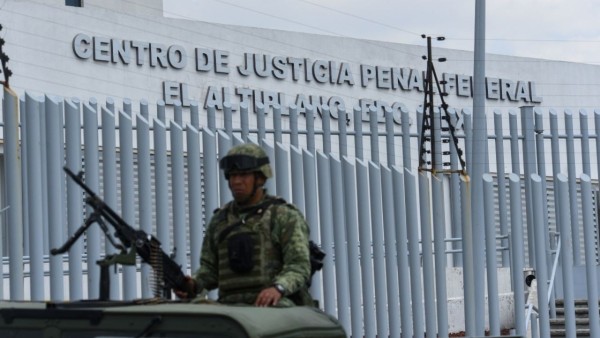
State power is used to coerce a reporter into revealing sources on cartel control in federal prison El Altiplano.
Los Ángeles Press
Luis Fernando Mendoza Castellanos, a senior official with over three decades in Mexico’s federal penitentiary system, is currently the director of Cefereso No. 1 "El Altiplano." He stands accused of leveraging his position to intimidate journalist Guadalupe Lizárraga by using César Freyre Morales — a recognized victim in the controversial Wallace case — as a means of coercion. According to messages received by Lizárraga, Mendoza is demanding that she disclose her sources for an investigative report on cartel control within federal prisons, threatening that Freyre will be tortured by cartel-linked inmates if she refuses.
This act is not isolated. It is part of a wider strategy of institutional violence and intimidation allegedly orchestrated from within the highest levels of the prison system. Mendoza’s long-standing career overlaps with the consolidation of a criminal infrastructure within federal prisons, where corruption, the sale of privileges, and complicity with organized crime have become systemic.
Testimonies from inside the prison system suggest that Mendoza has not only tolerated but facilitated the commercialization of illicit goods and services — from liquor and food to weapons and mobile phones. Under the pretext of modernization, high-security facilities have become epicenters of criminal governance, with cartels like Los Zetas exploiting institutional resources to eliminate rivals and control internal prison dynamics.
Central to this system of criminal control are the Treviño Morales brothers — Miguel Ángel (alias "Z-40") and Omar (alias "Z-42") — high-ranking leaders of the Zetas cartel. Investigations and internal testimonies indicate that both operated with impunity from within federal prisons, benefiting from protection and logistical support provided by prison authorities. In Cefereso No. 13 in Oaxaca, Miguel Ángel allegedly orchestrated the targeted torture and assassination of rival cartel leaders, using state resources and collaborating officials to execute these operations. Their presence inside the penitentiary system transformed prisons into command centers, allowing the Zetas to consolidate power and eliminate opposition with state complicity. The extent of their influence underscores the degree to which organized crime has penetrated and co-opted Mexico’s federal prison structure.
The case also underscores the enduring impunity of public officials who, despite serious allegations, remain in power. Lizárraga calls for urgent intervention from national and international human rights bodies, holding Mendoza directly responsible for any harm inflicted on Freyre or his family. She warns that such threats represent more than personal retaliation — they expose the structural collapse of Mexico’s prison system, and a form of state terror aimed at silencing investigative journalism and human rights advocacy.