
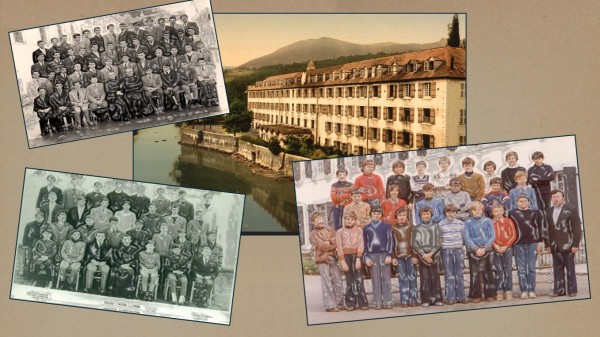
The French Catholic Bishops and the order behind Bétharram do their best to portray the school as an exception, one coming, from a bygone era. It is not.
Bétharram, as other Catholic “orders,” provides a pristine example of a way too common solution to clergy sexual abuse: the “geographic solution”.
By Camille Rio, MEP*
When, on February 5, 2025, Mediapart reported that Prime Minister François Bayrou had intervened with Judge Christian Mirande to defend the Catholic school of Bétharram in the Carricart affair, the attention of all of France was suddenly focused on this modest village of 800 inhabitants in the Pyrénées-Atlantiques.
Pierre Silviet Carricart, a priest and former headmaster at the Catholic school, was a local celebrity in the Pyrénées-Atlantiques, a region near the border with Spain. He was a member of the local elites. As such, his death on February 2, 2000, in Rome, shocked the region to its core. Ruled as a suicide, his body was dragged out of the Tiber river, as this entry from the French-language Wikipedia tells.
Since October 2023, however, a collective born from an ordinary Facebook page of former students at the school has been accumulating reports and the copies of the filings at the local precinct of the Gendarmerie, the so-called cerfas: 20, then 30, 70, 100, 150. By the end of May 2025, more than 200 complaints have been communicated to the courts.
In November 2021 already, Jean-Marie Delbos, a lone protester, stood with a small sign summarizing his case, attacking himself as well. The sign was calling himself: 'Victim of a predator in Bétharram and a fool'
Delbos’s original French expression “Victime d’un prédateur à Bétharram et cocu” can be deceiving, as Delbos was calling himself a cuckold in French slang, but the intended meaning was to depict himself as a fool, for becoming the victim of the Catholic Church, the school he attended as a kid, and the French authorities.
Delbos shouted himself hoarse in the cathedral-like silence that accompanied the solemn genuflection of the bishops gathered in Lourdes to decide on the follow-up to the Sauvé Report, reminding them how: “repentance is a load of rubbish, the first measure is to fire all those responsible for covering up for these people.”
It is hard to say it better. How can we explain the institution’s pusillanimity over the past three years, while this explosive issue was brewing dangerously, literally under the bishops’ noses, and less than twelve miles or 20 kilometers from Lourdes, the Marian city itself?
It is true that, as far as Bétharram is concerned, scotomization, that is to say to block our ability to perceive painful realities is a long-standing practice: the first serious warnings were issued in 1993, 1996, 2000, as told by this French-language summary of Pierre Carricart’s suicide in 2000, if not fifty years earlier (in some countries this link will open a French-language documentary from Arte, a Franco-German producer tracing violence in Bétharram all the way back to the late 19th century).
The symbol of educational violence, the «Me Too» trigger of Catholic education in France, the hell, the “gulag” of the Pyrenees, now bears a name: Bétharram, to the shame of the inhabitants of Lestelle-Bétharram, whose hometown’s name evokes both the place’s original name, its religious establishment, “the beautiful Branch,” and the name of its sanctuary, witness to a Marian apparition as early as the 14th century, in which Mary saves a young girl about to drown in the Gave River with a branch. But it is also the name of a teaching congregation: the Priests of the Sacred Heart of Jesus of Bétharram, founded in 1832 by its guardian figure, saint Michael Garicoïts.
This fourfold legacy of the name Bétharram, a multifaceted toponym, is also ambiguous. In this this matter, Church institutions know how to play marvelously on this ambiguity.
In April 2024, I contacted the collective «Former students of the Bétharram middle and high school, victims of the institution. » Embarrassed for six years by the abuse cases within the Paris Foreign Missions, aware of the cases in many other missionary institutes, and already familiar with the thousand tricks and convolutions of the Catholic authorities, abroad and in France, I wanted to at least be sure that the collective had accurately assessed the development of the order’s missions around the world: hundreds of priests spread across 14 countries over more than 70 houses, as the graphic after this paragraph summarizes.
I was aware of the congregation, as my mission in Thailand was once founded by a Bétharram Father, and I knew most of the religious members of the institute active in Thailand. Beyond this side of the issue, I was hoping that, unlike the French leaders of the Catholic Church, who are completely indifferent to the foreign survivors’ fate, the French victims, were willing to express concern for the foreign victims of French priests and religious.
I knew about the reach of the Congregation of the Bétharram Fathers. They have not been confined to the walls of the Bétharram school. Being aware of that made me wonder about the potential consequences of the foreign travel of implicated members of the order of Bétharram, the collective welcomes me. As much as I, they were also aware about potential victims abroad and the difficulties they face when coming out with their own stories of abuse.
This collaboration reached one of its goals when, on April 2, a press statement, translated into fifteen languages, and distributed as widely as possible to the foreign press came to light.
I must here express my gratitude to the collective of victims of Bétharram, for having first overcome its understandable reservations about working with a priest. Also, because they were resolutely willing to tackle the issue of foreign victims, adding to the already sufficiently heavy burden of obtaining recognition and reparation for the members of the collective.
In my opinion, it is significant that this call for testimonies comes from the victims themselves. They place solidarity with all victims as a founding principle of their fight: solidarity first with the victims, all conditions combined, both priests and lay staff (demanding the same recognition and reparation for all), from the congregation of Bétharram.
Also, solidarity with the victims of all private schools then, sparing no time and effort to guide, to advise, to reach out, to support, and bring together victims from other institutions who are aware and are in touch with the collective. Moreover, they are willing to express their solidarity with past, present, and future victims, calling for a genuine national child protection policy; and finally, solidarity with foreign victims.
In doing so, the collective is building a broad fraternity sharing a struggle in a strategy that, I say to the shame of the Church, is the exact opposite of that of religious authorities.
“Regionalizing” the archives
It is indeed very significant, when we examine both the history of these cases and their handling by Church authorities, to note that the latter's entire effort was to “regionalize” them as to avoid contamination beyond the single institution of the beautiful branch, Bétharram.
The belated press release of February 20, 2025, from the French Conference of Catholic Bishops, CEF, suggests that Bétharram is an exception, one coming, moreover, from a bygone era, within Catholic education. However, the congregation’s on communication is more telling, through both its conduct and its actors. Initially, a timid statement in September 2024, in Basque and in French.
Alas! Despite the effort to translate to Basque, the statement is hardly known outside the congregation’s social media, most of which are monolingual in French.
When last February the scandal involving François Bayrou, the sitting French prime minister broke, it was first Father Laurent Bacho, former vicar general, and head of the “listening cell of the Bétharram fathers” (the title alone is laughable) who dealt clumsily with the journalists who besieged the order’s house in Béarn.
Ultimately, he got help from Father Jean-Marie Ruspil, the CEF’s regional vicar. At no point did the superior general of the congregation, the Argentinian Gustavo Agin, speak on the matter. He his best as to keep it within Notre-Dame de Bétharram’s high, ivy-clad, walls.
It would take until March 2025 for the issue of abuse to be addressed in a sibilant manner in the congregation’s internal letter, Family News No. 212. That newsletter of sorts is usually available here with its contents in French, English, and Spanish. However, the website seems to be unstable, so it would be better to try to access it over the Internet Archive here.
This newsletter is written by the Superior General, who, for his part, congratulated himself on never having been a victim of violence during his years as a student in Bétharramite schools in Argentina (you have to read it to believe it).
Even more striking: during a telephone conversation with a Thai priest from Bétharram in early April, he expressed his astonishment when I told him about the immense scandal rocking his congregation in France. He had simply never been informed internally, even though, a few days earlier, Father Agin, the Superior General, had been visiting the missions in Asia.
Victims' Alerts
It would take the voluntary coming forward of his victims throughout France for us to realize that a lay supervisor who had been implicated had pursued a brilliant academic career in private education in France.
The collective and journalists working with them were surprised by the strange trips abroad. To fully appreciate the scope of the Bétharram crisis and the potential reach of the abuses, one must keep in mind that the order is also active in France in Pibrac, a town near Toulouse, and Limoges, halfway between Paris and Toulouse.
They have houses or are in charge of parishes or schools in Great Britain, Spain, and Italy, as well as in the Middle East, and for a long time in North Africa. In Morocco, the emeritus archbishop of Rabat, Vincent Louis Marie Landel is a member. In South America, two former bishops of Encarnación, Paraguay, Spaniard and Basque bishop Ignacio Gogorza and Paraguayan Claudio Silvero, are also members of the order. And have parishes and other missionary works in sub-Saharan Africa, and Asia.
Bétharram is not only a teaching congregation; it is also a missionary society, present in 14 countries, particularly in so-called “mission countries.” This is where it secures its recruitment, its resources, and, in short, its future. It is possible to get a better grasp of what is at stake for them: it is possible to sell a few modest properties in Lestelle, near the school at Bétharram, even risk a national scandal in France, where few are still into religious practice, and sacrifice the head so that the body may live. “Let the house and school in the Pyrénées perish, so Bétharram remains in its missions."
After all, the Bétharram school could be seen as an exception, a dramatic one certainly, but like a sort of cancerous tumor in a healthy body? Nothing could be less certain.
For the missionary identity of the Bétharram Fathers was present from the very earliest years of the congregation: the first Bétharram Fathers accompanied, as chaplains, the massive Basque, both Spaniard and French, immigration to South America, where they founded prestigious colleges, similar in every way to the Lestelle establishment. This initial deployment would give a strongly missionary flavor to the nascent institute from the outset. The Middle East, sub-Saharan Africa, and then Asia would soon follow.
The trips to Bethlehem (Father Lamasse), Rome (Father Carricart), and the Ivory Coast (Father Ségur) clearly indicate a solution too familiar to believe in exceptions: the "geographic solution," convenient within a congregation that was both French and missionary.
The extent of the violence, particularly involving priests linked to the school indicates the systemic nature of the phenomenon in a congregation where, until recently, the Novices destined for ministry as missionaries or in mainland France were trained in the same minor seminary, precisely the apostolate where Jean-Marie Delbos was abused, a few yards or meters from the college.
It is worth keeping in mind how Alain Esquerre who, for a while was a spokesperson of sorts for the victims and who recently published a book about his experience as such explained how “all the headmasters at Bétharram were sexual aggressors.”
In that respect, it is impossible to dismiss the fact that the tumor has had every chance to metastasize, and for a long time already.
How many Bétharrams?
How many Bétharrams? This question turned into a slogan of sorts for the victims of Catholic education in France as not only reveals the anxiety over discovering similar cases in a number of French Catholic schools, linked to either orders or dioceses. It also forces to raise questions about violence within the numerous (several dozens) teaching and missionary institutes that are members of the Conference of Religious Men and Women of France (CORREF).
Among the different groups or “orders” of sorts one can find different brotherhoods: the Brothers of Ploërmel, of the Sacred Heart, of the Christian Schools, of Saint Gabriel, etc. They came to exist almost at the same time as the Betharramites and are almost similar in their operation, their culture, and how they organize and manage their staff. Also, they have in common the mixing of teaching and missionary apostolates.
The scandals that have punctuated the news with lurid news stories for the past five years with distressing regularity always present the same pattern: one, then two, sometimes dozens of cases attributed to one or another of these educators of vice in the metropolitan establishments of these congregations, without anyone ever realizing that these congregations are active all over the world, in hundreds of schools elsewhere in the world.
And this is no longer a question of a bygone past: the problem in missions is very contemporary (the Bétharram congregation opened its new Vietnamese region in 2015). The cases of the Brothers of Saint Gabriel (Loctudy-Issé) or the Congregation of the Mission (hundreds of cases in their elite schools in Ireland, none so far in their numerous African missions) are eloquent on this subject.
How many Bétharrams? How many, within these centuries-old institutes modeled on the Foreign Missions of Paris, the MEP (Missions étrangères de Paris): Lazarists or Congregation of the Mission, Vincentians, Eudists, Lassalians, Oblates of Mary Immaculate, among many others it is an open question.
How many within the missionary institutes of the same model abroad, here again called into question for their metropolitan establishments, never in their missions: Mill-Hill Fathers, Maryknoll Fathers, Missions Étrangères de Québec, Yarumal, Xavierians, etc.? Yarumal, by the way, is one Latin American, Colombian to be more precise, contribution to this select group, the other being the Mexican Missionaries of Guadalupe.
How many within these "new communities" under the spotlight in France but which thrive abroad and on mission (Brothers of Saint John, Foyers de Charité, Béatitudes, etc.)?
The Chest of Horrors
While one can understand the cowardice of the leaders of these institutes, terrified to open this chest of horrors that is abuse in missions, and who have been clenching their buttocks for four years, praying that the wave of revelations will spare them, one can less understand the faint-heartedness of the French religious authorities, and in particular CORREF, as this denial contrasts so much with the solemn declarations of its leaders the day after the submission of the Independent commission charged with doing the Sauvé Report, the CIASE.
It is still inexplicable, moreover, that the latter was able to avoid this monumental blind spot, when we now know that its members were perfectly aware of this issue: CIASE Plenary Meeting No. 4, hearing of Sister Véronique Margron, CORREF's chair, April 23, 2019: “France is one of the founding countries of the most important [missionary] congregations.”
Mr. Jean-Marc Sauvé: “The roots are very deep: in 1900, 80 percent of nuns and 50 percent of missionaries worldwide were French.”
Hearing of Ms. Martine Brousse, chair of the association La Voix de l'Enfant (The children’s voice) (11/19/2019): “We must therefore not forget, when analyzing the phenomenon, the children abroad who are victims of French priests.”
Why this massive blind spot in the otherwise very comprehensive CIASE investigation? Why, above all, has CORREF been so passive since October 2021? They did so when the scandals at the Foreign Missions of Paris, the MEP, were about to break, without provoking any reaction other than laconic statements of circumstance. Would it be because raising a case such as MEP would lead to questions about the deficiencies of all missionary institutes within the confederation?
Why, finally, this wait-and-see attitude on the part of the Conference of French Catholic Bishops, if not because violence in mission raises the question, barely touched upon by the CIASE, of abuses attributable to the so-called fidei donum diocesan priests? Another blind spot whose scattered files threaten, here and there, to explode.
Fidei donum are diocesan priests, not religious, sent into so-called “countries of mission” under the shared authority of their own bishops, the local receiving bishop, and the relevant authorities in Rome, as described broadly in this 1957 encyclical by Pope Pius XII.
The German Bishops' Conference, for its part, did not hesitate to commission a report on fidei donum priests in mission, published in 2022, with appalling conclusions.
Their report, available only in German and Spanish could be translated as Investigation of the files of the Fidei Donum Coordination Office of the German Bishops’ Conference. The German original is available at the Studies section of the German Conference of Catholic Bishops' website here. The Spanish version is available over Adveniat’s partially bilingual, German and Spanish, website here.
The “Catholic” aspect of the problem
The Bétharram “file” is exemplary in that it goes beyond its subject in every way, and everywhere betrays the existence of established, immutable, organized “systems.” It is, paradoxically, a dizzying “systemic” issue whose international character is both the key and the symbol:
The accusation raised against François Bayrou, the sitting Prime Minister, calls into question the “small arrangements between friends” of all-powerful notables, within veritable provincial “baronies,” chieftains of sorts.
The blindness of public authorities regarding such numerous and serious abuses within a Catholic institution also calls into question the curious impunity that private education still enjoys in the French Republic that, nevertheless, is secular and sovereign regarding the education of its citizens.
The dual teaching and missionary dimension of the Bétharramite Institute calls for a truly “Catholic,” a universal understanding of the phenomenon of sexual violence: by practicing the exfiltration of clergymen abusers to even more vulnerable populations; by deliberately regionalizing scandals to regions too affected to be kept silent any longer.
It also does so, by exploiting the uncertainty created by vague responsibilities of the different authorities within the Church: the local parish, the congregation of Bétharram, the diocese of Bayonne, and the Roman Curia.
It also does so by isolating, distinguishing, and dividing the victims. In doing so, Church authorities strive to confine these “isolated cases” within a convenient and discreet “quarantine” of sorts.
It should be clear, however, that systemic issues in nature, require a systemic response: and the response can only be Catholic. To be so, it first needs to understand the global scale of the violence and the response that the universal Church provides. Beyond that, through our ability to hold together all the scattered elements of this vast nebula, both in France and abroad. Let us add this: a task of equally considerable magnitude presents itself to missionary reflection: to what extent have these mechanisms been exported to mission churches, which are also affected by the clergy sexual abuse crisis on a considerable scale?
A formidable question that imposes itself on missiology, the so-called science of missions. The call for witnesses published in fifteen languages by the collective of victims of Bétharram happily contributes to this effort, beyond the sole search for victims of the congregation. One can only regret that this authentically Catholic initiative, one that is also “synodal,” in its collaboration with various actors from around the world, is once again the responsibility of the victims themselves, making up for the inertia of the Church authorities.
*Camille Rio MEP is a French Catholic priest, member of the Foreign Missions.
Translation and edition from French to English by Rodolfo Soriano-Núñez. All the edits to the French original are in italics.
A version of this article originally appeared in Golias, a French magazine. Camille Rio authorized its translation to English and Spanish.