
Rodolfo Soriano-Núñez Lunes, 09 de Noviembre del 2026
Before Leo XIV’s departure to Uruguay, survivors in Lima, unveiled a map and database detailing cases of 77 clergy and lay leaders facing sexual abuse accusations in Peru.
Leo XIV’s visit to Uruguay allowed him to see the future of Latin America, a region where religious practice is increasingly at risk.
By Rodolfo Soriano-Núñez
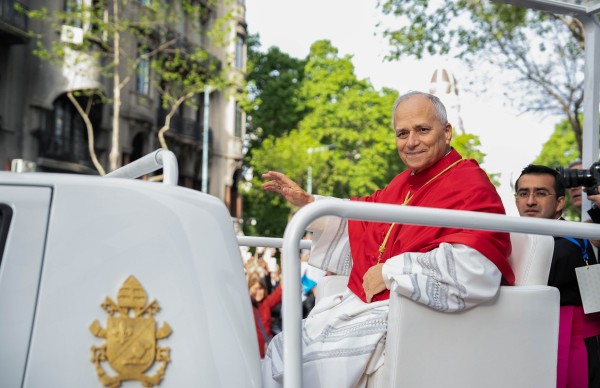
Last Friday, as planned, Pope Leo XIV made the first trip back to Latin America since his 2025 election. The Uruguayan leg of his trip has gone, as expected, with little or no surprise or local enthusiasm. He is now in Argentina and, in a few more days, he will be in Peru, his adoptive country, the one where Pope Francis first appointed him as bishop of Chiclayo.
Unlike Catholicism in most of Latin America, Uruguay has been at least for the last century or so, an anomaly where religious practice found a challenging environment, although unlike Mexico, Venezuela or even Cuba, where the political elites at different points in time directly attacked religious practice, in Uruguay there was a friendly Church-State “divorce.”
What happened after the amicable Church-State separation has been only worsened by the Vatican’s choices there and elsewhere in the region, and the outcome, to nobody’s surprise was Friday’s “quantum leap” into the future, with the relatively empty streets of Montevideo as the witnesses of the Catholic Church’s inability to guarantee its own future.
If that was not enough, the capital of Uruguay offered another glimpse of the future of Latin America, Catholic or otherwise: an older country, no longer the goal of eager migrants willing to cross the Atlantic or to relocate from other countries in the region.
On Saturday, Paysandú, a municipality on the eastern banks of the river that separates Argentina and Uruguay, offered a friendlier, warmer, environment. The proximity to Argentina, Paraguay and Brazil, made it relatively easy for pilgrims from those other countries to attend the activities on Saturday.
For the remainder of the Uruguayan leg of his tour, Leo XIV seemed to be able to strike the right chords in all his messages. He avoided the open confrontation with the political elite of a country where Catholics went from being 60.5 percent of the population in 1995 to barely 33 percent, as the story with data from Latinobarómetro linked below told last year.
Hopefully, he will acknowledge that the glimpse he was able to get into the future of Catholicism as a minority is the byproduct of choices revealing the Catholic Church’s difficulty when engaging contemporary Latin American societies. More so, as the Catholic Church’s diagnosis about the region’s religious practice, felt prey for the military or health metaphors the region’s media started using back in the 1980s for the changes in religious practice, as either an invasion or a pandemic of cults, proved wrong.
As the story below proved early this year, with data from the Pew Research Center, at least as far as religious practice is concerned, Latin America, has gone the way Canada, the United States and most of western Europe have gone, without ever achieving the standard of living of those other countries or regions.
Although Uruguay is not represented in the Pew dataset, fact is all available information from that country follows the same pattern one sees in the six most populous countries included in the report available here.
How Leo XIV and his teams from Latin America interpret the data from the region is anybody’s guess. What should be clear by now is that the data from Pew, as much as national censuses and polling from Latin America are a monumental rebuttal, if there ever was one, to the notion that “only conservative denominations grow,” that became in the 1960s the favorite excuse for Christian denominations all over the world, to incentivize as much as possible the most sectarian forms of religious practice.
Moreover, they prove that the institutional design of the Church-State relation, an issue many Latin American conservatives see as thorn in their forefronts, has little or no significant impact on religious practice, what matters the most are the specific choices the Catholic Church does on its own as to how it decides to bear witness of its commitment to their understanding of Christian values.
That is where the Catholic Church’s choices to deal with its own challenges seem to have a rather negative impact in the development of Catholicism in the region, with the clergy sexual abuse crisis as an issue that keeps coming as a source of resentment, contempt and even rejection of the Catholic Church as such.
Last week this series already reviewed some of the challenges that Leo XIV’s trip to Argentina will confront, at least when thinking about the clergy sexual abuse crisis there in the story linked above this paragraph. However, the most notable development of the week was a press conference held in Lima, the Peruvian capital, last Thursday, less than one day before Leo XIV’s departure from Rome.
A map and a network
The activity, organized by the Peruvian Network of Survivors of Clergy Sexual Abuse and U.S.-based NGO Bishop Accountability, revealed a new database containing information about 77 bishops, priests, religious brothers, so-called consecrated laypersons, and other individuals associated with the Catholic Church who have been named in different cases.
The database is similar to those set up by Bishop Accountability in the United States and other countries over the last 20 years or so, documenting clergy sexual abuse cases going all the way back to the mid-20th century.
The new Peruvian database has many of the already known usual suspects, “household names” by now, such as Luis Fernando Figari and Germán Doig, the two founders of the Sodalitium of Christian Life, an order-like organization similar in many respects to both the Mexican Legion of Christ or Opus Dei, an organization key to understand what has happened in Spain and more precisely in Peru, where one of its members, Cardinal Juan Luis Cipriani Thorne, was for little less than 20 years (1999-2019) the head of the Archdiocese of Lima.
He achieved such position despite the fact he attacked at least one underage male under his care back in 1983, six years after his priestly ordination in 1977, in Madrid, the capital of Spain, and five years before being promoted in 1988 by John Paul II to auxiliary bishop of Federico Richter Fernández-Prada, then head of the Archdiocese of Ayacucho.
The date when the abuse perpetrated by Cipriani happened is one of many details one finds in the database and the map available at the Peruvian Network of Survivors (content in Spanish). For each pin in the map, there is the identity of the named abuser, the date(s) when abuse(s) happened, and some other details to better understand the context of the accusations.
Besides Anne Barrett Doyle, a member of the Board of Directors at Bishop Accountability, the database was presented publicly in Lima by José Enrique Escardó Steck, currently a journalist, but also the “survivor zero” of the large-scale abuse at the Sodalitium of Christian Life, a leading voice when talking about clergy sexual abuse in Peru as chair of the network of survivors there, and by Reinhold Nann.
Nann still appears in CatholicHierarchy.org as the prelate (equivalent to bishop) emeritus of Caravelí, a rather isolated jurisdiction of the Catholic Church in southern Peru, 360 miles or 570 kilometers south of Lima, in the heights of the Andes, almost 5,840 feet or 1,780 meters above sea level.
As Robert Prevost, who was born in Chicago and ordained a priest for the Order of Saint Augustine in Rome in 1982, Nann was ordained a priest in Freiburg im Breisgau, Germany, in 1986. Both were promoted to bishops by Francis while doing missionary work in Peru: Prevost in 2014, Nann in 2017. Although there is no official information as to why Nann resigned at 63, he admits he left the priesthood.
For a year or so, after Prevost’s appointment as head of the Dicastery for Bishops in 2023, he was Nann’s superior. As such, it is possible to assume that he was well aware of the details of Nann’s resignation to the see of Caravelí in July, 2024. It is unknown if Nann warned Prevost about his current endeavors, as he published a rather harrowing account of how the Peruvian bishops have been (mis)handling clergy sexual abuse allegations for at least the last three decades.
Available only in Spanish, the title of his account of what has happened in Peru could be translated as “Predators’ cave or safe Church? Clergy sexual abuse against underage persons in the Peruvian Church and its future prevention.” Nann himself summarizes his book in a piece he wrote for Religión Digital, a Spanish-language medium available here (content in Spanish).
The cases Nann writes about should not come as a surprise to Prevost, since he was briefly, during his time as bishop of Chiclayo, the chair of the committee dealing with clergy sexual abuse within the Peruvian Conference of Bishops.
As a consequence of the publication of his book and his role in building the database presented by the Peruvian Network of Survivors and Bishop Accountability, Nann has become the latest of the many targets of Alejandro Bermúdez’s irate tirades in social media.
Catholic McCarthyism
A former executive of EWTN and member of the “suppressed” Sodalitium of Christian Life, Bermúdez uses social media to blast whoever disagrees with him on any and all issues, throwing against his targets the kind of darts so common in the Catholic Latin American far-right: whoever disagrees with him is either a “communist,” an “enemy of the Church,” or is guilty of some other imaginary crimes the Catholic far-right is quick to manufacture to discredit other humans.
He has done plenty of such attacks against other individuals willing to criticize what has happened in the Sodalitium and in other organizations and dioceses associated to the Catholic Church in Peru and other Latin American countries.
During the Conclave that elected Robert Prevost as Pope, Bermúdez was willing to go as far as to publicly attack, at the Sala Stampa in Rome, two journalists who have been at the forefront of the reports about abuse at the Sodalitium. One was Paola Ugaz, a Peruvian journalist whose story inspired a play that Leo XIV felt the need to celebrate as a way to show his support for Ugaz and the survivors at the Sodalitium.
The story linked after this paragraph goes over more details of the message Leo XIV sent to Ugaz, other Peruvian journalists and survivors of the Sodalitium, and to the cast and public attending the premiere of the play titled Proyecto Ugaz (Ugaz Project).
The other was the former correspondent of Crux in Rome, Elise Ann Allen. She published the first report about abuses at the Sodalitium in English, and last year, after Prevost’s election as Pope, she published a book with a long-format interview with Leo XIV.
Sadly, the interview was very able to grasp some of the limits of Leo XIV’s understanding of the depth of the clergy sexual abuse crisis and, as such, one installment of this series (linked after this paragraph) delved into some of the tensions in Leo XIV’s understanding of the clergy sexual abuse crisis revealed by the dialogue with Allen.
Going back to Bermúdez, one must keep in mind that when Pope Francis forced him out of the Sodalitium, less than a year before the canonical suppression of that organization, Bermúdez and his surrogates in social media did their best to do what predators and their accomplices do better: render themselves as victims of whoever dares to point out their abuses, and Francis was not the exception.
Although he formally resigned his many positions at EWTN, it is unclear how much actual distance there is between the U.S.-based cable network and Bermúdez. He keeps an extensive social media operation, the kind of operation a “lone ranger” would be unable to sustain on his own, and he either promoted or played a role in shaping EWTN’s Spanish language grid.
Given the absurdity of the algorithm behind Elon Musk’s X, it is impossible to figure out whether his social media reach is what, one decade ago, used to be called “organic” or if there is some “alchemy” from that and other social media pushing Bermúdez’s posts and threads, but he has built over his many years at ACI Prensa and EWTN a rather robust audience, very willing to support his tirades and attacks over social media.
One only needs to go over how Bermúdez has “accused” Nann at what used to be Twitter of the “crime” of cohabitating with an adult female, while dismissing the substance of Nann’s accusations about the Catholic Church’s mismanagement of clergy sexual abuse cases in Peru.
The opacity of Bermúdez’s actual relation with EWTN is more relevant when one takes into consideration that Leo XIV’s Latin American tour also marks the debut of Montserrat Alvarado, a former top executive at EWTN, as the new head of the Holy See’s Dicastery for Communications.
“Devil’s work”
Although Vatican News and other Catholic media have done their best to emphasize as much as possible the fact Alvarado is of Mexican descent and a lay female, it is impossible to forget about how, back in September 2021, Pope Francis himself criticized EWTN’s coverage of his pontificate, going as far as to describe the personal, systematic and relentless attacks on him as “the work of the Devil.”
It is also hard to dismiss how, a few weeks ago, Tim Busch, the “financial soul” behind Napa Institute, praised Alvarado over her ascension to her current post in Rome over a 30-minute interview. It would be impossible to go over Napa Institute’s fraught relationship with Pope Francis by bankrolling, endorsing or supporting clergy and lay persons at odds with the Argentine Pontiff at some point during his tenure in Rome.
Suffice to go back to how after Pope Francis forced out of office in 2015 John Clayton Nienstedt, the now emeritus archbishop of Saint Paul, Minnesota, Busch and his peers at Napa Institute offered in 2016 Nienstedt a position as an “independent contractor.” The already emeritus bishop kept his position there for almost two years.
It was only in 2018, after the scandal around Theodore McCarrick was unavoidable, that Napa Institute saw fit to end its relationship with Nienstedt. Napa Institute was adamant in emphasizing that when they hired the emeritus prelate, Rome had placed no restrictions on him, and it is true. It was only on December 2018, four months after he left Napa, that Rome set restrictions on Nienstedt’s ability to preside over services in his former diocese.
It is easy to understand why Leo XIV would be interested in building a bridge, the very definition of what a Pontiff does, with EWTN and other similar media outlets. However, it is unclear how Alvarado will perform her duties in Rome and how different Vatican News and the rest of the Vatican’s media operation will remain from EWTN’s takes on key issues, including clergy sexual abuse.
The database presented in Lima before the Pope’s return to Latin America was built or at least partially validated by Nann’s insider knowledge. As with other databases of its kind (see the story below about Protestant Accountability) the one presented in Lima is useful not only because of the specific cases it identifies, but because databases allow other potential victims to come forward.
The development is more relevant in Peru, as the laws there seem to be frozen back in the late 1990s. It is hard to know if there will be challenges to the very existence of the map as, despite being canonically suppressed since the first quarter of 2025, one of the very last decisions taken directly by Pope Francis, key figures of the Sodalitium of Christian Life, Bermúdez among them, remain active in public life.
They also remain unwilling to acknowledge the abuse at the Sodalitium, and have enough contacts in governments and Catholic curias in the United States and several Latin American countries to make the lives of their critics miserable. That has been the case of Paola Ugaz, one of the many Peruvian journalists who have been the subject of threats and legal maneuvering to try to silence her.
What is worse, as this series has been stressing since the rumors about the suppression of the Sodalitium emerged over 2024, there is no warranty such measure will actually succeed.
Granted, Pope Francis’s canonical suppression stands and it would be unthinkable, at least for Leo XIV to backpedal such decision. The main problem is that the formally suppressed Sodalitium, as many other similar order-like organizations in the Catholic Church, regularly spin-off into several “lay” organizations, charities and even firms.
Labor exploitation in God’s name
Their “lay” character is a double-edged sword. On the one hand, it frees them from potential control or oversight from Rome or the local dioceses. Sadly, in many countries all over Latin America, it also allows them to disguise their true relation not so much with the Catholic Church, but more significantly from the order-like organization they spun-off from.
The “lay” character also allows labor exploitation, as organizations like the Sodalitium, the Legion of Christ or Opus Dei, use those organizations to provide specific services to the leadership of the organization.
That is the case of the so-called “auxiliaries” in Opus Dei, mostly women who performed what otherwise would be seen as domestic labor for the benefit of the elite of numerary and supernumerary members. In the Legion of Christ, there were the many different categories of “consecrated members” within the so-called Regnum Christi (Latin for Kingdom of Christ). As with the Opus Dei “auxiliaries,” the “consecrated” were nuns in all but name and, tellingly, without the rights nuns would have in more traditionally structured orders.
The excuses Rome found during the heyday of John Paul II’s “New Evangelization” to allow and even encourage the emergence of this kind of “new religious movements,” whose success has been built by mechanisms disguised under the heavy makeup of Biblical or Catholic language to justify labor exploitation, sexual abuse, sect-like practices, and other maladies the Catholic Church had barely begun to acknowledge when the suppression of the Sodalitium happened.
If that was not enough, there is the issue of how the members of the Sodalitium were able to gather support from bishops in Peru, the United States, Brazil, Colombia and some other countries, where the risk remains that the local branches of the Sodalitium could assume a new identity, survive for the time being as diocesan association of the faithful or under some other configuration until they find the right conditions to relaunch, perhaps with a different name, the Sodalitium as such.
The stories linked before and after this paragraph went into more detail on how difficult it actually is to suppress predatory, sect-like religious organizations such as the Sodalitium, more so when the bishops of the country where such organization emerged are, for the most part, unwilling to acknowledge the abuse, not only sexual, that happened there.
What remains of Leo XIV’s first tour of Latin American will have defining moments over this week. Yesterday, around 5 PM local time, Pope Prevost’s flight from Montevideo landed at the Newberry airport in Buenos Aires. Despite yesterday’s appearances, the days before his arrival, there was tension as Javier Milei was intent on breaking Vatican protocol when receiving Pope Prevost.
Ever since Paul VI made his first trips to different regions of the world in the 1960s, Vatican protocol dictates the Pontiff steps down from the aircraft on his own. Leo XIV followed the protocol in Madrid, in Paris and, on Friday, at the Berisso Airport in Montevideo.
Ever the attention seeker, Milei wanted to go into the airplane’s cabin to meet there with his guest, to walk down the stairs with him, as to emphasize either how important the visit is or how close Milei wants to appear to Leo XIV at least during his days in Argentina.
If one believes in what the Argentine media published last week, Milei’s attempt at creating that kind of artificial proximity was met with the proverbial Roman wall of silence, expecting the Argentine President to pick up the hint. Apparently, he did, so Vatican protocol prevailed.
Post Data
Over the week, besides the new data base in Lima, survivors of clergy sexual abuse in both Bolivia and Chile issued heartfelt statements revealing how deep that scourge cuts in a region where, on top of the complexities and even absurdities of canonical processes, State capacity on issues of justice and Human Rights is far from stellar.
The Bolivian survivors published on November 3, the letter that appears as a PDF after this paragraph. As expected, they deplore the delays, the insensitive attitude of the local Catholic hierarchy, as much as the maze-like process they are forced to deal with when dealing with the local and the Roman curias.
On the Pacific Coast of Latin America, another survivor of clergy sexual abuse also published an open letter asking Leo XIV to address their grievances as the Chilean Catholic hierarchy seems to be already willing to forget or dismiss whatever agenda for change Pope Francis tried to promote when he asked for the resignation of the full episcopal bench back in 2018.
Over several paragraphs of the letter, Marcela Suárez Bastías, now 55, survivor of clergy sexual abuse when she was nine, goes over the details of her original abuse and more so over those of the continuous revictimization she has suffered when dealing with prelates such as Cardinal Fernando Chomalí Garib, the current head of the Archdiocese of Santiago de Chile, and who was among those who tendered his resignation to Pope Francis, but who—ultimately—survived what was more a reshuffling than an actual reckoning of what happened in Chile and elsewhere in Latin America.
Suárez Bastías, as many other survivors of abuse in Chile these days, has little patience for the way Chomalí hurried himself to support José Antonio Kast, the Chilean President who is in the midst of a scandal after he allowed for the systematic reduction of sentences of sexual predators using administrative loopholes in the Chilean law.
A few weeks ago, this series offered some details of how the loophole worked (see the story above) and, more significantly, how it contradicted an explicit presidential campaign promise made by Kast to avoid that kind of procedures. Suárez Bastías’s letter appears in both English and Spanish in the PDF file below.
If you read Spanish, you can find here a 2018 summary of Marcela Suárez Bastías’s fight for justice in Chile. She used to be the headmistress of a school and home for marginalized kids in Valparaíso, a position from which she was fired after she supported the residents’ accusations against a local priest.
Despite the many expectations created by Pope Francis’s forcing all the episcopal bench to tender their resignations, little or nothing was achieved and many of the cases remain in a multidimensional limbo as both the Catholic hierarchy and the authorities do their best to delay or openly dismiss accusations.
* * *
A summary of this piece is available as audio after this paragraph.
Your browser doesn't support HTML5 audio. Here is a link to the audio instead.
Note on production: The text of this summary was written and edited solely by the author. The delivery of the audio summary was achieved using a high-quality, text-to-speech engine Microsoft Word for Web. The AI was used for voice generation only, not content creation.