
Rodolfo Soriano-Núñez Domingo, 04 de Agosto del 2024
The former general secretary of the Mexican conference of bishops and new bishop of Piedras Negras promised “zero tolerance” to sexual predators.
However, both Piedras Negras and the neighboring diocese of Torreón prove how bishops play a key role in the ordination of predators as Roman Catholic priests.
By Rodolfo Soriano-Núñez
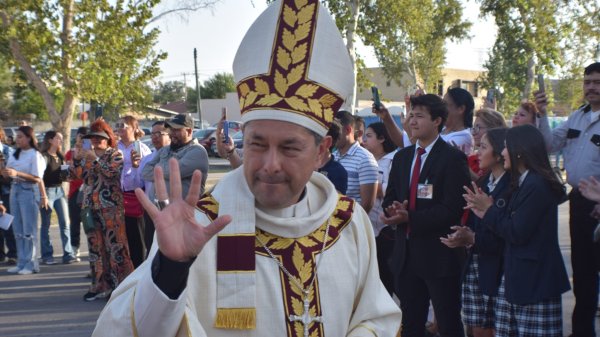
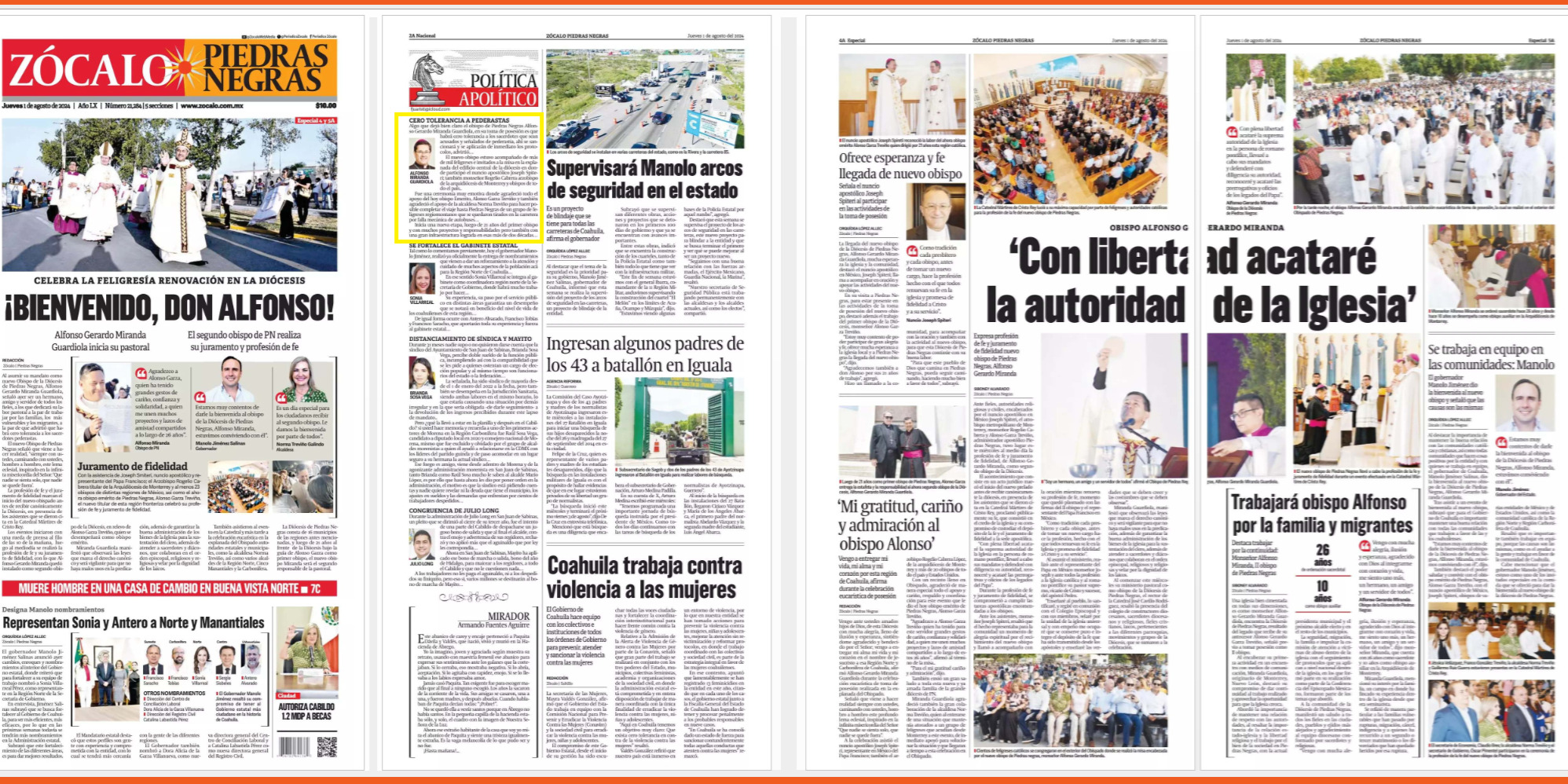
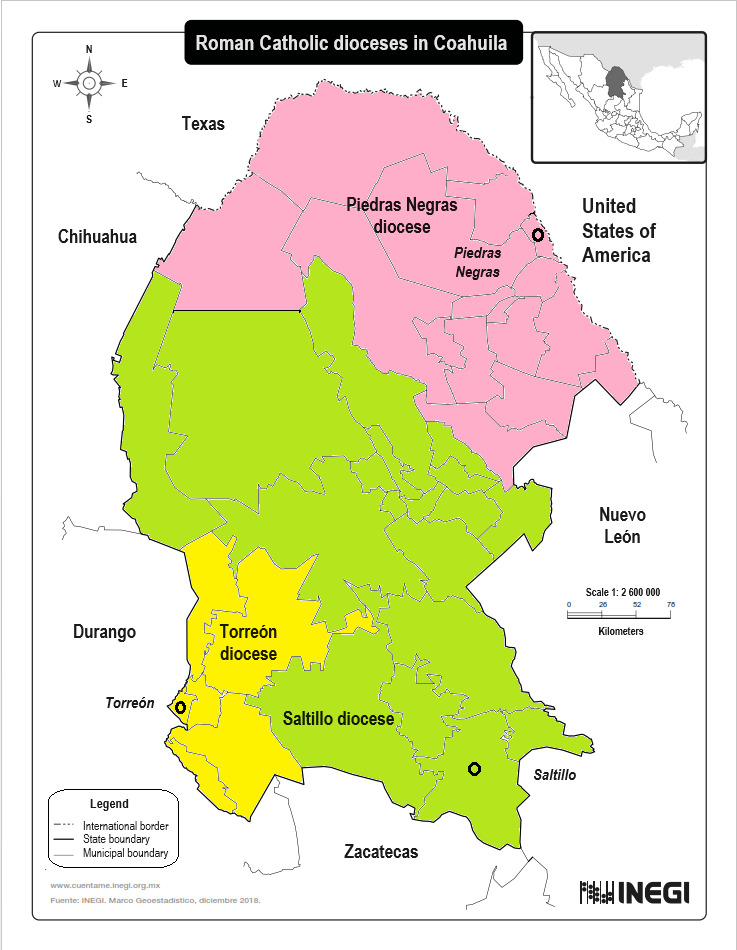
On July 31st, Piedras Negras, Coahuila, a sister city of Eagle Pass, Texas, greeted its new Roman Catholic bishop, former auxiliary of Monterrey, Alfonso Miranda Guardiola.
Bishop Miranda résumé includes a six-year period as general secretary of the Mexican Conference of Catholic Bishops, the so-called CEM for its acronym in Spanish, from April 2016, right after Pope Francis’s visit to Mexico, to November 2021, and odd five-year stint, the by-product of an adjustment in the terms set by the Conference’s rules that used to be set as three-years periods.
During his term as general secretary, CEM achieved their current rate of compliance with what Rome rendered as a major fruit of the Catholic Church’s reform to deal with sexual abuse over the last ten years.
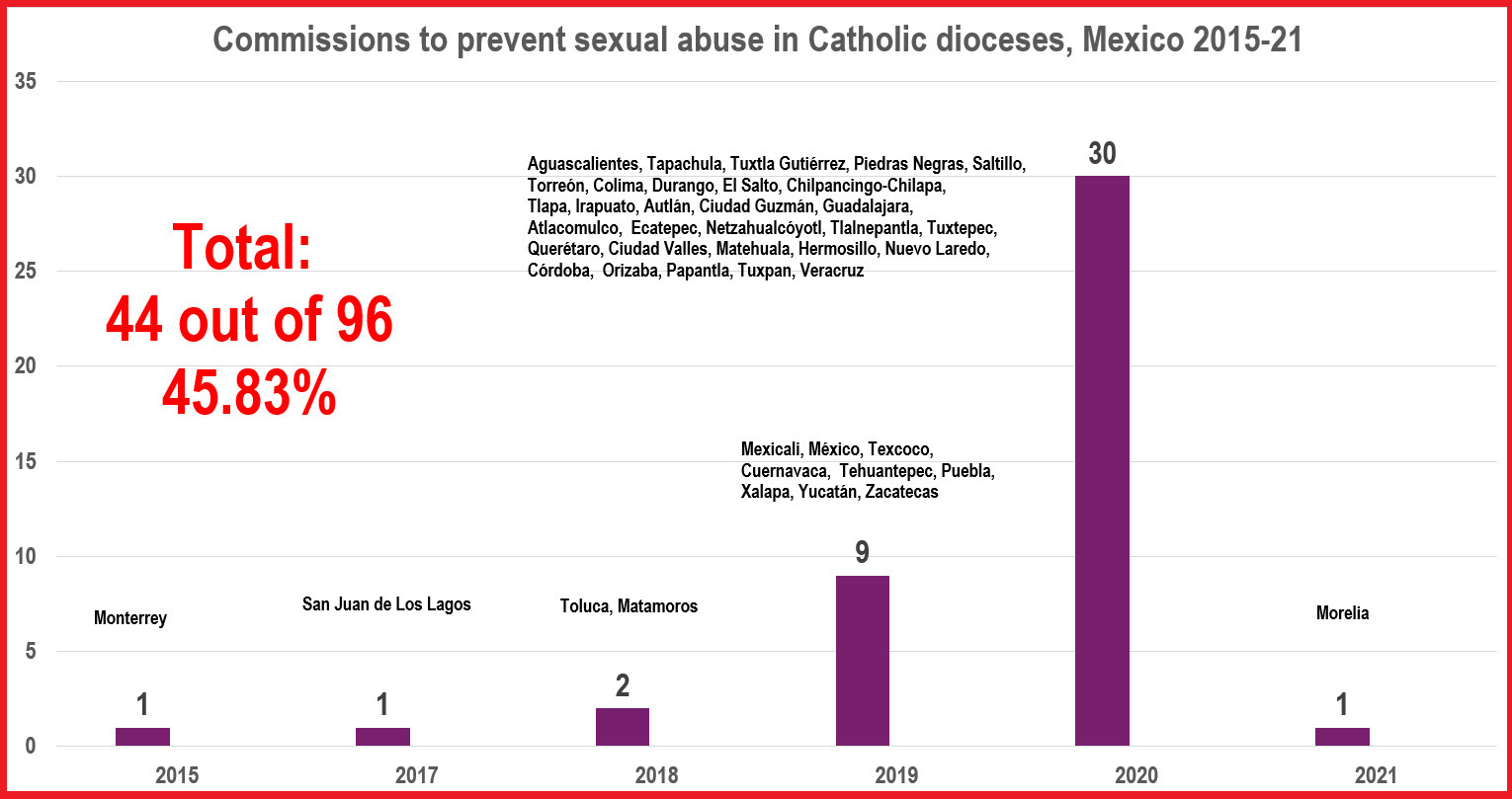
Despite the bells and whistles, a previous piece in this series proved how less than half the Roman Catholic dioceses in Mexico have a commission to prevent sexual abuse. From that report, the graph appearing after this paragraph shows how all but one of the Mexican Roman Catholic dioceses having a commission to prevent clergy sexual abuse set said commission during Miranda’s term in office as general secretary.
Moreover, Piedras Negras (Black Stones in Spanish), a small city 772 kilometers or 480 miles Southeast of El Paso, Texas, is one of the few Mexican dioceses where the evidence of clergy sexual abuse was enough to send one priest to jail, with a sentence of up to 13 years in prison and a payment as compensation of two million Mexican pesos, a bit over 100 thousand US dollars.

Stories from the Mexican desert
Back in 2002, Juan Manuel Riojas Martínez, known in Northern Mexico as Padre Meño attacked a student at the then auxiliary seminary of the diocese of Saltillo. The first instance of abuse happened after a party to celebrate Riojas Martínez’s ordination anniversary, attacking then seminarian Ignacio Martínez Pacheco.
Up until 2003, the current territory of Piedras Negras was part of the diocese of Saltillo, whose see is the capital city of the state of Coahuila, standing 440 kilometers, a bit less than 274 miles South of Piedras Negras.
Riojas Martínez was a professor at what was the minor seminary of Saltillo. When John Paul II created the new diocese, appointing Alonso Gerardo Garza Treviño as bishop, Riojas Martínez became the rector of the new seminary, a powerful position within any diocese.
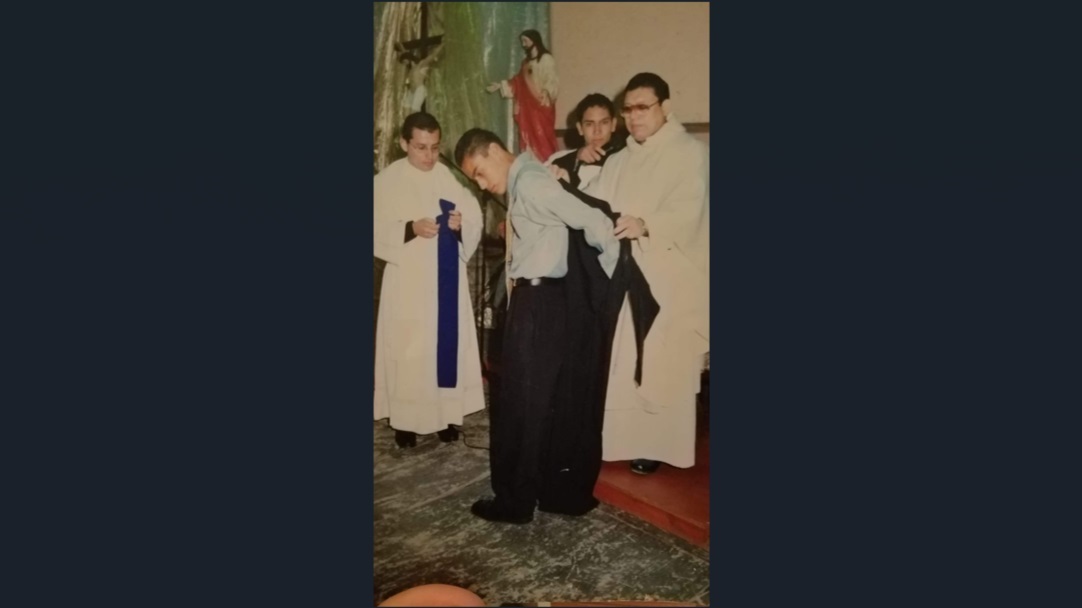
Martinez Pacheco filed his complaint about what was happening at the Piedras Negras seminary on April 19th, 2017, two years after then seminarian Roberto Javier Calzada Tamez, another victim of Riojas Martínez, filed his own report at the Seminary of Monterrey, the largest city in Northern Mexico, and the see of the eponymous archdiocese that, under the new rules issued by the Church, has authority to probe cases in its suffragan dioceses when the bishop is unwilling or unable to carry its own probe.
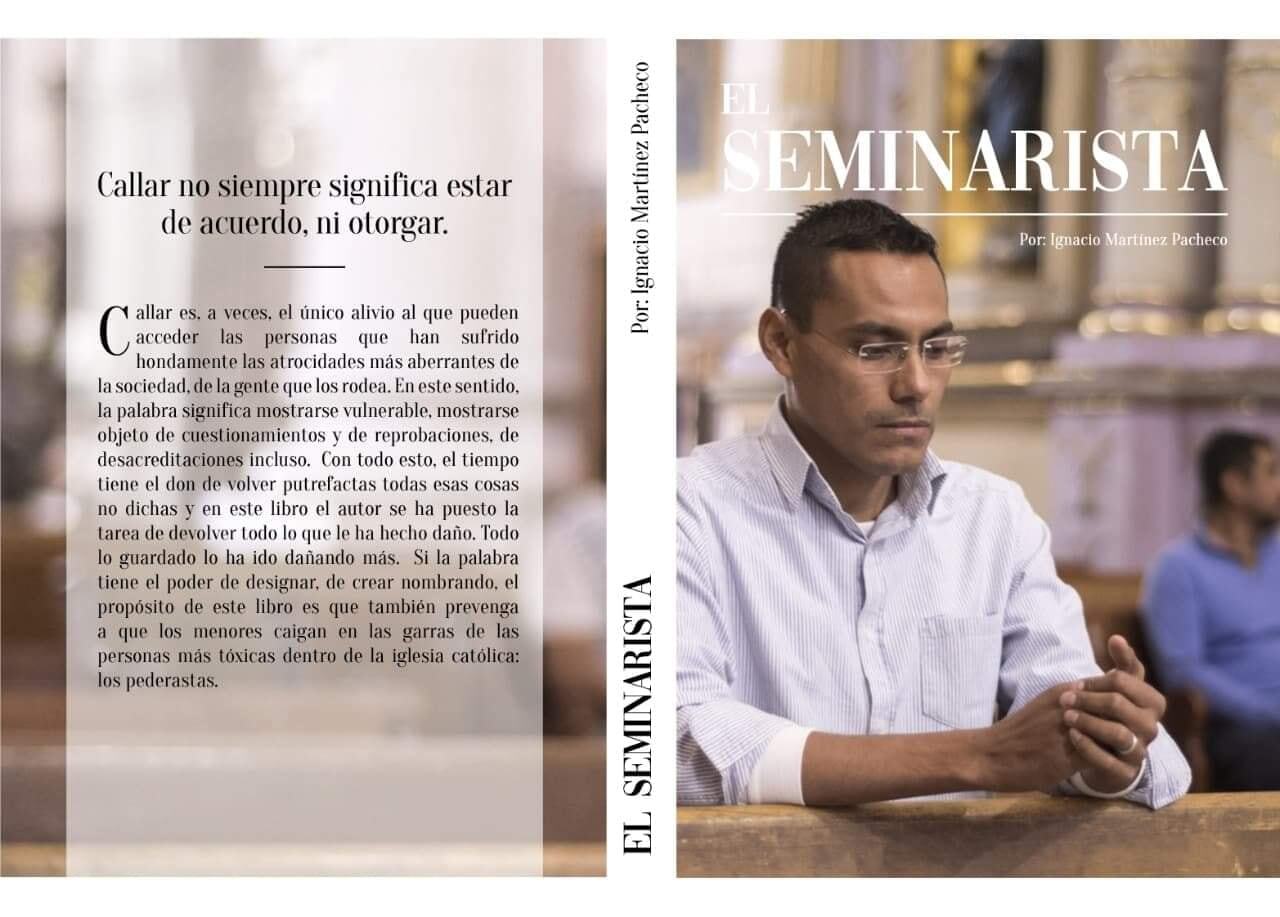
The testimonies by Martínez Pacheco and Calzada Tamez were enough to bring Riojas Martinez down. His bishop, reluctantly, followed the path to dismiss him from the clerical state, while Martínez Pacheco authored a book, whose cover in Spanish appears after this paragraph. The book tells his experience with clergy sexual abuse. He tried to rally fellow victims in Mexico, but died in 2021, a victim of the coronavirus pandemic.
In the video appearing next, published originally by the diocese at the height of the storm brought by the probe and then the trial, Garza Treviño, now emeritus bishop of Piedras Negras, accepts that something is happening in his diocese, but he is unwilling to address the issue explicitly.
Then bishop of Piedras Negras, Garza Treviño, in a video from March 2017.
At the time Garza Treviño published the video, on March 31st, 2017, he had been the boss there for 14 years, so it is impossible to assume he was not aware of what was happening in his diocese by the time he published the video.
Despite that he barely provides any information. He say, simply says that “we all know what is happening in our diocesan church.” He talks about the false or misleading information (0:25), and even talks about journalists acting in bad faith (0:40) “against persons and institutions” of his church.
He never identifies the accused priest, and he only talks about a report dealing with “conduct unbecoming” (0:50). At no point he is willing to acknowledge the extent of the damage done by the priest under his care, although he claims to be “seeking the truth and justice” (1:20).
Despite the bishop’s dismissive attitude towards the victims their accusations were enough to force the civil authorities to prosecute Riojas Martínez who is now in jail and to force Rome to acknowledge that something was wrong.
Earlier release
In appeal, Riojas Martínez was able to cut his original sentence from fifteen to thirteen years. Following the procedure for Mexican penal law, a year ago, on July 14th, 2023, his defense attorneys, sought an earlier release from prison.
The authorities of Coahuila denied his request, at least for the time being. However, given the existing rules in Mexico, it is possible to assume he will file similar requests every year until the end of his sentence.
It was in that context that monsignor Miranda Guardiola assumed as the new bishop of Piedras Negras. It was in that context that he pledged once again the “zero tolerance” that the local media in Coahuila turned into an unusual headline in México.
It is not that Mexico is exempt from the effects of the sexual abuse crisis. Mexico has been the opposite, one epicenter of a global crisis that is relevant not because of the effects on the Catholic Church, although those are already evident. It is relevant because sexual abuse, clergy or otherwise, destroys the victims’ lives, it also destroys any expectation of having sincere, honest relationships between clergy and faithful, and it also destroys what social science calls social capital.

In that regard, even if bishop Miranda Guardiola’s promise of “zero tolerance” to sexual abuse in the Roman Catholic Church, I have been hearing those words from him and other top clerics dealing with the crisis that I find increasingly harder to believe their words.
It is not that Miranda Guardiola is a bad person. People who know him, and we have mutual friends, tend to have a positive impression of him. He seems capable, one more specimen of the new hotbed of the Mexican episcopate, the seminary of the archdiocese of Monterrey.
But he is unable to deal with criticism about his own role in the handling of the sexual abuse crisis in Mexico. During his tenure as general secretary of the Mexican Conference of Bishops he decided that my criticism of his performance was too much, so he blocked me at what used to be Twitter. I wonder how he will deal with criticism in his own diocese.

In any case, it must be clear by now that headline-grabbing statements as those used by Capital newspaper in Coahuila to highlight Miranda Guardiola’s inauguration have little or no effect in the handling of the sexual abuse crisis.
Pope Francis himself has had his share of headline-grabbing statements, and his words have had little or no effect to actually bring meaningful change in the lives of victims of clergy sexual abuse.
Zero tolerance?
What we know about the clergy sexual abuse crisis in the Roman Catholic Church as a byproduct of the cases considered in this series and many more that Los Ángeles Press is unable to address because we are a small medium is that said church is less than willing to actually follow the stern standard set by Miranda Guardiola on his inauguration.
Last week Los Ángeles Press went over the story of Franklin Germán Cadena Puratambi, a priest whose abuse of a minor led to a suicide at the very see of political power in Ecuador, when his victim, unable to deal with the aftermath of the abuse performed by Cadena Puratambi decided to kill himself at the rooftop of the Ecuadoran congress.

Suicide at the Congress
It is impossible to know how many more victims of clergy sexual abuse decide to end themselves as a consequence of the abuse because most police departments use suicide as an easy excuse to avoid any investigation of what forced a person to end his or her life.
But Cadena Puratambi provided one more example of the raucous pathways priests follow to achieve ordination. He was a member of the Salesian order, but he tried to become a priest with two dioceses in his country.
Cadena Puratambi’s case is similar to two other cases Los Ángeles Press has published before. Back in January 2024, Mexico City was shocked when news of the sudden arrest of Sergio González Guerrero, a priest who also was a member of a religious “order” that expelled him.
Later, the archdiocese of Mexico City admitted him in its seminary and later ordained him. The Mexican authorities arrested González Guerrero on sexual abuse charges early this year.

Before this paragraph you can find the first piece of that series, while the second and third pieces are available here and here, although this series is available only in Spanish.
In the early days of February, the mother of an 11-year-old boy accused Morseo Miramón Santiago, a priest in the diocese of Izcalli, a suburb of Mexico City, of abusing his son.

Sacerdote de Izcalli, acusado de abuso de un niño de 11 años
There has been no arrest, but Los Ángeles Press published a detailed account of that case in the story linked immediately before and immediately after this paragraph, although the story is also only available in Spanish.

Morseo Miramón was not a member of a religious order, but the archdiocese of Acapulco originally admitted him in its seminary. For reasons unknown, he dropped out. Later, the relatively new diocese of Izcalli admitted him in its seminary and ordained him back in 2017, to be removed in October 2023 from his position as vicar and publicly accused by his victim’s mother in January 2024.
Those three cases, two from Mexico and one from Ecuador, prove how little actual oversight there is in Roman Catholic seminaries and how easily potential predators can find their way into ordination.
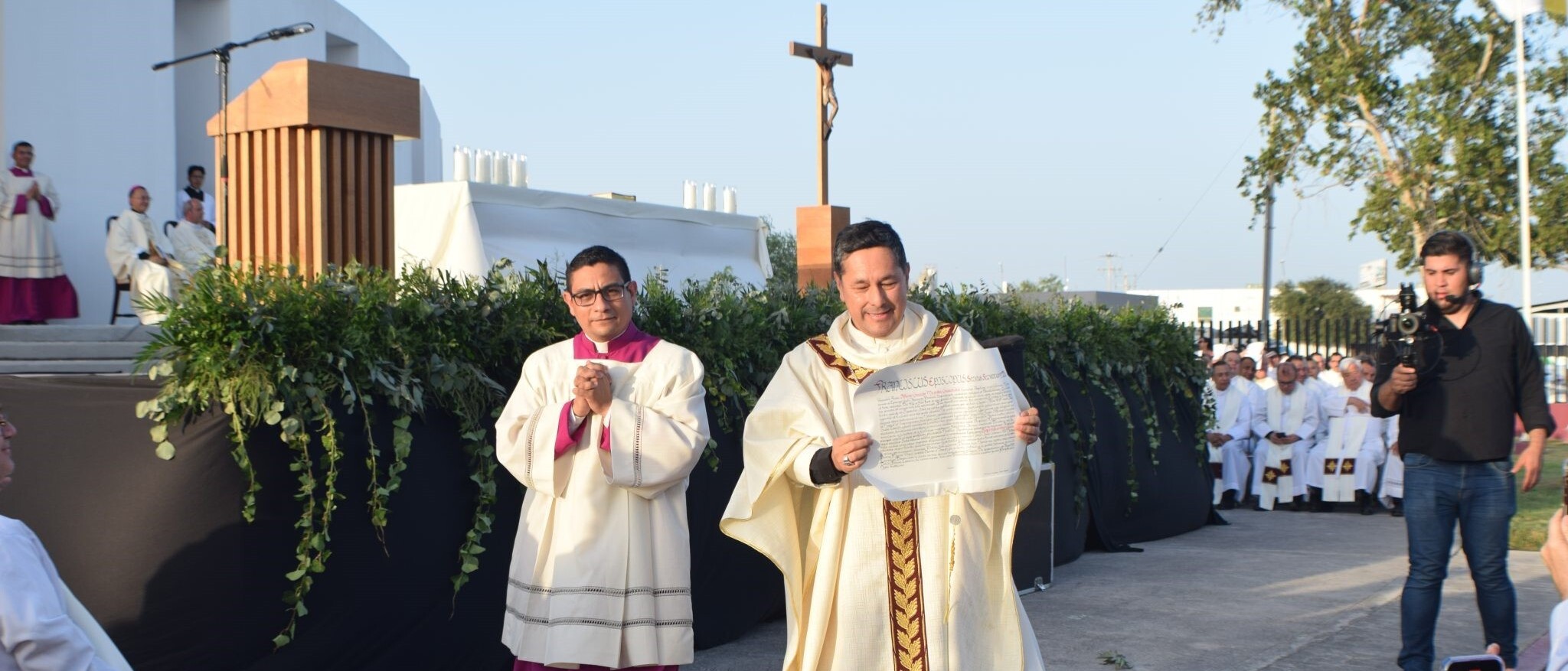
The profiles of Sergio González Guerrero from January, Morseo Miramón Santiago from February, and Franklin Germán Cadena Puratambi, from July, display the pitfalls of oversight and accountability when dealing with how bishops come to ordain priests with foggy records.
That is why this series overall assumption is that the key to understanding clergy sexual abuse in the Roman Catholic Church in the Spanish- and Portuguese-speaking worlds lies in the predators and those who provide predators with the setting required to attack their victims, and not the victims. That is also why bishop Guardiola Miranda’s stern statement about a “zero tolerance policy” looks more like a gimmick, than an actual program to address the root causes of sexual abuse in his church.
Gatekeepers?
To better understand the issue of the role played by bishops as the gatekeepers to seminaries and ordination, it is worth to pay attention to a neighboring diocese in the same Mexican state of Coahuila.
South of Piedras Negras, lies Torreón, a city lying 850 kilometers or 530 miles South of El Paso or a bit over 800 kilometers or 500 miles Southwest from San Antonio. Torreón, as its sister city Gómez Palacio, in the neighboring state of Durango, is a dynamic metropolitan area, known in Mexico as La Laguna.
La Laguna is nowadays a story of economic success associated with the so-called nearshoring, driving further integration between the markets of Mexico, the United States, and Canada. Sadly, the integration of those markets has little or no impact on the behavior of the Roman Catholic Church or on the behavior of the Mexican authorities much more interested in reaping the benefits of the new impulse to foreign investment, than in providing justice for its citizenry.
It is in that regard that one needs to understand David Pérez Ortiz’s story. He used to be a Roman Catholic priest who currently resides out of Mexico. He sought to formally finish his relationship with the Catholic following the complex process to get the dispensation from the Holy Orders he received back in 2011, when now deceased bishop José Guadalupe Galván Galindo ordained him as priest.
He was a victim of sexual abuse when he was a student at the seminary back in 2001, when Pérez Ortiz was 17 and Jorge Silva López, his predator was a priest and a professor at the seminary.
After his ordination he was a professor at his diocese’s seminary. During that time, in 2012, then rector, Aurelio González Rodríguez notified him that he was about to expel then seminarian, Rorick Armando Ayala since he was abusing a minor of a family who filed a complaint.
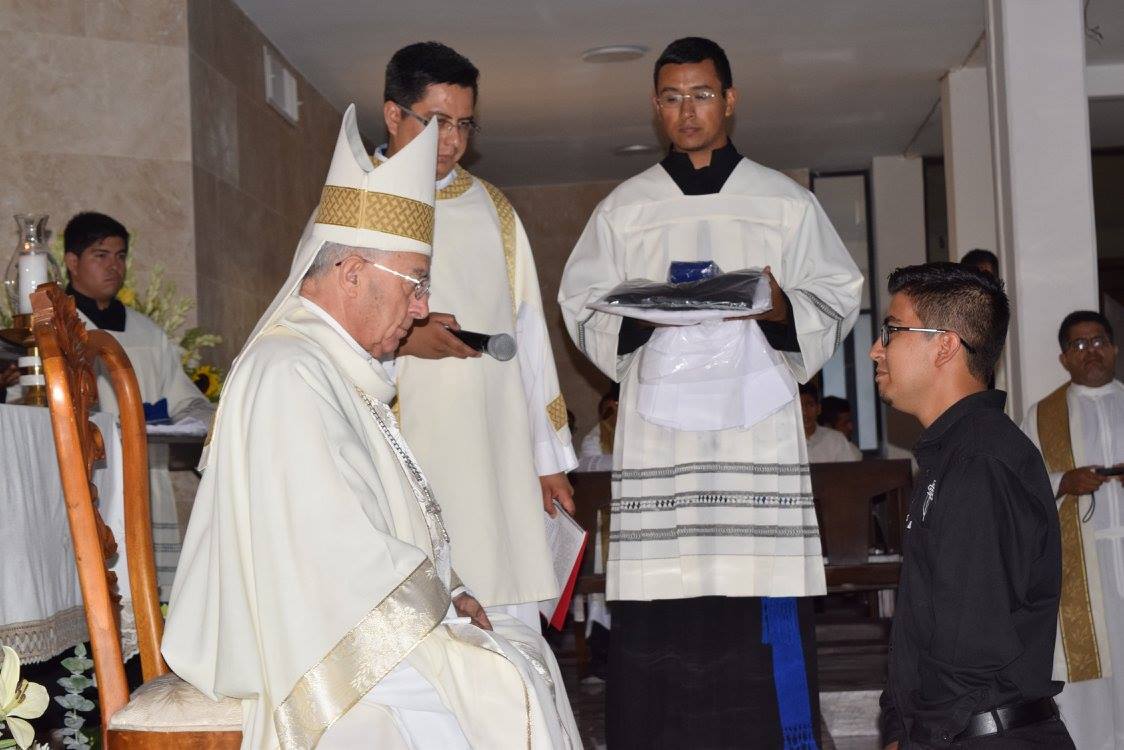
Since there was another case of a then seminarian in a gay relationship, Pérez Ortiz and other professors at the seminary requested a similar treatment for Cristián Iván Castañeda Silva.
Although bishop José Guadalupe Galván Galindo expelled Castañeda Silva from the seminary, he also asked Pérez Ortiz to leave the diocese. He accepted as a way to process the very experience of sexual abuse he suffered back in 2001.
Despite his decision back in 2012 to expel Rorick Armando Ayala from the seminary, bishop Galvan Galindo readmitted him as seminarian in 2017. Two years later, already in 2019, Galván Galindo’s successor, bishop Luis Martín Barraza Beltrán followed a similar path when accepting Castañeda Silva as seminarian again.
Warning the bishop
Assuming he was unaware of the details of the case, Pérez Ortiz sought bishop Barraza Beltrán to warn him about the prior accusations against Galván Galindo. The bishop dismissed the warning, citing the advice of other priests in the diocese.
Given the severity of Pérez Ortiz’s alert Bishop Barraza Beltrán went as far as to accept “any responsibility” coming from the ordination of Castañeda Silva. After almost three years out of his diocese, Pérez Ortiz went back to Torreón in 2020. He filed then a formal complaint about the abuse he suffered back in 2001, when he was an underaged seminarian.
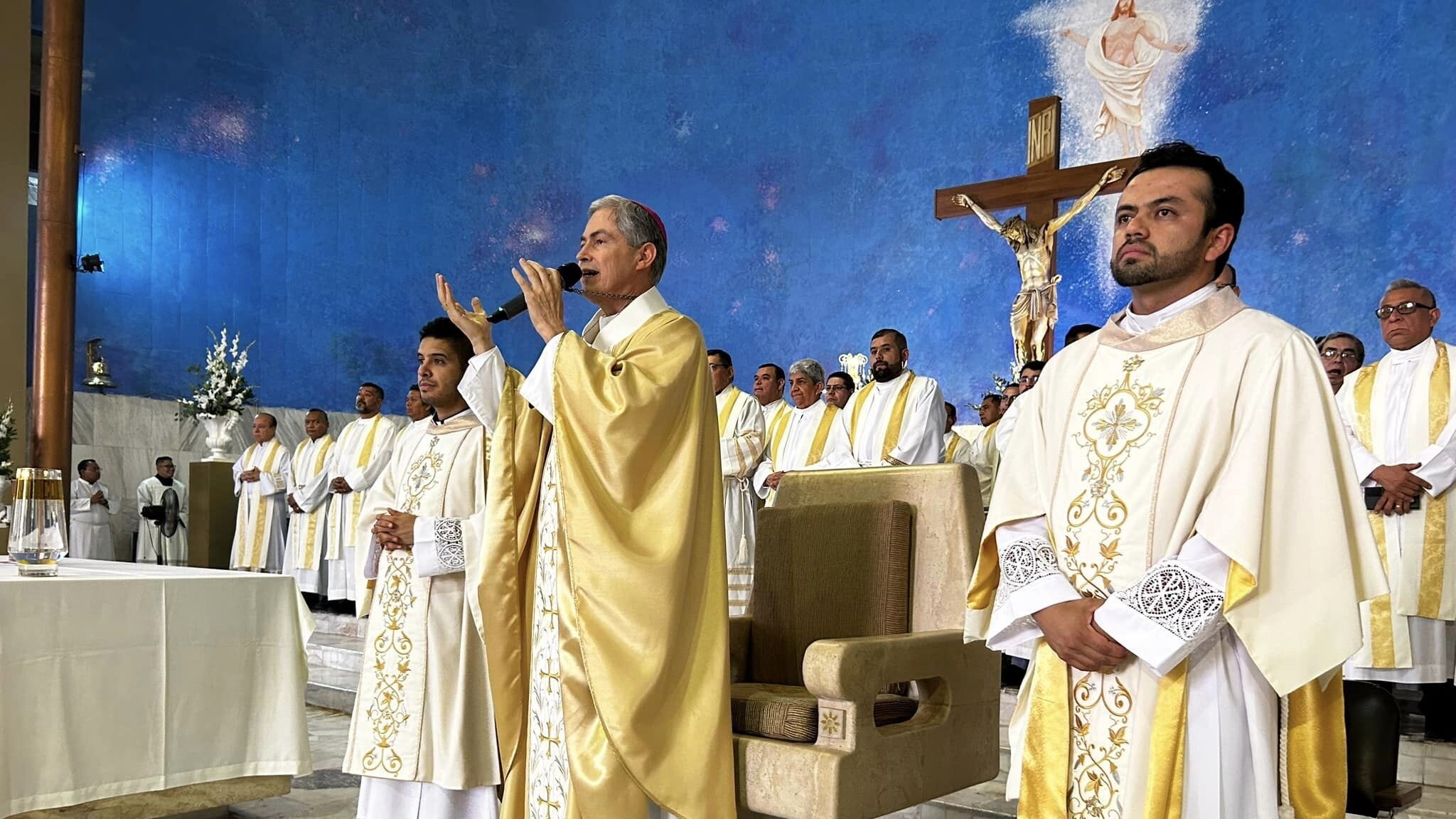
After the pandemic, in 2022, Pérez Ortiz sought to end his relationship with the Church as priest. His superiors asked him to go to the Roman Catholic Church tribunal in Mexico City, more than one thousand kilometers or a bit over 630 miles South of Torreón.
As a condition to get a formal dispensation from his vows and duties as a priest, Carlos Jean Riquelme, a priest and canon lawyer at the Catholic Church’s tribunal in Mexico City asked Pérez Ortiz to sign a letter pledging to avoid any kind of scandal or criticism towards the Church.
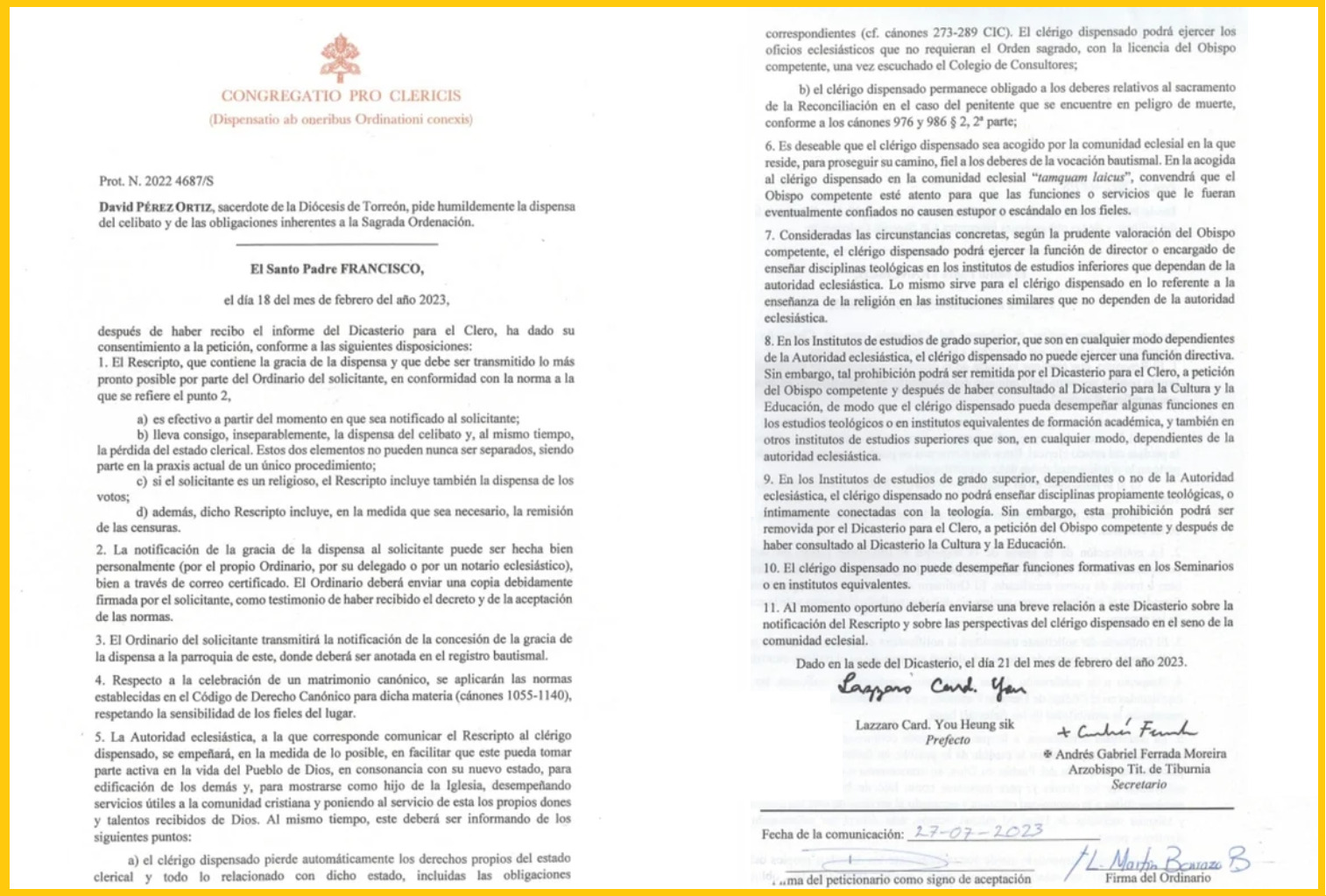
In 2023, Pope Francis gave Pérez Ortiz a formal dispensation from his vows and duties, as the document after this paragraph shows, but no acknowledgment of the denunciation of his own and other’s abuse, which Pérez Ortiz emphasizes as the leading cause to leave the priesthood.
Pérez Ortiz claims that the abuse he suffered, the abuses he was aware of as a priest, and the handling of his own and the other cases of clergy sexual abuse have had an impact on his physical and mental health that forced him to seek medical help.
Pérez Ortiz’s case provides more details about how predators come to be priests. For him, a former Roman Catholic priest and victim of clergy sexual abuse, bishop Barraza Beltrán victimizes me and other victims when dealing with his reports about the abuse he was subjected to by a professor at the seminary and by the handling of two specific and formal reports of clergy sexual abuse he was involved with as professor in the diocese’s seminary.
An example of how the Catholic hierarchy revictimizes its own members exists in the interview Mexican newspaper El Siglo de Torreón (available only in Spanish here) published back in April of this year.
There, bishop Barraza Beltrán slams Pérez Ortiz as insincere and accuses the former priest of setting up a trap for the bishop.
In that interview the current bishop criticizes Pérez Ortiz for not doing his own probe to demonstrate the validity of his accusations against the predators readmitted in the seminary and, eventually, ordained by the diocese of Torreón.
Pérez Ortiz sees these accusations as a mechanism the bishop is using to send a message as to prevent or inhibit other victims from reporting clergy sexual abuse.
«By attacking a victim of clergy pedophilia as I was when attending seminary in Torreón, the bishop creates a deterrent. His aim is to discourage others from filing formal reports, what some people call a chilling effect.
«He is trying to disqualify me as a victim while trying to deter others from coming forward to file formal complaints. At the same time, he overplays what the Mexican Conference of Catholic Bishops and his diocese have done regarding clergy sexual abuse. »
Farcical nature
That is why Pérez Ortiz sees the current bishop’s actions as “closer to a farce than to a real solution to the issue.” The farcical nature of their solutions can be seen in the alleged existence of centers to listening the victims of clergy sexual abuse as those promoted by the diocese of Torreón, as the one on the ad capture in the next picture.

«On the one hand, they dismiss the victims they are asking to attend their centers. For me, again, as a victim and as a former priest it is very difficult to believe that a victim would be willing to expose him or herself to talk about their experience of abuse and then, later, to be either dismissed or attacked by those who allegedly are interested in listening.
«These public attacks have a particular effect on the population when they come from a bishop. Bishops like Barraza Beltrán claim to speak on behalf of God and his Church. »
Pérez Ortiz talks about how the civil law in Mexico and the canon law of the Catholic Church have rules regarding the bishop’s duty to file a formal complaint at the district attorney’s office and to begin an internal process in the Church.
In Torreón, neither bishop Galván Galindo, nor his successor bishop Barraza Beltrán have complied over the last 20 years or so, with neither the civil Mexican law nor the global Code of Canon Law of the Catholic Church.
For Pérez Ortiz this is where the violence brought by clergy sexual abuse keeps happening over and over, revictimizing the victims of that kind of aggression.
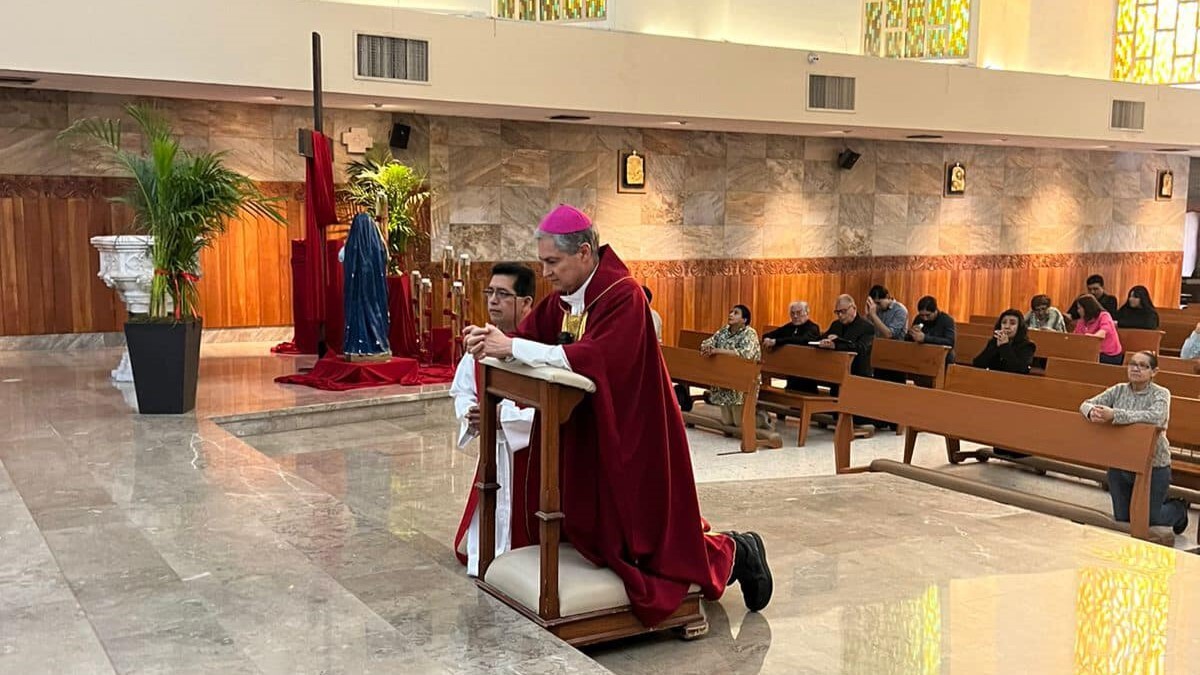
Dismissing the facts
Pérez Ortiz stresses how bishop Barraza Beltrán dismisses his complaints about other cases at the seminary in Torreón, while providing not argument to prove that his predecessor was wrong when he expelled seminarians accused of abusing kids, as in Castañeda Silva’s case when the seminary formally expelled him.
According to Pérez Ortiz, bishop Barraza Beltrán claims that…
«…nobody from the team of seminary professors informed him. I was a member of that team. I informed him in writing. From the first moment he dismissed my report on that issue. Instead of attending my report he asked priests who were not involved in that case. If you want to know, ask someone who has first-hand information about the case.
In doing so, he dismisses the fact that the authorities of the seminary, bishop Galván Galindo included, expelled through a formal process then seminarian Castañeda Silva.
«Why would he dismiss that fact? He says that he accepted the expelled seminarian for a reintegration experience and then ordered him. With what standard or criteria can the bishop guarantee non-recurrence?
«Again, why did neither him nor his predecessor formally notify the prosecutor's office as required by Mexican law? »
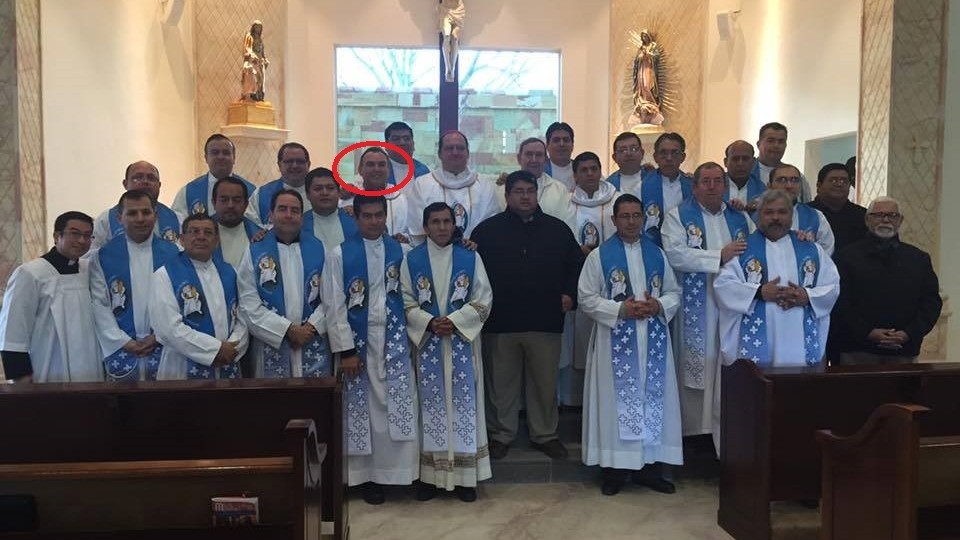
At this point in his argument, Pérez Ortiz raises yet another issue common in many cases of clergy sexual abuse happening in seminaries and novitiates, the places where the females aspiring to become a nun do their studies, that of whether or not the superiors keep actual records of what happens when a complaint if filed in the Church.
Pérez Ortiz frames it this way:
«His attitude on this issue forces me to ask if there is a file on Castañeda Silva’s case at the seminary. Was bishop Barraza Beltrán willing to read said file? Was that file destroyed?
«All these opaque practices led me to confirm first-hand that when there is an intention to cover up pederasty, there is no real and effective internal control that prevents a bishop from doing so. »
Former priest Pérez Ortiz goes deeper into the issue of whether or not there are real, retrievable, records of the complaints filed in these cases:
«During the dispensation process, I had several calls with Víctor Monreal, a priest who is the vicar for judiciary affairs at the diocese of Torreón. In one of them, Monreal claims that the bishop was aware of my complaints, and that he did not proceed according to law and that he advised bishop Barraza Beltrán to avoid further complications with Rome.
Systematic cover-up
«For me it was the confirmation of the systematic cover-up practices used by the Catholic Church when confronted with cases of clergy sexual abuse. One must keep in mind that it is not only my case.
On top of his case and the readmission and ordination of Castañeda Silva there is also the readmission and ordination of Rorick Armando Ayala. The parents of his victim filed a formal complaint with the then rector of the Torreón seminary, priest Aurelio González.
According to the information at hand, González confronted the then seminarian Rorick Armando Ayala about the accusations and he accepted the facts. As a consequence, he was expelled from the seminary and years later, the same rector approved his readmission. González forced those who were professors at the seminary and were aware of this case to readmit a former seminarian with a formal complaint of pedophile clergy sexual abuse.
Years later, bishop José Guadalupe Galván Galindo, now deceased, ordained Rorick Armando Ayala as a priest for the diocese of Torreón. Once again, when there is the intention to cover up someone, even if the accused has accepted the complaint for pedophilia, there is no internal control that can prevent it. And they act with total impunity.
Until here, Pérez Ortiz’s testimony on what happens at the diocese of Torreón.

As the stories comparing the El Paso to Ciudad Juárez, linked immediately before this paragraph and those comparing California in the United States with the Baja Californias in Mexico, linked after this paragraph prove, even if all the other aspects of the doctrine remain equal, the key to understanding the misfortunes of the victims of clergy sexual abuse is how far are the civil authorities willing to go to provide some measure of justice to the victims.

In the United States, whether one deals with California, the bluest of all the blue states, or with Texas, the stronghold of the Republican Party, a victim of clergy sexual abuse has far better chances of receiving some measure of justice, than a Mexican victim of a similar crime in Baja California, Chihuahua, or Coahuila.

Baja California and the clergy sexual abuse crisis
A key issue that is worth taking into consideration is that bishop Barraza Beltrán previous post was as rector of the seminary of Chihuahua.
As the series dedicated to Ciudad Juárez published back in 2023 proved, the archdiocese of Chihuahua and the diocese of Ciudad Juárez have not been able to deal with their own crisis of clergy sexual abuse.

From that series only the comparison between the dioceses of El Paso and Ciudad Juárez is available in English, but we published a detailed account from a former student of the seminary of Ciudad Juárez, linked immediately before this paragraph, and an account from a former student of the seminary where Barraza Beltrán used to be rector, linked after this paragraph.
