
Rodolfo Soriano-Núñez Lunes, 24 de Junio del 2024
The Child Victims Act, approved in 2019, allowed for victims of clergy sexual abuse to seek justice in civil courts in California.
A law crafted after that Act in California, allowed E. Jean Carroll to prove she was the victim of Donald Trump in New York courts.
By Rodolfo Soriano-Núñez
A new wave of news about bankruptcies in Roman Catholic dioceses of California is sweeping the Internet these days. According to Religion News Service, the new wave involves more than 3,000 cases.
It is not that new cases are emerging at the rate they were back at the height of the clergy sexual abuse crisis, in the aughts. In California, the new wave of bankruptcies in the Catholic Church are the by-product of a major change in the understanding of the reasons behind sexual abuse.
The diocese of Fresno, explains their current situation with these words:
«In 2018, the California Legislature approved AB 218, a bill that lifted the statute of limitations for three years on child sex abuse litigation and allowed survivors to file suits regardless of when the abuse occurred. That three-year “window” for filing cases that otherwise would have been barred closed on December 31, 2022».
AB 2018 is the California Assembly Bill 218, a law also known as The Child Victims Act, approved back in in October 2019. Until 2022, the law allowed people who was sexually assaulted as a minor to file civil lawsuits although the statute of limitations had already expired.
The Child Victims Act inspired the Adult Survivors Act, the law that allowed E. Jean Carroll to sue Donald J. Trump in New York courts back in 2023.
As such, both laws in California and New York are the byproduct of broad changes in the understanding of the consequences that sexual abuse, clergy or otherwise, has on victims. It used to be that the so-called statute of limitations made almost impossible for some of the victims to overcome the effects of sexual abuse while getting ready to face their predators in courts.
Similar but rather timid changes have happened elsewhere in the world, even in Latin America, with the removal of the statute of limitations for crimes that used to have that clause as in the cases of Chile (2022) and Mexico (2023), although in both cases only those victims who were minors (less than 18-years old) are allowed to seek the relief of justice.
Main difference in that respect between the reforms in Latin America and those that have happened in the United States over the last four years or so is that, at least in the cases of California (2018-9) and New York (2021-2), is that the statute of limitation was not an obstacle to go, at least in civil courts, after a predator.
The way forward
More relevant is that both AB 218, the Adult Survivors Act and other relatively new pieces of legislation reflect the effects of the politicization of the debate about sexual abuse. It is proof, it there ever was one, that the way forward to figure out a solution to clergy or other types of sexual abuse is to reform, even if temporarily, the laws and codes regulating public life.
AB218 is not a perfect solution to clergy sexual abuse since it only opens a route on civil and not on criminal courts. That feature limits the scope of the punishment that can be sought at court, as no imprisonment will ever happen at a civil trial, but—up to a certain extent—it benefits the victims since it is easier to follow the procedure on civil than on criminal courts.
That is because the burden of proof is different, as the Judiciary of California explains it:
«In a criminal case, the government must prove the defendant’s guilt “beyond a reasonable doubt.” In a civil case, the plaintiff must prove his or her case by a “preponderance of the evidence” (more than 50 percent). This means that a party to a civil case can win if he or she is able to convince the judge or jury that his or her side of the case is slightly more convincing than the other side’s».
The Roman Catholic Church in California
The Catholic Church in the state of California is organized in two so-called provinces. Two groups of dioceses headed each one by an archdiocese or metropolis, with a group of suffragan dioceses, as can be seen in the map immediately after this paragraph.

In the map, the diocese of Honolulu, Hawai’i, appears as part of the Catholic Church in California. That is relevant only for the purposes of the internal organization of the Catholic Church, as it is up to the civil authorities in the archipelago to deal with clergy sexual abuse cases there.
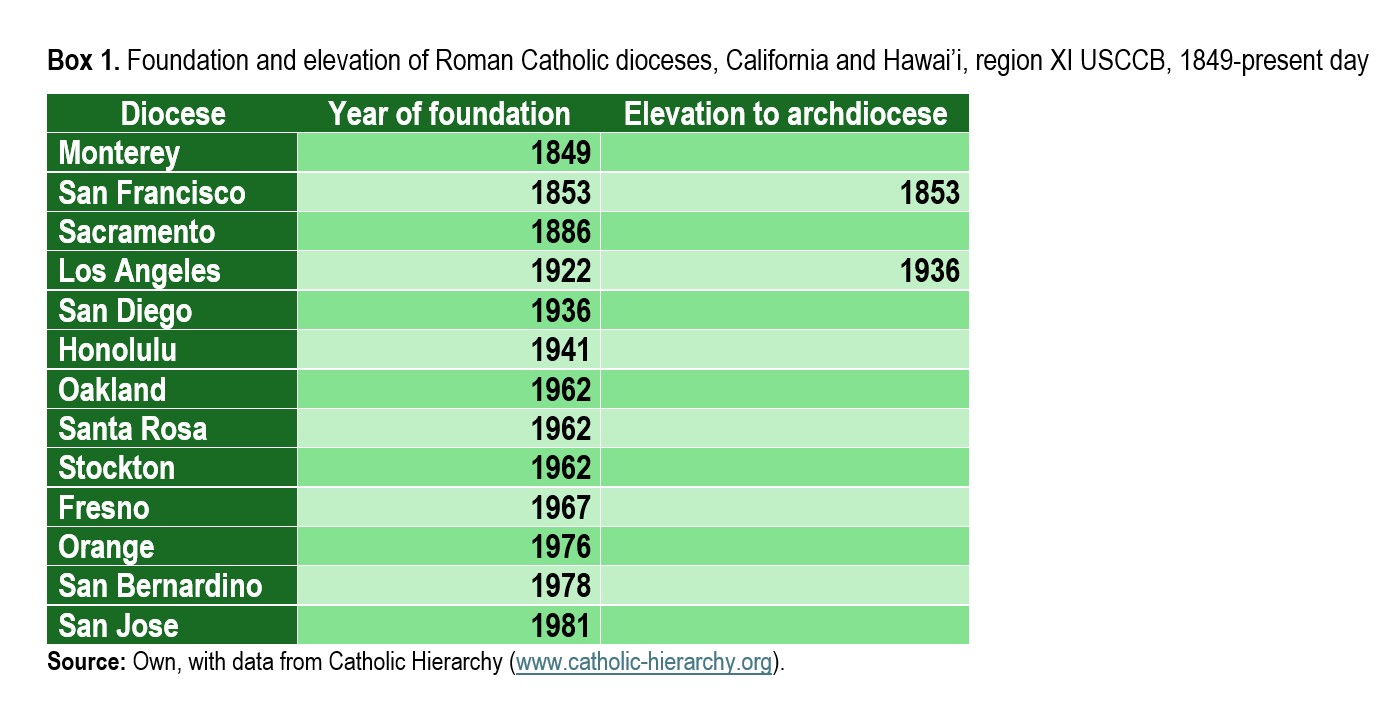
How California came to be, with Texas, one of the few states in the United States with two archdioceses is the byproduct of the growth of the population in both states and the relevance of Latino Catholics in the social fabric and the politics of both states.
The box appearing immediately after this paragraph summarizes the process leading to the current configuration of California with two archdioceses or metropolis and their suffragan dioceses.
Overall, the new wave of filings from different Roman Catholic entities (dioceses and religious “orders”) seeking the protection of bankruptcy reflects the ability of the survivors of clergy sexual abuse to build broader, larger, coalitions with survivors of other forms of sexual abuse.
The new wave’s origins
What is happening right now in California is, in more than one respect, the effect of the vast organization and mobilization of survivors and their families in that state and the United States at large.
It is not only the media effect of the scandal, but actual grassroots labor to lobby the politicians who shape the legislature in Sacramento, what brought AB 218 to life.
The prove of it is that scandals regarding clergy sexual abuse have been happening in both the United States and Latin America. Media from Mexico City all the way down to Buenos Aires and Santiago de Chile, regularly print out stories detailing the effects of abuse on victims and their family.
The difference, then, is not the scandal brought by the circulation or even the reach of those stories, but what happens after.
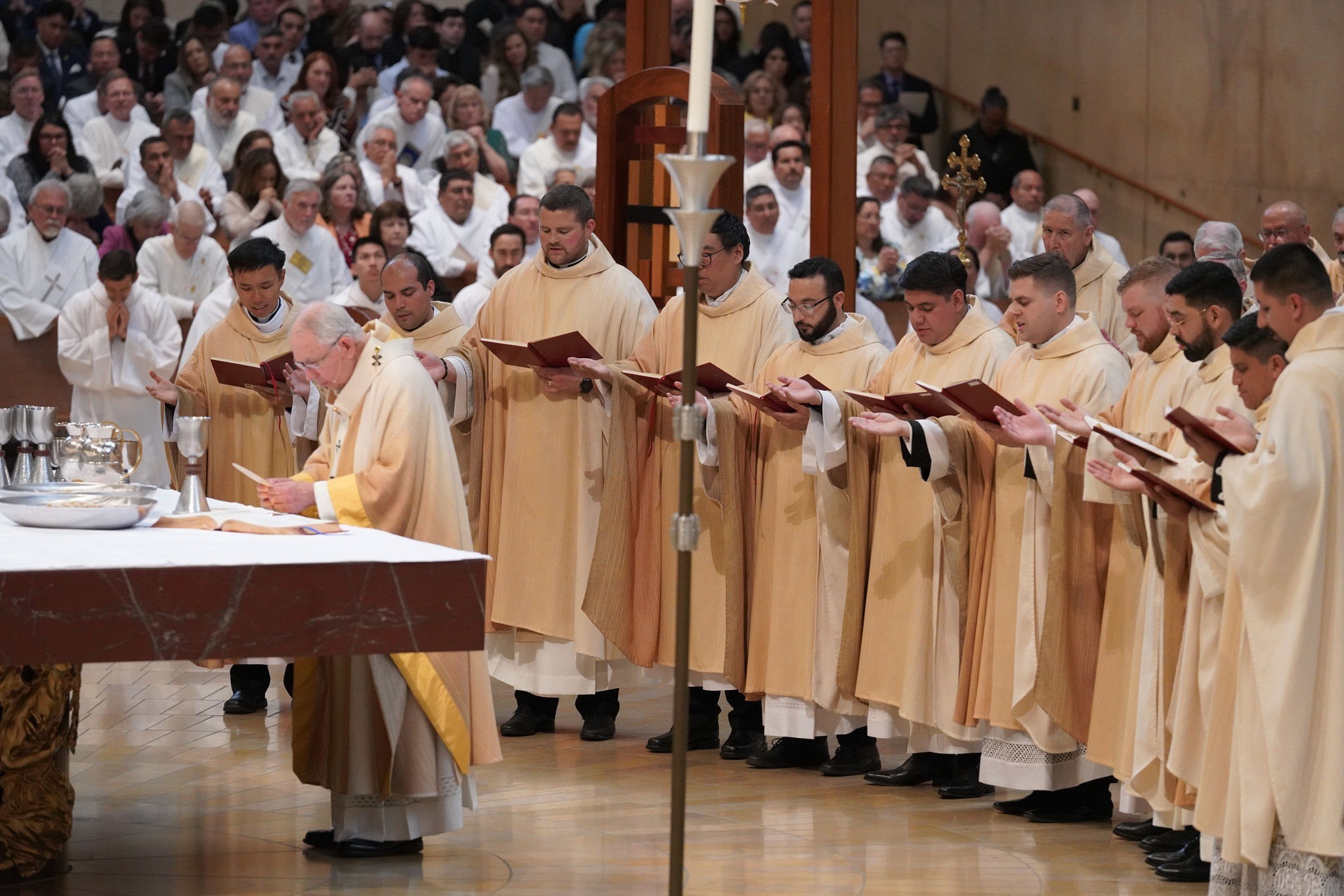
Despite the attitude that the Catholic far-right assumes in the United States and elsewhere when confronted with the effects of clergy sexual abuse, denouncing the victims as hungry beasts seeking to destroy a noble institution, the survivors’ networks has never set their sights on eradicating or destroying the Catholic Church or religious practice as such.
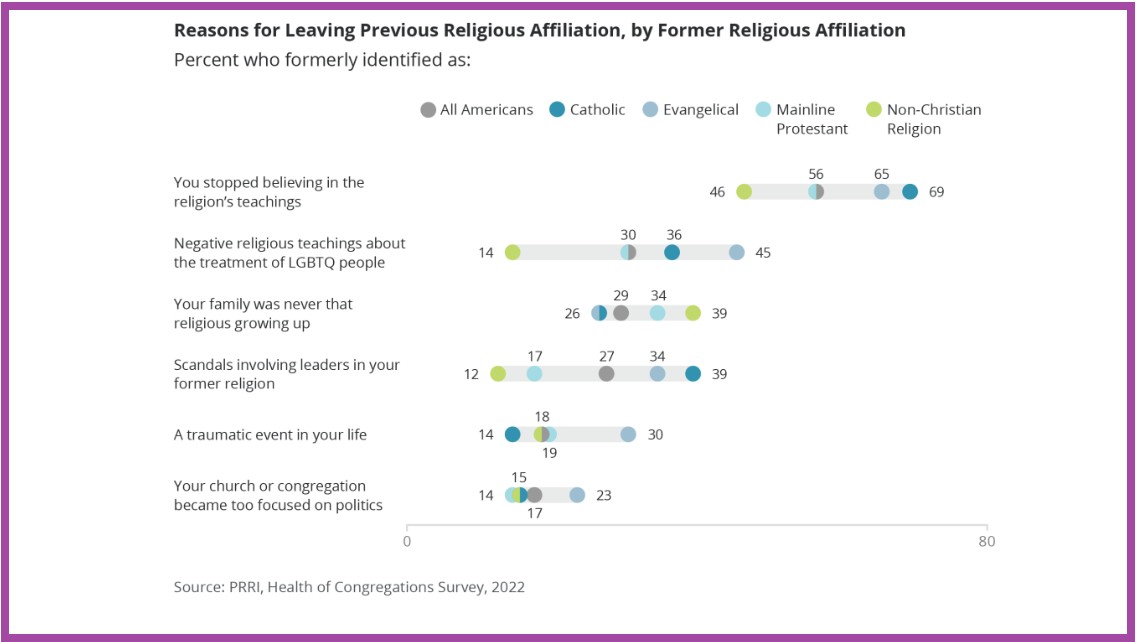
That is not to say that the ongoing clergy sexual abuse crisis has had no effects on the membership and attendance to religious institutions affected by sexual abuse. Back in 2022, the Public Religion Research Institute, a prestigious non-for-profit organization in the U.S. found evidence that there is an effect of “scandals involving leaders” of religious organizations.
According to the study Health of Congregations (whose most significant findings are here), at least in the United States, it has been the Roman Catholic Church the most affected by such scandals.
As reported by PRRI’s study, 39 percent of their former members claim said scandals were the reason behind their decision to leave that church, as can be seen in the graph appearing next to this paragraph.
Graph 1. Losing your religion.
This is not the first wave of lawsuits and the attempt of the Roman Catholic dioceses in California to seek relief at the bankruptcy courts in that state.
Back in the aughts, when news emerged of a vast cover up operation at the archdiocese of Los Angeles, then headed by Cardinal Roger Mahony, that entity of the Catholic Church paid seventy-six million U.S. dollars, to compensate fifty-four victims of clergy sexual abuse.
At least thirteen of the seventy-six million paid by Mahony went to the victims of Nicolás Aguilar Rivera, a Mexican priest sent there by now retired Cardinal Norberto Rivera Carrera, at the time bishop of Tehuacán, in the Mexican state of Puebla.
Rivera Carrera was unwilling to provide a full report on the priest he was sending, Nicolás Aguilar Rivera.
In a previous piece in this series Los Ángeles Press offered details about how Nicolás Aguilar Rivera (no family relation with Cardinal Rivera Carrera) was able to move from Tehuacán, to Los Angeles, California, and from there back to Mexico.

Around that time, the diocese of San Diego sought the protection offered by the so-called Chapter 11, the law dealing with bankruptcies in the United States. Then bishop Robert Henry Broom, rendered his diocese as unable to deal with the lawsuits brought by 144 victims of clergy sexual abuse.
The courts dealing with that kind of cases denied Broom’s request back in 2007 and, therefore his diocese paid over 198 million U.S. dollars as compensation to the victims.
The current wave
As of Sunday June 23rd, there are eight entities of the Roman Catholic Church seeking the protection of Chapter 11, the bankruptcy process, as the table appearing immediately after depicts.
Table 2. Roman Catholic entities of California and bankruptcy.
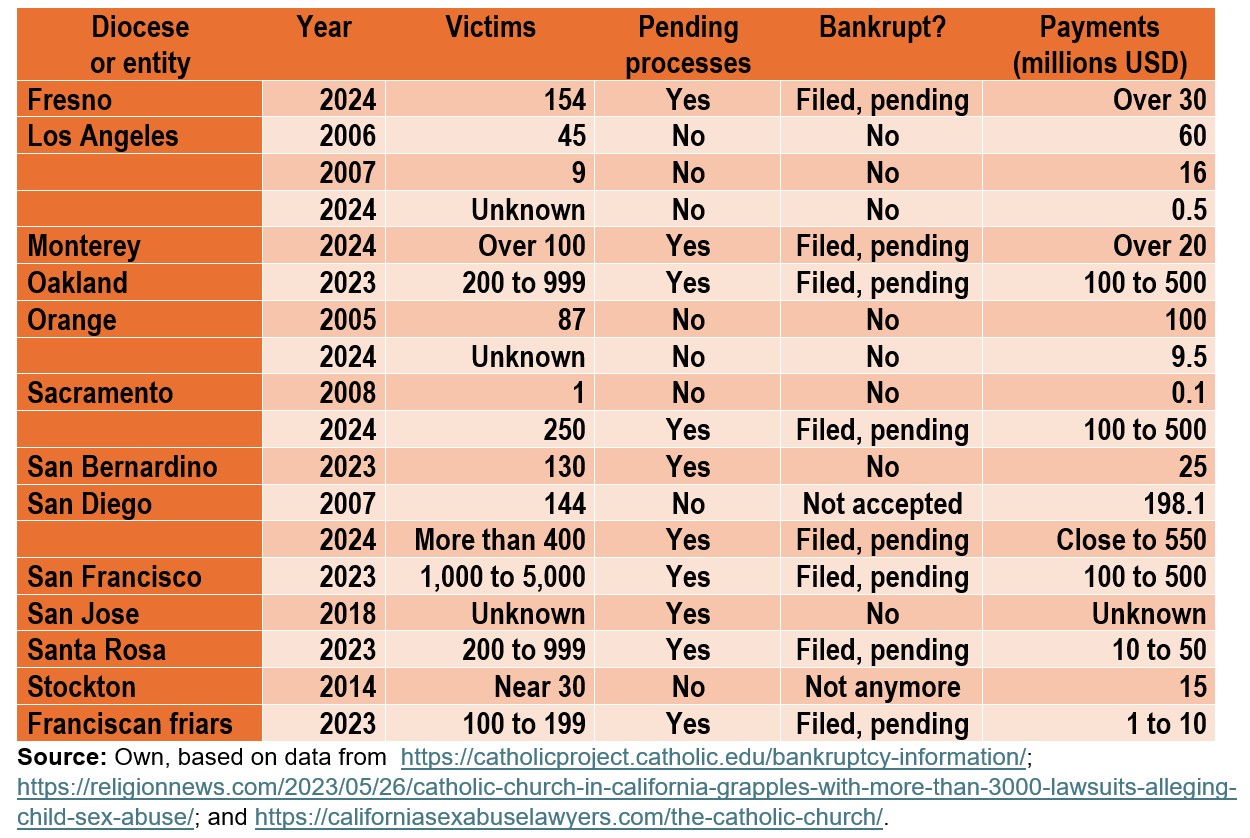
Besides the dioceses, there is also one reference to the Franciscan order of California filing for bankruptcy at the courts.
Filing and getting the protections of bankruptcy are not the same thing, as the case of San Diego, back in 2007, proves. The case of the Roman Catholic archdiocese of Saint Paul and Minneapolis in Minnesota proved, back in 2017, that even if the courts could be willing to grant the relief, the dioceses can be forced to give more money than they originally offered to the victims of clergy sexual abuse.
Although the bishops of California stress the fact that this new wave of lawsuits, and filings seeking the relief of bankruptcy do not reflect the current practices of the Catholic Church in California and the United States, there is no reason to believe that the crisis as such is over.
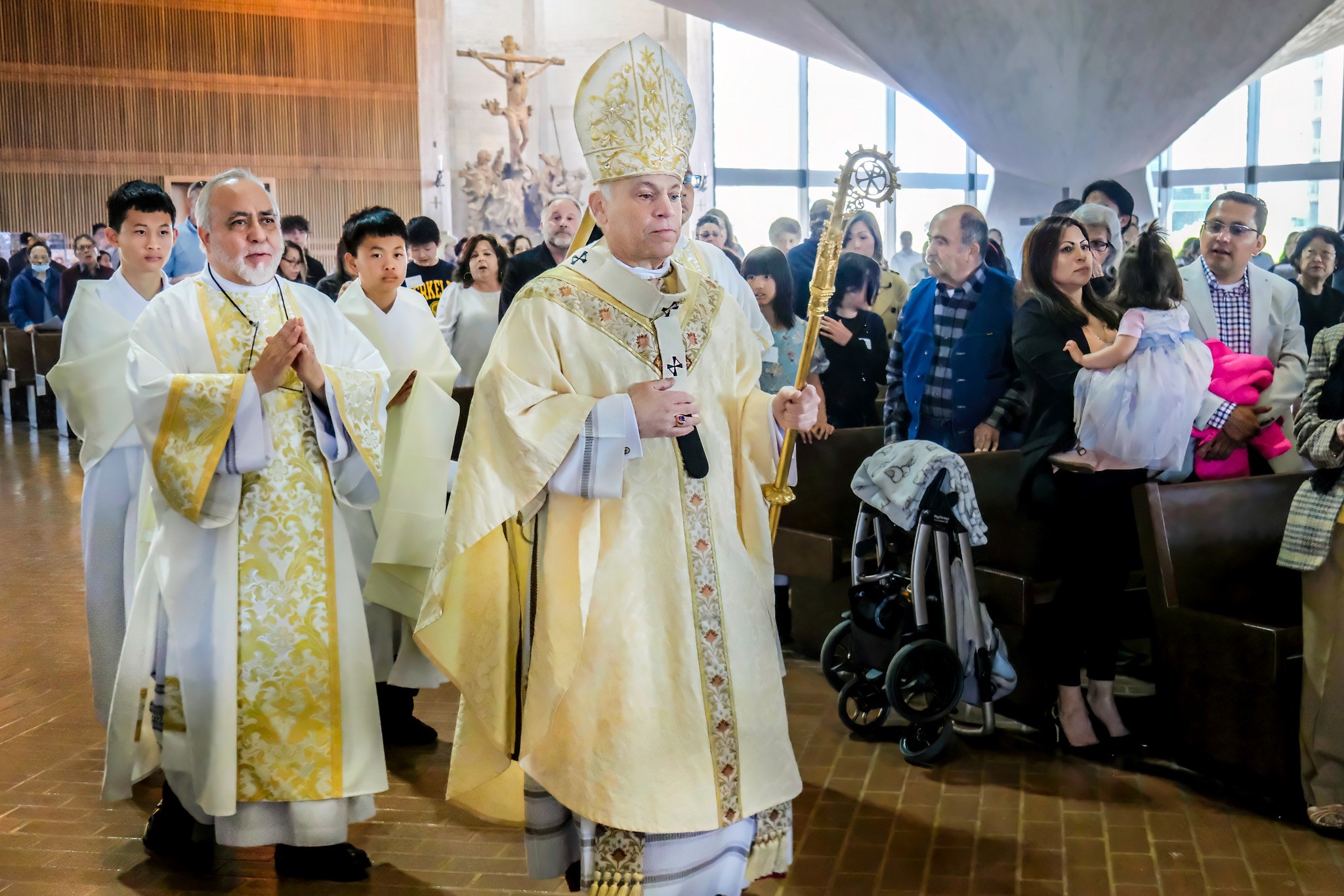
Even if one limits the analysis to developed countries, the crisis is there, active, defying the apparent will of the leaders of the Catholic Church to figure out a solution.
One of many possible examples of very recent cases of clergy sexual abuse in the Roman Catholic Church was uncovered on Sunday by Tagesschau a media news service of the German public TV ARD and comes from Cologne, the archdiocese presided by German Cardinal Rainer Maria Woelki, a cleric promoted by Benedict XVI who nobody could blame of being Liberal.
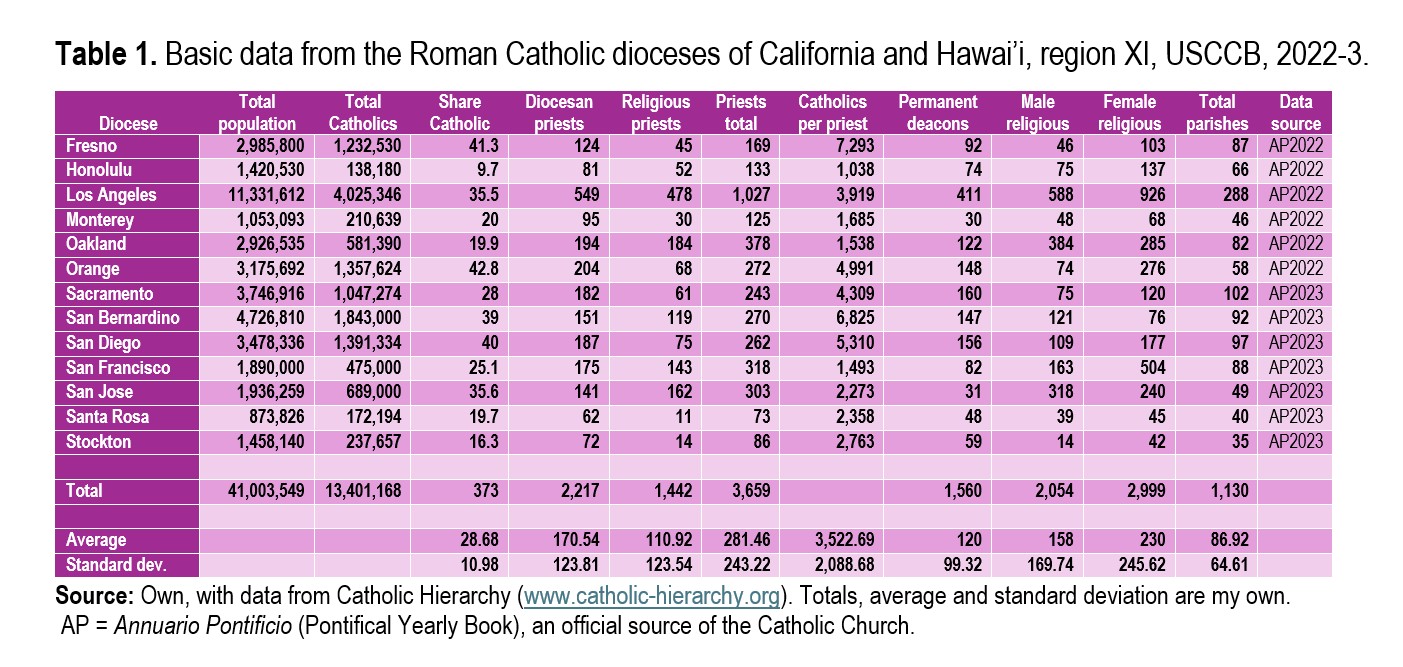
It is with that in mind that the next table offers an estimation of the current number of victims for each of the Roman Catholic dioceses in California. The estimation is based on the findings of the Sauvé Report.
A series published back in 2023 by Los Angeles Press discusses the methods and main findings of that report, commissioned by the French Conference of Catholic Bishops. I link the main story of that series immediately after this paragraph.
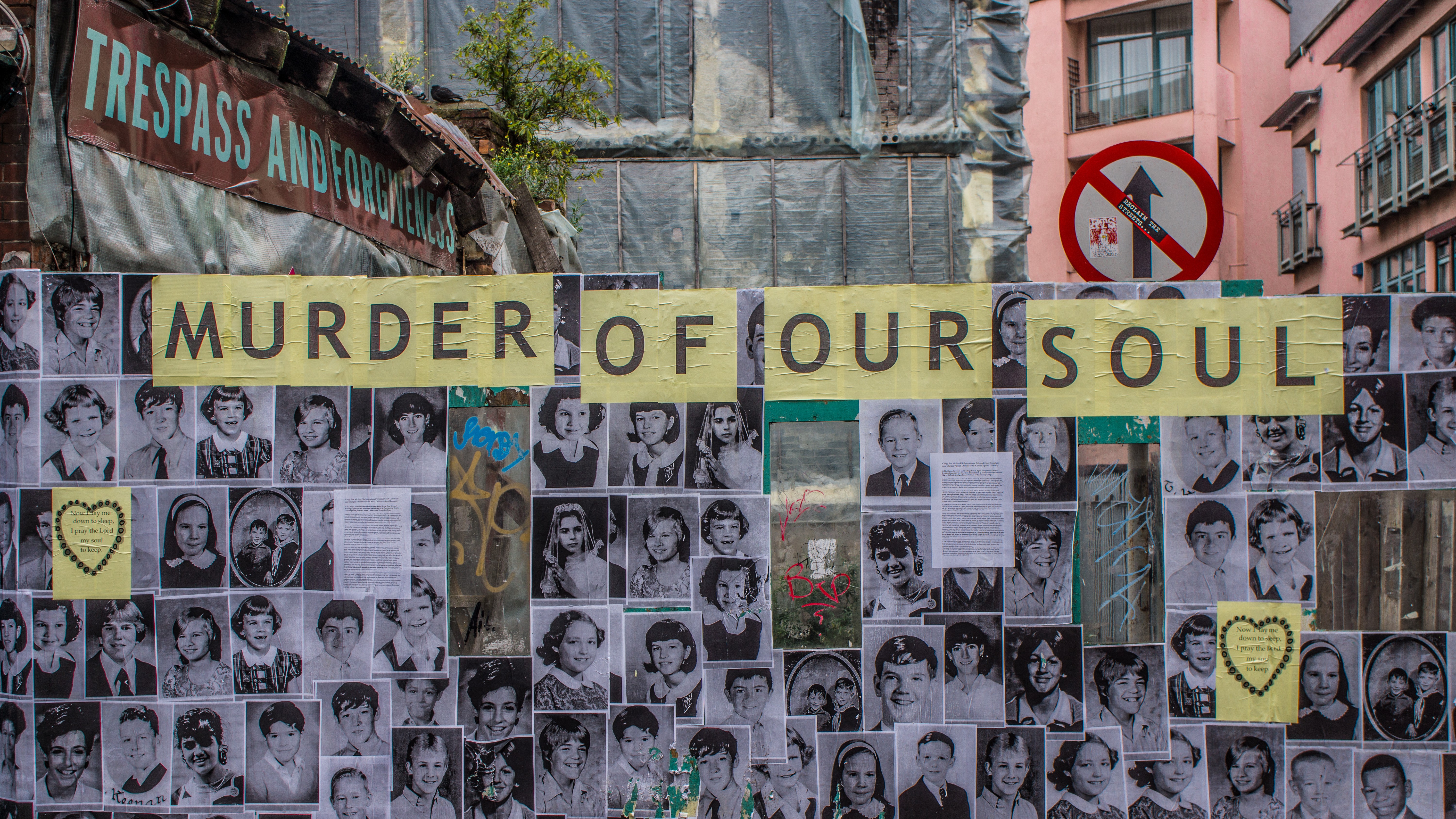
The Sauvé Report states that…
…a rate of around three percent of priests and members of religious orders who committed sexual violence against children, constitutes a minimum rate and a relevant point of comparison with other countries.
It is impossible to replicate the procedure followed by the Sauvé Report. The estimates provided here for each of the dioceses in California are “static” in the sense that they only consider the current number of priests. In this text I do not calculate sexual abuse over different periods of time as the French report does.
Following the parameters set by the Sauvé Report I offer an upper limit or maximum and a lower limit or minimum estimate for each of the dioceses in California. The Sauvé Report includes three estimates of the number of victims for each sexual predator.
The table appearing next show offers an upper and lower of the estimate limit using the 25 and 63 victims per predator as the base for the estimates for each Catholic diocese.
Table 3. Total male clergy, estimations of predator clergy and victims in California, Hawai’i, region XI USCCB, 2022-3.
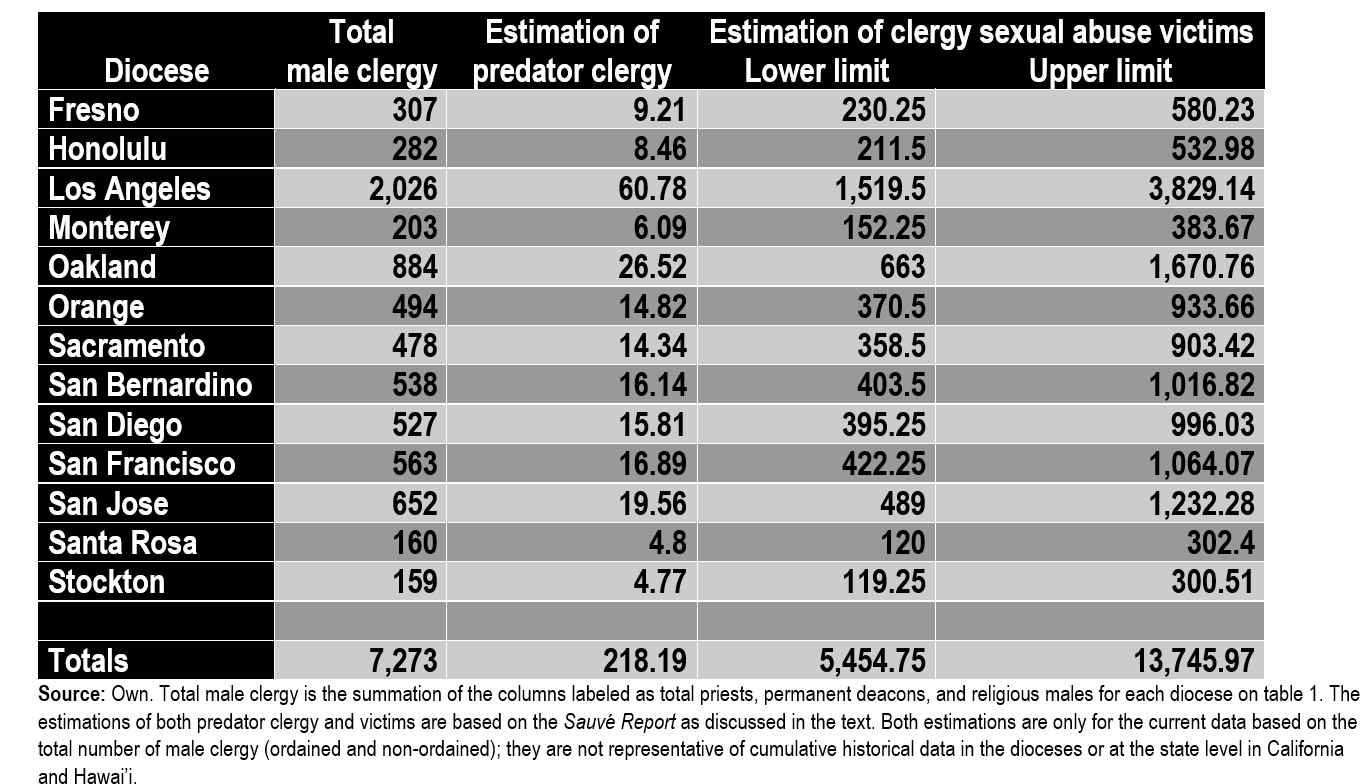
In other reports, as the one issued by the Australian Parliament, the so-called Royal Commission, there are dioceses with up to fifteen percent of the clergy involved in sexual abuse. If that was the case for other dioceses, then the limits of the range would need to be multiplied by a factor of five.

In that respect, the estimation presented here, as the one offered back on July 2023 for 64 countries or the one made when comparing, in the linked before this paragraph, the Roman Catholic dioceses of El Paso, in the United States, and Ciudad Juárez, in Mexico, is extremely conservative and not an attempt of exaggerate the extent of the clergy sexual abuse crisis.
Finally, although it is customary for Roman Catholic dioceses in the United States to publish their own listings of credibly accused clergy, some law firms in California concentrate in one single page all that information. One of said databases is offered by Zalkin and it is available here.

English Edition
Baja California and the clergy sexual abuse crisis