Rodolfo Soriano-Núñez Lunes, 17 de Febrero del 2025
The French Prime Minister lies twice at the National Assembly about his knowledge of abuse at a school where his wife used to teach.
German broadcaster Deutsche Welle proves how, during John Paul II and Benedict XVI tenures as popes, German bishops sent priests with records of abuse to Brazil and Bolivia.
By Rodolfo Soriano-Núñez
At a time when the world emerging from the postwar and globalization is coming to an uncertain end, in a context of end of pontificate, the clergy sexual abuse crisis keeps damaging what is left of the Catholic Church and the religious practice associated to it, while showing more evidence of how unfit political institutions are to deal with.
In Argentina, the new sudden resignation of a bishop forces to reopen the files of the abuses at the Institute of the Incarnate Word, while the branches of the Opus Dei there and in other Latin American countries desperately try to discredit HBOMax's decision to broadcast a series about the abuses at their houses.
In France, the dismissive attitudes of an already weak Prime Minister, and the overall attitude of the Catholic Church there shook the national government to its core, while Bolivia and Brazil come to terms with the history of predator German priests.
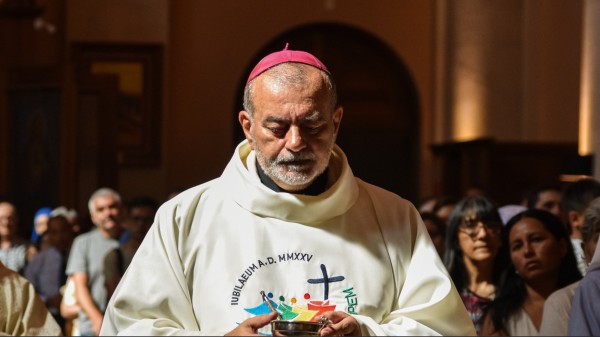
The sudden resignation of Carlos María Domínguez to the diocese of San Rafael is the newest development in a long history of radicalization of a segment of the Roman Catholic church going all the way back to the late 1960s, when the Argentine bishops were unwilling to actually dismiss a priest who went as far as to openly challenge the authorities of both John XXIII and Paul VI to call and enact the second Vatican Council.
The priest was Carlos Miguel Buela, and he has been the subject of frequent references in this series devoted to clergy sexual abuse worldwide. San Rafael came to be his "fort," through a complex process that would be impossible to detail at this point. He used his Church’s weaknesses to keep a secretive and predatory organization alive with the support of a couple of local bishops and because of his ability to “spread the joy” at the right places in the Roman Curia.
As vice chair of the Argentine Conference of Catholic Bishops, and former archbishop of Buenos Aires, Pope Francis himself, then as Jorge Mario Bergoglio, requested his predecessor John Paul II to suppress the Institute of the Incarnate Word, known globally after it Spanish-speaking acronym of IVE.
As it was the standard operating procedure, Karol Wojtyla and the “stars” of his Roman Curia, Joseph Ratzinger, future Pope Benedict XVI, and Angelo Sodano, the former nuncio at Santiago de Chile and then Secretary of State and protector of several predatorial organizations, dismissed Bergoglio’s and then chair of the Argentine Episcopate (CEA after its Spanish-speaking acronym), Cardinal Estanislao Esteban Karlic, the now emeritus archbishop of Paraná, to suppress the IVE.
As it is happening now in Peru, IVE resisted the suppression by replicating the same story of perpetual victimhood that the Opus Dei itself replicates these days from Argentina to Mexico and in Spain, to render itself as the victim of a campaign they claim HBOMax launched to discredit them.
Opus Dei tradition
In full Opus Dei tradition, as proven by Peruvian Cardinal Juan Luis Cipriani Thorne’s attitude recently (see the story below) they hardly admit any wrongdoing and deny the well-documented practice of “uninformed recruitment.” Said practice by which they offer young girls in marginalized towns of Latin America a chance at having a Catholic education, has been instrumental to staff their offices and houses with what many see as maids disguised as lower rank nuns.

English Edition
Sodalitium, a suppression of sorts
As it happens these days with the Peruvian Sodalitium, the Argentine bishop’s request for the suppression of Buela’s order was not hurried. Quite the opposite. It was the product of a long (more than six years) experience of three successive “apostolic visitations.”
An “apostolic visitation” is an audit of sorts. It follows a messy procedure that has derived in recent years into the chastising of female religious orders in the United States because they were deemed to be heretic for advocating for female ordination, but unwilling to acknowledge the true scale of abuse, sexual, spiritual, or otherwise at the Argentine Institute or IVE, the Mexican Legion of Christ, and other similar orders.
More recently, a similar procedure has been behind the attempt to actually suppress the Peruvian Sodalitium, with no warranty that said suppression will ever actually happen.
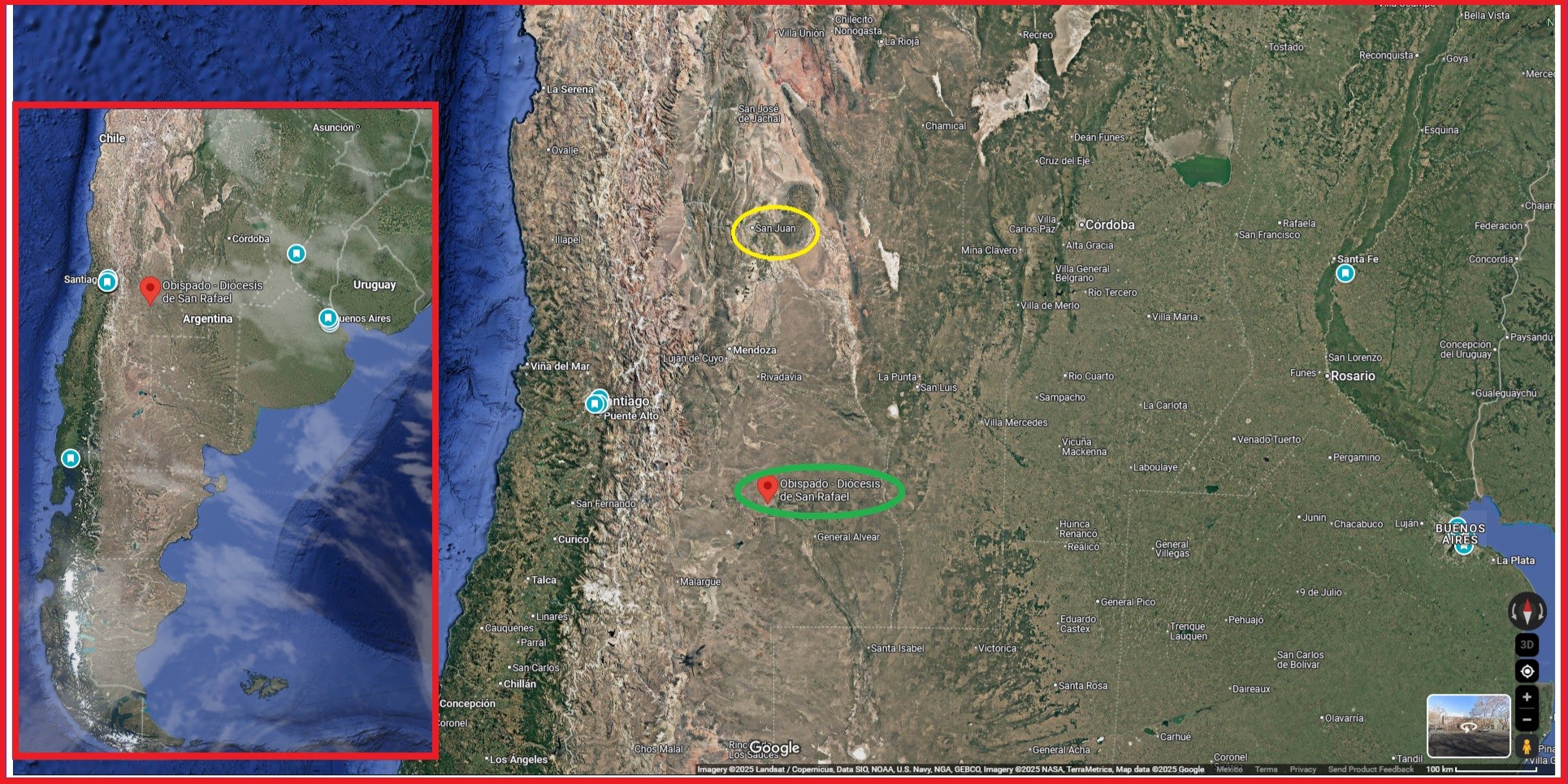
The three “apostolic visitations” on Buela’s order found, at least, sectarian practices and the potential negative effects of the way San Rafael, a diocese in the Argentine West, geographically closer to Santiago, the capital of Chile than to Buenos Aires (see the map below), was willing to accept an “agreement” to share its seminary with Buela’s IVE.
The last of those visitations was conducted by an Argentine archbishop who is a member of the Opus Dei. Nobody could call him a “liberal” or, in current parlance, “woke” or any of the adjectives thrown as daggers against people warning about the negative effects of clergy sexual abuse.
He is Alfonso Delgado Evers, now archbishop emeritus of San Juan de Cuyo, a territory also located in the Argentine west, although he got the assignment when he was still the bishop of Posadas, a diocese right on the border of Argentina and Paraguay, almost 900 miles or 1,500 kilometers to the East.
The agreement to “share” the seminary at San Rafael with IVE was a bad deal from the get-go, but as it is usually the case with religious movements with sectarian tendencies, they were relatively successful at recruiting and keeping seminarians.
Reveries of San Rafael
They did so by going after young males willing to go through the usual immersive experience of the “half monk, half soldier” experience that the leaders of the Sodalitium were offering almost at the same time almost 1,600 miles, more than 2,500 kilometers, to the north, in the affluent neighborhoods of Lima, Peru.
Their experience was also similar in all but name to the experiences young Whitexicans, Mexicans of “white” ethnicity, were getting at the Legion of Christ in Marcial Maciel’s houses of “formation” in Mexico and elsewhere in the English- and Spanish-speaking Catholic worlds.
These types of predatory organizations require the kind of discipline coming of the “state of siege mentality” infused by the “half monks, half soldiers” identity, as a way to prevent members or former members leaking information about their abusive practices.
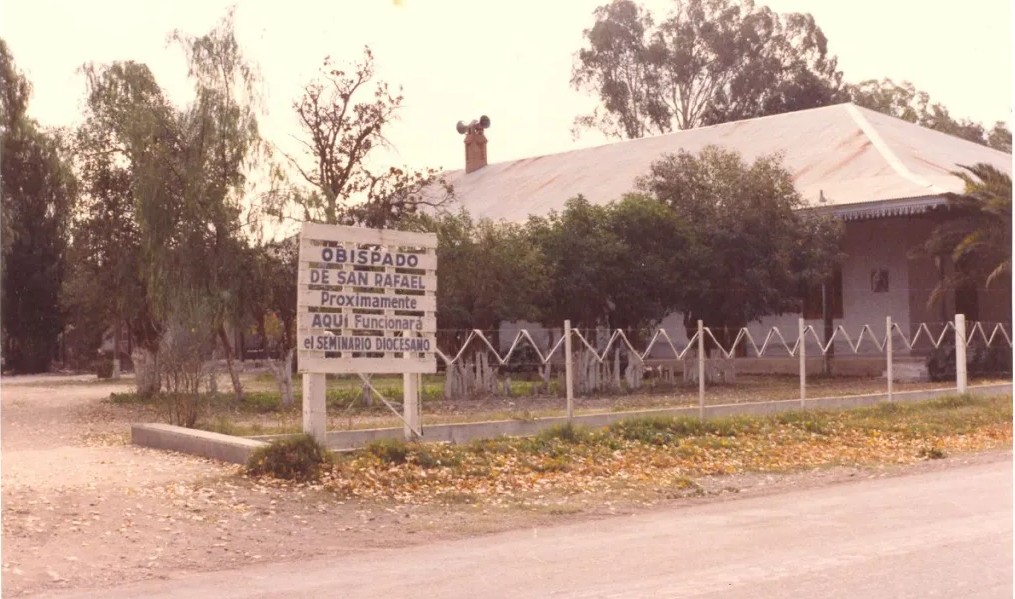
Buela was able to resist any attempt from Delgado Evers, Karlic, and Bergoglio to suppress the so-called IVE, because he was able to enlist former Cardinal Theodore McCarrick, then recently appointed by John Paul II as the archbishop of Washington, DC, as one of his order’s benefactors, as the so-called McCarrick Report details (available here at the Holy See’s website).
To make matters worse, the new “early,” “sudden,” resignation at San Rafael is the latest in a series of failed episcopal tenures there.
Already in the 1970s the diocese had the never explained early resignation of Óscar Félix Villena, a former auxiliary bishop of Buenos Aires, who got there in 1970, to leave two years later in the midst of an enigma. Ten years later, John Paul II would appoint him as auxiliary bishop of Rosario, dying 22 years later, in 2004.
To replace Villena, Paul VI appointed bishop León Kruk. A few years after his appointment, he brought Buela and his order to San Rafael, setting the “agreement” that allowed for the shared use of the seminary, while allowing for the increased radicalization of the students, bringing former students of other seminaries in Argentina.
Bitter fights and car accidents
A number of them had left their dioceses of origin because, as Buela as a seminarian and later in his early years as priest, despised the mass in Spanish, and most if not all of the changes brought by the second Vatican Council. Kruk died in mysterious circumstances in a car accident in 1991 when he was 64, in the middle of an already bitter fight with Buela.
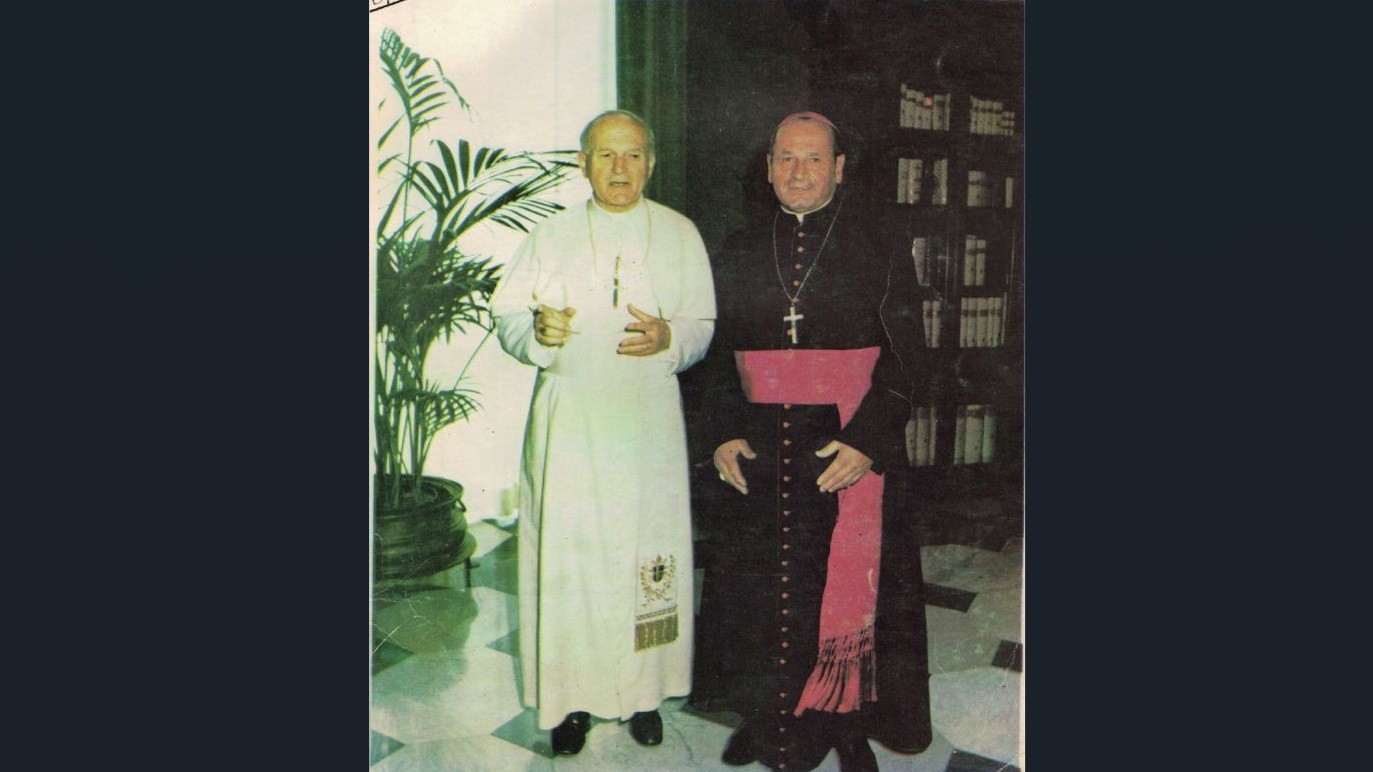
John Paul II appointed a then auxiliary bishop of Córdoba, Jesús Arturo Roldán, who was only able to deal with Kruk’s toxic legacy there for five years, as he would also die, at 65, in 1996, although in his case it is known that cancer was the cause of death. The first apostolic visitation on Buela’s order happened during his tenure as bishop (1995-8), although his death prevented him from knowing the results.
Almost one year after his death, in 1997, John Paul II appointed then auxiliary bishop of La Plata, Guillermo José Garlatti to San Rafael. After the end of the first visitation, modified the terms of the agreement with Buela’s IVE, and was witness and probably an active promoter of the second (1998-9) and third (1999-2001) visitations to Buela’s order.
He changed the policy regarding the aggressive recruitment at other dioceses of Argentina. He left San Rafael alive, in 2003, to become archbishop of Bahía Blanca.
After denying the Argentine bishops’ request to suppress Buela’s order, John Paul II appointed Eduardo María Taussig, then a priest of Buenos Aires, as bishop there. He remained as such until 2022, when Pope Francis decided to temporarily close the seminary of the diocese of San Rafael.
Even if, over time, Taussig was able to draw a line between the diocese and Buela’s order, and Benedict XVI forced Buela out of the leadership of the order in 2010, after a fourth probe found him guilty of abusing seminarians under his care, the influence of fundamentalist priests brought to San Rafael’s seminary during the agreement with Buela remained.
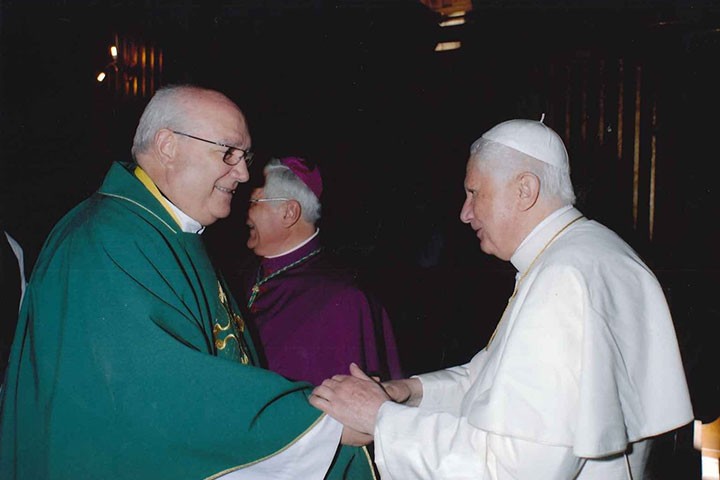
Said priests revolted when Rome accepted common sense medical advice to avoid contagions during the coronavirus pandemic. These priests who were also professors at the Seminary challenged Taussig’s and ultimately Francis’s authority to allow for the distribution of Holy Communion in the hand, as it was safer to avoid contagions.
Far from accepting such notion, the priests-professors at the seminary of San Rafael, displayed the fundamentalist behavior one find in the most radical quarters of the so-called Rad-Trad movement in the English-speaking world. Unable to deal with the complexity of the diocese despite his 20-year tenure there, Taussig resigned at 67.
It was then that Pope Francis appointed Carlos María Domínguez as the new bishop of San Rafael. Domínguez, originally an Augustinian friar, was at the time the auxiliary bishop of San Juan de Cuyo, so he knew that Western region of Argentina relatively well and should have been familiar with the story of abuses, sexual and otherwise, at Buela’s order, at the seminary of San Rafael, and the kind of issues affecting the diocese.
He remained at the helm of the diocese for less than two years and there is little or no information as to the actual reasons behind his decision to quit. He is 59, so he had at least 15 years more of service as bishop.
Neither the news agency of the Argentine bishops, AICA, nor any other source in Argentina or Rome provide any meaningful explanation of the sudden departure, so it is up to anybody to figure out the potential reasons for this.

Given the situation with Argentine bishop Gustavo Zanchetta, considered a week ago in the previous installment of this series (see above), and the ongoing fallout of the crisis at the Peruvian Sodalitium and other cases of clergy sexual abuse involving the sudden or early resignation of Roman Catholic bishops and the history of abuses at San Rafael it is hard to avoid speculating about the reasons behind his decision.
What is clear at this point is that the Catholic Church does not help its own cause acting the way it does. More frequently than not, these early resignations end up becoming the source of scandal and harm not only for the conferences of Catholic bishops, but mostly for the persons, the families in parishes all over the Catholic world.
German predator priests
One only needs to watch the documentary broadcast this week by the German public broadcaster Deutsche Welle to see the pain inflicted on parishioners in Germany, Bolivia, and Brazil, by predator priests and, even more so, by German bishops willing to send said priests to weak parishes in rural Bolivia or Brazil, where they simply replicate and even amplify, given the less regulated context of Latin America, their predatory behavior.
The Deutsche Welle documentary forces whoever is aware of some details of the clergy sexual abuse crisis to wonder what was Benedict XVI’s and before his pontificate what was Joseph Ratzinger’s role in sending those predator priests from German dioceses to Latin American weak prelatures, willing to admit any priests sent from Europe.
If the German bishops were aware of the predatory behavior of the priests sent to Latin America they should have informed Ratzinger, then prefect of the all-powerful Dicastery for the Doctrine of the Faith of their decision. Was he aware?
Chances are he was, but as with Domínguez’s resignation to San Rafael, or Rome’s decision to keep Zanchetta as bishop, it is up to the faithful to struggle with the overwhelming weight of doubt, the devastating feeling of unease that people of faith has to deal with because Catholic leaders—as the leaders of other religious organizations—are simply unwilling to actually do as they say.
And the problem is not only the almost permanent contradiction in which they, the leaders of Roman Catholicism and other Christian and Abrahamic religions live, but the way they feed the most fundamentalist and sectarian aspects of their understanding of the Bible, Christian or Jewish, and how those fundamentalist and sectarian takes on their faith are used for political purposes, as it happens these days in the United States and elsewhere in the Western world.
New sheriff in town?
One example of such takes was in full display there at Germany over last week, when U.S. Vice President J.D. Vance boasted about “a new sheriff in town,” as he addressed the Munich Security Conference, as the video from German broadcaster BR24, linked after this paragraph, shows.
His speech goes beyond the scope of this series, suffice to say at this point that it marks a point at which Europe needs to concentrate on its own defense when it is clear that is at the mercy of a potential attack from Vladimir Putin.
The European Union was deeply divided way before the November 2024 election in the United States and its outcome will only divide it even further, with Italy and Hungary leading a Pro-Trump/Pro-Putin, populist, authoritarian wing, and with Germany and France as the unreliable leaders of an autonomous wing in the Union.
Unreliable because both French President Emmanuel Macron and German Chancelor Olaf Scholz command minority governments. Scholz, who issued a vigorous response to Vance the day after, is facing a complex election where no poll gives him a chance to remain in government and where he runs the risk of becoming the third national party behind Vance’s German partner, the neo-Nazi Alternative for Germany, AfD after its German-speaking acronym.
Macron already faced a similar election that forced him to build an extremely fragile coalition that put right-to-center François Bayrou as Prime Minister back in December 2024.
Bayrou’s appointment came after his predecessor, Michel Barnier, was barely able to hold the position for 99 days, from September 5th, through December 13th. It is impossible to go into the details of why Macron’s presidency deals with the curse of a minority government, despite the snap election called back in 2024. Suffice to say at this point that Bayrou’s past dealing with sexual abuse in Catholic settings is coming to bite him back.
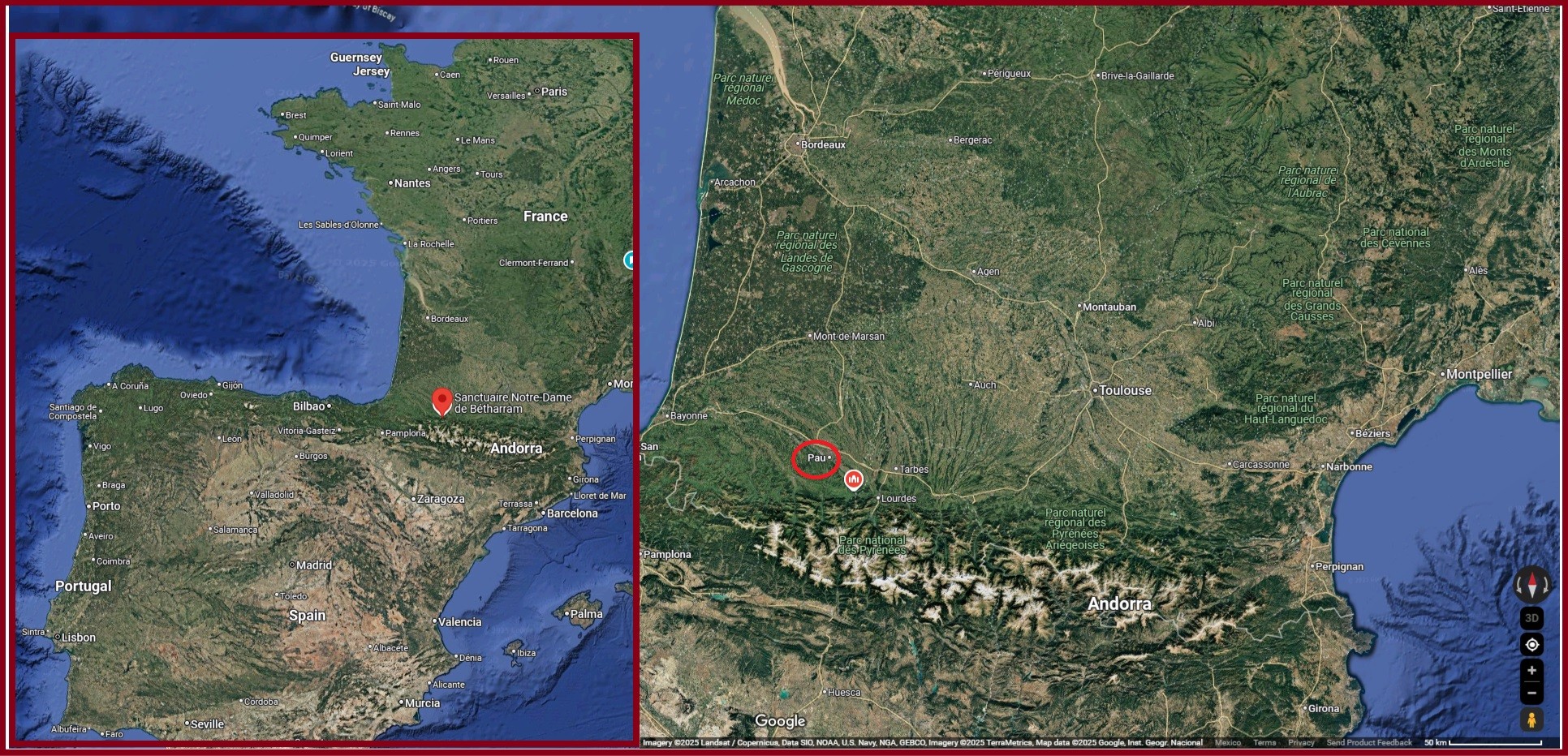
The story is not new on its own and, given the fact that Bayrou is, on top of the current Prime Minister of France, the mayor of Pau Béarn Pyrénées a small town near the border with Spain, in Southern France (see the map after this paragraph), it is hard to believe his claim that he was unaware of what was happening at that school in his hometown where his wife was a professor of religion.
Unlike what happens in the U.S. or the Mexican political systems, where one person cannot hold simultaneous positions in the national and local governments, the French political system admits that kind of “cumulative” and simultaneous exercise of local and national charges.
What is not clear is if the French political system will admit in the current, extremely dangerous circumstance Bayrou’s claims, lies for some of his critics, about whether or not he was aware of what happened at the school where his wife used to teach.
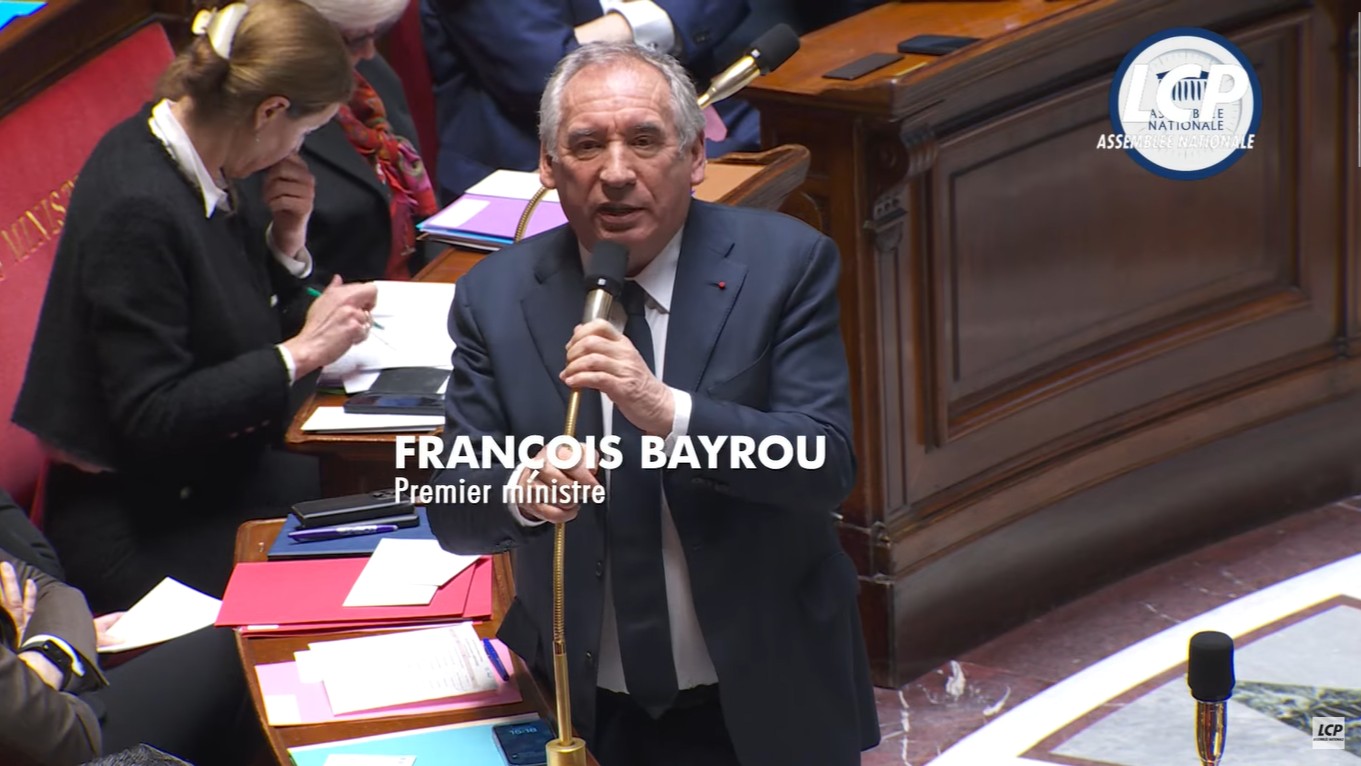
Last time the issue resurfaced, after lying dormant for almost a year, was early this month, when Bayrou claimed twice he was unaware of the situation at the school. He did so during Question Period, a procedure common in Parliamentary democracies, where the Prime Minister and his Cabinet must answer questions from the opposition.

Omerta again
Back in mid-2024, French network TF1 broadcast a report about what had happened at the Notre Dame of Bétharram school in the 1980s. The abuses had been happening there before, some claim that all the way back to the 1960s.
In the video linked after this paragraph it is possible to see males in their sixties talking about their experiences there, when Bétharram was a boarding school. Also, it is possible to see parents of current students attending the school shocked by the news of abuses there.
Audio available only in French. Request English subtitles at YouTube’s control panel.
A month later, Boris Fauche, a former student of the then boarding school offered his testimony to yet another French newscast, 20 Minutes France in this case. He goes into details of the kind of abuses, sexual and otherwise, him and his classmates were subject to by the lay and clergy personnel running the school in the 1980s.
It also provides details of how, by the end of 2023 and early 2024, a group of survivors came forward to provide details of their experience at the school, as the video after this paragraph shows.
Audio available only in French. Request English subtitles at YouTube’s control panel.
In the next video, Paul Vannier, member of the French National Assembly, questions Bayrou about his knowledge of the issue. Vannier stresses the fact that Bayrou’s wife was a teacher there and she has an active life in the Catholic Church in Pau Béarn Pyrénées.
Audio available only in French. Request English subtitles at YouTube’s control panel.
Once again, as it is already common in French debates about clergy sexual abuse and more broadly about abuse in religious settings, the notion of omerta, the code of conduct of the Sicilian mafia to keep silence and to cover up sexual abuse emerges in Vannier criticism of Prime Minister Bayrou’s behavior.
Vannier challenges how much Bayrou knew. It is not without reason. Bayrou was minister of Education from 1993 through 1997, and later, since 2008, has played some role in the local government of Pau Béarn Pyrénées.
And it is not only Vannier. Before the French member of the national assembly, Mediapart, a French news outlet published a detailed report dealing with what Bayrou knew and the role of his wife as a teacher at the school and as a catechist in the local Catholic structures, associated to the diocese of Bayonne-Lescar e Oloron, whose bishop is Marc Marie Max Aillet.
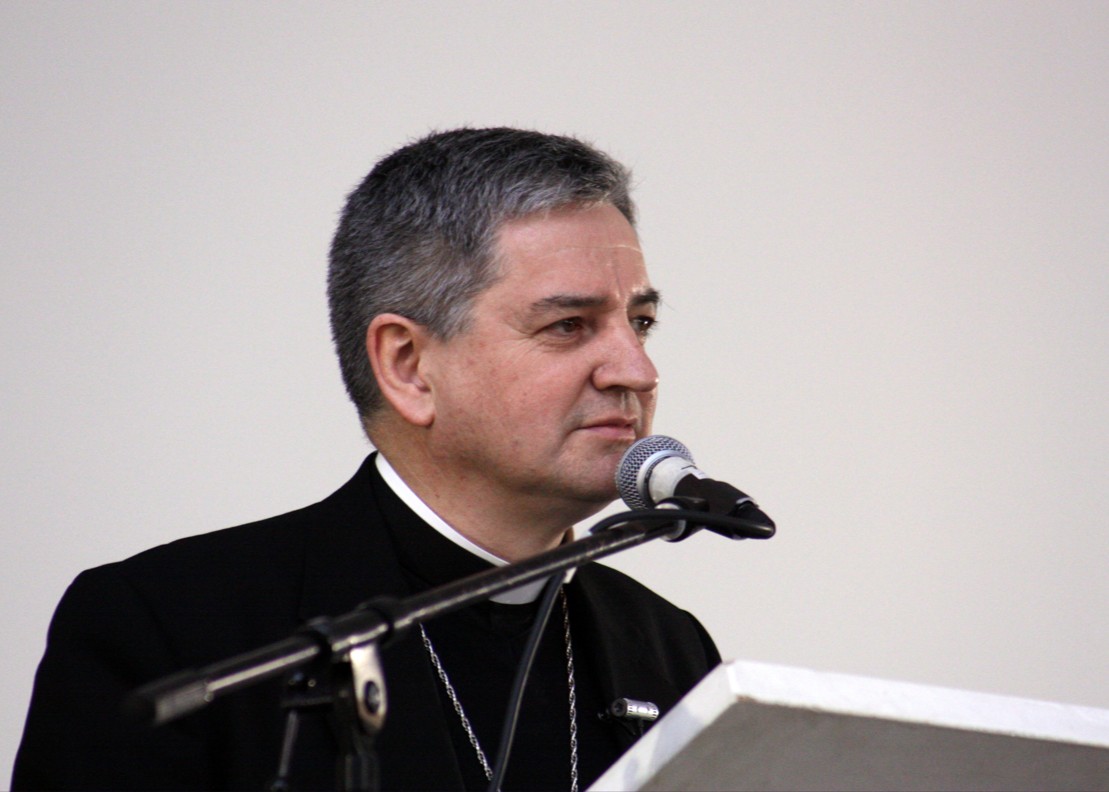
The diocese acknowledges the presence of the order in its territory (information available only in French and Basque) and there are at least two statements about the abuses at the school.
One, from the bishop, is available here, only in French, signed one year ago, on February 16th, 2024, acknowledges the issue and the “shock” it has caused all over France.
The other comes from the order running, up until today, the school. It is signed on September 2024 and it is available in both French and Basque here.
Sadly, Mediapart’s piece in French is only available behind a paywall here.
An English-speaking summary of the situation is available here at France 24. There is it possible to read how the victims sent detailed accounts of what was happening at Bétharram to Bayrou back in March 2024.
Deny, deflect, and dismiss
Bayrou denies any knowledge and, above all, any wrongdoing on the issue. It is unclear at this point what will happen after Bayrou did so twice already as Prime Minister. In any case, it should not surprise that there are already calls for his resignation as both Prime Minister and mayor of his hometown.
Collette Capdevielle, a French socialist member of the national assembly posted a message at what used to be Twitter setting her party’s position on the issue. Her message appears after this paragraph.
On Saturday, back in Pau Béarn Pyrénées, Bayrou had to confront the victims of abuse at Bétharram as the video after this paragraph shows. There it is possible to watch Alain Esquerre, the spokesperson for the survivors of sexual abuse at the school pour his heart out while calling out what he describes as hypocrisy of the system and, again the “omerta”, the code of silence breaking apart French institutions, making them “dysfunctional.”
Audio available only in French. Request English subtitles at YouTube’s control panel.
Esquerre ends his plea calling the Prime Minister and Mayor of Pau Béarn Pyrénées to hear the voices of five million French survivors of different forms of sexual violence (see also here in French).
Despite that, Bayrou insists he was unaware.
If one changes the language and the names of the victims, the predators, and the places where the abuse happened it is the same story, from the United States or Canada, down to Argentina or Chile, and from Mexico or Peru to France or Germany.
And, as it is usually the case, the order running the school has offered the pro-forma apologies. The Congregation of the Sacred Heart of Jesus published an English-speaking report about the situation at the school (available here) but, when one sees Esquerre and other victims of abuse describing the kind of abuse they were subject to at the school, it is clear that someone is not doing enough.
Bayrou has a chance to address the issue and to prove that there is no reason to support Putin’s allies in the French elections to punish those dysfunctional institutions.
The question is if the French politicians are paying attention and if they will stop lying, because—as Esquerre points out in the next video, from the YouTube channel of the Associated France Press, at 0:24, everybody in Pau Béarn Pyrénées knew about the abuses: “Tout le monde savait,” and the fact that even the bishop was acknowledging already a year ago the situation seem to imply that there is no way to believe Bayrou when he claims that he was unaware of the situation in his hometown.

English Edition
Hero, priest, and sexual predator: the story of Abbé Pierre