Rodolfo Soriano-Núñez Lunes, 12 de Mayo del 2025
In Rome, Leo XIV should leverage Robert Prevost's experience in Chiclayo to bring to an ending the clergy sexual abuse crisis.
To do so, Leo XIV needs to expand on Pope Francis’s legacy, not diminishing it as the conservative wings of his church demand.
By Rodolfo Soriano-Núñez
Robert Prevost’s recent election as Pope Leo XIV opens the door to a host of analyses of its impact and consequences. Los Angeles Press has been following the devastating effects of the clergy sexual abuse crisis in the Catholic Church for more than two years now. This installment of the series goes over some of the potential consequences of his election on this issue.
Back in September of 2024, this series dealt with a case coming from Chiclayo, the Peruvian diocese lead by Prevost from 2014 until 2023, when Francis promoted him to prefect of the Congregation of the Bishops and chair of the Pontifical Commission of Latin America.

English Edition
From Chicago to Chiclayo, sexual abuse victims are pawns
That article, linked above this paragraph, went into the details of Peruvian predator priest Eleuterio Vázquez Gonzáles. Despite the unavoidable specifics of his case, it is—and hence the sad state of the crisis in that religious organization— what can be described as garden variety clergy sexual abuse.
It became relevant a year ago, not because of the specifics of the case, but mostly because media operations associated with the far-right of the Catholic Church in both the United States and Peru, say fit using the case Vázquez Gonzáles’s case in Chiclayo as a proxy in their wars against then Pope Francis.
Robert Francis Prevost was, already then, a major figure in Francis’s curia and the Catholic far-right in the U.S. and Peru perceived him as a source of the Vatican’s probe on the Sodalitium of Christian Life.
Archbishop Charles Scicluna and monsignor Jordi Bertomeu, officials of the Dicastery for the Doctrine of the Church, have probed the case for the last two years, leading to the suppression of that order.
The reasons to perceive Prevost as a source of the probe had some validity, since he has been aware of the mismanagement of Catholic dioceses in Peru for more than ten years.
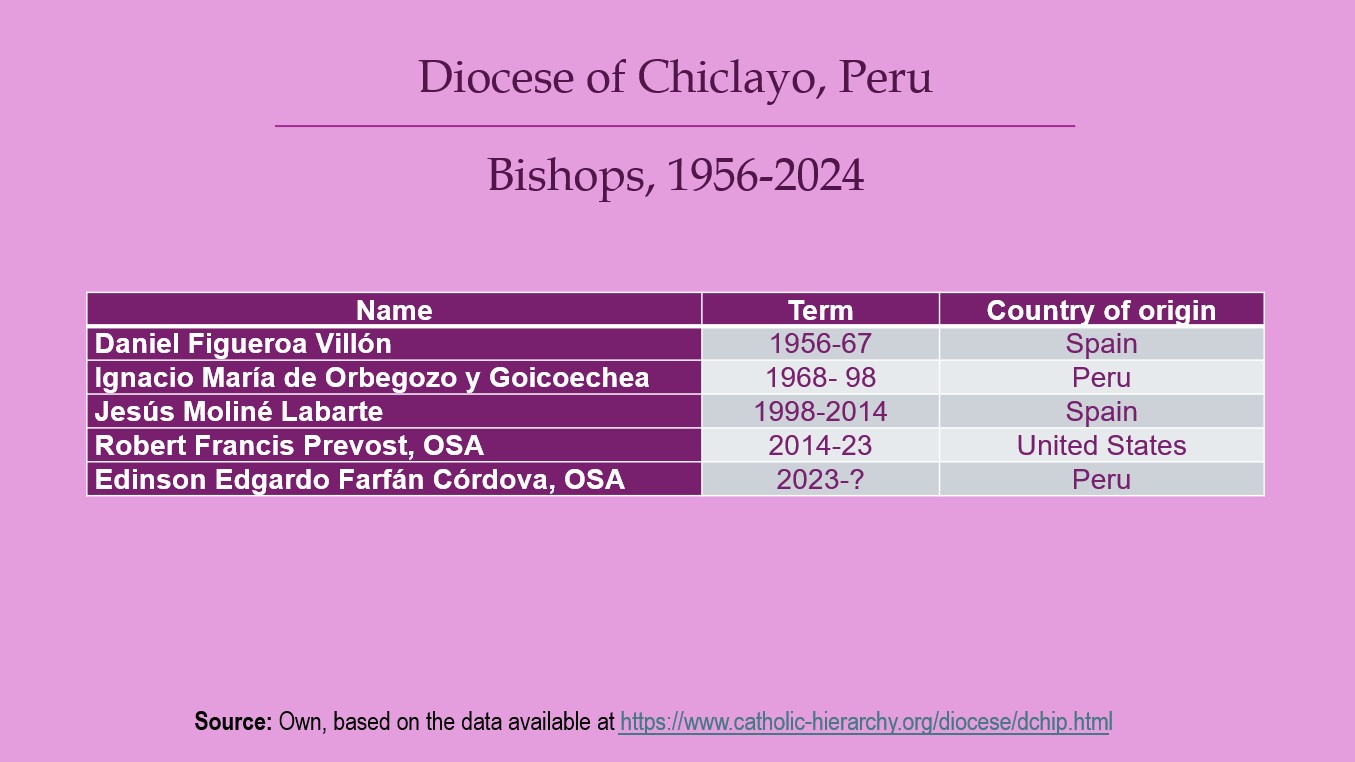
Prevost took over the diocese of Chiclayo from a bishop who although not officially linked to the Spaniard Opus Dei, a controversial and conservative Catholic organization, was very close to leading figures of that organization in Spain and Peru.
From 1968 until his death in 1998, Ignacio María de Orbegozo y Goicochea, a Spaniard full member of the Opus Dei was Chiclayo’s second bishop. After his death, Jesús Moliné Labarte, also a Spaniard, close to that order although not an actual member, took over and remained the third bishop of Chiclayo, until 2014.
Instead of an immediate appointment of Prevost as bishop there, Pope Francis appointed Prevost first as “apostolic administrator” of the diocese. As such, he ruled over the diocese, but he did on Francis’s behalf, for almost a year. It was an intervention of sorts of the diocese without the conflict usually associated with the so-called “apostolic visitation.”

Findings?
It is unclear what he found there and what he told Pope Francis about his findings. But it is possible to assume that Francis was happy with his tenure as “apostolic administrator” since he appointed him as fourth bishop of the diocese the next year.
It is also possible to assume that something was happening there, as there is evidence of abuse, sexual and otherwise, at dioceses, parishes, and other entities associated with the Opus Dei, as several installments of this series have proved over the last two years.
The piece published back in September acknowledges, on the one hand, the legitimacy of the claims about abuse at Chiclayo, and the need for improvement from that diocese, from the Peruvian conference of Catholic bishops, and for the Catholic Church at large.
However, it also points out the discrepancies in how the Church handles abuse cases in different regions. A thesis that this series has been proving is that the key to explain clergy sexual abuse is not how good or bad is bishop X as compared to bishop Z.
The main contention is that the differences in the outcomes when dealing with clergy sexual abuse depend more on the performance of the police, district or state attorneys, and the courts in each country, how they perform, than on the individual character of a Pope, a national conference of Catholic bishops or an individual bishop.

That has been the backbone of the comparison between the dioceses of Ciudad Juárez, Chihuahua, Mexico and that of El Paso, Texas, United States, linked above.
That was the same approach Los Angeles Press followed when comparing the evolution of the clergy sexual abuse crisis in the Roman Catholic dioceses of California (see above) and those in the Mexican states of Baja California and Baja California Sur, linked after.

English Edition
Baja California and the clergy sexual abuse crisis
The doctrine, the practice, the culture, and many attitudes are the exact same in border towns like Mexicali and Calexico or Ciudad Juárez and El Paso. What changes is neither the religious doctrine nor the Code of Canon Law, what changes is whether the victims have to confront their predators in the context of the Mexican or the U.S. systems of justice.
The article about Prevost’s tenure in Chiclayo built over that foundation. The idea was to avoid the usual labyrinth one finds in journalistic accounts of the clergy sexual abuse crisis unable to go beyond the failures of character of any given bishop in a diocese.
That does not mean that Prevost was perfect as bishop and much less that he will be perfect as Pope Leo XIV. Back in September 2024, the story on then Cardinal Prevost criticized the unwillingness of bishops working in Latin American dioceses to be transparent, including him and the rest of the Peruvian bishops to open their archives, and to allow for thorough reviews of abuse cases. But even if he were to open said files, there would be legitimate questions about the will of the Peruvian police and district attorneys to actually pursue the cases.

The Peruvian bishops’ opacity, now projected into Leo XIV’s role as Pontiff, raises serious doubts about his true commitment to global accountability, as the global grassroots organization Survivors Network of those Abused by Priests fittingly points out.
No consequences, no paradise
Moreover, it emphasized the need for actual, practical, consequences for dioceses and bishops failing to comply with Pope Francis's decrees to set up systems for reporting abuse. It was on that issue where the story about bishop Prevost’s tenure at Chiclayo saw some interest on his side to actually walk the walk when addressing the clergy sexual abuse crisis.
The article also delved into the specifics of the Vázquez Gonzáles case, noting the lack of readily available information about his current status and the diocese’s handling of the accusations. It underscores the pattern of behavior often seen in such cases and the need for the Church to provide tools for tracking any priest’s professional record and the fact that such need is more relevant when dealing with priests with actual records of clergy sexual abuse.
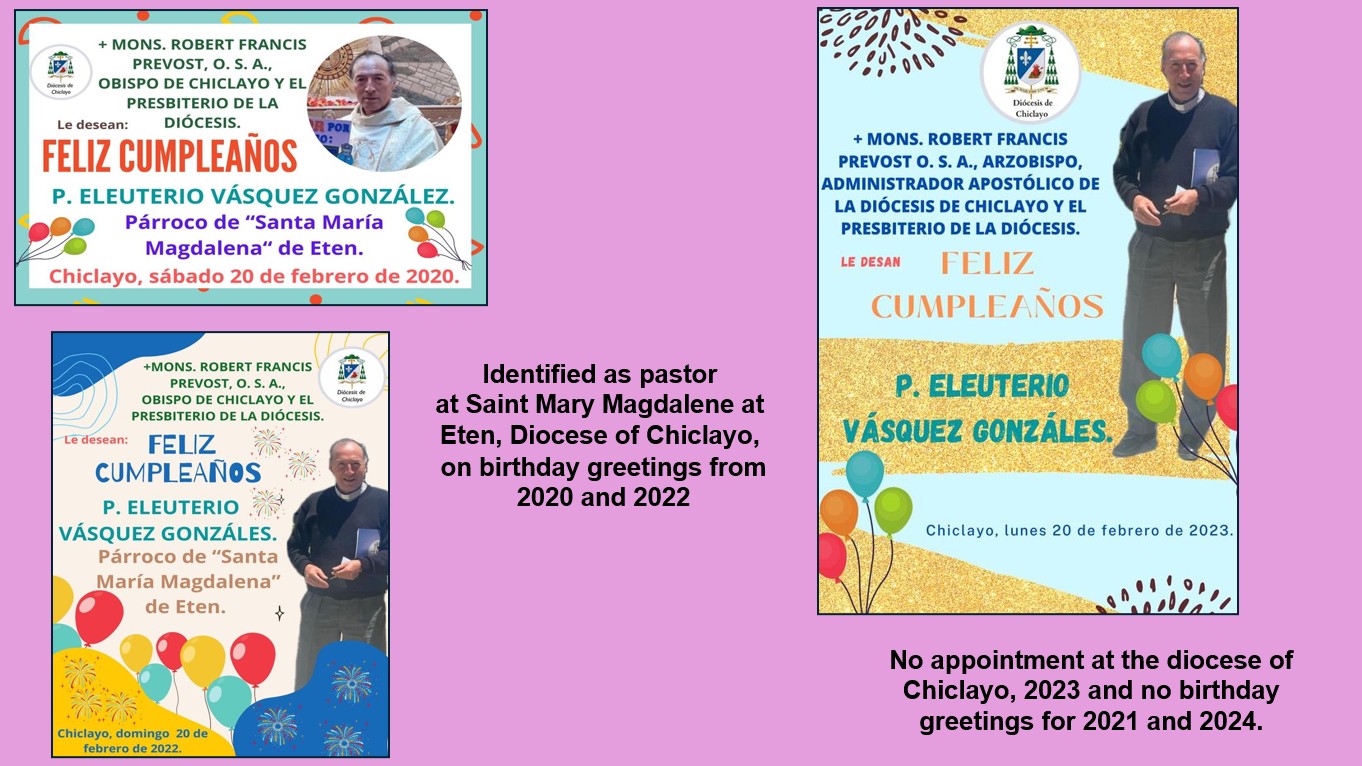
Robert Prevost was, on more than one respect, ready for the job, as he was the global leader of his order for twelve years, starting in 2001. In that respect, before Pope Francis’s decision to promote him to bishop in Peru, he was aware of the effects of clergy sexual abuse in the United States and in other countries.
That is why, the main propositions of that piece were a call for greater transparency and accountability from the Catholic Church in Latin America regarding clergy sexual abuse and the need to prioritize the victims' well-being, ensuring that dioceses comply with established guidelines for reporting and addressing abuse.
However, any mention of Chiclayo and the clergy sexual abuse crisis there cannot dismiss the issue of the extremely flawed performance of the Peruvian system of justice, as poor as the Mexican, the Brazilian, or any other Latin American system of justice.

English Edition
The crime of Father Araújo
To better understand this and how the allegations against Prevost crossover the allegations about abuse, sexual and otherwise at the Sodalitium of Christian Life, anyone willing to actually grasp Prevost’s legacy as bishop of Chiclayo should know about the many failures of the Peruvian system of justice when dealing with that order.
It would be impossible for to repeat here again the coverage Los Angeles Press has been doing about the crisis at the Sodalitium, suffice to say at this point that our coverage of what has happened at that order centers on the difficulties the Vatican itself found when dealing with abuse at that religious organization.
The skepticism surrounding the future of the Sodalitium stems from the obvious support from key political figures in Peru to the order. Even the Vatican itself expressed its doubts about the chances of the Peruvian system of justice ever actually addressing the issue.
These stories discuss the ongoing crisis within the Sodalitium of Christian Life, a Peruvian-based Catholic society, primarily focusing on the sexual abuse scandals and the Vatican’s response. The core issue revolves around the widespread abuse perpetrated by its founder, Luis Fernando Figari, and other members, including physical, psychological, and sexual abuse, as the story linked after this paragraph, the first of the series on the Sodalitium published in English here at Los Angeles Press.

The series highlights Pope Francis’s actions, including the expulsion of numerous members and leaders, and the suppression of the Sodalitium itself. However, the series also criticizes the Church’s response as insufficient, particularly regarding justice and the offering of actual reparations for the victims, as the most recent installment of that series, linked after this paragraph, tells.
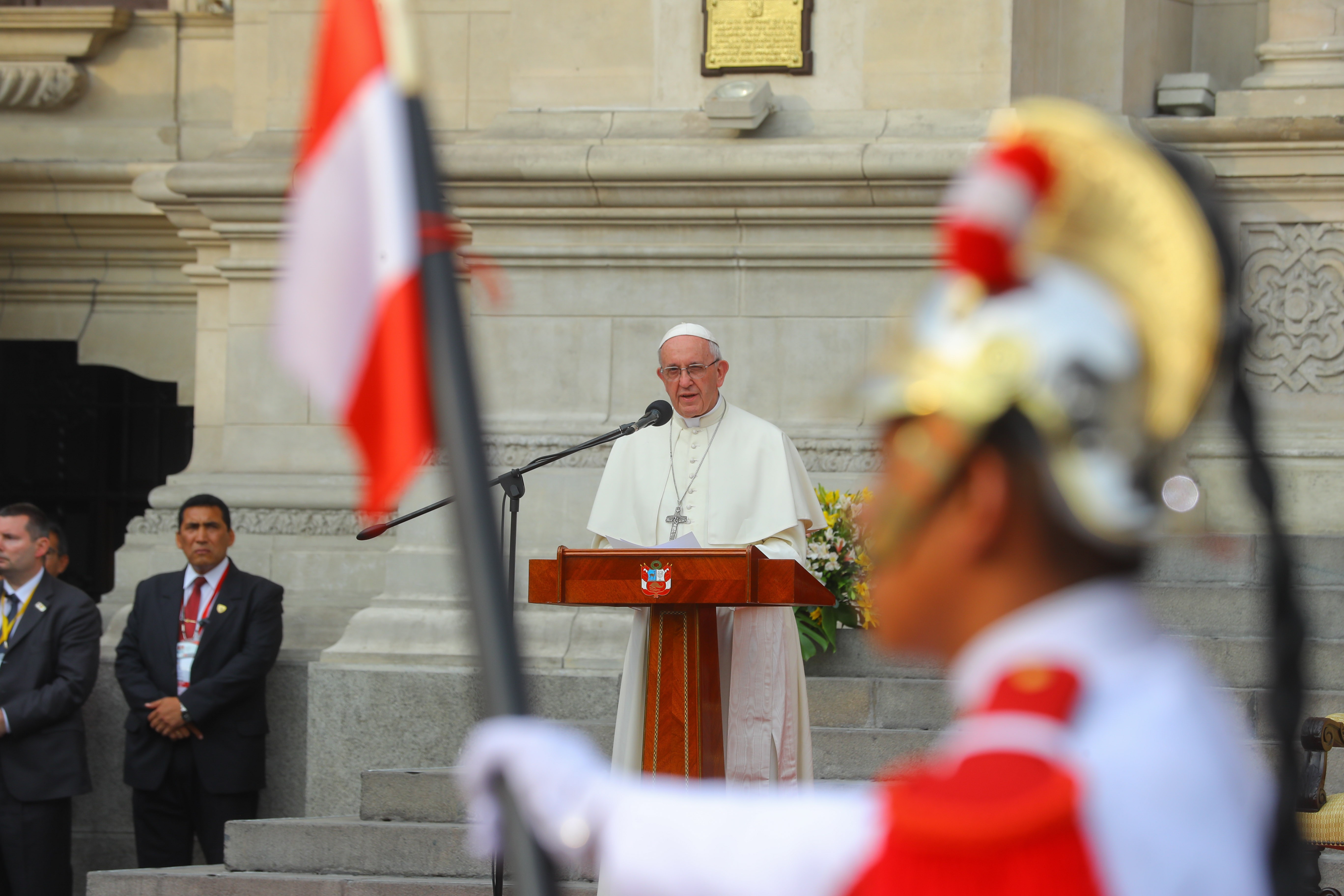
English Edition
Sodalitium, a suppression of sorts
The depth of the crisis was illustrated when, on Saturday, April 19th, 48 hours before Pope Francis’s death, the frontpage of La República, a leading Peruvian newspaper, told the story of Monsignor Jordi Bertomeu, a Spaniard national and official at the Dicastery for the Doctrine of the Faith, letting the world know about the decision of Francis to go over courts in the United States to try to achieve a measure of justice for the victims of abuse, sexual and otherwise, at the Sodalitium. Their frontpage story appears as an image after this paragraph and it is available only in Spanish here.

Opportunity
How Robert Prevost’s tenure as bishop of Chiclayo will inform Leo XIV’s papacy is still an open-ended story, open probably for the next 20 years or so. His own experience dealing with predator priests as Eleuterio Vázquez Gonzáles, his knowledge and involvement in the Sodalitium probe as both bishop of Chiclayo and as chair of the Pontifical Commission for Latin America, will also be relevant.
He has the opportunity to actually shape his and his Church’s response to the preeminent issue for the future of that religious organization: clergy sexual abuse. His time in Peru exposed him to the harsh realities faced by abuse survivors, and the damage done to the Church's credibility, especially in a nation where the Church benefits from extensive institutional protections.
Unlike the victim-like narrative developed by the Legion of Christ in Mexico, the Opus Dei in Spain, or the Institute of the Incarnate Word in Argentina, about a martyr Church under siege, the Peruvian Church is an Established Church, it is the Church of the Peruvian State. Despite that, one sees there the same regrettable behavior from priests all too willing to play victim while abusing their own faithful.
And in Vázquez Gonzáles case, bishop Prevost saw, first-hand, no filters involved, the actual evidence of a very heterosexual priests abusing girls who were minors then, so there is no way for Leo XIV to fall back into Benedict XIV’s salad of deaf explanations and dog-whistling on the “gay as predator.” Quite the opposite.
In that regard, it would be for his own and his Church benefit if Leo XIV left behind Catholic witch hunting of LGTBQ persons to focus himself on improving accountability, transparency.
A good point to being his papacy would be to enhance the powers of Tutela Minorum, the Commission to deal with clergy sexual abuse timidly set up by Pope Francis whose future remains uncertain as it is clear that even if for some reason Cardinal Sean Patrick O’Malley was willing to remain in charge, he will be 81 next June.

English Edition
The Catholic Church’s report on clergy sexual abuse
Finding a replacement will not be easy and it is clear that his second in the commission, Colombian bishop Luis Manuel Alí Herrera suave attitude is good for talking the talk, but there is no evidence of him actually walking the walk.
Campaign
Moreover, the fact that Robert Prevost was the victim of a campaign by the MAGA-Catholics running EWTN, Catholic News Agency, and The Pillar, should also provide the new Pope with valuable insights into the kind of minefield that the clergy sexual abuse crises is.
I am not the only one claiming that Prevost has been the victim of an attack from EWTN, CNA, and The Pillar is not only mine, as stated in the September 2024 piece. It is a position shared also by Pedro Salinas and José Enrique Escardó Steck. Both are former members of the Sodalicio, both are survivors of abuse within that “order,” and both now work as journalists reporting on abuse in that and other religious organizations in Peru.
A piece by Salinas for Religión Digital is available here, although only in Spanish. José Enrique recently talked to a Peruvian media outlet to provide his interpretation on the issue. His interview is available as a video after this paragraph, or if not available there here too with audio available only in Spanish.
While there are signs of a commitment to actually tackling the issue, since Prevost was the sole Peruvian bishop actually willing to, at least, translating the United States Conference of Catholic Bishops’ documents and expertise on dealing with clergy sexual abuse, the challenges posed by the Peruvian legal system remain significant.
What is he going to do about Vázquez Gonzáles? Will he reopen the case to actually punish him and, more important, to actually compensate the victims?
What is he going to do with all the knowledge he accrued about the many faces of the Sodalitium? What will he do if the dioceses of Denver and Philadelphia, where the Sodalitium operates in the United States, go back to dragging their feet when and if the suppression actually happens?
What will Samuel Joseph Aquilla, archbishop at Denver, and Nelson Jesús Pérez, the Florida native ruling over the Archdiocese of Philly do in that case? Will they support the characters straight out of MAGA-land behind the Sodalitium, as in the case of Alejandro Bermúdez, who has been named as a potential officer at the U.S. embassy to the Holy See? Bermúdez is a former member of the Sodalitium, one of the members expelled by Pope Francis and a former managing editor at ACI Prensa, the Spanish-speaking version of CNA, now integrated in EWTN.
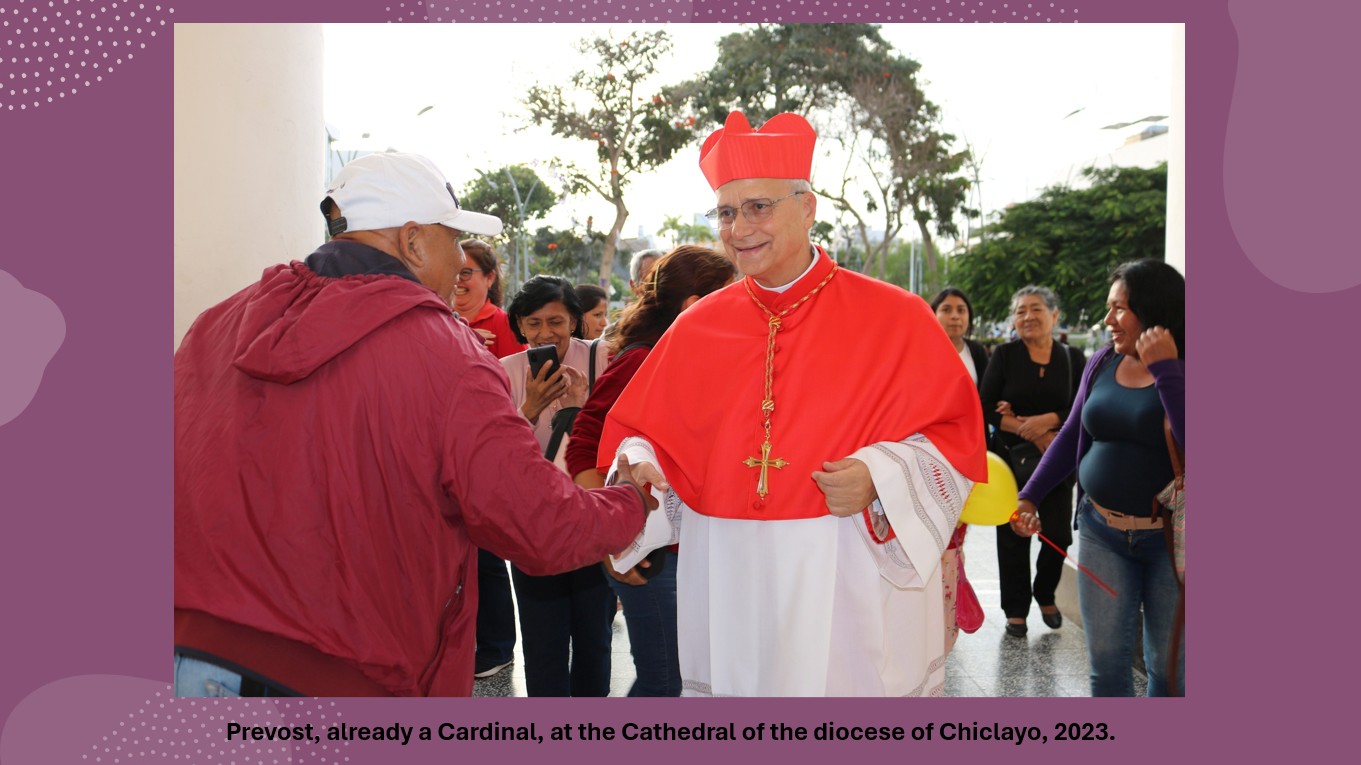
Will those two bishops side with the “Pope Americano,” or will they go for a “middle of road” betrayal of Pope Francis’s will by keeping them as “diocesan associations of the faithful”?
In that regard, even if the key to understand the devastating effects of abuse lie in the borders of the national States, the Church has plenty of room to improve and the experience of the U.S. Catholic Church to foresee potential threats in other countries would be extremely helpful.
Italian Opera
For that to happen, however, Pope Leo XIV will have to close the door on those calling him to destroy Francis’s legacy. So far it seems to be clear that at least the Synod remains as an ongoing process.
It is unclear at this point what will be the future of Sister Simona Brambilla, the current head of the office dealing with the religious orders worldwide, the so-called Dicastery for Institutes of Consecrated Life and Societies of Apostolic Life.
Similar fears exist about the future of the prefect of the Dicastery for Promoting Integral Human Development, Sister Alessandra Smerilli.
And the same could be said of the third nun running something in Vatican City, at least for the time being: the head of the Vatican State administration, Sister Raffaella Petrini, the so-called Governorate of Vatican City State.
English Edition
The Catholic Church, unable to rule itself
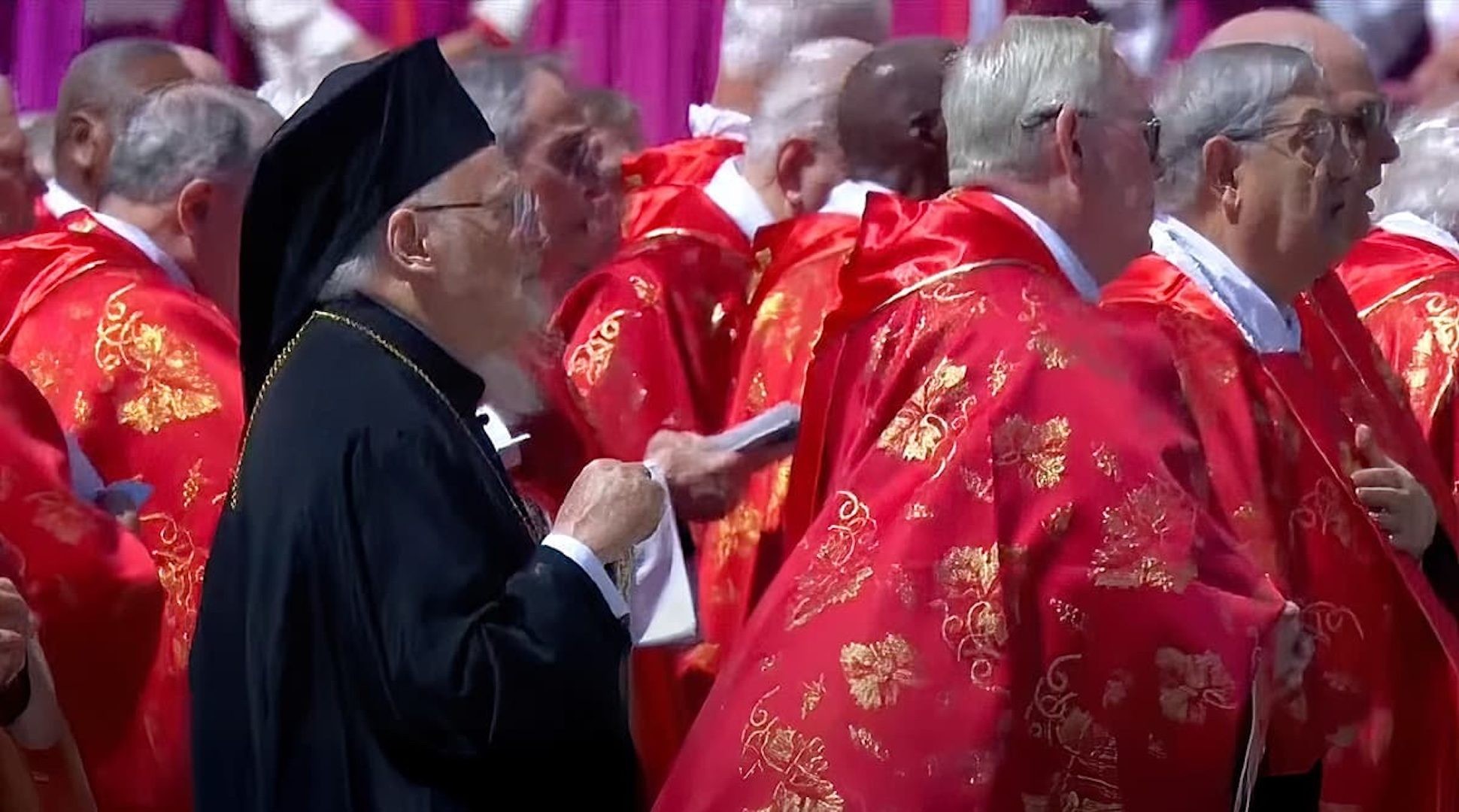
Not that Prevost had a record of being macho or misogynistic, but many cardinals are. As the story linked before this paragraph told, one of the few things Catholic laypersons ever would know about Cardinal Beniamino Stella, the former nuncio to Cuba, and a non-elector in the 2025 Conclave is that he used his time during one of the so-called General Congregations to disparage about Francis’s appointment of nuns as head of dicasteries and other Vatican offices. As in the aria of an Italian opera, Stella lamented Brambilla, Smerilli, and Petrini running something other than the kitchens in Vatican City
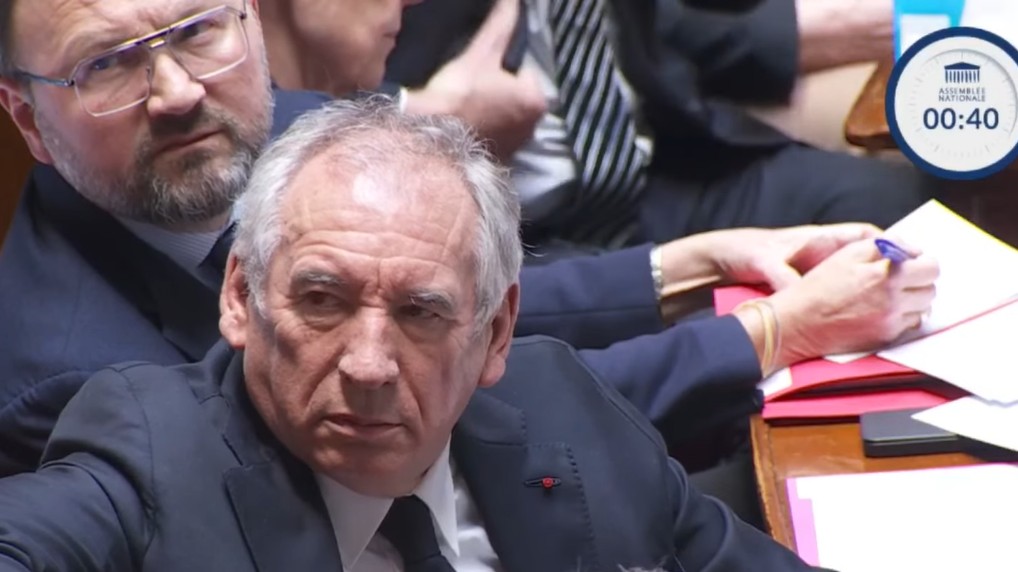
Leo XIV's performance as Pope will be closely watched, as victims of abuse continue to seek justice and accountability, as this week the world will be paying special attention to what happens in the French National Assembly on Wednesday May 14th. That day, Prime Minister François Bayrou will be facing very intense scrutiny about his own role in France’s national nightmare at the Catholic school of Our Lady of Bétharram, where now there is evidence of abuse going back to the late 19th century.
English Edition
Bayrou, French Prime Minister, to testify on sexual abuse