
Rodolfo Soriano-Núñez Domingo, 04 de Enero del 2026, 00:00
As much as it is easy to blame Trump, Latin American leaders calling for peace need to look at their own behavior when dismissing the regional system of human rights when it rules against them.
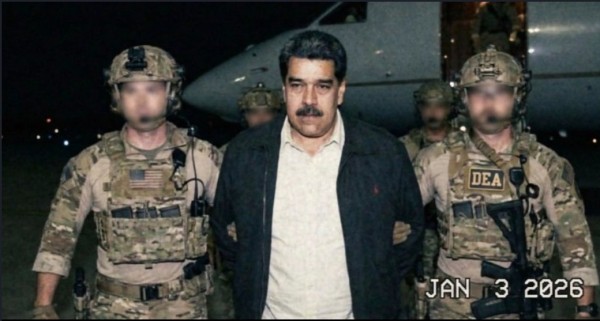
Maduro's abuse of Venezuelan nationals happened while other Latin American presidents turned a blind eye to what was happening in Caracas, leaving the door opened for Trump's own abuse.
By Rodolfo Soriano-Núñez
Starting at 5 am, when I usually wake up, I have unable to stop thinking, as some sort of “background process” in what happened in Venezuela. As much as I dislike Nicolás Maduro and the rest of the populist governments, in the left or right in Latin America, I cannot express any kind of support for what Donald Trump has done this time around. I do not think it is about oil or oil prices, for the same reasons I do not believe his attack on Iran was about oil, even if in both cases oil is the main commodity supporting the Iranian and Venezuelan economies.
Donald Trump could have had the very abundant oil of Alberta, Canada, cheaper, hassle free, had he played a different tune in his exchanges with Ottawa. But he is not Dwight Eisenhower, John F. Kennedy, Richard Nixon or Bill Clinton.
He is a TV producer-host, lucky enough to figure out a way to beat the gerontocracy ruling the Democratic Party, as old as him and way too deep into the pockets of the very same elite Trump is pleasing now with his tax cuts.
On top of that, a classic case of the capture of the State institutions, Trump was able to seize the blind take of a large share of the Catholic bishops and other Christian leaders in the United States to dismiss any issue other than abortion.
On top of add, Trump was able to resuscitate the deep roots of racist politics with which the U.S. was born from the get-go. Whoever is dumb enough to no accept that, please explain to this Mexican, why the idiocy of the 3/5 of a man when talking about enslaved African Americans living in the early iterations of what is now the United States or why, back in the 1930s, Mexicans became, as much as they are now, the targets or racial hatred.
My inability to process the issues grows, as I cannot find the words to express sympathy or even empathy for Maduro, his regime or the Latin American chiefs of State who now try to talk about international law to condemn what Trump did.
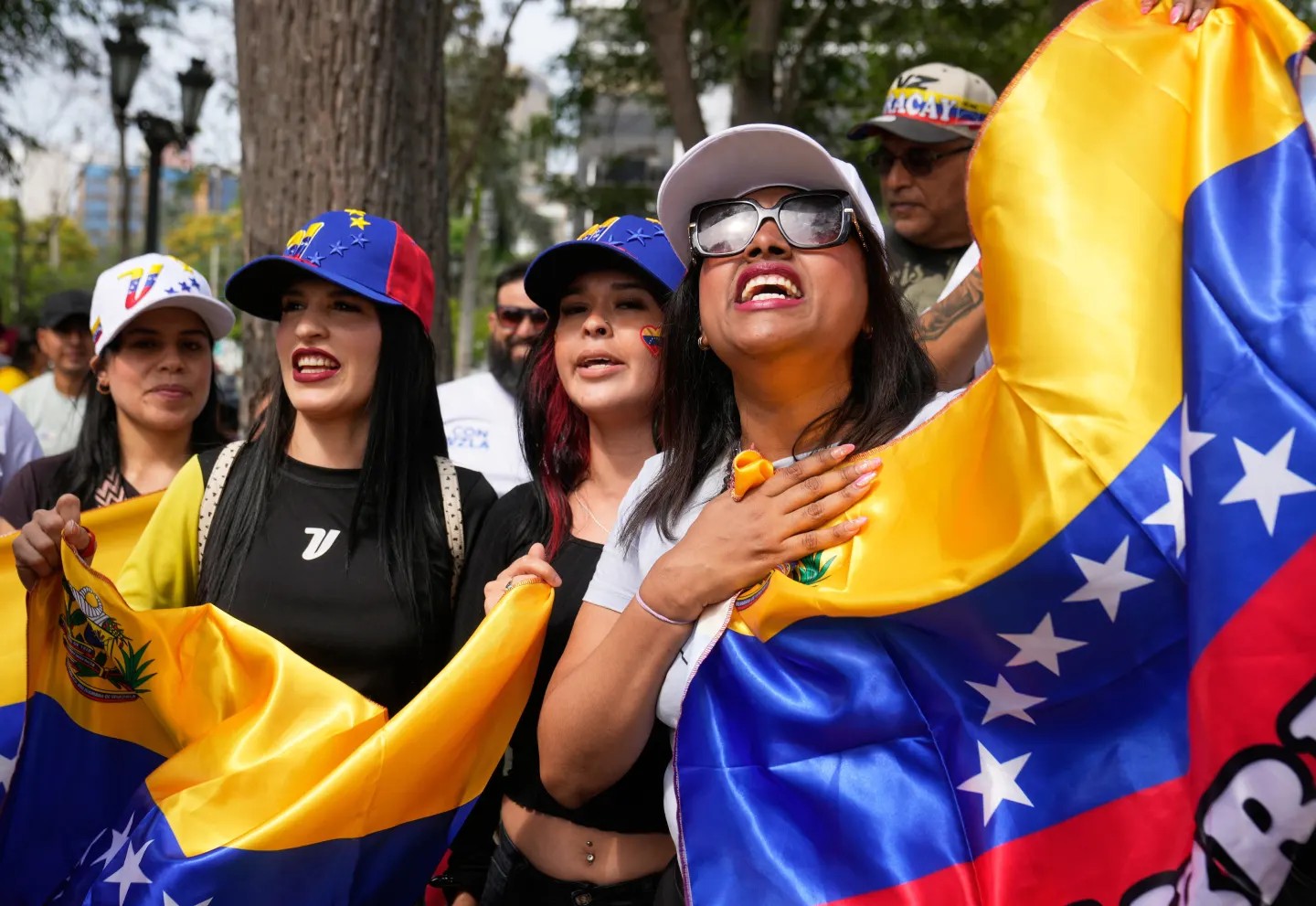
Also, I have nothing but contempt for the position of the leaders of the Latin American exiles trying to seize the opportunity offered by what Trump did this morning in Caracas as some sort of route to a new wave of democratic governance in Latin America. In Miami or in Buenos Aires with Javier Milei or in Lima with the real boss of the Peruvian political elite, Keiko Fujimori.
My sense is that this is a major failure for the United States, because now I find people such as Bernie Sanders sharing their concerns with former Republicans as to the potential consequences of what is happening now in Venezuela.
If I wanted to find a word to define my own personal animus at this point would be, perhaps, perplexity.
I am deeply perplexed not only by what Trump did, by the potential implications of what his threats about doing something similar in Colombia, and three or four other countries.
Even is he does not put “boots on the ground”, the damage has been done and whoever is keeping track of him knows that he just released a truly dangerous actor in Latin American politics, Juan Orlando Hernández, the former president of Honduras.
Vietnam nightmares
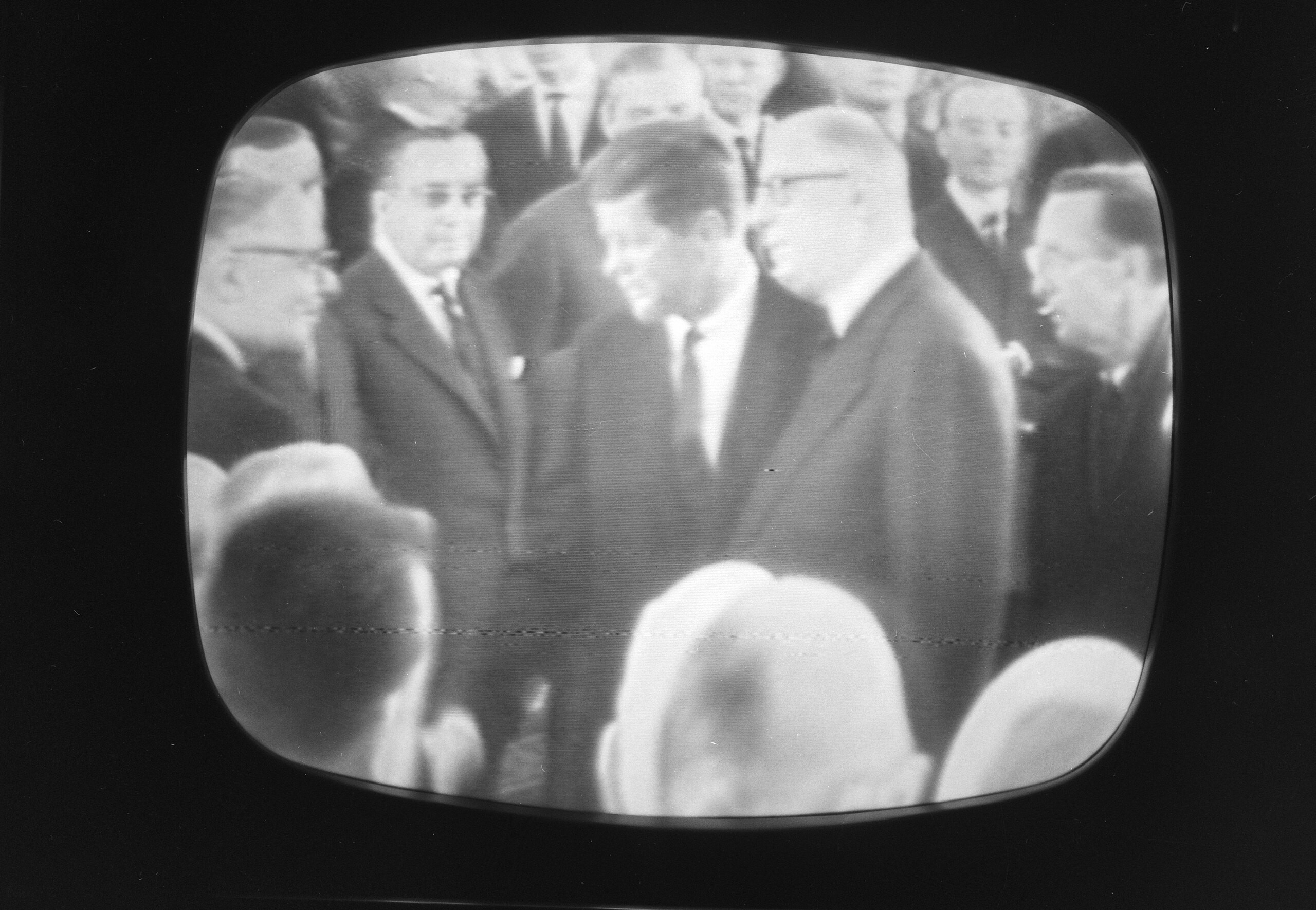
When John F. Kennedy decided to scale up the U.S. involvement in Vietnam, he was not only unwilling to learn from what the U.S. already knew of Eisenhower’s involvement there.
Kennedy was also dismissing the many years of French unsuccessful attempts at controlling what was Indochina. Charles de Gaulle told Kennedy to stay out of Vietnam, and he dismissed the suggestion for reasons other than the sound understanding that De Gaulle had of the implications of the task. Like Kennedy, the current administration seems to think a "surgical" intervention ends the story, ignoring that nationalism—even against a dictator—eventually turns against the occupier.
Venezuela will not be easy to rule from Miami, much less with the hubris that is the birthmark of the current U.S. administration. Quite the opposite.
The border with Colombia is as difficult to control as the Vietnamese jungle. Colombia has been unable to pacify large regions of its own territory controlled by groups who found in Maduro a partner.
These Colombo-Venezuela “trochas” and mountain passes are the new "Ho Chi Minh trails;" they are porous mazes that neutralize high-tech military superiority and favor the “people's war” tactics of “colectivos” and other insurgent groups.
Still, putting aside the issue of Trump’s many mistakes, I put the most blame in the inability of the Latin American nations to actually build a Latin American human right system able to punish governments such as Maduro’s or Ortega’s or those of Peru, Mexico, and others where the governments either tolerate or promote systematic human rights violations.
The basic notions to build such system are there, in the Inter American Court of Human Rights, but Maduro, Daniel Ortega, Enrique Peña Nieto, Andrés Manuel López Obrador, the Peruvian political elite, and many other Latin American leaders do their best to dismiss and even mock its rulings.
Tequila with Pisco
In both Mexico City and Lima, the excuses follow two patterns: The twisted notion of sovereignty coupled with the idea of “we are not a Colony” while dismissing the criticism coming from the weak Inter-American system of Human Rights. It is the same destructive behavior—one with tequila, the other with pisco.
In Mexico, despite the alleged differences between López Obrador and Peña Nieto, both protected the Mexican Army from any potential real, material, liability in the Ayotzinapa case, just as Keiko Fujimori and her underlings in Lima have been doing with what happened in Ayacucho and Juliaca.
Even if nowadays diplomatic relations between Mexico and Peru have been cancelled, both governments share similar attitudes when dismissing its own excesses and abuses.
The similarities extend also to the attacks launched in Mexico City and Lima against any expert unwilling to exonerate the Mexican or Peruvian armed forces.
Both the Mexican and the Peruvian elites disregard multilateral institutions even if now, when dealing with Venezuela, the Mexican elites try to use those institutions to condemn Trump.
And again, there is no way to justify what Trump did, but it is rich, really rich, to try to light the candle of the “respect for international, multilateral, institutions” from both ends expecting to never get burned. And that not to mention how in Peru or in Mexico the political elites dismiss the victims as either “terrorists” (in Peru) or as “manipulated by the opposition” (in Mexico), to justify their disregard and even systematic attacks on the already weak regional human rights framework.
That is what breeds the sense of relief one sees in the Venezuelan exile enjoying Trump’s actions while enraging the nationalist groups in Mexico, and many other countries condemning them as traitors.
It is a sad day for the region, and I am not sure it is even possible to grasp the potential implications of Trump’s arrogant, hubris-infused behavior, but one needs to remind the scenes of the millions of Venezuelans leaving their country, and now used as election bait by José Antonio Kast, the new president of Chile, to carry his own version of antimigrant raids in the Andean nation.
And Kast is an easy target for criticism, more so nowadays, but one also needs to remember and how López Obrador and many other Latin American leaders were never able to express any condemnation of the violence exerted by Maduro and his regime, much less any actual sympathy of the many Venezuelan forced out of their homeland.