Rodolfo Soriano-Núñez Lunes, 20 de Julio del 2026
According to Rio, sexual abuse will not be Leo XIV’s priority for his visit to the Catholic Church in France. He will have a meeting with survivors, but most of it will remain secret.
Some of those who are responsible for handling abuse in the Catholic Church perceive a certain fatigue in the public and believe that it's a good thing for them.
By Rodolfo Soriano-Núñez
When Pope Leo XIV arrives in France in September, the four-decades old clergy sexual abuse crisis will not be a priority. Instead, the Vatican seems intent to deploy a playbook fine-tuned during last month’s trip to Spain: a dress rehearsal where the sole meeting with survivors was kept confidential, attendees were meticulously vetted, and there is no official record of such meeting.
It is a model designed to maintain diplomatic optics, even as those within the sanctuary warn that the underlying system remains fundamentally unchanged and closer to a mafia, than to the ideal of a community seeking the common good and salvation.
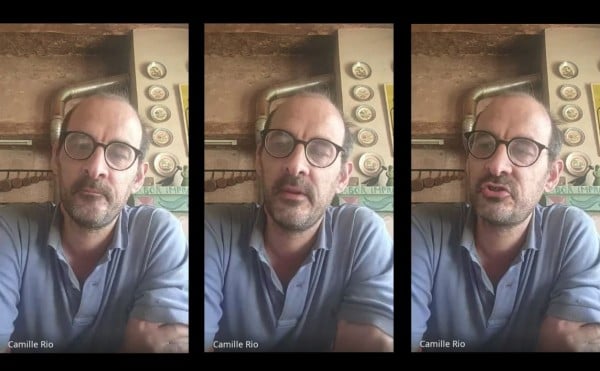
In this interview, Camille Rio, a French Catholic priest whose ministry spans both Europe and Asia as a member of the Paris Foreign Mission Society (MEP after its French acronym), explicitly cuts through the cosmetic veneer of Vatican “safeguarding” protocols, characterizing the self-protecting networks stretching from French dioceses to the “mission territories” and all the way to the Roman Curia as operating “like a mafia.”
By the end of 2024, this series published a piece authored by Rio himself, see after this paragraph, where he goes over the disappointing outcome of the first report regarding abuse in the so-called “territories of mission” managed by the MEP, an order-like organization within the Catholic Church.
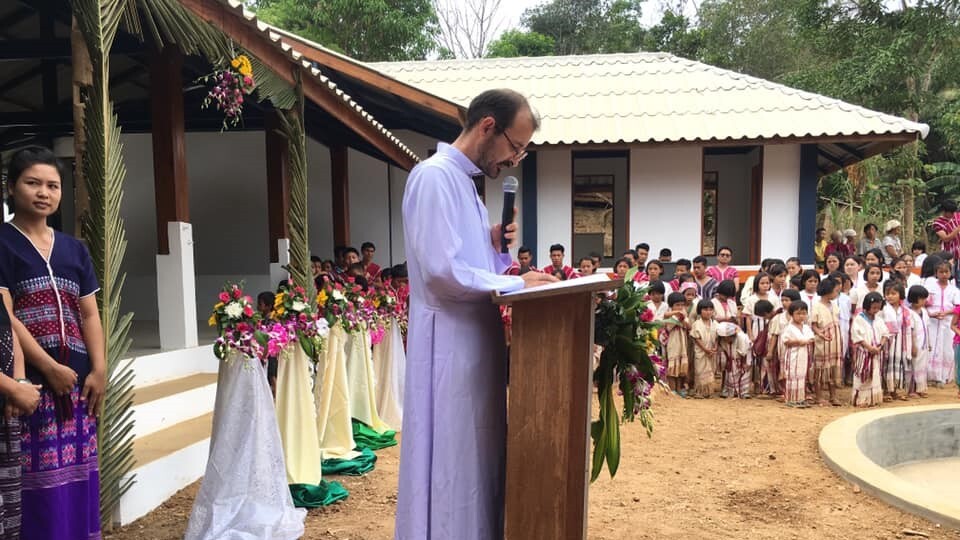
In this interview centered mostly on the expectations around Pope Leo XIV’s visit to France, Rio calls for real measures, similar to those enacted by the Italian judiciary when going after organized crime there, as he is well aware of the risk of hanging to the illusion of a localized failure, the “rotten apple” trope.
Rather, the evidence demonstrates a highly coordinated, global operational standard. The institutional response to post-2016 scrutiny in France mirrors the exact patterns of opacity observed across Latin America: when independent verification looms, the hierarchy locks the archives. Personal records of priests are systematically hidden, and the exact same group of prelates who bear systemic responsibility are the investigators, judges, and media managers of their own crimes.
As the Church gambles on public fatigue to run down the clock, this internal alarm reveals that beneath the pageantry of the upcoming apostolic visit lies a deeply entrenched ecosystem of omertà—one that standard canonical procedures cannot fix, and that the upcoming papal trip is designed to politely bypass.
When seen from Latin America, it is impossible not to appreciate how deep the Sauvé Report went to try to address the true scale of abuse in France, providing some metrics to try to figure out the scale of abuse elsewhere in the Catholic world.
When comparing the response to specific accusations in Europe and Latin America, the differences are glaring. In France, the Catholic dioceses are willing to openly acknowledge the abuse, name the alleged predator and, with that information already posted in their websites (content only in French), call for testimonies of potential victims, and even ask local media to help them achieve such goal, as France 3 Alsace’s Facebook post above this paragraph or here proves (audio available only in French).
Meanwhile, in Mexico City the local Catholic see still plays the game of hiding the names of accused predators and avoids as much as possible best practices to achieve transparency and accountability as the story linked after this paragraph told last week.
Despite those differences and whatever naïve enthusiasm there was it came to a halt when Camille Rio, an active Catholic priest in France, offered his assessment of what is happening there, less than ten weeks before Pope Prevost’s visit and less than a month after a similar activity in Spain.
It must be noted that the visit will happen in the aftermath of the approval of a law that facilitates access to therapeutical means to ends one’s own life, an issue where the Conference of Catholic Bishops is raising its voice, although in a context affected by several scandals of sexual abuse, clergy and otherwise and, perhaps more significantly while France gets ready to elect a new President in a long process that will start by the end of this year to end on May 2, 2027, if a ballotage is required.
Here the exchange with Camille Rio, recorded on July 4, in English, via Google Meet.
I would like to ask you considering your experience and how you have dealt with this issue on both Asia and France itself, how do you assess what has happened in France as far as the clergy sexual abuse crisis is concerned?
Well, doing a little is better than doing nothing, of course, so we have to recognize that the French church understood the problem many years ago in reality. The first report was in 2000, but at least the huge case in Lyon, with Bernard Preynat (content only in French), a now deceased priest and Cardinal Philippe Xavier Barbarin, which in 2016 allowed for a wise liberation of the speech for the victims, of their right to come forward.
So, the Catholic Church, but mostly the French society and the French government and the French National Assembly understood that there is something huge there and that, if we don't tackle the issue, it's going to get bigger and bigger.
The conferences of French Catholic Bishops and French female and male religious created the Independent Commission on Sexual Abuse in the Church (some of its content is available in English), CIASE after its French acronym, in 2016. They say they did it on their own, but mostly it was a response to the pressure of the French National Assembly, meaning that if the Catholic Church was unwilling to do it on its own, then the assembly was ready to intervene.
There was a surprise on that commission, as they asked a former top officer in several institutions in France, Jean-Marc Sauvé, an honorary Vice President of France’s State Council (Conseil d'État), a scholar, and an individual who has a good reputation in France to be the leader of this group.
And in my opinion, he did more than what they asked him. So, in 2021, when the report came out (available here in English), that was a huge scandal, mostly because of the number of the presumed victims, more than 300 thousand, and by the analysis supporting the report.
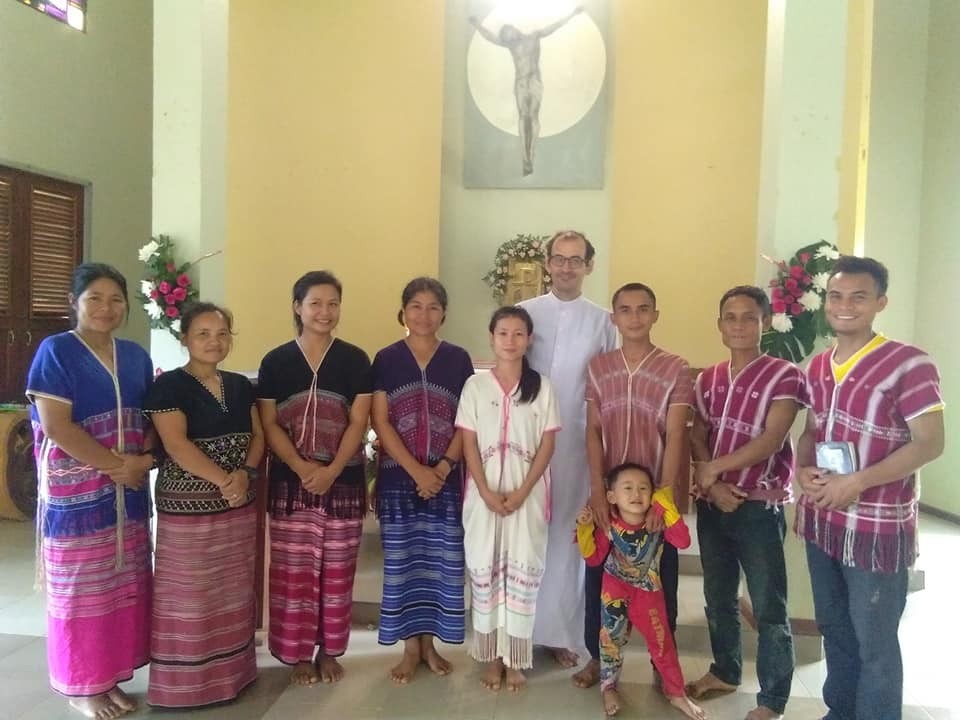
After that, in November, 2021, it seems that the Catholic Church handled the problem really, but the handling is mostly illusional after November, 2021. Lots of promises, but if we see five years later, there's nothing, not much more.
And, especially, if we see with the many cases coming out till November, 2021, it has actually never stopped. Maybe it is not about one case a day, but many cases a week, and not only historical cases, but contemporary cases.
That's quite impressive if we follow all the cases a long time, both in the diocesan, for the diocesan priest and religious priests.
And not only priests, but now bishops, no?
Yes, also after November, 2021, when the Sauvé Report came out, shortly after, two cases emerged. The first one was that of Michel Léon Émile Santier, the now emeritus bishop of Crétiel, who was a quite well-known prelate in France, who abused young males.
And especially the case of Cardinal Jean-Pierre Bernard Ricard the now emeritus bishop of Bordeaux, who was the leader of the French Conference of Catholic Bishops not long ago.
Then came the case of the current bishop of La Rochelle, Georges Colomb, and, later, that of Jean-Michel Alain di Falco Léandri, who is now the emeritus of Gap-Embrun, and so on. So, what is really impressive, in my opinion, is that we have some statistics about the percentage of priests involved in abuse cases, but what we lacked is one for the share of bishops involved in these cases.
And that is the most impressive in France, I guess, that when we see that the sexual abuse, financial abuse, and abuse of power are coming together. And when we find some sexual abuse, always it's a question of power.
The higher we go in the structure of the system of power within the Catholic Church, the more we find abuse, and especially among the bishops, their conference.
And even more so when you take into consideration that in France, even the apostolic nuncio to France…
Yes, indeed, indeed. The previous apostolic nuncio, Luigi Ventura, he has been accused and condemned by the French justice for abuses on young men too.
And he has been there for, I can’t remember, maybe seven or nine years as a nuncio. So, he was behind the appointment of most of the current French bishops.
And it happened also almost at the same time that the very Archdiocese of Paris was going over its own scandal with the former archbishop, Michel Christian Alain Aupetit.
The problem is that when the issue is a marginal priest, a parish priest in the suburbs, the situation is quite easy for the bishops; they remove the priest as soon as there is word of what happened in that case, whether is true or not.
But when the issue involves a bishop, that's very, very difficult, because they can stay for a long time. No one will speak about it. And some of them are still in charge, even if they have some quite grave cases.
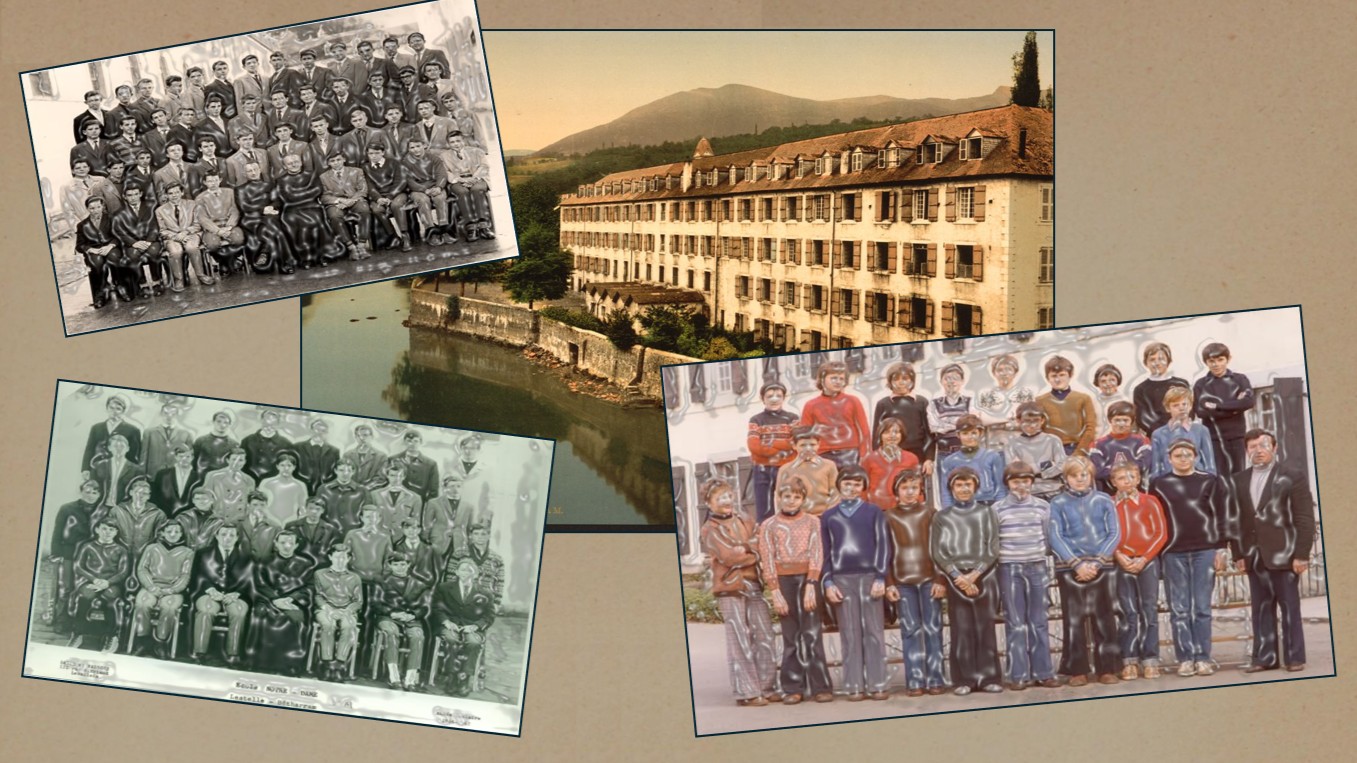
Also, during the last three years, France has been shaken to its core by the scandal at the school in Bétharram, which opened an entirely new dimension of the scale of systemic abuse at Catholic schools.
And now it's not only Bétharram, but it's a plethora of schools all over France. What do you think about this?
Well, the CIASE or Sauvé Report investigated on Catholic schools, but not that far.
And what is interesting with the Catholic schools is that in France, this is very sensitive issue. And this is very important also in French political life, because Catholic education has been the source of a long fight between the Catholic Church and its schools, on the one side, and the State, the lay State, and the ideal of the lay school, the public school, on the other.
So that case has entered into a larger debate on Catholic education in France. But what is interesting too is that this is not only diocesan schools, these are also religious school from many, many Catholic communities and congregations, and especially Bétharram, which is not only a teaching congregation, but also a missionary congregation.
English Edition
Bétharram: Sacrificing the head so the body may live
As a consequence, there is a mixed reality, with cases in France and abroad; it has missionaries, and it also has had bishops, who also have some responsibility too on top of that of the congregation, the order as such. And it actually became a real political debate in France.
Maybe you know that next year, there will be the presidential election in France. So, what we see after five years is that the French Catholic Church has no strength anymore because of the damage to its reputation. Its reputation has been really killed by the Sauvé Report.
And what the bishops say, their speech and that of their leaders in France has no more power or no more audience. If you go over their social media, no bishop will speak anymore.
And the problem is that in France, the society is really divided and the polity is really divided too. And, as far as its reputation is concerned, the Catholic Church is going down.
And the society is leaning to the right, just as it has happened in the United States of America, there is great interest from the far-right to use Catholicism as some kind of civilizational sustain. They are trying to get some kind of accreditation from the church.
As a consequence, they widely open their newspapers, their TV shows to the bishops and the bishops, they don't have any more place to speak. So, some of them, they agree to go on that TV show. And so on.
So, within that context, how do you expect the visit, the apostolic trip of Pope Leo to happen? What is your expectation about this trip?
This is an enigma for us. Really, we don't know what, how did they invite the Pope to France? What did they tell him? We guess that it was Cardinal Jean-Marc Aveline, who is the bishop of Marseille and president of the French Conference of Catholic Bishops.
We don't know what he really asked him, when the decision to come here was taken. The fact is that he is coming in a very special political time, a few months before the elections, so, we don't know what to expect.
Could be a surprise because Pope Leo XIV is surprising everywhere he goes.
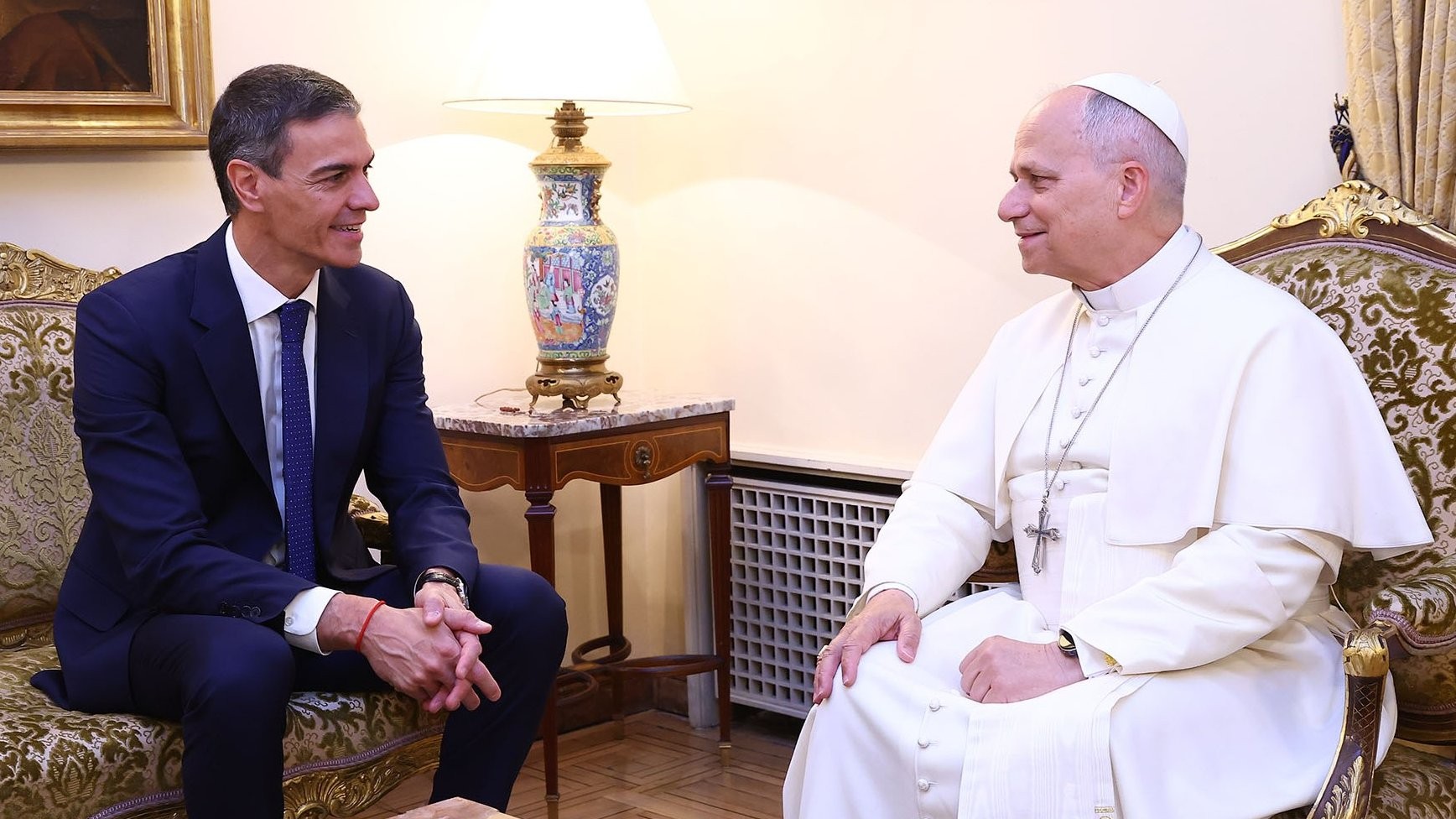
His visit to Spain last month was something, it was quite a success. What is going to happen later in France? The problem is that in France, the handling of sexual abuse cases by the Catholic Church, I mean, by the bishops and the nuncio is not good.
English Edition
Leo XIV in Spain: The Catholic Church’s many paradoxes
After the nuncio, it's handled by the Roman curia, and what we can see for many cases in France is that the curia is not doing well, despite being straight under the responsibility of the Pope.
So, I don't think the Pope’s visit to France will change anything about this…
You don't perceive a specific change coming as a consequence of the visit?
First of all, I don't think that sexual abuse will be the main subject for the visit. It will be a detail in the visit. Sure, there will be a meeting with survivors, but we will never know what will happen in that meeting. We will not know who will be received and who will not get an invitation to the meeting.
Do you expect a similar situation to what happened recently in Madrid, with a closed meeting and no official acknowledgement of the meeting?
In France, everything is linked quite closely. If the Pope speaks about politics, then we can understand something about sexual abuse, about power in the Catholic Church, about the responsibility of the leaders and so on.
And what is your take on the changes happening in the French judiciary? Do you perceive there more disposition to take upon these cases? I mean, we have had a string of rather shocking cases of abuse, not only in clergy or religious settings, but we had the Gisèle Pelicot case, there were more recent cases in schools, and not only Catholic, which is also relevant to understand, which is something that the Sauvé report was adamant stressing how sexual abuse is not only happening in religious contexts, and how dangerous it could be when combined with other elements in the overall, larger society.
I think this is too soon to say, because the last cases, especially about children in their families and schools, there is huge indignation in the society.
There have been a lot of promises by the politicians to reform the judiciary system, but it's too soon. First, we don't know if something will happen really one year before the election. And I don't think so, but it's too soon to say, I think.
What we see for the French society is that the MeToo movement, as we say, has been able to achieve something in France, and this is the major issue today: there is a huge sense of injustice in the French society,
But also, there is this perception, how to say it?
It is the perception that you don't want to listen anymore about the scandals. And this is the same thing for the abuses in the Catholic Church.
For, maybe, two or three years many newspapers went investigating on many cases, but now, for the new cases, no one will, because the people reading the newspaper, they don't want to hear about it anymore, it's too much.
Is it too much? That is the perception?
Yeah, it's too much.
Do you perceive a certain fatigue with the issue?
Absolutely. And I guess that some of those who are responsible of these issues in the Catholic Church, they are aware of this fatigue and they believe that it's a good thing for them.
Do you perceive them still trying to run down the clock on this issue, to win it on time?
My opinion, after November 2021, is that the Sauvé report explains something: there is something similar to a mafia in the Catholic Church. Like a mafia, I'm not afraid of the word.
It is something like that. A combination, a mixture of power, titles, and sexual abuses. And the answer is not the answer required for a mafia.
As you know, when the mafia was really hurting Italy, the answer from the Italian justice was a special jurisdiction for the mafia, a special law, because they understood that the mafia in Italy was very dangerous for the Italian democracy itself.
I think this is exactly the same for the Catholic Church in France. We have something like a mafia from France to Rome. And this is very dangerous for the life of the Catholic Church, for the Catholic Church itself. So, we need a special legislation, a special judge and special law to deal with the subject.
And actually, we don't, we don't do it. All that we do, a few, but we do, is safeguarding.
And, safeguarding is good, but if criminals still run the place, there is no use at all for safeguarding.
Now, within that context, what do you expect from the apostolic visitation to the so-called Emmanuel movement? Do you expect some major change there as far as the movement is concerned?
Well, I know the Emmanuel Movement generally, as a movement, but not that well. But as you know, in France, there are apostolic movements in many cases with apostolic visits, on top of apostolic control in many, many communities.
For the vast majority of them we don't have a report. And when we have it, it's only a partial report, with only few details of what actually happens.
And the other problem is that the Catholic Church allows these communities to make them their own, their own independent controls, and their own independent reports.
By doing this, we don't achieve any good, any goal.
And we go back to the issue of safeguarding because many of these orders, many of these communities are betting big on these alleged changes on safeguarding.
And the evidence we have for the last five years is that these policies, as far as safeguarding is concerned, are not really that effective. At least that's the case in Latin America.
This is the same for my own community. We were waiting for a safeguarding protocol for many, many years. At least after many, many scandals, they sought out a protocol of safeguarding.
But as far as I know now, they don't follow the protocol, their own protocol. So that's what I say, safeguarding is not enough. If you only do safeguarding, but you cannot probe, sanction and punish the criminals, what is it for?
Would you say that many of these safeguarding policies and procedures are nothing but makeup, a cosmetic measure?
This is mostly damage control for the communities, who are in the eye of the storm, but it's not the way to actually make safeguarding productive. You need the quiet, peace and time to learn. But this is the only answer so far from the Catholic Church.
We don't have any more judicial or canonical progress…
We have Tutela Minorum and safeguarding as progress. It's good, but it's not enough.
You have some progress with safeguarding in Asia because of Tutela Minorum, but there is no liberty of speech in Asia, especially for that sort of subject.
And the issue of clergy being at the same time, the accused, the police and the judges of other clergy members, which brings us back to what already was the key issue highlighted by A.W. Richard Sipe back in the 1990s, which is really hard because we have been hearing so much about the promise of safeguarding. And the sad reality is that as an example, the Legion of Christ in Spain is still having cases, despite all the alleged investment in safeguarding policies and procedures and all these issues. Do you perceive that in France is the same situation as far as safeguarding is concerned?
Yes, I guess it's even worse in France. What is really impressive in France is that the crimes are still happening. And, the same group doing the crimes, ask for forgiveness, and are the judges, the bishop is the judge in his diocese. The same group doing a report and investigating the accusations, do the ruling, and communicate on the cases because it is the bishop who communicate or the Catholic press and the same who decide how to repair with the French reparation system in the church.
English Edition
Playing the victim: a template at the Legion of Christ
And the problem is that the church, the French Catholic Church is actually already so small, and it is getting smaller and smaller, so it is always the same group of people who know everything, the same secrets.
And that problem of concentration is these people barely start to understand that there is a real problem there. And even in the government, in the French government and the French justice.
And yet the head of Tutela Minorum is a French bishop, a former auxiliary in Paris, bishop Thibault Verny…
Yeah, I think he's a nice guy and he's doing well, but the problem is not there.
And the other problem is that as far as safeguarding is concerned, Tutela Minorum is the only institution in Rome addressing the subject. That means that the people in Tutela Minorum get information from all over the world about many, many cases.

English Edition
Leo XIV appoints Verny at Tutela, new wine in old wineskins?
That means that they got the information. By having the information, they got the power because information is power in the Catholic Church, and the secret is also power in the church. But in fact, they can't do anything. So, they have the power, but they don't have the power to change.
Yes, they hold the secrets, but they cannot act upon that knowledge.
They can act on safeguarding, but only on safeguarding; they don't need all that sort of information.
What is your assessment? What is the Catholic Church at large lacking, both in France and elsewhere?
I think we are lacking of transparency. But not only transparency on the protocol. We are lacking of transparency on the cases and not on the cases themselves, on what did they do and what the victims suffered.
No, transparency of the church handling of the cases. Because the problem is that it's not the priest who did something bad, but all the complicity in the Catholic Church’s structure.
And is there no transparency at all in the French Catholic Church?
Not at all. When we ask about the priest, at least they would say, what happened with the priest, but they never say about the handling in the Catholic Church, because talking about the handling goes against the protocols of the French Catholic Church, the Roman curia, and so on.
Yes, even tracing the appointments of a priest is a very difficult task. Even if it's possible to do it with some bishops because one has websites with databases, like Catholic Hierarchy as an example, to figure out where he has been. That very same bishop personal record before being consecrated is almost always impossible to find. It's very hard to figure out where in the world a priest has been before being appointed to any given position. And that creates a whole set of problems by itself because it is almost impossible to figure out where he has been.
And I think it was even better before because in France, since all the cases in 2016, since that time, we have no more information that we had before. But when they understood that some people is going to check, they blocked everything.
Okay, if you would like to add any other issue that you think is relevant, thinking about the upcoming visit of the Pope.
No, we still have hope. Because hope is stronger than death, but I don't know.
Well, I thank you very much for this.
You're welcome.
* * *
A summary of this piece is available as audio after this paragraph.
Note on production: The text of this summary was written and edited solely by the author. The delivery of the audio summary was achieved using a high-quality, text-to-speech engine Microsoft Word for Web. The AI was used for voice generation only, not content creation.