
Rodolfo Soriano-Núñez Jueves, 04 de Julio del 2024
Although twinned by their location, the Roman Catholic dioceses of El Paso and Ciudad Juárez offer contrasting and contradictory responses to clergy sexual abuse.
In El Paso, bishop Mark Seitz published a list of clergy abusers, publicly apologized, and has compensated victims, while José Guadalupe Torres Campos harasses the victims in Ciudad Juárez.
By Rodolfo Soriano-Núñez
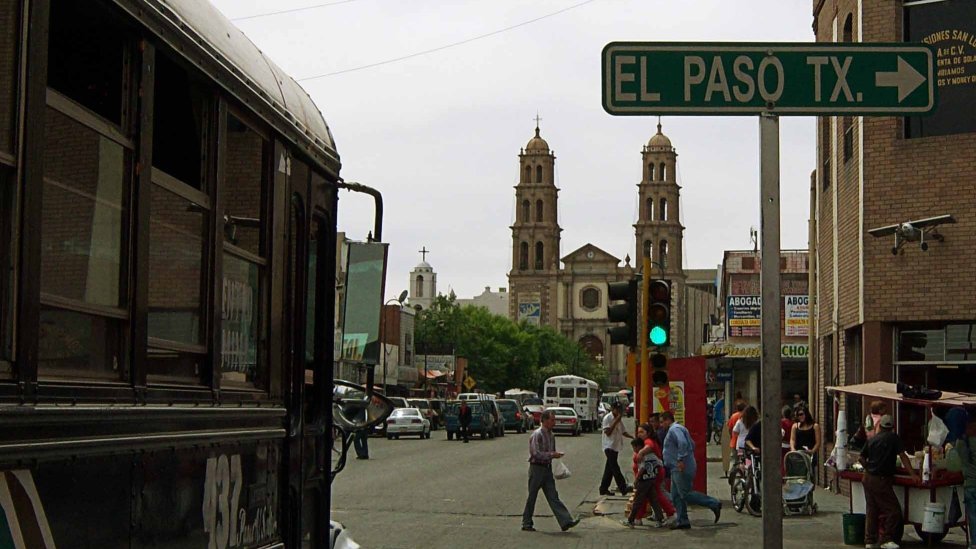
That Ciudad Juárez and El Paso are united by something more than the common history of the founding and the separation that came after the war of 1846-8, does not prevent their citizens from being aware of the many differences between the twin sister cities at the border.
The differences do not end or begin with language, currency, the way of measuring distances or temperatures. They can be seen dramatically in the stories of clergy sexual abuse at the hands of Roman Catholic priests.
It is not that clergy sexual abuse is worse in El Paso or Ciudad Juárez. Each of the sister cities has had its share of sexual predators.
The difference between the cities separated by the Rio Grande or Rio Grande, depending on which side of the border one is on, is that while El Paso faced the facts, like many other dioceses in the United States, Ciudad Juárez lives in denial.
The Catholic Church in the United States has learnt the hard way that attacking the victims, humiliating them, discrediting them is worse for the Catholic Church. In Ciudad Juárez, as in many other dioceses in Mexico, bishops bet on amnesia, on oblivion, on the victims dying or on the corruption of the Mexican authorities to address the clergy sexual abuse crisis.
When one sees the cold numbers in table 1, it is possible to notice the similarities between both dioceses. Back in 2021, El Paso reported to Rome 79.8 percent of its population as Roman Catholic, just under 719 thousand of a total of just over 900 thousand people in that corner of Texas.
Its Mexican sister reported that same year 79.57 percent of the population of that territory of Chihuahua as Roman Catholic, just under one million 333 thousand of the almost one million 700 thousand people living there.
Ciudad Juárez operates in almost 30 thousand square kilometers, just over eleven thousand square miles, from seventy-seven parishes with 121 priests, with an average of eleven thousand Catholics for each of those priests. El Paso operates in a territory of almost 70 thousand square kilometers, just under 27 thousand square miles, from ninety-nine parishes with 118 priests, and an average of just over six thousand Catholics for each priest.
To fulfill their duties, priests of El Paso must cover much greater distances than their counterparts in Ciudad Juárez who, on the other hand, must serve a larger number of people in a smaller territory.
Outside of that, it is difficult to say that things are radically different in the seven Catholic temples dedicated to Our Lady of Guadalupe in Ciudad Juárez, Chihuahua, as compared to the temples of the two parishes dedicated to Our Lady of Guadalupe in El Paso, Texas.
Even the buildings, their designs, all speak of the same religion, a similar culture practiced, however, in two different institutional contexts. That is what changes.
With all the defects that can be attributed to justice in the United States and especially in Texas, starting with its race- or ethnic-driven biases, which means that Latinos and African Americans are always at greater risk of being blamed for a crime in Texas, the reality is that the U.S. judicial system offers clergy sexual abuse victims greater opportunities to find some relief and reparation.
Mirrors
The fifteen kilometers or just over nine miles that separate the parishes of Our Lady of Guadalupe, in Guadalupe, Chihuahua, from Our Lady of Guadalupe in Fabens, Texas, do not change anything about the narrative of the apparitions of Guadalupe, or the beauty of the holidays of December 12th. One is a perfect mirror of the other and vice versa.
What changes is that, while in Texas victims of clergy sexual abuse have some hope of receiving a measure of justice, in Chihuahua, the victims' complaints end up becoming artifacts against themselves.
A report to the authorities is not the beginning of a process to offer justice and restore the social fabric and trust; lawyers at the service of those who can afford their fees, easily turn reports of clergy sexual abuse into the nightmare that Javier, Margarita’s father has experienced.
Margarita, the pseudonym of a girl whose identity I am preserving, ended up at the now defunct government shelter in Pradera Dorada, at the request of the lawyers of the Roman Catholic diocese of Ciudad Juárez. There, Margarita became the victim of sexual abuse of another female inmate.
The diocese’s lawyers were trying to prove that she was subject to abuse in her own family, as a way to discredit her and her father’s denunciation of the sexual abuse she suffered there and the molestation she suffered at the hands of Istibal Valenzuela Olivas. Los Angeles Press provided a detailed account of her case in a story, available only in Spanish, linked after this paragraph.
It is not that Mark Joseph Seitz, the bishop of El Paso, Texas, has a gift making him especially better or superior to José Guadalupe Torres Campos, the bishop of Ciudad Juárez, Chihuahua.
The fact is that, Chihuahua makes it easier to perpetrate crimes. The system of justice in Chihuahua makes it easier for crimes to remain unpunished and facilitates that trials are not a door for justice; rather, they are a door to fabricating guilty parties, as Guadalupe Lizárraga has proved repeatedly at Los Angeles Press.
While bishop Seitz and his lawyers have had to recognize the need to be transparent, to listen to and care for victims of sexual abuse north of the Rio Grande, bishop Torres Campos evades any reparation or responsibility by seizing the many failures of the municipal and state police, the so-called ministerial police, a distant equivalent of the Criminal Investigations detectives in Texas and other states in the U.S., the office of the Chihuahua State’s Attorney, and the judges.
It is not that he can always win, as the case of Aristeo Baca demonstrated, but as that same case proves, Torres Campos uses a vast repertoire of resources to avoid any responsibility by “convincing” the victims' and their relatives that he has all the contacts in the right places.
The difference
Although Roman Catholicism is similar on both sides of the border, for victims of sexual abuse the difference between living south or north of the Mexico-United States border is relevant.
It is enough to consider that from the webpage of the diocese of El Paso it is possible to know of the existence of thirty priests accused of sexual abuse linked to that Texas diocese since the 1950s. And it is not just El Paso. The diocese of Las Cruces, in New Mexico, has also published a similar list, as have had other dioceses in the United States.
Here the list published in 2019 by the diocese of El Paso, Texas, with the names of the 30 Catholic clerics with accusations of sexual abuse.
On the website of the diocese of Ciudad Juárez it is not even possible to obtain information on the physical, postal, or electronic addresses of all the parishes in that diocese, something that is extremely easy to obtain from the website of the diocese of El Paso. Furthermore, El Paso offers its information both in English and, portions of it, in Spanish.
Here the list published in 2020 by the diocese of Las Cruces, New Mexico, neighboring those of El Paso and Ciudad Juárez.
It is not as if the thirty priests that the diocese of El Paso acknowledges as sexual predators goes undisputed. However, that figure of thirty is closer to the figure of forty-seven that one gets when estimating the number of predator priests using the criteria set by the Sauvé Report as I will explain later in this piece.
And there lies a major difference when compared to what we know with great difficulty about the sexual predators of the diocese of Ciudad Juárez, which is the product of media reports and what we know about the criminal proceedings of Leopoldo Nevárez Erives’s and Aristeo Baca’s cases. As far as Baca's case, Los Ángeles Press published a story available only in Spanish, liked after this paragraph.
In fact, as far as the diocese of Ciudad Juárez is concerned, there is no public acceptance that any of its clerics and/or employees have committed any error, much less sexual abuse.
In that sense, the contrast between the diocese of El Paso and that of Ciudad Juárez is abysmal, since in the Mexican diocese still adheres to the idea that nothing happens once one crosses the border into Mexico.
Bishop Torres Campos' attitude stands in sharp contrast with bishop Seitz’s, who has a video in his diocese’s website explicitly addressing the issue of clergy sexual abuse, both in English and Spanish.
On the other side of the fence, whatever the diocese of Ciudad Juárez renders as information is, mostly, open invitations for masses, kermesses, or parties, but no acknowledgement of the mistakes and crimes perpetrated by their priests.
It is almost impossible to track down the movements happening in that diocese, something that other dioceses in Northern Mexico do regularly even if through their Facebook pages, as in the case of the diocese of Saltillo, in the state of Coahuila.
Some of that “information” is available, eventually, on the Facebook page of the diocese which, as far as it is possible to observe, is the main vehicle of its communication policy, alongside with a similar Facebook page of the seminary and some personal pages maintained by the priests of Ciudad Juárez on their own.
There is a diocesan newspaper, Presencia, which maintains a site where many of its articles are reported as “unavailable”, in which it is impossible to carry out systematic searches, since most of its content is behind a paywall.
Silence as a strategy
If we know of the two priests publicly and officially identified as sexual predators in Ciudad Juárez is only because of what the media has published in Mexico and in the United States.
If I say that the figure of 30 clerics acknowledged by the diocese of El Paso is an improvement when compared to Ciudad Juárez policy of relentless silence is not because I am “pro-gringo”, or because I believe that “the grass is always greener on the other side of the fence” or for any other reason.
The figure of 30 predatory clerics that the diocese of El Paso reported in 2019 is more credible or closer to reality than that of two cases that we know of in Ciudad Juárez because, when using the criteria set by the Sauvé Report for both dioceses to calculate the number of predatory clerics and ranges of the number of victims of sexual abuse, we get the numbers reported in Table 2 for Ciudad Juárez, immediately before this paragraph and for El Paso, in Table 3 presented below.
These numbers are just the product of an estimation following the criteria set by the Sauvé Report.
That report was commissioned by the Roman Catholic bishops of France. Their authors had full access to the archives of each French diocese to know the data on the number of clergymen and reports of abuse. It them who had access to that information who set the number of clerics as the determining factor of the estimation presented in those two tables.
Unlike other documents that operate on a more casuistic logic, such as those of the prosecutors of Pennsylvania, Illinois and other states in the United States, or those presented by some dioceses in Germany, the one prepared by a Polish newspaper or the one that more recently presented by the Swiss University of Zurich at the request of the national conference of bishops in that country, the Sauvé Report is the first and so far the only one that offers indicators allowing to estimate the number of victims.
That number depends on a constant that the Sauvé Report calculates to be around three percent of the total number of clergymen in any given diocese. The Sauvé Report sees this value as the minimum to make relevant international comparisons.
The Sauvé Report, commissioned by the French Conference of Roman Catholic Bishops states that…
…a rate of around three percent of priests and members of religious orders who committed sexual violence against children, constitutes a minimum rate and a relevant point of comparison with other countries.
Although it is impossible to replicate the procedure followed by the Sauvé Report, since I do not have access to the dioceses’ archives, in this case I have done my best to provide a historic account of the number of predator clergymen and victims. Instead of providing “static” estimations as I have done for California in the United States and the Mexican Baja Californias for current predator clergymen and current victims.
In that sense, the figure in the first column of tables 2 and 3 of this text is the result of adding up the number of priests, both diocesan and religious, the number of permanent deacons, and the number of religious males.
Based on that number, the second column is the equivalent to the three percent of the number in the first column in both tables.
The third and fourth columns on each table are the lower and upper limit of the range. That range is also provided by the Sauvé Report. Those limits have been calculated using the range of 25 to 63 victims per predator as the base for the estimates for each of the two Catholic dioceses.
It would be better to have more precise values, but the Annuario Pontificio, a statistical summary of all the dioceses of the world that the Holy See now publishes more regularly, did not do so before.
During Paul VI’s and John Paul II’s reigns the Annuario Pontificio only reported updates for these two dioceses in the years 1966, 1970, 1976, 1980, 1990 and 1999.
From this century onwards the updates are more frequent, but they are not yearly.
Therefore, the calculation is built over irregular intervals of between eight and up to 14 years for each cohort of predator clergymen and victims.
For this comparison I have calculated the victims that existed, according to the number of male clerics reported by each of the two dioceses, in the years 1966, 1980, 1990, 2003, 2013 and 2021. The figures reported in the last horizontal row, labeled Totals, corresponds to a simple sum of the values reported for those years.
The El Paso diocese's reported number of thirty male clerics with credible accusations of sexual abuse is much closer to the estimate drawn up using the Sauvé Report criteria than the fiction clung to by the Ciudad Juárez diocese, that claims to have no cases of clergy sexual abuse, and where only when going through media reports it is possible to find two cases of sexually predatory clergy.
This without losing sight of the fact that I was unable to find any official document from the diocese of Ciudad Juárez in which at least recognizes these two cases, in addition to the fact that, unlike El Paso, the Mexican diocese has not published a report about the abuses that occurred in that religious district.
The figures in Table 2 and 3 are the result of using a minimum estimator. There is evidence in other reports, as in the case of Australia, of dioceses where up to 15 percent of clergymen participated in predatory practices. If that was the case for other dioceses, then the limits of the range on columns 3 and 4 of the tables would need to be multiplied by a factor of five.
Previously, Los Ángeles Press published an estimate of the number of predator clergy and victims of clergy sexual abuse for 64 countries, available immediately before this paragraph.
Neither Ciudad Juárez nor any other diocese in the state of Chihuahua have even reported to the Mexican Conference of Catholic Bishops (CEM) the creation of their commissions to prevent clergy sexual abuse. In fact, less than half the Mexican Roman Catholic dioceses have created this type of commission in their territories, as reported in the story linked after this paragraph.
That none of the five dioceses and one archdiocese of the state of Chihuahua have created their commissions for the protection of minors is just one more symptom of the problems affecting Catholicism in Chihuahua and Mexico at large.
If back in the 1980s Chihuahua had a forward-looking Catholicism, willing to understand “the signs of the times”, as is often said in the jargon of the apostolic movements of Mexican Catholicism, today it is a reactionary Catholicism, unable to follow the Pope’s timid lead on almost any issue.
As far as the clergy sexual abuse, they are unwilling to follow the lead of the Roman Catholic dioceses of Texas and New Mexico in the United States or those of Coahuila, Nuevo León, and Durango in Mexico, some of which have set up, at least, their commissions to prevent clergy sexual abuse.
It should not surprise that, just as bishop Torres Campos avoids as much as possible any action aiming at preventing clergy sexual abuse or at taking care of the victims in his diocese, his hierarchical superior in the Catholic Church, the archbishop of Chihuahua, Constancio Miranda Wechmann follows the same pattern.
This perverse dynamic is evident in the case of Margarita and in the other cases that surely exist, but that remain unknown, most probably because of the way the diocese chastises those who dare to go public with a report.
As I proved on the first installment of this series, available only in Spanish here, Bishop Torres Campos has not followed any of Pope Francis’s suggestions regarding the treatment of victims. Torres Campos has not received Javier; he does not acknowledge Javier as the grieving parent of a victim.
Instead, through his lawyers, Torres Campos harasses Javier and Margarita, his daughter, taking her away from their home and sending her to an unsafe place, so unsafe that the shelter of Pradera Dorada no longer exists.
What exists, however, are the consequences of the abuse that Margarita suffered there.
It was in this sense that I spoke with Erika Espinoza. She and Angélica Torres are Javier’s and Margarita’s lawyers.
Priorities
When asked about the situation of the case, Ms. Espinoza points out that her first priority is that in this situation in which the victim is a girl who was sexually abused by a priest and later abused by a female at the shelter “the crimes do not go unpunished; We seek to clarify the facts and we hope to obtain a conviction for the aggressor.
“The law in Chihuahua and Mexico says that the purpose of the procedure is ‘to protect the innocent and repair the damage’. In this case, it is necessary to ask: how can the damage of sexual violence in childhood be repaired? I consider that repairing the damage is difficult to achieve, it is not feasible.
“What are we looking for? First, that the courts acknowledge the value of the victim’s testimony. It is not just Margarita's voice. She is the voice of other girls and boys and teens, both male and female. We want Mexican courts to stop discriminating against children. We want to stop their discrimination of women.
“We want them to believe the voices of children reporting violence. As of today, they assume that girls or boys reporting violence are liars, which is what the diocese of Ciudad Juárez has alleged at different points in the process.
“We want them to put an end to the idea that people who claim to do a job or a service to God are unable to perform acts like these. We want to stop giving preference to what people who claim to have such a special mission say over what children, teens, and other victims who cannot claim such special service to God say.
“We want Margarita's word valued, respected and we want the same for any other girl or boy who calls out an attack on them.
“We want them not to be the ones facing doubts, disbelief. Our team wants Margarita to obtain justice, despite a path full of hurdles she is facing. We want the judges and district attorneys hearing and believing the victims, and, consequently, we want punishment for her aggressor.
A feature making especially difficult to litigate these cases, explains Espinoza, is that in Mexico “the judicial processes have the adults as the main characters. Law in Mexico is adult-centered and, of course, sexist.”
And then, she adds, there is the revictimization of the victim: “Margarita has been revictimized at different points in the process. As a result, other crimes have been committed against her.
“The Mexican justice system has punished Margarita more for telling the truth about what happened with that priest. And unfortunately, just as it happened in her case, happens in other cases in which our firm helps females and girls who have been victims of sexual violence.”
Stop pretending
The lawyer elaborates: “the fight is for her; so, the fight is to end the simulation of the enforcement of the law. We need to stop pretending that there are protocols to deal with the cases with a gender perspective. Judges, district attorneys, and the police dismiss those protocols in in practice, even though in this and other cases involving girls, boys, and teenagers, the judges and the office of the State Attorney cite rulings from the Mexican Supreme Court.
“It is necessary to stop pretending during the processes; we need a thorough enforcement of the law, the rulings, and the protocols in cases in which girls, boys and teenagers are the victims of sexual violence.
“Also, Mexico must abide by the criteria set by the international treaties ratified by our Senate, as with the Convention on the Rights of the Child or the Convention of Belén do Pará, that is, the Inter-American Convention to Prevent, Punish and Eradicate Violence against Women, among other treaties that are there, but that are not acknowledged in the everyday practice of the Mexican courts.”
-How much simulation there is in courts when it comes to these protocols?
“Although the judges and district attorneys frequently cite the protocols, in practice they dismiss the protocols and the written law. This Belén do Pará Convention is frequently cited, among others, when we deal with case related to girls, boys, and teenagers.
“All parties cite the principle of the law talking about the ‘best interest of children,’ but in practice they dismiss the rights of girls, boys, and teenagers.
"We hope that, in the remainder of this and other cases pending in the courts of the state of Chihuahua, the judges follow the stated procedure with true adherence to the spirit and letter of the law and the treaties.”
-And is there empathy from the authorities?
"No. We hope there was empathy from them. We would hope that they were willing to acknowledge in practice the dignity of girls and women who have been victims of sexual violence. But they do not.
“It is unfortunate to find so many hurdles, among them the absence of empathy and an effective understanding of what it is to be kid, a female or a gender minority and going through a process as we have done with Margarita for the last three years and that we cannot even think that is open.
“I cannot go into the details of the case, but that shows how difficult it is to litigate if the courts dismiss the rights of girls, boys, and teenagers, since the authorities are not willing to believe in their word.
“It is sad, but far from believing the girls, boys, teens, and even adult victims of sexual abuse in the Catholic Church or in other spaces, the authorities prove them that if they report they will have serious problems, starting with this unwillingness to believe them.”
At this point my conversation with the lawyer ends. I cannot help but think that, just as in the civil sphere there is this abyss between the stated principles of the laws and the treaties, in the Roman Catholic Church, the diocese of Ciudad Juárez dismisses the so called “spirituality of reparation” proposed by Pope Francis back in May 2023.
Bishop Torres Campos dismisses the ideas embodied in this spirituality of reparation; he dismisses even the idea of creating the commission to prevent clergy sexual abuse in his diocese, even though he seemed so solicitous with Pope Francis when he hosted the Pontiff’s visit back in 2016.
He does not even imitate the realistic, no-nonsense attitude of his namesake, his brother and colleague in the episcopate, bishop Seitz of El Paso, as to accept that there are indeed sexual predators in his diocese. Seitz recently had to spend more than a million and a half U.S. dollars to settle one of the cases involving priests in his diocese.
It is not out of chance that even members of the Commission for the Protection of Minors, the so-called Tutela Minorum, made in mid-2023 a dramatic call to cease simulation in the Church. Will achbishop Miranda Wechmann of Chihuahua capital and bishop Torres Campos of Ciudad Juárez listen to them? Will they ever follow Pope Francis's lead?