
Rodolfo Soriano-Núñez Lunes, 13 de Octubre del 2025
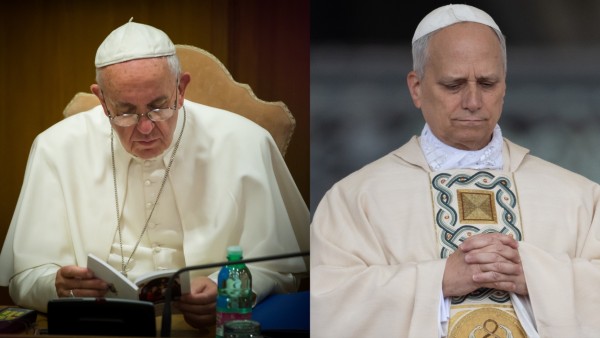
In doing so, Leo XIV runs the risk of losing what Francis achieved to control “soft money” and addressing the clergy sexual abuse crisis.
How far will Leo XIV go in his attempt to undermine Francis’s timid attempts at reining in the Catholic Church’s worst clericalist appetites?
By Rodolfo Soriano-Núñez
The last couple of months in Rome have been momentous, yet not in a way that inspires hope for institutional improvement. Instead, recent actions under Pope Leo XIV signal a potential reversal of the accountability and transparency reforms instituted by Pope Francis.
This is most critically observed in matters relating to the clergy sexual abuse crisis and the financial system designed to prevent its cover-up. As much as one would like to believe that institutions learn from their mistakes, the early signals from the new pontificate demonstrate a dangerous willingness to revisit the very mistakes hurting the Catholic Church’s credibility.
For reasons that are not self-evident, Pope Leo XIV performed actions that contradict key accountability policies driven by his predecessor, though allies present them as measures aimed at improving the Church’s administrative ability.
On the one hand, early in September, Pope Leo XIV signaled a major concession to U.S. Cardinal Raymond Leo Burke—a leading Francis critic—to celebrate the so-called Traditional Latin Mass in St. Peter’s Basilica.
Later in September, Pope Leo XIV initiated a troublesome rhetorical pivot on the clergy sexual abuse crisis. In an interview with Crux, he spoke of “innocent priests” facing false claims. For reasons hard to understand, in doing so he risks reopening the “hunting season” on survivors.
On Monday, October 6, Leo XIV issued a document, akin to a decree, known by the Catholic Church as a Motu Proprio. This document, titled as it is usually the case in that church in Latin Coniuncta Cura or Shared care kills one of Francis’s key financial reforms.
Finally, on Thursday, October 9, Pope Leo XIV published the first major document of his pontificate, the Apostolic Exhortation Dilexi Te (I have loved you). The document stresses the Christian duty to care for the poor and marginalized and as such has been presented as an indirect indictment of the current authoritarian and anti-migrant policies in the United States.
Granted, it is impossible to label Leo XIV’s choices as a full betrayal of Francis’s legacy, but it is hard to gauge how far will he go when trying to accommodate the internal conservative forces pushing to restore the Latin Mass, to cancel financial reform and more than willing to go back to a deaf-toned defense of predatory clergy.
Isolated, these episodes could be easily dismissed as “gestures” to please specific constituencies in the Catholic Church. Taken together they spell the risk of a major reversal of what was an already timid attempt at changing the ways of the Catholic Church’s hierarchy.
The risk is greater when one takes into consideration that, as despite all concessions, it is hard to find any support from these forces when challenging Donald Trump’s and other populists’ regressive agendas on issues such as migration. One only needs to watch the “silent” rebellion of the most conservative wing of the United States Conference of Catholic Bishops, happy to support Donald Trump’s policies on migration, despite their effects on the Catholic Church own base in that country.
Betting big on Burke
Allowing for Raymond Burke to go back to Saint Peter to celebrate Mass in the old rite is politically consequential. Rehabilitating Burke lends legitimacy to a faction whose opposition to liturgical reform goes back to Paul VI’s pontificate, challenging his authority and that of the Second Vatican Council to enact changes, while promoting the most absurd conspiracy theories the Catholic Church has ever suffered.
It should be stressed that Latin was never actually absent from rituals and sacraments during Pope Francis’s tenure. As prescribed by ritual, Latin was the lingua franca of most of the masses he presided over as Pontiff, with the relative exceptions of Masses such as those celebrated on December 12, where he would talk in Spanish about Our Lady of Guadalupe.
In bringing Burke back to Rome, Leo XIV lends legitimacy to a faction of the Catholic Church known for promoting conspiracy theories to criticize the 1960s and 1970s reforms.
In that regard, bringing back the old, 1962 ritual, not only legitimizes the many attacks carried or blessed by Burke and his surrogates on Francis, supported by the most conservative factions of the Catholic Church in the English-speaking world by the so-called Napa Institute and in the Spanish-speaking world by the Yunque and Tradition, Family, Property.
They are an extension of the attacks on Paul VI back in the 1960s and 1970s. The most “charitable” of such attacks render Paul VI as a gullible character, but the most radical factions of the Catholic Church chastise him as heretical actions and even worse, as a betrayal performed by Pope Paul VI because of his alleged Jewish ancestry or because he was portrayed as the very incarnation of the Antichrist.
Claiming Paul VI was a “crypto-Jew” is a persistent antisemitic conspiracy theory rooted in the traditionalist rejection of the Second Vatican Council's declaration Nostra Aetate or In Our Time, issued in 1965, which repudiated the concept of Jewish deicide (collective guilt for Christ's death).
Since traditionalists saw Nostra Aetate as a radical break from previous doctrine, the conspiracy theory provided a non-theological "reason" for the betrayal: a supposed hidden Jewish heritage on his mother's side.
As far as rendering Paul VI as the Antichrist, it should be noted that calling a Pope as such used to be the province of the most radical Protestant factions, the kind of yelling that Northern Ireland Loyalists would spit at Irish Catholics during the Troubles. What was different is that when it is about attacking Paul VI, one finds alleged Catholics using language strikingly similar to that of the Orange Loyalists in the Ulster.
Post-Vatican II traditionalists borrow the language and attitude to portray Montini as they still call him up until today, as a heretic Pope presiding over a massive “apostasy.” As one of many possible examples, see the post from a self-described “Catholic layperson”, a Spanish-speaking user at what used to be Twitter, calling in August of 2025 Pope Paul VI “Montini the Antichrist” (“El anticristo Montini”).
Also, over at Scribd it is possible to find another example of this strain of Catholic thinking with a relatively recent edition in PDF of a classic of the anti-Paul VI literature from the 1970s: El enigma de Montini (Montini's Enigma) a pamphlet where Paul VI is accused among many other things of being in the service of Masonic lodges intent on destroying the Catholic Church.
It should be noted that Montini’s enigma was written by a Mexican former Jesuit, Joaquín Sánchez Arriaga, who was expelled from the Society of Jesus after the Second Vatican Council he became a celebrity of sorts in the so-called Rad-Trad universe, where he would disparage against Paul VI as frequently as possible.
Although hard to find, there are some websites with references to other pieces by Sánchez Arriaga as 1973’s Sede Vacante: Paul VI is not a legitimate Pope or the darling of the second-hand books’ market, The New Post-Conciliar or Montinian Church.
That is the reason why the Argentine Pontiff issued stern restrictions on the use of the so-called “old rite.” Not because it was old, but because ever since the 1970s, the so-called Tridentine Mass, became the banner of the rejection of Paul VI’s changes in the Church, not only on liturgical issues, but mostly when dealing with antisemitism in Church.
That ritual is called “Tridentine” after the Italian city of Trent, where a fractious, protracted, and conflictive Council happened over 18 years, from 1545 through 1563. The Council forced an artificial uniformity on liturgical issues.
Oddly enough, the proponents of the alleged “old and authentic rite” issued at Trent, dismiss and belittle older rites in the Catholic Church. If a century before Trent, Europe was home to several variants of the rituals to celebrate the Mass and other sacraments, Trent barely allowed for the survival of the Mozarabic and the Ambrosian rites in certain regions of Spain and what is Italy nowadays.
Throwing victims under the bus
Back in September this series delved deeply into the potential implications of Leo XIV’s take on the alleged risk of over-reporting of clergy sexual abuse cases, the piece warns about the potential risks of dismantling the hard-won progress toward accountability in the clergy sexual abuse crisis during a media interview.
By shifting institutional concern back to the defense of the accused clergy, a stance unsupported by empirical data, he puts a premium on the dioceses’ documented efforts to dismiss as much as possible reports, concerns, and even settled rulings on predator priests.
The Pope decided to prioritize the defense of accused clergy by warning against “false accusations” and the lives of “innocent priests” being destroyed. The article contends that although the Pope stressed that the vast majority of claims are authentic, his emphasis on the exceptions signals a dangerous shift in institutional concern, while incentivizing the frequent attacks on survivors of clergy sexual abuse as to discredit them.
The main problem is that the Pope’s commentary on false accusations lacks any empirical backing, as there are no national or global reports documenting a significant issue with the over-reporting of clergy sexual abuse cases. Instead, institutional data overwhelmingly supports the authenticity of survivor claims and all of them stress that one of the main issues is under- and not over-reporting of abuse in religious settings.
By making the exception the rhetorical focus, the Pope provided comfort and validation to the conservative clerical factions that have long resisted survivor-centric reforms and sought to reassert the canonical "presumption of innocence" above all other pastoral and ethical duties.
The Pope’s words were not a pastoral take on the issue, but a political choice perhaps aimed at signaling a new direction to the Church’s hierarchy. This rhetoric is seen as a deliberate attempt to calm the anxieties of the clerical class, particularly those elements of the hierarchy accustomed to placing the institution’s reputation ahead of the needs of the victims.
The result is the potential rehabilitation of the old defense mechanism that characterized the pre-Francis era: prioritizing the protection of the priest's career over transparency.
The piece highlights the case involving Giuliana Caccia and the Peruvian Sodalitium of Christian Life, to expose the true nature of dangerous claims. The article notes that Leo XIV is well-versed in the Peruvian context.
Yet, the Caccia case serves not as evidence of false accusations by random victims, but rather as an instance of a politically motivated false claim made by Caccia, a member of the Peruvian ruling class, to portray herself as the victim of a former member of the Sodalitium who was among those willing to come forward about their experiences in that now suppressed “order”.
Caccia was trying to obstruct a Vatican-led investigation and protect her own network from suppression. This counterexample proves that when claims are found to be false, they are often acts of institutional “self-defense” against accountability. The article concludes by asking whether the Pope’s comments were merely “a slip of the tongue” or a chilling “prophecy of things to come.”
By initiating his papacy with a rhetorical retreat on the clergy sexual abuse crisis, Pope Leo XIV risks becoming the figure who sanctioned the reversal of accountability, suggesting that the Church's internal habit of accommodating clerical self-interest may ultimately triumph over the difficult, yet necessary, reforms demanded by the victims and the modern world.
It is hard to understand why Leo XIV would talk about that kind of behavior when it is really difficult to find any other example of similar attitudes from an alleged victim trying to bamboozle a member of a religious order such as the now suppressed Sodalitium of Christian Life.
Rome seems to insist on the fact that the suppression of the Sodalitium is on track, as decided by Francis, but whatever goodwill one could be willing to put on such decision dilutes when one takes into consideration all the other signs Rome is broadcasting these days.
And there is another risk: rendering the suppression of the Sodalitium as some sort of lasting solution. It is sad to witness how these days survivors of the Legion of Christ, the Opus Dei or the Institute of the Incarnate Word criticize the survivors of the Sodalitium celebrating the suppression of the Peruvian order as the ultimate measure to address the clergy sexual abuse crisis.
Clericalist appetites
On Monday, October 6, Pope Leo XIV dismissed one of Pope Francis’s key financial reforms by issuing a document, akin to a decree, known by the Catholic Church as a Motu Proprio.
This decree, titled in Latin Coniuncta Cura or Shared Care, directly reverses Francis’s push to centralize financial control. The official text of the Motu Proprio can be consulted on the Holy See's website here, oddly enough only in Italian, so there is no access to an English or Spanish official translation. Even on that there are hints of past attitudes from the Roman curia to try to limit accountability and transparency as much as possible.
The Argentine Pope had sought to centralize management of Church funds under the Institute for the Works of Religion (IOR), the so-called Vatican Bank. He did so not on a whim, but because the Vatican was reeling from multiple crises of financial opaqueness that led to the effective suspension of the Holy See from key European payment systems—a practical financial lockout that occurred in the final months of Pope Benedict XVI’s pontificate.
The financial crisis was defined by the London property deal, which saw the Vatican’s Secretariat of State invest approximately €350 million (over $400 million) into a speculative real estate venture.
The subsequent mismanagement, extortion, and fraud—which led to Angelo Becciu’s dismissal from the Roman curia and the College of Cardinals and ultimately to his trial—resulted in a staggering final loss to the Holy See estimated by The Associated Press at €140 million to over €200 million (roughly $150 million to over $210 million).
This enormous financial failure fueled Francis’s decision to centralize management, but it was hardly the only one reason. Decades of “lax” practices at the Vatican had allowed sexual predators such as Marcial Maciel, Carlos Miguel Buela, and Theodore McCarrick to buy their impunity through large, unregulated “donations” to Vatican offices.
This ability to dispense “soft money,” funds dispensed in cash and without the formalities of banking transactions, is a known feature of abusive behavior in the Catholic Church at large.
Almost always, where there is the fire of clergy sexual abuse, there is also the smoke of financial misappropriation and malfeasance, since predator priests and sometimes their bishops use cash to try to silence their victims, or to buy the help and loyalty of police officers in their countries or to secure support from Curial officials in Rome.
This rollback, coupled with Becciu’s trial’s uncertainty, threatens one of Francis’s few achievements to rein in the Vatican curia’s worst clericalist appetites and it is worsened by the outcomes of the ongoing trial of Angelo Becciu.
And even if Becciu’s case is weak, his behavior is reminiscent of other top Vatican officials using their access to “soft monies” to help their relatives gain access to lucrative deals, such as former Secretary of State during John Paul II’s pontificate, Cardinal Angelo Sodano.
Back in the Aughts, when Sodano was at the apex of his power, his nephew, Andrea Sodano, got into shady deals, acting as a “building consultant” for Marcial Maciel’s Legion of Christ and engaging in activities linked to old New York City Italian crime families.
Both The New York Times in 2008 (as reported by The Associated Press and published at the Los Angeles Times) and Jason Berry at The National Catholic Reporter in 2010 describe how the young Sodano benefited from his uncle’s far and wide contacts.
As far as the young Sodano was concerned, the U.S. authorities dismissed the charges, as they were not large enough to justify in their view chasing the young Sodano, but the corruption has been there as one of many stains in Sodano’s tenure in Rome.
Going back to Becciu’s rather weak case, the Vatican Court of Appeals dealt an embarrassing blow by dismissing the prosecutor’s own motions due to procedural failures. This institutional inability to punish financial malfeasance is a recurrent feature of the Church’s difficulty to rule itself.
Penelope’s works at the Vatican Bank
One also needs to keep in mind that this case was the source of one of the most bitter episodes of the recently celebrated conclave where Cardinal Prevost was elected as Pope.
Becciu, who claims to be innocent, was halfway expelled from the College of Cardinals by Pope Francis. The way the Argentine Pontiff “punished” Becciu, left the door open for the Italian prelate to make a fool of himself by pretending to be reinstated to the College during the so-called Sede Vacante, that is the interregnum after the death of a Bishop of Rome and before the election of his successor.
Francis “punished” Becciu for the mismanagement of funds in his care. Becciu used the banking accounts of one of his relatives to perform some kind of “creative accounting,” to put it nicely, that ended up biting him and the Holy See back.
The “creative accounting” practices of key Vatican officials as Becciu used to be, was the source of many attacks on Francis from the Italian far-right unhappy with his support for the migrants trying to enter the European Union, even if there was no actual way to tie Francis’s support for the migrants and the NGOs offering some assistance, with Becciu’s largesse with his family.
Granted, to assist groups facing formidable threats from drug lords, chieftains, smugglers, and their likes, religious organizations need “soft money”, the kind one can dispense in cash and without the formalities of banking transactions, but there is a known record of abusive behavior when dealing with “soft money” in the Vatican.
The story after this paragraph portrays Becciu’s case as part of the documented difficulty the Catholic Church has to rule itself and the inability to actually punish financial malfeasance, which is a recurrent feature of clergy sexual abuse, as usually “soft” money, as the one the Vatican is used to deal with, is frequently used either by predator priests to try to silence their victims, or to try to buy the help and loyalty of top officials in Rome.
The Pope’s latest decree, translated to English as Shared Care, signals a shift from a centralized approach on fund management to try to address corruption to one framed as “shared administrative flexibility,” as it used to be when subservient Legionaries of Christ priests used to spread Marcial Maciel’s “joy” in envelopes all over the John Paul II Roman curia.
Given the Pope’s take on an alleged crisis of false claims of clergy sexual abuse, one has to wonder if reversing Francis’s centralized approach is, in effect, Penelope’s work—unraveling the protective fabric woven by Francis, and suggesting that financial opacity is a risk the new Curia is willing to accept.
Loving thy neighbor
In Dilexi Te (or I Have Loved You), the document issued by Pope Leo XIV on October 9, he stresses the fundamental Christian duty to care for the poorest in their communities at a time when the U.S. Conference of Bishops is deeply divided over the nation’s political direction and the effects of Donald Trump’s policies.
It is impossible not to wonder about the actual response the Pope’s document will have in the United States with its rather tense political context.
A native Chicagoan, Pope Leo XIV has been forced to witness over U.S. media the taking over of his native city by National Guard troops brought in to enforce Trump’s restrictive migration policies.
Hours before the document’s release, the crisis was brought directly to Rome: Mark Seitz, the Catholic bishop of El Paso, Texas, held a private audience with Leo XIV where he briefed the Pontiff on the ongoing crisis at the U.S.-Mexico border.
As an Apostolic Exhortation, the document is a pastoral call that does not delve into the redefinition or reform of any major theological issue. It reveals, instead, the new Pope’s key takeaways regarding the present and future of his Church.
The timing is everything, as the document arrives in the midst of a deep political crisis in his country of origin, with subpoenas fired by the Trump administration on dubious charges, bringing the U.S. judicial system closer to that of Mexico than to that of Canada, and when the United States is grappling with a bitter government shutdown on top of other economic concerns.
Moreover, it appeared days before the celebration of what will be, by the end of October, a new development in the years-long Synod on Synodality called by Pope Francis.
The document has been perceived in some sectors of the Catholic Church as an indirect indictment of the ongoing authoritarian and populist turn in the United States, and a direct call to the Catholic base to reaffirm the Church’s teaching on migration.
However, it is unclear whether the United States Conference of Catholic Bishops (USCCB) is actually willing to challenge Trump’s policies. A few days before the document was formally published, the bishops in the state of Illinois, where Chicago is located, got into a bitter feud over abortion politics, the key driver behind many Catholic bishops’ rather blind endorsement of Trump’s policies.
Coordinated action?
The public confrontation came when Chicago Cardinal Blase Cupich announced he was willing to acknowledge Senator Dick Durbin, a Democrat who identifies himself as Catholic, for his contribution on migration issues.
As soon as Cupich announced the award, bishop Thomas Paprocki of Springfield, Illinois, came out, excommunication bulls in hand, to attack Cupich, because of Durbin’s stance on abortion.
Paprocki’s attack on Cupich, theoretically his superior, was way too similar to his 2023 attack of Cardinal Robert McElroy, at the time of their confrontation, the bishop of San Diego, California, and now the archbishop of Washington, D.C.
Paprocki’s attack on McElroy came soon after he endorsed Pope Francis’s informal blessing of “irregular couples,” including LGTB Catholics. Even if Paprocki’s accusations and innuendos had McElroy as his stated target, they were all aimed at attacking Pope Francis, rendering him as heretic.
The Cupich-Paprocki spat proved, among other issues, that there is little or no back-channel communication between Rome and the USCCB, and between the bishops of neighboring dioceses as to avoid public conflict. More so as Springfield in Illinois metropolis is Chicago. In that regard, it is hard to expect any coordinated action as a response to Leo XIV’s first major document.
Besides his rather blind support for whoever endorses antiabortion policies regardless of other issues, Paprocki is known for his denialist attitudes when dealing with the clergy sexual abuse crisis.
As recently as 2023, the Office of the Illinois Attorney General, published its Report on Catholic Clergy child sex abuse in Illinois (available here in full). The report goes over each of the Catholic dioceses in the state.
When addressing Springfield, Paprocki’s territory, the report clearly states: “men leading the Diocese of Springfield for 50 years chose to protect the reputation of the church and its clerics, rather than attempt to ensure the physical and mental well-being of its children.”
In the section devoted to Paprocki’s tenure, the report shows how he bets big on opacity and on doing as difficult as possible for victims to identify their predators:
- And even now, the diocese’s list of substantiated child sex abusers does not include each cleric’s parish assignments—the only Illinois diocese to omit such vital information for diocesan clerics. In 2019, the diocese explained its practice of excluding assignments as seeking ‘to avoid traumatizing parish communities that had no clue a priest assigned to their parish may have harmed children, and we do not want to retraumatize communities where it was known that the priest was an abuser.'
Sandinista conga
Paprocki’s and the far-right wing in the USCCB attitudes are not new. The same happened back in the Aughts in Nicaragua when Cardinal Miguel Obando y Bravo fully endorsed Daniel Ortega as the strongman there in exchange for very repressive antiabortion laws in the Central American country.
A story published after Ortega’s decision to seize the Catholic University of Central America, UCA, in Managua, linked after this paragraph, provides the details of what Obando did then.
As it stands, there is nothing innovative about Leo XIV's document about the care for the most marginalized, it is all about the timing and how, days before the celebration of the Synod on Synodality, will resume when the United States faces a bitter government shutdown and an even more bitter climate of political confrontation with no easy solution in sight.
It is within this context that a paradox emerges: even if Dilexi Te reaffirms many of Francis’s concerns and preferences, there are stark differences between Francis and Leo.
How far will Prevost go when trying to accommodate the internal conservative forces pushing to restore the Latin Mass, cancel financial reform, and return to a deaf-toned defense of predatory clergy?
It is hard to find any support from these conservative factions when challenging Donald Trump’s and other populists’ regressive agendas on issues such as migration, despite their devastating effects on the Catholic Church’s own base in that country.
In that regard, what emerges is the risk that Leo’s interest in restoring some unity with the most conservative factions of the Catholic Church, those closest to Donald Trump, clashes directly with the need to keep some basic sense of coherence with Francis take on migration and other key social issues.
Little less than 150 days into his papacy, Leo XIV seems willing to perform a profound institutional pivot.
Externally, he seems to acknowledge the need to commit to the Gospel, as proven by Dilexi Te. However, to do so, he requires the Church to confront political authoritarianism and protect the marginalized. Yet, his simultaneous internal decisions—rehabilitating the Traditionalist opposition, loosening financial safeguards designed to contain “soft money” corruption, and validating the defense of “falsely accused” priests—signal the risk of a Church's primarily focused on accommodating clerical self-interest.
The risk when performing this pivot is that this internal pursuit of appeasement with the traditionalist wing, with the curia’s love for “soft money,” and the urge to dismiss clergy sexual abuse as a defining issue will be read as a functional counter-reform, ultimately undermining the very coherence and moral authority needed to challenge the regressive political forces Leo XIV speaks out against in Dilexi Te.
In his homily for yesterday, Sunday October 12, Mass, Leo XIV hinted he is aware of the kind of dangerous path he is following when undermining Francis's legacy. As elliptic as religious discourse is, one reads there:
- The lepers in the Gospel who do not return to give thanks remind us that God’s grace can touch us and find no response. It can heal us, yet we can still fail to accept it. Let us take care therefore not to go up to the temple in such a way that does not lead us to follow Jesus. Some forms of worship do not foster communion with others and can numb our hearts. In these cases, we fail to encounter the people God has placed in our lives (my emphasis). We fail to contribute, as Mary did, to changing the world, and to share in the joy of the Magnificat. Let us take care to avoid any exploitation of the faith that could lead to labelling those who are different — often the poor — as enemies, “lepers” to be avoided and rejected.
Main problem then is sharper and crispier: why try to please and appease those whose hearts have been numb ever since a legitimate Pope as Paul VI decided to change the way the Mass was celebrated?
Why try to please and accommodate Burke and the Rad-Trads factions in the Catholic Church? What is the quid pro quo expectation there? Is that related to the changes on the Vatican's finances?
More so when one takes into consideration that the changes to the Mass approved by Paul VI were the consequence of a 70-year-long record of reports to his predecessors, going as far as Leo XIII when he authorized in 1897 the, until then, prohibited practice of translating the Latin Mass text to the vernaculars for its use in devotionals and "hand missals." Paul VI and all his predecessors, even Pius X, acknowledged the risks of blind adherence to Latin.
After reading Leo XIV's homily I was able to find out that the U.S.-Peruvian Pontiff held a private meeting, on Monday October 6, with Juan Luis Cipriani, the Peruvian Cardinal and former archbishop of Lima who decided to mock Pope Francis's restrictions set on him when he decided to attend in full Cardinal regalia, Jorge Mario Bergoglio's funerals in Rome.
Gareth Gore's posting over his Substack immediately caught the attention of angered victims of the Opus Dei, the "order" of sorts of which Cipriani is a numerary member. His question about why would Leo XIV was willing to meet with Cipriani while dismissing the need to meet with the many victims of the Opus Dei and other religious "orders" affected by clergy sexual abuse remains, up until now, unanswered and, sadly, chances are there will be no suppression of the Opus Dei as Francis was willing to do with the Sodalitium.