
Guadalupe Lizárraga Lunes, 10 de Agosto del 2026
Clark Garcia used emoji codes to share his shifts and lane assignments, allowing drug-laden vehicles to cross without inspection in Tecate.
By Guadalupe Lizárraga
Acutalizado 10/08/2026 9:26h
SAN DIEGO, California — Former U.S. Customs and Border Protection officer Jesse Clark Garcia was sentenced Aug. 7 to nine years in federal prison for allowing drug-laden vehicles to enter the United States through his inspection lane at the Tecate Port of Entry on behalf of a trafficking organization linked to the Sinaloa Cartel.
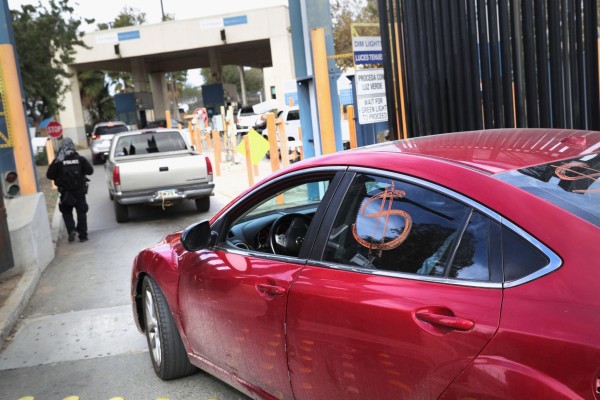
Garcia admitted that beginning in 2021 he provided traffickers with his work schedules and the inspection lanes he would be assigned to. The group coordinated the crossings through coded text messages, including emojis that told drivers when and where to approach the border.
According to the U.S. Attorney’s Office for the Southern District of California, Garcia also exploited CBP’s internal scheduling flexibility to switch shifts and work lanes he had not originally been assigned. On other occasions, he falsely reported technical problems to bypass inspections triggered by system alerts.
He was paid at least $10,000 for each vehicle he allowed through.
In his plea agreement, Garcia admitted facilitating the importation of at least 100 kilograms of fentanyl, 107 kilograms of methamphetamine and 270 kilograms of cocaine.
Federal prosecutors said the proceeds were used to purchase luxury goods, a high-end vehicle and a home in San Diego, as well as to acquire an ownership interest in a horse-racing business and build a ranch in Mexico.
The government’s public statement does not identify the address of the San Diego property, the location of the ranch, the name of the horse-racing business or the other people involved in those transactions.
Garcia left his post as investigators closed in
By late March 2024, as the federal investigation into his activities progressed, Garcia stopped reporting for work and did not respond to calls from his supervisors.
Investigators later observed him entering Mexico in a vehicle packed with personal belongings.
Mexican authorities arrested Garcia on May 2, 2024, at the request of the United States and transferred him to U.S. custody that same day.
On July 8, 2025, he pleaded guilty to nine federal charges related to conspiracy to import controlled substances and the importation of cocaine, methamphetamine and fentanyl.
The investigation was conducted by the FBI’s Border Corruption Task Force, the Department of Homeland Security Office of Inspector General, CBP’s Office of Professional Responsibility, the U.S. Border Patrol, Homeland Security Investigations and the Drug Enforcement Administration.
Garcia and Bonillo operated at separate border crossings
Garcia was prosecuted alongside Diego Bonillo, another CBP officer who used his position at the Otay Mesa Port of Entry to allow vehicles sent by the same Mexico-based trafficking organization to enter the United States.
Both men were charged in federal case 24-CR-0908-RBM in the U.S. District Court for the Southern District of California.
The federal GovInfo record for case 24-908, United States v. Garcia, identifies Diego Bonillo and Jesse Clark Garcia as defendants.
Bonillo was sentenced on Nov. 7, 2025, to 15 years in federal prison. He admitted that between October 2023 and April 2024 he allowed at least 15 vehicles to cross the border without inspection.
Prosecutors attributed to those crossings 75 kilograms of fentanyl, 11.7 kilograms of methamphetamine and more than one kilogram of heroin.
Bonillo also used a second phone to communicate his work schedules and assigned lanes. Prosecutors said he spent proceeds from the scheme on international travel, luxury gifts, tickets to the Saúl “Canelo” Álvarez-Jaime Munguía fight, visits to the Hong Kong Gentlemen’s Club in Tijuana and an attempted real-estate purchase in Mexico.
The plea agreements show that the trafficking organization had access to two corrupt officers at separate ports of entry: Garcia in Tecate and Bonillo in Otay Mesa.
Traffickers knew in advance when the officers would be working and which inspection lanes they could use to move vehicles across the border without being searched.
Mexican operators remain unidentified in public records
U.S. prosecutors described the traffickers who paid Garcia as members of a Mexico-based drug trafficking organization linked to the Sinaloa Cartel. Public filings do not identify the organization’s faction or name the individuals who directed the operation.
A separate prosecution in the Southern District of California has documented a trafficking network operating in Mexicali and California’s Imperial Valley with ties to Los Rusos, a faction of the Sinaloa Cartel.
That case charged 48 defendants, with 25 taken into custody and 23 listed as fugitives. Federal prosecutors described a network moving fentanyl, methamphetamine, cocaine and heroin through the border corridor.
No public filing, however, connects that network to Garcia, Bonillo or the vehicles that crossed through their inspection lanes.
Los Chapitos, another Sinaloa Cartel faction, also operates trafficking networks into Southern California. But case 24-CR-0908-RBM does not attribute the payments made to the former CBP officers to Los Rusos, Los Chapitos or any other specific Sinaloa Cartel faction.
The public record also establishes no connection between Garcia and Fernando Salgado Chávez, Pedro Montejo Peterson, Ismael Burgueño, Ricardo Iván Carpio Sánchez, Eduardo Riguero, or other individuals named by confidential sources in a November 2025 investigation published by Los Ángeles Press.
The criminal case has now ended with prison sentences for the two CBP officers who controlled the inspection lanes.
The public record, however, still does not identify the people who delivered the payments or decided which drug shipments would be sent through Tecate and Otay Mesa.