Guadalupe Lizárraga Viernes, 14 de Noviembre del 2025, 03:00
The 15-year U.S. prison sentence reignites debate over the reach of drug trafficking into Baja California’s economic and governmental spheres.
By Guadalupe Lizárraga
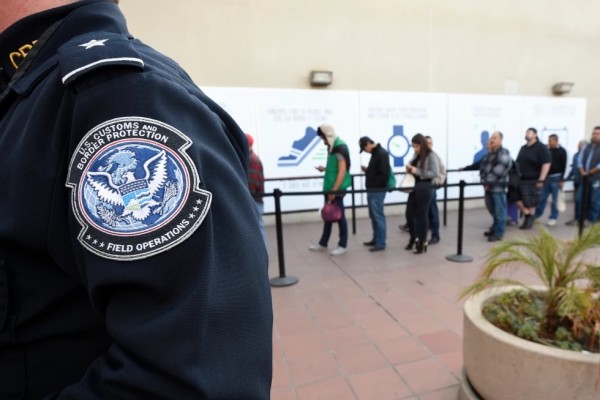
LOS ANGELES — The case of Diego Bonillo, a former officer with U.S. Customs and Border Protection (CBP), has opened an unexpected window into entrenched corruption along the Tijuana–San Diego border. On Thursday, federal authorities confirmed that the 30-year-old was sentenced to 15 years in prison after admitting he helped Mexican traffickers smuggle cocaine, methamphetamine, heroin and fentanyl into the United States.
But the conviction tells only part of the story. Court records and intelligence reports reveal a far broader scheme — one that connects government officials, influential businessmen and political operatives in Baja California to a sophisticated cross-border trafficking structure.
The CBP officer who opened the gate for cartel shipments
Last July, Bonillo pleaded guilty to conspiracy to import controlled substances. According to his plea agreement, he used his position at the Tecate and Otay Mesa ports of entry to wave through vehicles loaded with drugs without inspection.
Federal prosecutors in San Diego confirmed that at least 75 kilograms of fentanyl, 11.7 kilograms of methamphetamine and more than 1 kilogram of heroin moved through lanes under Bonillo’s supervision.
Prosecutors said Bonillo communicated with traffickers using a clandestine phone, alerting them to the lanes he would control and the times when vehicles could cross. The operation, active from October 2023 to April 2024, relied on at least fifteen drug-laden vehicles.
Proceeds from the scheme funded international travel, luxury purchases, attempted real-estate acquisitions in Mexico and frequent visits to Hong Kong Gentlemen’s Club in Tijuana.
Business and political networks behind the trafficking pipeline
Information obtained by Los Angeles Press through confidential sources indicates that the operation facilitated by Bonillo was not an isolated effort, nor was it disconnected from the political and economic structures of Baja California.
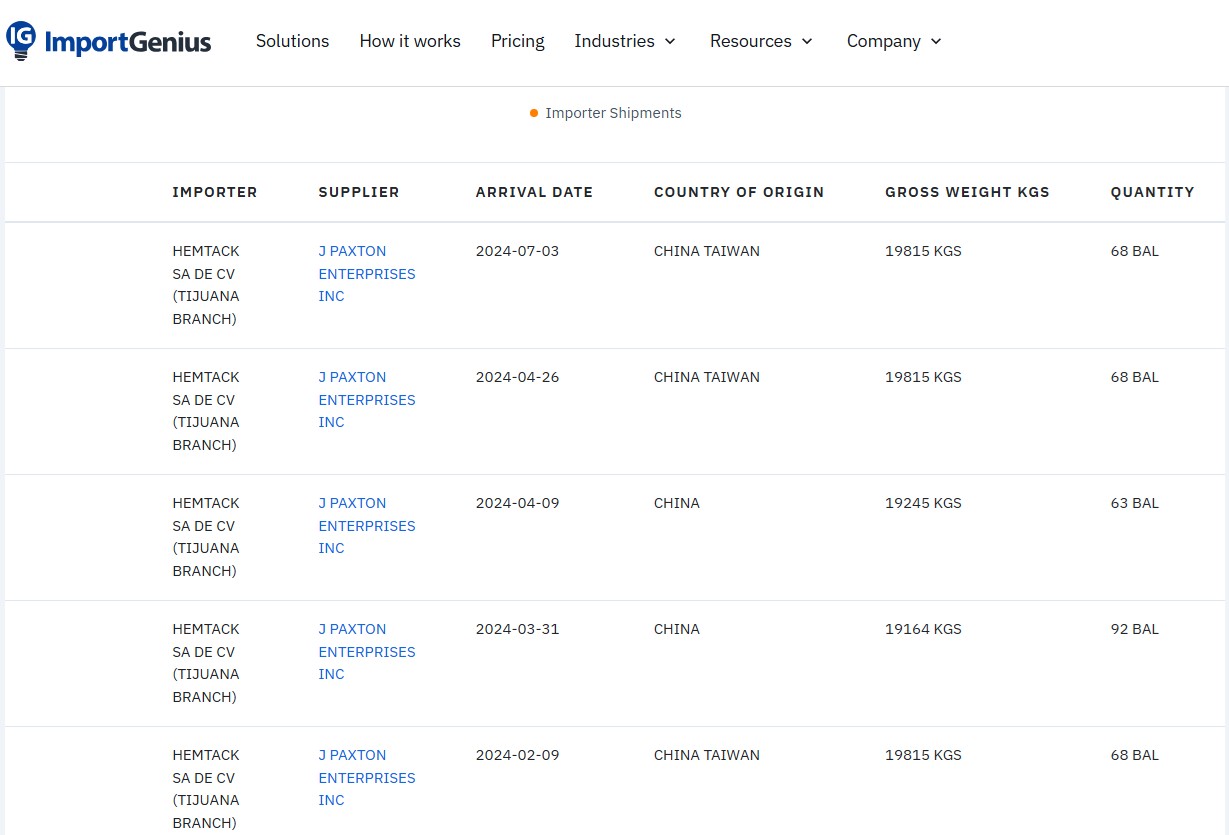
Confidential sources identify Fernando Salgado Chávez, a businessman with extensive regional influence and financial operator of a cross-border luxury-property network, as a key coordinator. For at least six years, Salgado allegedly oversaw the movement of fentanyl precursors using export trucks registered to Hemtack S.A. de C.V., owned by Pedro Montejo Peterson, currently Tijuana’s Economic Development Director.
Montejo’s corporate network includes San Diego-based Phase II Products Inc., along with Mexican affiliates such as Comdecora S.A. de C.V. and Stoli Uniforms, which mirror one another’s import patterns, suppliers and commercial addresses.
Import databases (ImportGenius and Panjiva) confirm that Phase II, Hemtack and Comdecora share Asian suppliers —Vinatech Trading Ltd. and J. Paxton Enterprises— consolidating a binational supply chain linked through the same commercial addresses and points of contact.
This pattern aligns with Montejo’s operational model, which has relied on mirror companies to move goods and capital between Mexico, California, China and Taiwan.
Interviews conducted by Los Angeles Press describe a system that relied on maquiladora trade routes and export permits to disguise the movement of chemical precursors within legitimate shipments. Salgado reportedly acted as a strategic partner during the final export stage, while the network benefited from institutional cover allegedly facilitated by former Baja California Attorney General Ricardo Iván Carpio Sánchez.
Municipal checkpoints and redirected intelligence
Sources also point to possible involvement of current political actors. Checkpoints set up in Tijuana under Mayor Ismael Burgueño and operated through the Secretariat of Economic Development and Tourism (SEDETI), functioned not merely as public-safety measures but as facilitation points for operations linked to Carpio, Montejo, Salgado, and businessman Saúl Guakil.
The operation relied on a steady flow of intelligence originating in the United States, channeled to Montejo, who in turn alerted Salgado to deploy operators and ensure safe crossings for designated trucks.
How Bonillo’s testimony fits the broader scheme
Although Bonillo’s court records focus on his individual role inside CBP, key elements of his account align with the operational structure described by intelligence sources: a U.S. officer enabling direct crossings coordinated by Mexican political and business networks designed to synchronize routes, timing and permits without raising suspicion.
If federal investigations confirm these links, the Bonillo case may prove to be only the visible edge of a larger transnational corruption network involving high-level actors on both sides of the border.

English Edition
Between Sinaloa and CJNG: The Business of ‘Marco Santelices’