Rodolfo Soriano-Núñez Domingo, 08 de Diciembre del 2024
Back in Mexico, Verástegui’s rallied his base to build a new political party to compete in the 2027 midterms.
Verástegui’s ally, Father Israel Gómez Mendoza, is not a simple priest sharp-shooting Cardinal Carlos Aguiar Retes. He is the judicial vicar of a Mexican diocese.
By Rodolfo Soriano-Núñez
After charging against Cardinal Carlos Aguiar Retes for the crime of attending a round table at one of Mexico City’s Roman Catholic colleges, the Latin American far-right had a celebration of sorts to mark up the first anniversary of Javier Milei as President of Argentina.
For a few hours, Buenos Aires became the capital of the Spanish-speaking world to hear addresses by some figures in the orbit of President-elect Donald Trump, as Lara, his daughter-in-law, Steven Banon, his former advisor at the White House, and Kari Lake, an Arizonan Republican politician who can only explain her inability to win elections by manufacturing complex conspiracy theories.
Despite that, Lake is among the potential nominees for the key position of U.S. Ambassador to Mexico. Not that Lake has any diplomatic or policy experience. Only because he is loyal to the death to Trump, she replicates Trump’s own conspiracy theories about his defeat in the 2020 election, and because she also replicates Trump’s tough talk when dealing with Mexico.
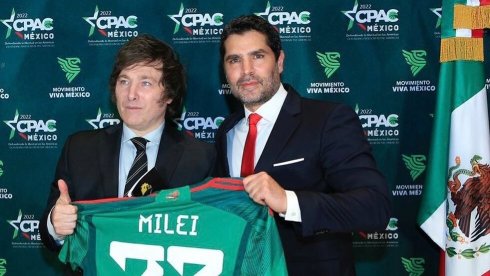
Among the speakers at Buenos Aires was Eduardo Verástegui, a leading figure of the attack on Cardinal Aguiar Retes, the Roman Catholic archbishop of Mexico City, who is about to reach the 75-year-old limit to tender his resignation.

Verástegui, Trump, and the wrath of Catholic intolerance
Being a Cardinal, and one of the few Mexican bishops closer to Pope Francis than to the most far-right wing of the United States Conference of Catholic Bishops, the one led these days by Cardinals Raymond Burke and Timothy Dolan, there is a chance Pope Francis will let him remain until he crosses the 80-year-old mark.
But there is no guarantee of over time for Aguiar Retes. Given Francis’s own age and health, there is chance he would rather promote a younger, closer to him, Mexican bishop to the archdiocese in the Mexican capital city, than waiting.
The attack on Aguiar Retes is, on its own right, a warning about how far the radicalization of the Mexican Catholic base has gone. It used to be the case that Cardinals and bishops were exempt from those kinds of attacks, at least from priests and more so from laypersons aiming at rendering themselves as Catholic in public life.
Double standards
Norberto Rivera Carrera, Aguiar Retes’s predecessor in Mexico City used to rub elbows with politicians of any party with no consequences despite his awful record as protector of Marcial Maciel, the Mexican super sexual predator, and his own role in covering predatory priests sent to U.S. archdioceses such as Los Angeles.
Among the many pictures available of Norberto Rivera Carrera shaking hands with Mexican politicians, there is one that keeps coming, over and over in recent years. One from almost ten years ago that has the now emeritus archbishop shaking hands with the current secretary of Education of the Mexican Federal government, Mario Delgado.
Delgado is one of the Mexican politicians whose name is associated with noted U.S. sexual predator Keith Raniere, the leader of the NXIVM cult.

There is evidence of Delgado attending at least one of NXIVM’s “courses” in Mexico, and there has been no official probe about the extent of sexual abuse in that organization South of the Rio Grande. In that regard, if it was about casting stones at “impure” clerics, there are better candidates to do so.
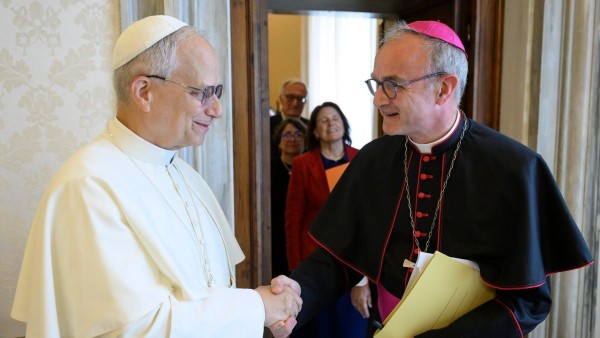
The Mexican far-right charged Aguiar Retes with the crime of associating, for the purposes of a public round table at a Catholic College, with Congressman Ricardo Monreal Ávila, and Senator, Luis Donaldo Colosio Riojas.
They went further to dox Monreal Ávila as a freemason or franc-mason. The indictment on Colosio Riojas was of allegedly following the United Nations “dictum” about the Sustainable Development Goals as they are commonly known in English.
It is impossible to go here over why those two issues triggered the Mexican far-right attack on Cardinal Aguiar Retes the way they did. There is a long and complex history of mutual verbal and physical violence between Roman Catholic leaders and members of Freemason lodges in Mexico.
However, even if Monreal was actually a Franc-mason, the activity was a round table, a panel, an academic activity. It was not a mass or any other religious function, so—in that regard—the wrath against the Cardinal for betraying some rule in that Church is hard to figure out.
And in Colosio Riojas’s case the situation is even worse because nobody in the far-right social media was able to dox him with nothing else but public statements about the policies inspired by the so-called Agenda 2030.
And even if the obsession with Monreal’s alleged condition as Freemason is mostly Mexican and deeply rooted in the violence and chaos of the Mexican 19th century, the anger towards the Agenda 2030 is a new source of hatred, violent speech, and behavior that has been in full display in Argentina, Peru, and other Latin American countries since the United Nations set the agenda back in 2017.
In Peru, a key element of Giuliana Caccia Arana’s performance as a public figure close to the Sodalitium is her criticism of the Agenda 2030. She has made her name lambasting the Agenda 2030 rendering it as a treasonous attack on Peruvian sovereignty. Some details of her activities in that regard appear in the piece linked after this paragraph.
What makes the Sodalitium so relevant?
As told in that series she frames her activity as a “cultural battle.” It was noticeable that over the weekend, Verástegui used that idea of a “cultural battle” to talk about his plans to create a new political party in Mexico.
Existential threats or so they say
Some of the goals that the Latin American far-right see as existential threats are number 5, a call to achieve Gender Equality; number 10, a similar call to Reduce Inequalities, and number 13, one to engage in Climate Action.
A screenshot of the website where the UN promotes the goals appears as an image next. Thei website is available here.
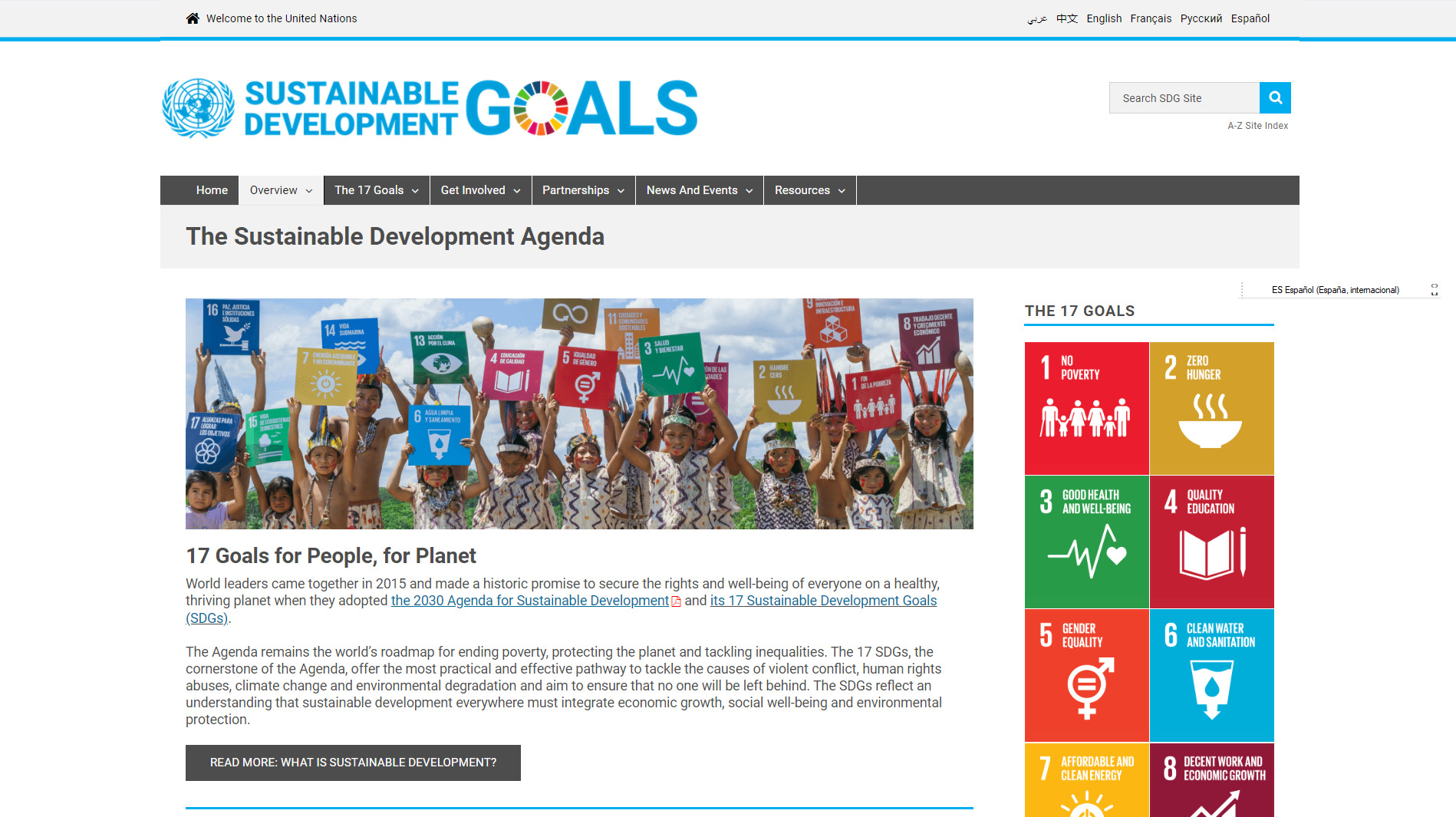
Although the United Nations has little or no ability to actually enforce any kind of policies, much less to dictate how or why a nation member should engage with their own citizens, the global far-right, as much as totalitarian and authoritarian regimes depict the UN as an evil dictatorship forcing them to adopt changes.
The most frequent source of anger, the one bridging the concerns of the Latin American far right and authoritarian regimes from other regions, such as Vladimir Putin’s in Russia, lies precisely on goal number 5, the call to achieve Gender Equality.
It would be impossible to address that issue here, suffice to say there lies one of the reasons Roman Catholic Cardinals and bishops are willing to avoid any criticism of Putin’s behavior. Even if it is an elaborated dance of homophobia, which leads to attacks on Pope Francis himself, many leaders in the Catholic and other Christian churches praise Putin’s rejection of that aspect of the so-called “globalist” U.N.’s Human Rights agenda.
There is where coalitions between Putin and the global and more specifically the Latin American far-right are building. It is not something exclusive of Putin. In other installments of this series, it possible to see how something similar happened with Daniel Ortega of Nicaragua and how he got now deceased Cardinal and former archbishop of Managua Miguel Obando y Bravo, to bless Ortega because he was willing to ban abortion.
As much as the Latin American far right now criticizes Ortega’s power grab and his repeated attacks on Roman Catholic bishops, priests, orders, masculine and feminine alike, Obando played a key role in propping up Ortega’s rise to power, as the story linked after proves.

The Catholic Church in Nicaragua: a new twist in the plot
If the bishops praising Milei and his allies in each Latin American countries were paying attention to what happened in Nicaragua, they would acknowledge Obando’s and other Nicaraguan bishops’ mistakes and their own mishaps.
The latest news from Managua talk about more expulsions, although this time around nuns are the main target of Ortega’s anger. Up until August, the number was 131 clergymen and 91 nuns expelled.
The new Latin America far-right seems to be unable to take notice of that. Mostly because the new far right overemphasizes the role of the individual leader as the carrier of some sort of warranty against failure, as Obando did with Ortega.
They resent institutions so much because of their corruption, real or assumed, and put so much emphasis in the alleged personal relationship with the leader, that there is no place or need for new institutions or to improve already existing ones.
That makes very hard to compare Jair Bolsonaro, the former President of Brazil, to Daniel Ortega, the Nicaraguan strongman, until one pays attention to how they deal with pressing issues like coronavirus. Then the similarities are in full display and only the over appreciation of the individual leader, allows their followers to pretend that they are not fruits from the same tree.
Something similar happens when dealing with how Mexican former President Andrés Manuel López Obrador, despite his alleged identity as a “leftist” was able to strike what he repeatedly called a friendship with Donald Trump, while despising, day in and day out and as hard as he was able to, Javier Milei.
And there are differences, but they are much more in form, in the kind of imaginary enemies they attack, than in the way they attack those enemies.
One just need to see beyond the many insults Milei has been using since he was a candidate to congress, or when he decided to become a presidential candidate, to find the “communication model” of other populist leaders, from Trump to Marine Le Pen or Georgia Meloni.
Although there are plenty of examples of that model, including some personal attacks on Pope Francis, for the sake of brevity the sole example of that model appears after this paragraph.
Javier Milei as host of an Argentine webcast, March 19th, 2019. Subtitles in English.
There it is possible to see Javier Milei dismissing the Argentine left with all kinds of extremely disrespectful adjectives. In the box after this paragraph, there is a transcript of the 80 seconds of the video as an image, with my English translation to the Spanish original.
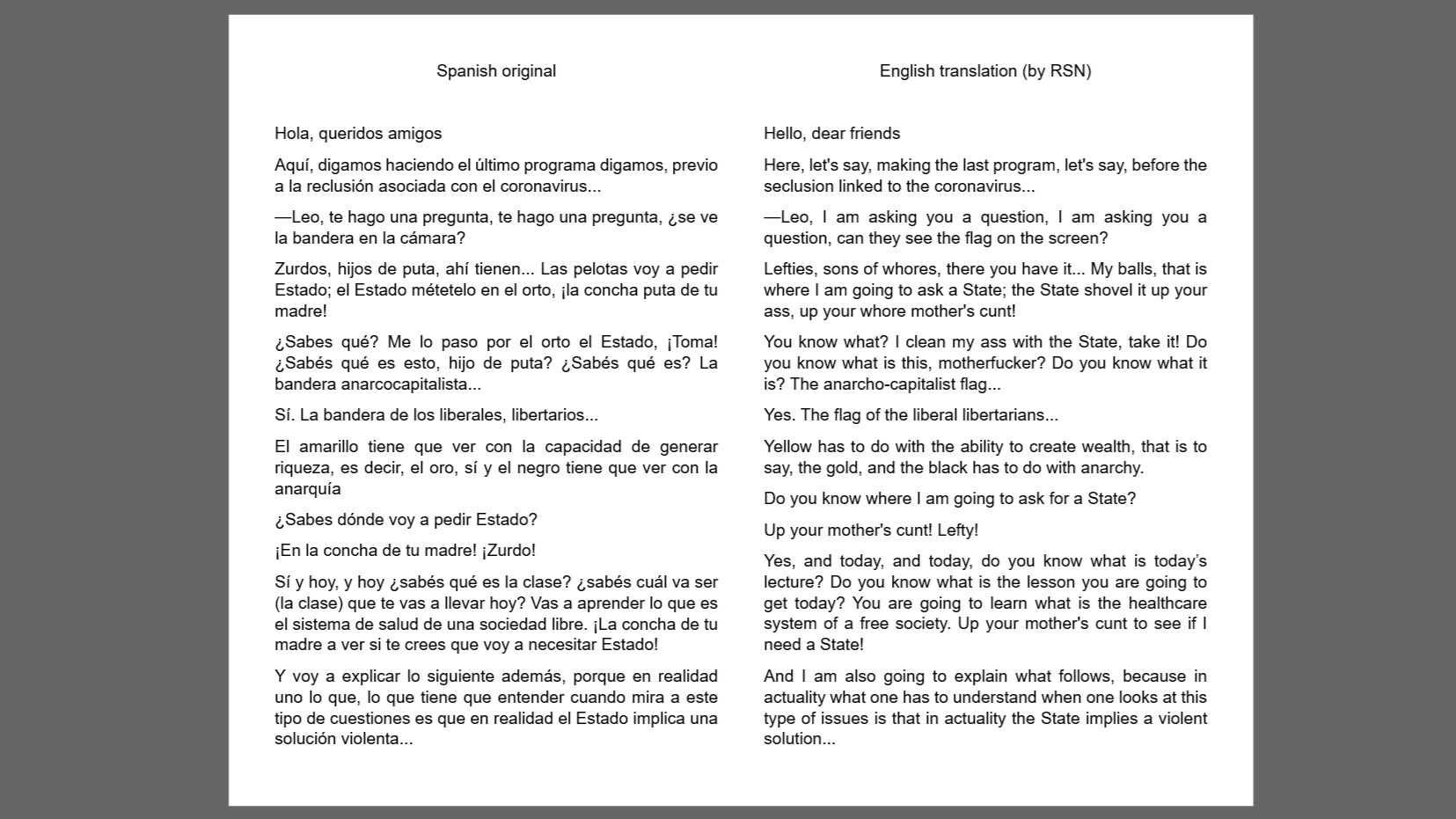
There, Milei uses a full hand of very Argentinean insults in Spanish, which I am not going to repeat here. If you are interested in the full video at YouTube, it is available here, but be aware that YouTube’s automatic closed captions in Spanish are heavily censored, so if you use that option, there is a chance most of the content will become unintelligible or rendered by the closed caption as gibberish.
Threats
What matters the most is the dismissive attitude towards the health-care system at the time of taping that video, during the early days of the pandemic. Far from changing his attitude after one year as President, one of Milei’s most recent decisions was to take away access to health care for retirees.
Milei’s policy choice led one victim of that decision to threaten with setting himself on fire at the offices where he used to get his prescription drugs. He is 67-year-old, and his doctors diagnosed him with a terminal illness, so he needs the meds, and he cannot get a new job.
The moment when people around him are able to remove the matches he was ready to use to ignite himself, appears in the social media posting after this paragraph.
Video of the male who tried to set himself on fire in Córdoba, Argentina. Audio available only in Spanish.
The model in full display in that video is creeping in Mexican social and traditional media. Only on Sunday, a leading character in the attack on Cardinal Aguiar Retes, soap opera actor Eduardo Verástegui and Ricardo Salinas Pliego, the owner of TV Azteca, one of the two largest legacy media firms in Mexico, used it over social media.
One should not dismiss as a mere coincidence the fact that both Salinas Pliego and Verástegui were in attendance in CPAC Buenos Aires, as the full roster of speakers, available as an image after this paragraph or as a social media posting here tells.

There they joined a troupe led by Donald Trump’s daughter-in-law, Lara, who as the rest of the U.S.-based CPAC personalities like Kari Lake or Ben Shapiro went to Pope’s Francis hometown to celebrate Javier Milei’s first year in office. Not that there are that many reasons to cheer.
The very day of the celebration, even right-wing newspaper Clarín, a staunch supporter of Milei’s rise in Argentine politics, had to report about the threat of self-immolation.
The next day, the Catholic University of Buenos Aires issued their most recent report on the state of poverty in a country that, back in 2023, heard all imaginable promises about the beginning of an era of endless prosperity.
Poverty and anger
And it is true, inflation was the issue, back in 2023, that most probably ended up giving Milei the keys to the Pink House, the see of the Executive Branch in Buenos Aires, and there was already a problem of growing, entrenched, poverty, but the fact is that none of the policies launched over the last twelve months, have solved any of the issues affecting the lives of Argentines.
A key metric in Argentina is the yearly report on poverty issued by the Catholic University of Buenos Aires, on a thread posted over Sunday, they summarized in one graph the evolution of poverty and extreme poverty or destitution.
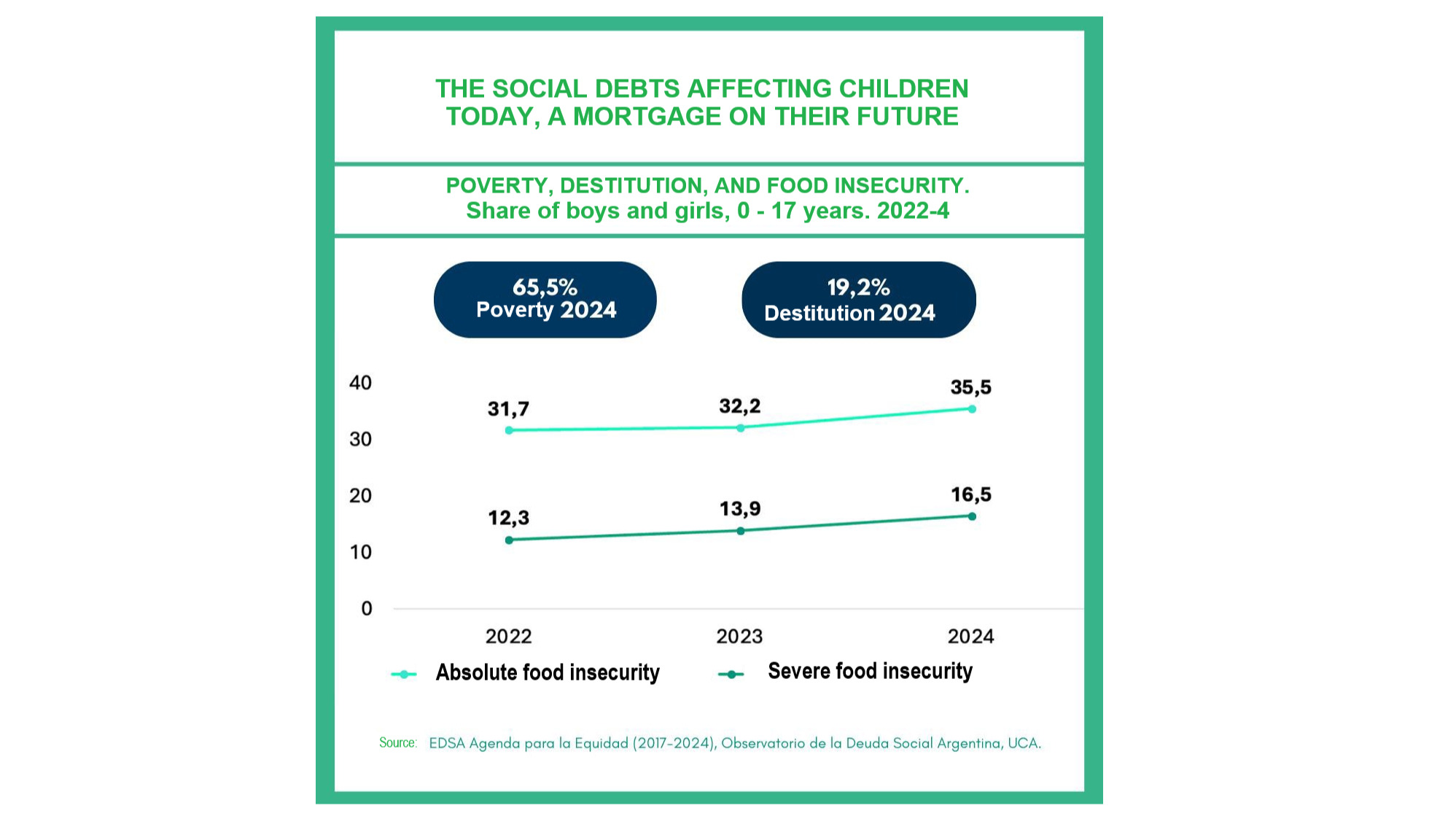
A translation of the first graph in that thread appears before this paragraph. Their thread in Spanish appears after this paragraph. Their full report for 2024 is available in Spanish as a PDF file here.
That is why Verástegui was able to go to Buenos Aires to cheer Milei in his first anniversary. Despite the 4,600 miles or 7,400 kilometers between both capitals, underdevelopment, inequality, corruption, and intolerance end up having similar outcomes in both countries.
In Buenos Aires, Verástegui went hard on the topics that he knows will be cheered by the attendance at any Conservative Action Political Conference from Miami to Madrid and from Mexico to Santiago de Chile: it is all the political left's fault or, to say it in the new Argentine jargoon coined by Milei, “los zurdos de mierda” that, depending on how rude the translator wants to be can go from “the shitty Left” all the way to "the fucking Left.” Your choice.
Back in Mexico, Verástegui announced his bid to build a new national political party. Unlike other Latin American countries, where it is easy to organize new, as in Peru where there is an expectation of no less than 20 parties competing for the country’s presidency in 2026, in Mexico there are plenty of rules that new parties must met to get a chance to become a national party.

On Sunday, yesterday, the newspaper El Comercio from Lima, Perú, sets in close to half a million the total number of possible candidates to fill the ballots to compete for a record number of ten thousand posts up for grabs, as the image before this paragraph shows.
More important is that the two social media postings where Verástegui talked about his projects for the future already acquired the tone, a bit less rude, but already full of anger that worked for Milei. More important, he has a similar attitude about blaming a mythical left for any and all the issues that could accumulate from today until 2027 when the Mexican midterms happen.
Mexican midterms are more relevant because on top of the lower house of the Mexican congress, thirteen out of 32 governorships of the country are up for grabs, as most of the nation’s local state legislatures.
The partner
And what about Verástegui’s partner in charging against Cardinal Carlos Aguiar Retes?
As it turns out there is an actual Father Israel. His full name is Israel Gómez Mendoza. He is not only a run of the mill priest. Despite being only thirty-eight, he is at the same time the judicial vicar and the pastor of the parish of Saint Francis of Assisi, in the diocese of Cuauhtémoc-Madera in the state of Chihuahua.
It is a mystery how he is able to have those two, one would guess, full-time positions in his diocese’s curia and, at the same time being as active as he is over his many social media accounts.
A deeper mystery is if he acts over social media as some sort of theological snipper or a ninja priest on his own, following the footsteps of other Roman Catholic priests chastising bishops, Cardinals, and even the Pope himself, as the spokesman of the diocese of Ciudad Juárez or if he is somehow voicing what his bishop is unwilling to say on his own.

On Saturday, on the eve of the Consistory where Pope Francis appointed new Cardinals, Gómez Mendoza attacked another Cardinal. This time around he sharpshot British Dominican Timothy Radcliffe.
Having no charity or, for that matter respect for his superior, he attacked Radcliffe from his “anonymous” social media accounts, and not only Radcliffe, but he implied Pope Francis had made a mistake, as Gómez Mendoza’s posting at what used to be Twitter, appearing after this paragraph, shows.
In a reply to someone following him, Gómez Mendoza blasts Cardinal Radcliffe as “a woke Dominican who wants to change moral sexuality.”
Change or acknowledge facts and reality? Hard to tell.
A simple scrolling Gómez Mendoza’s timeline at what used to be Twitter shows his contempt for Pope Francis. It is impossible not to wonder if his superior, bishop Jesús Omar Alemán Chávez is aware of Gómez Mendoza’s opinionated timelines in social media, ranging from his partisan views on politics, to the way he disqualifies Pope Francis’s appointments of Cardinals or how he attacks the primate of Mexico, Cardinal Aguiar Retes.
Pope Francis appointed Alemán Chávez as bishop of Cuauhtémoc-Madera two years ago, on December 7th, 2022. He took over as bishop in March of 2023, so there is chance Gómez Mendoza is a hold over in his positions in the local curia from now deceased bishop Juan Guillermo López Soto’s tenure.
Putting aside the issues of internal discipline of the clergy of that diocese, the key issue is, given Verástegui’s call to build a new party and Gómez Mendoza’s propensity to meddle in partisan politics and how far is the new Mexican far-right willing to challenge on the one hand the Roman Catholic’s authority.
If Milei is an example, Mexican Catholics can get ready for Verástegui, Father Israel or some other new leader of it to call Francis the “representative of the Malign on Earth” and then pretend that it was just for kicks, but then going to Fox News to blast the Pope again.
Also, how much have the Mexican bishops learnt from the mistakes of other bishops. Nicaragua is the first example to come to mind, but there are other at least as bad. Then there is issue of how much the current Mexican bishops have learnt from the mistakes of the Mexican bishops before.
Last year, Los Angeles Press ran a series to explain how Verástegui became a leading figure in the Mexican far-right. A link to the last installment of that series appears after this paragraph.

The Verástegui Network, a dystopian and authoritarian world