
Rodolfo Soriano-Núñez Lunes, 28 de Julio del 2025
Mexican judge demands diocesan accountability, while Argentine appeals court offers hope to survivors of clergy sexual abuse there.
Abuse going back to the 1970s tarnishes Pedro Arrupe's legacy as Jesuits face abuse trials in Louisiana and Bolivia. Opus Dei opens a “Healing” office in Spain.
By Rodolfo Soriano-Núñez
This week’s piece deals with an assortment of cases of clergy sexual abuse from several countries that, although relatively well known in their countries, are still affected by an understanding of this type of abuse as a collection of isolated cases with little or no relation between them.
One of the purposes of this series, the way it tackles cases from different countries is to actually dispel such notion and to prove how this is a global crisis, with systemic roots related, on the one hand to deficiencies in the systems of justice, ill-prepared to protect the rights of victims, and their families, and to prevent the occurrence of these cases, not only in religious settings.
It systemic nature also stems from the often-unbridled power of Catholic clergy, more evident in the more conservative and fundamentalist varieties of such denomination but still present in relatively “liberal” Catholic communities.
The series aims at highlighting makes abuse possible, and the hurdles preventing solutions, despite the many promises about a zero-tolerance approach on the issue, as some of the most recent installments of this series proved.
Today’s is a non-probabilistic sample of sorts, with no pretense of accuracy, as not all cases receive the same coverage. Some are barely reported, while others, such as the abuse at the Spaniard Opus Dei, are widely covered by the media in several languages.
This account goes from Germany, to Argentina, then to Mexico, the United States, Bolivia, and ends in France.
The remains of the Ratzinger system
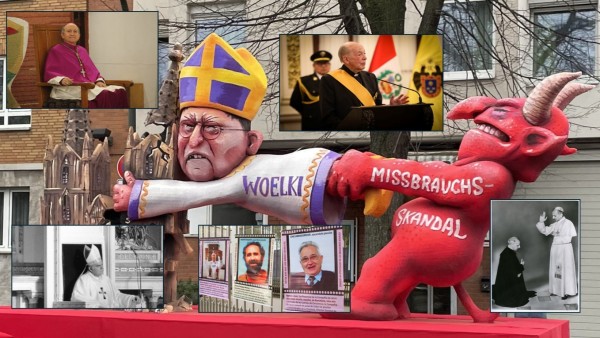
German abuse survivors, through the Advisory Board for the Survivors (Betroffenenbeirat) of the German Bishops' Conference, escalated early in July their long-standing concerns about Cardinal Rainer Maria Woelki, archbishop of Cologne.
On Friday, July 18, 2025, they submitted a formal canonical complaint directly to Pope Leo XIV, accusing the cardinal of violating his pastoral duties in the handling of sexual abuse cases.
The advisory board contends that Woelki misled abuse victims about proper procedures and negligently managed cases. The main problem there, as it is usually the case is that the extreme bureaucratization of the issue causes the “re-traumatization” or re-victimization of survivors of clergy sexual abuse.
The Board’s members assert that they have “lost all confidence that under Cardinal Woelki's leadership, abuse cases would be investigated without regard for the perpetrators.”
Woelki was one of Pope Benedict XVI’s favorites. He appointed Woelki as the second archbishop of Berlin. The title was more a sort of compliment from Rome after the German reunification, when it went from diocese to archdiocese (1994), than a reflection of the existence of a vibrant local Catholic community in the old Prussian capital.
By the German Church’s own admission, less than seven percent of the little less than six million inhabitants of Berlin identify as Catholic. No surprise as soon as he had a chance to go back home, in July 2014, Woelki got a ticket back to Cologne, where he was auxiliary bishop and priest under Joachim Meisner, one of Ratzinger’s closest allies in the German-speaking Catholic world.
The canonical complaint comes after years of controversy surrounding Woelki’s actions in Cologne. He faced significant backlash for initially withholding a report he commissioned on abuse in the archdiocese, citing legal concerns, before commissioning a new one.
This furthered the perception that he was covering up for the mishandling of abuse under his mentor, Meisner, and ultimately, covering up the so-called “Ratzinger system” in the Catholic German-speaking world. Similar patterns of cover up for senior former bishops or archbishops in dioceses in that world.
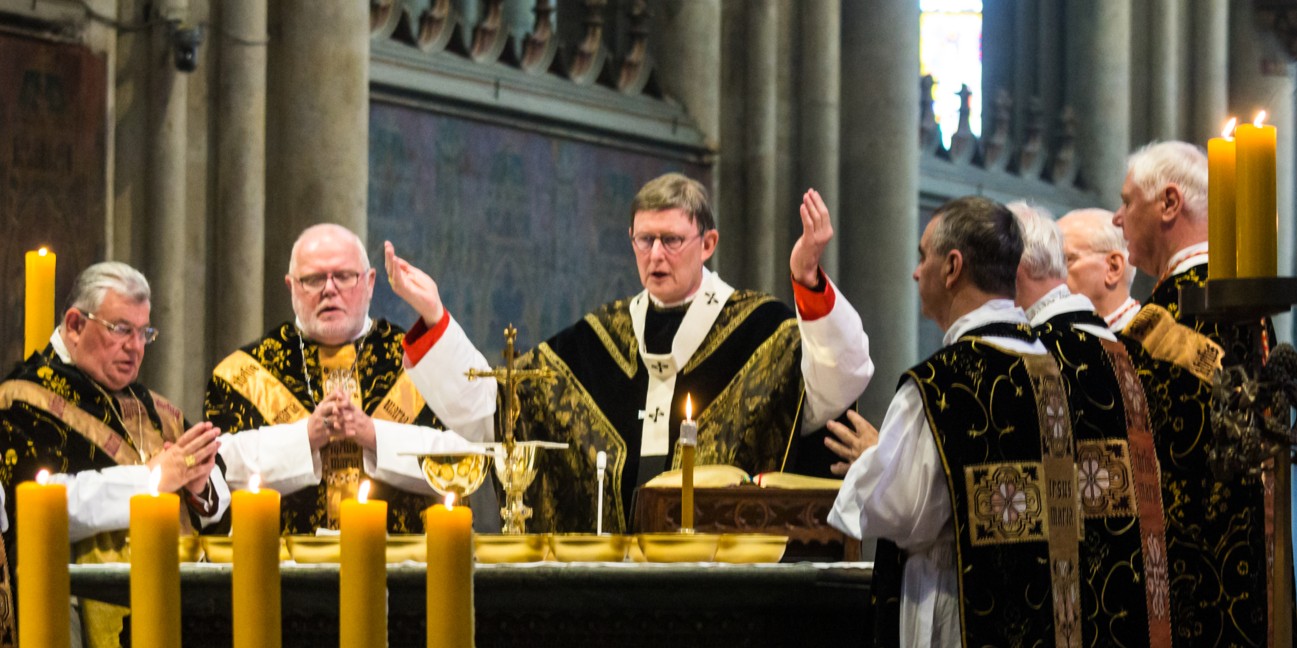
Cardinal Woelki presiding the Funeral Mass of Cardinal Meisner, 2017. Photo by Raimond Spekking, Wikimedia.
That perception was somehow confirmed by a later Vatican investigation that found no evidence of unlawful actions by Woelki himself, but a systematic mishandling of reports regarding abuse cases, concluding that Woelki made “major mistakes” in communication, contributing to a "crisis of trust" within the archdiocese. It is unclear if the mistakes were honest, or if there was intent to taint the process.
More recently, in May 2025, Woelki agreed to pay a €26,000 fine to settle a perjury investigation related to his testimony about a historic abuse case, with prosecutors attributing his false statements to negligence rather than intent.
The Archdiocese of Cologne has dismissed the latest canonical complaint as “obviously baseless,” stating the accusations are unfounded and built on “false assumptions.”
It argues that civil cases did not address abuse-handling procedures, therefore making the canonical application out of the question. Despite the archdiocese's dismissal, the submission of this canonical report to Pope Leo XIV highlights the continued struggle for accountability and transparency within the German Church, particularly in one of its largest and wealthiest dioceses.
Moreover, it highlights a deep rift in the German Catholic Church between their lay groups and leaders and the hierarchy, unwilling to acknowledge the existence of a “Ratzinger system” aimed at silencing survivors of clergy sexual abuse in Germany, Austria, Switzerland, Luxembourg, and Liechtenstein.
Argentine vindication?
In Argentina, the so-called Sidders case was resuscitated by an appeals courts overruling a lower court’s decision that had followed criteria set by the Argentine Supreme Court of Justice to dismiss a case due to the statute of limitations.
Raúl Anatoly Sidders was a chaplain at a Catholic school who abused, among others, a then-underage female who committed suicide in 2024 after going through the kind of ordeal Latin American victims of clergy sexual abuse undergo. However, it must be stressed that the appeals court decision forces the lower courts only to reconsider the case.
As a previous installment of this series reported, Argentine courts followed a similar set of criteria in the case of Justo José Ilarraz, as it also has happened recently in Chile with former Jesuit but still a priest, Felipe Berríos del Solar, as the section “Damascus by way of Chile” of the story linked after this paragraph tells.
English Edition
Is the Catholic Church‘s talk about zero-tolerance for real?
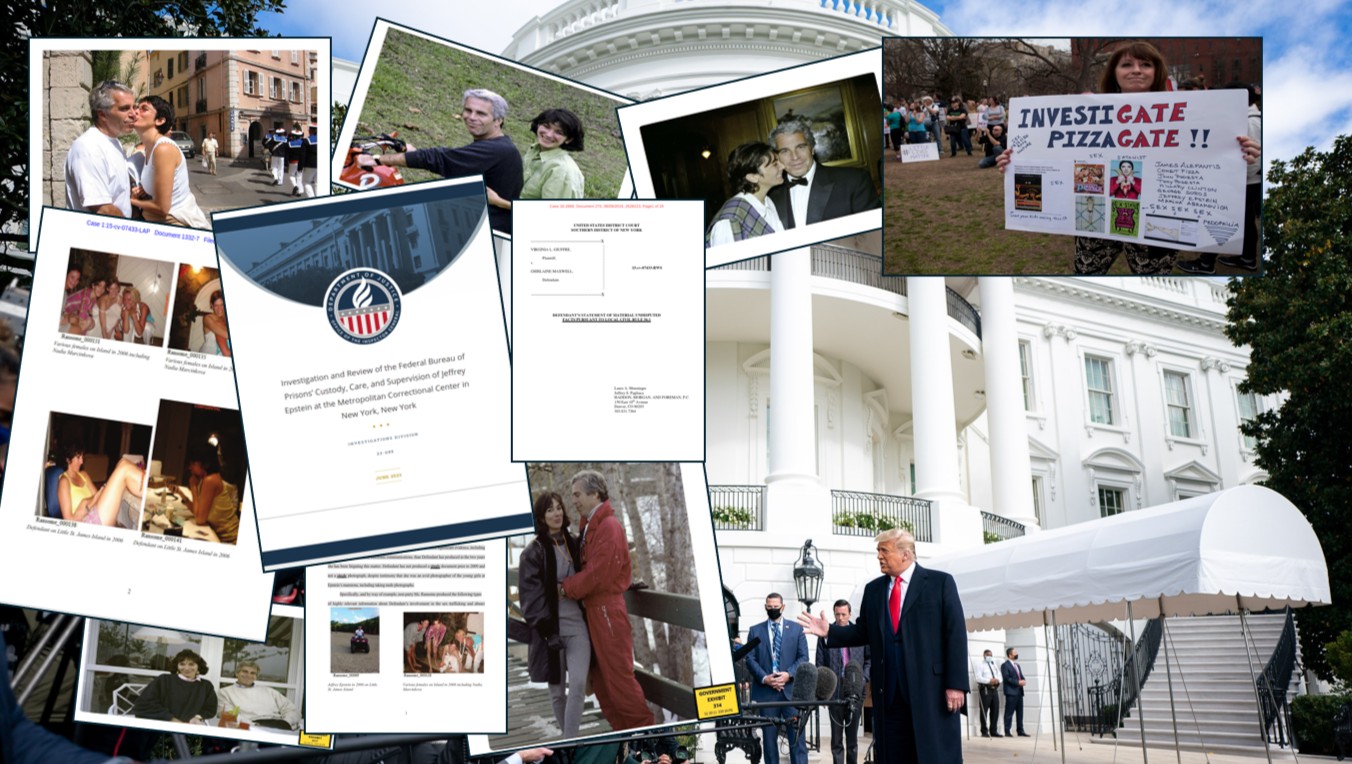
An actual rebooting of the Sidders case is a most welcome development in Argentina nowadays, as there are other cases at risk of being dismissed on similar grounds, but one must be aware that there are powerful forces behind the drive to dismiss cases on statute of limitations grounds. As the Epstein case proves, weaponizing abuse is a risk in different countries.
The real chances of being heard by Opus Dei
In a highly publicized development, Opus Dei opened on July 17, 2025, a “Healing and Listening Office” in Spain (content in Spanish). The idea is to address complaints of an institutional nature and facilitate what they see as a “healing processes” for former members or individuals who participated in its activities and feel they have been harmed.
Their take on the issue follows a similar experience in Argentina where accusations have been made of several types of abuse, ranging from labor and professional to conscience and sexual abuse.
The Argentinean experience, dating back to 2022, is not auspicious, as the South American office seemed to be more an element of a public relations campaign aimed at dismissing criticism of the many abusive practices, than an actual attempt at solving the issues in the Argentine branch of that organization.
The accusations in South America stem from the Opus Dei’s proselytizing practices. Its operatives went over Catholic parishes in small towns in Argentina, Paraguay, Uruguay, and Bolivia, recruiting dozens of young women. Ultimately, they faced systematic pressure to dismiss their own goals of having a civil career coupled with the religious life they disguised as non-religious life Opus Dei offers.
Most of the females were from rather low-income households and the expectation was that they would have access to the kind of education, allegedly superior to other institutions, offered by Opus Dei schools and colleges.
It is a process similar to those in the so-called Regnum Christi of the Mexican Legion of Christ, and the many branches of the now suppressed Peruvian Sodalitium of Christian Life, among other “orders”.
These relatively new organizations would often portray themselves as anything but a traditional Catholic order. Their claim was deceptive, as the recruits would in actuality lose material rights that these organizations were unwilling to acknowledge to their unsuspecting recruits.
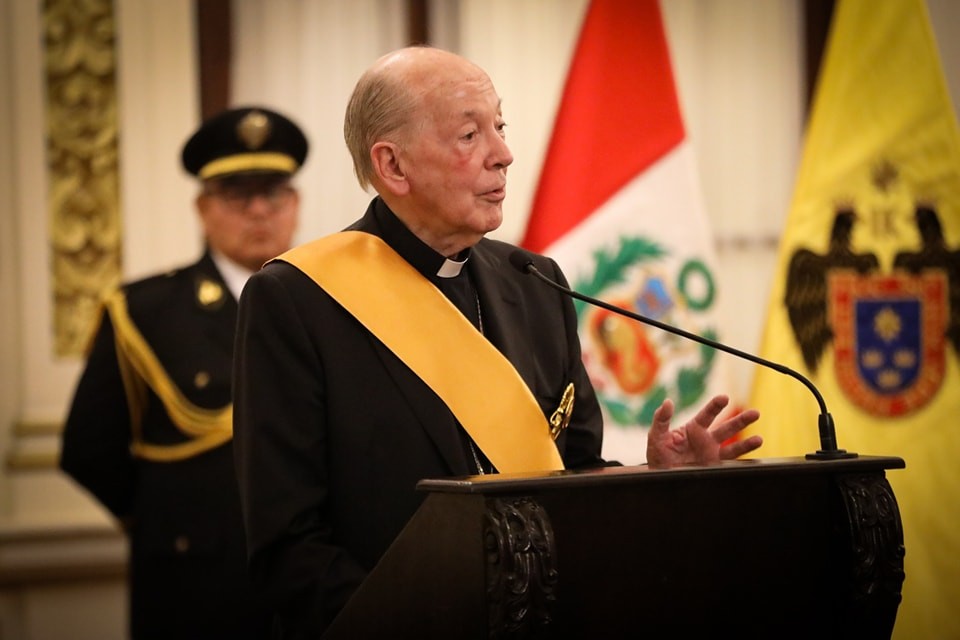
This reality is further exemplified by the complex role played by Cardinal Juan Luis Cipriani Thorne, the now emeritus archbishop of Lima and a prominent member of Opus Dei, actually the first cardinal from that organization, in the Sodalitium crisis.
One should not forget that, on top of being on the receiving end of a rather weak “disciplinary action” by Pope Francis for his role in the sexual abuse of an underaged male, Cipriani was also a key player in the legal and extralegal defense of the Sodalitium Christianae Vitae.
This series has gone before over what happened at that Peruvian “order” and how Cipriani was, as several Peruvian survivors put it, “the Opus Dei cardinal that Sodalitium needed,” to achieve the often mafia-like commitments between Opus Dei’s Cipriani and the Sodalitium.
English Edition
What makes the Sodalitium so relevant?
Peruvian reveries
If one believes what the Opus Dei says about itself, its office in Spain will be staffed by a “team of professionals, including psychologists, spiritual guides, and social workers”, some of whom are current members “without governing positions”, and importantly, some are former members of Opus Dei.
It must be noted, however, that there is no assurance that key members of the staff, such as the psychologists, will be free of current or former Opus Dei affiliations. This is particularly sensitive, as Opus Dei is perceived even by Catholics as a “Church within the Church.”
If one believes what the Opus Dei's says about its own new office in Spain, it aims at providing a “space of trust that allows each case to be attended with empathy and respect.”
The Opus Dei bombastic statement goes further as to claim that the Office will have “operational independence”, while asserting that the Office will gather information to “understand what happened, assess the magnitude of the case and seek the best way to offer assistance and healing.”
One only needs to go over how Cipriani rendered himself, earlier this year, as a victim of Pope Francis to be aware how far the Opus Dei members are willing to go when operating in denial mode, as the story linked after this paragraph explains in the section under the “Lima-Madrid-Rome axis” heading.
English Edition
Migration and abuse, the explosive mix
This new office follows the establishment of similar initiatives by Opus Dei, such as the Office of Healing and Resolution opened in Argentina in 2022, with similar hurdles. It should not surprise that launching this Office comes amidst ongoing controversies and growing calls for greater transparency regarding Opus Dei's internal practices and past alleged abuses.
Furthermore, there are longstanding allegations, including those detailed by former members, of spiritual abuse and coercive practices, such as excessive mortification and control over personal lives, within the institution, sometimes extending to financial exploitation. The Opus Dei Awareness Network (ODAN) is one organization that has long documented such concerns.
While Opus Dei frames the new Office as a step towards “listening and learning,” critics and some survivors remain skeptical, as experiences of similar mechanisms driven by the predatory organization itself often lack true independence and the power to enforce genuine accountability or offer adequate redress.
Victims’ advocates consistently call for independent, secular investigations and robust legal processes rather than internally managed “listening” or “hearing” initiatives, particularly given the long history of the Catholic Church dismissing the true depth of abuse when investigating on its own.
The best possible example, the most recent, comes from the Sodalitium's timid attempt at reform that, in the early years of Pope Francis's pontificate, had as a defining feature, a similar office aimed at “listening” survivors of that predatory organization.
Far from actually offering a measure of justice, they did their best to dismiss as many cases as possible. They set rigid standards to become eligible for a compensation and even then, when the psychological help was available it came from professionals paid by that organization, and they tried to blame the victims for the abuse.
Similar patterns exist in the Mexican diocese of Torreón, as the story linked after this paragraph, in the section “Farcical nature” proves.

English Edition
How predators become priests: a view from Mexico
From Atlacomulco to Ciudad Juárez, the Mexican nightmare
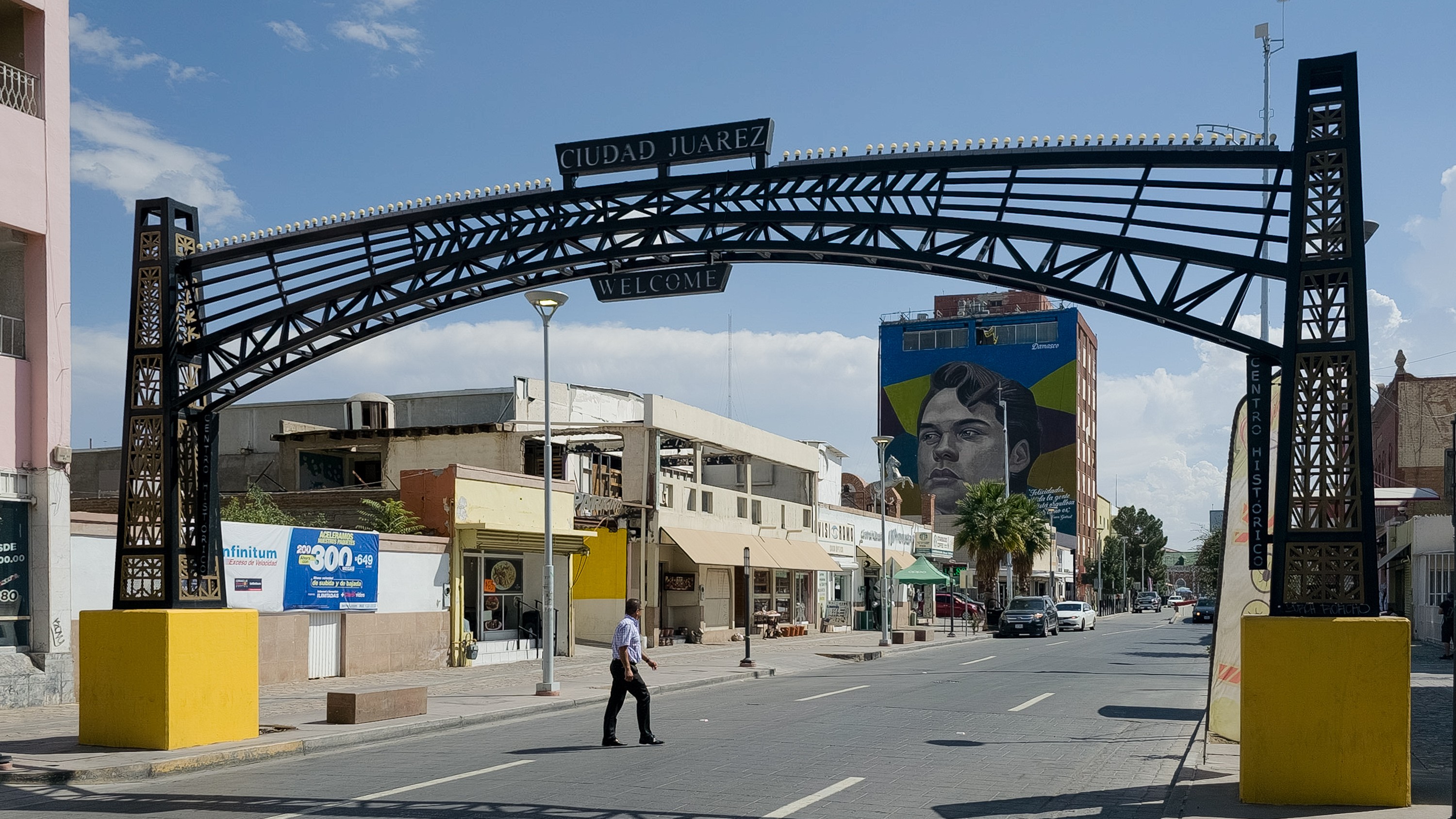
And in Mexico similar patterns emerge as recent developments prove in Atlacomulco, in Central Mexico and Ciudad Juárez, in the U.S.-Mexico border, highlighting the discouraging struggle for accountability regarding sexual abuse.
In Ciudad Juárez, a priest identified in official documents as Eliseo R. S., legal alias for Eliseo Ramírez, was sentenced on July 21, 2025, to four years and ten months in prison for child sexual abuse that occurred in 2013 during a confession.
The sentencing judge, Víctor Iván Rodríguez Trejo, critically noted the priest's exploitation of his sacred role and the manipulation of the victim's faith. Notably, for the first time in Mexico, the judge issued a public exhortation to the diocese of Ciudad Juárez to amend its rather irresponsible behavior.
This series has delved at least twice to the depths of the clergy sexual abuse crisis in the diocese of Ciudad Juárez. First as a comparison with the Catholic diocese of El Paso, Texas, as to try to explain why the same institution follows such divergent paths at both sides of the border.

That story appears before this paragraph, another time was when interviewing a former seminarian who is a survivor of clergy sexual abuse at the hands of a then deacon of that diocese. That story is linked after this paragraph.
English Edition
Back to Ciudad Juárez
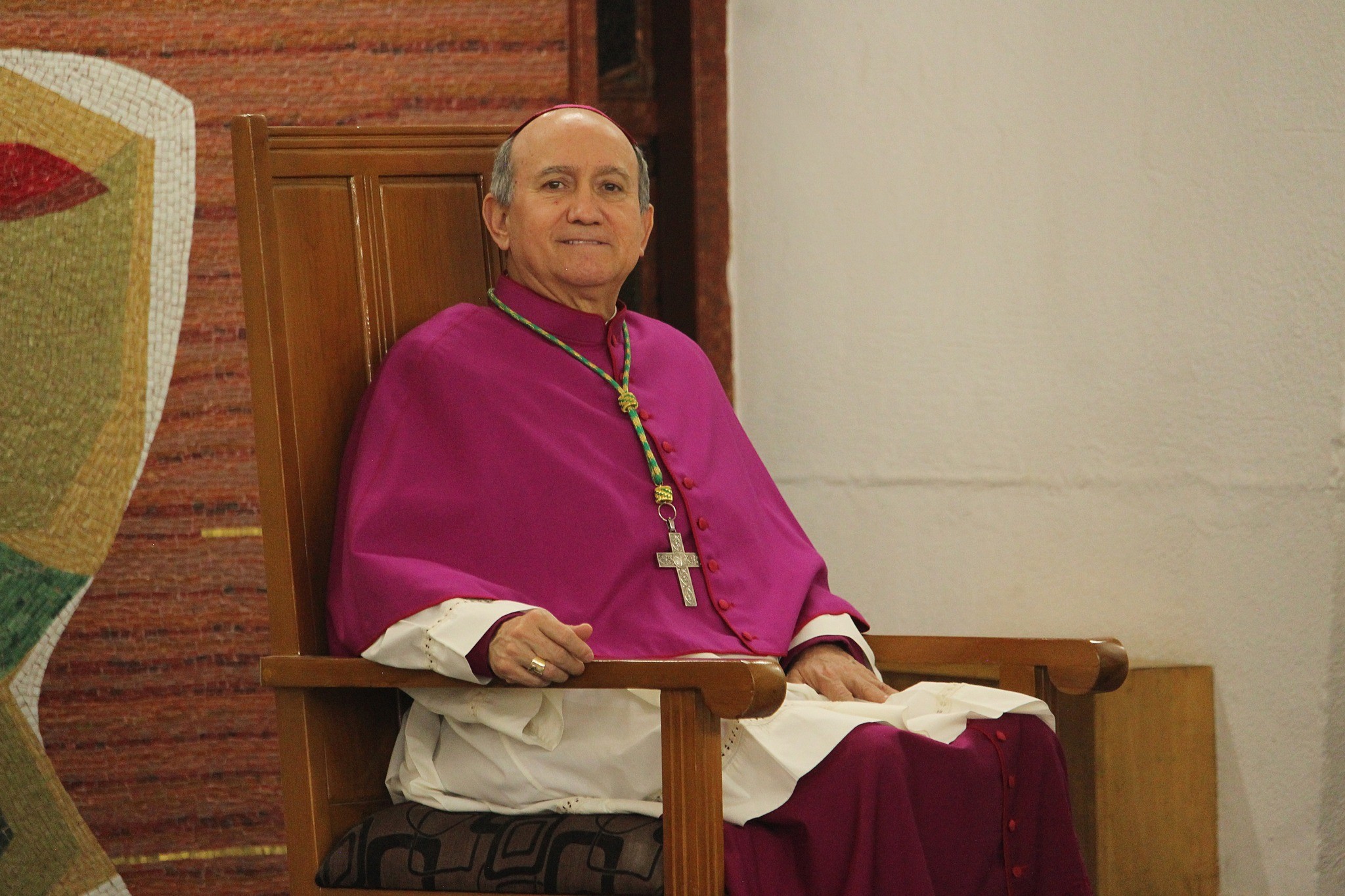
The ruling urged the diocese led by José Guadalupe Torres Campos to urgently review and reform its protocols for priestly interaction with minors, prohibit one-on-one contact in private settings, limit private confessions with those under 18, and implement mandatory prevention training, acknowledging its moral duty to protect children.
While the Diocese stated over a boiler plate communiqué that “existing protocols are in place”, the judge's direct address underscores gaps between what the diocese claims and the effective practices of its priests. The diocese statement has, as a backdrop, the diocese’s arrogant dismissal of Pope Francis’s request to set up, as a minimum, a commission to prevent clergy sexual abuse.
Sadly enough, the fact that the Mexican courts are addressing now a case from 2013 proves how hard is for Mexican survivors to achieve a measure of justice.
The diocese’s statement in Spanish, with an English unofficial translation after the original is at the box after this paragraph as a PDF.
Statement from the diocese of Ciudad Juárez, Chihuahua, Mexico. Spanish first, English follows.
Torres Campos’s dismissive attitude is exacerbated when one takes into consideration the role one of his priests plays at the so called CEPROMELAT, Latin American version of Tutela Minorum.
The priest is Daniel Portillo Trevizo who appears at the “Who we are” page of CEPROMELAT website as the “Academic chair” (content in Spanish).
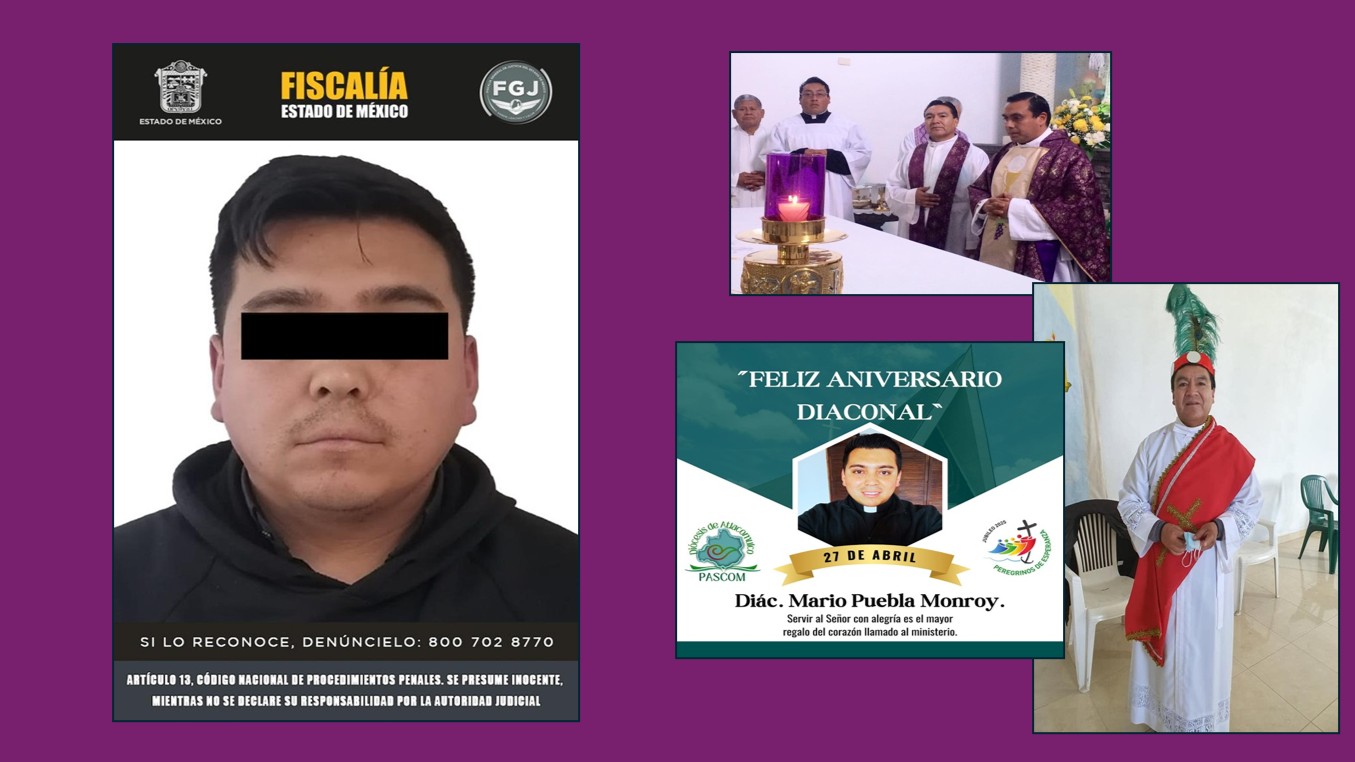
Meanwhile, as reported last week, a separate case in Atlacomulco involves the arrest of a priest named only as Mario 'N' approximately two years after he allegedly committed sexual abuse against two minors.
English Edition
A new abuse case rocks the Catholic Church in Mexico
This ongoing investigation highlights the limits and contradictions of the Mexican legal process and the persistent need for the Catholic Church in Mexico to adapt and enforce more stringent, transparent, and victim-centered preventative measures and accountability processes.
It is harder to dismiss Atlacomulco, as last week’s case is not the only one from that diocese, and the diocese itself was founded by a cousin of noted Mexican super predator Marcial Maciel.
Trump’s confession secrets
On the other side of what is now a militarized border, and in the midst of the debacle regarding the handling of the Epstein case, in Washington state, the Trump administration actively intervened to challenge a new law, Senate Bill 5375, that would have forced Catholic priests to report child abuse revelations heard during the Sacrament of Confession.
The law, signed by Democratic Governor Bob Ferguson, aimed to add clergy to the list of mandatory reporters for child abuse, explicitly removing the long-standing privilege for information obtained through confessional communication. The underlying assumption was that priests have access to key information to prevent abuse from ever happening.
English Edition
Epstein case: lessons from the financier‘s 225 victims
Despite the many requests to change their take on the issue, the Catholic Church in the United States and elsewhere remains united around the idea that even if a priest knows of a pattern of predatory behavior from other individual, he should not use such knowledge to report the matter to the authorities.
On Friday, July 18, 2025, U.S. District Judge David G. Estudillo, originally appointed in 2021 by then President Joe Biden, issued a preliminary injunction, temporarily blocking this controversial part of the law from taking effect.
The judge sided with the Catholic dioceses in Washington state: the archdiocese of Seattle, and the dioceses of Spokane and Yakima who had sued the state, arguing that SB 5375 infringes upon their First Amendment right to freely exercise their religious beliefs.
The U.S. Department of Justice, under the Trump administration, had also filed a lawsuit in June, supporting the bishops’ challenge and labeling the state law as “anti-Catholic” and an unconstitutional burden on religious freedom, while offering Trump a chance to once again portray himself as the champion of the most conservative wing of the United States Conference of Catholic Bishops.
The Justice Department argued that the law uniquely targets clergy by denying them an exemption for privileged communication that is still afforded to other professionals, such as lawyers.

Catholic leaders, including archbishop Paul D. Etienne of Seattle, had warned that any priest who violated the "seal of confession" would face automatic excommunication.
This legal battle highlights the persistent tension between state efforts to protect children and religious organizations' claims of constitutional protection for their practices, particularly confession, which the Church considers inviolable.
The fact that Estudillo was originally appointed by Biden, gives Donald Trump a relatively easy excuse to avoid the usual criticism about favoring practices favoring sexual predators. More so since Estudillo is the son of Mexican migrants.
Hail Mary in Cincinnati?
Running counter to what happens in Washington state, in Cincinnati, Ohio, there is a rebellion of sorts boosted by the endorsement of Jake McQuaide, a veteran of NFL’s Miami Dolphins, Minnesota Vikings, and Rams.
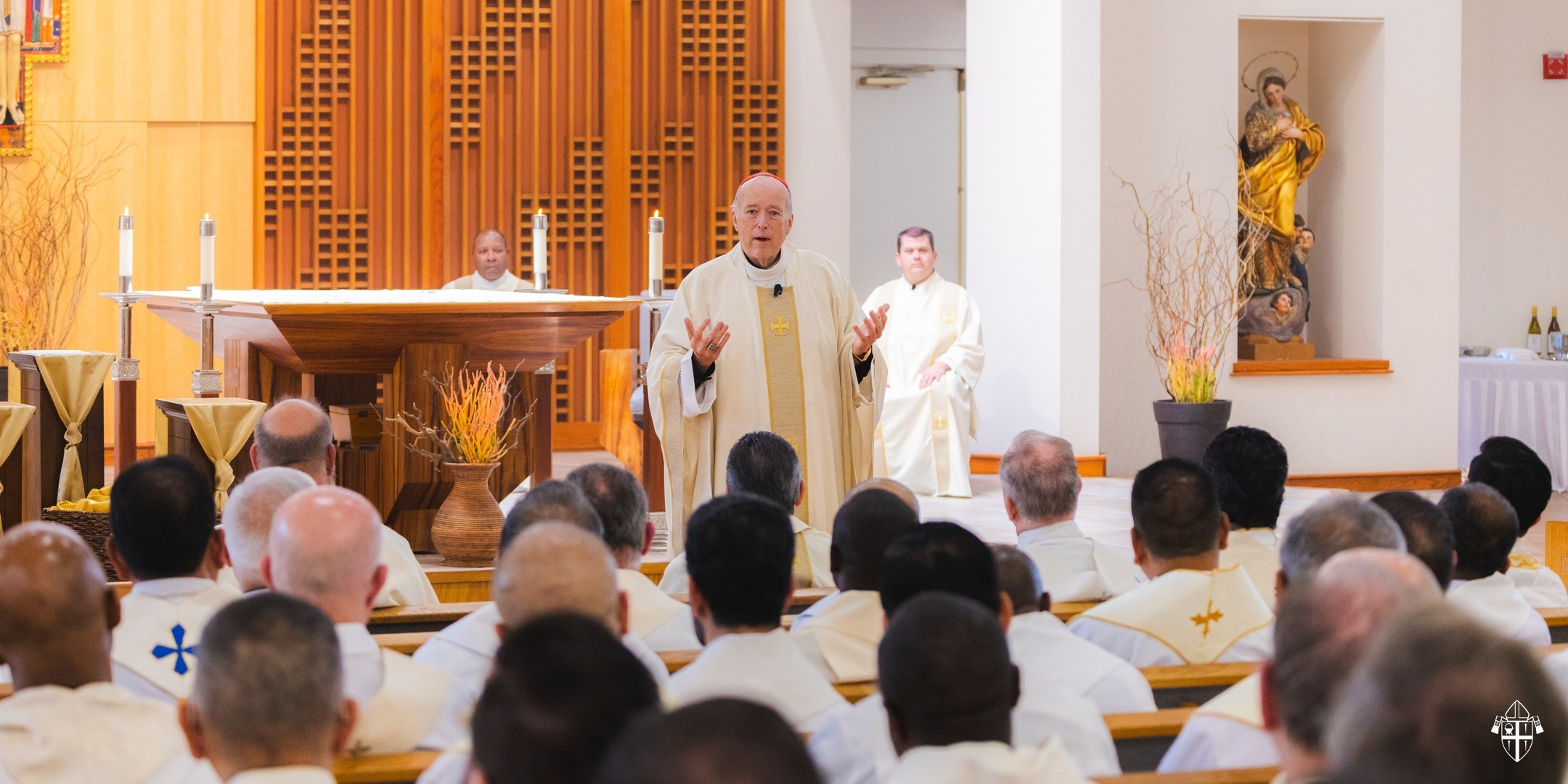
He was able to grab headlines back in June when he joined a group of local Catholics at the Our Lady of the Visitation parish in Cincinnati to demand actual responses from the archdiocese led by Robert Gerald Casey.
The issue was the alleged use of a parish laptop by priest Martin Bachman to play games involving witchcraft and diabolic imagery, but before Casey’s relative recent appointment to Cincinnati, one of the very last made by Pope Francis back in February of this year, there were other issues there.
The most notable goes back to 2019 when Rebecca Surendorff, who left this Church over issues of abuse and cover-up, founded an organization advocating for laws to protect children from sexual abuse and provide justice for survivors.
Ms. Surendorff activism was the byproduct of a case involving Father Geoff Drew. He is accused of child rape and of having child pornography in computer equipment under his care, so even if the accusation against Bachman could be seen, from a distance, as overreach from overzealous parishioners, but their anger has a long history of dismissive attitudes from the Catholic Church at large, and in Cincinnati and other dioceses in Ohio.
Casey’s predecessor, now emeritus archbishop Dennis Marrion Schnurr, got the Cincinnati post after Benedict XVI appointed him as coadjutor in 2008 to address the many troubles under Daniel Edward Pilarczyk’s long, more than 30-year long tenure there.
It is unclear what would be the long-term effect of McQuaide’s actions and even if he will do it again, as he was escorted out of the parish by police, but him, Surendorff and a rather small but very active group of active and former Catholics are mounting the most significant challenge to the dismissive attitude with which the Catholic dioceses of Ohio deal with clergy sexual abuse.
Looking back in Upstate New York
New York State has been a significant battleground for clergy sexual abuse accountability, largely due to the Child Victims Act (CVA). Enacted in 2019, the CVA opened a look-back window that allowed survivors of child sexual abuse to file lawsuits regardless of when the abuse occurred, leading to a massive surge in claims against the Catholic Church and other institutions.
In total, over 10,800 claims were filed under the CVA across New York State, with more than half of those (over 5,500) directed at religious organizations, predominantly the Catholic Church, according to Child USA and the Law Offices of Jeff Anderson.
A previous installment of this series, dealing with the case of California, linked before this paragraph, went over the details of the so-called “look-back windows” and how they facilitated addressing major issues in both California and New York, not only in the Catholic Church, but in other spheres of public life.
In New York’s case, the civil trial won by E. Jean Carroll against Donald Trump was possible precisely because of this legislation.
As far as the Catholic Church in the Empire State, this law has forced several dioceses across Upstate New York to seek bankruptcy protection and agree to substantial financial settlements. Three key examples are the dioceses of Rochester, Buffalo, and Syracuse.
The diocese of Rochester was one of the first in New York to file for Chapter 11 bankruptcy in 2019, shortly after the CVA window opened. After years of complex negotiations, a significant milestone was reached recently.
On July 23, 2025, attorneys representing survivors announced a new settlement agreement, bringing the total compensation to $246.35 million. This amount includes a major recent settlement of $120 million with a “last holdout insurer,” Continental Insurance Company (CNA), a testament to the perseverance of approximately 450 survivors.
The diocese's bankruptcy proceedings aimed to provide equitable compensation to victims while allowing parishes to continue their operations.
Perhaps now that there is an agreement, Leo XIV will appoint a successor to bishop Salvatore Ronald Matano who, at 78 is the oldest active Latin rite Catholic bishop in the United States, only younger than the current nuncio in Washington, D.C., French Cardinal Christophe Pierre.
Then there is the diocese of Buffalo, headed by the much younger Michael William Fisher who faced hundreds of claims, forcing him to file for bankruptcy back in 2020.
In April 2025, the diocese reached a $150 million settlement agreement with sex abuse victims. However, the implementation of this settlement has not been easy.
Reports over June and July indicate a significant pushback from individual parishes who are being required to contribute substantial portions of their “unrestricted cash” (ranging from ten to 80 percent of said funds).
Road to renewal?
The situation is dire, as parishes with higher percentages are slated for closure or merger under the diocese's recently announced Road to Renewal plan. Some parishes have even appealed to the Vatican and initiated legal action in New York courts, arguing that these mandatory contributions are financially devastating and may “fatally destroy” them, highlighting the financial strain and discord within the Church stemming from these settlements.
More so, as there is a collective memory of what are the reasons behind the current crisis: systematic cover-ups, decades long tales of “nothing to see here” whenever local faithful asked about the kind of actual control bishops such as Richard Joseph Malone was willing to exert over their clergy.
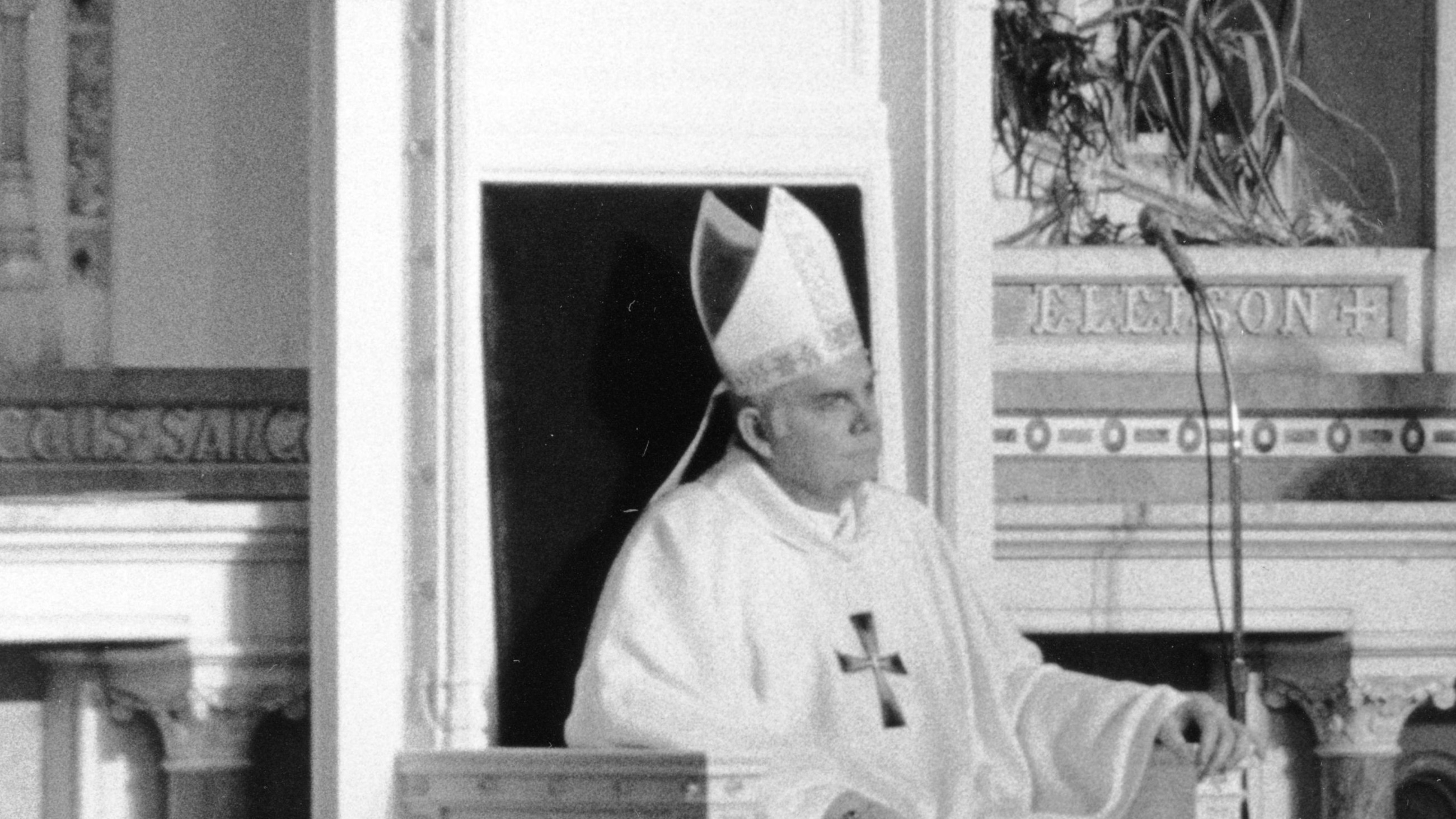
This becomes clear when one goes over Malone’s bio and finds that he was promoted to bishop by Bernard Law, the Cardinal who inspired Spotlight, the movie about the monumental clergy sexual abuse cover up in the archdiocese of Boston, where Malone was one of the last three auxiliary bishops promoted by Law, in 2000.
Malone left the diocese one year and a half before reaching 75, in 2019, leaving the mess there in Fisher’s hands. Fischer is a disciple of Donald William Wuerl, the Cardinal and emeritus archbishop of Washington, D.C., who also faced repeated allegations of cover up in the U.S. Capital and at his former diocese of Pittsburgh, Pennsylvania.
The record of abuse at Buffalo keeps deepening as details emerge of the existence of a “Magdalene Laundry,” similar to those in Ireland. There, so-called “wayward girls” were into a form of slave work, as the story linked after this paragraph tells. If the video is not displayed as expected in your browser, you can find it here.
Then, there is the diocese of Syracuse, currently under Douglas John Lucia’s leadership.
As Buffalo, Syracuse filed for Chapter 11 bankruptcy protection in June 2020. In November 2024, it reached a $100 million settlement agreement to compensate over 400 survivors of sexual abuse by clergy, religious, and lay employees. This settlement involved contributions from the diocese itself ($50 million), individual parishes ($45 million), and other entities.
Finally, there is the diocese of Albany. As Rochester, Albany is currently led by a bishop well beyond the 75-year rule of retirement. Bishop Edward Bernard Scharfenberger is currently 77, making him the fourth oldest bishop in service in the United States.
Unlike other Upstate New York dioceses, Albany is trying to avoid bankruptcy, instead proposing a court-supervised “Victims/Survivors Compensation Plan.” Scharfenberger’s plan has faced criticism, with mediation efforts often flirting with collapse.
While the diocese has reached some individual settlements (e.g., a recent $750,000 settlement for a 47-year-old survivor), the vast majority of the more than 400 Child Victims Act lawsuits it faces remain unsolved, a sign of difficulties in achieving a comprehensive and widely accepted resolution outside of bankruptcy.
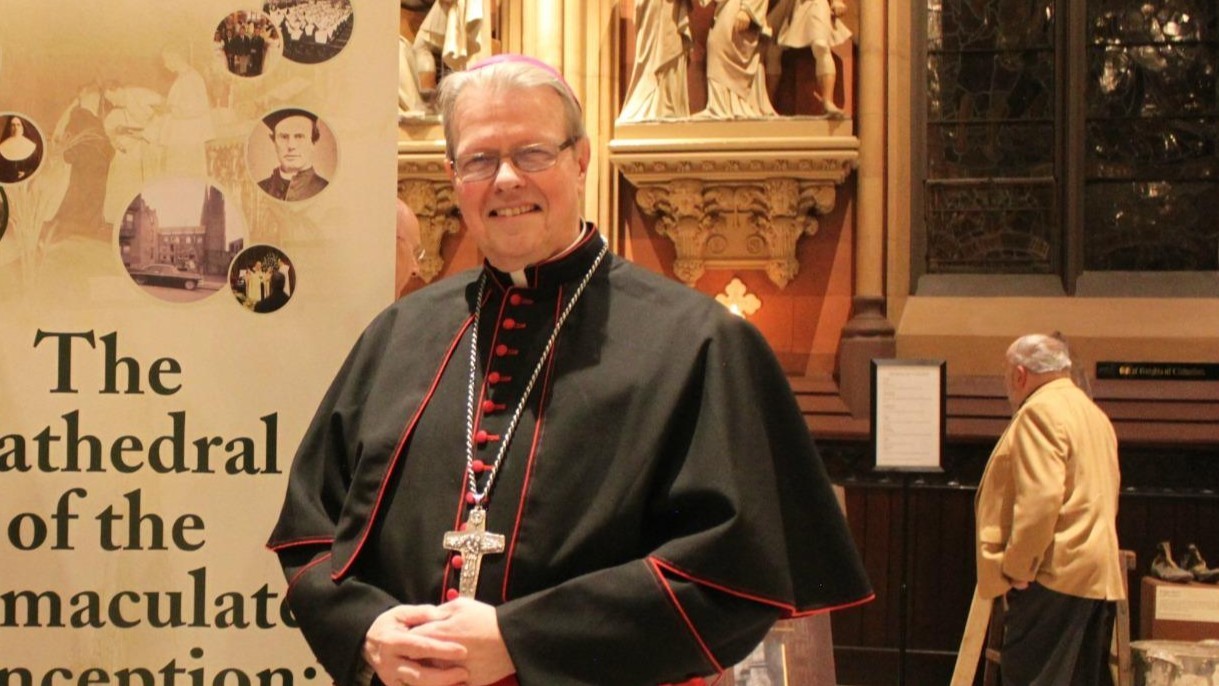
Edward B. Scharfenberger at his Cathedral in Albany, NY, 2016. Social media of his diocese.
These massive payouts underscore the devastating financial toll that decades of unchecked abuse and subsequent cover-ups have taken on the Catholic Church in New York. They also reveal the complex legal and financial strategies employed by dioceses to manage these liabilities, often involving significant internal conflict and questions about transparency and equitable compensation for survivors.
Oddly enough, data for the diocese of Brooklyn and the archdiocese of New York City is far more complex as they have gone through different approaches and processes over the last couple of decades.
Arrupe and his U.S. and Bolivian heirs
It has to do with Pedro Arrupe's role, as the Jesuits' global superior at the time, in making the final approval for the ordination of Donald Barkeley Dickerson, then a Jesuit seminarian, after a torment of sorts had occurred in Louisiana. Dickerson already had a record of sexual abuse.
Despite such record, Arrupe ultimately ruled Dickerson as worthy of ordination, even though reports offered by local leaders of the Jesuits described the abuse of underage males in full detail.
In a perfect world, the new details should force the Catholic Church to rethink its understanding of abuse, and the systems to deal with it, but also the very notion of sainthood as the Jesuits seek the beatification and, ultimately, the canonization of who was the superior general of the order from 1965 through 1983.
Debates about canonization have been marred by references to abuse for the last 20 years or so. It is known that John Paul II was aware of the kind of abuse happening at the Legion of Christ and many other organizations akin to “orders” in the second half of the 20th century and, despite the many warnings, he continued expressing support for Marcial Maciel and other leaders of such organizations and actively offered a refuge of sorts to Bernard Law in Rome.
The Jesuits’ worries grow as, earlier in July, the Bolivian Nation’s Attorney gave new impulse to the cases of Jesuit predator priests in Bolivia, following mounting pressure from survivors and, significantly, the fallout from the global abuse crisis that has forced a re-evaluation of historical allegations.
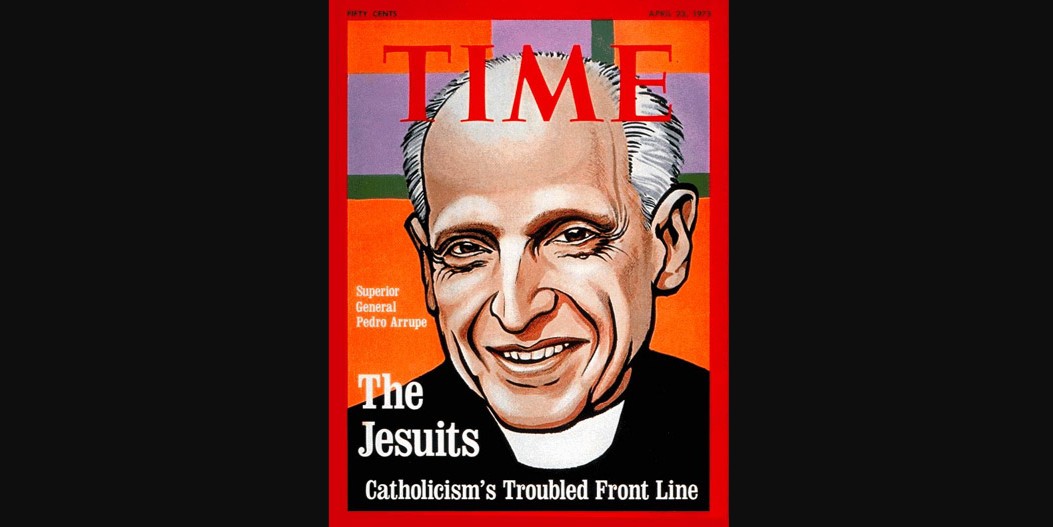
The April 23, 1973 cover of Time Magazine with Pedro Arrupe, then Superior General of the Society of Jesus.
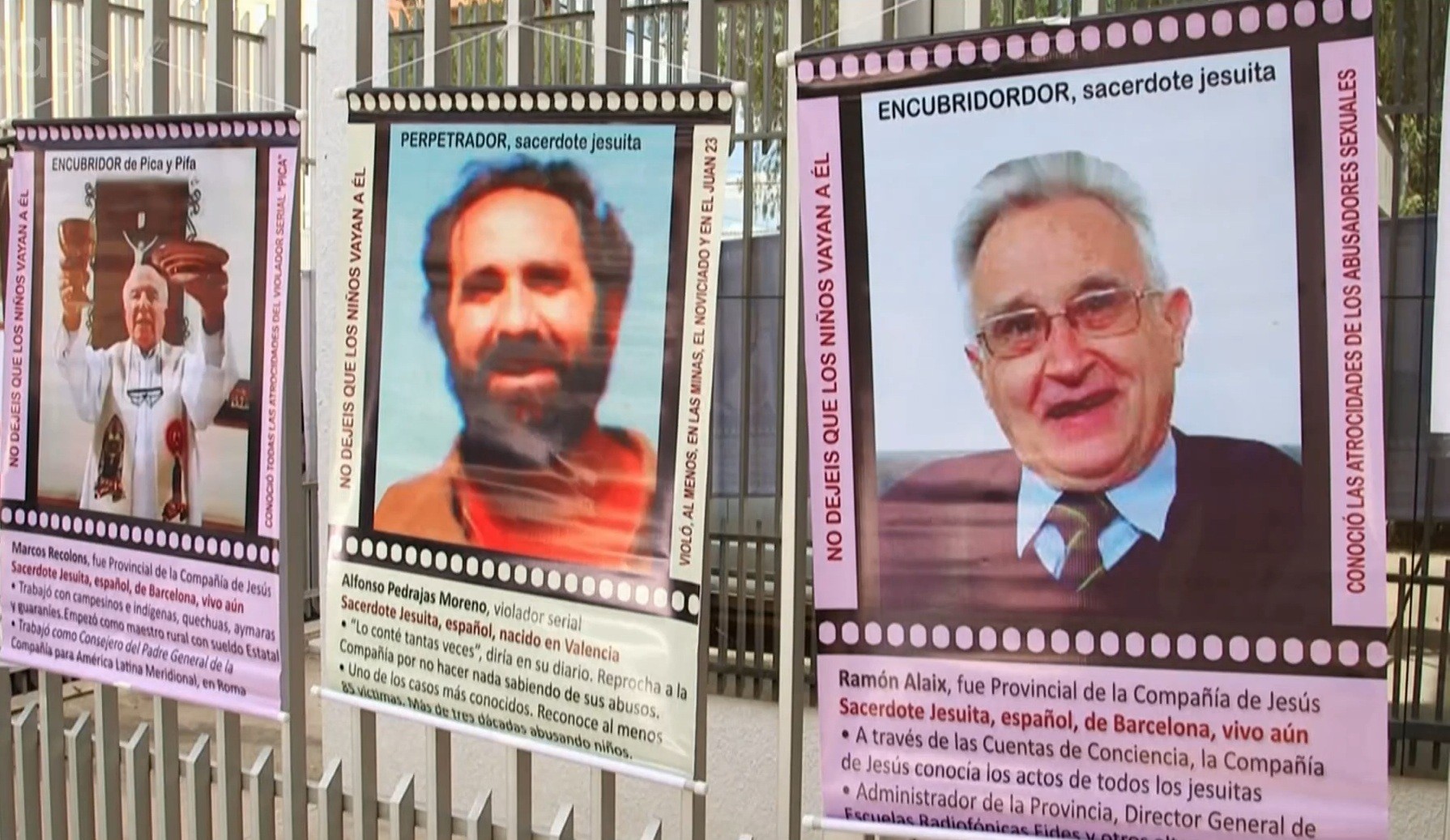
The renewed focus targets two key figures: Marcos Recolons de Arquer and Ramón Alaix Busquet. Both are Spaniard nationals who are already over 70, which diminishes the actual chances of substantial prison terms.
The relative “novelty of the matter” in Bolivian courts stems from the lack of precedents to allow for a full prosecution, meaning that while allegations might have circulated for years, formal judicial processes often faced significant hurdles or outright dismissal, reflecting a widespread deficiency in the region's justice system to protect victims' rights and pursue accountability effectively.
Double betrayal
The difficulties of putting these cases on trial and offering a measure of justice emerged immediately, as the proceedings were suspended once again less than a week after their reboot on July 22, with a theoretical new date of August 1.
Beyond the advanced age of both former superiors of the Jesuit province in Bolivia, other issues, including complex legal maneuvering, challenges related to obtaining testimony, and the broader institutional resistance, make it impossible to offer any definitive forecast about the potential development of this case.
This ongoing struggle underscores the systemic challenges inherent in addressing long-standing abuse within the Church, particularly in contexts where judicial systems are still adapting to the complexities of such high-profile cases and social awareness is relatively nascent. A prior installment of this series, linked below, went over some of the details that prompted this trial.

In this respect, it should be noticed that many of the Spaniard priests implicated in abuse in Bolivia were formed, inspired in more than one sense, by the charming personality of Father Arrupe.
The former superior of the Jesuits, the so-called “Black Pope”, as the 1970s media used to call him, was a celebrity in his own right. Back in 1973, Time magazine devoted one of their weekly issues covers to the Spaniard Jesuit leader, as many more civil and Catholic magazines in different languages did.
Years later, there are those calling him the “second founder of the Jesuits”, because of projects such as the Jesuit Refugee Service or the way he was able to keep together a large, pluralistic order, where there was room for conservatives such as Avery Dulles as well as liberals such as Daniel Berrigan.
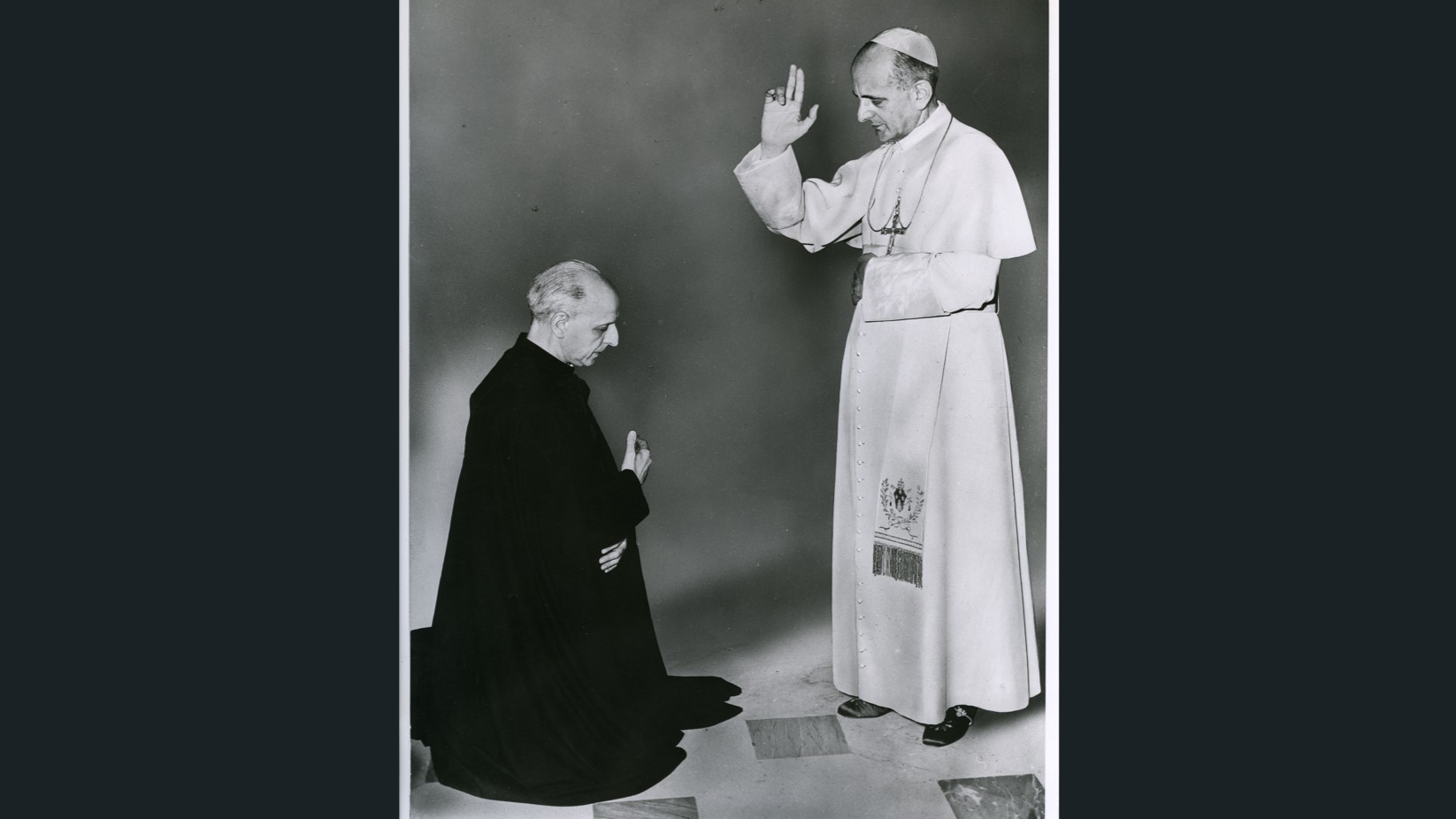
In black, Pedro Arrupe receives a blessing from Pope Paul VI, 1965. Jesuits' social media.
When thinking about the trial in Bolivian courts that Recolons de Arquer and Busquet could face in the coming weeks, one cannot help but wonder what effect Arrupe’s writing on surviving the nuclear attack in Hiroshima had on them and many other young males seeking to become Jesuits by the end of the 20th century.
One cannot help but wonder how he and the Jesuits at large used that experience and how some of those young males ended up becoming, this side of the pond, either accessories as is the claim against Recolons de Arquer and Busquet or sexual predators, as Alfonso Pedrajas Moreno was.
One cannot help but wonder the kind of betrayal of their own formation they had to commit, while reading about Arrupe’s notion of 'becoming men for others,' and abusing unsuspecting members of already marginalized low-income families in Cochabamba and other towns in Southern Bolivia.
But also, one cannot help but wonder how the very same man, Arrupe, who was articulating those ideas about the experience of surviving a nuclear attack in Japan, was also able to betray his own take on “becoming men for others” when he dismissed the warnings his U.S. Jesuit peers sent him over telex (see the PDF below) in the late 1970s.
One cannot help but wonder if the Bolivian trial will be the trial of Arrupe himself.
A message sent back in 1977 to Pedro Arrupe, then Superior General of the Society of Jesus.
Post-Bétharram France
France has undergone a profound reckoning with clergy sexual abuse, largely catalyzed by the landmark Independent Commission on Sexual Abuse in the Church (CIASE), often referred to as the Sauvé Commission, which published its devastating report in October 2021.
This report, which has been frequently referenced in this series, shocked the Catholic world by estimating that 330,000 children had been victims of sexual abuse within France's Church over the past 70 years. Behind the abuse, the Report estimates a total number of 3,000 predators among priests and other church personnel.
The Commission explicitly denounced the systematic manner by which Catholic leaders had covered up abuse perpetrated by even some of the most revered figures of Catholic France, such as Abbé Pierre, who was the subject of an installment of this series, linked after this paragraph.

English Edition
Hero, priest, and sexual predator: the story of Abbé Pierre
Jean-Marc Sauvé, the Report’s lead, made no friends among the French Radis, the equivalent of the Trads and Rad-Trads in the English-speaking world and the Yunques in the Spanish-speaking world, when he and his team urged the French bishops to take “robust and decisive action”, including compensation for victims and significant reforms to Canon Law and internal governance.
The scale of the abuse, the Church's “deep, cruel indifference toward victims,” and the systemic failures it exposed have fundamentally reshaped the public's understanding of the crisis in France, Europe, and elsewhere.
Even after such a comprehensive national inquiry, new survivors continue to come forward, and specific cases or congregations are still undergoing their own processes of investigation and revelation. This is evident in new developments at La Valette, La Var, and particularly with the Congregation of the Priests of the Sacred Heart of Jesus of Bétharram.
English Edition
Bétharram: Sacrificing the head so the body may live
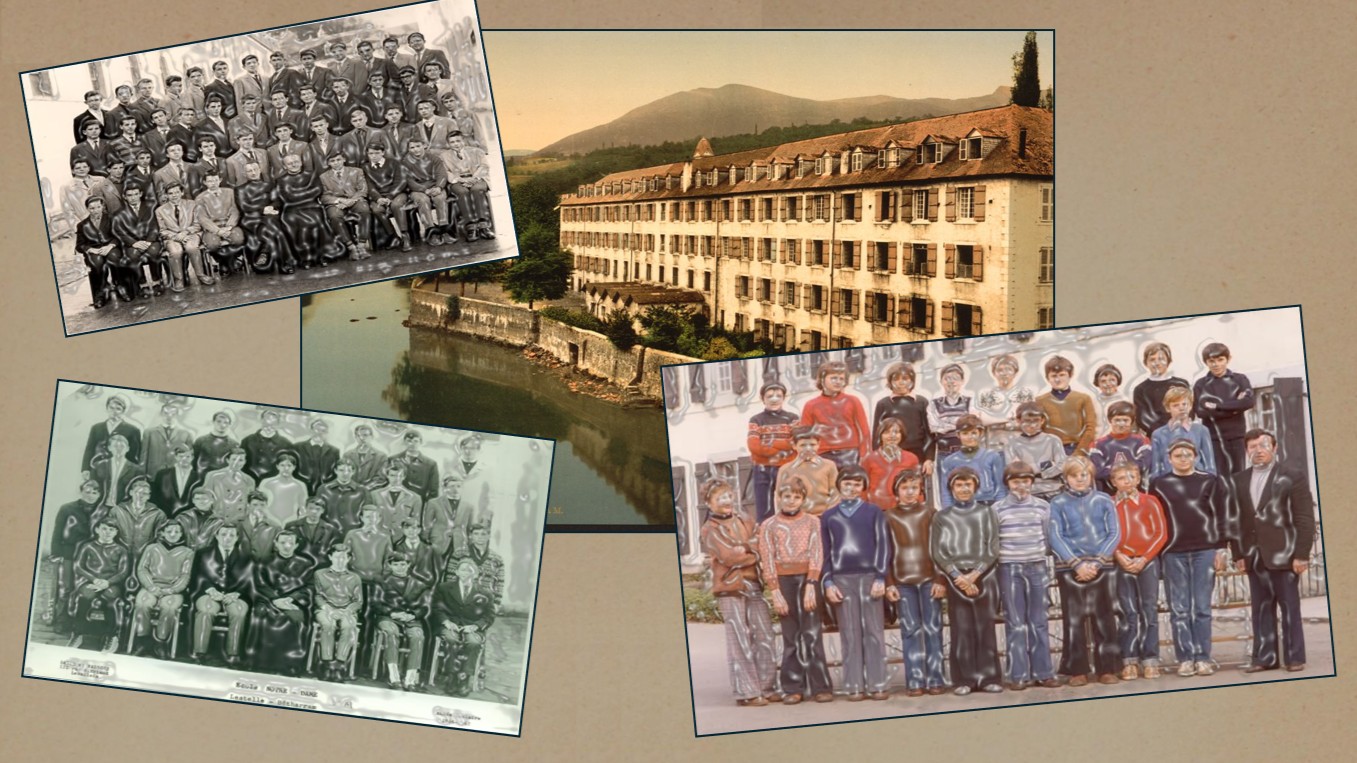
Bétharram has been the subject of several installments in this series. Most notably the essay penned by Camille Rio, linked before this paragraph, and a previous story by the author of these lines.
English Edition
Bétharram, a mirror for all countries to look at
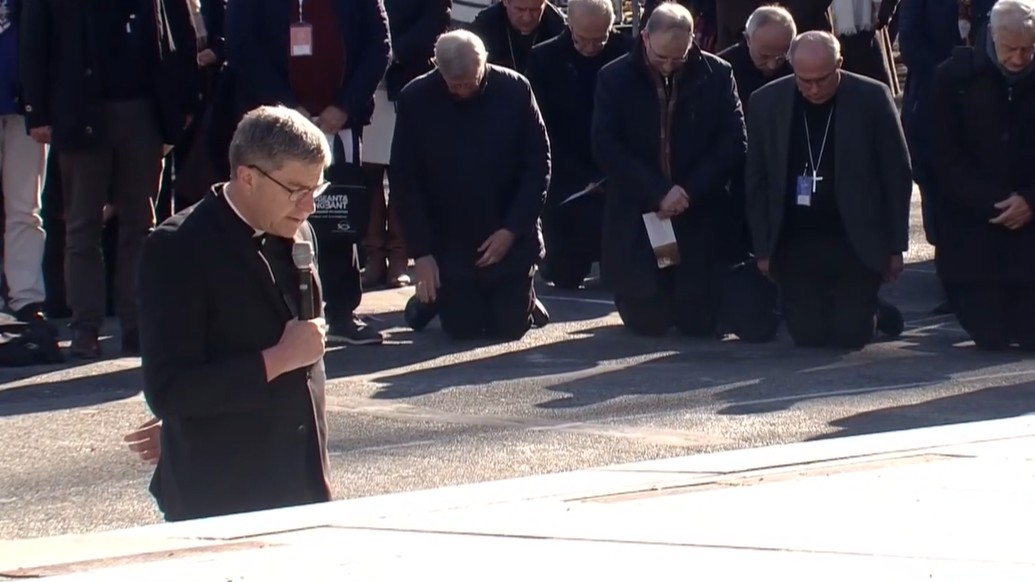
This pervasive issue led to the formation of a newly created Independent Commission to Investigate the Sexual and Physical Violence at Our Lady of Bétharram, Commission Bétharram.
This specialized commission is now actively collecting testimonies from survivors, demonstrating that the full extent of abuse within specific religious orders or institutions continues to surface, even in a post-CIASE landscape.
The ongoing testimony from new survivors at Bétharram underscores the long-term impact of institutional cover-ups and the continued need for independent, victim-centered processes to uncover the full truth and provide justice, years, and even decades, after the initial crimes. It serves as a stark reminder that national reports, while crucial, often represent only the tip of a deeply entrenched and still unfolding crisis.
The situation at La Var is far less complex than the record of systemic abuse at Bétharram. The case at the small parochial Catholic school at La Valette, La Var, is about instances of “moral violence,” incidents of emotional distress, like a young girl urinating herself in class out of fear of a teacher, and manipulation through behavioral notes; teachers threatening “black crosses” if children spoke to their parents about disciplinary measures in the classroom.
One teacher allegedly forced a first-grade student to wear a pacifier around her neck to publicly shame her as a “baby.” Concerned families sometimes withdrew their children from the school mid-year to “remove them from danger.”
La Valette highlights how now the clergy sexual abuse crisis has evolved into a crisis of loss of trust in the abilities of two main institutions, the schools and the Catholic Church, to contribute to the education of the sons and daughters of French Catholic families.
Dioceses such as that of Fréjus-Toulon now face the consequences of many years of dismissing egregious repeated, systematic abuse. This is encouraging parents to be less willing to accept what used to be common practices in French Catholic schools.

Woelki destroying the Cologne Cathedral dragged by the demon of the sexual abuse scandal (Missbrauchs-Skandal). Photo by Ben Sack. The original sculpture was crafted by Jacques Tilly (https://en.wikipedia.org/wiki/Jacques_Tilly).