Rodolfo Soriano-Núñez Miércoles, 11 de Junio del 2025, 02:00
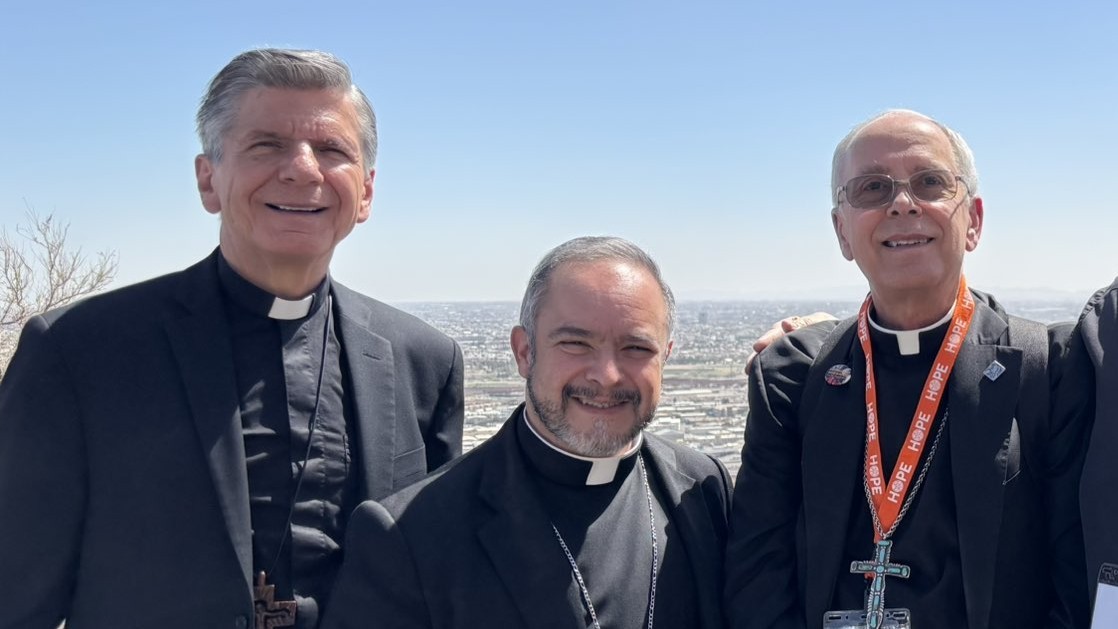
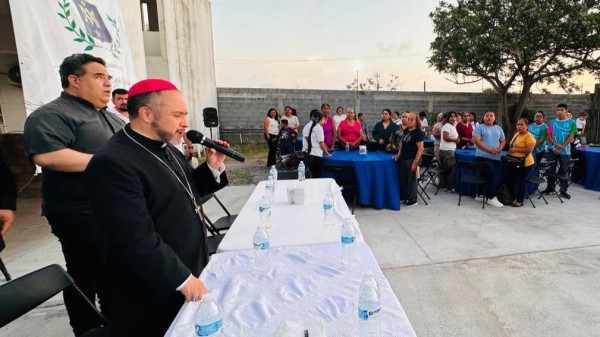
The statement is signed by Eugenio Lira, bishop of the Mexican border town of Matamoros, sister city of Brownsville, Texas.
Lira is the chair of the Mexican bishops’ conference committee dealing with migration.
By Rodolfo Soriano-Núñez
This Tuesday June 10, bishop Eugenio Lira of the Mexican city of Matamoros, sister border town of Brownsville, Texas, issued a statement on behalf of the Mexican bishops conference, the so-called CEM after his Spanish-language acronym, dealing with migration.
Bishop Lira decries the mistreatment of undocumented populations currently residing in the United States terrorized by the massive raids launched in the Los Angeles metro area starting on Friday June 6.
The statement, issued only in Spanish, does not explicitly name the U.S. federal government, the authority behind the raids leading to the unexpected and unplanned mobilizations last Friday.
Although bishop Lira quotes by name the archbishop of Los Angeles, Mexican born José Horacio Gómez, as reported yesterday by Los Angeles Press, Gómez's last statement about the raids was issued in Mexico City late that Friday.
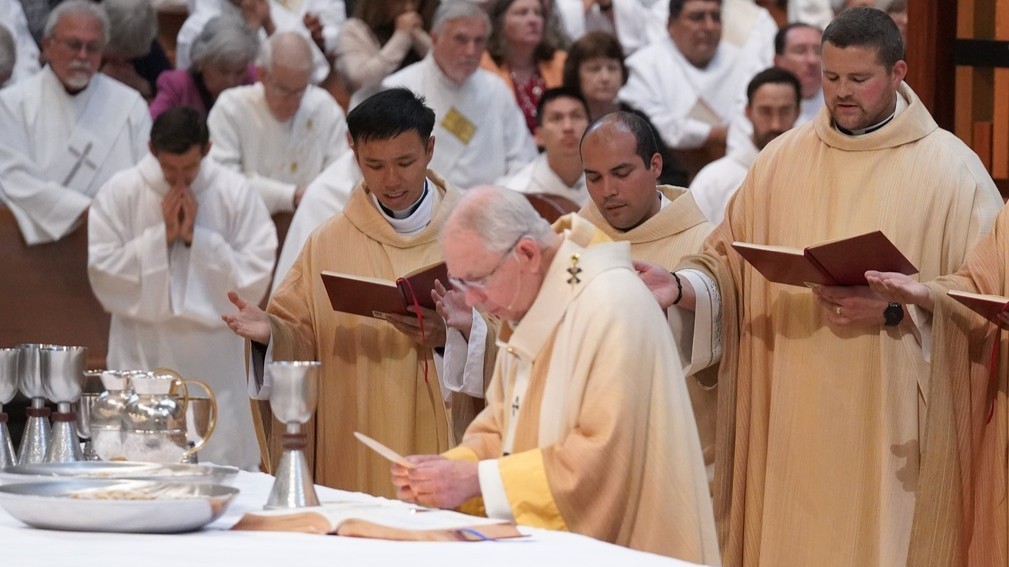
Ever since, Gómez’s personal social media accounts and those of the Archdiocese of Los Angeles (LA Catholics over what used to be Twitter) have remained active but avoiding as much as possible any reference to the actual, on the ground situation in many migrant communities in the Los Angeles metro area and elsewhere in California.
In that respect, as noted yesterday, the social media accounts of Salvatore Cordileone, the archbishop of San Francisco, have also avoided any hint of potential criticism towards the U.S. federal government or Donald Trump.
That despite the fact that Trump has been using his own social media and the many interactions he has with the press covering his activities in the White House to criticize and threaten California governor Gavin Newsom with an impending arrest while addressing the White House press corps.
The United States Conference of Catholic Bishops remains also silent on the issue, and even bishops with deep roots in Mexican communities in the U.S. such as Daniel Ernest Flores, bishop of Brownsville, Texas remain active, with plenty of liturgical and biblical postings over his social media account at what used to be Twitter, but evasive about addressing the situation in their social media accounts.

English Edition
Pope Francis decries US migration policy under Trump
Archbishop Gustavo García-Siller, of San Antonio, Texas, who used to be active on social media, “killed” his twitter account after posting a criticism of the government of Israel that got flagged by groups strongly supporting Benjamin Netanyahu's policies.
He last updated his Facebook account on November 2, 2024, when he presided over the Day of the Dead ceremonies in one parish of his archdiocese.
Mark Joseph Seitz, bishop of El Paso, Texas, has also remained for the most part silent over the crisis in Los Angeles and elsewhere in California and the United States.
Seitz’s most significant activity over social media was the retweet of a thread dealing with the issue of migration in the United States and the terror driven by the White House against migrant communities all over that country.
The thread was carefully written by an emeritus professor of UCLA prestigious Law School, Dr. Peter Arenella.
His thread has reached over 7 million views, and it is linked after this paragraph.
Professor Arenella posted his thread early on June 8, and bishop Seitz reposted it by June 9.
The statement of the Mexican bishops comes endorsed with the signatures of the chair of the CEM, Cuernavaca’s bishop Ramón Castro, and his general secretary, the auxiliary bishop of Mexico City, Héctor M. Pérez.
An unofficial, Los Angeles Press, translation to English appears after his paragraph and the original in Spanish appears as a PDF file in the box after the statement.
Statement on the situation in Los Angeles, California
With pain and concern, we are closely following the aftermath of the complex situation brought by the massive raids to arrest undocumented migrants and the protests that have occurred as a response in Los Angeles, California, and which have spread to other places, such as San Francisco, California, and Austin, Texas.
As Archbishop José Horacio Gómez of Los Angeles has rightly pointed out, if it is true that no one wants the presence of criminals in their communities, it is necessary to distinguish that, although some undocumented migrants commit criminal acts, not all undocumented migrants are criminals. Moreover, the vast majority of undocumented migrants contribute to the good of the communities in which they live and work.
This necessary distinction, which makes it possible to overcome confusion that leads to mistakes, allows us to clearly see reality and to make appropriate decisions for the benefit of all. Decisions that, for those who identify themselves as believers, must be illuminated by the Word of God, who has said: “The same laws and regulations will apply both to you and to the foreigner residing among you” (Book of Numbers 15:16). “Give to strangers and foreigners here,” admonishes Saint Augustine, “what you will be paid back in your own country” (Sermon 86:11, see page 402 of this book with Augustine's sermons in English).
The solution to undocumented migration requires multiple joint actions. Among them, an immigration system allowing to do things as well as they could be done, without having to resort to other paths that only end up complicating everyone’s lives. Hence Pope Leo XIV’s calling: “no one is exempted from striving to ensure respect for the dignity of every person, especially the most frail and vulnerable, from the unborn to the elderly, from the sick to the unemployed, citizens and immigrants alike” (Address to the Diplomatic Corps accredited to the Holy See, May 16, 2025).
United with all people of good will, especially those who are suffering in these difficult times, we ask God, through the intercession of Our Lady of Guadalupe, to help us understand that we are all brothers and sisters and to build a better world together.
Box with CEM's Statement in Spanish.
The statement from the Mexican bishops’ conference underscores a new development. It used to be that the U.S. Catholic Bishops would be miles ahead of their Mexican counterpart as far as advocacy for migrant populations confronting terror caused by U.S. federal actions.
As it stands now, it is CEM, the Mexican counterpart of USCCB, the entity now addressing the ongoing migrant crisis. Will the CEM’s statement be enough to push U.S. prelates to reconsider their public stance?
It is hard to tell at this point. Also, one should expect some word from the bishops of other Latin American countries with relatively large populations in the United States.
Another key actor on this issue is the newly elected, first American Pope. On May 30, Pope Leo XIV appointed Pedro Bismarck Chau, a Nicaragua-born bishop as auxiliary of the archdiocese of Newark, New Jersey. More recently, on Thursday, June 5, he appointed Simon Peter Engurait, a priest originally born in Uganda, as bishop of Houma-Thibodaux, Louisiana.
These recent appointments suggest a clear preference from the Chicago-born Pope regarding the role of migrant Catholics within the Church's leadership.
As migrant communities face continued terror in cities such as Los Angeles, the Mexican bishops’ appeal for respect for their basic human dignity stands in contrast to the perceived silence of many of their counterparts north of the border, highlighting a critical moment for Catholic leadership in both nations.