Rodolfo Soriano-Núñez Lunes, 27 de Julio del 2026
Urbano Vázquez, a priest born in Mexico with a record of abuse in the U.S., is now the poster boy for deadly antimigration policies.
However, when assessing the effects of clergy sexual abuse, one must be aware that predator priests like Urbano move South to North as much as they do North to South.
By Rodolfo Soriano-Núñez
The last couple of weeks, Catholic news services in the United States and Latin America in both English and Spanish have been flooded with information about the violent arrest of Leticia Ugboaja, a religious sister; the suicide of Benjamin Madu, a Catholic priest; and, more recently, the trial to denaturalize Urbano Vázquez Ortega, a priest and Franciscan friar, originally born in Mexico.
They are, in more than one respect, the three faces of the Catholic experience in the United States: a nun snatched by ICE agents because of the color of her skin when she was walking toward Sunday Mass, a hospital chaplain who, confronted with the choice of going back to Nigeria, ended his life, and a convicted predator who stubbornly claimed his innocence during a pandemic-era trial, who now becomes the poster boy for the Trump administration’s enforcement of migration law.
Taken in isolation, each of these stories has been spun endlessly by media outlets focusing on single aspects of their cases. Taken together, however, they offer a stark lens through which to gauge the modern Church’s deepest structural challenges. Sister Ugboaja has become a reluctant celebrity, eager to return to the quiet, essential labor performed by religious sisters in marginalized border communities like McAllen, Texas, where ICE arrested her.
The tragedy of Benjamin Madu’s death reaches into theological tensions that right-wing Catholic commentary often refuses to confront when addressing suicide and other issues encompassed in the right-to-life debates, as it exposes the psychological desperation born of rigid immigration walls.
Many of the right-wing Catholic outlets that recently attacked the governments of Spain, France, and other European countries for having enacted laws to facilitate assisted suicide could draw lessons from it, but it is hard to imagine changes in their ideological positions, quite the opposite.
In France, there was at least one bishop ready to fire off excommunications at lawmakers who voted for the most recent reform. The fact that he is Marc Aillet, the head of the diocese of Bayonne, where the now defunct Catholic school of Bétharram sits, and that he did his best to prevent transparency on that and other clergy sexual abuse cases in his diocese is hard to miss.
English Edition
Bétharram, a mirror for all countries to look at
The speed at which Aillet reacted to the reform in the French National Assembly exposes the tensions and contradictions in Catholic moral theology. Whether in France or elsewhere, bishops who are willing to “go Medieval” on lawmakers over these issues are, more often than not, the most reluctant to adopt transparency and accountability standards, as proven by the fact that Aillet’s Bayonne was one of the few French dioceses unwilling to open its archives to Jean-Marc Sauvé and his team to assess the true reach of clergy sexual abuse in that country by the end of the 2010s.
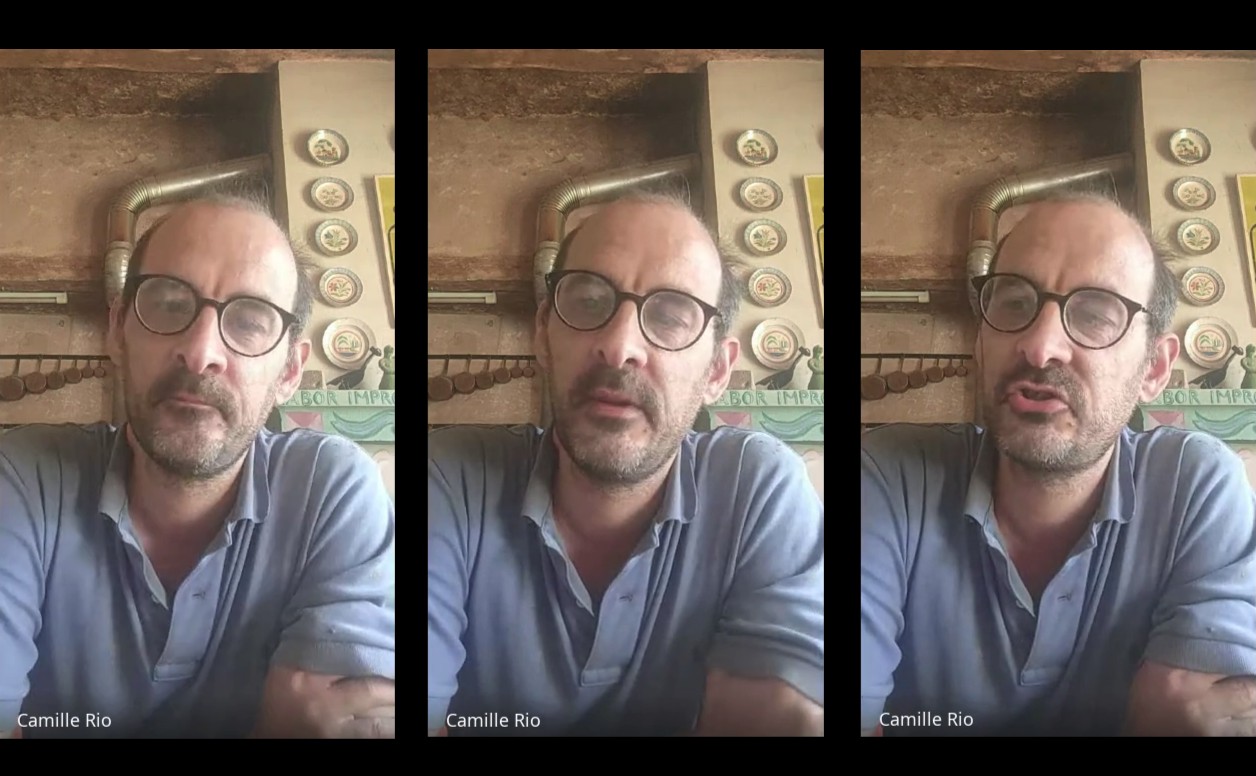
Putting the French threat of excommunication aside, the three cases that have dominated the exchanges over Catholic social media remind us of an old Mexican saying that, roughly translated would mean “the innocent pay for the guilty.”
Sister Leticia is the innocent party in this triptych of sorts; she became the victim of an antimigrant enforcement apparatus expanding its net using the fear of “evil,” an apparatus unable to distinguish between a drug dealer or a convicted predator and a dedicated nurse walking to church in her habit. She became the visible, terrifying outcome of a system built on collective suspicion and racial hatred.
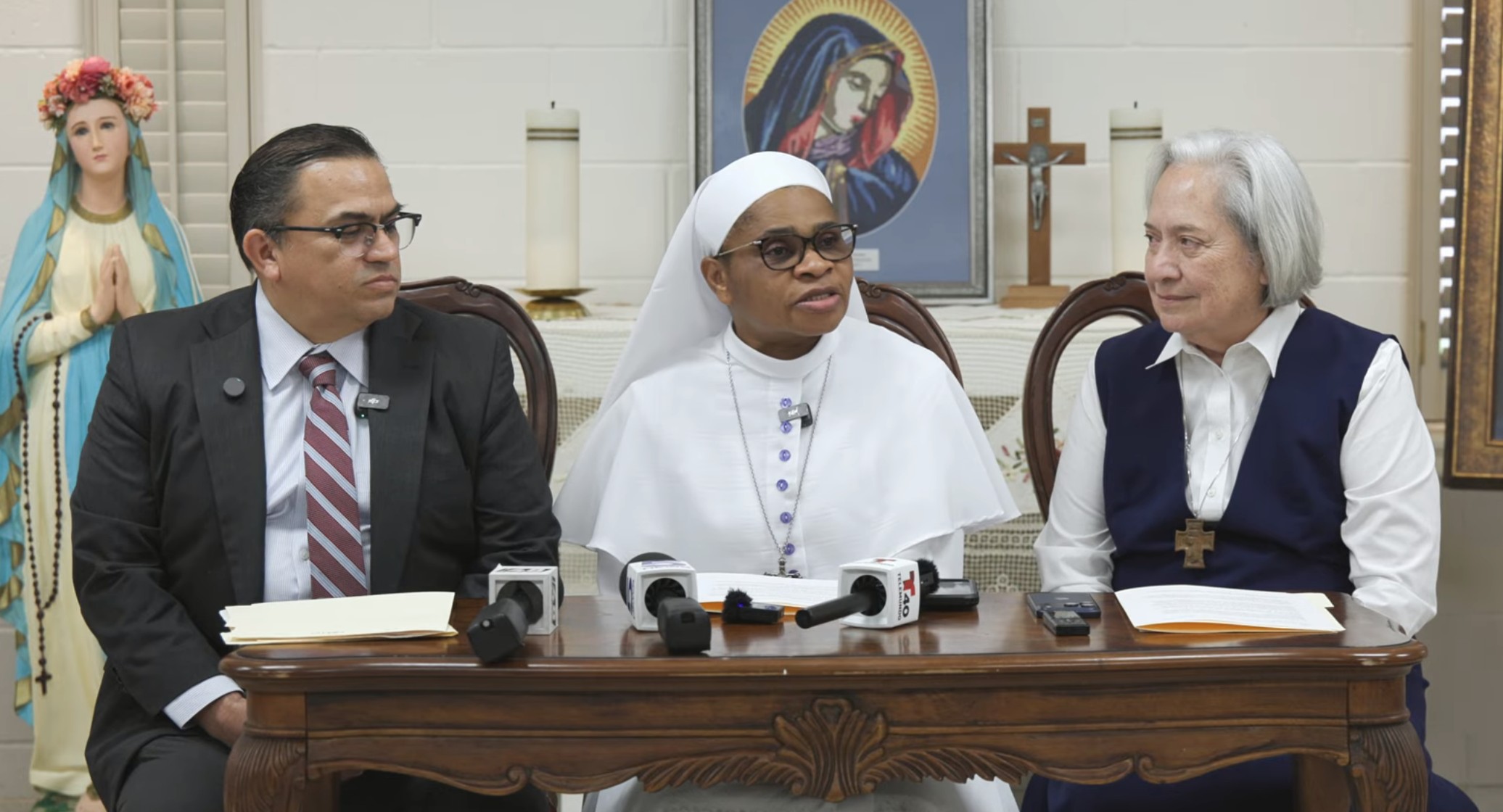
Then, there is Benjamin Madu, the priest willing to commit suicide to avoid going back to a violence-stricken world in Nigeria, a place he no longer saw as home. His tragedy exposes, on the one hand, the psychological toll of that same antimigrant apparatus. When state machinery uses cases like Urbano's to close legal pathways, tighten religious R-1 visa extensions, and enforce rigid return policies, human nuance disappears. A priest terrified for his life in a hostile homeland is met not with sanctuary or process, but with a bureaucratic wall—leading directly to fatal despair.
Finally, there is the guilty party, Urbano Vazquez Ortega, who now becomes the perfect example of the evil Trump’s ICE claims is willing to extirpate, regardless of consequence. He provides the political machine with its ideal “poster boy.”
Because his crimes are real, monstrous, and indefensible, his case is held up by enforcement advocates to justify sweeping dragnets, aggressive border enforcement, and harsher visa rules. His existence gives state power the moral cover it needs to claim, “we are protecting the public from foreign predators,” even if there is evidence of an ongoing effort to at least reduce Jeffrey Epstein’s accomplice, British socialite Ghislaine Maxwell’s, sentence.
English Edition
Migration and abuse, the explosive mix
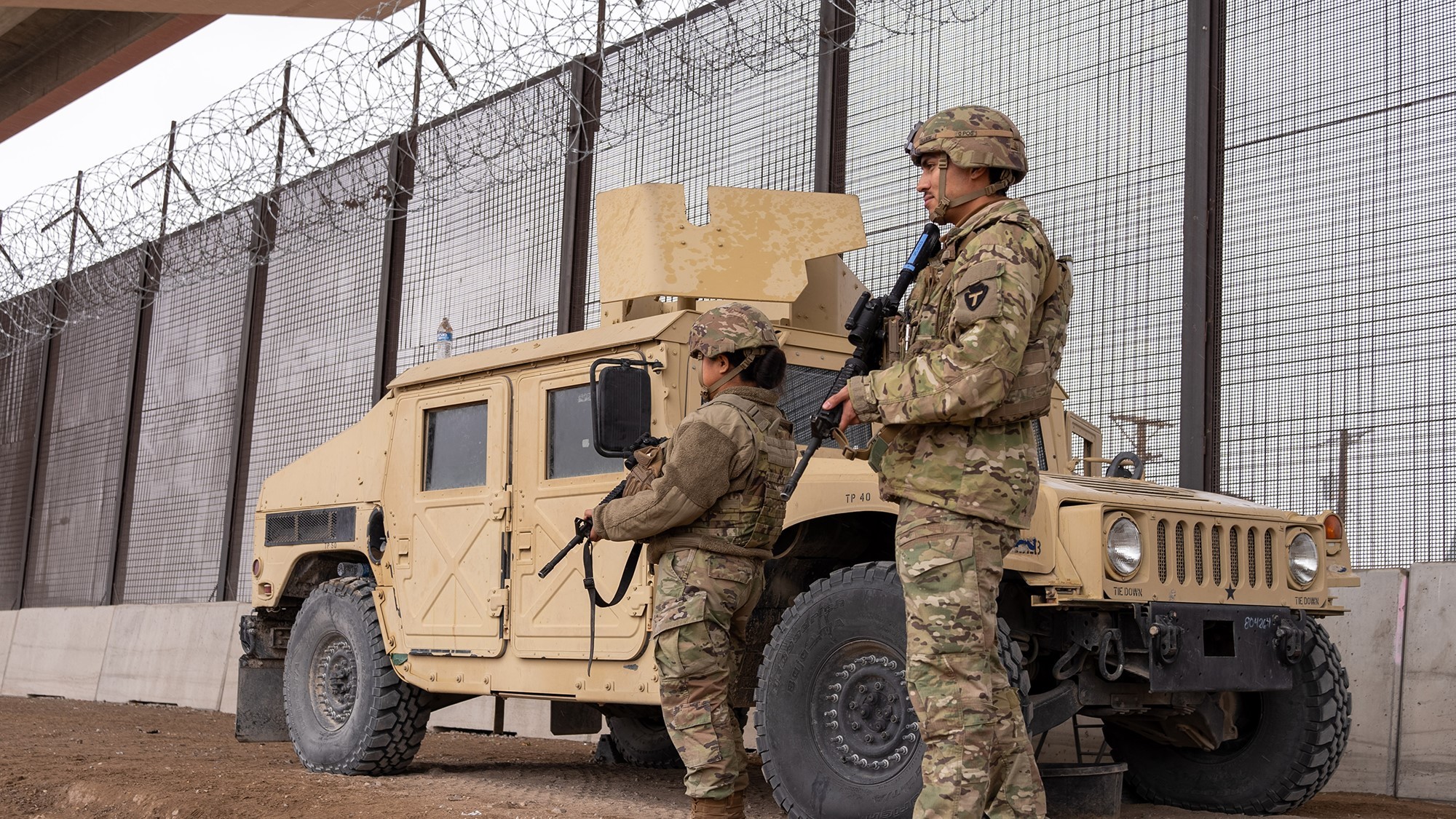
It would be naïve to pretend Vazquez Ortega's actions are not providing the political ammunition to turn the entire immigrant religious workforce into suspects, as the January 2025 story linked before this paragraph proved. When the Department of Justice and DHS bundled his case into high-profile press announcements (featuring rhetoric targeting “criminal aliens” and “predators who lied their way into citizenship”), Vazquez Ortega became a primary exhibit.
His real, egregious crime—child sexual abuse—is leveraged as a rhetorical shield: by combining indisputable offenses for which he was already in jail and purging a 15-year sentence with broader immigration enforcement, the narrative implicitly paints naturalized immigrants, particularly so-called “people of color,” as inherent security and moral risks.
However, there is another aspect about Urbano Vázquez Ortega’s case that merits attention to understand what lies behind the rot of clergy sexual abuse—and how four decades of institutional reform have failed to prevent crimes that will eventually send him back to a country where he has relatives, but no life to return to.
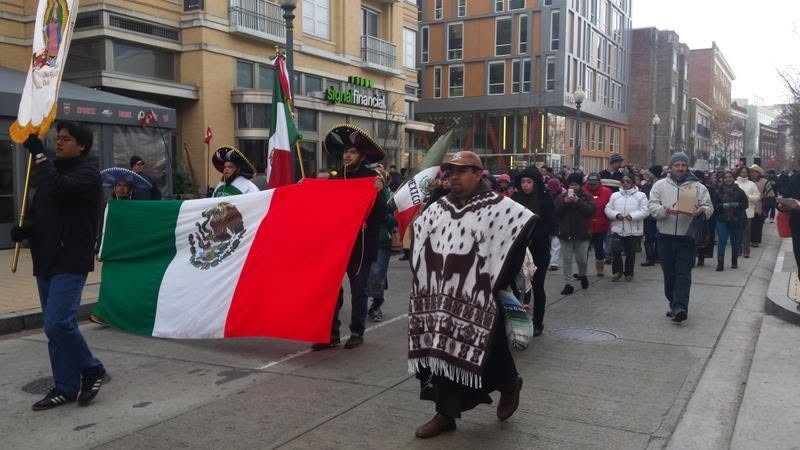
As far as it has been possible to build a profile, Urbano entered religious life while already living in the United States. The specifics of his path to U.S. citizenship are hard to ascertain at this point, although it is known that it was the province of Saint Augustine of the Capuchin Franciscan Friars who sponsored him during the complex process leading to becoming a U.S. citizen at some point in 2017.
Although it was possible to find some loose references to Mexican nationals registered under that name, it is impossible to fully identify where he was born in Mexico at some point in the 1970s.
Sadly, his case was immediately used as a way to justify the deaths of innocent people, whether in Texas, Florida or Maine, Mexican or Colombian, for a pretext similar to what singled out Leticia Ugboaja when, on June 28, 2026, she was trying to get to Sunday Mass: the color of their skin or any other “marker” of their identity.
Urbano Vázquez Ortega’s path to citizenship is in more than one respect similar to that of Anthony Odiong, a fellow Catholic priest, recently sentenced to life imprisonment in Texas, as the story linked after this paragraph told a few weeks ago.
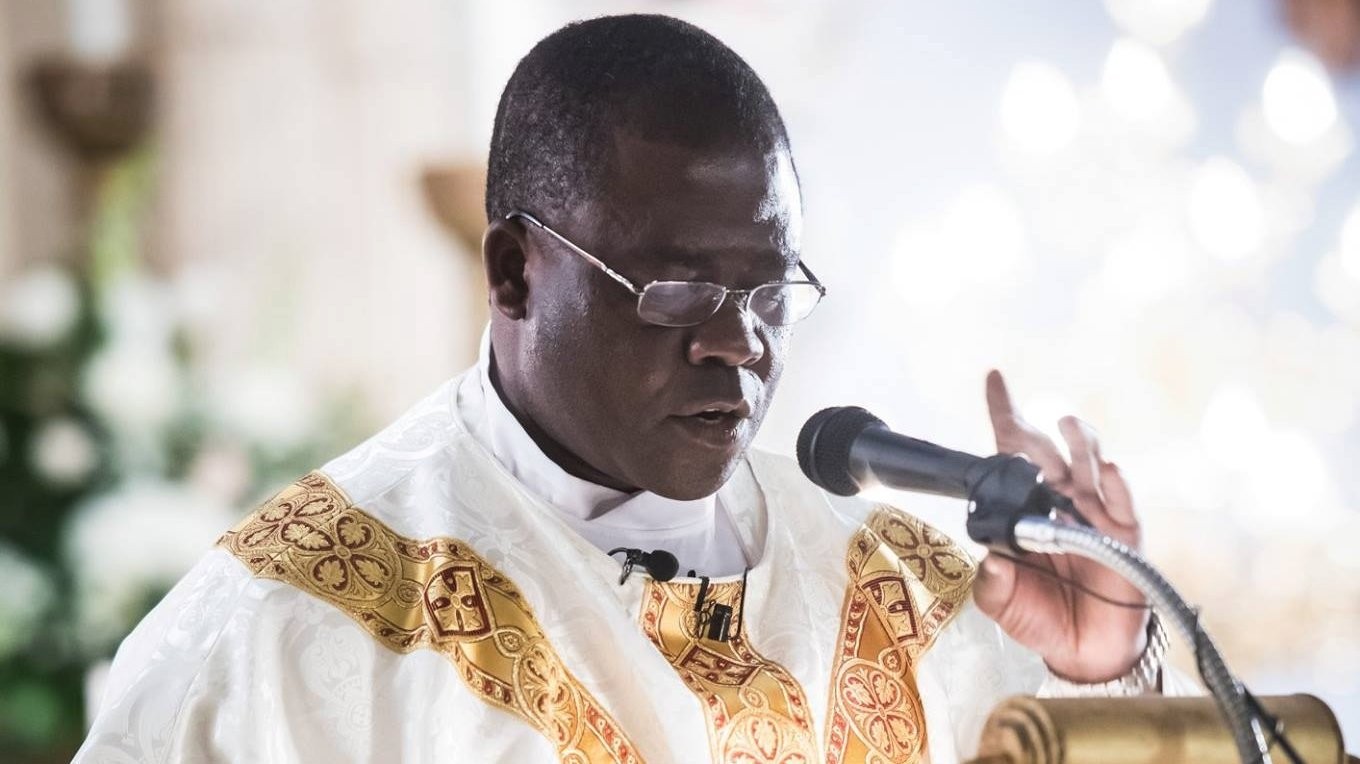
The sole difference is that while Vázquez Ortega entered religious life while already in the United States at some point in the first decade of this century, to be ordained as a priest in 2014, Odiong completed his seminary education and was ordained in his native Nigeria.
Tellingly, both Vázquez Ortega and Odiong rejected plea offers made by the authorities in the District of Columbia and Texas, respectively, and bet big on a jury trial. In both cases, they lost. While Vázquez Ortega losing his U.S. citizenship is already a consequence of his 2019 jury trial on clergy sexual abuse, chances are Odiong will face, sooner rather than later, a similar fate.
It is not hard to imagine the Trump administration expediting a trial to denaturalize Odiong in ruby red Texas as a way to justify the levels of violence that its understanding of the enforcement of migration law in the United States is trying to set as the new normal, regardless of consequence.
Are there any better examples of heinous criminals than two predator Catholic priests, one Mexican and the other Nigerian, to help the public, Latinos and Blacks included, forego any qualms about the kind of violence displayed by the Trump administration when enforcing some aspects of current migration law in the United States?
A culture of hubris
Despite the many cultural differences that shaped Urbano Vázquez Ortega’s and Anthony Odiong’s experiences as Catholic priests in the United States, it should be clear that both operated within a framework of entitlement dear to clerical Catholic culture.
Having spent years using their institutional status, validated by the use of special garments and community reverence, they insulate themselves from accountability and transparency.
When forced to face the consequences of their predatory behavior, they approached the criminal justice system with the delusional belief that their moral authority would translate into courtroom immunity.
It is impossible to know the specifics of the counsel they got from their lawyers, but there is a chance that, on top of the incentive criminal lawyers have to go for a trial (more billable hours), there is also something amiss in the definition of the priorities of an institution willing to pay no less than a quarter of a million dollars for each of these trials but unwilling to pay similar amounts in compensation.
At this point it is impossible to fully answer the many questions these two priests’ behavior forces to consider. Some of such questions are these:
Why would an institution concerned with its own survival be willing to put that much money at risk if both priests were offered pre-trial plea bargains that would have capped their sentences, the cost of legal defense and contained public damage?
Why both of them rejected the deals to gamble on jury trials that ended up opening the flood of more victims coming forward? Why, in Vázquez Ortega’s case being willing to risk deportation to a country where chances are he has nothing but distant relatives probably trapped in the poverty that forced Vázquez Ortega’s family out of Mexico in the first place?
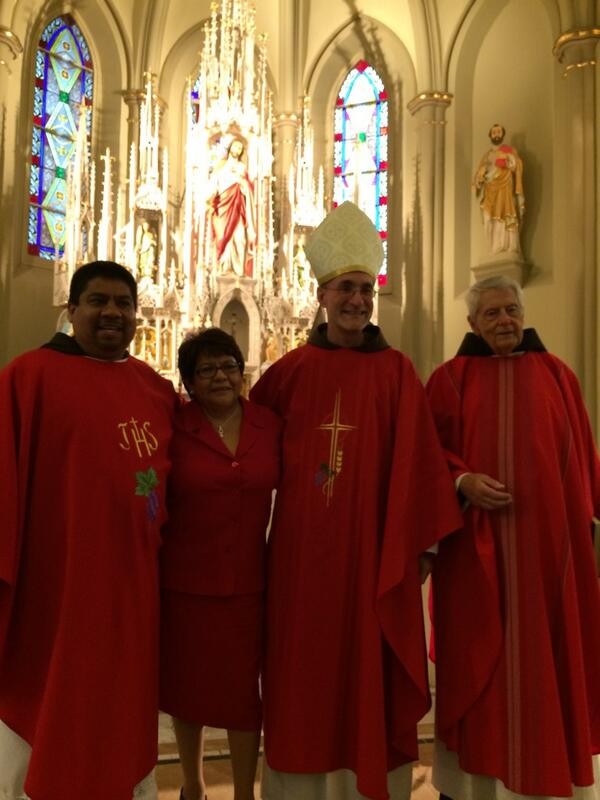
As much as both priests played a role in rejecting the plea bargains and betting big on the remote chance of a mistrial or a hung jury, it is impossible to miss the fact that Catholic dioceses and orders in the United States seem to be willing to burn their funds in the defense of predator priests. Why? Who is advising them to do so? To achieve what kind of ends?
When both Anthony Odiong and Urbano Vázquez Ortega declined the plea bargains, were their bishops aware of the “billable hours” they were going to face from their legal counsel?
Were their bishops hoping to protect the institution by funding the legal strategy of both priests?
And even worse, are the U.S. Catholic bishops aware of what the social and cultural cost of such defense strategies is?
Why instead of a last-ditch effort that only helps the dioceses’ retained lawyers are they not accepting their culpability and repairing the damage to the victims?
As useful as common legal strategies such as “bury them in paper,” they only create social resentment among survivors, their friends and relatives, who are able to witness firsthand the Catholic Church's ability to burn money as legal fees but seeks the protection of bankruptcy when forced to pay compensation.
If anything, Urbano Vázquez Ortega’s and Anthony Odiong’s cases demonstrate how dangerous the combination of Catholic clericalist hubris and the hyper-adversarial machinery of U.S. corporate law is.
On top of achieving little or nothing when betting for a hung jury or mistrial, the result for the diocese funding these screwball “Hail Mary” legal strategies is institutional annihilation. Mostly because to pursue these strategies the dioceses must contradict the elaborated liturgies of Popes John Paul II, Benedict XVI, Francis and more recently Leo XIV asking for forgiveness when, in actuality, the Catholic Church’s lawyers are intent on attacking the victims.
By abandoning the core principles of truth, confession, and penance in favor of corporate defense tactics, the Church leadership attempts to save the corporate structure—only to destroy whatever remaining moral credibility the institution holds in the eyes of the public.
While researching this piece, putting aside the extremely odd case of George Pell, the Australian Cardinal who was able to win an appeal at his country’s Superior Court, there was no evidence of clergy, Catholic or otherwise, being acquitted by a jury, not even through a hung jury. And even if there was a case where, through the oddity of a hung jury there was an acquittal for an accused priest, it would prove nothing but temporary relief as the incentives to find additional victims and/or evidence would only increase exponentially.
In that regard, again, questions should be asked as to what incentives had these two migrant predatory priests to go for a jury trial.
The last veil
As sad as it is going over Urbano Vázquez Ortega, a predator whose crimes legitimize the Trump administration’s antimigrant policies and rhetoric, it is necessary to wonder and question if he, whether as a member of the Capuchin Franciscan order or through the existing exchanges between U.S. and Mexican dioceses came to Mexico as a priest and if he ever committed abuse in his country of origin.
The question is not academic. Religious orders, like the Capuchin Franciscans, often move members internationally for missions, retreats, family visits, further formation and also to hide from standing accusations in their home countries.
As this series has proved repeatedly when talking about the so-called “geographic solution,” offenders within clerical structures historically exploited this mobility to find new environments with zero oversight or to evade local suspicions.

And to be clear. The “geographic solution” bites North to South, South to North and South to South. That is the aspect of this issue lost when the current U.S. government uses cases such as Urbano Vázquez Ortega’s to justify the kind of crackdown that caused the death of at least two Mexicans and one Colombian in Texas, Florida and Maine, respectively, over the last four weeks.
The story about the current situation in Oaxaca, Mexico linked after this paragraph includes cases of predator priests sent from the United States to Mexico, where they extended their criminal careers.

That is why it is more necessary to figure out if there is a trail of victims of Urbano Vázquez in Mexico. Serial child sexual abusers—particularly those acting within a position of absolute trust (like religious ministers)—rarely limit their behavior to a single geographical location if presented with access to children elsewhere. If he felt comfortable abusing minors at Shrine of the Sacred Heart in D.C., his behavioral baseline would not magically disappear when traveling abroad.
Going over the social media of the Shrine in the U.S. national capital and the Capuchin Franciscan order only a handful of old traces of Urbano Vázquez Ortega’s work as vicar remain. It is impossible to know what was actively removed from those Facebook profiles.
A search in the available databases for religious ministers, Catholic or otherwise, in Mexico showed no instances of Urbano Vázquez Ortega ever being registered at any of the Mexican dioceses, but that does not mean he never went back to Mexico, so the question remains.
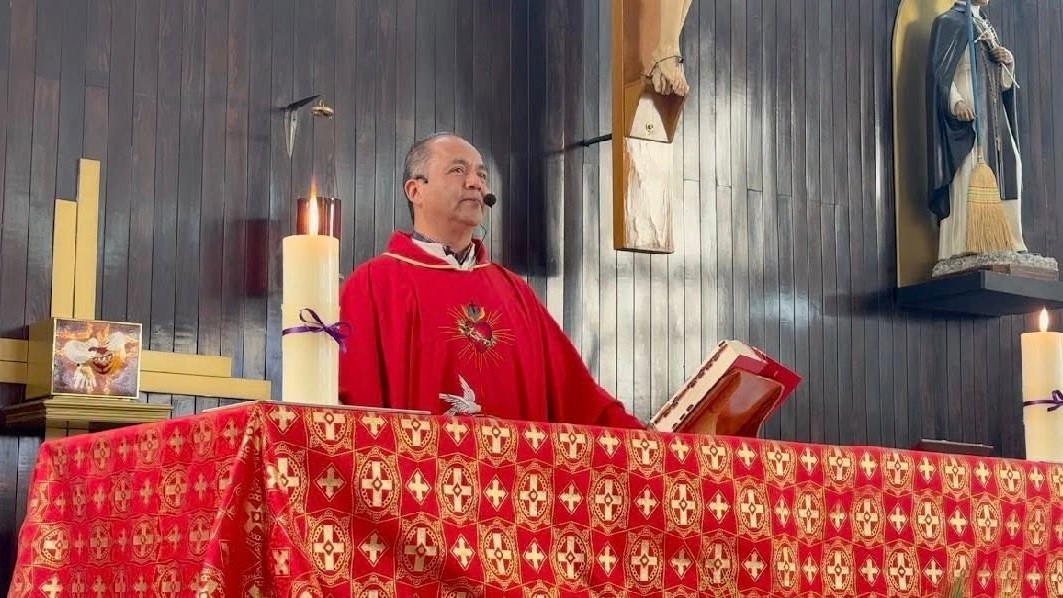
It also must be noted that as heinous as Urbano Vázquez Ortega’s crimes were, he was not “caught” in one of ICE’s raids outside a Home Depot in Marina del Rey, California or in The Bronx, New York. The robust system of justice in the United States had already done with him what most Latin American systems of justice only dream about: he was arrested, out of arrogance he decided to stand trial, letting the lawyers of the Archdiocese of Washington, D.C. bill hours of legal fees, and was already serving his sentence. So, there was no actual need to instill fear in migrant communities to protect the innocent.
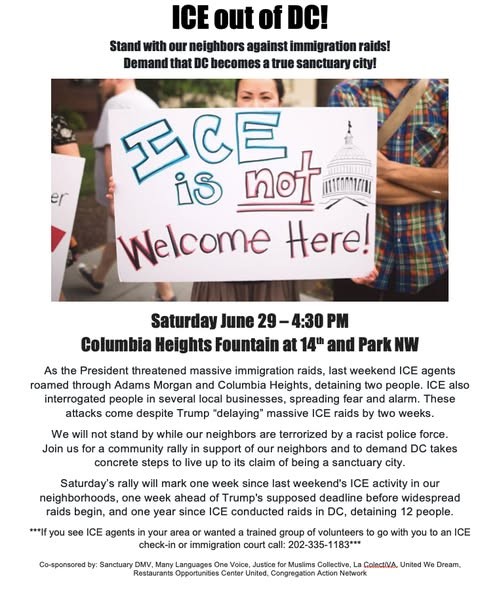
And yet, if one goes over the comments in the social media postings about Leticia Ugboaja's arrest, whether among the more than four thousand on ABC News' post at their Facebook profile or the over one thousand on EWTN's, there is a distinct strain of reactions from deep within the MAGA heartland intent on rendering the nun's arrest as justified because of the abuse perpetrated by the likes of Urbano Vázquez, Anthony Odiong and many other predators. That is the nature of the clergy sexual abuse crisis, it makes, as the old Mexican saying goes that "the innocent pay for the guilty," including nuns who are, in civil life, nurses like Leticia Ugboaja.
It is a moral panic.
Post Data
Another major issue argued at least until Wednesday 22 was alleged news of the imminent acquittal of former Jesuit predator priest Marko Rupnik. To be clear, it was the Jesuits themselves who, after dozens of victims bravely came forward, decided to expel him from that order-like organization of the Catholic Church.
A previous installment of this series went deep into the kind of standing accusations against Rupnik and the fact that despite the Jesuits’ decision to expel him, he remains a priest with valid licenses to perform as such.
English Edition
Berríos and Rupnik, the parallel lives of predator priests
The “news” was first reported by Messa in Latino (content only in Italian), an Italian-language “Traditionalist” blog, specialized in attacking the Second Vatican Council, Paul VI’s liturgical reforms.
When weaponizing Rupnik’s case, the blog endorses the allegations as a proxy to attack the Papacy as intrinsically corrupt and, more specifically, Pope Francis who, at some point in his life, both as head of the Catholic Archdiocese of Buenos Aires and later as Pope was willing to endorse Rupnik’s art and ideas.
He changed his attitude on him and was a major player in the Jesuits decision to expel Rupnik although for the conspiratorial view of the world behind Messa in Latino that was just posturing.
The rumor about Rupnik’s imminent acquittal or absolution, to be more precise, was almost immediately picked up by Catholic Herald, a British outlet known for its consistent hostility towards the Papacy. Catholic Herald limited its take on Rupnik to a social media post where they simply reported on what Messa in Latino published in Italian.
Oddly enough, Vatican News required more than 48 hours to come up with some response to the rumor, insisting on the idea that the trial is still active and that there was no indication of an imminent resolution.
How much the Messa in Latino original entry, a yelling one-liner, was a trial balloon launched by a conniving monsignor in Rome is anybody’s guess. Hopefully, someone in Rome is paying attention to what happens in La Paz, Bolivia, where the scandal about the large-scale abuse of hundreds, probably thousands, of young males and females from Bolivia’s First Nations is still a front-page story.

Acquitting or absolving Rupnik will send the worst possible message to the Bolivian victims of the Jesuits, further compounding the growing difficulties of many Catholics unable to understand what their church is trying to do on clergy sexual abuse matters.
* * *
A summary of this piece is available as audio after this paragraph.
Note on production: The text of this summary was written and edited solely by the author. The delivery of the audio summary was achieved using a high-quality, text-to-speech engine Microsoft Word for Web. The AI was used for voice generation only, not content creation.