Rodolfo Soriano-Núñez Lunes, 31 de Marzo del 2025
The Legion claims to be in sorrow and indirectly acknowledges that something happened at the Highlands School in Madrid but provides no detail.
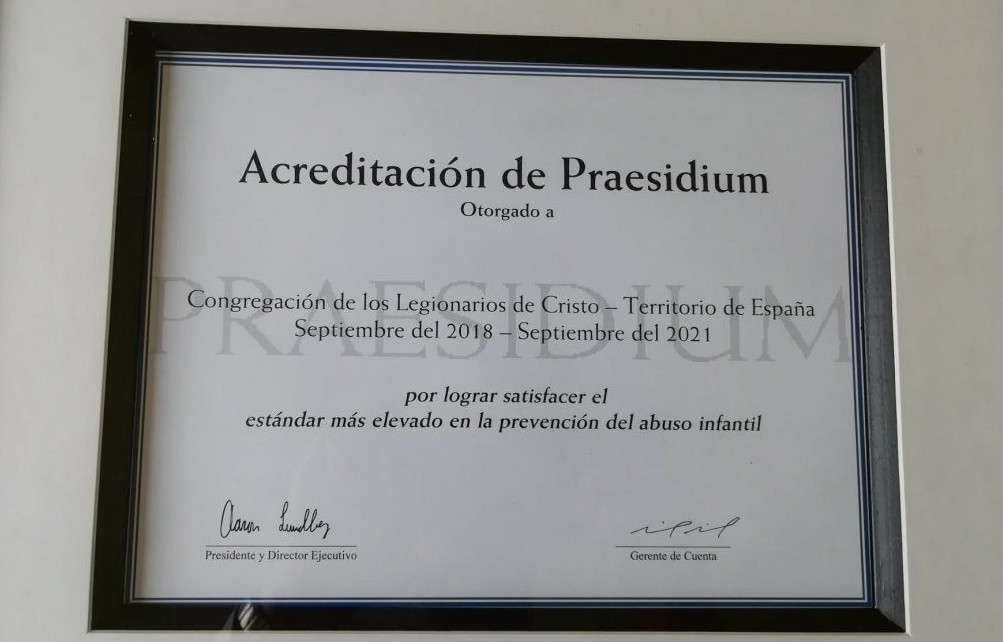
Praesidium Group, a U.S.-based consultancy credited the Spaniard province of the Legion of Christ as able to prevent clergy sexual abuse.
By Rodolfo Soriano-Núñez
This week the Legion of Christ finally “acknowledges” that something awful happened. Through a letter dated on March 24th, 2025, Francisco Javier Cereceda Vicente, Chairman of the Board of Directors of the Regnum Christi schools in Spain accepts that “serious events” happened at the Highlands Catholic School in Northern Madrid.
However, at no point in the two-pages statement issued by one of the order’s bosses in Spain, there is an actual explanation of what happened, and more importantly what will they do, if they ever do it, to compensate the victims of the crimes allegedly perpetrated by Marcelino de Andrés Núñez, how will he be punished, if there is ever any punishment at all.
The letter, available in both its original Spanish and an unofficial translation to English, avoids any actual reference to who used to be the chaplain of that school. I does not provide a final number of victims of who seems to remain a priest in Marcial Maciel’s order.
We only know his name because people who know him in Mexico from his days as personal secretary of Marcial Maciel are willing to identify him. The Legion of Christ is well aware of how far they can push their case as to force media based in Spain to avoid using the actual name of who used to be the chaplain at that private school in Madrid.
Letter from Fr. Francisco Javier Cereceda Vicente to the members of Regnum Christi. Unofficial English translation after the Spanish original.
Cereceda Vicente’s letter tries to render him as willing to acknowledge mistakes and goes over the usual kabuki of asking for forgiveness, a template rehearsed over decades at this point by the leaders of the Legion of Christ.
Any assessment?
Despite that, it avoids providing an assessment, even if partial of what went wrong at what one would think is a key piece in the Legion of Christ’s machinery in Spain and the Spanish-speaking world at large. Cereceda Vicente, instead, praises the many things that, according to his own take, his order has been doing right.
This is more necessary since, the Legion of Christ rendered its dealings with the so-called Praesidium Group, a U.S-based consultancy firm that somehow issues accreditations to the Legion of Christ’s schools in Spain and other countries.
Praesidium claims to have a roster of 256 different entities as compliant with the criteria to get their accreditation. The full list of entities appears as a PDF in the box immediately after this paragraph. Some of those entities belong to a single, larger, entity as in the case of the many entities associated with the Legion of Christ, the Young Men Christian Association, several Roman Catholic dioceses in the U. S., Canada (Edmonton), and other countries.
Full list of entities accredited by Praesidium Group. Available here.
Among the other orders getting accreditations from Praesidium are some entities associated to the Society of Jesus, the so-called Jesuits in the United States, to which Pope Francis has been a member for 67 years now, most of his adult life, as he entered that order back in March, 1958.
If one goes deeper in the Praesidium website it is possible to find how they claim to have specific set of standards for Catholic institutions. They even have a copyright claim about the use of something called “Praesidium’s Accreditation Standards for Catholic Religious Institutes,” a phrase or title they close with a sign, indicating their claim to be the sole owners of that idea.
If that is the case and given the fact that they issued the accreditation to the Highlands School in Northern Madrid and all the other schools of the Legion of Christ in Spain, it is clear that something is amiss in either the accreditation process or in the model they claim to have a copyright claim over.
English Edition
Legion of Christ, five new victims of sexual abuse
It is hard to measure what will be the actual or potential consequences for Praesidium Group, but they claim to be following an idea straight out of a 2002 statement, from the Conference of Major Superiors of Men.
The conference is a U.S.-based entity where several male religious “orders” of the Roman Catholic Church share knowledge and expertise on this and other issues and concerns. When addressing the issue of safeguarding, the Conference explicitly mentions Praesidium Group as an organization working with them and links to that group’s website, as this page proves.
Timeline
The Conference offers a timeline (available here) of their work on that area and there one can read that their collaboration with Praesidium Group goes back to 2004. Other relevant highlight comes from 2018, when the Conference highlights their suggestion to the orders under their umbrella “to follow best practices regarding the release of names for those with established allegations”.
And some of the entities in the Conference, as in the case of the Jesuit province of Canada and the United States, do so. One can go over their websites and find lists with the names of clergy, priests or religious brothers, with credible accusations of clergy sexual abuse.
That is the case of the Central and Southern Jesuits of the U.S., whose website published back in 2023 a detailed list of their member and former members, alive or dead, in that condition, as this page proves.
The fact that the Canada and U.S. Province of the Jesuits is willing to release even the names of dead clergy with credible accusations is relevant because it facilitates the healing process of survivors of this experience. It prevents victims of said priests from having to figure out on their own, without access to archives, whether on paper or electronic, when and where a cleric was and under whose authority.
It is an acknowledgment of the kind of institutional responsibility that goes the decision of moving a priest or a religious brother from a parish to a school or the other way around as, for the most part, with the relative exception of some very small orders, priests cannot decide on their own where they will exert their ministry.
But said practice happens, for the most part, only in Canada and the United States. Even in Spain, the Jesuits follow the approach, far more secretive, of the rest of the Catholic Church in Spain when trying to avoid this practice, and the same goes for the Legion of Christ, as the letter issued by Francisco Javier Cereceda Vicente proves.
And even if Praesidium seems to be intent on acknowledging the need for accountability and transparency, that group has no saying on who actually overlooks the enforcement of criteria to actually prevent abuse.
Changes
It is worth pointing out that it is possible to access versions of their so-called Accreditation Standards a 47- or 48-page booklet. The 47-page booklet was published back in 2024 and it is available over the Praesidium Group website at the end of this page, and appears at the box below.
Praesidium Accreditation booklet 2024.
The 48-page version is from 2020 and it is the one available at the Legion of Christ’s website, although it is not possible to download it there. One can only read the document at this page. I put it together as a single booklet and it is available as a PDF at the box below too.
Praesidium Accreditation booklet 2020.
In both versions it is impossible to find page 2. Both of them go from page 1 to page 3 with no other page in between. Both documents have a total of 20 standards organized in four areas. The only meaningful change deals with Standard no. 18.
On the 2020 edition of the booklet, it says:
The Institute ensures Members on a Safety Plan do not work in any position that allows access to minors or in any ecclesiastical ministry.
On the 2024 edition of the booklet, one can read:
The Institute ensures Members on a Safety Plan have appropriate assignments.
The Glossary of Terms in both editions define “Safety Plan” as “a formal written supervision program for an individual who, it has been established, has sexually abused a minor”.
It is impossible to know if Marcelino de Andrés Núñez was on a “Safety Plan”, and Cereceda Vicente’s letter provides no detail about that, as he is more interested in praising what allegedly they have been doing to prevent what ultimately happened with, as far as we are possible to know at this point, five underage girls in the elementary school cycle of the school in Northern Madrid.
It is also impossible to understand why instead of hardening the language used to talk about “Members on a Safety Plan.” which is code for what in any other circumstance would be a sexual predator, the 2024 booklet seems to soften that language going for the euphemism of said members having “appropriate assignments.”
Praesidium booklet in Spanish 2020, as displayed at the Spaniard province of the Legion of Christ's website.
But even on that regard it must be pointed out that the Spanish province of the Legion of Christ only has a Spanish-speaking edition of the 2020 booklet, available here with other documents. There the language is an almost literal translation of the 2020 English edition where there is a clear understanding that “Members on a Safety Plan” should not be in “any ecclesiastical ministry”.
Left to wonder
Once again, the Legion of Christ leaves victims, survivors, their relatives, and witnesses to wonder whether or not that order’s leaders were aware or not of allegations about previous abuses from Marcelino de Andrés.
It must be noted, however, that both documents in English and the sole document available in Spanish have an extremely narrow understanding of sexual abuse as something that is relevant for what the Standards call “the Institute”, that is to say the religious order, only if the victim is a minor. It is not clear, at least not in my understanding of both documents if they allow for dealing with allegations of sexual abuse from survivors who come forward as adults.
In that regard, the so-called Praesidium Group seems to blind itself to the potential abuse of adults, which is especially relevant in the case of female members of religious orders, as this series proved with the case of the Mexican nun Myriam, whose case is the main subject of the a bilingual electronic book recently published by Los Angeles Press, as Romper el silencio/Breaking the silence, available for free as a PDF download here. The first installment of that series appears after this paragraph.

Cereceda Vicente’s letter quotes their yearly reports in Spain. The reports from Spain are available, only in Spanish, here. Cases from the United States are available in English here, while cases from Mexico are available in Spanish here. Links to additional information for cases in other countries are available in English here, but in some cases the information will be in other than English languages.
The Legion of Christ claims that their policy to avoiding publishing the full names of the predators, even in cases where the abuse has been proved, follows the national laws of the countries where the cases have happened but in some cases they also claim to avoid the full identification of a predator when, allegedly, a survivor asks them to do so.
English Edition
Playing the victim: a template at the Legion of Christ
Personally, after talking to many victims of abuse, I find hard to believe that there would be a survivor willing to offer an excuse for the kind of opacity that the Legion of Christ displays.
The opacity is in full display in Cereceda Vicente’s letter, and I would be hard pressed to believe that they will come forward providing a detailed account of this case as it also allows to question the role of a key Mexican member of the so-called Regnum Christi, the “lay” branch of the concern built by Marcial Maciel over many years of “ministry” as leader of the Legion of Christ.
Mexican roots
That member is Rocío Sánchez-Mejorada. She comes from a Mexican family linked to the Legion of Christ and has been the head of the safeguarding office of the order for the schools in Spain.
She is an alum of the Universidad Anáhuac in Mexico City and currently claims to be head of Safeguarding for the Regnum Christi Spain, as her Linked-In profile claims.
She has been in charge of that area at least since 2023, as this page from the Regnum Christi Colombia tells, and as confirmed by this other story at the Regnum Christi Spain website.
As it is usually the case in that organization, she likes to render herself as the member of a family with which she fully identifies, as this video from October 2018 proves, where in full Regnum Christi fashion she describes her life as following a path shaped by God and her membership in that organization.
The video marked the moment when she left Mexico and a position at FEMSA, the bottler of Coca-Cola in Mexico and other Latin American countries, for a position at the Francisco de Vitoria College in Madrid, Spain.
The Francisco de Vitoria College is the flagship institution of the Legion of Christ in Spain. Her last position there was as Psychologist and from there, the Legion’s bosses appointed her as head of safeguarding where she had to play a role in accepting Marcelino de Andrés having contact with underaged students allowing for what ultimately happened there.
While working at the college she also had time to get two master’s degrees on top, one would assume, to getting the training required to become the head of Safeguarding for the schools and college of the Legion of Christ in Spain.
In this regard, it is impossible to not raise questions about how Marcelino de Andrés Núñez remains a priest and was able to be in close contact with underaged girls at the Highlands School in northern Madrid.
More so when one goes over the detail of what the Legion of Christ has gone to get the accreditation from Praesidium Group, and despite the fact they seem to be aware of the negative effects that abuse has on their most important business: education.
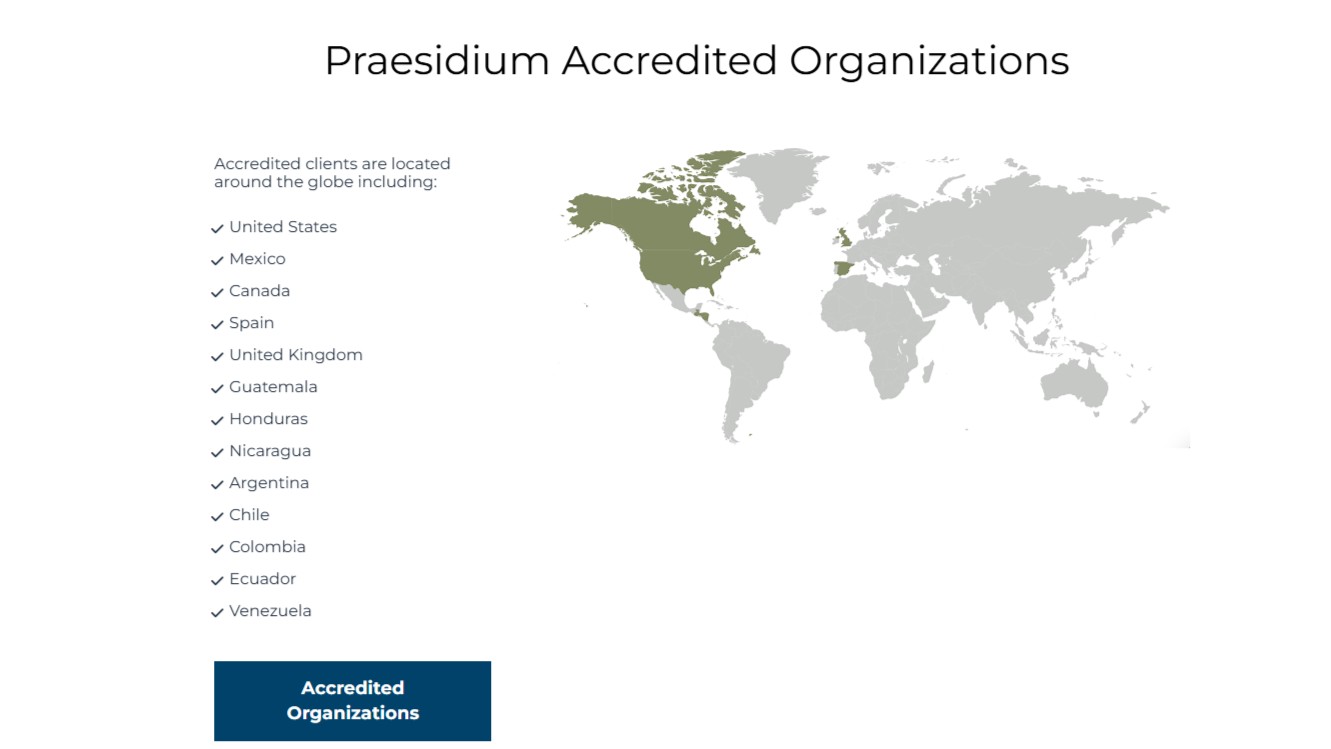
There are some additional details about the accreditation, what Sánchez Mejorada’s predecessor as Safeguarding head at the Regnum Christi claims they did to achieve the accreditation and to actually prevent abuse. The fact remains, however: there are five new more victims of one of the most predatory organizations in recent history in the Roman Catholic Church, with no indication as to when or how this will actually end.
Given the Legion of Christ's history, their attempts to control the narrative surrounding the abuse at the Highlands School are disturbingly familiar. From the vague language of “serious events” to the carefully crafted statements of contrition that avoid concrete details, the order's strategy is clear: minimize damage, protect their reputation, and deflect true accountability.
This pattern, consistently observed in their handling of past scandals, reveals a deep-seated institutional resistance to transparency. The Legion does its best to keep victims, once again, relegated to the shadows, their experiences dismissed or obscured by carefully worded pronouncements.
The questions remain: how many more victims are there, and what real steps will the Legion of Christ take to ensure justice and prevent future abuse? Until they abandon their calculated approach to damage control and embrace genuine transparency, their words ring hollow.
Also, it is impossible to dismiss the effects this could have for the credibility of organizations like Praesidium Group, more so given its relations with male religious orders and dioceses based in the United States. At a minimum, it is hard to believe in the promises of the efficacy of their accreditation process.
If you read Spanish, there are additional reports of the accreditation process available here.

English Edition
A former novice denounces abuse in Mexico