Rodolfo Soriano-Núñez Lunes, 10 de Noviembre del 2025
For the first time, in the coattails of the clergy abuse crisis, Rome reveals the reasons behind a French bishop's early resignation.
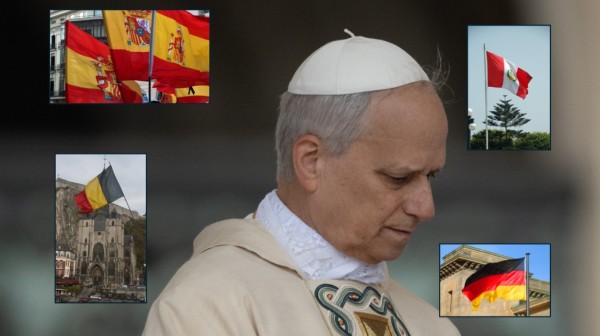
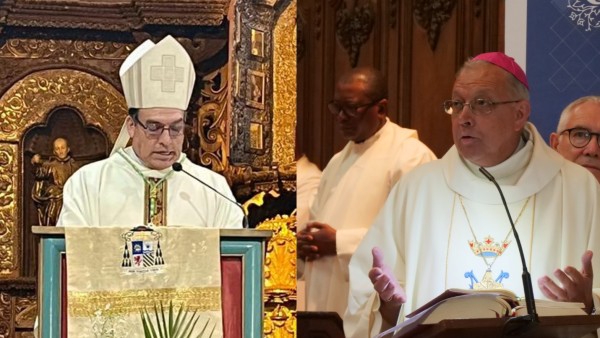
Bishop Gusching’s resignation happened three days after Peruvian bishop Quispe López’s. While we know now why Rome forced out the French prelate, abuse wise, silence remains the policy in Peru and Latin America at large.
By Rodolfo Soriano-Núñez
If one tries to find an example of a positive path for the solution of the global clergy sexual abuse crisis it would be hard to see any other place than France.
On the one hand, as it happened in the United States back in the 1990s and Aughts, there seems to be the ability of survivors, their allies, and advocates to challenge stereotypes and distrust and build broad coalitions to achieve specific even if limited goals.
There is also the acknowledgment of a certain need for the polity to push for reform and improvements of both the written laws and how those laws are interpreted by police, district attorneys, and judges.
As it happened in the United States ever since the beginning of the crisis in the 1980s, there are media, even Catholic media, willing to acknowledge the extent of the crisis, to give voice to survivors, their relatives, and allies.
And survivors themselves are willing to come through, to tell their story, and to come to terms with the effects of abuse in their lives. One of such survivors is Jean-Marie Delbos, a victim of abuse at the Catholic school of Bétharram, whose book saw the light in France back on Thursday November 6.
In doing so, they reveal the true extent of the effects of abuse, which is the aspect most faithful of different religious traditions are less willing to actually acknowledge. Some of them because it contradicts their own experience of practicing their religion, but for some of them because they hold a siege mentality that rejects the very idea of abuse ever happening.
Also, because up to a certain extent, abuse has been “normalized.” An example of such “normalization” is the differences in how the abuse of male minors by male priests is held to a different standard than abuse of adult females.
Another sign of change in the French Catholic Church, one challenging this “normalization” of abuse, comes from female religious orders, the nuns, who are well aware of the extent of the damage, as abuse of novices and nuns is far more prevalent than the hierarchy is willing to accept.
A protagonist of this renewed role of French nuns is sister Véronique Margron. She is the president of the Conference religious males and females in France and, as such, she has been a very active voice criticizing the behavior of priests, both diocesan and religious, and bishops.
Conspiracy of silence
She has been also an advocate for the survivors of abuse in France, and she is very wiling to go on the record criticizing the abuse crisis in her country as an “unforgivable conspiracy of silence,” to quote a recent interview she had with French news paper Ouest-France by the end of October, although the conversation is available only in French and behind a paywall here.
Her take on the scale and how the crisis came to be what it is not new. She has been offering similar takes to the media for the last five years at least. Margron knows what she is talking about because many of her sisters in faith have been the target of predatory clergy, as the story linked below from Mexico tells.

Over her Facebook account, one finds every now and then reflections and even full pieces, usually delivered by her at some forum or similar activity. Back in July 27, she published one of such pieces. One of its paragraphs summarizes her take on the role played by the Sauvé Report to make the French Catholic Church aware of the extent of the damage and the need to address the consequences:
- [It] was a turning point. I had already met and listened to women and men, children and adults alike, who were victims of sexual violence perpetrated by members of the Church, their lives shattered. But they were, if I may say so, just one among many. Even before the report, we had to confront, with horror, the systemic, sometimes even, I dare say, systematic nature of the rapes, violence, and acts of barbarity inflicted. I don't know if it will ever be possible to grasp the magnitude of this explosion, this bottomless abyss. Yet this is where we are, at least where I am.
Later in the piece she describes her position as one where she acknowledges what has happened and says:
- It is here, I believe, that the will to recognize and restore becomes the main issue. As Karl Jaspers says: “The will to repair is only serious and can only have moral significance if the repair results from a purifying reshaping of our being.” “From this arise seriousness and resolve.” “The consequence is modesty.” To transform ourselves, to “purify” our own selves, to learn from others, from victims, from society… And to act.
The Conference of Catholic Bishops itself accepts the need to acknowledge the issue and avoid the negationist attitude that, for the most part is still dominant in practice in Latin America.
Back on October 11, the newly renovated Cathedral of Notre Dame in Paris received victims of clergy sexual abuse to have a religious service there, but most notably the Conference of Bishops’ TV channel, KTO, has produced segments on that and other activities related to the abuse crisis in France, and some of them have been dubbed to English to amplify those pieces’ reach. One of such pieces appears after this paragraph.
Sadly, when looking at how the crisis evolves in France and comparing it with how it evolves in Argentina, Mexico, Peru, or any other Latin American country, it is almost impossible to find similarities.
There are no nuns in leadership positions playing a similar role to denounce the abuse, to advocate for the survivors and, especially, to make other Catholic persons aware that the crisis is not a machination, or a fabrication aimed at “destroying the Church,” as it is usually portrayed in Facebook parish and diocesan groups, and even more in the meetings of Catholic movements and associations.
Moreover, besides Margron as a voice willing to criticize when required her Church’s behavior, there are also dissident priests, willing to break rank and to challenge their superiors, whether in the local dioceses, in Paris or all the way to Rome. That is also something amiss in Latin America.
Above all else, there are no reports such as the Sauvé Report going deep into what has happened, abuse wise, in the region.
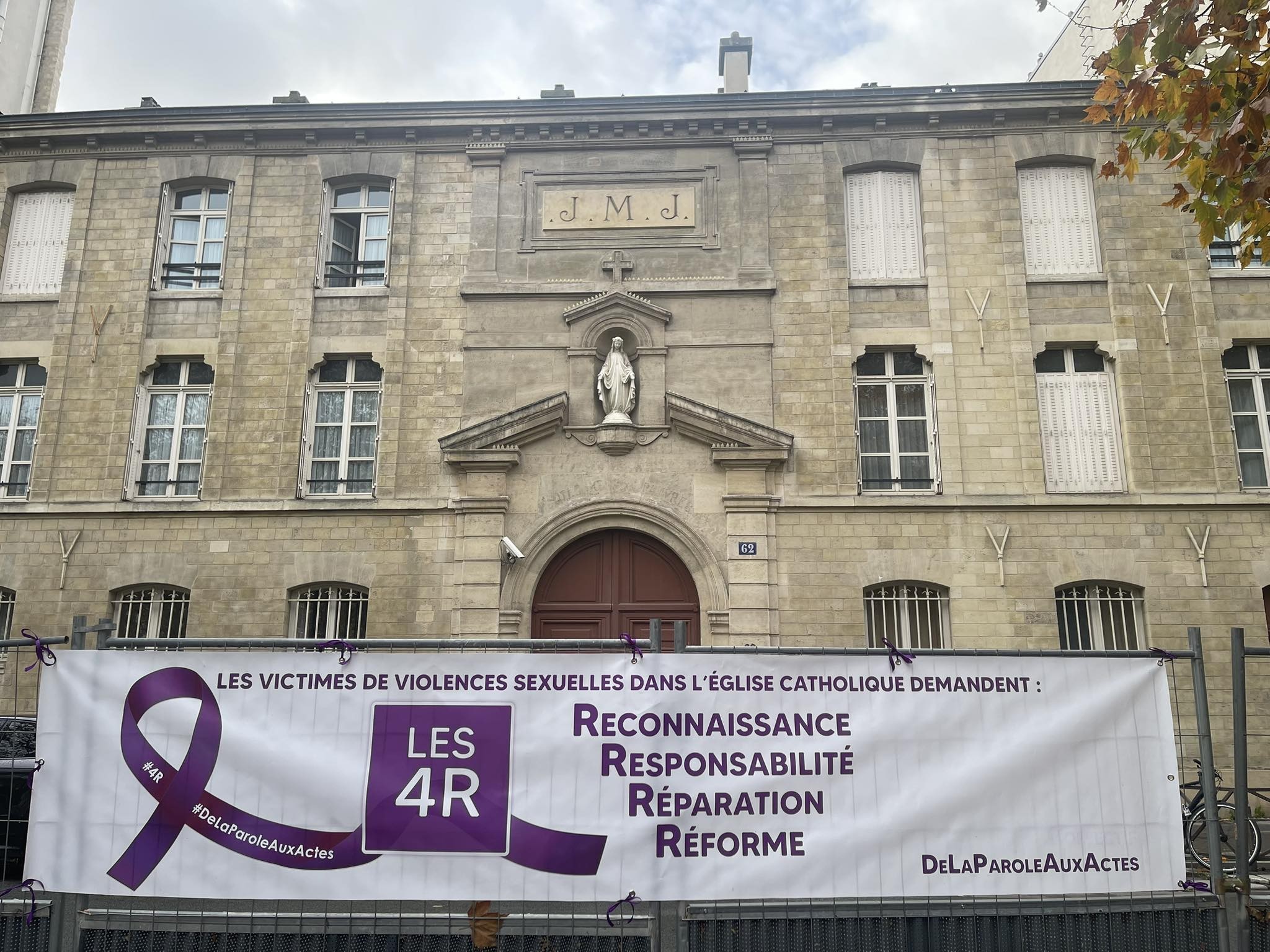
These features distinguishing French from Latin American Catholicism were in display in the streets of Paris this Saturday 8, when groups representing survivors of 30 different Catholic schools, movements, and other groups, held a rally outside the headquarters of the French Conference of Catholic Bishops.
The mobilization promotes the idea of the “Four Rs,” that is to say, Reconnaissance, Responsibility, Reparation, and Reform, as the banner they placed before the headquarters of the conference, at 58 Breteuil Avenue in Paris, in display after this paragraph.
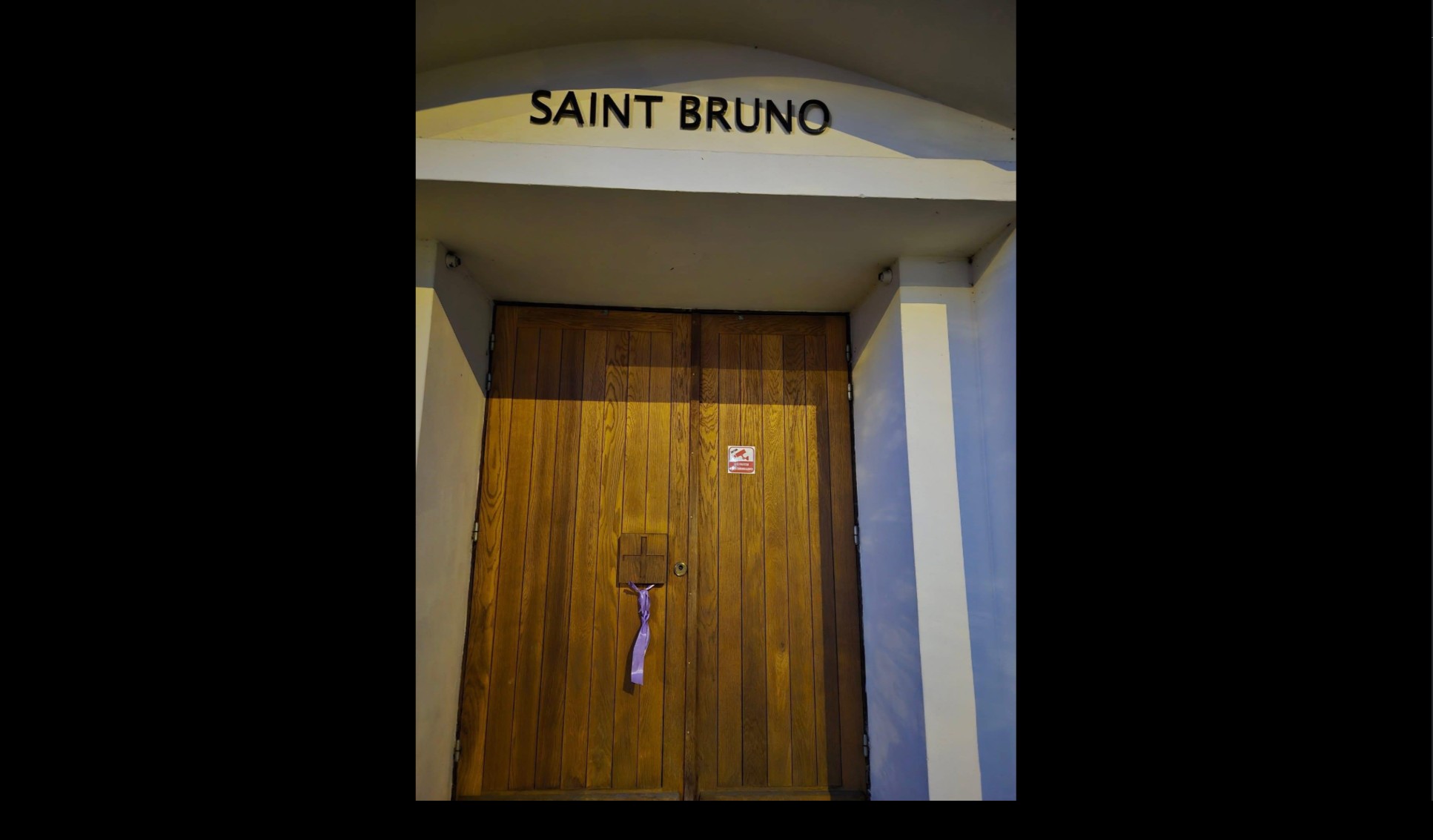
The organizers made a call for survivors to tie a purple ribbon at the doors of the parishes where abuse had happened, and some of them did it as the picture shown after proves.
A symptom of the reckoning the French Catholic Church is going through, the rally showcased a wing of that religious organization unwilling to keep quiet and their rejection of denial as the main “policy” to deal with clergy sexual abuse.
The scale of the damage
They are groups that have been calling to acknowledge, on the one hand, the scale of the crisis and, on the other, the scale of the damage every survivor and their relatives have to go through when dealing with the aftermath of abuse. They have been calling also for the bishops to solve the issue of reparations and compensations for the survivors.
There was no immediate resolution from the French bishops, who were in Lourdes at their regularly scheduled, year’s end, assembly but unlike what happens in Latin America, there is a portion of the clergy willing to acknowledge the issue and, above all, the ability of the survivors to put their differences aside and to mobilize together and press for solutions to their demands.
Also, although small, there is a group of bishops willing to acknowledge, on the one hand, the extent of the damage brought by the crisis, and more so the need to move forward and to avoid the politicization of the issue.
That already happened in France for most of this year during François Bayrou’s tenure as prime minister, due to its role in the scandal at Bétharram, as a previous installment of this series, linked after this paragraph, explains.
English Edition
Bayrou, French Prime Minister, to testify on sexual abuse
Bayrou’s unwillingness to acknowledge his mistakes, his mishandling of the crisis at the Catholic school where his wife was a professor of religion and his son was a student, was not the sole reason for the end of his government, but it certainly facilitated his demise.
The politicization of the issue is ever more unavoidable as, after Bétharram, the many victims of other similar schools have been coming forward, telling similar stories about abuse, physical and/or sexual, confirming the fact that, despite the stringent laws dictating a very strict separation of Church and State, abuse was so prevalent in many schools, Catholic or otherwise, that it became one more feature of education in France, one nobody was really willing to challenge, much less to probe what was happening there.
Beyond the mobilization at the bishops headquarters and the politicization of the crisis as such, the first week of November offered a distinct sign of internal change: a major, extremely unusual shift in how the Catholic Church deals with the “early” resignation of bishops.
Double standards
For the last 40 years or so, since the 1980s, a sure sign of some level of wrongdoing in any given diocese was the early resignation of a bishop, before he had reached the 75 years mark. Two installments of this series dealt with some of the cases of bishops where it has been possible to identify bishops whose “early” resignation fits that pattern.

English Edition
Catholic bishops forced to resign, looks can be deceiving
One, going all the way back to Pius XII's pontificate in the 1950s and one centered exclusively on the last two years of Pope Francis's tenure appear before and after this paragraph.
English Edition
Pope Francis forces out of office 30 bishops in two years
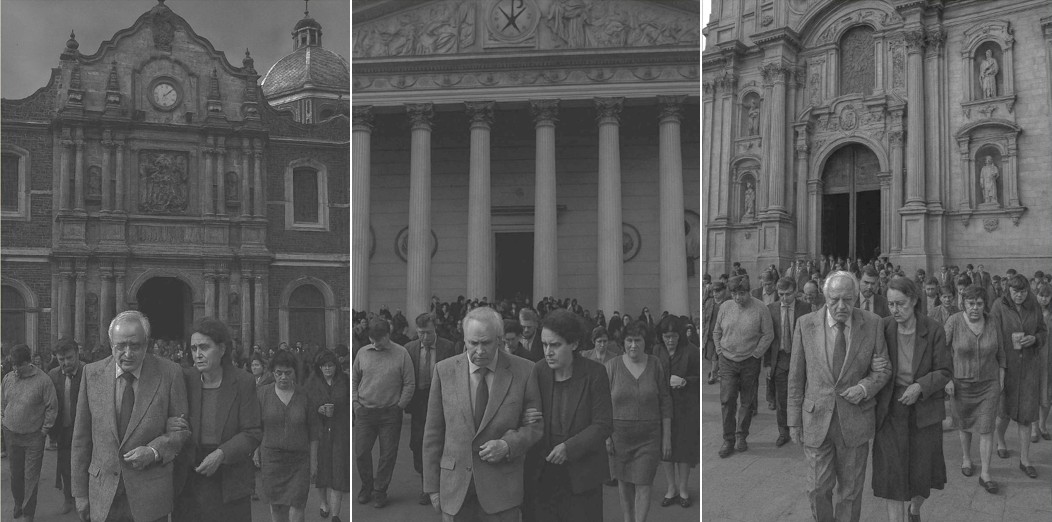
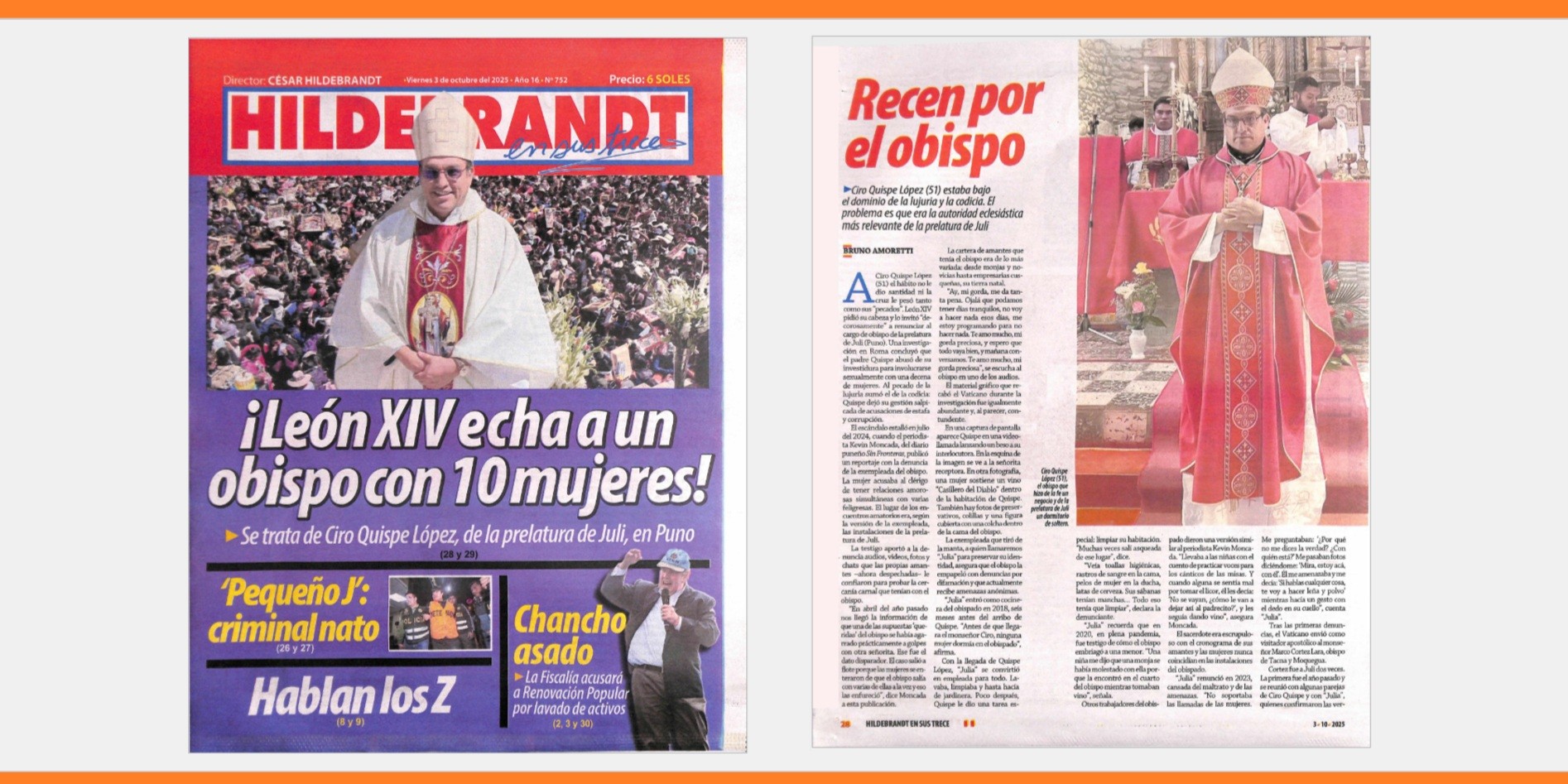
More recently, this series dealt twice with the resignation of Peruvian bishop Ciro Quispe López, who on September 24, 2025, resigned as head of the diocese (prelature) of Juli, as the section titled "Post Data" in the story linked after this paragraph proves. As it is usually the case, there was no official notice of the reason behind the fact he was resigning his position 24 years before the age of retirement.
Peruvian weekly magazine Hildebrandt offered a detailed account of why Rome “asked” Quispe López to resign, but no official statement has been made in Rome, Lima, and much less in Juli itself, an isolated municipality, in the southernmost extreme of Peru, closer to La Paz, the capital of Bolivia, than to Lima.
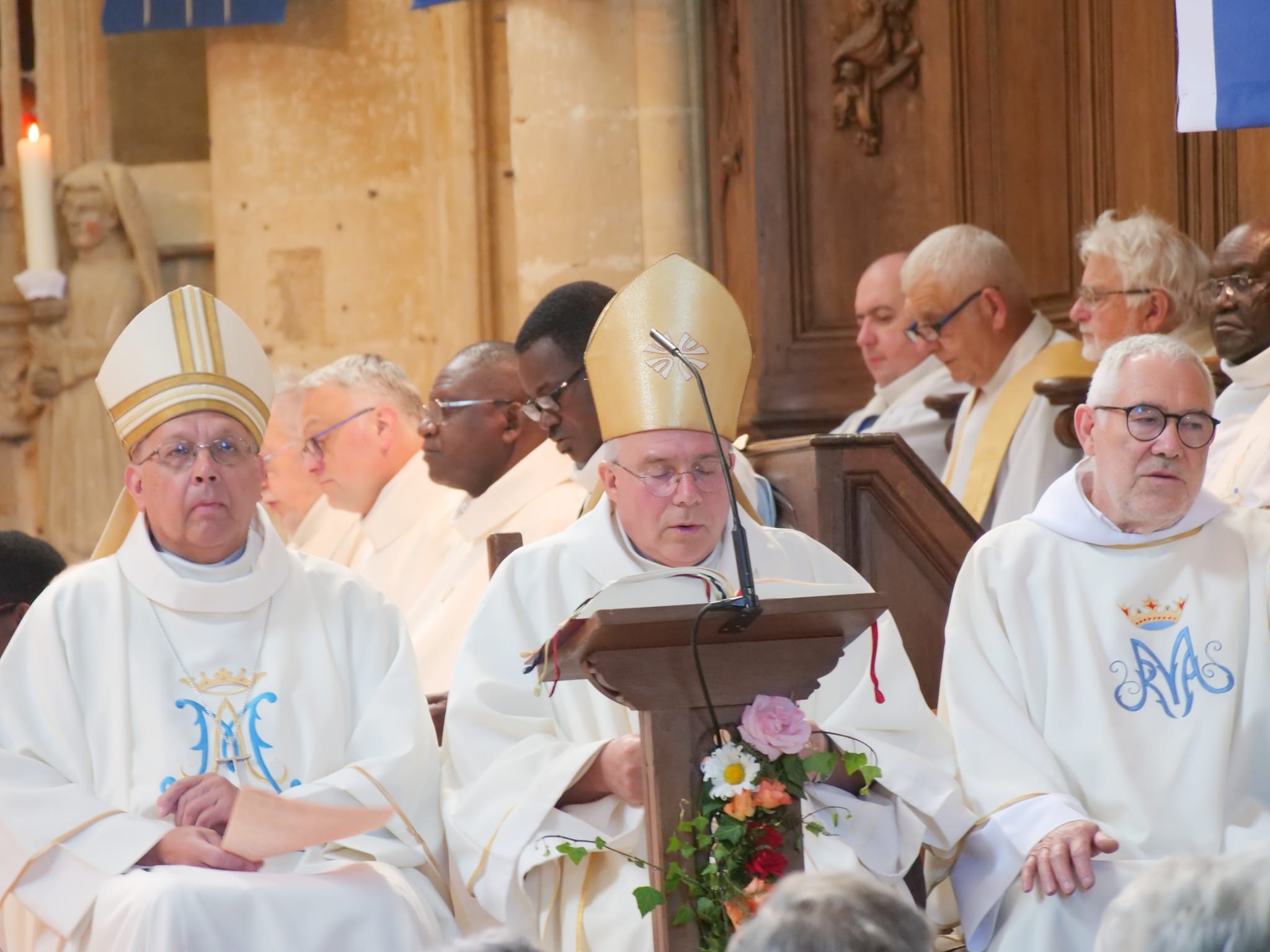
On the other side of the world, in Verdun, France, something similar happened three days after. If one reads the statement regarding Quispe López’s resignation from September 24, 2025 and the one dealing with Gusching’s from September 27, 2025, one could assume they come from the very same template: a one-liner stating a “silent exit,” with no explanation of what actually happened in any of the two cases.
However, unlike what has happened in Juli, where the ritual of the “silent exit” for the embattled bishop remains in practice, at least as far as the Catholic Church is concerned, in the French diocese, more than a month after the actual resignation, the Apostolic Nunciature, the Pope’s representation in France, issued an unusual statement providing details of why Jean-Paul Gabriel Émile Gusching resigned his position as bishop five years before reaching the statutory age of retirement of 75. A translation of the full statement appears next.
An unofficial translation of the statement of the Nunciature
Information reached the apostolic nunciature in France concerning relationships with women by bishop Jean-Paul Gusching, then bishop of Verdun. The apostolic nuncio forwarded this information to the Dicastery for Bishops of the Holy See. Despite his persistent denials and the fragmentary and contradictory nature of the information received, bishop Jean-Paul Gusching pledged to the prefect of the aforementioned Roman Dicastery to avoid in the future any behavior toward women that could be interpreted as contrary to his priestly vows.
Given the ongoing nature of the situation, the Holy Father requested and accepted his resignation from the governance of the diocese of Verdun, which took effect on September 27. As a precautionary measure, the prelate was required to live in seclusion in a location outside his home diocese of Amiens and that of Verdun, and to refrain from all liturgical celebrations and public pastoral activities.
It is specified that the health reasons publicly cited by the Prelate for submitting his resignation were only one factor in the Holy Father's acceptance of it.
All the information received also led to the opening of a preliminary canonical inquiry, entrusted to bishop Stanislas Lalanne, bishop emeritus of Pontoise, assisted by archbishop Philippe Ballot of Metz, apostolic administrator of Verdun. A report was also filed with the civil authorities.
The canonical inquiry is still ongoing. To preserve the integrity of the process of justice, and to respect the presumption of innocence, the apostolic nunciature will not communicate further.
As restrained as the nunciature’s statement is (available here in French) it breaks the usual “silent exit” routine, so common in cases such as this.
It refutes the idea that, as it is usually the case, health was the main reason behind the early resignation, and it signals the possibility of something deeper, something that merits both a “canonical inquiry” and a report “filed with the civil authorities.”
The now emeritus bishop himself has admitted to at least one relationship. Not an “old flame,” a distant memory from his days as priest or seminarian. The situation started one year after his appointment as bishop in 2014, and it went on for seven years, until 2022.
During interviews with local media (content in French and behind a paywall), Gusching said so.
Honesty and fraternity?
The seven-year timeframe means that even as Gusching was making public appearances, such as his February 2021 interview with his own communications team at the diocese of Verdun on the challenges and spiritual renewal of the Church during the pandemic, he was also, by his own admission to L'Est Républicain, actively cohabiting with at least one of the women, compounding the public contradiction of his position.
The fact that, around minute 12 of the interview, available after this paragraph, with audio in French, he talks about honesty and fraternity as key elements to offer a credible understanding of the faith, just stresses the kind of contradictions that the alleged strict sexual moral of the Catholic Church forces on its own bishops and priests.
Hence the need to pay attention to the detail of how the Nunciature to France issued the statement using “femmes” and not “femme” when going over the reasons to force out Gusching from office.
If the Nunciature was not a good enough source, then there is the statement issued by archbishop Philippe Ballot, head of the diocese of Metz, and now apostolic administrator of Verdun who, when explaining why he is taking over from Gusching, also uses the plural femmes (females) and not femme (female):
The first paragraph of Ballot’s message to the diocese of Verdun says:
- As part of a preliminary investigation requested by the Dicastery for Bishops and conducted by bishop Stanislas Lalanne, bishop emeritus of Pontoise, the Holy See has decided to impose precautionary measures against bishop Jean-Paul Gusching, bishop emeritus of Verdun. He is accused of having relationships with women, which could be contrary to his priestly vows. The Holy See has asked bishop Jean-Paul Gusching to cease exercising any public ministry pending the outcome of the ongoing canonical proceedings. He is also required to reside outside the territory of the dioceses of Amiens and Verdun. It is possible to go over the communiqué from the apostolic nunciature in France.
It is really hard to imagine two official statements, one from the Nunciature to France and the other from the current bishop of Metz, France, who has been appointed by the Pope as the temporary head of Verdun, using “women” or “females” just because. And it is even more unusual that an explanation has been offered of the reasons for the early resignation of a bishop.
Parisian reveries
The issue is not relevant only because of the nature of the relationship or because it is about a bishop. Four years ago, on December 2, 2021, Cardinal Michel Christian Alain Aupetit, was also forced to resign as archbishop of Paris, but he did so without the Nunciature to France or any other French bishop officially broadcasting the reason why he did so.
In his case, even if there was a similar scandal over how Aupetit harassed a female employee of the Parisian archdiocese, there was never an official statement about the real reason to force him out.
In Gusching’s case, there is also a specific instruction about where not to live: his former diocese of Verdun and Amiens, where he was born back in 1955, and what appears up until now as a request: “to refrain from all liturgical celebrations and public pastoral activities.”
The language of Gusching's restrictions, to “refrain from all liturgical celebrations and public pastoral activities” and live outside two specific dioceses, is reminiscent of the canonical measures imposed on Peruvian Cardinal Juan Luis Cipriani. Cipriani's restrictions, imposed by the Holy See, notably included limits on his “public activity, place of residence and use of insignia.”
Cipriani, a top member of Opus Dei, was widely seen as defying these constraints, first by returning to Lima to accept a public honor vested upon him by his fellow Opus Dei member, Mayor Rafael López Aliaga, and even more conspicuously by parading through Rome in Cardinal vestments during the late Pope Francis’s funeral.
The coordinated nature of López Aliaga’s decision to publicly honor the restricted Cardinal affiliated to the Opus Dei, suggests it was not merely personal defiance, but potentially a concerted effort to challenge the papal directive itself.
The Gusching case is auspicious because, unlike the controversy surrounding the apparent lack of transparent enforcement against Cipriani's high-profile defiance, the restrictions on Gusching are explicit about both his residence and his public ministry. They signal a potential will to ensure visible compliance and enforce consequences more uniformly under Leo XIV's pontificate.
It is unclear at this point how far the canonical inquiry would go, but the very fact that there is some clear indication as to why Gusching was forced out in two official statements from Catholic entities and the kind of restrictions set upon him, are auspicious signs for more transparency in how this kind of issues are handled by Rome.
Peruvian nightmares
One has to wonder, however, why there was no such transparency when dealing with Quispe López. More so when one takes into consideration that there are only 72 hours between both resignations, and the scandal in Quispe López’s case was much more notorious as in his case there are at least ten females involved.
After reading the restrictions set on Gusching, one also has to wonder if there are actual restrictions on Quispe López regarding where he is allowed to live and if there are regarding his ability to preside over sacraments and rituals.
As good as the enhanced transparency when dealing with Gusching is, one has to wonder why the double standard when handling Quispe López’s resignation.
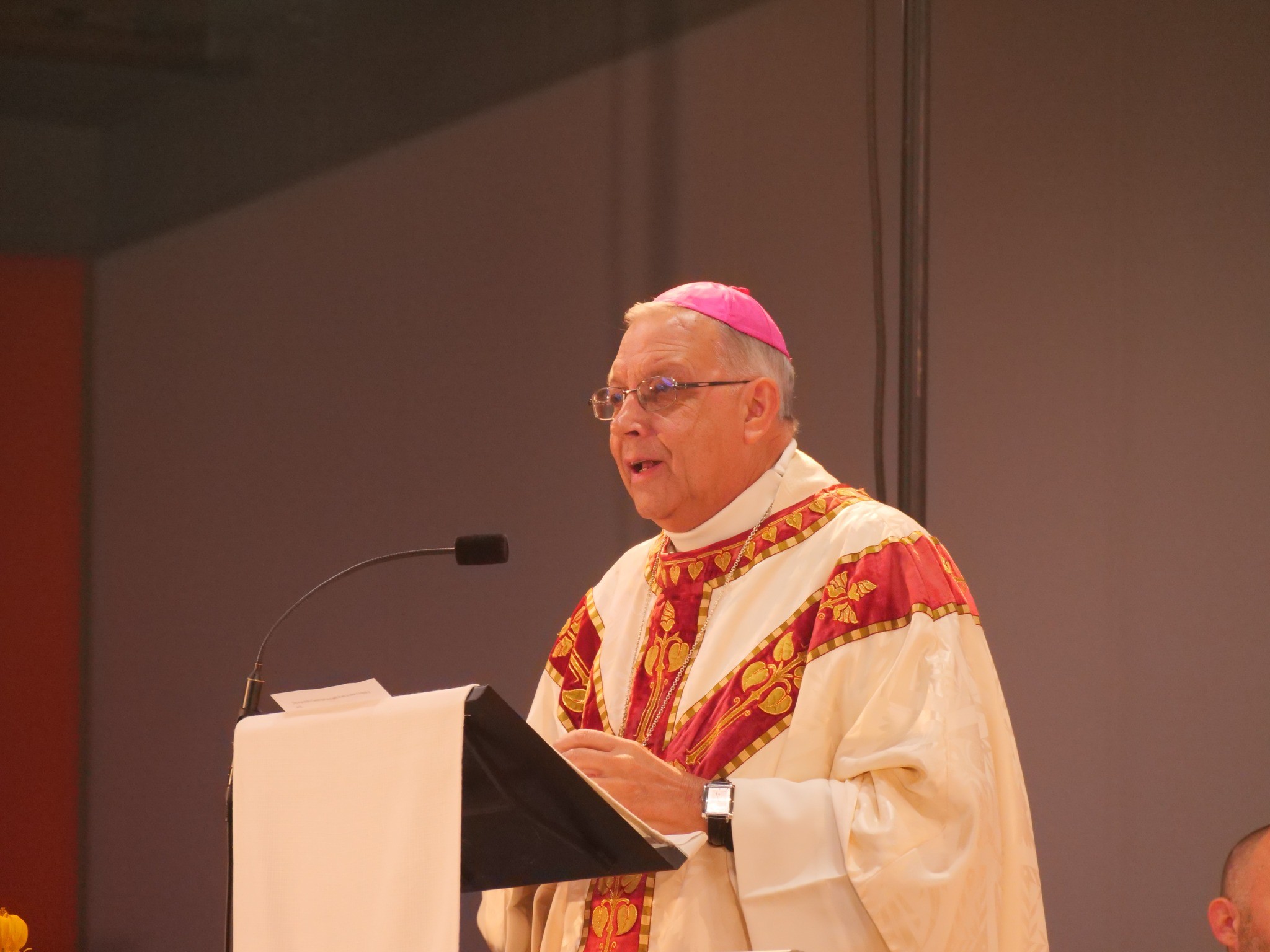
Moreover, it was recently publicized the fact that Pope Leo XIV has had at least one meeting with Cardinal Cipriani, however it is unclear whether additional restrictions were set on him by Pope Prevost.
This is more relevant as Cipriani was more than willing to play victim when the Holy See “leaked” the contents of his file to the media back in January, a few days after the Opus Dei Cardinal decided to accept the public honors vested upon him by Mayor López Aliaga.
Gusching’s case must also be considered in light of previous, disastrous, experiences in France. On June 2020, the faithful of the diocese of Créteil, near Paris, got news that Pope Francis had accepted their bishop’s, Michel Léon Émile Santier, resignation at 73.
As usual, a claim about health concerns emerged, highlighted at the time by the pandemic. However, almost two years later, a French Catholic magazine reported the increasingly common story about the real reason behind Santier’s early resignation: he abused his power during his time as priest in the diocese of Coutances, in the 1990s.
Even if he was not an active predator, he engaged in a convoluted practice of voyeurism with two male parishioners under his care who he manipulated over the sacrament of confession.
Since Santier was already then the bishop of Créteil, a suffragan diocese of Paris, the canonical probe fell under the aforementioned archbishop Aupetit. So, the was probing Santier while he was being already under Rome’s radar for his own issues in the Parisian archdiocese.
Ultimately, Santier would be subject to a series of symbolic penalties, including limits on his ability to perform sacraments, being forced to live in a convent, among others, but the news about such sanctions only emerged in October 2022, almost two years after his resignation, and only after Famille Chrétienne, Golias, and other civil and Catholic French media uncovered, piece by piece, the real reasons behind his resignation.
And to further describe the maze of issues affecting the Catholic Church in France, it is impossible to dismiss the fact that before becoming bishop of Créteil, Santier was, from 2001 until 2007 the bishop of Luçon, a small diocese in the French Atlantic coast. Almost one year after Santier went to Créteil, Benedict XVI appoint Alain Castet as bishop there.
His tenure was less than nine years as he resigned in October 2017, when he was barely 67, providing no explanation as to why he left the diocese as he did. Officially, as usual, health appeared as the reason for the resignation, but one has to wonder if it was actually that.
Putting those issues aside, it should be clear that something, one would guess, rather awful happened between September 27 and November 4, that is to say, between Rome’s willingness to follow the “silent exit” routine and the Nunciature to France’s decision to flip the board and reveal some details, not an actual report, but some details about what happened with Gusching.
Prevost casts a shadow over Leo XIV
The forced transparency when dealing with Gusching’s resignation is more relevant when considering a controversy concerning Pope Leo XIV's actions as Prefect of the Dicastery for Bishops regarding abuse in New Zealand. The case is relevant because it involves a Cardinal, the former archbishop of Wellington, Pope Francis, and then prefect Robert Prevost, before his election as Pope.
As the superior of that Dicastery Prevost had authority over the vast majority of the Catholic dioceses worldwide. In such capacity, Prevost was involved in the Vatican-led review concerning allegations of historical sexual abuse against Cardinal John Dew, the now emeritus archbishop of Wellington, New Zealand.
In June 2024, the Vatican-led review concluded that no further Church inquiry was required, effectively clearing Cardinal Dew to resume public activities, which he had suspended upon the allegation becoming known.
The 2024 decision reverses, even if only symbolically, what happened when Pope Francis accepted Dew’s resignation on the very day he turned 75, despite the fact that it is almost customary to let Cardinals remain for a few more months after reaching that age, as it happens now in New York City, Mexico City, Chicago, Guadalajara, and many other dioceses headed by Cardinals who, as such, can remain in their position until they reach 80.
Even if at first criticism of Prevost’s decision remained limited, for the most part, to New Zealand, as time has gone and other decisions made by Prevost, whether as bishop in Peru or as superior of the Order of Saint Augustine are analyzed, there are doubts about how consistent his rulings as bishop have been and more so, how consistent his rulings as Pope will be.
In that regard, groups like SNAP Aotearoa New Zealand publicly expressed grave concern over Prevost’s handling of the case, suggesting the Vatican review, which occurred after New Zealand police closed their investigation without charges, placed “institutional interests above the care and safety of his people.”
Specifically, the complainant alleged they were never contacted by the Vatican as part of its review, raising serious questions about the fairness and thoroughness of the canonical process overseen by Prevost’s dicastery.
This specific failure, clearing a Cardinal with accusations of mismanagement of reports, adds to what is becoming a record of “poor judgment” when dealing with allegations against members of the hierarchy.
.

A previous installment of this series, linked before, highlighted how contradictory was that during the first interview of his Papacy with U.S. medium Crux, Leo XIV talked about “false accusations” against “innocent priests,” when all the reports available up until now talk about the under-, not the over-reporting of cases of clergy sexual abuse. Some of his critics talk about a certain preference to prioritize protection of the hierarchy over protecting the victims.
The transparency when dealing with bishop Gusching’s “early” resignation cannot be just as a pontifical pivot. If it is going to be meaningful, it should be a time to reset the way the Church handles these issues, as to figure out if Leo XIV will keep protecting the hierarchy or if he will protect victims, while setting a genuine universal accountability as a policy for his papacy.
Meanwhile in Latin America
A minor but unavoidable development in Latin America has been the recent “castling” at the top positions of the Cepromelat (content available only in Spanish), the so-called Center for the Protection of the Minors in Latin America.
The “new” director has been a relatively constant presence at the entity, he is Daniel Portillo, a priest from the archdiocese of Chihuahua, and there lies the very first contradiction in this promotion. How is it even possible that a priest from a diocese that has been either unwilling or unable to comply with Pope Francis request to set up a commission to prevent clergy sexual abuse is the head of Cepromelat?
Only the Mexican Conference of Catholic Bishops and the Latin American Council of Bishops, the so-called Celam could answer that question. The assertion that Chihuahua lacks a commission to at least prevent clergy sexual abuse is based on an updated review, as of Friday November 7, 2025, of the list of Mexican dioceses having a commission to prevent clergy sexual abuse, available here (content in Spanish), where there is no reference or mention of the archdiocese of Chihuahua.
One would expect that after almost six years since Pope Francis made the original request in 2019, or two if they go with the 2023 date of the amended version of Vos Estis Lux Mundi, the Mexican Conference of Catholic bishops would be willing to comply with the very basics of such request.

Previous installments of this series have offered details as to how the conference of Catholic Bishops in Mexico evades fulfilling this duty, as in the one linked before this paragraph.
There has been a minor improvement regarding the data reported in that installment, as the story linked after this paragraph tells when talking about the report published by Tutela Minorum this year.

English Edition
The 2025 Catholic report on clergy sexual abuse
The risk of politicization
The Mexican bishops seem to be unaware that as it has happened in France and elsewhere, sexual abuse at large, but more specifically clergy sexual abuse has a hidden potential to be politicized.
The Mexican Catholic Church as others in Latin America seem to expect that such politization will not happen, despite their inability to comply with their own internal benchmarks.
Betting on the difficulties that victims in Latin America have to organize and to emulate what survivors in countries such as the United States, France, or Germany have been able to achieve seems like a losing proposition for an entity such as the Catholic Church claiming to have an interest in becoming a broker in peace building processes in countries drowned in different types of violence such as Mexico.
Cepromelat is already promoting its congress to be held in March 2026 at San José, capital of Costa Rica centered on the notion of repairing the damage. That is a great idea, but the fact is that there is little of substance when it comes to reparations in Latin America.
Carefully choreographed liturgies only substitute public apologies and actual reparations and compensations for the damage in the imagination of the most loyal die-hard Catholics.
Often they revictimize the victims who have been dealing with the unwillingness of extremely aggressive die-hard faithful to even acknowledge that abuse happens. It is frequent to see that kind of Catholics in social media where, by virtue of the radicalization that defines the current zeitgeist rewards, they do their best to insult and attack those who talk about the plight of survivors of clergy sexual abuse over social media, as if they were exterminating a true and vital enemy of the Catholic Church.
That is why Pope Leo XIV dismissive talk about “innocent priests” being accused was so troubling for whoever digs deep in the implications of his interview with Crux. It entices that kind of die-hard Catholic layperson to prove at all costs that the victims or their advocates are lying.
And the effects of this are more devastating for Leo XIV himself, as questions about his own role in dealing with abuse cases in his former diocese of Chiclayo, Peru, remain open.

English Edition
From Chicago to Chiclayo, sexual abuse victims are pawns
The longer it takes him, now as Pontiff, to correct his own record as bishop, the less credible his promises of improvement and zero-tolerance towards clergy sexual abuse are.
As far as the Latin American conferences of bishops, the signs of alarm are all there. In Mexico, the federal government recently announced both a national program to deal with sexual abuse at large, while a member of the ruling party bench in the lower house of the national congress introduced a bill to enforce censorship of Church-owned media.
Even if the measure is not limited to the Catholic Church, it is not hard to imagine that the main target of the bill is that religious entity. The Mexican bishops’ response was notably weak because far from defending freedom of speech as a universal human right, it was a call to mobilize the Mexican Catholic base, as can be seen in the very last line of the message posted by Ramón Castro, the bishop of Cuernavaca, and president of the conference.
To make matters worse, one day before the president of the Mexican conference of bishops issued a rather weak response to the bill, a priest in the Mexican Catholic heartland, the so-called Lowlands, the Bajío, decided to publicly insult Libia García, the governor of the state of Guanajuato.
The priest, known as Padre Pistolas (Father Handguns), is a darling of social media for being willing to play a fool, bragging about the use of handguns in a very violent region of an already extremely violent country, while “preaching” alleged “homilies” filled with expletives, insults, and all kind of aggressions against whoever dares to criticize him.
Separately, the same Castro and his general secretary, Héctor Pérez, issued a cryptic one-page statement criticizing the use of violent language, but without actually naming the so-called Padre Pistolas. The statement in Spanish appears after this paragraph.
In that regard, any will to actually acknowledge a mistake in the priest’s behavior vanished. One also must be aware that this is not the first time this priest acts out in ways similar to a drunk teenager, and yet, for reasons only the Mexican bishops grasp, he remains a priest.
A summary of this installment of the series is available for listening after this paragraph.