Rodolfo Soriano-Núñez Lunes, 27 de Abril del 2026
As refreshing as Leo XIV’s call is, it will not be easy for many Catholics way too invested in John Paul II’s narrow understanding of morality, centered on abortion.
Although Leo XIV seems to be unwilling to fully embrace Francis’s legacy, Trump’s attempt to grab the Catholic Church’s support by force is further deepening the rift between the Vatican and the White House.
By Rodolfo Soriano-Núñez
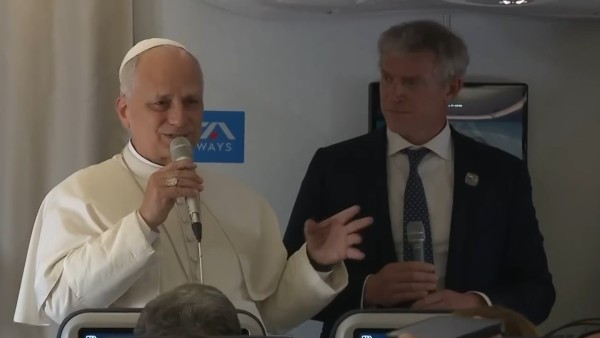
Pope Leo XIV’s pastoral trip to Africa ended with the kind of in-flight media conference that Pope Francis’s turned into an opportunity to speak directly with the media. This time around, Pope Prevost actually expanded his “air-time” with the media, proving how aware he is of the need for him and his Church to “speak truth to power” in ways no other Pontiff has been forced to do since, at least, the early 19th century.
It allowed the first American Pope to send a not-so-subtle message to Catholics who, in the United States and all over the world became single-issue voters, despite the many warnings political science and history have about political parties, election blocs, and religious organizations close to such parties or blocs willing to bet their future that way.
Leo XIV’s message was not that different from what Pope Francis tried to hint, in official statements and when he influenced the positions taken by the Argentine Conference of Catholic Bishops regarding abortion.
Sadly, even if Leo XIV’s response to a German journalist opened the door a to potential reconsideration of the role of sexual morals as the key issue, the litmus test of Catholicism, it was also charged by the kind of fear about actually putting an end to such narrow understanding of Catholic doctrine. The question and answer were as follows:
“Verena Stefanie Shälter, ARD Rundfunk: Holy Father, congratulations on your first papal trip to the Global South. We have seen much enthusiasm and even euphoria; I imagine it has also been very emotional for you. I would like to know how you evaluate the decision of Cardinal Reinhard Marx, archbishop of Munich, to give permission in that diocese for the blessing of same-sex couples. In light of the different cultural and theological perspectives, especially in Africa, how do you intend to preserve the unity of the universal Church on that specific matter?
“Pope Leo XIV: In the first place, I believe it is very important to understand that the unity or the division of the Church should not revolve around sexual matters. We tend to think that when the Church speaks of morality, the only moral topic is the sexual one. And, in reality, I believe there are much more important issues, such as justice, equality, the freedom of men and women, religious freedom, which would take priority over that specific topic.
“The Holy See has already communicated with the German bishops. The Holy See has made it clear that we do not agree with the formalized blessing of couples—in this case, of homosexual couples, as you have asked, or of couples in irregular situations—beyond what, so to speak, was specifically permitted by Pope Francis by saying that all people can receive a blessing.
“When a priest gives a blessing at the end of Mass, when the Pope gives a blessing at the end of a great celebration like the one we had today, these are blessings for all people.
“The well-known expression of Francis 'Tutti, tutti, tutti' (Everyone, everyone, everyone) is an expression of the Church's conviction that everyone is welcome; everyone is invited; everyone is invited to follow Jesus, and everyone is invited to seek conversion in their lives.
“Beyond that, I believe that the topic can cause more disunity than unity, and that we should seek ways to build our unity focused on Jesus Christ and what Jesus Christ teaches. That is how I would answer that question.”
(The full transcript of the inflight press conference is available here. Oddly enough, there is no English-language translation as of Sunday April 26, 2024).
Even if there is some glimpse of hope about a Pope being able to “read the room” of the actual reality of the Catholic Church in Germany it would be ignorant to credit Leo XIV or Francis with being the first contemporary Pope to “read the room” and understand that as important as some principles are, they cannot be the litmus test of the Catholic Church’s role in public, and more precisely, political life.
Before Francis, Paul VI had to acknowledge that Catholicism cannot bet all its political capital on sexual morals and that there were other moral issues that Catholicism must take into consideration when taking stances in public life.
Although Pope Montini had the privilege of presiding over the end of Vatican Council II and to enact transformative changes to the way the Catholic Church celebrates the Mass and, perhaps more significantly, to the way it interprets its role in public life, its relation with other religious traditions, Christian and otherwise.
In doing so, Paul VI, a son of the European generation that witnessed the devastation brought by II World War, force to the Traditionalists’ chagrin, major changes in the way the Good Friday is commemorated by his Church. He dropped the neurotic understanding of the role of Jewish people in what 20th century Theology calls “the economy of salvation.”
He did it by changing the formula with which Catholics prayed for the “conversion of the Jewish.” In doing so, he triggered the ever-lasting hatred of Marcel Lefebvre and his followers at what is now the Society of Saint Pius X, an order-like fringe organization about to repeat the schismatic consecration of four bishops, just as Lefebvre did it, against John Paul II’s instruction on June 30, 1988.
Catholicism, Italian style
In the early 1970s, he also was forced to acknowledge the unsustainability of the Italian Catholic bishops’ intransigent position regarding marriage and divorce. Their intransigent stance was good for Italian cinema. It prompted some of the most delightful comedies of the 1960s: Divorce Italian Style (1961) and Marriage Italian Style (1964), the most notables but hardly isolated examples of how absurd and cynical Italian (and more so Italian Catholic) public life had become, with similar situations in Spain, Portugal and Argentina among other countries at the time). It was also a major driver of “gossip journalism,” telling the stories behind the “rich and famous” ways to mock the Italian law.
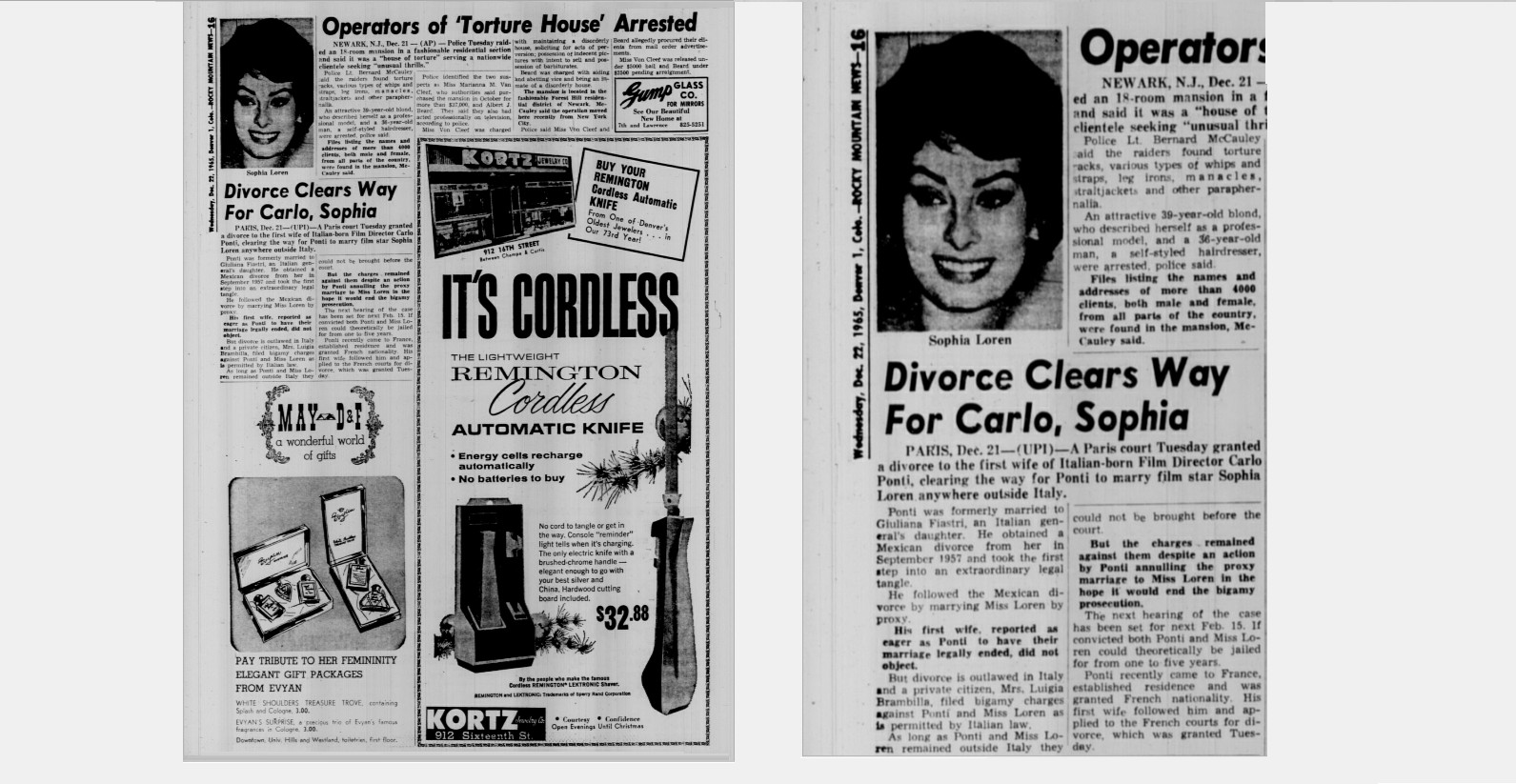
One of the most notable, dating back to the late 1950s, but with lasting repercussions way into the 1960s, told over many years the story of how to be able to marry young Sophia Loren, Italian movie producer Carlo Ponti, got a Mexican divorce, because there was no way for him to get one in Italy. Putting the fluff of the gossip news aside, Loren’s case was a perfect example of laws that far from protecting marriage as an institution, did their best to undermine it in both the civil and the religious sphere.
As late as 1965, a year after Sophia had a major success with Marriage Italian Style, news about her role in Ponti’s “Mexican divorce” were still a lifeline for news services such as United Press International, and more so local newspapers such as Colorado’s Rocky Mountain News, as the screenshot after this paragraph proves.
Montini, a career diplomat, who came to become Bishop of Rome through the ranks of the Vatican’s Secretariat of State during the 1940s and 1950s drew lessons from the way him and his fellow Italian bishops lost the Italian referendum on divorce in 1974.
Vatican observers at the time and historians see his take on 1978 abortion reform (content in Italian) as one of “strategic silence” or a “measured protest.” One stemming from what he learned from the approval of the 1970 Divorce law, a momentous time when despite open opposition from Paul VI, Italy legalized divorce, but more so from the disastrous 1974 referendum on that issue.
Despite warnings, and perhaps his own understanding of the issue, Paul VI and the Roman Curia supported the unofficial “Catholic” side on the vote. The outcome was a painful loss for Pope Montini and his team, with six of each ten electors supporting the Italian divorce law. The referendum proved that even “cultural” Catholics were no longer following the Vatican’s political directives.
Reading the room
By 1978, Paul VI was able to “read the room” of Italian politics and realized that a total frontal assault on the Italian State would likely result in another humiliating electoral defeat and further alienate the Christian Democracy (DC) party, which was then navigating the “Historic Compromise” (compromesso storico) that forced them into an uneasy ruling coalition, the so-called Pentapartito or Five Parties, with organizations to its left.
What is worse, the Christian Democrats found there in the midst of an era of troubling political violence both in Europe and Latin America, from the streets of Northern Ireland to the fields of Cyprus in the Eastern Mediterranean, and from there all the way down to the streets of Santiago de Chile and Buenos Aires.
An Italian symptom of the European Continental-scale violence had been the kidnapping of Christian Democratic leader Aldo Moro. Law 194 was passed on May 22, 1978, little less than two weeks after Moro’s corpse, a close friend of Pope Paul VI, was found. The political atmosphere in Italy and Europe at large was one of mourning and extreme political instability.
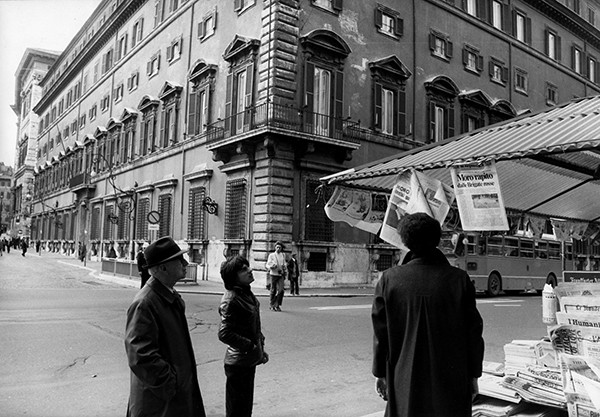
Perhaps against his own preference, Paul VI was able to see through the barrage of headlines and understand that Law 194 was not a “free-for-all” abortion bill, it did not “liberalize” abortion in a libertarian sense; it “regulated” it, including provisions for counseling, social support for mothers, and, crucially, conscientious objection for doctors.
Far from issuing formal or informal excommunications against the politicians accepting the reality of abortion as it happened in the United States against Joe Biden, Nancy Pelosi and others, the Vatican limited itself to issuing a formal condemnation through the Congregation for the Doctrine of the Faith (CDF), while Paul VI himself did not issue a pontifical document.
He also avoided calling for massive mobilization against the law. It would have been disastrous for the way the attempt at the time to come to terms with the nature of democratic regimes, a major issue for other popes who, for reasons that it would be hard to summarize here, challenged the nature of democratic governance, along the lines of the existence of natural or divine law that are meaningful only if one is a Christian believer, as their existence is hardly accepted by all philosophical systems.
Years of lead
The approval of Law 194 did not happen in a vacuum of civil debate; it occurred during the height of the so-called Anni di Piombo (Years of Lead), a period where the “room” Paul VI was reading was literally under fire.
For the Pope, the existential threat to the Italian Republic, symbolized by the brutal execution of Moro by the Red Brigades just days before the law’s passage, reconfigured the hierarchy of emergencies. Moro was a former member of the FUCI, the Federation of Catholic University Students, after its Italian initials, where Monsignor Montini would spend some time as one of its chaplains.
As such he “accompanied” or “walked with” generations of college graduates, some of whom became politicians (like Moro). As such it was contrary to his intuition to mobilize the Catholic base against the very lawmakers he had mentored at FUCI, even if they were the ones signing Law 194 into effect.
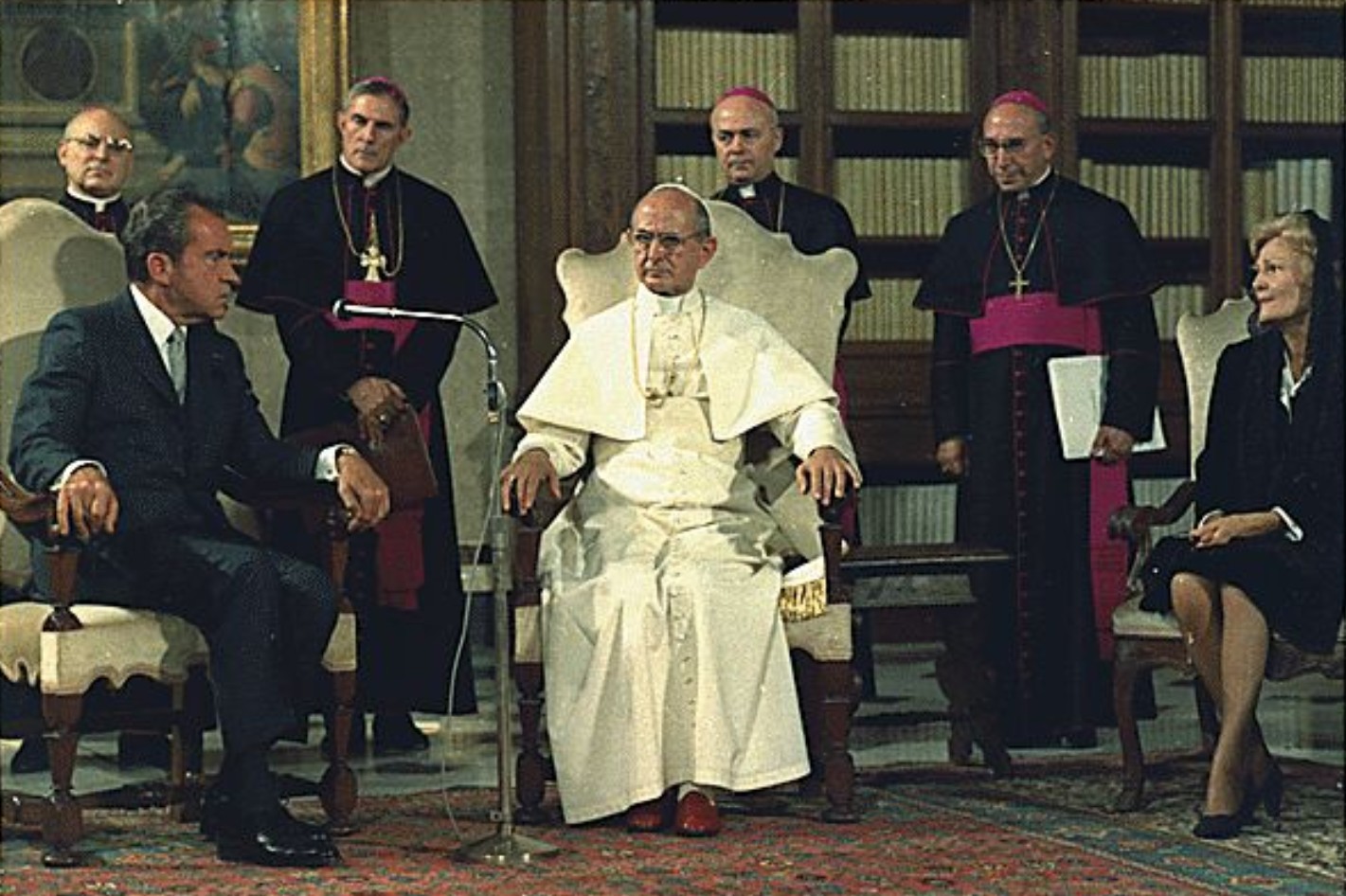
Launching a “Crusade” against a Christian Democratic government already reeling from domestic terrorism would have been more than a moral stance; it would have been an act of institutional arson against the only stabilizing force left in the country.
Furthermore, this “strategic silence” was informed by a broader European and Latin American landscape of political brutality. Paul VI had recently witnessed the futility of moral appeals against entrenched violence to a European autocrat who claimed to be a faithful Catholic in Spain: the aging Francisco Franco had ignored the Pope’s personal pleas for clemency, executing political dissidents by the medieval garrote vil as late as 1974.
Back in 1973 and 1976, democratically elected governments in Chile and Argentina, respectively, had been defrocked by military Juntas whose leaders immediately used the symbols of the Catholic Church to justify massive violations of human rights, including members of the clergy.
In Argentina, the Junta led by General Jorge Rafael Videla had had the support of members of the French Secret Organization of the Army (OAS after its French language initials), who had been involved in the attempts on Charles de Gaulle in France.
OAS’ brand of Catholicism, inspired in notions of France performing some kind of civilizatory task reminiscent of Rudyard Kipling’s “white man’s burden” was as willing to legitimize the use of violence. They were doing so almost at the same time Camilo Torres Restrepo asked Cardinal Luis Concha Córdoba, the archbishop of Bogotá, to let him leave the priesthood to join the Liberation National Army guerrilla in his native Colombia.
Violence with a divine excuse
Both spelled trouble for a religious organization as complex as the Catholic Church, because both were abusing in one way or the other the “Just War” Catholic doctrine. That is precisely what one sees nowadays from some of Donald Trump’s Catholic acolytes nowadays: using Catholic doctrine to justify the extermination of an adversary in God’s name.
Paul VI was forced to acknowledge that Catholic rulers could be both the targets of violence promoted by Catholics dissatisfied with their performance, but also had to acknowledge how little influence it had when trying to convince Franco, Augusto Pinochet or Videla of sparing the lives of people challenging them in Spain, Chile or Argentina.
In that respect, Pope Montini probably understood that the era of the Papacy dictating terms to the “Catholic” heads of State was over. More so, when he was aware of how Catholic imagery and symbols were also part of the explosive mix in the Northern Ireland “Troubles,” or how the ghosts of antisemitism turned the Munich Olympiad into a revery of Dachau.
In that context, of widespread instability, Montini chose to be the anchor of the State rather than the captain of a cultural war. He did so by focusing in a rhetoric of the “sorrow” of the Catholic Church rather than a political call to arms.
Such approach was not received with unanimous applause, many in the Catholic far-right of the time saw as a capitulation. The pending issues left by the Council, and the liturgical reforms enacted by Paul VI were almost immediately wrapped up and used against him by the conservative and traditionalist wings of the Catholic Church who scapegoated him as the culprit of the Italian defeat and, more significantly, as the culprit of whatever went wrong in the 1970s.
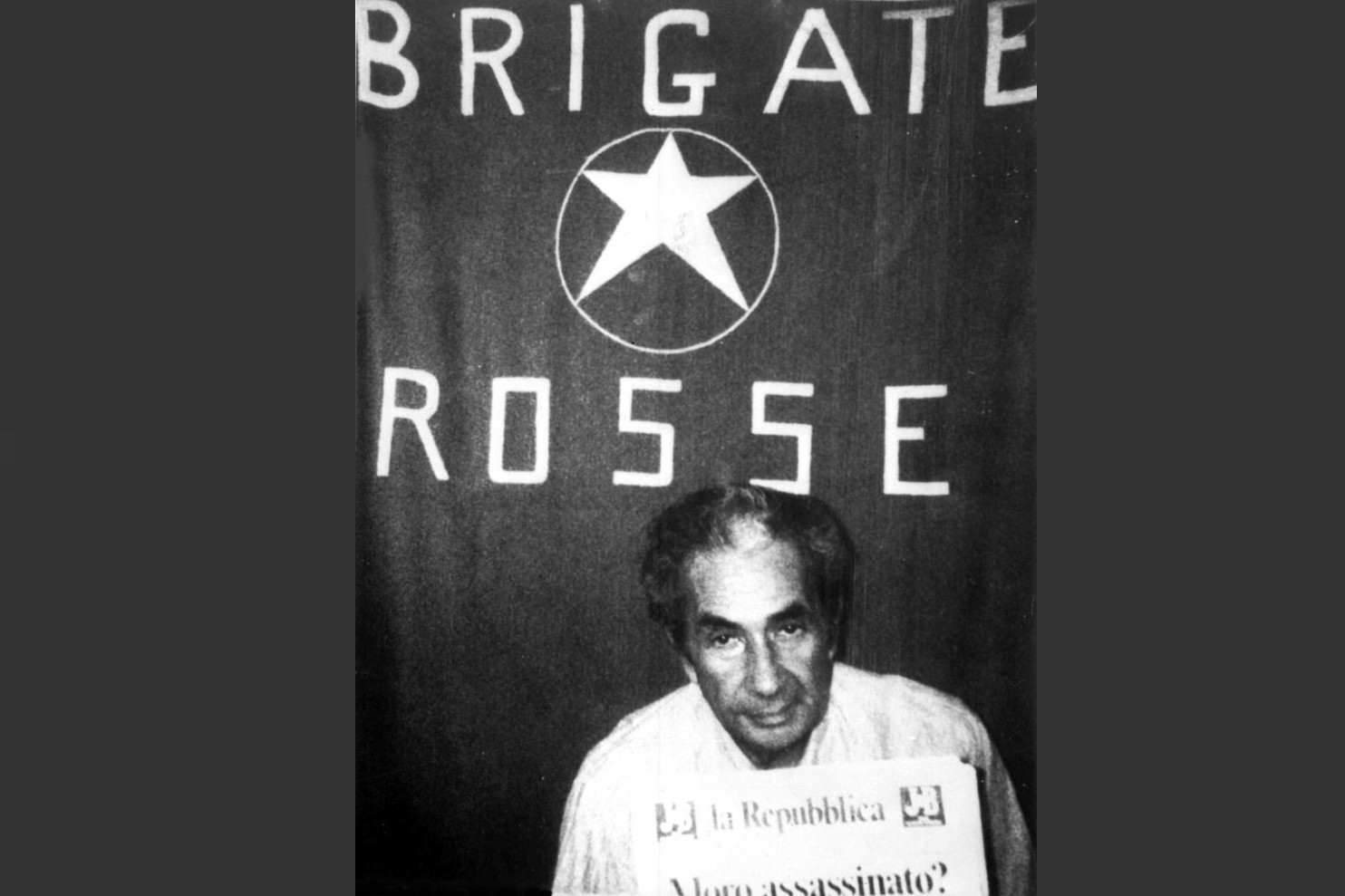
Historical accounts suggest Paul VI’s restraint was based at least on three factors: the Aldo Moro Trauma: Moro’s murder on May 9, 1978, shattered Paul VI. The law passed while the Pope was in a state of profound personal grief and preoccupation with the Red Brigades’ threat to the Italian State, but also to European peace.
Witness to destruction
One must remind that Giovanni Battista Montini celebrated his 20th birthday around Armistice Day in 1917, and that he spent II World War as the second in command at the Secretariat of the State in Rome. Even if he was not a military chaplain and was not involved in any of the two major wars, he was a witness of the destruction of Italy and Europe in the 1940s.
That does not mean he had no political preference. As any practicing Catholic Italian citizen of his day, he preferred the Christian Democracy, but that was precisely why he understood how dangerous it was to force a crisis that would collapse the ability of the Christian Democracy to steer the extremely fragile governments of the Pentapartito, which was for many Italians at the time the last line of defense against political chaos.
He also understood that the Italian society of 1978 was no longer the society of 1929. He opted for “conscientious objection” as a legal victory, giving a chance to medical doctors, nurses and other health professionals a way to send a message to their bosses in Rome and elsewhere in Italy, rather than trying to hijack the Italian penal code.
As despised as Paul VI is for the U.S. and Latin American Catholic right, always attacking him as “too weak” or, in the most radical brand of attacks, as a “Marrano” (a pig), that is to say an alleged descendent of Jews, his take stands in stark contrast to the “culture war” approach followed by his successor, John Paul II.
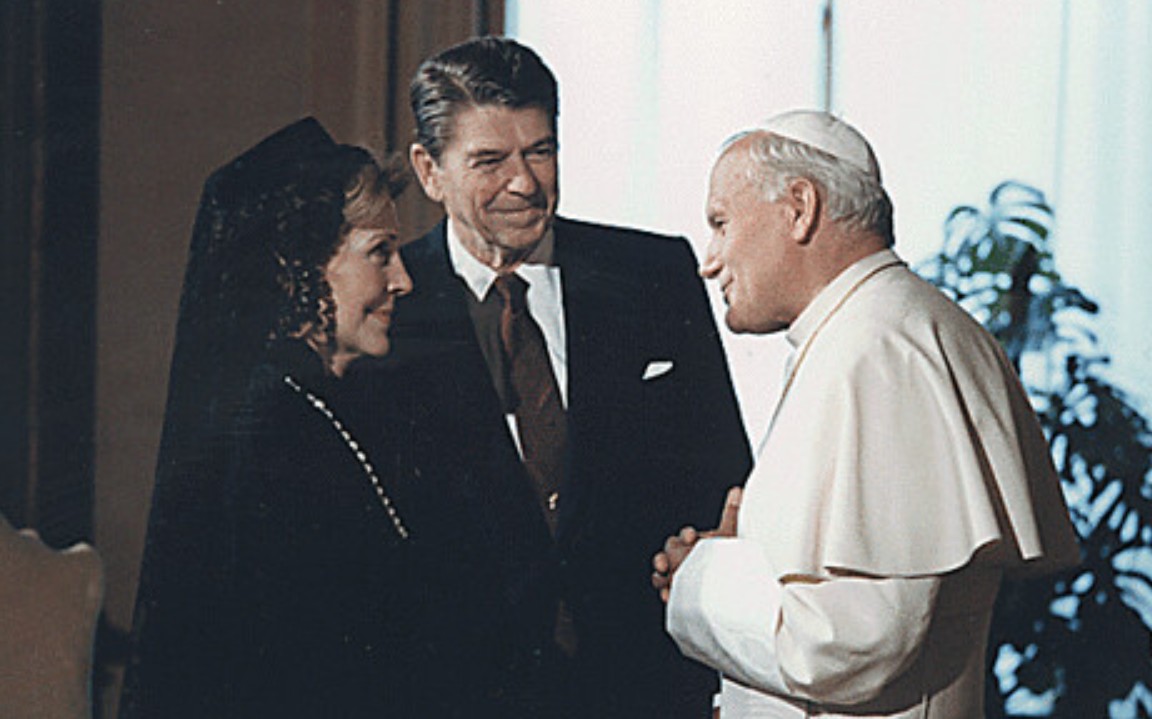
Paul VI’s final year in office was a masterclass in political realism: instead of betting on the implosion of the Italian State and Europe by calling out a scorched-earth, crusade-like campaign against Law 194, he acknowledged the changing reality of Italy and Europe. He understood what was at stake at a time where the Catholic Church was already deeply divided along ideological lines and how risky it was to bet on further radicalization.
In that respect, Paul VI was probably the first Italian Pope to develop a notion of the Catholic flock as a “creative minority.” Instead of demanding the State to turn Catholic dogma into law or jurisprudence, he secured Conscientious Objection (Article 9 of Law 194).
Wojtyla the Crusader
Less than three years after Paul VI’s “defeat” in the abortion debate, Italy went into the so-called 1981 “Penta-Referendum,” five separate referendums on four different issues on May 17, 1981. The issue with two different questions was precisely abortion. One of the questions tried to restrict what the 1978 law set; the second aimed at expanding access to abortion by lifting some of the limits set three years before.
The fact that neither of the two questions on abortion won should have been enough of a message for John Paul II to figure out the limits of his approach on the issue. Far from that, even if he avoided insisting on the issue in Italy, he discarded his predecessor caution and derived no meaningful lesson from the experience.
While Paul VI saw the need to make the Catholic Church a pillar of political stability by acknowledging the internal forum of the faithful, John Paul II viewed the 1981 vote as a cultural battleground. In that respect, if one goes back to the Italian media of the late 1970s and early 1980s what one finds is the record of Karol Wojtyla’s inability to “read the room” of Italian politics, but also to read the Italian electorate.
Unlike the Vatican’s attitude during the 1978 approval of Law 194, where the Curia worked through diplomatic channels and the Christian Democracy, John Paul II backed the Movimento per la Vita (Movement for Life) to force a popular vote.
In doing so, he framed the goal as one of total repeal of Law 194. Rhetorically, he went from the sorrow about abortion, into rendering the involved parties as criminals “slaughtering the innocent,” a framing now common in the far-right’s take on the issue in the English- and Spanish-speaking worlds, leaving little or no room to any meaningful discussion of exceptions to John Paul II’s all-or-nothing approach on that and many other issues.
Fresh from his own battles with the Soviet-leaning regime of his native Poland, Karol Wojtyla, the former archbishop of Cracow, dismissed the warnings of Italian bishops who feared a repeat of the 1974 divorce referendum defeat.
In hindsight, if one follows Italian sources, it is possible to see how there was an actual loss of the “Catholic” camp from 1974 to 1981. If in 1974, 60 percent of the vote supported ending the nightmare of “Divorce Italian style”, seven years later, 68 percent of Italians were willing to support “abortion Italian style.” They preferred the regulated framework of Law 194 over the “clandestine” chaos that existed before 1978, where rich Italian females able to pay a trip to London, were at no risk of ending an unwanted pregnancy.
The loss was all the more crushing for John Paul II’s Roman curia and his allies in Italy as the actual vote happened a few days after the Pontiff was able to survive an attempt on his life in Saint Peter’s Square on May 13, 1981.
And the effects on the Christian Democracy, the party that had been able to steer the fractious Italian regime after the II World War, ended up crushed, defeated and divided, opening the door for the kind of populist leadership that has dominated the Italian right, now heavily influenced by identitarian, anti-European Union and pro Russia factions.
Even worse, the only actual measurable outcome of the 1981 Penta-Referendum was to offer an actual metric of the Catholic Church’s loss of political muscle, that paved the way to the 1984 Revision of the Lateran Treaty (Villa Madama Accord), where the Catholic Church officially ceased to be the “State Religion” of Italy.
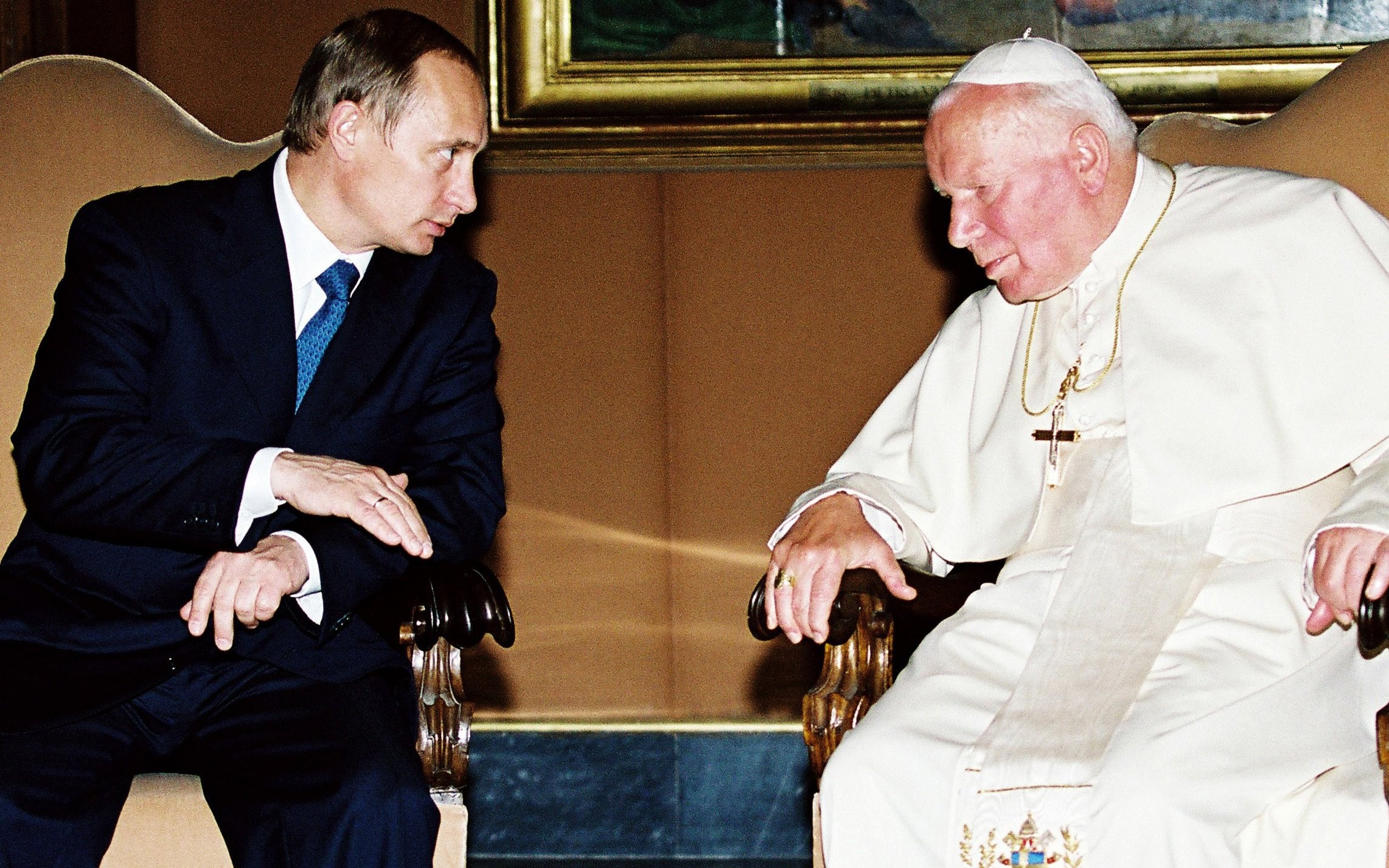
Perhaps more significantly, the Villa Madama Accord led to the end, by 1986, to major changes in the financial relationship between the Italian government and the Catholic dioceses in the country. Most of the public monies paid since the unification of the country, were no longer available to the Catholic Church, as the articles 50 and 51 of the 1985 document available here (content only in Italian) explain.
While John Paul II was winning battles against Communism in Poland, his “crusader-like” approach in Italy resulted in the loss of the Church’s special status. He spoke as if Italy were still a rural, pre-industrial Catholic monolith, failing to see the urbanized and secular shifts that Paul VI had already mourned and accepted.
Where Paul VI bet on the diplomacy of the possible, John Paul II did it on the politics of the absolute. The effects, at least in Italy and Western and Southern Europe were progressive loss of legislative influence.
While Paul VI was a diplomat who understood the limits of power and how dangerous was to bet on populist policies, as he himself was the permanent target of the populist of his day, attacking him for his alleged ethnic origins as much as his policy choices, John Paul II saw the Italian political arena as an extension of his experience as a leader of the Polish Catholic resistance.
As it became the standard operating procedure of the Catholic and other-than-Catholic far right in the 1990s and through the 21st century, he treated abortion and the 1981 referendum not as a policy debate, but as a clash between the “Culture of Life” and the “Culture of Death.”
Ever more concerned about using abortion as a springboard to sustain political alliances, he went as far as to call the 1978 Law 194 a “stain on the Italian nation,” despite the role of noted Catholic politicians in shaping such law, while leaving little or no room for any kind of medical consideration, even in the case of ectopic pregnancies.
Even if his apologists now dismiss the notion of his own role in pursuing an increasingly intrusive approach on surveilling females’ bodies and treat them all as potential murderers, many of the most radical takes on preventing any and all abortions, as currently happens in the United States, had their moral rationale in John Paul II’s original take on the 1981 referendum.
Ratzingerian paradoxes
The contrast between Paul the Diplomat and John Paul the Crusader finds a rather tragic and paradoxical conclusion in Benedict XVI’s input on the increasing radicalization of the rhetoric and political bets on supporting the “new Constantine” of the any given country, that is to say, new “protectors of the faith,” as the Roman emperor who, regardless of their own credentials, were willing to support the Catholic Church bet on eradicating any and all abortions.
In that regard, Benedict XVI’s pontificate is marked by paradoxes so deep, so entrenched that, to no one’s surprise have become the source of increasing stress for the Catholic Church itself.
Before Leo XIV’s current confrontation with Donald Trump, it is hard to think of a better example than that coming from Nicaragua, where Pope Ratzinger blessed Cardinal Miguel Obando y Bravo’s support of Daniel Ortega’s return to power, despite the many warnings issued by Nicaraguan priests and laypersons, because Ortega promised a strict anti-abortion legislation, a bet that ultimately left the Church ideologically pure but institutionally bankrupted and politically homeless, as the story linked after this paragraph tells.

English Edition
The Catholic Church in Nicaragua: a new twist in the plot
Benedict XVI and Obando y Bravo, both veteran hands in the Wojtyla papacy, got the stern anti-abortion law they wanted, but at the cost of the Catholic Church’s moral standing.
Even worse, to achieve such “feat”, Obando y Bravo became a “State cleric,” a Cardinal showered by Ortega’s regime as “Hero of Peace”, while helping Ortega build what now the Nicaraguan exile rightfully denounces as a dictatorship even if most of them are still unable to articulate a meaningful critique of Obando and Benedict XVI, while trying to blame, instead, Pope Francis, even if he became Bishop of Rome long after Ortega had consolidated the kind of dictatorship him and his wife now lead.
The way the Nicaraguan exile blames Francis is harder to reconcile with the fact that one of the most frequent targets of both Obando and Ortega were the Jesuits, now officially suppressed in the Central American country, after having been forced out of their college, the Universidad Centroamericana.
Benedict XVI “won” the Nicaraguan abortion battle but lost the entire institution of the Church in Nicaragua to a caudillo who used the “moral litmus test” as a mask.
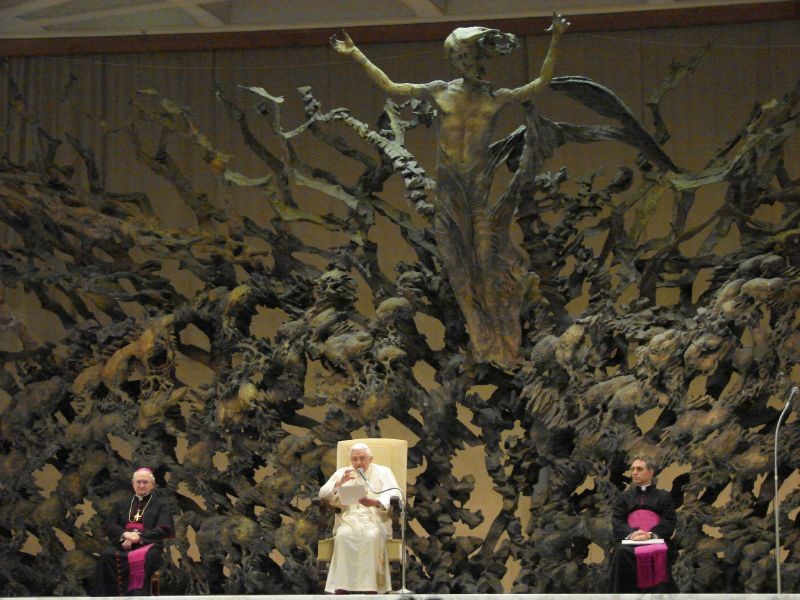
More troublingly, John Paul II’s and Benedict XVI’s take on abortion as the “preeminent moral issue” favored movements known for their sectarian and abusive (sexual and otherwise) practices. That has been the case of the Sodalitium, the Legion of Christ, Opus Dei, the Institute of the Incarnate Word, the Heralds of the Gospel, among many others who, to nobody’s surprise, render themselves as radical and intransigent as humanly possible on the issue of abortion, while desperately protecting predator members of such religious organizations.
Since these groups were as “orthodox” as possible on the preeminent moral issue of abortion and contraception at large, John Paul II’s and Benedict XVI’s Roman curias were more than willing to rubber-stamped their expansion while ignoring the many red flags their expansion triggered at least since the early 1980s.
Not that Paul VI’s curia was necessarily better or more enlightened on the issue. There is evidence of how Cardinal Montini was already aware of Marcial Maciel abuse and, as many other members of the Pius XII and John XXIII curias, was unwilling to actually trigger the kind of measures to put an and to the abuse happening at the Legion of Christ.
In that regard it is impossible to dismiss Benedict XVI’s role in the fast-paced acceleration of Catholic “losses” in Canada, Europe and Latin America because of how he reinterpreted Paul VI’s take on the “Creative Minority” theory.
Instead of acknowledging the need to further expand the appeal of Catholic doctrine on different moral issues, he ultimately shrunk its reach, as to only include those who agreed with him.
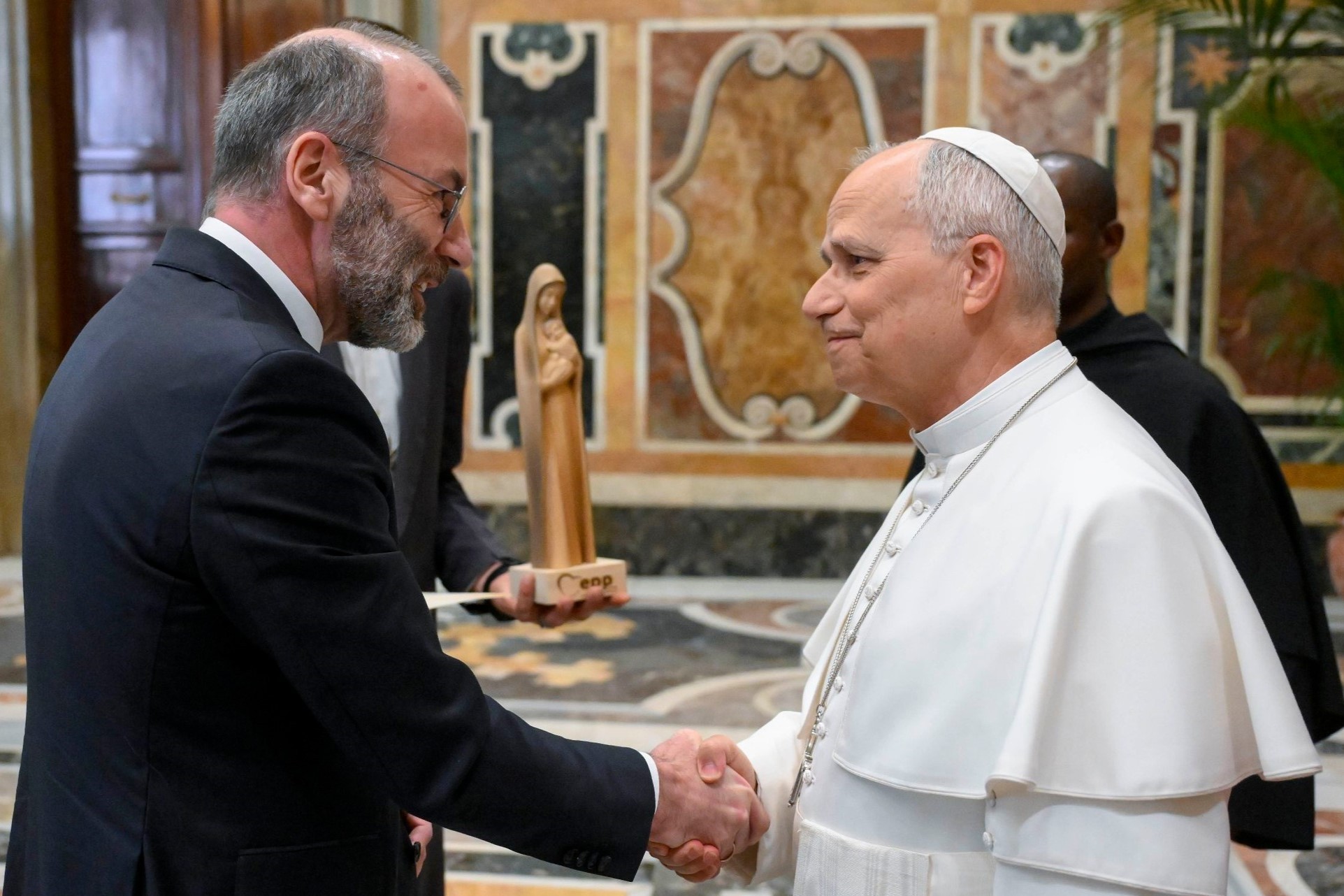
In Spain, Benedict suffered its greatest European defeat. Between 2004 and 2010, Spain, the Western European “Catholic heart,” legalized same-sex marriage and significantly liberalized abortion laws. Benedict’s response was high-level theological confrontation, which backfired by making the Church appear as an “alien entity” to a modernizing Spanish youth.
In doing so, Benedict XVI lend whatever legitimacy was left in his papacy to the most radical wings of the Spaniard Catholic right, now organized around Vox. Its leader, Santiago Abascal, is now more than willing to mimicking the same discourse one sees in the United States when the most radical wings of the Make American Great Again movement blame the Catholic Church with profiteering from migration (content in Spanish).
Despite Ratzinger’s fame as a theologian, his gamble on the so-called “Non-Negotiable Values” (protection of life, family structure and parental freedom in education) ended as his own Waterloo. By narrowing the Catholic identity to a handful of political triggers, he and his followers created a bunker mentality that is strikingly similar to the “Lost Cause” theology of the most anti-Catholic Protestant churches in the United States South.
Like those who continue to sanctify the Confederacy’s defeat as a “noble crusade” against an infidel North waging a war of aggression on the Christian South while dismissing the issue of slavery, the radicalized fans of Benedict XVI frequently frame the Catholic Church institutional decline as a “holy martyrdom.”
Following John Paul II’s and Benedict XVI’s narrow understanding of the “creative minority,” they turned down the chance to become salt of the Earth for the opportunity to sell memberships to an exclusionary club.
In doing so, they trade the universal reach of a Church with a “large tent” kind of theology, into the paranoid sect-like theology of grievance, where being right in their own eyes is more important than being a shepherd to a changing world. In this “Lost Cause” of the Catholic right, the survival of the select few, those willing to turn Catholicism into a sect, as archbishop John Wester of Santa Fe explains the risk of turning Catholicism into a cult, a sect.

English Edition
Strickland and the risk of turning Catholicism into a cult
As a previous installment of this series explained, Wester saw a structural “hollowing out” of the Catholic Church long before Trump took center stage. He witnessed the “Pro-Life” movement transform from a moral stance into an excuse for the likes of Frank Pavone, among other priests unable to even acknowledge their own Church’s leadership as legitimate.
Wester warnings were not only about the potential risk of losing membership, but more significantly about the risk of “contracting out” Catholic identity to a political party, as it happened with Cardinal Obando and the Daniel Ortega understanding of Nicaraguan Sandinismo.
The Latin American take
As contradictory as Benedict XVI’s understanding of his own role, he was willing to step down and become the first “emeritus Pope” in several centuries, in doing so he allowed for the arrival of a Latin American Cardinal to the Petrine office.
Francis’s sensibility on the issue of the “preeminent issue” is relevant because he was well aware of how deceitful and dangerous can be a Church way too integrated with the polity, as in his native Argentina and neighboring Chile.
Far from offering a real advantage, the close relation of the Catholic Church with the governments of Argentina and Chile became examples of institutional vulnerability.

By the time the abortion debate reached its peak in Argentina in 2020, Francis was well aware of how negative was Benedict XVI’s and Obando’s bet on banning abortion in exchange for their support of Daniel Ortega’s dictatorship.
Moreover, as the former archbishop of Buenos Aires, he understood something his most immediate predecessors in Rome were unable to acknowledge: the Church could no longer afford an anti-abortion Crusade because its own house was on fire due to the systemic rot of clergy sexual abuse.
In 2020, Argentine President Alberto Fernández tried to use Bergoglio as a political punching bag. He went to Rome to play his role with the kind of Porteño flair one would expect from a canchero and then immediately pushed the Voluntary Interruption of Pregnancy (IVE) bill in Buenos Aires.
Fernández and his team framed the legalization as a “public health issue” rather than a moral one, hoping to force Francis into a traditional, vitriolic reaction one would expect from John Paul II or Benedict XVI. Well aware of the gambit, the Argentine Pope avoided the trap. Instead of issuing an excommunication or a papal screed, he let his many years of work in the most marginalized barrios of Buenos Aires speak on the issue, the opposition to abortion was not framed as the kind of Crusade Wojtyla and Ratzinger were willing to call out.
By refusing to turn the issue into a Pope vs. President debate reminiscent of John Paul II’s take on the 1981 referendum, Bergoglio avoided further damage to the relation of the Catholic Church with its own popular base. The way the debate happened, in the midst of the severe restrictions set by the Argentine government during the pandemic, allowed to avoid the accusation against Bergoglio of not being willing to play “Crusader Pope.”
Something similar could be said about how Bergoglio played his hand in Chile, with the more troubling element of how his visit there, after the 2017 abortion bill was approved there, became a lesson in the negative effects of dismissing the true scale of the clergy sexual abuse crisis.
It is impossible to forget how Bergoglio lived his own personal Waterloo in Chile, during his 2018 visit there. Not only the empty streets and venues, and the rather weak excuses provided by the local Catholic media, blaming the holidays, as if such issues were not taken into consideration when Rome goes through the drill of preparing a pontifical visit.
One could even pile his absurd defense of bishop Juan de la Cruz Barros Madrid of Osorno, one of the so-called Karadima bishops, but as absurd as such defense was, it was the continuation of Rome’s standard operating procedure when dealing with similar cases.
Bergoglio’s critics in Chile, some of them close to José Antonio Kast, the current President, the grandson of a German Nazi, use Francis’s restraint during the 2017 debate on abortion in Chile to insist on the notion of him being weak, or even heretic, for not having mobilized the Catholic Chilean base. Was it even possible? If there was a base able to be mobilized by him, why was not present when he was there?
Francis’s take seems to be the logical conclusion of the consequence of how Rome discarded Paul VI’s wisdom on how to pick the Catholic Church’s (cultural) battles only to later, after the Nicaraguan tragedy, recover it. Being as close as he was to the slums in Buenos Aires, he was able to understand why females in his own flock sought abortions and how some of them had them spontaneously, as the consequence of malnutrition, malformation of the fetus, ectopic pregnancies, to name just a few of the cases where it was hard to frame any female as a potential murderer.
To launch a Crusade in Chile or Argentina would have been tantamount to institutional suicide. By avoiding the “open confrontation” in Argentina, he prevented the already severely injured structure of the Catholic Church in his native country to be further damaged by the kind of political defeat John Paul II lived in 1981.
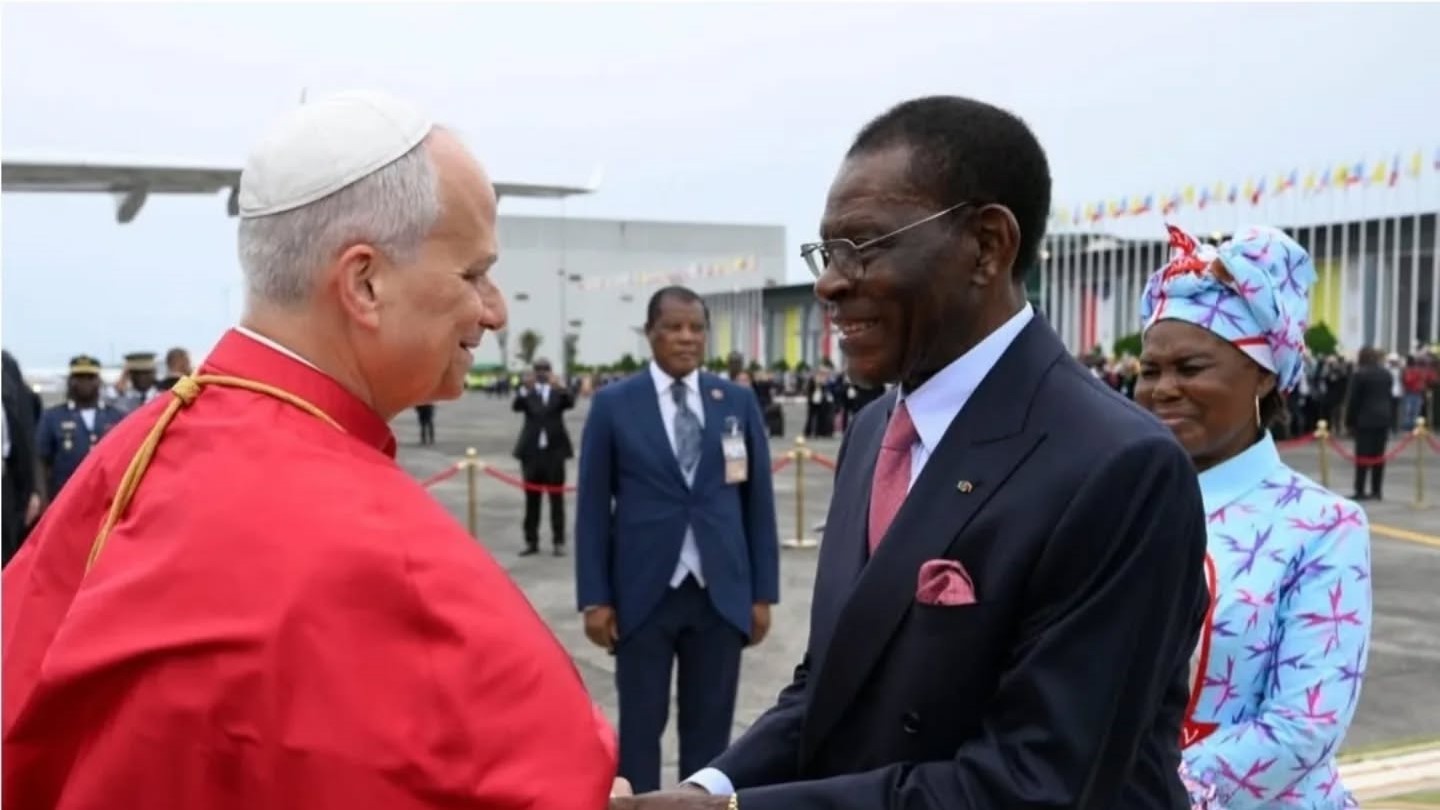
How far will Leo XIV be able to take his correction on abortion as the “preeminent issue” for the U.S. Catholic Church is open to discussion. Whoever followed Francis’s awful relationship with the United States Conference of Catholic Bishops knows by now how little influence him and his champions (Blase Cupich, Robert McElroy and Joseph Tobin) were able to exert.
USCCB did its best to chastise Joe Biden and Nancy Pelosi while fighting each other to find an excuse to praise Donald Trump and his own champions at that body, Salvatore Cordileone, the archbishop of San Francisco. And Trump is well aware of that.
Whenever he has a chance, he reminds both the Catholic bishops and the non-Catholic antiabortion MAGA crusaders how it was his additions to the John Roberts’s SCOTUS what made the killing of Roe vs. Wade, regardless of consequence, possible, the kind of tangible outcome that would have made John Paul II happy.
In that respect it is hard to imagine a sudden decoupling of the anti-Francis/Pro-Trump USCCB wing and the GOP. Even in the event of a Blue Wave in the 2026 midterms, the “theology of the Lost Cause” has become so deeply ingrained in U.S. Catholicism, that it is now possible to find Catholic priests mimicking the defense of the South in the U.S. Civil War, as much as it is possible to witness an allegedly Catholic U.S. Vice President warning the Catholic Pope about how far he is willing to go when talking about relevant issues.
Leo XIV’s best bet to actually make his Church aware of how morality cannot be limited to abortion or same sex sexual relationships, as the original question of the German journalist posed, is the swift appointment of replacements in the sees whose heads turn 75, as he already did in New York City, back in 2025, to MAGA’s chagrin.

* * *
A summary of this piece is available as audio after this paragraph.
Note on production: The text of this summary was written and edited solely by the author. The delivery of the audio summary was achieved using a high-quality, text-to-speech engine Microsoft Word for Web. The AI was used for voice generation only, not content creation.