Rodolfo Soriano-Núñez Lunes, 06 de Julio del 2026
As in any global crisis, progress remains uneven and largely dependent on the willingness of politicians and authorities in each country to pursue accountability.
Sadly, the crisis persists because accountability and enforcement remain uneven across civil jurisdictions and because the Catholic Church continues to resist full scrutiny.
By Rodolfo Soriano-Núñez
Over June there was a barrage of news related to the clergy sexual abuse crisis that merit some additional consideration beyond the scandal of large and punchy, tabloid-style headlines.
Those headlines still dominate the rather weak reporting and debate happening, for the most part, in Mexico and other countries in Latin America, as the information dealing with the arrest of priest Nicolás Orbe in Acapulco, in the Southern state of Guerrero on charges of raping an underage female in November 2025, proves.
On the opposite side of that kind of news are the detailed reports emerging from the German diocese of Essen, which help explain why the crisis persists despite decades of public exposure. Three separate newly released reports confirm what was known already since late 2011 about the mismanagement of cases in Essen, in the archdioceses of Paderborn, Munich, Cologne, and elsewhere in the German-speaking world.
Even if the most recent reports deal mostly with now deceased Cardinal Franz Hengsbach’s role in systematically mishandling abuse reports, it also forces one to raise questions about Joseph Ratzinger’s role in allowing the crisis in the German-speaking world to become what it is now.
Ratzinger was briefly, back in the 1970s, the head of Munich, but remained influential in almost any decision taken there and elsewhere in countries with relatively large German-speaking populations in Europe during his long tenure as prefect of the then Congregation for the Doctrine of the Faith, and eventually his run as Benedict XVI, in what is aptly known as the “Ratzinger system” in news and academic reports in the German-language world.
Motives of hope for survivors come from San Francisco, California, where despite archbishop Salvatore Cordileone’s unwillingness to comply with requests for information about priests’ assignments in the archdiocese under his care and its suffragan dioceses, a massive agreement of 395 million to settle claims of clergy sexual abuse was reached.
Such news emerged just a few days after the Democrats there elected Xavier Becerra as their candidate to governor. Becerra gained notoriety in California, Mexico and elsewhere because he was the California State Attorney General who built and won the case that has Naasón Joaquín García, the leader of the Luz del Mundo Church, behind bars and waiting for a federal trial dealing—as the case originally brought by Becerra did—with clergy sexual abuse.
Sadly, even in the United States, developments are uneven. Other states there lack the ability of California, New York, or Texas to speed up probes dealing with clergy sexual abuse allegations, as proven by the ongoing difficulties in the many pending cases dealing with large-scale abuse at the archdiocese of Baltimore, Maryland.
Another potential positive development could happen in the near future if Polish judges agree with Janusz Szymik, who has been able to build a case against the archdiocese of Cracow, where he was an underage abuse victim in the 1980s.
Szymik claims a local priest raped him “hundreds of times” and seeks a 20-million-zloty (€4.7 million or 5.3 million USD) compensation. So far, the priest has been identified only as Jan W. and used to have a pastoral assignment in the village of Międzybrodzie Bialskie in southern Poland.
Back then, the village was part of the archdiocese of Cracow. However, when John Paul II reshaped the map of the Catholic Church in Poland and other European countries, it became part of the newly formed diocese of Bielsko-Żywiec.
English Edition
Leo XIV’s bitter Lent season
A few months ago, dealing with another case, the story linked before this paragraph, went over some of the painful cases of clergy sexual abuse emerging from John Paul II’s home country. Main difference in Szymik’s case is that he was a victim when Karol Wojtyla was the sitting Pope and, by all accounts, he was adamant in rejecting accusations of clergy sexual abuse coming from Poland in manners all too similar to how he used to dismiss accusations coming from Mexico and other Latin American countries, framing them as attempts to attack the Catholic Church.
More so, as he was the head of the Cracow see before being elected Pope, from 1964 until 1978 when he was elected Bishop of Rome. As it happened with Ratzinger in Munich, John Paul II remained a key player in what happened or not in Cracow and the rest of the Polish Church.
In that respect the developments in Germany and Poland go well beyond the cases as such, and are perceived as potential glimpses of what both the civil authorities and the Catholic hierarchy will be willing to do regarding this issue.
More so as, even if formally a major player in the ongoing Polish trial is the now deceased Franciszek Antoni Macharski, it is impossible not to wonder what was known in Rome about Jan W’s abuses in Poland when John Paul II was Pope.
In South America, the reports are gloomier as the Argentine judiciary seems to be intent on using the worst possible solution to these kinds of cases: the statute of limitations as an excuse to cease all attempts at offering a measure of justice to the survivors.
A few weeks ago, the series went over the efforts of the Argentine Network of Survivors of Clergy Sexual Abuse to force their government to avoid the statute of limitations solution. As the story linked after this paragraph told, their take is not based on whims or vindictive attitudes, but on judicial criteria set by the Inter American Court of Human Rights when dealing with similar cases where the statute of limitations emerges as a major issue.

In that respect, the Argentine case involving priest Raúl Eduardo López Márquez in Catamarca, is relevant not only for cases already stuck in the judiciary pipeline in Argentina, but also for cases from Mexico to Chile, where lawyers for the accused and even the authorities have tried to use the statute of limitations as a way to shield their clients or to “easily” settle clergy sexual abuse cases.
More so as it is clear that in Argentina and other Latin American countries one consequence of the wave of far-right governments recently elected is their attempts at dismissing sexual abuse accusations, clergy or otherwise, reflecting their understanding of sex and gender and reproductive rights.
Taken together, the developments in the month of June in the global clergy sexual abuse crisis prove the persistence of the issue, and the difficulties of the Catholic Church and other religious organizations to actually prevent the very emergence of new cases.
English Edition
Leo XIV in Spain: The Catholic Church’s many paradoxes
What follows is an attempt to summarize some of the developments during the month of June—with the relative exception of Pope Leo XIV’s pastoral trip to Spain, that has been considered in the previous stories appearing before and after this paragraph.

Mexican headlines
Even if details of Orbe’s case are scarce, he was arrested at the seminary of the archdiocese of Acapulco on June 20, 2026. It is not known if he had some official appointment there or if he was just there when state troopers arrested him.
It is known, however, that he left the parish of Saint Michael the Archangel in Coyuca de Benítez, a town 17 miles or 27 kilometers north of Acapulco, in April 2022. There are pictures of his departure and the festive welcoming of current pastor Josué Arroyo Martínez, in the Facebook account of a local medium in Acapulco (content in Spanish) available here or after this paragraph.
The parish of Saint Michael the Archangel keeps an unofficial Facebook profile, available here only in Spanish, where only one picture related to Orbe’s tenure as pastor remains, available here in Spanish.
It is impossible to assess if the absence of a digital memory of his tenure there was prompted by his arrest and release after posting bail, but it is clear that whoever tries to figure out Orbe’s professional trajectory as Catholic priest will have little help from the social media linked to the archdiocese of Acapulco.
On the archdiocese’s Facebook profile, it is still possible to find some traces of Orbe’s trajectory because of posts such as the one available here at that social media or after this paragraph as an image, where he still appears on the evening of July 6, 2026, as the headmaster (rector) of the seminary, but there is no clarity as to the specific dates of his tenure there.
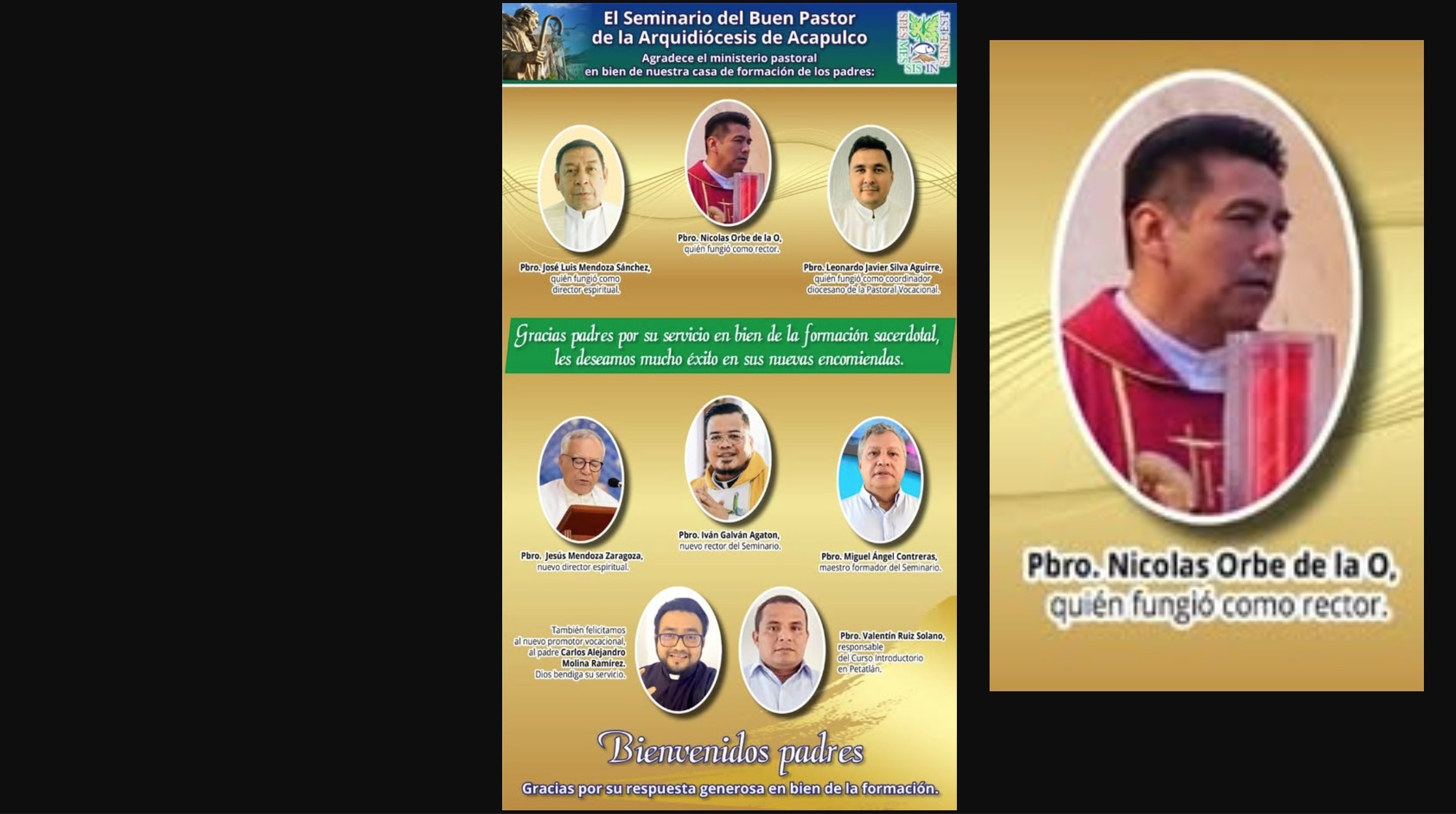
Going over the archives of the Archdiocese’s Facebook profile it is possible to find that after two years as a “vicar”, in 2024, Orbe was appointed again as pastor of the parish of Saint Louis King of France, but there is no information as to whether he has been already removed from that position. It is known that he went back to ministry, at least in the days immediately after his release on bail, but it was impossible to find a statement on the archdiocese’s official position as far as his canonical situation.
As it is usually the case in Mexico and other Latin American countries, there was not clear information about the reasons for his transfer and when local media reported the arrival of Josué Arroyo Martínez, the current pastor there, reports about Orbe were limited to say he was appointed as “vicar”.
The problem is that being appointed vicar could be a promotion, if he went to become a vicar at the archdiocesan curia, but it could be also a demotion if he went to assist the pastor of another parish.
Chasing ghosts
It should be noted that only five posts bearing Orbe’s name survive at the Facebook profile of the archdiocese. Trying to locate him or any other priest in that Catholic jurisdiction is like trying to chase ghosts, making it hard not only for other potential victims to track Orbe’s career and record but, overall, making it almost impossible to figure out how the Catholic Church actually tries to address the roots of the clergy sexual abuse crisis.
Unlike German, French, U.S. or Canadian dioceses, where priestly appointments, diocesan directories, safeguarding offices, and historical records are readily available online, anyone attempting to reconstruct Orbe's trajectory in Acapulco must rely on scattered Facebook posts and fragmentary local reports.
Although not a revelation, as this series has been following this issue over several years now, on the archdiocese’s Facebook profile, it was impossible to find any post about a commission to prevent clergy sexual abuse, as it was ordered by Pope Francis back in 2019. Acapulco is not alone in dismissing the Pope’s instruction to set such commissions, and at the Mexican Conference of Bishops’ website (content in Spanish) there is no entry related to a commission to prevent abuse at the Catholic see in Acapulco.
It is clear in that respect that prevention, even as loosely defined by the Vatican’s Tutela Minorum, has been hardly a priority of Leopoldo González who, at 75, should have sent already his letter of resignation to his current position.
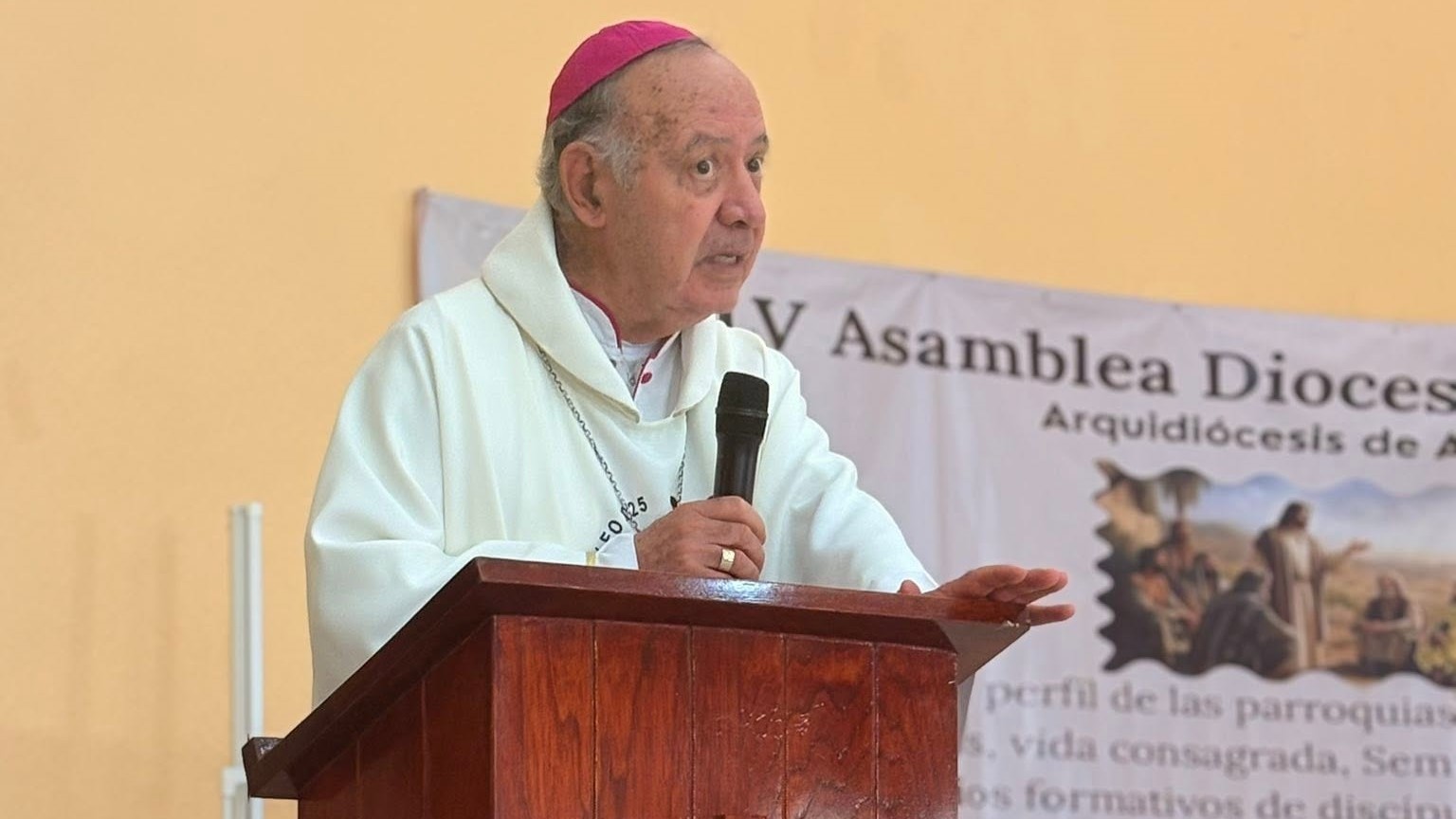
To make matters worse, the archdiocese of Acapulco lost their website’s URL, located from 2006 up until 2016 at arquidiocesisdeacapulco.org. There are only a handful of snapshots from that website at the Internet Archive, but given the use of Flash and Java in their original setup it is almost impossible to access any actual content in what is left of that website at the Internet Archive.
Like many Latin American Catholic dioceses, Mexican bishops claim websites are too expensive to be kept, and even if they deploy resources to other projects, the unwritten law for many dioceses in the region is to avoid setting up fully functional websites similar to those in the English- or French-speaking worlds as a way to avoid even the most basic type of accountability, as it would be possible to figure out in cases such as Orbe’s at least what was his professional trajectory, as to try to figure out if there were victims in other parishes were he worked before.

Acapulco played a key role in at least one case of clergy sexual abuse in Izcalli, an exurb in the outskirts of Mexico City where a former seminarian of Acapulco was reaccepted and eventually became deacon and priest.
The path Morseo Miramón took—leaving Acapulco unable to be ordained there, only to find refuge in Izcalli—was a story told only in Spanish in the entry linked above, available here with a Google automatic translation to English. A summary of his case was part of the story linked after this paragraph presenting seven archetypical cases of clergy sexual predators.

English Edition
Seven stories of clergy sexual abuse
Already then, this series emphasized the lack of a minimum of transparency and accountability from Mexican and Latin American dioceses. The lack of information is a defining feature in Orbe’s case, as it is unknown why he left the Saint Michael’s parish in Coyuca de Benítez. Was archbishop Leopoldo González aware of any issue when he removed Orbe as pastor there?
The issue is not academic. If he was aware of Orbe’s behavior already then, it would be necessary to have a full record of Orbe’s previous deployments as seminarian, deacon and priest to try to understand what happened and to know if he attacked others in their previous assignments.
After a few days in preventative jail, Orbe was able to post bail, opening the door to one of the most bitter aspects of the debates over the Mexican justice system’s performance: who should have access to that mechanism that, in Mexican penal law follows a rather tortuous set of criteria.
Despite the many suggestions and rulings of the Inter American Commission and Court of Human Rights, criticizing how the Mexican system is designed, nowadays it is almost impossible for the average citizen, but remarkably fluid for those backed by institutional power or expensive lawyers to post bail.
To make matters worse, Mexican jails have been historically overcrowded and are the frequent sites of mutinies and protests, more so as it is relatively “normal” for the Mexican hyperformalist court system to incarcerate accused individuals for many years with no hope of ever having a chance to actually face a trial.
German reports
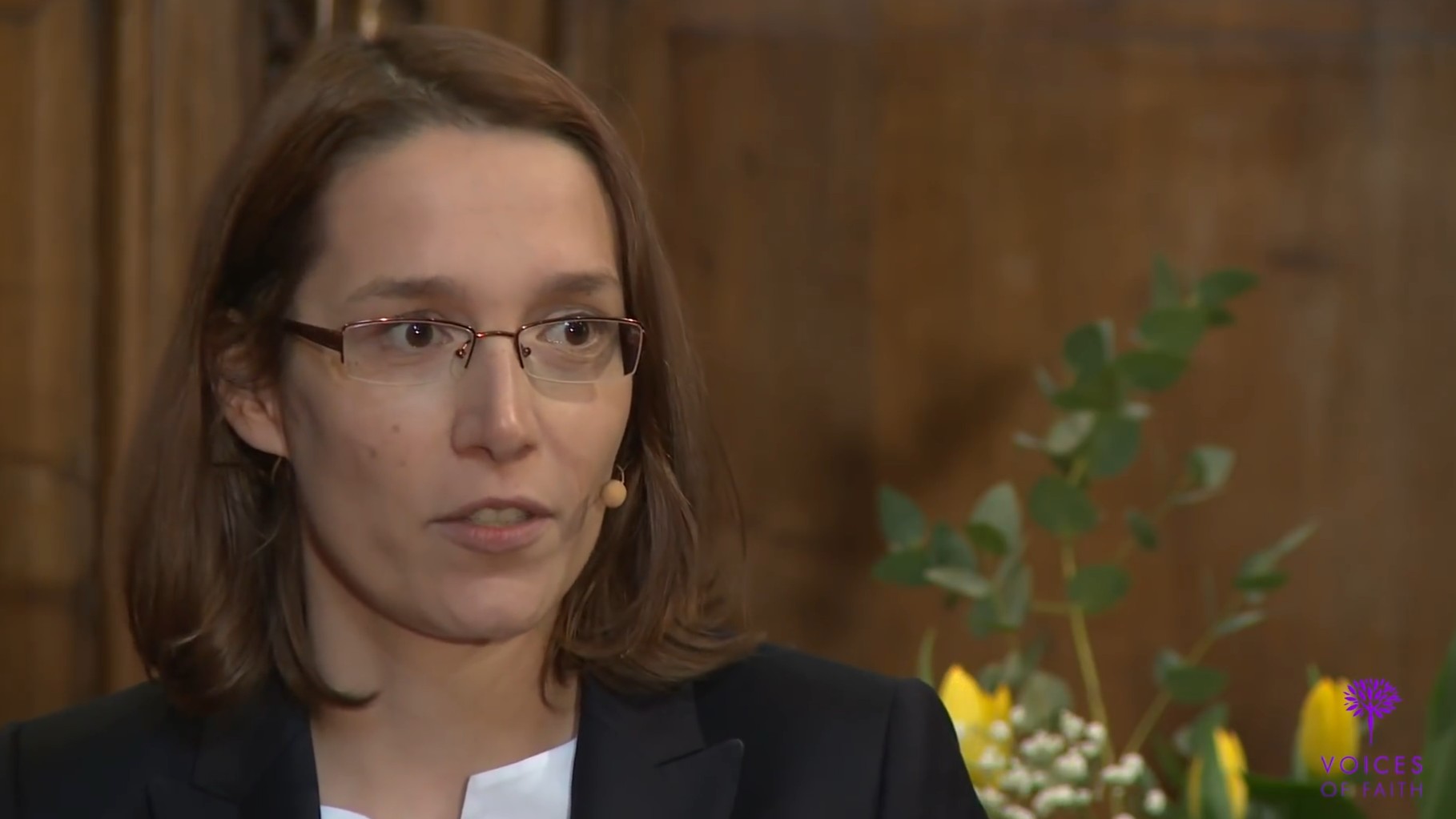
It would be impossible to dive deep into the recent independent historical reports out of the diocese of Essen and the archdiocese of Paderborn; it suffices to say that they systematically expose how senior hierarchy functioned under what theologians as Doris Reisinger-Wagner have rightly identified as the “Ratzinger system.”
Nur die Wahrheit rettet (Only the truth saves), a book written by Doris Reisinger-Wagner and Christoph Röhl systematically dismantles Joseph Ratzinger’s legacy, defining the Ratzinger System as a deliberate ideological framework that worsened the global Catholic clergy sexual abuse crisis.
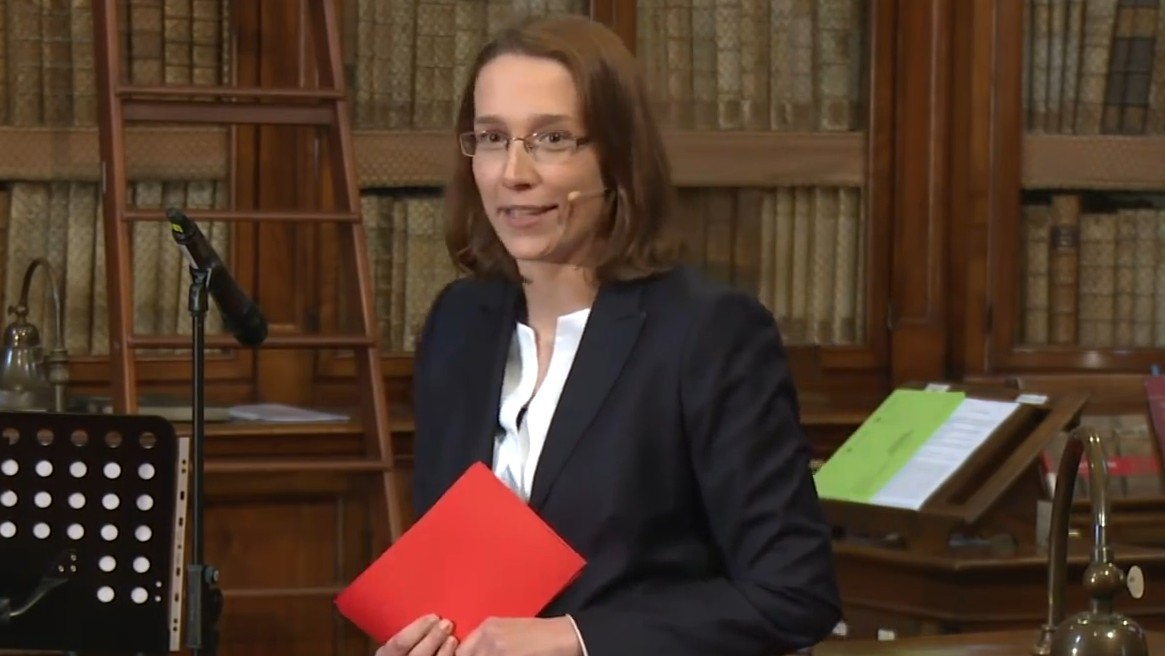
According to Reisinger, the core mechanism of this system relies on three interconnected elements: the sacralization of the priest; the absolute obliteration of the “internal forum,” the very conscience of the faithful, and the sacralization of canon law.
Ratzinger-Benedict XVI saw the priest not only as professional or a minister, but as a human fundamentally transformed in his very being, the so-called ontological change, turning clergy untouchable even for their superiors within the Church itself. Under this logic, an attack on a priest’s reputation is viewed ideologically as a direct, sacrilegious attack on Christ and the Church itself.
Similarly, Reisinger shows, based on her own experience and those of many other survivors of clergy sexual abuse, how the Catholic Church under Benedict XVI weaponized spiritual abuse as a precursor and shield for physical abuse.
By allowing the proliferation of religious “orders” and movements such as Das Werk, where Reisinger-Wagner was a member and was attacked by a priest, placing a massive premium on absolute interior obedience, it is easy to find victims whose “internal forum” (their conscience) is unable to tell the difference between spiritual direction and confession and abuse.
A more detailed discussion of Reisinger-Wagner’s take and how she builds the notion of the Ratzinger System is available in the section titled “Germany: The tip of the iceberg” in the story linked after this paragraph.

Ratzinger-Benedict XVI did his best to endorse “orders” and movements whose superiors used their members’ spiritual devotion and vow of obedience to facilitate the cover up of abuse, sexual or otherwise, under the guise of “sacred humility/sacred obedience,” while rendering secular reporting a betrayal of God and treason towards the Church, as a reflection of an approach that prioritizes the reputation of the Church over the actual healing of the survivors.
What the reports emerging from Essen, Paderborn and other German dioceses prove is, as Reisinger showed, how Ratzinger was not a “pioneer” of prevention. She argues that this centralization was “never aimed at protecting victims”.
He was mostly concerned with taking away volatile, scandalous, cases away from local civil judiciaries and standard, decentralized canon law procedures. By strictly reserving these crimes to Rome under papal secrecy, Ratzinger effectively created a legal black hole. It gave the Holy See absolute control over information management, prioritizing notions of canonical “healing” far removed from actual justice and mostly concerned with the specifics of the labyrinth-like administrative discipline of predatory priests while systematically preventing transparency.
Recycling predators
As far as Franz Hengsbach’s role, the independent Paderborn University study explicitly documents a pervasive “spiral of cover-up” spanning decades. When a priest showed “remorse” to a superior, it was treated as a sign of compliance and future obedience opening the door to the recycling of predatory priests into parish life, hospitals, or nursing homes, often despite secular criminal convictions.
When that was not possible in Germany, the other two European nations with large German-speaking populations (Austria and Switzerland) were a choice, and if the predatory priest was somehow fluent in Spanish, Portuguese or any other language useful in the Global South, there was always a chance to move him over to foreign dioceses, under the guise of the German development programs abroad.

English Edition
Argentina, Germany, or France: nobody knows about abuse
The section titled “German predator priests” in the story linked before this paragraph goes over one of such cases where the German bishops were willing to send predator clergy to Latin America in ways almost copied to the dot to what emerges these days of the large-scale abuse of First Nations minors in Bolivia at the hands of Spaniard Jesuits.

As Ratzinger, Hengsbach bet heavily on prioritizing the Church’s reputation over the victims’ health. And that attitude was still policy under current Essen bishop Franz-Josef Overbeck, who did his best to protect Hengsbach’s legacy when allegations first surfaced internally in 2011, still under Benedict XVI’s papacy.
Overbeck himself, as other current German bishops, has accepted how he prioritized the reputation of a church dignitary over the safety and care of victims, causing systematic failure.
As it has been the case in the United States with the John Jay Report and later in France with the Sauvé Report, the data compiled in Germany stands only as “snapshots” or what German academics call the “bright” as in known field of abuse.
In cases such as the archdiocese of Paderborn, there is a total of 210 accused clerics and 489 victims identified. As massive as those numbers are, the emerging data from the German dioceses emphasize that there is an even larger, almost impossible to quantify “dark field” or “dark figure” of suppressed cases that remain hidden due to decades of active administrative concealment by the Catholic Church and the unwillingness of German politicians and public officials to pick up a fight with an entity perceived as an ally of the old battles of the Cold War.
It should not come as a surprise that a major consequence of the revelations emerging from Hengsbach’s and other German bishops’ behavior coincides with a deep collapse of public and institutional trust in the Catholic Church and those perceived in German society as their allies.
This collapse is even worse when one takes into consideration the devastating effects of recent decisions from Rome as the one to forbid the participation of lay persons as preachers in Catholic religious services, or the frequent attacks the German Synodale Weg receives from the most radical corners of the U.S. Catholic far-right.
The full report detailing how the diocese of Essen covered up abuse is available in German, offering a comprehensive breakdown of the institutional failures.
* * *
A summary of this piece is available as audio after this paragraph.
Note on production: The text of this summary was written and edited solely by the author. The delivery of the audio summary was achieved using a high-quality, text-to-speech engine Microsoft Word for Web. The AI was used for voice generation only, not content creation.