
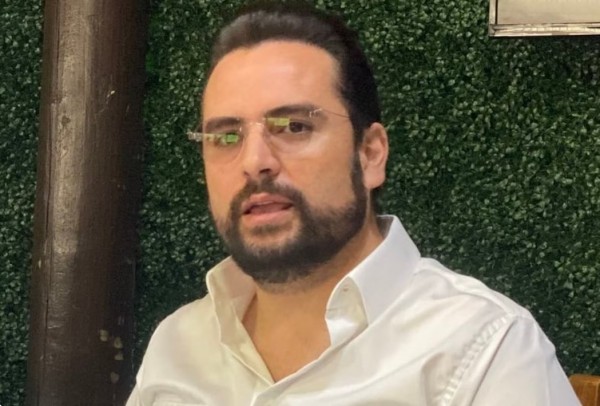
The action also places Governor Alfonso Durazo Montaño’s business and political ties in Sonora under increased scrutiny.
By Los Ángeles Press
The U.S. government has revoked the visa of Alfonso Durazo Chávez, son of Sonora Governor Alfonso Durazo Montaño, following an Immigration and Customs Enforcement (ICE) investigation into fuel smuggling and money-laundering operations.
According to information obtained by El Congresista, Durazo Chávez is listed as a partner in a network of companies tied to illicit activities, alongside former navy officer Fernando Farías Laguna, a fugitive accused of leading a fuel-theft and trafficking scheme known in Mexico as huachicol fiscal.
The visa revocation is part of a broader Department of Homeland Security (DHS) initiative aimed at denying entry to individuals under investigation for financial crimes or links to organized crime. Federal sources confirmed the measure was executed in October 2025, following intelligence sharing between U.S. and Mexican agencies.
Investigation records show that Durazo Chávez and Farías Laguna jointly held stakes in companies registered in Sonora and Baja California, allegedly used to simulate fuel-import operations and move capital across the border.
So far, neither the governor nor his son has made a public statement, but the decision has reverberated through Sonora’s political circles, placing the Durazo family’s business dealings under heightened scrutiny in the border region.
Pattern of Sanctions Against Mexican Politicians and Business Figures
The revocation of visas for Mexican public figures by the U.S. government has intensified in recent months as part of a broader policy to tighten border controls and combat illicit financial networks.
In September, the U.S. Department of the Treasury sanctioned Jesús González Lomelí, a businessman linked to the Sinaloa Cartel, along with former Rosarito mayor Hilda Araceli Brown, for the same criminal associations.
In Baja California, U.S. authorities revoked the visas of Governor Marina del Pilar Ávila Olmeda and her husband, Carlos Torres Torres, as well as the husband of Mexicali Mayor Norma Bustamante—all identified as persons of interest in ongoing U.S. investigations involving financial misconduct and political protection networks.
Another high-profile case involved Eduardo Cuauhtémoc Margolis Sobol, an executive in the private security and armored-vehicle industry, whose visa was revoked for financial irregularities and suspected money laundering. Margolis is closely associated with former Public Security Secretary Genaro García Luna, who is currently facing drug trafficking charges in the United States. His business partner, Eduardo Mizrahi, another entrepreneur with federal government contracts in Mexico, was also subjected to the same travel restrictions.
These actions reflect a growing trend in Washington to impose migration and financial sanctions on Mexican politicians and business leaders, particularly in cases where political power, private wealth, and organized crime intersect.
The review of financial and corporate backgrounds has now become part of the new bilateral security framework between Mexico and the United States, aimed at curbing illicit capital flows and preventing criminal infiltration of public institutions.