Rodolfo Soriano-Núñez Lunes, 26 de Enero del 2026
Recently, the Huntington Library made available online a set of files from trials at the Inquisition in Mexico City.
The Mexican Inquisition papers at the Huntington Library papers confirm sexual abuse has been a protracted crisis for the Catholic Church for at least 400 years.
By Rodolfo Soriano-Núñez
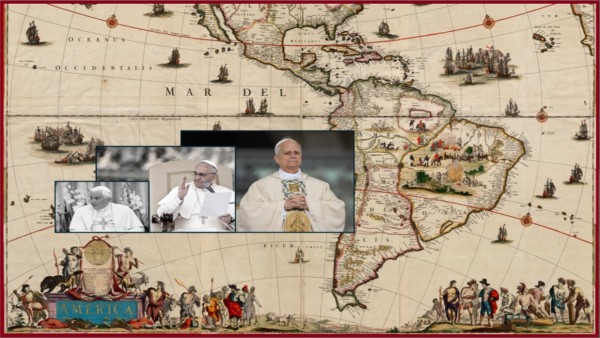
One of Benedict XVI’s favorite “tricks” when confronted with the severity of the clergy sexual abuse crisis was to blame lesbian and gay persons for the devastation he knew was happening in the Catholic Church.
Whether in Latin America, when dealing with Marcial Maciel and Fernando Karadima or when doing the same in any given European country shook by the effects of the crisis, his response, some kind of template borrowing from his younger self, was to blame modernity for sexual abuse.
Even when sexual abuse was not the issue, he was more than willing to use modernity as launch moral panics, as it happened when Cardinal Franc Rodé, at the time head of the then Congregation for Institutes of Consecrated Life and Societies of Apostolic Life (content in Italian), launched in 2009 an apostolic visitation on the Leadership Conference of Women Religious, an entity where most of the female religious orders active in the United States, around 80 percent of all U.S. nuns, participate.
That intervention was “enhanced,” later, with one by the then Congregation for the Doctrine of the Faith, led, at the time by William J. Levada, the former archbishop of San Francisco (1995-2005).
Some of the paperwork of the visitation is still available at the website of the United States Conference of Catholic Bishops.
The fact that both Levada and, much more so, Rodé were willing to turn a blind eye to the documented abuse within religious orders such as the Legion of Christ, while simultaneously aggressively targeting the LCWR, reveals the real concerns of the Ratzinger Papacy.
Nun-hunt
Their willingness to ignore the reality of abuse in male-led institutions, while launching an allegedly doctrinal “nun-hunt” in the U.S., underscores the selective nature of their “explanation” of abuse and their conflated understanding of modernity and more so of sexuality.
Ultimately, it would be Pope Francis who, in 2014 (content in Italian), put an anticlimactic end to the probes on the U.S. nuns. They turned the tables on the Vatican’s probes as they launched a successful campaign, Nuns on the Bus, which now is a formal ministry touring the United States to explain what they do and how they do it. An assessment of the process from the targeted nuns is available here.
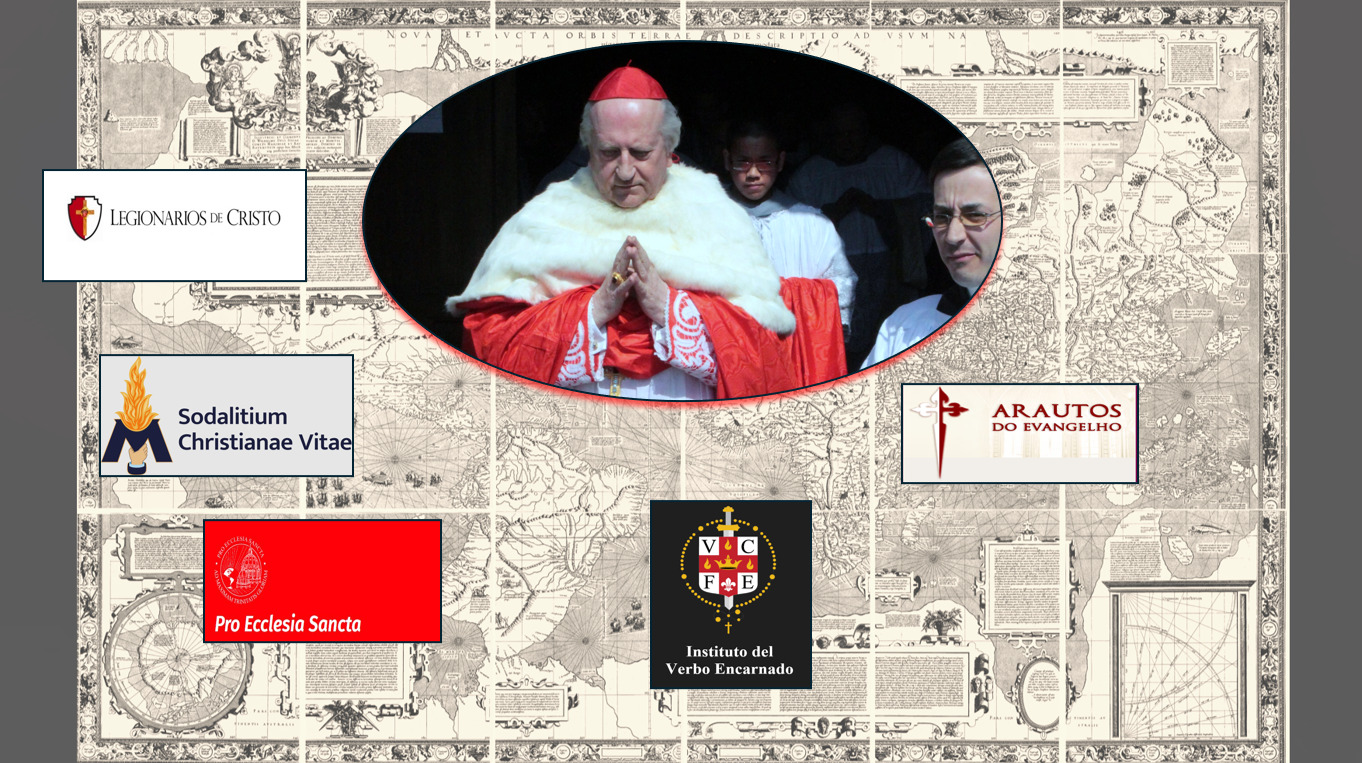
A previous installment of this series went deep into Rodé’s role in the management of the clergy sexual abuse crisis, especially when considering the cases of the Mexican Legion of Christ-Regnum Christi, and the Peruvian Sodalitium of Christian Life. As stated in that piece, Rodé praised Maciel after Rome admitted he had abused his family and members of the order he founded.
English Edition
Cardinal Rodé, the sexual abuse missing link
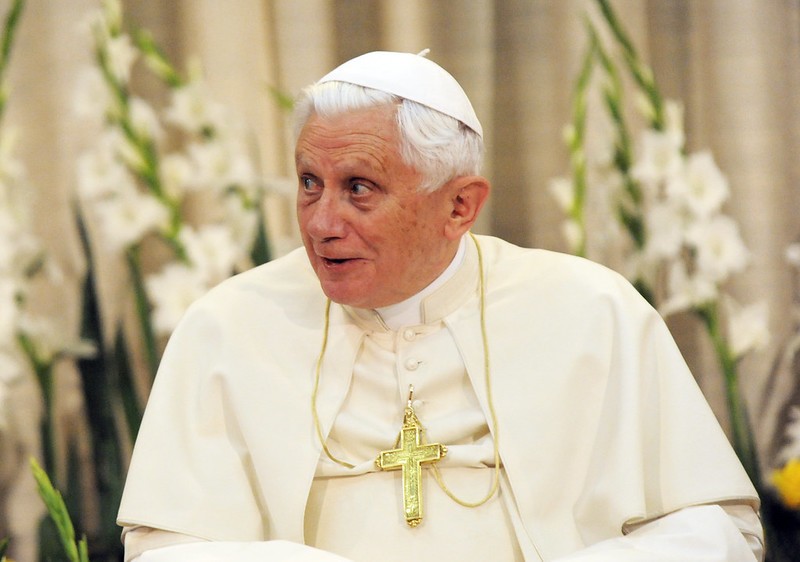
If Benedict XVI’s “nun-hunt” is not enough evidence, a more recent example of his take on how to solve emerged in 2019. Since he was already emeritus, his take at the time on the issue is not in the Vatican’s website but over Klerusblatt, a German-language, paper-based journal.
Soon after, EWTN published an English-language translation of what, according to Ratzinger was an indirect “contribution” to the Vatican Summit convoked by Pope Francis from 21–24 February 2019, on the theme of The Protection of Minors in the Church.
In the very first paragraph of his piece, Benedict XVI blamed the sexual education offered by the governments of the then Federal Republic of Germany and Austria:
The matter begins with the state-prescribed and supported introduction of children and youths into the nature of sexuality. In Germany, the then-Minister of Health, Ms. (Käte) Strobel, had a film made in which everything that had previously not been allowed to be shown publicly, including sexual intercourse, was now shown for the purpose of education. What at first was only intended for the sexual education of young people consequently was widely accepted as a feasible option.
Similar effects were achieved by the "Sexkoffer" published by the Austrian government [A controversial 'suitcase' of sex education materials used in Austrian schools in the late 1980s].
Modernity as culprit
In a rather extra-logic succession of arguments, Professor Ratzinger connected those changes with others:
- Sexual and pornographic movies then became a common occurrence, to the point that they were screened at newsreel theaters [Bahnhofskinos]. I still remember seeing, as I was walking through the city of Regensburg one day, crowds of people lining up in front of a large cinema, something we had previously only seen in times of war, when some special allocation was to be hoped for.
The rest of Benedict XVI’s piece follows a similar pattern: rendering the clergy sexual abuse crisis as it boomed in the 1980s as the byproduct of the evolution of U.S. Law and modernity, and above all else as something the Catholic Church had to learn to deal with on the fly, something with no precedent in the long history of the institution, something taking him and John Paul II by surprise:
“The question of pedophilia, as I recall, did not become acute until the second half of the 1980s. In the meantime, it had already become a public issue in the U.S., such that the bishops in Rome sought help, since canon law, as it is written in the new (1983) Code, did not seem sufficient for taking the necessary measures.
“Rome and the Roman canonists at first had difficulty with these concerns; in their opinion the temporary suspension from priestly office had to be sufficient to bring about purification and clarification. This could not be accepted by the American bishops, because the priests thus remained in the service of the bishop and thereby could be taken to be [still] directly associated with him. Only slowly, a renewal and deepening of the deliberately loosely constructed criminal law of the new Code began to take shape.”
It was Benedict XVI retelling what him had already said during his tenure as sitting Pope, as one of many possible examples, in his 2010 letter to the faithful of Ireland.
There one can see a summary of the argument in section no. 4 where he blames modernity, secularization, the abandonment of traditions, and the timid attempt of his own church in the 1960s to be more faithful to the Gospel it claims as its most valuable treasure as the culprits of the crisis.
The sole mistake acknowledged there by Benedict XVI was “a well-intentioned but misguided tendency to avoid penal approaches to canonically irregular situations. It is in this overall context that we must try to understand the disturbing problem of child sexual abuse, which has contributed in no small measure to the weakening of faith and the loss of respect for the Church and her teachings.”
Non-explanatory explanations
Main problem with Pope Ratzinger’s “explanations” from 2010 or 2019 is that none of them actually explained what had been happening. For him, the issue emerged in the late 1970s or early 1980s as a byproduct of the Western moral exhaustion. Granted, he was not a professional historian but given the task he dealt with for almost four decades, a modicum of historical knowledge would have been helpful for him and the institution.
If anything, his 2019 piece reads, six years later, as an attempt at cleansing his and his predecessors’ records on the issue, while sticking to the kind of moral panics that religious institutions, Christian and otherwise, use when trying to blame other for their own mistakes. This series has delved deep into Benedict XVI’s take on the clergy sexual abuse crisis so, there is no need to repeat here what has been said.
English Edition
Benedict XVI and sexual abuse: real zero-tolerance?
What remains to be seen is that will Pope Leo XIV do to address the clergy sexual abuse crisis in what could be a record-breaking Papacy, as Robert Prevost was born in 1955, making him a relatively young 70-year-old Pope. Will he decry modernity as the culprit for the crisis, as John Paul II and Benedict XVI did? Will he build upon Francis rather timid attempt at reform?
The issue is also relevant as back in December 2025, the Huntington Library in San Marino, California, made publicly available, online, documents from the Inquisition in Mexico City.
The papers have been in California at least since the 1940s when the Huntington Library there acquired them from George Robert Graham Conway, a former executive of a U.S. mining firm in Mexico and other individuals. As it is still the case with similar documents in Mexico, Spain, and Peru, the papers as such, are not easily available to the public.
By 1964, Seymour B. Liebman published a piece titled “The Abecedario and a Check-List of Mexican Inquisition Documents at the Henry E. Huntington Library.” Although Liebman’s interest was mostly on the misadventures of the Jewish diaspora in Latin America, his work on the Huntington papers was a major advance to understand other aspects of the Inquisition’s role in Colonial Latin American societies.
What the Huntington papers tell
The 1980 Guide to the Hispanic American Historical Review, available here at the Internet Archive, a periodical summarizing existing volumes dispersed all over North and Latin American libraries describes Liebman’s article (pp. 6-7) as “a general description of the nature of and the listing of the main content of 46 volumes of Mexican Inquisition documents purchased in 1907 and bequeathed to the Huntington Library at San Marino, California, is given here. The nature of the 1,744 trials is presented by numbers in each category of offense, punishments are catalogued, breaches of jurisdiction are noted, and the problem of names and aliases is discussed.”
Ever since, Liebman’s original work at the Huntington Library has been a major reference for specialists on Mexican and Latin America Colonial studies such as Solange Alberro, among others.
It would be in 2013 when a digitization project begins, but the results remained for the most part unavailable. Twelve years later, in February 2025, the library encoded the metadata, making 93 trials searchable for the first time.
Finally, in December 2025 a fraction of the Mexican Inquisition papers at the Huntington Library became fully available as either *.jpg or *.pdf files when the Online Archive of California, tracked the papers using ArchiveSpace, a digital tool.
It was early this month when specialized social media groups spread the news about the digital availability of the Mexican Inquisition papers at the Huntington Library, as Jorge Cañizares-Esguerra’s post over his Facebook profile proves (available here).
Unlike what still happens in Seville, Spain; Mexico City, Mexico; and Lima, Peru, the three major sees of the old Spanish Inquisition, the documents at the Huntington Library are available online and, if one is able to read handwritten Spanish records from the 17th, 18th, and 19th centuries, it is possible to go, page by page over what could be seen as a non-probabilistic sample of the kind of cases the Inquisition in Mexico City was dealing with at the time.
This sort of “non-probabilistic sample” is more relevant because it confirms what more traditional research performed by scholars in Seville, Mexico City, and Lima has documented in the archives over the last century or more: once issues such as religious practice or lineage—used to determine whether a person was a descendant of Jewish or Muslim people—are set aside, the Inquisition archives acknowledge the relatively frequent practice of solicitation.
And it is a sort of “non-probabilistic sample” because it is impossible to know what was lost in the plundering that occurred in Mexico following the 19th-century Church-State conflict, or, perhaps on a smaller scale, what happened in Lima and Seville, in addition to the loss of Inquisition activity records in other dioceses of the former Spanish Empire.
It suffices to note, for example, that in Lima there are gaps—as will be seen later in tables 3 and 4—covering a total of just over 120 years. This is without forgetting the data from the Inquisition in the Portuguese Empire, similar but not identical to the Spanish one, as well as the other forms of inquisition tribunals that existed in Europe as far back as the Middle Ages.
In any case, even before presenting here the data, it is possible to assert that there is no way to support Benedict XVI’s 2019 claims and that it would be a major mistake for Leo XIV to go back to that position.
The Huntington Mexican Inquisition digital papers prove that sexual abuse is not a new issue associated to modernity and that the Catholic Church has been aware of how frequent such conduct has been at least since the 17th century, when what is now the Dicastery for the Doctrine of the Faith emerged in 1622 as the entity responsible to address what today is termed clergy sexual abuse.
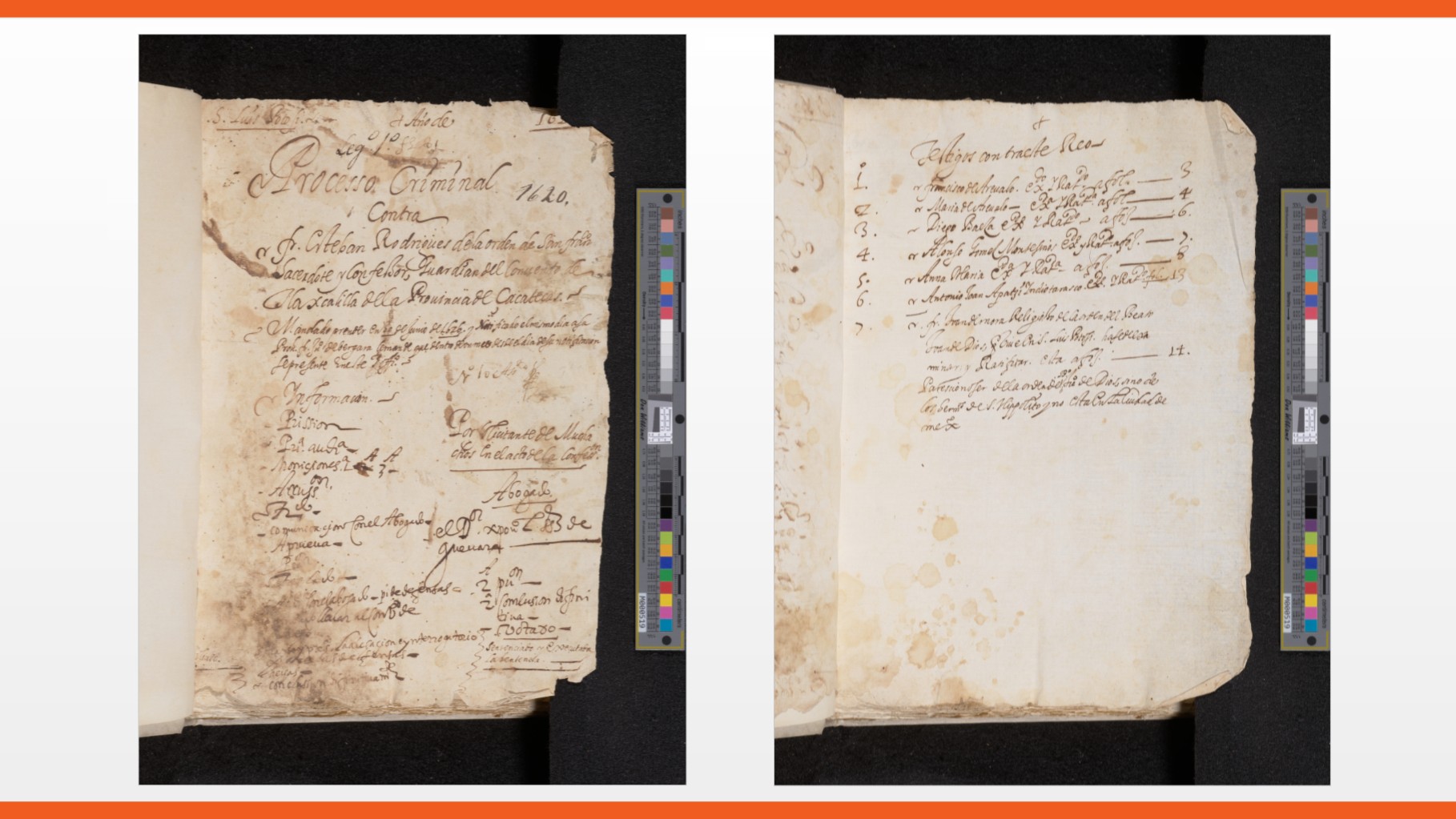
An irrefutable example of this is the trial initiated in 1620, which lasted nearly 20 years until 1639, against the Franciscan friar Esteban Rodríguez. The first two pages of this file are presented above, as an image, and the complete record is available here. Rodríguez was accused of the solicitation of underage boys (niños), an offense that now would be classified as the sexual abuse of minors.
Blaming the victim
Furthermore, there is the problem that Inquisition archives do not contain the modern terminology of “child abuse” because sexual misconduct was historically codified through the categories of solicitation, sodomy, and heresy. Heresy worked as a broad judicial catch-all category, allowing the Holy Office to process “unnatural” sexual behavior by framing moral transgressions as theological errors.
Solicitation—the act of a priest seeking a sexual relationship within the context of confession, the sacrament of penance—was identified as the primary institutional threat because it directly undermined the enforcement of clerical celibacy following the Council of Trent, a meeting of Cardinals and bishops spanning from 1545 through 1563.
Among many other changes, Trent redefined the way the Mass and other sacraments had to be celebrated, forcing down Latin as the official language of the Church for any liturgical celebrations, but also enhanced the penalties against priests unwilling to be celibate, and it also recodified the way confession had to happen to be valid.
To combat solicitation and, more broadly, the sexual indiscipline of their clerics, the hierarchy shifted the policing burden from the institution to the laity. Mandates set originally in Spain in 1559 and expanded to the universal Church in 1622 through the papal bull Universi Dominici, the very same behind the foundation of what is now the Dicastery for the Doctrine of the Faith, required laypeople to report soliciting priests under the specific penalty of excommunication.
This design created a significant spiritual trap for the faithful: they were forced to choose between the social danger of accusing a "sacred" figure, often the most visible figure of authority in the sparsely populated Spanish empire in the Western hemisphere, and the spiritual danger of being severed from the sacraments.
The mechanism effectively used the laypersons’ faith as a frontline tool for clerical discipline, though it ultimately failed to prevent the proliferation of the practice. It actually backfired, as it usually entailed pitting one cleric against others.
It was an old-style game of “blame the victim,” since if the victim was unwilling or unable to follow the tortuous process, it was his or her fault. And, as painful as it is to go over the details of some of the trials, the papers in Seville, Mexico City, Lima, and the Huntington Library all refute the theory that laypeople were indifferent to these reporting mandates or that they did not take them seriously.
Records show the faithful fulfilled their obligations despite immense logistical, financial, and social costs. Denouncing a priest required traveling to urban centers, sacrificing labor time, and facing local backlash or intimidation.
The laity participated because they maintained a firm belief in Church moral teachings and expected the hierarchy to uphold them. Even before the 1622 universal mandate, the faithful in various points of the Spanish Empire fulfilled the obligation to denounce solicitors, demonstrating a profound adherence to the moral standards the Catholic Church preached, unlike the hierarchy.
But that is why Ratzinger’s claims about him and by implication the then Congregation for the Doctrine of the Faith having “difficulties” to understand the clergy sexual abuse crisis emerging in the 1980s are so hard to accept.
Ratzinger’s 2019 account suggests some kind of collective amnesia that is hard to justify when the very Dicastery he led has held the summaries of the cases (the so-called Relaciones de Causa) of the trials in its archives in the Vatican for centuries or, sadly, an attempt to induce that kind of collective amnesia upon the faithful as to facilitate the use of moral panics as “explanations.”
Favorite tricks
This is more evident when one goes over some of the responses back in Colonial times to the issue. Already by then the hierarchy of the Catholic Church had figured out some of its favorite tricks. In the cases addressed by the Inquisition one finds accused priests moved from one location in the Spanish Empire to another, the very seed of the “geographic solution” that has been documented in several installments of this series.

The goal was to avoid public scandal over the trials. In Mexico City, going the Holy Office implemented a policy of “common sense and discretion,” modulating judicial outcomes based on social class, age, and culture, something that also happened in Mexico or Chile in the 20th century when the first complaints about Marcial Maciel or Fernando Karadima emerged. There was also a certain notion of “selective benevolence,” that almost always played in in favor of the priestly caste.
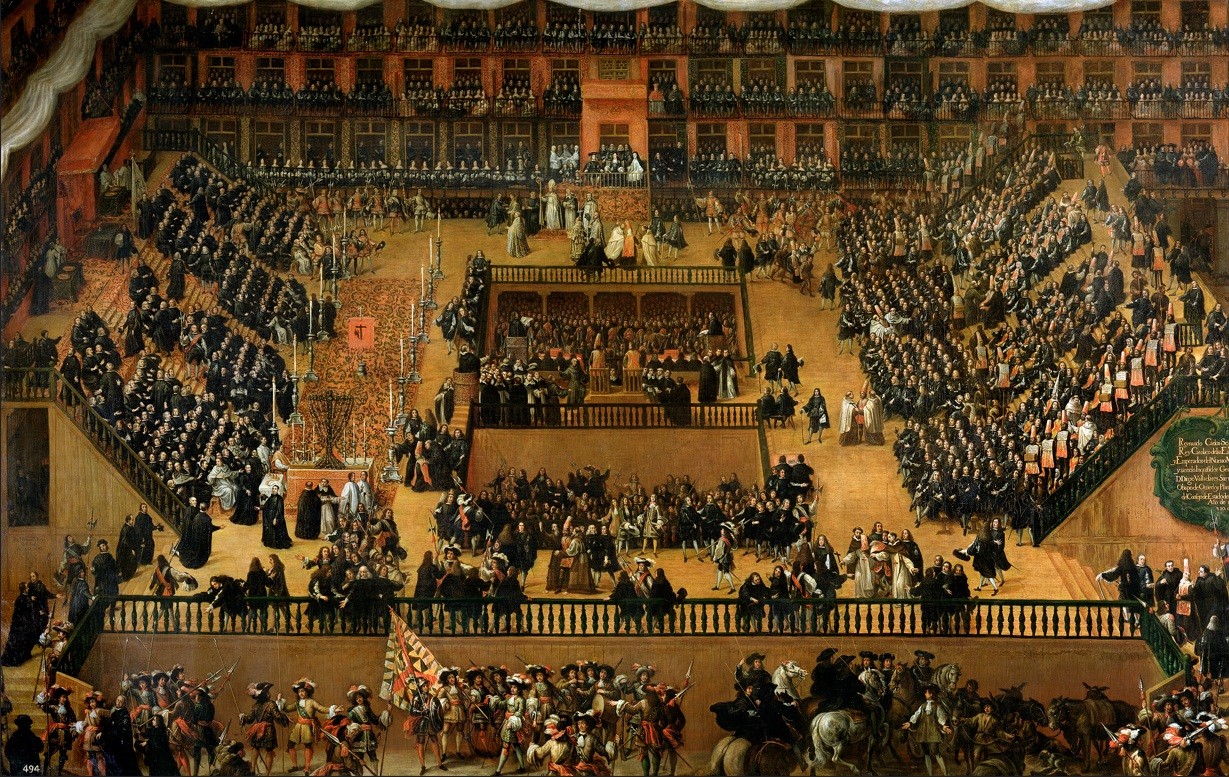
This “discretion” protected the sacred status of the priestly caste by ensuring proceedings remained secret, so the “profane” laity did not witness the extent of clerical failings. In that regard, if the trials and more so the punishment for witchcraft or for “Jewish-like practices” (Judaizantes) were a public spectacle at major public squares all over the Spanish and Portuguese empires, the rulings and discipline regarding solicitation were almost always discreet.
By emphasizing the basic distinction between sacred and profane even while putting on trial its own priests, the Catholic Church, an institution closely linked to crown and empire, kept to itself the details of clergy crimes, as to protect its inventory of trust. This divide is key to understanding how the hierarchy could acknowledge the crime internally while shielding the perpetrator from the public.
Some of the available data
A localized study of the district of Tasco (current Taxco, Guerrero, Mexico) reveals the intensity of solicitation. Between 1580 and 1630, solicitation cases represented 12.1 percent of all processes handled by the Holy Office in that jurisdiction. This was the second most frequent offense after general heresy, though the author notes that many sexual offenses were codified as heresies to preserve jurisdiction.
Victims in Taxco were primarily young, single, or recently married women. Their testimonies highlight a deep sense of "non-conformity" and spiritual disappointment. These reports were driven by a firm adherence to Catholic moral standards and a feeling of betrayal by the confessors tasked with their guidance.
Unlike the elites in New Spain elites, who might have been more cynical, these women firmly believed in the moral teachings of the Church and expected consequences for predatory behavior.
Another subset of cases from the 17th and 18th centuries in Mexico City identifies 41 cases of "perfect sodomy" (male-to-male). In most of those cases a member of the clergy was the “seducer and inducer” (see Flores Melo 2000)
These clerics leveraged their investiture—their perceived divine authority—to instigate sexual acts. The behavior followed a consistent pattern: the priest utilized the sacred nature of his office to initiate the interaction and subsequently used “gifts or threats” to ensure silence.
No authority pushing sexual education in the schools in the Spanish Empire and, for sure, no theaters playing dirty flicks in Mexico City then, discrediting Benedict XVI’s critique of modernity in Germany and Austria in the mid-20th century as the engine behind the sexual abuse crisis later in that century.
While physical violence was not common, the psychological weight of the priest's authority was the tool to perpetrate, legitimize, and minimize the abuse. The files prove how the priests, pulling rank on the laypersons, attacked their flock and then tried to cover with bribery or intimidation.
Additional data from Alberro (2015) provides a comparison of the distribution of crimes across the Spanish Empire. There are notable differences between Spain (2.6 percent) and New Spain (5.1 percent) and even more with the data from specific regions of New Spain, such as Taxco (12.1 percent). What matters is that there were reports of solicitation cases and that refutes Benedict XVI’s 2019 narrative about what happened in the 1980s.
Also, it must be taken into consideration that García Mendoza is very careful when bringing the issue of how ethnicity conflated the issue of solicitation in the Taxco region of New Spain. There were more mestizas and indigenous females in contemporary Taxco being the target of Spaniard, creole, and mestizo priests.
Table 2 consolidates data from four sources about processes in Spain and New Spain. Data in column 1, only from Spain, comes from a 1977 article by Gustav Henningsen. Data from column 2, 3, and 4, comes from different sources dealing with New Spain. Column 2 comes from the Mexican Nation’s General Archive. Data for column 3 comes from Vicente Riva Palacio’s series on the Inquisition. Finally, data for column 4 was an early attempt at organizing the data from the Huntington library following Liebman. Alberro’s masterpiece offers an explanation.
Putting aside the observed variations, what matters is that the problem was already reported in the Spanish Empire in the 16th century, contradicting what Benedict XVI was saying about the novelty of the issue in the 20th and 21st centuries.
It also must be taken into consideration that the discrepancy between general statistics and local realities highlights the effectiveness of the scarlet bond, the intraclergy solidarity, in masking the scale of abuse while focusing on minor religious offenses or heresies.
Data from Lima show similar trends, as can be seen in the next two tables. A sample from 1570 through 1600, has the numbers appearing in table 3.
A second sample, from 1621 to 1700, shows similar patterns.
The data emerging from the papers at the Huntington Library is hard to distinguish from what we already knew about the crime of solicitation in the Spanish Empire.
And similar patterns emerge from more specific analyses of cases tried by the Inquisition elsewhere in the Spanish Empire. It is worth citing, as one of many possible examples relatively recent articles published about how the Inquisition dealt with what nowadays would be framed as clergy sexual abuse in what are now the territories of Argentina and Colombia.
Jacqueline Vassallo published back in 2009 (contents in Spanish) a piece about “soliciting priests” in Córdoba del Tucumán, current Córdoba, Argentina in the 18th century. At the time, the cases there were under the jurisdiction of the Tribunal in Lima, current capital of Peru. As it happens nowadays between Mexican and Argentine cases of clergy sexual abuse, what changes are the names of the perpetrators, of the victims, and the places, but the template remains the same.
More recently, Mariana Meneses Muñoz published a piece comparing the proceedings in solicitation trials (content in Spanish) in Mexico City, Lima and Cartagena de Indias, about the same kind of processes in 17th century New Grenade Viceroyalty, current Colombia.
As it happens up until today, a feature of clergy sexual abuse was the weaponization of the religious beliefs of the victims, their relatives and communities. In Mexico City, the case of Fray Simón de la Concepción illustrates rituals used as tools for predation. Accused in 1747 by Juana Antonia de Santa Teresa, he allegedly kept women in the confessional for up to four hours against their will.
He used his role as a confessor to threaten them and, most critically, used the denial of confession or absolution as a bargaining chip. This weaponization of the “power of the keys,” the keys to the Kingdom of God, turned a site of spiritual healing into a site of psychological and physical captivity.
It demonstrates that abuse was not merely sexual but a more comprehensive exploitation of the symbolic power hold by clergymen who were able then to enforce the obligation to confess once a year, trapping the conscience of the faithful.
Scarlet bond
Also present too are the seeds of what Richard Sipe called in the 20th century the “scarlet bond.” This series has dealt with that notion in different installments. Suffice to say at this point that the scarlet bond describes the institutional priority of protecting clerical prestige over victim welfare. The story linked after this paragraph offers details of what entails the scarlet bond in the section “Predators as lone wolfs.”

For Sipe, the scarlet bond is closely associated to the clergy’s obsessive concern about secrecy. He sees it as “the cornerstone of the social construct of clerical celibacy and its violation. The reverence accorded to sacramental confession is stretched beyond all reason to cover and justify known clerical sexual violations and liaisons”.
In contemporary cases such as those of Marcial Maciel in Mexico or Fernando Karadima in Chile secrecy was paramount for Maltese archbishop Charles Scicluna, when he accounted for their crimes, especially when dealing with who helped or at least allowed both Maciel and Karadima to perpetrate as many crimes as they were able to do so, but the patterns are already present in the Inquisition records in Seville, Mexico City or Lima
Historical analysis, such as that of the aforementioned Argentine scholar Jacqueline Vassallo confirms the Inquisition’s objective was never the reparation of the damage inflicted to the victim but, at least publicly, the protection of the sacrament of penance from “profanation” and since the key player in such sacrament is the priest, there was always a good excuse to protect the priests performing it, even if it was within the context of such sacrament, where many of “solicitations” happened.
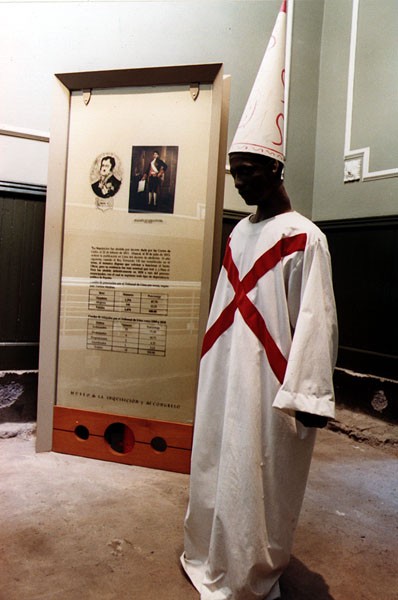
Because the crime was viewed as a spiritual profanation rather than a crime against a person, perpetrators were granted significant privileges. They waited for trial in convents rather than inquisitorial jails and were shielded from the more public autos de fe or the use of the sambenitos, habits similar to those used by monks forced upon suspects of witchcraft, “being Lutheran” or practicing the “Law of Moses.”
This preserved the image of the “sacred” Catholic priestly elite, a caste of sorts, while systemically ignoring the victims' psychological and physical damage. This disdain is a historical constant; victims do not matter to the institution, even though they were the ones fulfilling the most unpleasant aspect of internal church regulation through their denunciations.
And even worse, despite the Church original take on denunciation as a duty of the Christian faithful, nowadays those who dare to call out the abuse and excesses of the hierarchy become the target of attacks fostered by the hierarchy rendering itself as a victim of its enemies.
Sacred predators
Two South American Jesuit cases illustrate the functional reality of the scarlet bond, and the leniency afforded to "sacred" predators:
Melchor Venegas (Chile): Found guilty of soliciting eight women, his sentence of banishment was commuted by the Society of Jesus to merely praying the rosary daily for four years. He remained in ministry among vulnerable populations, reflecting a lack of concern for the risk he posed to others. This “punishment” was symbolic, sending the message that acting as he did had no real consequences, at least no canonical consequences for the clergy involved.
Pedro Miguel de Fuentes (Peru): Fuentes claimed his "intentions" were pure, rendering physical acts non-sinful for members of his order, whereas it would be a sin in other religious orders with corrupted intentions. Despite forming what is described as a "cult" that mortified women in public, he received only a ten-year ban on confessing women. The damage to the souls, psyches, and bodies of the women remained entirely unacknowledged in the institutional resolution.
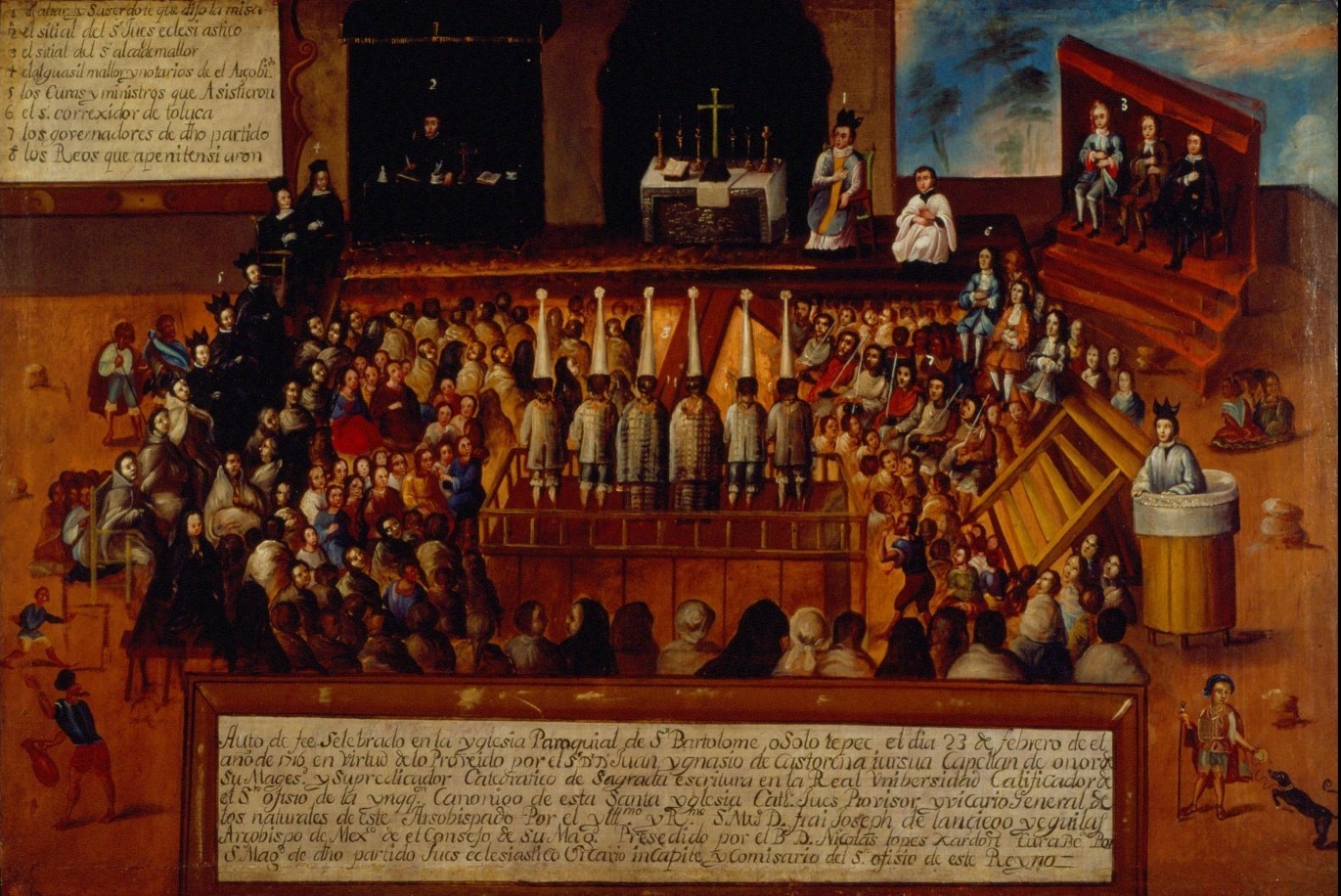
Records from the Tribunal of Lima (1581–1585) include cases such as Gabriel de Migolla in Popayán (contemporary Colombia) and Juan Angulo de Cabrera. The documents from remote districts like Chachapoyas and Loja (currently in Ecuador) confirm that the reporting mandate was fulfilled by the faithful even in geographically isolated areas.
A notable outlier is Antonio Ordóñez de Villaquirán, a canon in Quito who was tortured and executed. However, he was suspected of being married in Spain and living in public concubinage for twenty years, suggesting the Inquisition only reached the level of execution when canonical laws regarding the status of the priesthood (such as bigamy) were violated alongside sexual solicitation. This underscores that solicitation itself typically resulted in lenient sentences designed to preserve the cleric's ability to remain active in ministry as it still happens today.
The exhaustion of trust
Strategies of secrecy, relocation, and the "sugaring over" or "makeup" of facts used for over 400 years became untenable at the end of the 20th century. Improved communication and the loss of institutional control over information made traditional strategies to silence complaints ineffective. The prioritization of ritual purity over individual protection has led to the total exhaustion of the hierarchy’s "inventory of trust."
The current crisis represents the collapse of a system built on the systemic re-victimization of the faithful to protect its own reputation. The construction of the "sacred" versus the "profane" remains the central key to the problem, relevant not only to the historical cases cited but to the ongoing crisis in Latin America and beyond.
Denying facts, covering them up, or transferring responsibility to the victims turns into a media and social nightmare for a hierarchy that has exhausted its inventory of goodwill and trust. The idea that maintaining the integrity of rituals is more important than the effect of abuse is now unsustainable.
The erosion of trust is the primary consequence of historical disdain for victims and the elevation of clerical integrity over human reality. This dynamic, characterized by denying facts or transferring responsibility to victims, ultimately turns into a social nightmare for a hierarchy that sees its inventory of goodwill exhausted.
Ultimately, the evidence emerging from the Inquisition archives—stretching from the mining districts of rural Southern Mexico to the now-digitized files of the Huntington Library—dismantles the moral panic with which Benedict XVI sought to tackle the crisis.
Regardless of how prevalent was or was not in the empires of Spain and Portugal, solicitation and the abuse of sacred power it entails were codified administrative realities from the 16th to the 18th centuries. Modernity, as much as it may discomfort Ratzinger’s disciples, cannot be blamed for the abuse. It is an excuse used from time to time to launch moral panics and distract those who are unaware of the long history of the issue.
Even less can 20th-century sexual education or the small street-side cinemas of Central Europe in the 1960s be blamed, when there is a documentary record of how the Catholic Church, with the consent of European empires, managed, concealed, and "sugared over" sexual abuse four hundred years ago.
The historical record refutes the claim that the Catholic Church was “taken by surprise” by the clergy sexual abuse crisis in the 1980s. Archival evidence from the Spanish Empire demonstrates that sexual abuse by clergy, codified as solicitation, was a persistent and well-documented problem as early as the 16th century.
These cases were not isolated; they were systematically prosecuted, discussed, and managed by Church authorities, with institutional mechanisms rewarding secrecy, relocation, and lenient punishment, as it still happens today.
Moreover, the very office responsible for doctrinal enforcement—the Dicastery for the Doctrine of the Faith, formerly the Inquisition—has maintained summaries of abuse cases for hundreds of years, further undermining any narrative of institutional ignorance. The consistency of patterns across regions and eras, despite gaps in the archival record due to plundering and loss, reveals that the crisis is not a product of modernity or cultural rupture, but rather a long-standing challenge the Catholic Church has been unable to address.
The evidence shows that denial and concealment have exhausted the Church’s inventory of trust, making transparency and accountability essential for any meaningful resolution.
Whatever new direction Pope Leo XIV is trying to set to address the clergy sexual abuse crisis needs to drop for good the moral panic-based model of attacking modernity.
* * *
A summary of this piece is available as audio after this paragraph.
Note on production: The text of this summary was written and edited solely by the author. The delivery of the audio summary was achieved using a high-quality, text-to-speech engine Microsoft Word for Web. The AI was used for voice generation only, not content creation.
References
Alberro, Solange (2015 [1988]) Inquisición y sociedad en México, 1571-1700. [Inquisition and Society in Mexico, 1571-1700] México, Fondo de Cultura Económica, e-book 540 positions.
Flores Melo, Raymundo (2000) “Casos de Sodomía ante la Inquisición de México en los siglos XVII y XVIII” [Sodomy cases before the Mexican Inquisition in the 17th and 18th centuries], p. 51 in Quezada, Noemí; Rodríguez, Martha Eugenia and Suárez Marcela (2000). Inquisición novohispana [Inquisition in New Spain]. Volume 2, Mexico, UNAM-UAM, 430 pp.).
García Mendoza, Jaime (2000) “Casos de curas solicitantes denunciados ante el Santo Oficio de Tasco (1580-1630)” [Solicitant priests reported to the Holy Office at Tasco], pp. 25-44 in Quezada, Noemí, Rodríguez, Martha Eugenia and Suárez Marcela (2000). Inquisición novohispana [Inquisition in New Spain]. Volume 2, Mexico, UNAM-UAM, 430 pp.).