Rodolfo Soriano-Núñez Martes, 27 de Enero del 2026, 00:00
The bishops' statement regarding the massacre comes after Sheinbaum has gone to great lengths to bring Pope Leo XIV to Mexico.
The massacre in Salamanca makes harder to believe Sheinbaum claims about the effectiveness of her security policies.
By Rodolfo Soriano-Núñez
Late on Sunday, the 25th, a heavily armed group opened fire on scores of residents in Salamanca, a city in the central state of Guanajuato, Mexico. The victims were attending soccer games at a local sports complex. So far, authorities report a minimum of eleven deaths and at least twelve others critically wounded.
Early on Monday, the Mexican Conference of Catholic Bishops and other organizations in Mexico condemned the attack, renewing their calls for authorities to reconsider the tenets of the current security model.
Claudia Sheinbaum’s security model has been praised by the ruling Morena party and its allies for lowering the indices of homicides and other violent crimes—but only when compared to the peak of Andrés Manuel López Obrador’s presidency.
When compared to previous administrations, such as those of Enrique Peña Nieto, Felipe Calderón Hinojosa, or even earlier periods, Sheinbaum’s numbers are far less positive than she and her Security Cabinet claim. These claims are made whenever possible, most notably during the daily morning briefings held at the National Palace, the seat of the Mexican Executive, or during her tours across the country.
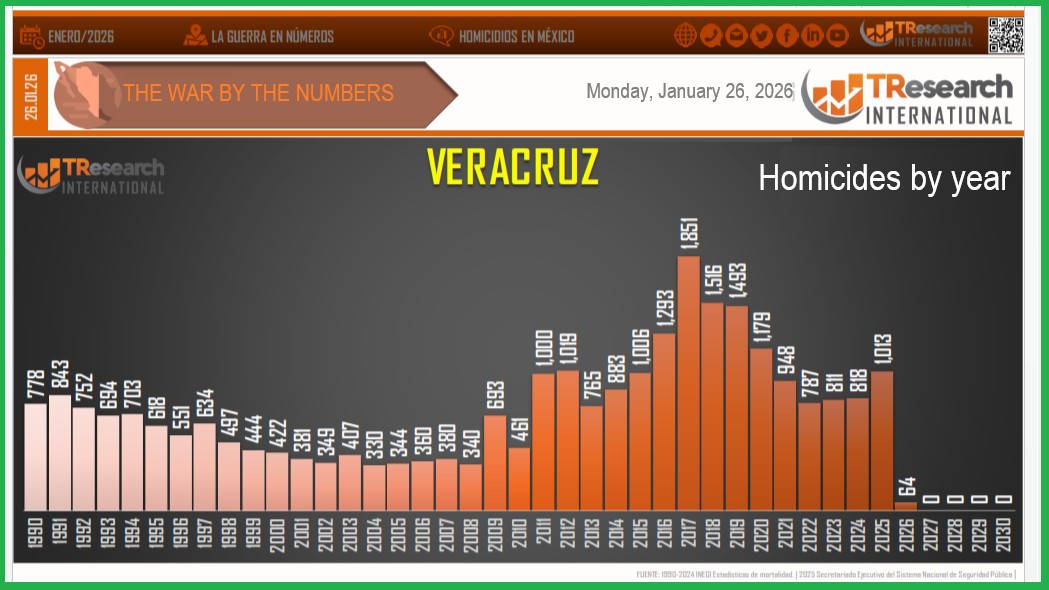
Last week, Sheinbaum’s team praised their own policies in activities held on Thursday in Puebla, the capital of the eponymous state in Eastern central Mexico, and on Friday in the Port of Veracruz, the largest metro in the eponymous state in the coast of the Gulf of Mexico. However, Sheinbaum’s numbers for Veracruz were hard to accept, as Veracruz has been suffering a growth in the number of homicides, as the graph after this paragraph shows.
Regarding the massacre in Salamanca, Sheinbaum avoided any details during the morning press conference in Mexico City and limited to acknowledge that it was up to the state attorney’s office to lead the probe at this time.
Oddly enough she devoted more time to offering an account of her exchanges with Lee Jae-myung, the President of South Korea, regarding additional dates for concert of the K-Pop group BTS than to offering any detail of what happened in Salamanca.
That city is home to a major oil refinery and a central node in the country’s struggle against large-scale fuel theft, is heavily dependent on the jobs generated by the Mexican oil monopoly Pemex and deeply scared by the violence of the last ten years associated to that kind of theft.
Despite years of military-like operations to guard the refinery and the ducts connecting it, the massacre happened just a few miles from the valves. It exposes the fact that the Mexican Army’s and National Guard’s “presence” is hardly effective as to prevent such massacres.
Express extraditions and international pressure
The Mexican security model is currently the target of criticism as lately, the Mexican government has sent without extradition trials in Mexico, so-called “violence generators.”
Such decisions have sparked a debate about the soundness of fast-tracking that kind of moves as a way to avoid military actions from Donald Trump’s government. Trump has repeatedly praised Sheinbaum as a “good person,” but he also claims she is afraid of acting against the Mexican cartels.
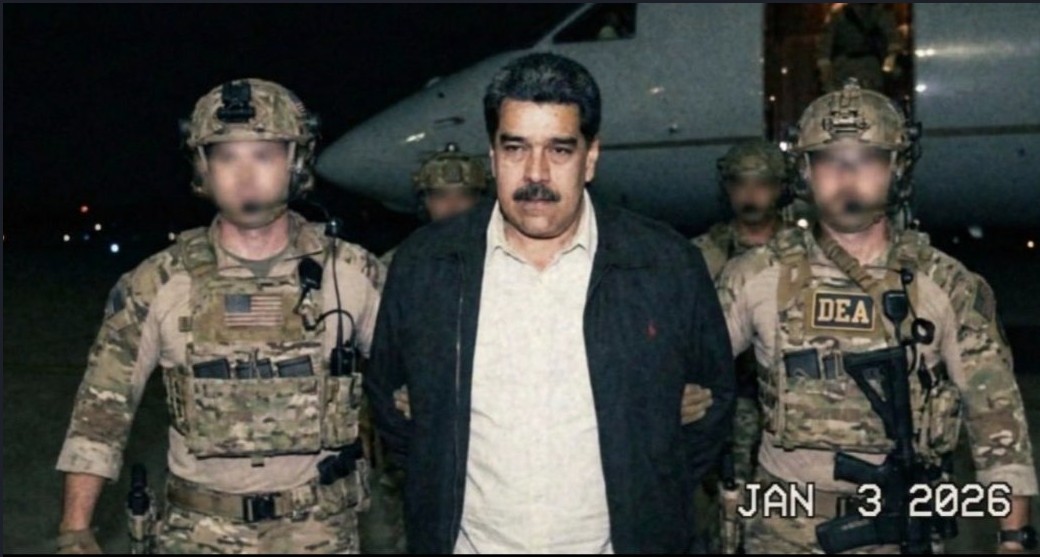
The latest round saw the summary “silent extradition” or 37 of these “violence generators” 18 days after Nicolás Maduro “arrest” in Caracas, Venezuela, and hours after Trump’s first anniversary of his second inauguration as U.S. President on January 21, 2026.
English Edition
Trump seizing Caracas, the failure of Latin America
The issue is more relevant as Mexico has held the Constitutional principle of preventing the use of the death penalty against its citizens when extradited to jurisdictions where such punishment is on the books, as in the case of the United States, which would be relevant at least in the case of Pedro Inzunza Noriega.
Despite the sweeping delivery of the 37 “violence generators” who used to be in Mexican jails, the massacre in Salamanca, Guanajuato puts Sheinbaum’s claim about an overall improvement in the security in Mexico in doubt and puts her at odds with the Conference of Catholic Bishops.
Pontifical politics
More so as her government has been very vocal in trying to bring Pope Leo XIV to the country despite the fact that Sheinbaum and most of her Cabinet identify themselves as “freethinkers” and even openly atheistic.
Sheinbaum has gone as far a to use her morning daily activity to tell the nuncio to Mexico, archbishop Joseph Spiteri, about her interest in talking with him, despite the fact that the nuncio is available in Mexico and follows, as most Vatican diplomats, the tradition of making his contact numbers available to the government of the country where he is deployed.
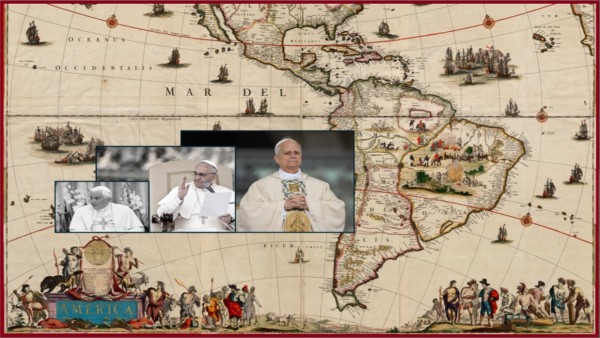
The Mexican Catholic public opinion is deeply divided between those who would jump at any chance of bringing any Pope to Mexico for whatever reason, and those who caution Pope Prevost and his team at the Pontifical Commission for Latin America, about the implicit risk of legitimizing Sheinbaum’s alleged closeness to both Pope Francis’s and Pope Leo XIV’s “social” understanding of the Gospel, and the objective differences that exist between the Mexican government and the Vatican.
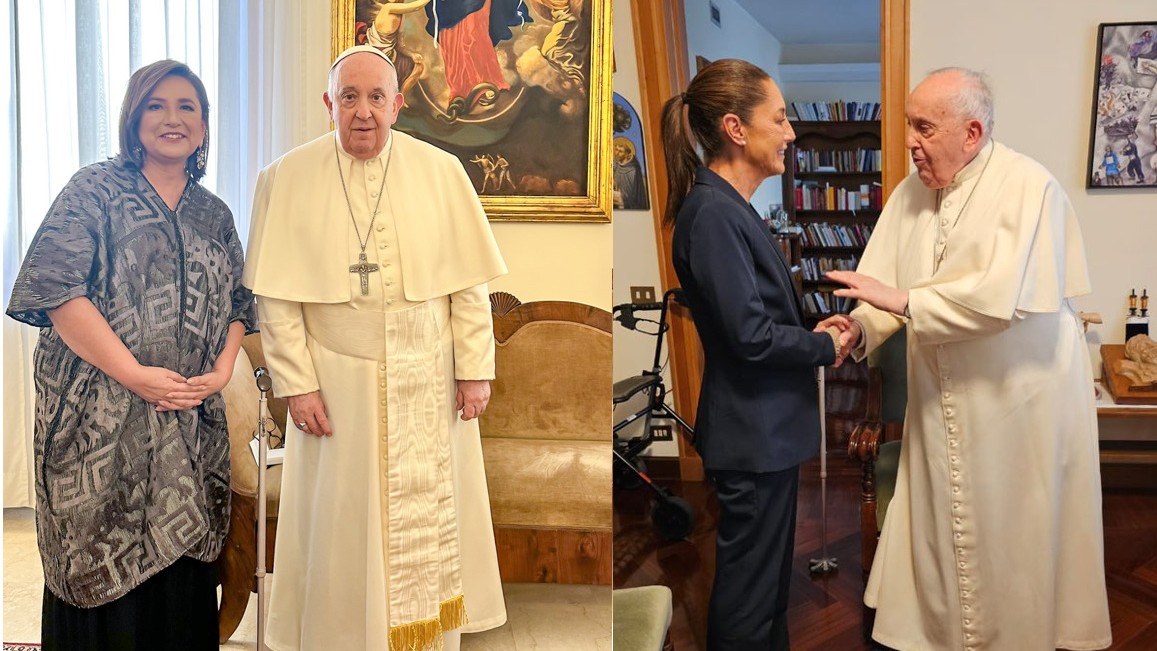
Ever since she was a Presidential candidate, Sheinbaum made an extra-effort to appear as close as possible to Pope Francis who granted her and her adversary in the 2024 Presidential election separate and private, informal audiences in the Casa Santa Martha, the place where Francis lived in Rome during his pontificate. The story linked after this paragraph goes over details of those private meetings, but it is available only in Spanish.
Elecciones México
El papa Francisco recibe a las candidatas presidenciales en Roma
The bishops’ role
The statement released early on Monday follows the most recent standard practice of the Mexican bishops to call out massacres such as Sunday’s, even if before, the Episcopate was less willing to openly condemn this kind of crimes.
The statement is also relevant as the Mexican episcopate is one of the few actors not under the control of Morena and it has been actively promoting the so-called "National Dialogue for Peace" (content in Spanish), an attempt to end the deaf-toned, war-like kind of violence ravaging Mexico for the last 20 years or so.
A new round of this National Dialogue for Peace is scheduled to begin on January 30th, at the campus of ITESO, the Jesuit University in the Western Mexican city of Guadalajara. According to the Mexican bishops’ own data, they expect to have a minimum of 1,300 participants at that activity.
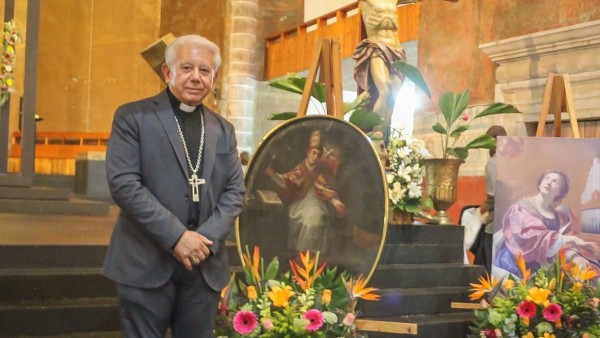
The statement is signed by Ramón Castro, the president of the conference, the current bishop of Cuernavaca, in the Central state of Morelos. He used to have a close relationship with the former governor of that state, Cuauhtémoc Blanco, a former soccer star in Mexico and the United States.
Blanco has been the main character in a drama where his own sister accused him of sexually attacking her while having her under his employment as governor. Blanco is currently a member of the Mexican lower house of the federal Congress. Castro endorsed repeatedly Blanco for public office because his alleged repudiation of abortion, so there is the expectation that bishop Castro has learnt a lesson about the potential risk of getting too close to public officials.
The Mexican bishops also condemned in the same statement an attack on the Cathedral of Puebla. The attack ended up with the burning of wood doors of the Northern entrance of the Cathedral and archbishop Víctor Sánchez Espinosa labeled as “a desecration.” Early on Sunday, he held a Catholic ritual to repair the spiritual damage to the sacred building.
The Mexican episcopate’s full statement appears, translated to English, after this paragraph.
Statement from the Mexican Episcopate
Mexico City, January 26, 2026.
WE CONDEMN THE VIOLENCE AND RAISE OUR PRAYERS FOR MEXICO
As the Mexican Episcopal Conference, we express our profound pain and indignation regarding the violence that continues to strike our country.
We energetically condemn the armed attack that occurred at a soccer field in the Loma de Flores neighborhood, in the municipality of Salamanca, Guanajuato, where a commando opened fire on players and families, leaving at least eleven people dead and a considerable number of wounded. This act deeply wounds life, human dignity, and the peaceful coexistence of our society; we ask that it does not go unpunished.
Furthermore, we regret and condemn the attempted arson against the cathedral of Puebla, in which one of its main doors was damaged. This event attacks the material, spiritual, and cultural heritage of humanity. We join the community of Puebla in calling for the clarification of these facts.
We stand in solidarity with the families of the victims in Salamanca. We raise our prayer to God for the eternal rest of those who have lost their lives, for the comfort of their loved ones, and for the end of the violence being experienced in Mexico.
We call upon the authorities to responsibly assume their duty to protect life, security, and sacred spaces, and we urge all of society to work together for peace.
We entrust our country to the intercession of Saint Mary of Guadalupe, Queen of Mexico.
The statement appears as a PDF, only in Spanish after this paragraph.