Rodolfo Soriano-Núñez Lunes, 13 de Julio del 2026
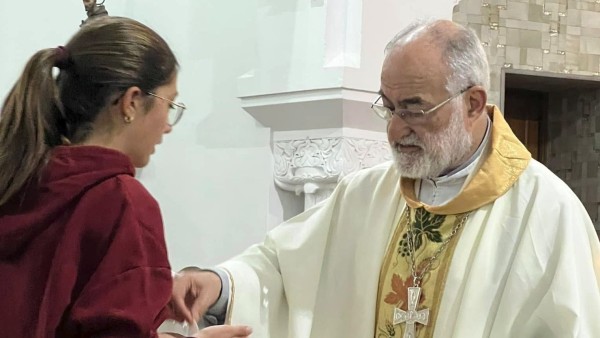
Is Cardinal López Romero a high-status representative of the “geographic solution” to clergy sexual abuse?
The Catholic Church’s opacity and the fear of many potential victims is Cardinal López Romero’s best ally to beat the clock and avoid accountability on abuse.
By Rodolfo Soriano-Núñez
On July 7, the world was again shocked by news of allegations of clergy sexual abuse against a major figure in the hierarchy of the Catholic Church. Following an ever more present pattern, the accusations were not against the founder of a relatively new religious movement or order, known for its sectarian practices.
The accused is Cristóbal López Romero, the current archbishop of Rabat, capital of Morocco and since 2019, a member of the College of Cardinals, one of the most exclusive “clubs” in the world, including only 241 members, of whom 111 are able to cast a vote in the hypothetical election of a new Pontiff.
On that Tuesday, French- and Spanish-language media in Europe published the first revelations of what stands now as the latest test on Leo XIV’s commitment to actually address the root causes of the over 40-year clergy sexual abuse crisis.
According to reports first published by the Agence France-Presse and other French-language media, at least five adult women have accused López Romero, a 74-year-old citizen of both Spain and Paraguay, of sexual assault and misconduct.
The accusations in Rabat claiming “repeated assaults” come from what French-language media describes as “a retired Church collaborator” who sent a written testimony to the Maltese archbishop, Vatican career diplomat and, as such, the current nuncio in Rabat, Alfred Xuereb, about the nature and mechanics of the harassment and details about “particularly insistent and prolonged hugs,” attempts to force kisses, among other issues.
In other statements, there are details about misconduct in the confessional coming from “at least three other women” who reported similar inappropriate breaches of physical boundaries, with some incidents initially surfacing during confession.
So far, according to the Nunciature in Rabat, there is no record of a complaint with the Moroccan police or other local civil authorities, so, at least at this point, the probe will only happen in the realm of canon (Church) law.
It is worth noting that Xuereb became nuncio in Korea after a four-year stint at the Secretariat of the Economy where he witnessed, first hand, the troubled resignation in October 2018 of the late Australian Cardinal George Pell to face charges of clergy sexual abuse and mismanagement of cases during his first years as priest in Ballarat, Australia. Both Pell and Xuereb assumed the roles of president and secretary of the secretariat, respectively, when Pope Francis created it back in February 2014.
Although Xuereb left the secretariat in February 2018, there is a chance he was aware of the kind of storm Pell and the Vatican had to weather when the accusations first emerged. Although Pell won his case on an appeal at the High Court of Australia, the doubts about him remain.
The main issue when thinking about López Romero, however, is on the one hand what we do not know about his past as a member and superior of the Salesians of St. John Bosco in Paraguay, Bolivia and Spain and if he had to deal with cases of abuse there. On the other, there is the issue of his own behavior in Morocco, the one deserving, at this point, the most robust probe possible.
The issue is more pressing because, even if tracing the public record of a bishop is relatively easy once he is appointed as such, for the most part, the records of presbyters (commonly referred to only as priests), deacons, religious brothers, seminarians and the lay persons holding official positions in the Catholic Church, are, almost always, hidden, unavailable.
The difficulty in figuring out the whereabouts of priests and deacons is ever more present in Latin America. As last week’s story in this series stressed when dealing with a case in the Mexican archdiocese of Acapulco, there is no way to trace the appointment of priests even in major sees such as Acapulco.
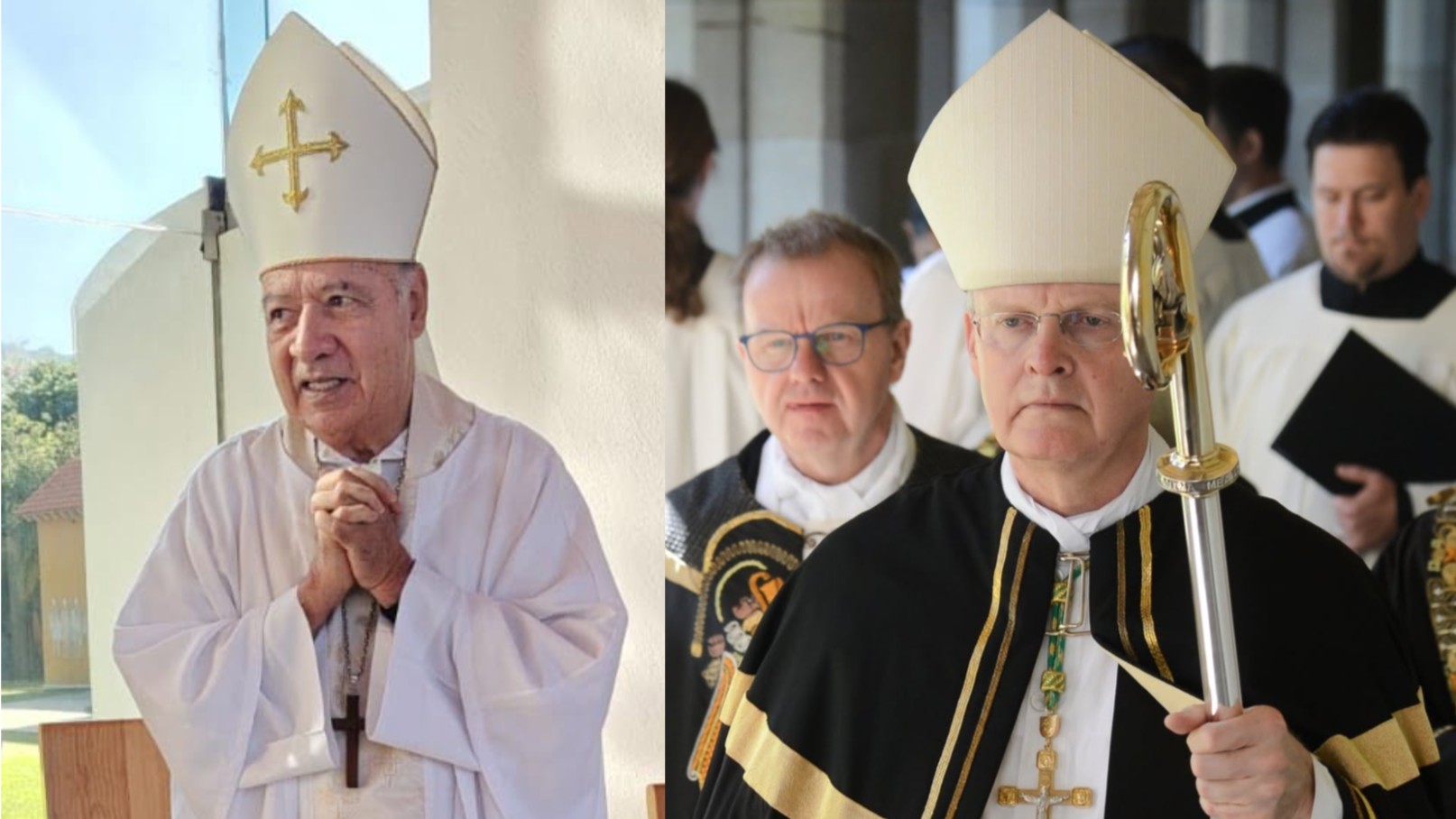
In Acapulco, on top of dismissing any call for transparency and accountability when dealing with clergy appointments, the archdiocese forces whoever wants to trace the record of any given priest to go over thousands of social media postings.
If that was not enough, many Latin American dioceses and even archdioceses such as Acapulco are still unwilling, seven years after the fact, to comply with Pope Francis’s order to set up a commission to prevent clergy sexual abuse in their territory.
Secret files
The records are there. If there is something the Catholic Church excels at, it is keeping records of its own appointments. Whether in Rabat, Acapulco or Asunción, there are records. They are either as part of the archives of a diocese or order or both, but they remain, for the most part, hidden and unsearchable. It has been only in a handful of countries (the United States, Canada, France, Germany) where there is a chance to figure out where a priest has been assigned, through publicly available records.
The absence of a public, searchable record for these appointments facilitates what this series has identified as the “geographic solution” to clergy sexual abuse, that is to say, the practice where a cleric facing accusations in any given jurisdiction is moved from such post to another with no explanation as to the reasons why.
This series has gone with relative depth into one case of clergy sexual abuse in Paraguay involving the so-called Oblates of Mary Immaculate, and at least one story dealing with the major crisis in the Bolivian Catholic Church because of the large-scale sexual abuse at Catholic schools and missions operated by the Jesuits there.
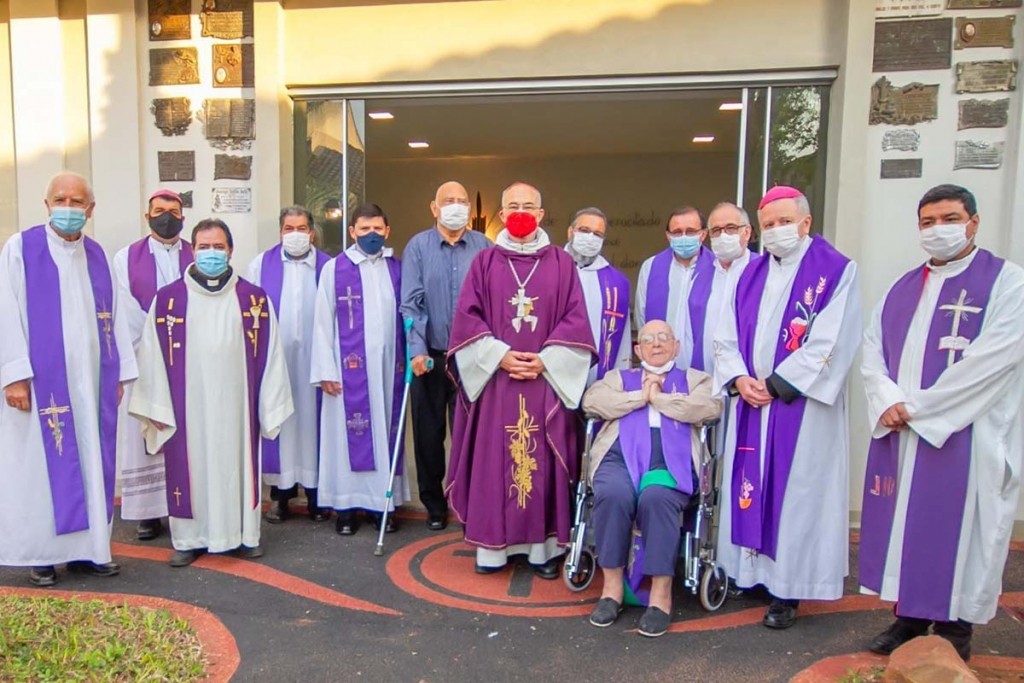
The Salesians have their own record in that respect. A couple of years ago, when going over the suicide of a survivor of clergy sexual abuse on the roof of the National Congress building in Quito, Ecuador, this series went over the details about how Franklin Germán Cadena Puratambi, a then religious brother in that order, was rejected as candidate for priesthood at least in two different instances.
Eventually he would be admitted as seminarian in the diocese of the Galápagos Archipelago, where he would be later identified and accused by the victim who, at some point in the 1990s, attended a Salesian school in Quito, where Cadena Puratambi was an instructor and had some role in a school aimed at supporting marginalized teenagers.

English Edition
Suicide at the Congress
What emerged in that piece is how, even if there was a clear understanding that Cadena Puratambi was unfit to become a priest, Manuel Antonio Valarezo Luzuriaga, then the apostolic vicar in Galápagos had an ad hoc excuse to run a risky bet when accepting Cadena Puratambi first as seminarian and later when ordaining him as both deacon and presbyter, since the Salesians never filed a report flagging Cadena Puratambi.
As that piece proved, the absence of such paper trail has worked nicely to avoid any liability for both the Salesians and Áureo Patricio Bonilla, the current prelate of Galápagos, more so in Latin American settings where religious organizations operate with high degrees of autonomy, and where reporting abuse is a relatively recent development, which in many cases is coded in so-called “imperfect laws” that even if they state the duty to report say nothing about a deadline to actually file a report and much less about potential legal consequences if no report is filed.
A suicide in Normandy
The aversion of the Catholic Church at large and Salesians more specifically to keeping records of those accused of abuse is not a malaise limited to underdeveloped Latin American polities such as Ecuador. Last year this series went over Jean-Marie Petitclerc’s suicide case in France. He was also a Salesian, member of one of the European provinces of that order, encompassing France and Belgium.

Petitclerc was a public figure in France, with some of his books translated by the Salesian publishing houses to other languages; he was a celebrity in the Catholic subworld that are the Salesian schools, more so since he displayed some ability to address specific issues in marginalized communities in the French exurbs, the so called Banlieues.
As able as his public persona was in the first and second decades of this century, by mid-2025, he was facing his third accusation of misconduct. For reasons only known to him and those closest to him, he decided to take his life. Even if, before his suicide, the Salesians were willing to remove him from active and public ministry there are questions as to how they handled the two previous accusations and the kind of actual measures placed, on the one hand to protect people having access to him, and the support offered to him to deal with the issue when he was forced to face a third accusation.
One is forced to even ask, who greenlighted his return to ministry when there was already a record of allegations? Is it worth forcing a priest already battling a record of allegations back into what must be seen as a dangerous professional practice for him and more so for the faithful around him?
The Catholic Church has a hard time acknowledging the limited long-term effects of the so-called “short-term therapies” (microwaved 90-to-180-day “intensive programs”) used as a one-size-fits-all solution in many dioceses and religious orders.
That is the very reason why, after years of treating clergy inside Catholic psychiatric settings, A.W. Richard Sipe, a key figure to understand the development of the clergy sexual abuse crisis in the last four decades, resigned the priesthood and emerged by the late 1980s as a fierce critic of using these temporary clinical interventions as a convenient rubber stamp to return predators to active ministry, as in the case of Boston priest John Geoghan, one of the seven stories in the piece linked after this paragraph.

English Edition
Seven stories of clergy sexual abuse
A few days after news about López Romero emerged in Rabat, French Catholic newspaper La Croix published a piece about the agreement reached by the relatives of Petitclerc and the Salesians to set up an independent commission to probe Petitclerc’s suicide, as it is clear that somebody in the Salesian order was not paying enough attention to him, both when he was abusing the faithful and when he decided to end his life.
The perception in France is that appointing Antoine Garapon to lead this panel is a highly calculated public relations and intellectual move by the French province of the Salesians. Garapon is one of France's most respected legal scholars, a former juvenile magistrate, and a member of the editorial board of the influential journal Esprit.
By placing a secular magistrate who specializes in juvenile justice at the helm, the Salesians are attempting to mirror the independent structural framework of the Sauvé Commission (CIASE) to regain institutional credibility. In that respect it is unavoidable to ask why López Romero’s case is not following a similar pattern?
Magic numbers
The Salesians are the second largest religious order in the global Catholic Church, and they own a vast network of schools all over the world, far larger than that of the Jesuits, the largest Catholic religious order by the number of members. Even if the Salesians trail behind the Jesuits in raw numbers, as the table after this paragraph proves, the fact is that the Salesians have a larger number of prelates (124), acting as bishops or similar officials of the Catholic Church, than those of the Jesuits (78).
In that respect, one must wonder what role that vast network of Salesian prelates will play in López Romero’s case? Will they try to shield and rescue him? Will they move their vast material and symbolic resources to “bury the story”? Will they go for the mobilization of their many social media profiles to render López Romero a victim of a global conspiracy?
If the Salesians choose to fight out the allegations, they will have to rehash the known strategy of discrediting the victims for some unrelated issue or going straight for the most frequent excuse when this kind of cases emerges: claiming that those involved were adults, dismissing the most damaging aspect of the abuse crisis: the issue of how the religious organizations allow for the weaponization of their own theologies to either justify or dismiss sexual abuse as the byproduct of satanic enemies of the Church intent on destroying God’s work or some other similar argument.
Even if Pope Prevost enjoys right now a relatively favorable perception of his performance as a global leader, mostly because he has been able to render himself as standing in civil opposition to what emerges these days from the White House, the fact is that his performance on the handling of the clergy sexual abuse crisis is less than stellar.
Last Summer, early in his tenure, he offered a landmark interview to Crux that played a major role in cementing his public image as a reformer due to his past actions suppressing the Peruvian Sodalitium of Christian Life.

Yet, as the piece linked before this paragraph told at the time, a closer reading of his remarks reveals a deeply troubling structural double-game. By arbitrarily asserting that “over 90 percent” of victims tell the truth, the mathematician-turned-Pope deliberately left an unbacked 10 percent window wide open for the Catholic hierarchy’s traditional defense machinery to gaslight survivors and claim “false accusations” as culprits of ending priests’ careers and lives.
With López Romero now engineering a classic, insular canonical retreat in Rabat to stall for time, Prevost’s rhetoric comes back to force him to show how willing he is to actually address and solve clergy sexual abuse cases. Was his interview with Crux a troubling slip of the tongue? Was it an even more troubling prophecy of things to come in the Church when dealing with accountability?
So far, the Vatican opened a standard preliminary canonical investigation into the claims. The accusations against López Romero are relevant not only because it is the first time a cardinal faces a canonical probe for alleged sexual abuse against adult women. Catholicism in Morocco is hardly a massive practice. His archdiocese has only 18 parishes, and it accounts for less than one percent of the total population in its territory.
In that regard, the issue reveals not only the less documented issue of abuse against adult females, but also how predators almost always prey upon those closest to them and the organizations where they hold some kind of power.
The fact that the victim calling out López Romero is identified as an “active collaborator” interacting closely with the archdiocese reveals her, even if indirectly, as a member of a highly restricted, well-educated, and well-connected community within Rabat, including wealthy retirees, diplomats, and corporate employees, so-called expats, some of whom are there because of the low-tax regimes or the warmer Mediterranean climates of North African coastlines, and a handful of Catholic students from sub-Saharan countries.
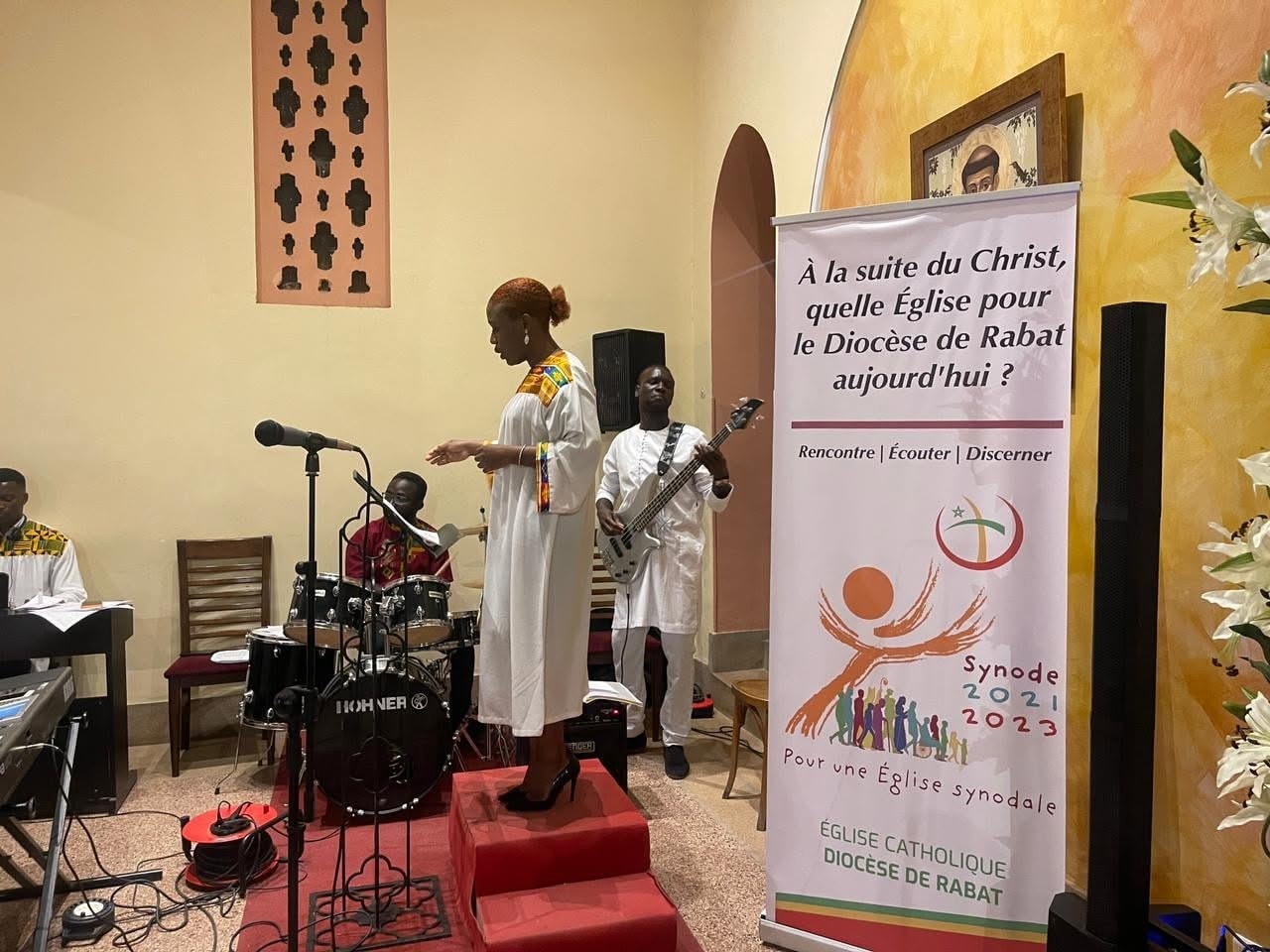
In that respect it is important to emphasize that the accusation comes from the very entrails of an extremely small Catholic community, restricted from expanding outward into the host country by the laws of the Kingdom of Morocco, but also traditionally bound to keep conflicts as internal matters, fiercely locked behind doors.
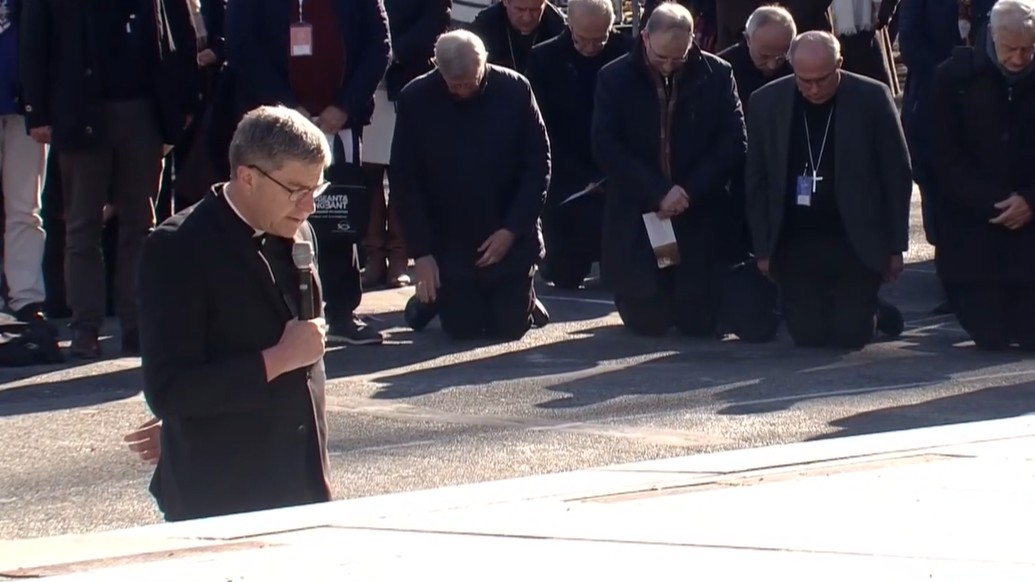
Sadly, it raises questions about what the Salesian order knew about López Romero’s time in both Paraguay and Bolivia, where he played major roles in that order, and how and why Pope Francis, who probably knew him from his days as archbishop of Buenos Aires, promoted López Romero to archbishop in Morocco, where he took the see at Rabat from a smaller order, also marred by large-scale accusations of clergy sexual abuse in France.
English Edition
Bétharram, a mirror for all countries to look at
What follows is an attempt to understand what we know for a fact about López Romero’s tenure in Rabat, and what could explain how he went from playing major roles in two South American countries, to spending some time in an exile of sorts, until Pope Francis appointed him as archbishop in a region where he had no known expertise, and then elevated him to Cardinal.
A career in Paraguay and Bolivia
Even if it is unclear what moved López Romero to move to Paraguay soon after his priestly ordination in 1979, he belongs to the last generation of Spaniard males who used to enter the seminary as a consequence of their religious upbringing and the relatively limited opportunities 1960s Spain used to offer its population.
The latest developments from the Agence France-Presse investigation confirm that the complaints are no longer contained to North Africa. A source close to the archdiocese explicitly revealed to journalists that “close associates of López Romero have reported identical physical overreach and boundary violations dating back to his years as a powerful missionary in South America.”
One must wonder how the current Vatican investigation is looking at the allegations. Is there a real effort to unveil the usual culture of complicity, omertà, and silence or will the probe limit itself to reminding the public that the victims were adults in order to dismiss the claims?
A more careful probe would have to ask questions about whether López Romero enjoyed the privileges that members of the Salesian leadership enjoy in countries such as Paraguay. Were there previous reports? When Pope Francis appointed López Romero as archbishop, were there any previous reports available to him and those who vetted López Romero? If such reports existed, were they available when Pope Francis appointed López Romero as member of the College of Cardinals in 2019?
One has to keep in mind how the Ecuadoran Salesian province handled Cadena Puratambi’s case to understand why, as painful as these questions are, it is necessary to raise them.
Even if born in Almería, in the southern Mediterranean coast of Spain, López Romero completed his high school, seminary, and university education in Girona and Barcelona, in the northern extreme of that coast, spending the critical formative years of his early adulthood (from 1964 to 1984) completely immersed in Catalonia, allowing him to become familiar with both Catalan and French.
French allowed him to survive his never fully explained first exit from South America. When he arrived in Kénitra, Morocco in 2003, there was no need to actually learn Arabic; he was operating a Salesian professional vocational center where the actual lingua franca is French, as it remains a language of prestige among the professional and intellectual classes, and internal Church administration is entirely French, as proven by the overall design of the Archdiocese of Rabat’s website, where Arabic comes after French and is limited to some headlines.
During his more than two decades tour of duty in South America he was the provincial superior of the Salesians in Paraguay (1994–2000), meaning he was running one of the most powerful and heavily financed religious orders in the country, as the Salesians manage there the second largest network of schools in the country, after those directly financed by the national government.
He also had a stint as head of Conference of Religious of Paraguay, putting him at the center of the country’s entire collective religious leadership, as most Catholic religious orders, both feminine and masculine have representation there.
On top of that, he played a role in the advisory council of the Ministry of Education and Culture and founded the Association of Catholic Communicators, giving him vast public, media, and civic reach.
Some sources credit him with some input in the message John Paul II read during his visit to Paraguay in May 1988 (content in Spanish).
He acquired Paraguayan nationality, removing any canon-law or political hurdles that typically slow down foreign-born clergy from taking over localized sovereign dioceses, so there is a chance he saw himself becoming a bishop in Paraguay, in a similar fashion to what happened with Robert Prevost who holds dual citizenship from the United States and Peru.
What happened?
However, at some point in 2000, at the end of his tenure as head of the Paraguayan Salesian province, he takes minor appointments within that order, and exits the country in 2003, to take his first appointment in Morocco. As previously noted, there is no possible proselytism in Morocco (as in most Muslim majority countries), so there was no need to learn Arabic. The French he had picked up in Spain was enough.
He stays there for eight years and leaves in 2011 to become the provincial of the Salesians in Bolivia until 2014, only to move back to Spain, as head of one of the Salesian provinces there for three years.
It was in 2017 when he went back to Rabat already with an appointment as archbishop. Two years later, Pope Francis granted him membership to the College of Cardinals.
The irony remains that while the Vatican successfully marketed López Romero on the global stage as a priest hardened by his experience in Latin America, and the expectation was for López Romero to play a role in helping African migrants trying to find their way to Spain and Europe, his actual day-to-day duties forced him to operate within rather insular, privileged francophone circles in Morocco.
What happened by the late 1990s, when Cristóbal López Romero held almost every primary indicator of an immediate appointment as bishop in Paraguay is anybody’s guess.
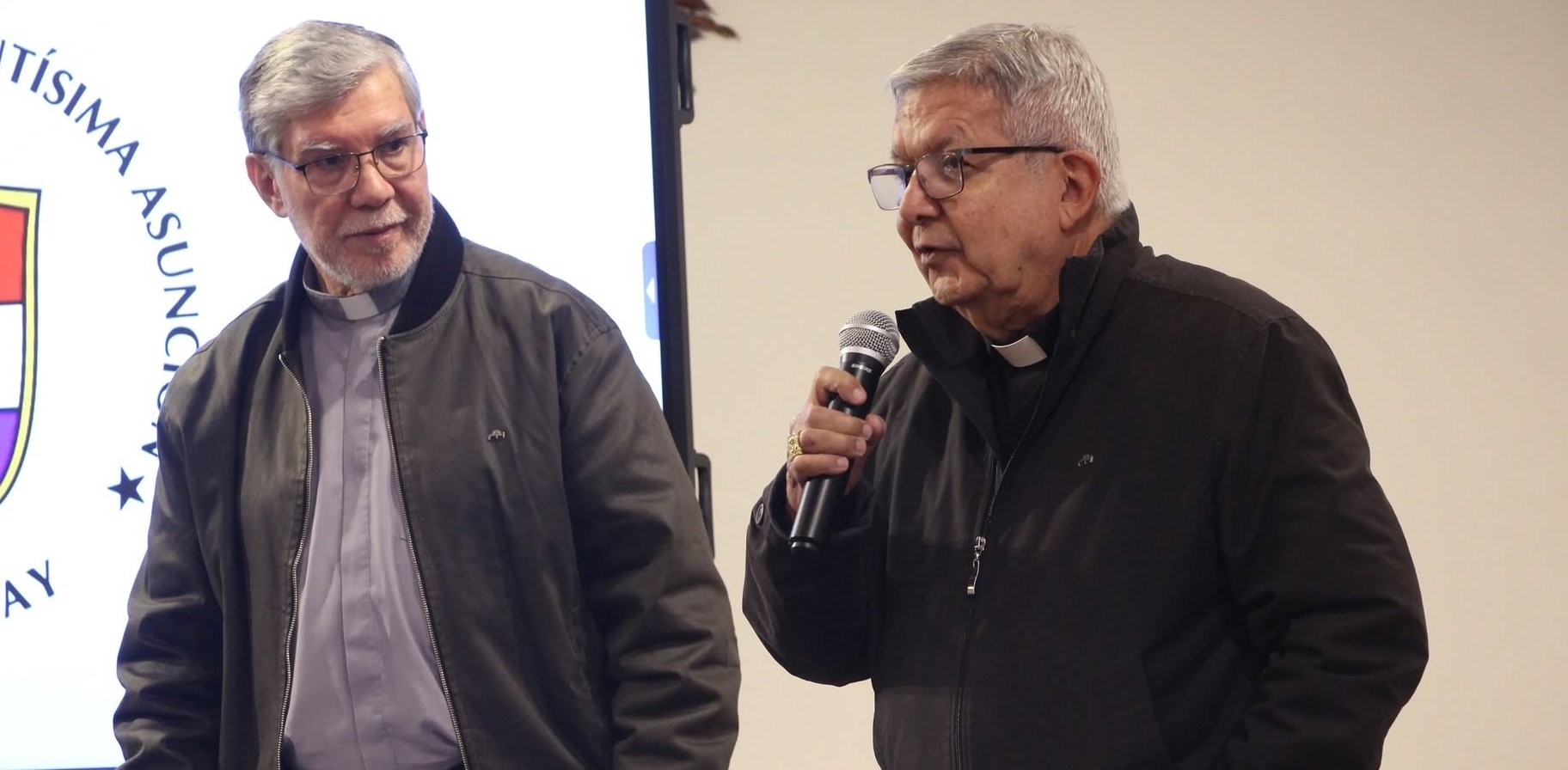
It forces one to raise questions as to why he was sent to Morocco. Such sudden move deviates from standard ecclesiastical career logic. After finishing his term as head of the province in 2000, instead of moving upward into the national episcopate, he was sent back to the trenches, at least on paper, as teacher for two years only to be extracted from his adoptive homeland in 2003.
For a naturalized citizen who had spent nearly two decades embedding himself in the top tiers of Paraguayan civic and religious leadership, being stripped of that visibility to become a localized administrator at a trade school in Kénitra, Morocco, is as close as possible to a silent, discreet, geographic exile.
It should not surprise that the archdiocese of Asunción, headed by Adalberto Martínez Flores, felt the need to issue a rather cryptic statement acknowledging the Vatican investigation and the statement issued by the archdiocese of Rabat, as can be seen in the post published at the archdiocese’s Facebook profile available in Spanish after this paragraph or if unavailable, here.
The issue eclipsed the news of Martínez Flores’s own resignation from his position and, even if it follows what is expected from such a source in this context, it is worth noticing that Martínez Flores has a not so bright record when dealing with allegations of abuse in Paraguay.
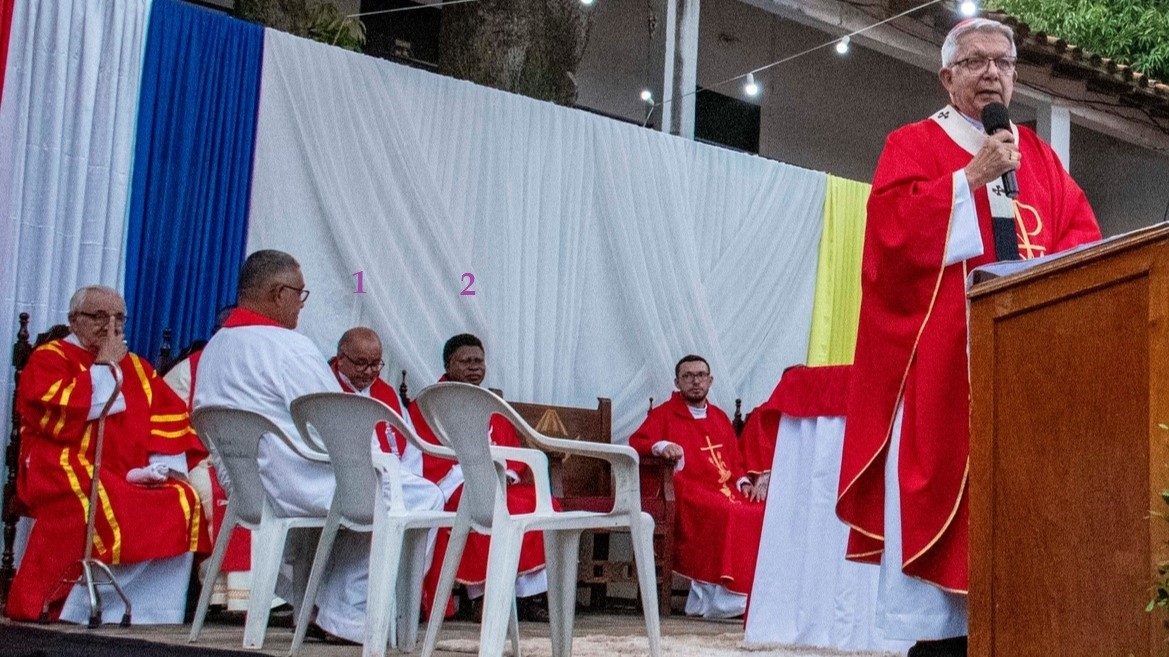
Back in March, in the story linked after this paragraph, this series went over how Martínez Flores claimed his diocese was against sexual abuse during a Mass concelebrated with Rafael Fleitas López, a Paraguayan priest with standing accusations of clergy sexual abuse.
English Edition
Theology of impunity: Lessons from Paraguay
Said priest, a member of the Oblates of Mary Immaculate, was in early 2024 about to be officially appointed to a rural parish in Oaxaca, Mexico, despite the standing accusations in Paraguay, as the story linked after this paragraph told then.

Omertá
Reports in European media tracking the canonical probe have indicated that investigators are not just analyzing recent events in Rabat, but whether a “culture of silence and omertá” has existed around López Romero to bury allegations and boundary violations that occurred during his years as a priest and provincial of the Salesians in Paraguay, Bolivia and Spain.
The issue, sadly, is that with the exception of Spain, where steps have been taken by the authorities and the Catholic hierarchy to address multiple, probably thousands of claims of clergy sexual abuse, neither Paraguay nor Bolivia stand out for the vigor of their judiciary or police.
It should be noted that according to a recently published book in Bolivia (see the Facebook posting after this paragraph or if unavailable here) there are at least 22 members of the Jesuit order accused of actively abusing their flock.
In some cases, the accusations include also the procurement of abortions among other conducts that, if one sticks to strict Catholic doctrine, would merit severe punishment by the hierarchy of that Church.
On top of those 22 priests or brothers (it is impossible to be more precise because there are two names who remain unknown up until now), there is an additional group of 18 former provincials and leaders of the Jesuit order in Latin America and elsewhere, described as accomplices, and a third group of ten Jesuits who had different degrees of responsibility in what happened in the so-called John XXIII Catholic school and home in Cochabamba, and other locations in Bolivia where that order has had some presence.

So, Bolivia is, by all accounts in a state of high alert regarding the Jesuits’ large-scale abuse, but also reflecting a political interest in keeping the issue of sexual abuse on the agenda, particularly given the standing accusations of that type of crime against Evo Morales, the former President and leader of the opposition, posing a challenge to the current head of State, Rodrigo Paz.
Most of the cases involving the Jesuits are what is known as “historic,” meaning most of them have fallen under the statute of limitations and, unlike what one sees in the United States, where there have been creative solutions to that issue, as in California and New York with the so-called “look-back windows” or what one sees in some European countries (Germany, France and Spain) where there has been the will from the bishops to accept the need to address on their own these issues before they become a political issue, in Latin America the bishops and superiors of religious orders are still actively trying to “run the clock down.”
In that respect, there are questions as to whether the Bolivian judiciary will go where other Latin American judiciaries are still reluctant to go: prosecuting “historic” cases.
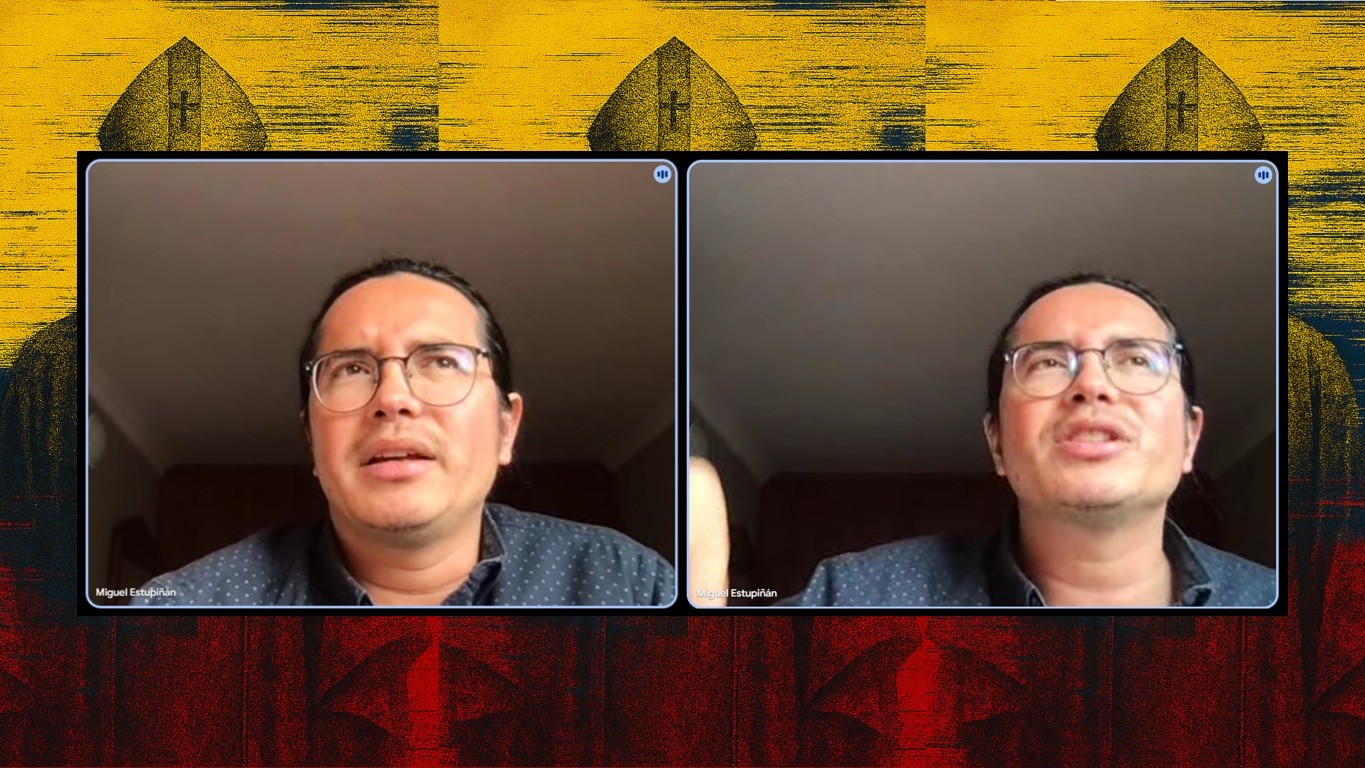
It also must be noted that the issue of transparency is at the very heart of a resolution by the Judiciary in Colombia. The judges there ruled to force the Catholic dioceses in that country to publish their records regarding clergy assignments. The story linked after this paragraph is an interview with Miguel Ángel Estupiñán, one of two Colombian journalists who asked their nation's judiciary to force the Catholic dioceses to be transparent on this issue.
* * *
A summary of this piece is available as audio after this paragraph.
Note on production: The text of this summary was written and edited solely by the author. The delivery of the audio summary was achieved using a high-quality, text-to-speech engine Microsoft Word for Web. The AI was used for voice generation only, not content creation.