Rodolfo Soriano-Núñez Lunes, 08 de Septiembre del 2025
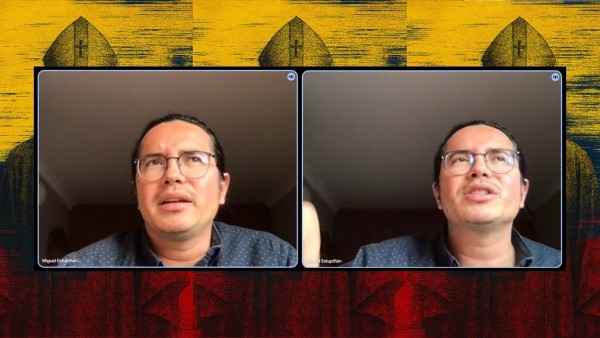
Estupiñán and Juan Pablo Barrientos Hoyos have been reconstructing trajectories of priests accused of sexual abuse in Colombia and elsewhere.
The need for accountability is a major driver of Estupiñán’s and Barrientos’s motion to get access to information about the trajectories of priests in Colombia.
By Rodolfo Soriano-Núñez
Back on May 14, media all over the Spanish-speaking world published news about an upcoming ruling from Colombia dealing with a core issue of the clergy sexual abuse crisis in that country and, potentially, all over Latin America.
Following the Colombian Constitutional Court’s tradition, a preliminary summary of the ruling was published that day, and the expectation is that the full ruling will be disclosed in the next few days.
As several installments of this series have proved, a major roadblock to figure out what happens in Mexico and Latin America when news of a case of clergy sexual abuse emerges, is the difficulty of mapping the trajectory of the aggressor. Very few dioceses in Argentina, Brazil, Chile, and Mexico have public information available.
Most dioceses all over Latin America use Facebook profile pages instead of other media to communicate appointments, resignations. As helpful as said profiles could be to build community bonds, systematic searches are almost impossible.
As a consequence, there is little or no accountability about the appointments as such, as it is almost impossible to trace at what point in time a priest has been assigned in any given diocese, and the uncertainty is greater when dealing with the many “orders” of the Catholic Church.
Even orders as established as the Society of Jesus, the Jesuits, exhibit very dissimilar behavior depending on the country they are working. In the United States and Canada, each of the provinces of that order there, have searchable databases with plenty of information about their members.
On the contrary, even in the most developed countries of the Spanish-speaking countries, Spain, Mexico, Chile, and Argentina, each province follows different rules and searches are hit-and-miss.
The same can be said of other well-established orders as the Salesians or the Franciscans. The situation is worse in smaller, less known orders, such as the Oblates of Mary Immaculate or the Legion of Christ.
With the Legion of Christ and its “lay” branch, the so-called Regnum Christi (Kingdom of Christ), the Opus Dei, and other relatively new “orders” it is even harder as their founders blew away the distinctions between religious and laypersons to exert sectarian-like forms of control, so even figuring out if someone is actually a member of said organizations is a Herculean task on its own.
This is more relevant as given the global nature of many religious institutions, it is relatively easy, even smaller denominations such as the Luz del Mundo (Light of the World) Church in Mexico, to send ministers to countries where they operate.
Even governments unwilling to facilitate migration for regular persons, have special categories or caveats when a religious minister petitions a visa to move from one country to another.
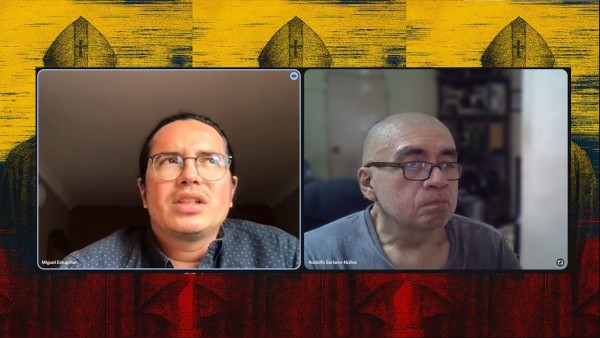
That is why this week’s installment of this series is an interview with one of the main actors of the legal procedure behind the upcoming ruling, independent Colombian journalist Miguel Ángel Estupiñán.
The road Estupiñán and his co-sponsor of the process about to result in this ruling, Juan Pablo Barrientos Hoyos have followed has been long and full of setbacks. The process started back in 2020 when Barrientos Hoyos tried to figure out the trajectories of priests in the archdiocese of Medellín, the second most populous city in Colombia, and key to understand Colombian and Latin American Catholicism.
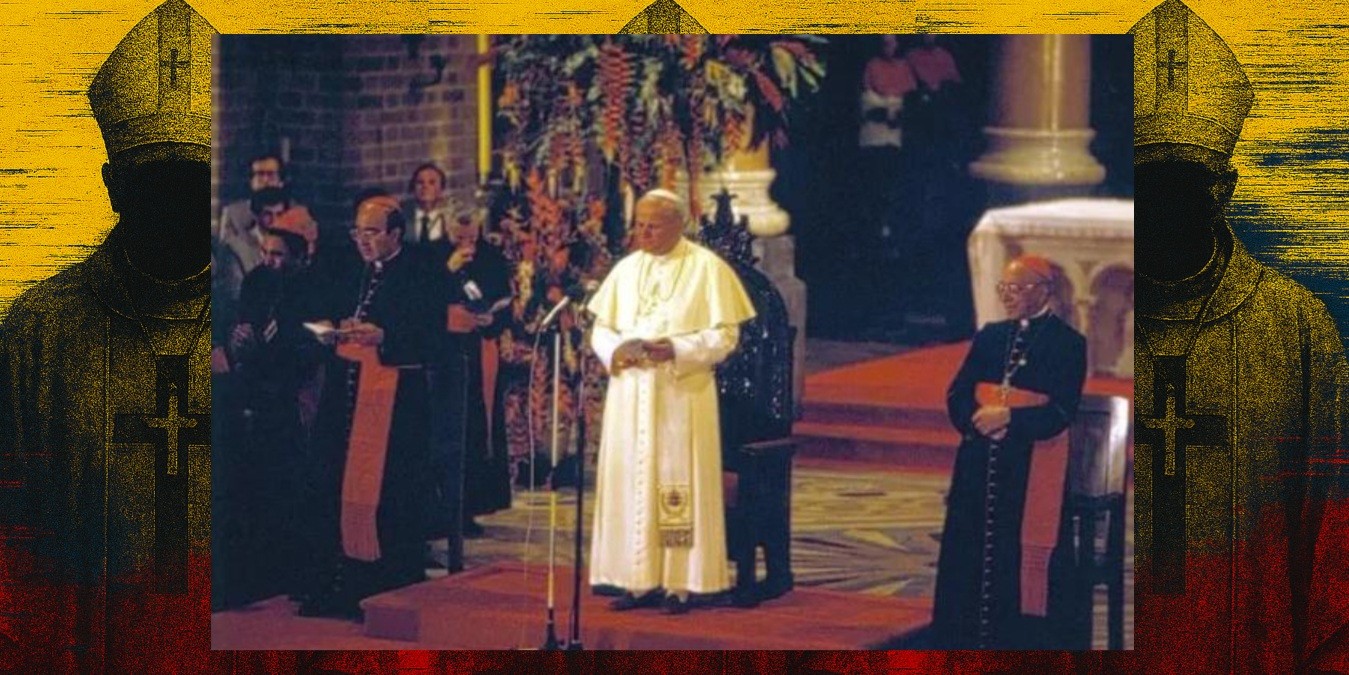
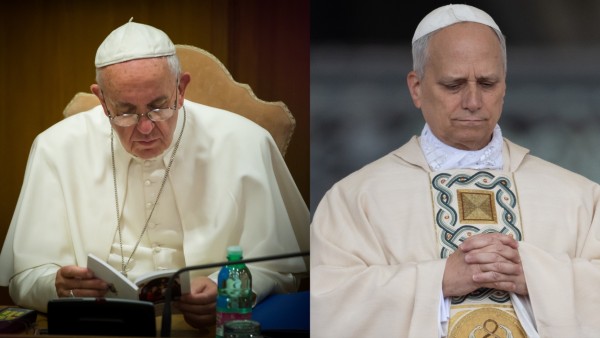
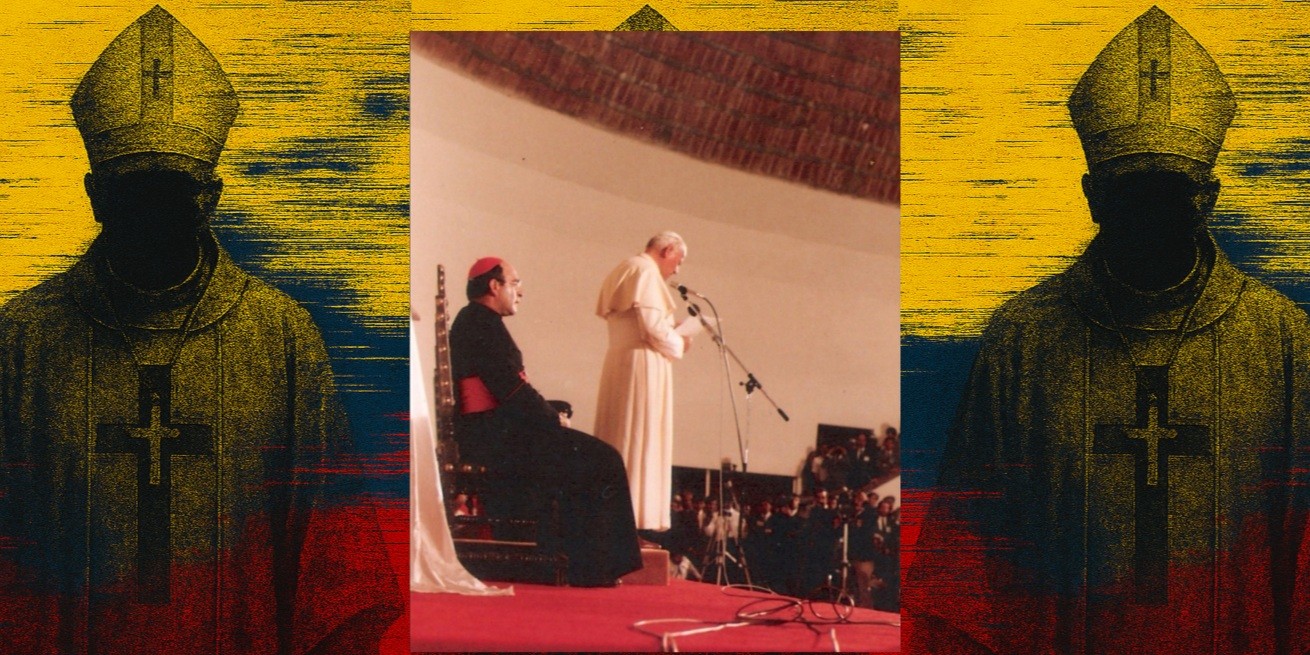
It was for several years the see of the Latin American Council of Bishops, the so-called, after its Spanish-language acronym CELAM, now located in Bogotá. More importantly, Alfonso López Trujillo was the archbishop there from 1978 through 1991, when he got a free ride to Rome, to join John Paul II’s curia.
The Polish Pope appointed him as president of the now suppressed Pontifical Council for the Family, a position he would hold until he died, at 72, in 2008, after being confirmed by Benedict XVI in 2005.
López Trujillo’s legacy
López Trujillo’s influence in Rome was evident from his days as president of CELAM (1979-1983). Later he became archbishop of Medellin, and later the president of the Conference of Catholic Bishops in his country (1987-1990).
His 18-years tenure at the mighty Council for the Family allowed him to play a key position in shaping the many fields of the cultural wars the Spanish- and English-speaking Catholicism has been fighting since the late 1980s.
His influence only grew after he promoted a fellow countryman, Dario Castrillón Hoyos as his successor at CELAM. Later, he also promoted Castrillo to join him as Cardinal, becoming a tandem key to understand John Paul II’s legacy.
After his tour of duty as president of CELAM, the Polish Pope appointed Castrillón Hoyos to the very powerful then Congregation now Dicastery for Clergy, having a say on almost any issue at a global scale, including the issues more directly related to the clergy sexual abuse crisis.
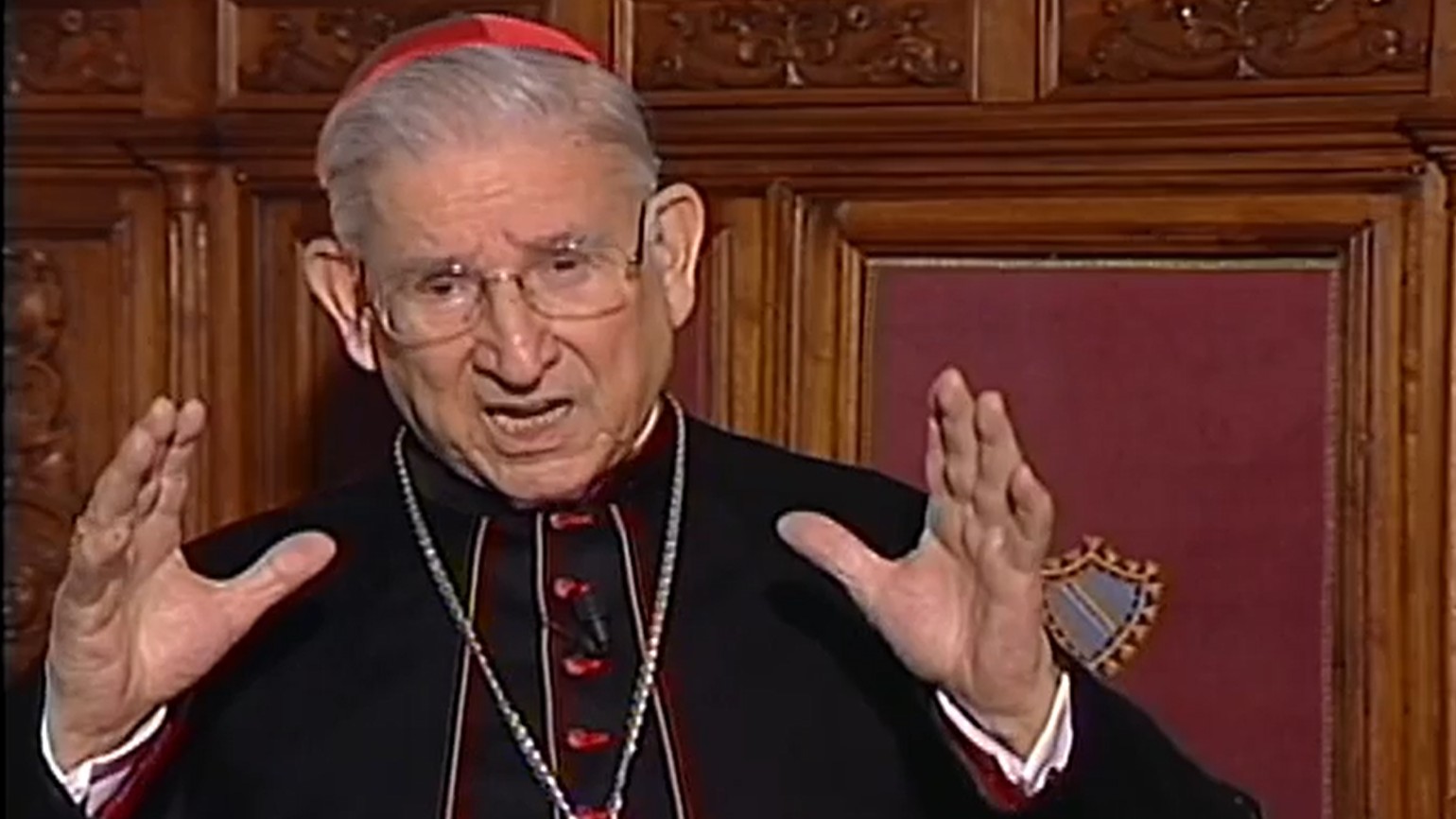
As one of many possible examples, it was in his role a head of said Congregation that he issued a letter of commendation for French bishop Pierre Pican (additional content in French here). Pican was not converting the heathen or suffering at the Roman Coliseum.
Castrillón Hoyos praised Pican for challenging the French authorities and covering up for René Bissey (content in French), accused in 1996 and convicted in 2000 by the French authorities after having abused at least eleven minor boys between 1989 and 1996, as this story from 2000 tells.
It was in 2001 that Castrillón Hoyos sent a letter in French, on the letterhead of the then Congregation for the Clergy of the Holy See, which he presided over. The letter congratulated Bishop Pican for covering up for the priest Bissey while rejecting any cooperation to disclose information about a case that rocked to its very core the French and European public opinion.
Although a predator priest attacking underage males was already common, this case revealed the role the French Boy Scouts played in such attacks. The case was similar to the abuse happening at the Boy Scouts in the United States and in other countries where that organization is active at the time. The case was relevant too because the Boy Scouts are key to understand why Catholicism remains active and relevant in France.
Castrillón, with John Paul II’s blessing, congratulated bishop Pican, and in doing so he made clear how far the Catholic Church is willing to go when its bishops have to decide between victims of clergy sexual abuse and their priests.
Back in March 2024, this series went into some detail of how far Castrillón was willing to go when protecting predators in the section titled “The Castrillón Doctrine” in the story linked after this paragraph.

Once the ruling is published entirely it will become a major reference for the Inter-American Court of Human Rights, where survivors of clergy sexual abuse are already seeking a measure of justice their countries are unable to given them.
What follows is a slightly edited version of a conversation we had over Google Meet on Monday September 1, 2025.
Rodolfo Soriano-Núñez (RSN): Miguel Ángel, I'd like you to tell me about your experience, please. What led you two, Juan Pablo and you, to appeal to one of the highest courts in the Colombian judicial system?
Miguel Ángel Estupiñán (MAE): The Constitutional Court. The Constitutional Court goes over the rulings of lower courts as to review how closely they are following Colombian constitutional doctrine and its development since the 1991 Constitution.
So, there are two precedents directly related to Juan Pablo Barrientos Hoyos’s previous work. He is the journalist who paved the way to properly use this research method of investigative journalism.
One must keep in mind these two previous rulings, T-091 from 2020 and the unified ruling SU-191 from 2022. They are the consequence of research Barrientos Hoyos began around 2018.
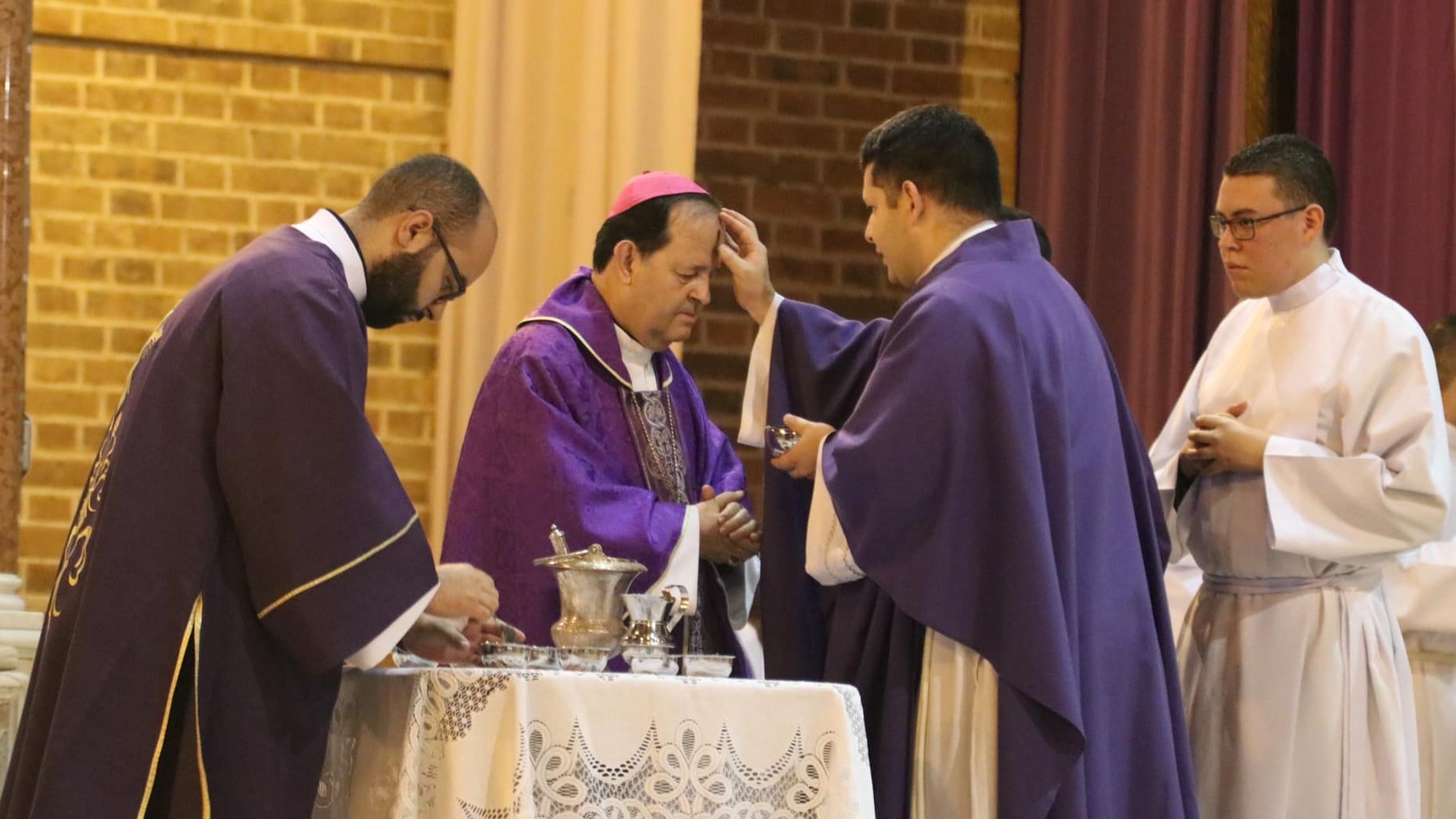
His main focus at the time was on Ricardo Antonio Tobón Restrepo, archbishop of Medellín. He repeatedly refused to answer requests from Barrientos Hoyos through a legal mechanism in Colombia: the Right of Petition. It derives from the 1991 Colombian Constitution as a right to appeal the national main institutions but is also applicable to institutions as relevant as the Catholic Church, in cases where information is needed, when there is a need to access information of public interest.
RSN: Let me make a digression here because it is very important. In Colombia, unlike Mexico, the legal status of the Catholic Church has never been challenged and has always held a position as what we would now call a "public interest entity," also with functions or duties vested upon it by the government.
MAE: Exactly. So, that made Juan Pablo's request for information more pertinent.
So, Section 23 of the Colombian Constitution defines the boundaries of the Right to Petition. A formal letter submitted to the authorities, to institutions, seeking information of public interest, which has historically been a resource for investigative journalists.
So, Tobón, the archbishop of Medellín, was a prime example of the Church’s unwillingness to answer the requests based on the Right of Petition as prescribed by Colombian law. Such requests have been a key tool for investigative journalists.
Public interest
RSN: Miguel Ángel Estupiñán and Juan Pablo Barrientos Hoyos have been using the Right of Petition (Derecho de Petición). As a key constitutional right in Colombia is similar to a Freedom of Information Act (FOIA) request in the United States but it has broader implications, because of how it has helped to define in Colombia the very meaning of “public interest”.
MAE: So, this constant refusal by the archbishop of Medellín to answer the requests framed within the notion of the Right of Petition as to provide information dealing with priests under his care fall within that notion of public interest.
These were priests who had first been reported. Later, the request was extended to a larger number of priests to determine whether they had been reported or not, which is what led Barrientos Hoyos to seek a ruling from the judges.
Here we must also refer to the work of The Boston Globe at the beginning of the century, because in the particular case of the Spotlight team at that paper. At some point, they sought help from a judge to order the archdiocese of Boston, its archbishop, Bernard Law, to release information that was somehow reserved or classified, or that the archdiocese refused to release because it perhaps also had to do with judicial proceedings, among other possibilities. So, that is a key precedent for what Barrientos Hoyos has been doing, The Boston Globe's appeal.

English Edition
Seven stories of clergy sexual abuse
As an independent investigative journalist, and someone who had been practicing journalism, focusing particularly on stories related to the Catholic Church, early in my career, even highlighting the role of the Colombian Catholic Church in the defense of human rights.
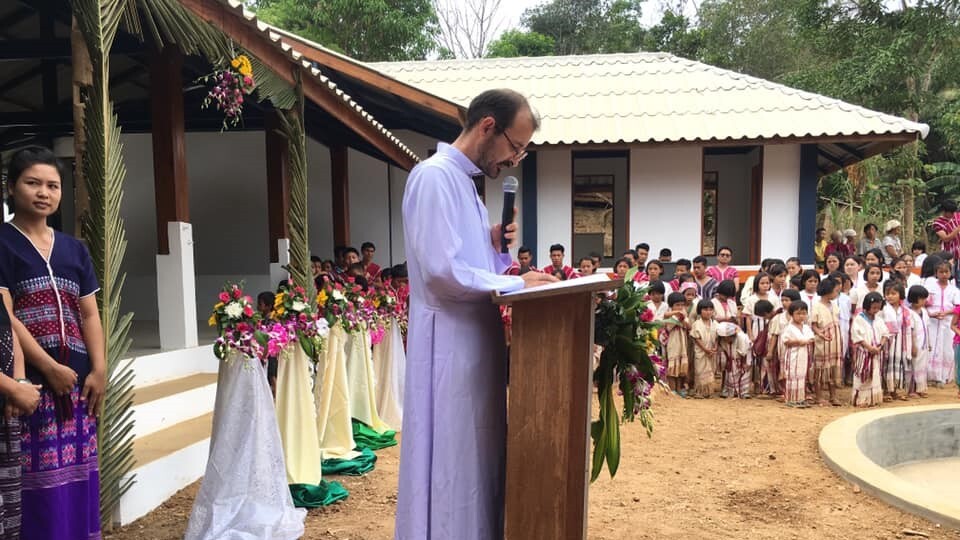
In doing so, I came across a story from a Catholic missionary in the Apostolic Vicariate of Leticia, deep in the Colombian Amazons. That missionary who has been calling out what had been happening at a boarding school serving local indigenous populations in that, mostly rural region of Colombia, but also calling out a cover-up by the region's bishop.
So, my intention was to follow a similar strategy, a method similar to the one Barrientos Hoyos had been using when dealing with the archdiocese of Medellín. At the time I have not met Barrientos Hoyos, but I had already begun to read, and there I began, let's say, to notice something very interesting.
When a journalist writes to a bishop via email, a rather informal email seeking information, the Church usually ignores him. I said so because I noticed how, after engaging the bishop of Leticia during an investigation I conducted on this issue in 2020, he abruptly ended a phone conversation with me. It was at that point that I went for the Right of Petition, which comes down to a formal letter invoking Section 23 of the Colombian Constitution.
The bishop before the judge
Then, the Catholic Church, in this case this bishop, had some kind of panic attack about being put before a judge by a journalist. At that point it was not an off-the-cuff questionnaire or an informal phone call with the bishop of Leticia, one he would be able to end abruptly and rudely. At that point it was rather a legal strategy. It was then that evidence against this bishop's actions began to emerge.
So, I made a formal request for a Right of Petition to the bishop; at that point he gave me information without me having to resort to a judge, but that already speaks to their attitude. I interpret this as the fear this bishop had. So, he began to give me information. I was able to compare the versions of those accusing this priest at a boarding school serving indigenous populations in the Colombian tropical forest and more so of a missionary nun.
She is a complainant, a Catholic nun, a missionary, who helped me to understand with arguments how the bishop's strategy had been to protect priests under his command there. He did so by covering up documents the accusers said they had handed over to the bishop. Fortunately, the nun was keeping copies of them. At the time she had a large archive with copies of the documents she had delivered not only to the bishop, but also to national authorities in Colombia.

As a journalist, one of my first satisfactions is that this news has become relevant because I was able to prove bishop José de Jesús Quintero Díaz's role in this case at Leticia. But also, I was able to show what the local and national authorities were failing to do. They were unwilling to remove a priest who was the principal of a boarding school receiving public funding.
In Colombia, these boarding schools are funded by the State and operated by the local dioceses, they are a byproduct of cooperation between the State and the Church. The Colombian State had, let's say, oversight and power over that boarding school, so the authorities at the national level are forced to be much more expeditious in a disciplinary probe carried out by the Attorney General's Office, yet another authority, against this public official and priest, while an internal Church process was on its way at the Vatican.
The principal had been already reported to the Vatican, his case was known to the Church’s hierarchy. Despite the report on these issues, he remained the principal of the boarding school. And that finally forces the authorities to remove him, that is a story that will repeat over and over.
And I, as to set the headline, was talking about the severity of how someone with such a report remained as principal of the boarding school.
The main sense of accomplishment from that story was to realize how effective was the method. See how effective was to use the Right of Petition to request information from the Catholic Church, but also from other entities like the Attorney General's Office or the Ombudsman's Office. Another entity is what we call here Family Welfare, which is like the protection or guardianship agency for children and families, similar to the Children’s Welfare offices in the U.S.
Opening a path
It worked. That made me realize how Juan Pablo’s path was offering an opening, as an independent journalist, that can be used by other independent journalists such as me. And I have always been very curious and interested in covering the work of the Catholic Church through journalism, but also its defense of human rights and, later, corruption.
So, I said, this method works for me. At that pace, with me working on those kinds of stories, and Juan Pablo Barrientos Hoyos’s work, who was advancing in publishing long, detailed reports about Medellín, this enormous Catholic city, one of the most important in Colombian Catholicism.
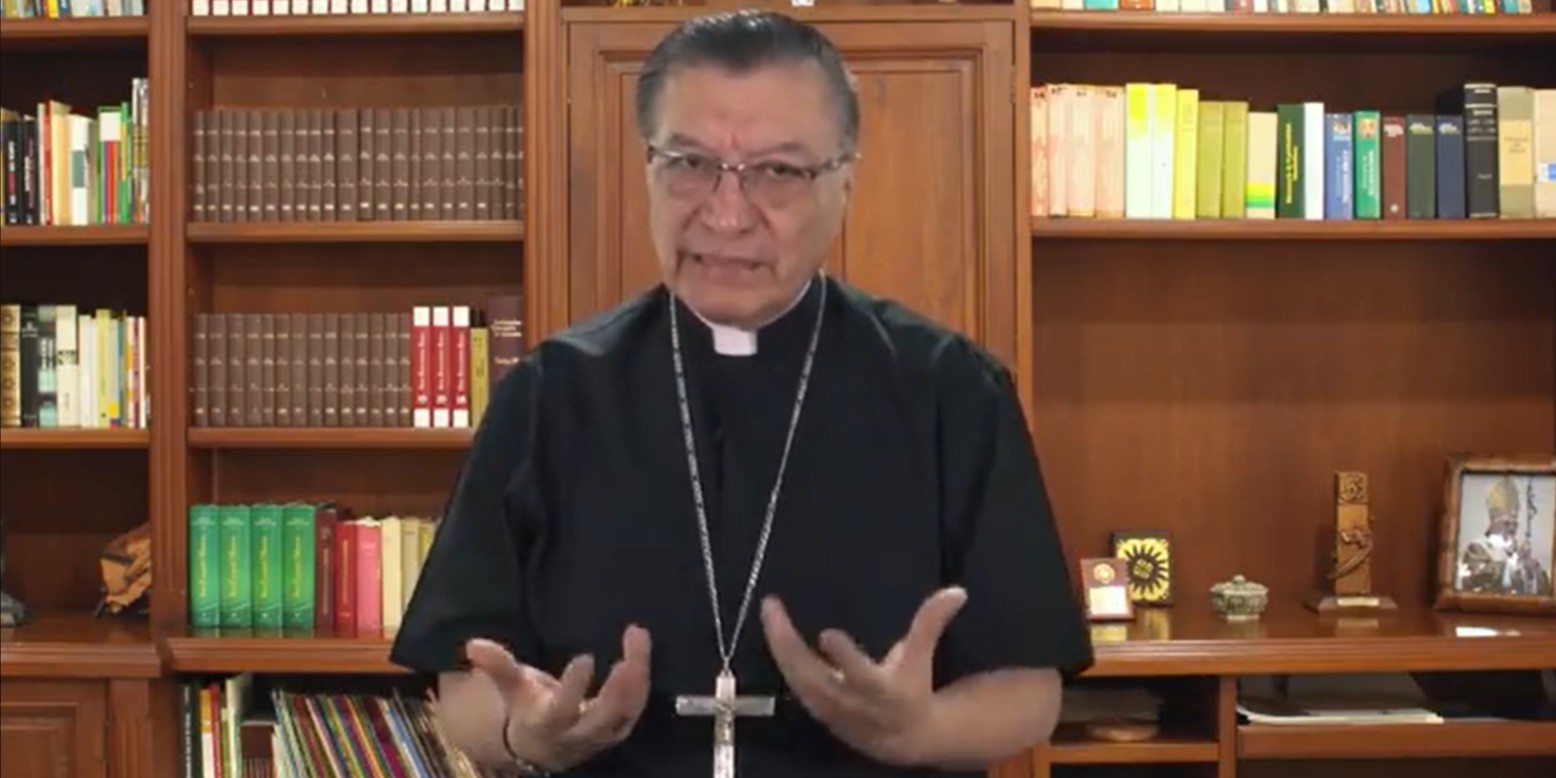
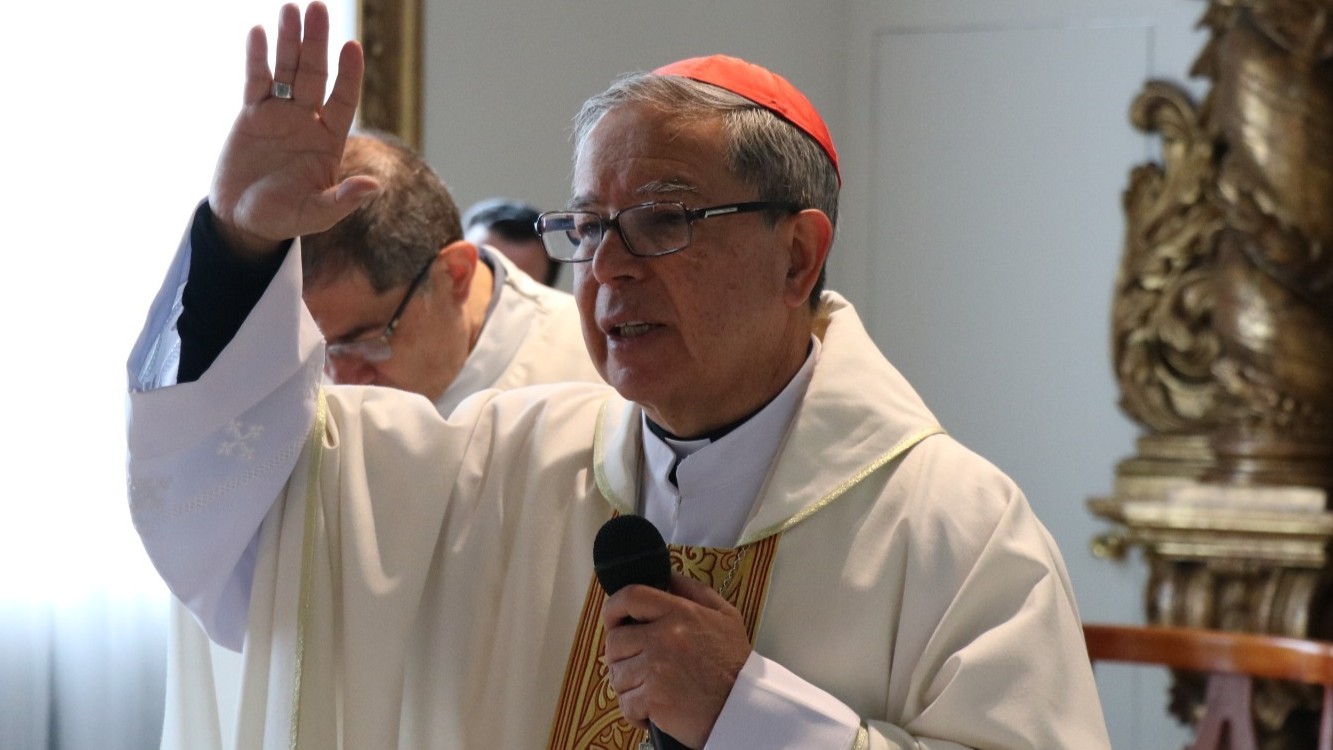
Later, Juan Pablo documented a key story from Villavicencio, when Oscar Urbina Ortega was the archbishop. There, a network of more than 30 priests had been inducing one single person into prostitution, starting in their teens and then later, when this person reached adulthood.
English Edition
Benedict XVI and sexual abuse: real zero-tolerance?
So, each of us was conducting separate investigations: Juan Pablo in Antioquia, then in the Llanos, I went to Southern Colombia, the Amazon, and at some point, Juan Pablo sought me out, called me, and suggested to carry a joint investigation, and then on a national scale.
The goal was to focus on how cover-up happens. It would no longer be the isolated cases of priests, usually protected by their bishops. It was about going directly into the bishops’ life trajectory.
Who, we thought, would be the bishops who covered up the most, believing that it could be said that there were some in particular. But what the research method revealed again was that it was a problem with deep roots in Colombian history. That is how we met in 2022, and we began to work.
Colombian lament
RSN: Now, could you please explain at what stage of the process you are? Because people in the curia of Tunja, as an example, they are quick to complain against both of you with all kinds of nonsense.
You are not requesting something unheard of. Some of the information you request is perfectly available for any bishop on websites such as Catholic Hierarchy or GCatholic, where one can access that information when it comes to a bishop, without any problem. And it is public information. The problem is that they are unwilling to make it available at the diocesan level.
MAE: They have not complied with delivering the information.
Something needs to be explained here. A now frequent practice of the Constitutional Court is to first announce a ruling's meaning through a statement.
[The Court's statement is available, in Spanish, over at the box after this paragraph as a PDF file].
This can happen months before the full ruling is known. Therefore, the full ruling is still unavailable. The Court is giving us a heads-up and telling the public about the meaning and, therefore, where the ruling will go. So, we already know it is a ruling in our favor and that will order the Catholic Church to fully respond our request.
We know the code, the name, how this unified ruling has been “baptized”, it is called SU 184 2025, but at this point we are still waiting, perhaps two weeks, or less.

As far as we know, it will be issued in a matter of days. First, the meaning of the ruling and the order were announced. But, in the meantime, the reporting judge continues drafting the final document.
Because there was a great debate within the Constitutional Court. There were two dissenting votes, and then, in a way, they said, well, in the meantime, let's move forward a little. However, they still haven't given us the ruling.
RSN: What path have you taken starting in 2022?
MAE: From 2022 onward, and particularly starting in 2023, which is when we send out a massive petition of rights to all Colombian bishops and the major superiors of religious congregations.
To understand the role of the Constitutional Court, out of 137 requests for Right of Petition, only about 17 institutions, including bishops or dioceses and major superiors or orders or congregations, responded, giving us everything we were asking for.
That was information on all the priests, right? We're not asking, in principle, only about those who have been reported, but rather, make a list, for each bishop, for each religious congregation, of the priests who have been ordained, in a given period of time, for example, since the religious congregation has been in Colombia.
How many priests have been ordained in Colombia? Which foreign priests have historically worked in Colombia since that religious congregation has been in the country?
Avoiding the tangent
In the case of bishops, since the existence of X or Y diocese, make a list of all the priests who have been ordained for that diocese and also of the priests from other institutions, dioceses, in short, who have worked in that region, whether or not they have been incardinated. That was what we were asking. It was about being certain of the names, and, in front of each name, you, as an institution, could say whether that priest has been reported or not.
Our questionnaire also included the question about the diocese's actions. Did it forward this complaint to the Colombian state's national criminal investigation authorities, that is, the Attorney General's Office, which is the body responsible for investigating these types of complaints?
Also, whether or not it suspended the priest. Did it forward the complaint to the Vatican, to the Congregation for the Doctrine of the Faith, at the time?
English Edition
Cardinal Rodé, the sexual abuse missing link
There were a series of questions and a grid as to capture certain issues, concerns that, over time, we have also refined to avoid them from going off on tangents, which is what most of those who gave us incomplete answers did.
So, 120 institutions, including bishops and religious congregations of men, clergy, and priests, simply limited themselves to giving us a list of 8, 3, 12, or at most.
Manizales handed over a list of 21 priests, and, regarding each case, they responded to our request, but they didn't give us the information we wanted to know about the other priests.
Who were they? Because that allowed us to even cross-reference information about a priest who may have been ordained in X diocese, but then we found him in the United States, with information from Bishop Accountability, or we found in other Colombian dioceses or...
RSN: Or in Mexico, as an example, right? Here in Mexico, there's a scandal right now: a Colombian priest, Carlos Cancelado Velasco, whose bishop himself doesn't know where he is, saying: "We have been unaware of his whereabouts for two years, but there's a group of faithful who defend him against all odds, and there's another group of people who say he has abused others, and that's why he disappeared out of nowhere in Tepic, right?
Also, since there are 18 Spanish-speaking countries and it's relatively easy for a Mexican to get used to Colombian Spanish, or vice versa, it's very easy for them to move from one place to another, right? So that further expands the possibility for what, at Los Angeles Press, we call the “geographic solution”.

The Legion at Colombia
MAE: Indeed, you have studied perfectly, the possibility, which is what worries, that there's a possibility, that something might happen, and then, to have proof that it happened.
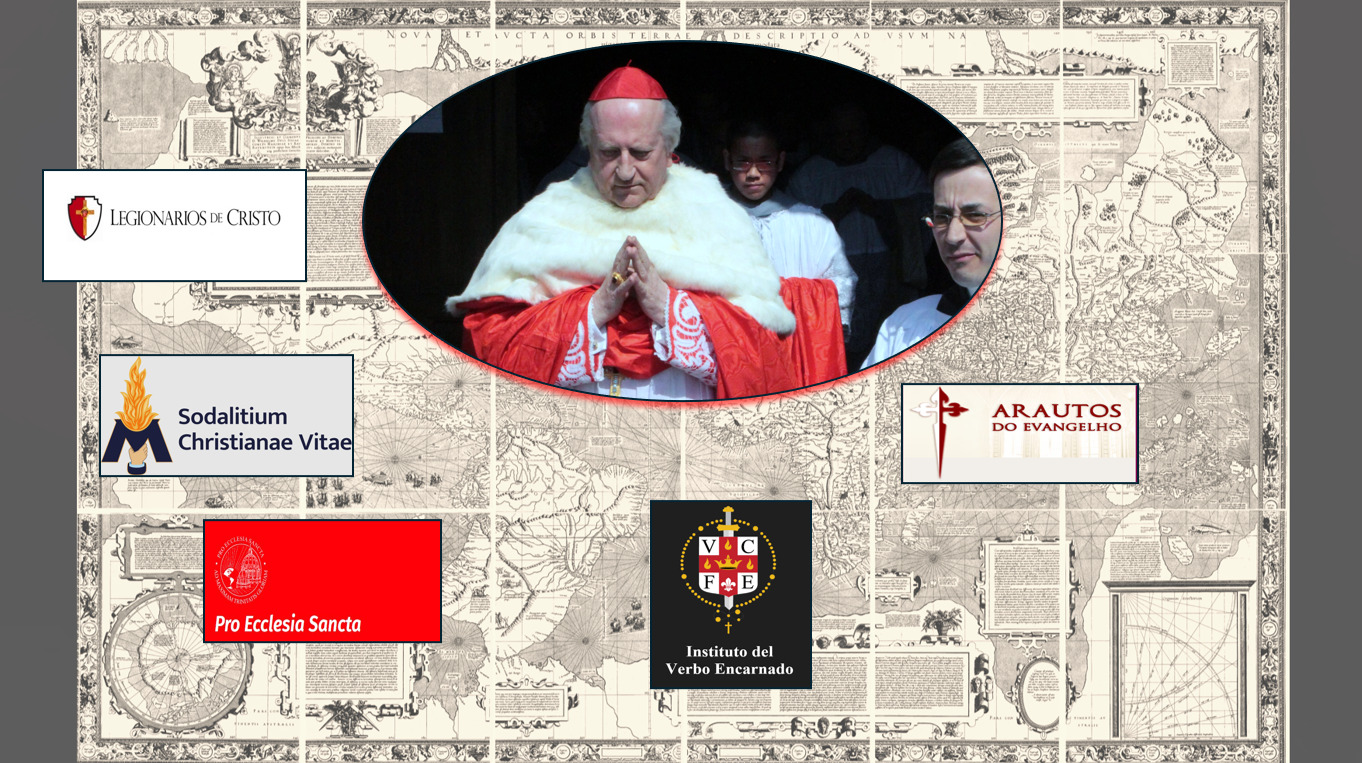
There are cases, for example, of priests of the Legionaries of Christ, reported at the time, and whose cases were known to the public in Mexico many years ago, but then one sees that in their life trajectories after those complaints that were reported, in the official reports they made at the time, these religious institutions, we see them in Medellín or Bogotá, passing through, active in the ministry,
So, what happened? How the institutions, bishops and congregations, the majority, let's say, 120, did not respond to us, everything we were asking, not only about reported priests, but about others, which would have allowed us to very quickly establish that although they were not reported in their diocese of origin, but were in other congregations.
Or members of religious congregations who are not properly incardinated in X or Y archdiocese, as in Bogotá, but the archdiocese did receive them. There is the case of the Franciscans, complaints against Franciscans, who were pastors at parishes of the archdiocese. The archdiocese refused to provide information about priests from congregations. They redirected the requests to the congregations. So, again, we turned to the judges.
To begin with, again, that sort of method, like Juan Pablo had already been developing, they dismiss our Right of Petition. This has to be interpreted as a violation of a right that a journalist has to access information and, therefore, it is a judge who has to safeguard, protect, and defend the right that a religious institution is violating.
So, we go to those 120 judges, the majority, 75, agree with us; 45, still continue, in some way, providing a margin of protection for the Church, by not forcing the Catholic Church to provide full information, with arguments that will merit study in a country such as Colombia.
Here there has been a concordat, but it has been modified, to the point that, since 1993, we cannot speak in terms of a so-called “special judicial jurisdiction for priests or bishops” who, in cases of criminal investigation, historically remained secret, or priests were sent to religious houses instead of jail, and that information was not publicly available.
Religion as privilege
In 1993, two years after the 1991 Constitution, which somewhat modified the Concordat, we could not speak of a special jurisdiction for the clergy. Despite this, in 2023 we still find a judge in Soacha, a municipality neighboring Bogotá, saying that, as journalists, we do not have the right to access that information, because a supposed jurisdiction exists.
So, it is very troubling to have judges who follow language in violation of the constitution, which has been modified. This merits much study and analysis, but we go to lower and middle courts and, finally, there is still a large number of cases, 45 at least, where the judges do not agree with us.
So, there is still an appeal. When, we “lose” the case, when the judge instead of upholding our right dismisses us, we take those 45 cases and file an appeal, also a Colombian judicial appeal, which is a citizen request for review before the Constitutional Court, which annually reviews thousands of rulings that, according to some of the parties, still require review, because, supposedly, they do not comply with the Constitution.

English Edition
Trump, the Catholic Church, and clergy sexual abuse
The judges are still ruling while dismissing doctrine advanced since 1991 following the new Constitution. And then the Constitutional Court selects our case among thousands and thousands of rulings that are reviewed annually. But acknowledging how relevant is this case, and since there was the 2020 precedent, they take it.
Juan Pablo first obtained this ruling in 2020. Then, in 2022, an additional only for the cases in Medellín. So, the next resolution will be nationwide. It's not just a matter of one bishop, X, on his own. The doctrine and the judges' mentality must be unified, or else it must be reviewed, and a large consultation will also be generated.
This led many priests to reproach us and even seek legal relief, arguing, “bishops, you are not entitled to give away our private information without our authorization. This must be reviewed to protect our privacy.”
So, a huge consultation was carried out with Catholic universities, public universities, law schools over more than two years. It was then, this year that we got news from the Court as to the meaning of its resolution that, in a few words, says that following previous rulings from 2020, with ruling T091 and then from 2022 with ruling SU191, despite what the Colombian Catholic Church claims today, journalists not only have the right to receive information about cases of reported priests, which are known to the Catholic Church.
It says that the Catholic Church must answer every request for information about its priests. And, again, the key point is that it is impossible for us to believe that in an archdiocese such as Bogotá, there are only six cases, or only nine known cases of priests with a report, when an archdiocese such as Manizales, the very archbishop says there are more than 20 cases.
Underreporting
And he says this despite the fact that chances are they are underreporting. Therefore, it's important, and I emphasize Juan Pablo's tenacity when saying that they have to address our request in full, regarding all the priests, no ifs or buts.
His tenacity and attention to detail has also been a learning experience for me, in working with him to develop a questionnaire-like grid, to prevent what men of the Catholic Church usually do in these cases. And with their language as well, which is like a dialectal variety, appealing to ambiguity and going off on frequent tangents.
I also need to clarify something else. The ruling is about handing over the files to us, not about opening the doors for us to go and search at the boxes, envelopes, and folders. We aim at receiving a PDF file, probably large, with the information on all the priests.
Where we hope to go, also in the future, is what has been done, as an example, in the United States through judicial rulings. Obviously, the Archdiocese of Los Angeles, for example, is putting digital folders online, with scanned files of priests. And there you see how some have gone to supposed clinics to get treatment. We know about this institution of the Paraclete in the United States, where they've supposedly been taken for decades.
RSN: The one that was in Jémez, New Mexico.
MAE: Yes, and the problem above all, it seems to me—and I also experience this problem, given my origins as a sociologist of religion and in many ways close to the Catholic Church—is that many bishops remain blind in not recognizing the damage this way of acting does to the institution itself, of hiding all the data instead of making it public, instead of being as transparent as possible, precisely to avoid what they now also recognize is a problem of lack of credibility, right?
RSN: They think they address the issue by accusing those of us who dare to criticize them of being communists, enemies of the Church, Freemasons or whatever flavor of nonsense they are having that day. They do so instead of acknowledging they are the ones harming the Church and its ability to influence peace processes in countries such as Colombia and Mexico, which have serious problems with violence. How can they render themselves as leaders of peace processes when one cannot trust them?
Systemic nature
MAE: So, Rodolfo, in the Colombian case, what they've given us so far, over the last two years, amounts to 13 percent of what we asked for.
And what we've been able to compile so far is a list of nearly 600 names of priests linked to the Colombian Catholic Church who have been denounced, right? I say linked, because some have been foreigners who have passed through here at some point.
But then, that list, without a doubt, if it corresponds to only 13 percent of what we asked for, chances are it could be longer, right? It could go all the way to five thousand priests. With those 600 cases, those stories involving more than 600 priests, some of them reported more than five times, chances are the final figure could go all the way there.

Other researchers will have them elsewhere, but once again it is irrefutable proof of the systematic nature of the most serious phenomenon, which is the cover-up. Because what these cases allow us to understand is what the response of the religious authorities has been to each of these priests. And then, what emerges is the pattern you have analyzed and studied.
It is the pattern of changing parishes, the temporary suspensions, even expulsions without informing about the reasons, and these priests, sometimes, although punished internally by the hierarchy, become teachers or principals of schools.
They continue holding jobs, positions, in education, in most cases, obviously, with great tolerance and impunity, because the relevant authorities were never notified and alerted about the complaints against these priests.
Given the nature of these crimes, who is responsible for addressing and solving the legal, judicial, and criminal status of these individuals?
Here we have been recently studying the case of a Jesuit, who at this moment, practically—you'll correct me however best you can put it—is supposedly “imprisoned” in a Jesuit “convent” and can't leave, because he was arrested a few years ago while taking pictures of girls. Then the Colombian prosecutor's office learned about the case but was unable to solve it.
It seems there was some sort of financial agreement between the Jesuits and the relatives who filed the complaint. This action was a violation of Colombian law stating that this type of complaints and accusations can never be the subject of out-of-court settlement.
What we know, as told by the Jesuit superior, is no. He claims this priest is sick and the prosecutor's office never allowed this case to come before a judge, so “we have him imprisoned.” It is up to the authority to clear out this issue affecting many priests nowadays, being aware that we lack information about who they are. These priests would supposedly be locked up in “convents.”
Institutional analysis
So, this whole issue calls for an institutional analysis. What are the most serious institutional factors that reveal this data in each of these stories? And we also find that the stories repeat over and over again.
This case was never reported to the Attorney General's Office. And there are cases where victims report to the authorities, alerting them, while the civil proceedings were moving forward, but these priests remained active in ministry. And in some cases, even after having been in prison, convicted, were reinstated by their bishops to go to other parishes.
This is a pattern, happening over and over. That is the reason we conclude that there is a criminal nature of a widespread institutional behavior.
English Edition
Bétharram, a mirror for all countries to look at
I come from a Catholic world, and have known sectors of the Catholic Church, defenders of human rights, and have also felt enormous admiration, not only for missionaries or priests of the lower clergy, but for some bishops, who at the time were very brave in combating transnational organized crime, drug trafficking, in the tropical forest regions, where those who suffer are Black and Indigenous peoples.
However, I was greatly surprised and saddened by these distinguished social leaders, bishops who defend human rights, who some describe as progressive-minded, and some would say, I don't know, well, it's the “leftist Church”, or heir to liberation theology.
I thought, when faced with this drama of abused and sexually assaulted persons, their handling of the issue will be different from others, and no. The contradiction is that people with a modern sensibility, faced with the drama of human rights violations, in the case of stories that implicate one of their own as an aggressor, as a criminal, they reproduce that culture of spiritual paternity, the bishop as protector even if he is also a judge. Instead, they say, “no, but I am above all else a father.”
All this drama of not committing to their canonical duty, that tells them they are also a judge; you should also have probed, and normally they avoid investigating the priests under them.
So, at a national Colombian scale, not only with current bishops, but going over the bishops’ trajectories, with archives or archival data, we are finding that if this bishop is here, let’s say, in Manizales, at the height of his career, a relatively young archbishop of one of the great Catholic cities, Manizales Caldas, in the coffee region, when he was previously, in Facatativá, very close to Bogotá, as a bishop, and before that when he was a young bishop in Tolima, in a region called Líbano, he left a trail of impunity and administrative corruption in the way he handled the issue.
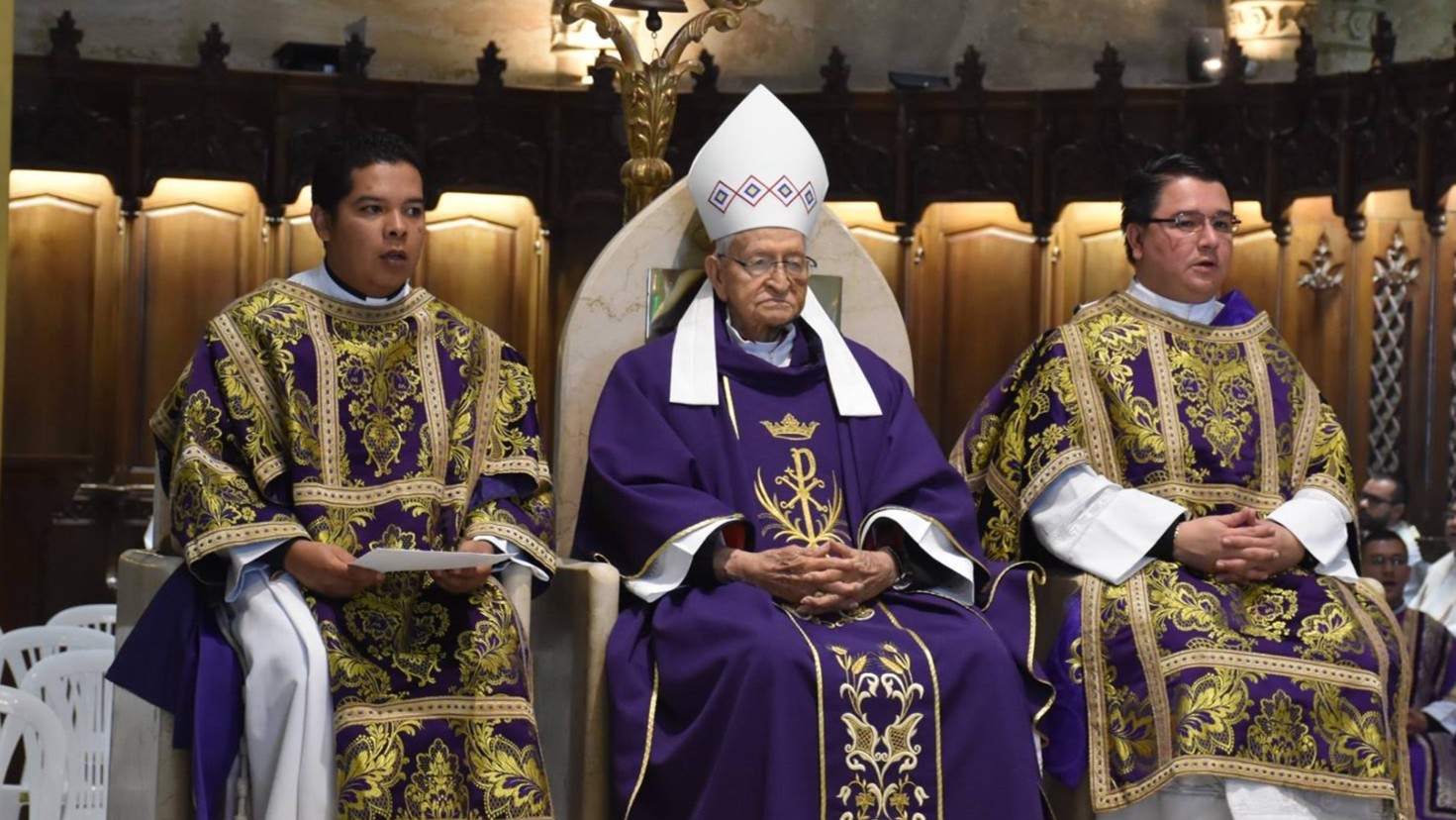
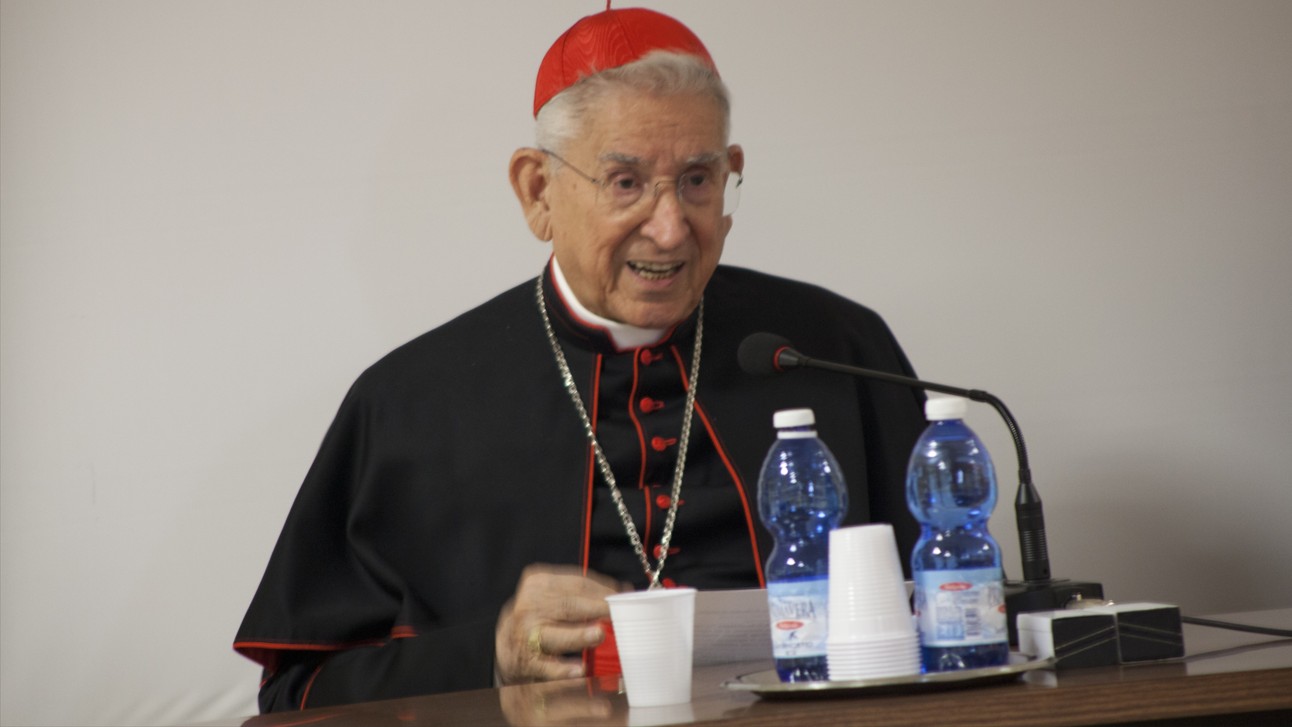
So, data is also emerging about something more than isolated cases of delinquent or reported priests. The data reveals how each of these current bishops and their predecessors, some distinguished prelates who have already passed away, one of them appointed, as an example, by Pope Francis, as the oldest living Cardinal, José de Jesús Pimiento Rodríguez, emeritus archbishop of Manizales.
Episcopal culture
And one sees that trajectory only in Manizales, since the 1980s, although we also have data from the 1970s. From the 1980s, most of the data is from the last ten years, but it is already there.
They do their best to not let people know about that. They are well aware of what is at stake at this point. It is the response the current bishops and their immediate predecessors and the bishops who promoted them, their mentors, have had. It is what we can call, their culture.
If we go to Medellín, it can be established that the current bishop, Ricardo Tobón, is following the norm and tradition of bishops dating back to López Trujillo, who mentored many of the current powerful bishops in various regions, where there are young bishops who are reproducing that culture.

English Edition
Suicide at the Congress
RSN: López Trujillo was, as far as Colombia was concerned, during John Paul II’s pontificate, the Pope for Colombia. He promoted whoever he wanted there and his way to understand the role of a bishop is fully in force today.
So, what about the “offices for good treatment” (safeguarding), where they already exist in Colombia, are the prevention strategies multiplying?
MAE: Well, main problem is how do I know how coherent, how reliable their prevention projects are when they are unwilling to come clean with the actual state of play of the situation here?
That's another topic and a contradiction I would like to have the opportunity to discuss with you so you can also give me your opinion on these phenomena.
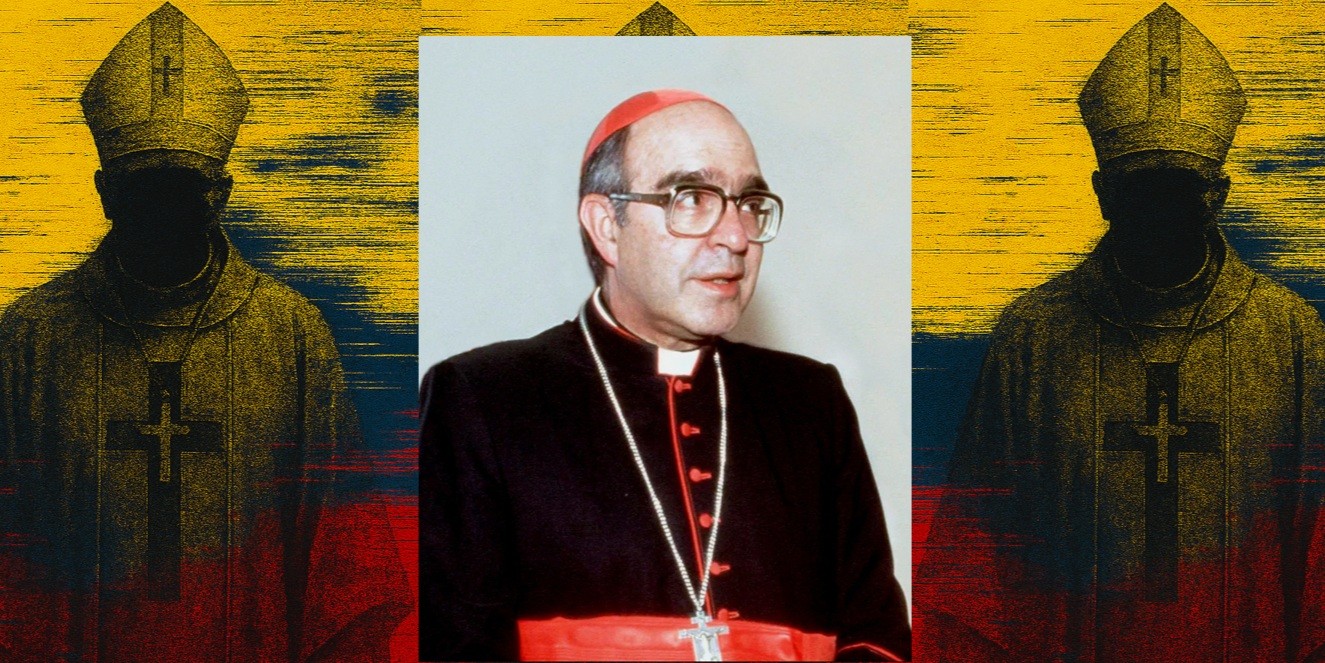
RSN: In Mexico the bishops immediately fall for the chance to render themselves as the victim, but that cannot happen in Colombia.
When was the religious persecution in Colombia? When were the churches closed? Where were the attacks against the prelates? But here the issue was solved one way or the other 20 years ago, but the clergy sexual abuse remains.
MAE: And yet, they are attacking us and criticizing us for what we do.
And the other thing you point out and call attention to is, yes, the process of what we're doing has to do with the Colombian context, but it also allows us to see relationships and ties and connections, obviously, due to the nature of the Church, to launch wider probes investigations.
So, for example, if one looks at time periods, one can review the response to cases during the period when Joseph Ratzinger was at the then Congregation for the Doctrine of the Faith, and I understand that at that time he already had the duty to be aware of all these processes.
Ratzinger system
And what recommendations did the Vatican give regarding some of the priests facing processes in Colombia?
So, one can now establish these types of, let's say, new investigative processes to say, look, this has something in common: it was during this period, if we look at what recommendations were given.
As an example, temporary sanctions of five years of suspension and then being reinstated to the position without public notice. Never, not even the civil authorities.
And there is another issue that of the Spaniard missionaries. The Catholic Church in Spain sent priests ordained there and were reported in Colombia. So, one should also be able to request information from the dioceses and religious orders in Spain, or their main headquarters in Rome.
Before being denounced here in Colombia, they had already been denounced in Spain, and coincidentally, that's why they sent them here, to Colombia, because they were inconvenient priests, as we know happened with German priests.

RSN: The Jesuits in Bolivia. That is what was just recently addressed at a trial where two Spaniard Jesuits, former leaders of the order in Bolivia were found guilty by a tribunal and sentenced to very light punishment, probably due to age, one year in prison.
The issue is that the order as such was aware they were sending missionaries already in trouble in Catalonia and the other Spanish provinces, and that's why they gave them the easiest way out. And that was Bolivia. They knew the state authorities are very weak there, so they would be able to do whatever they want. And they did it; they did what they wanted in Bolivia.
MAE: I think having access to more data, more information, will allow for that kind of study or research.
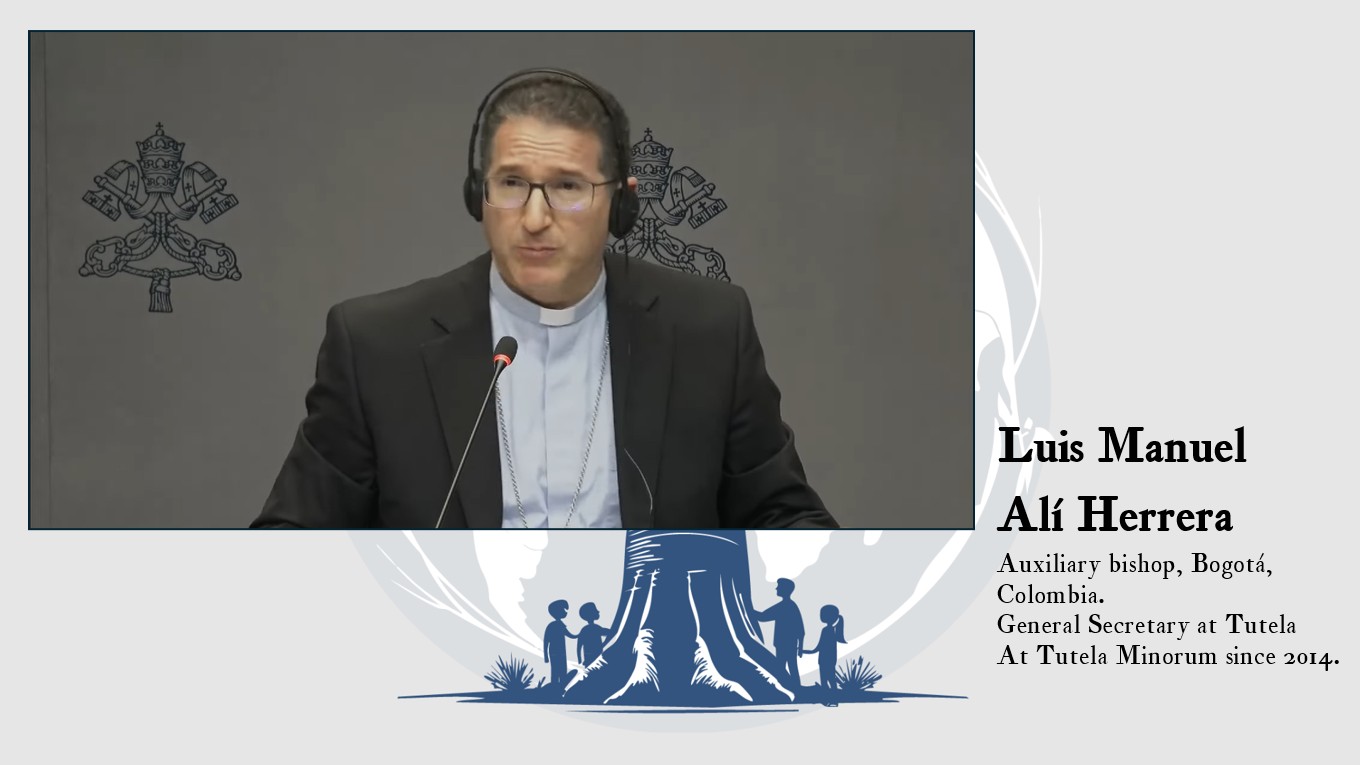
Another issue of concern here is the very active campaign in Colombia to portray a large prevention program headed by Luis Manuel Alí Herrera, the general secretary of Tutela Minorum, the global entity dealing with prevention in Rome.
They portray the program here as an example of how much is possible when offices are opened to receive complaints from Catholics. Despite that, here in Colombia and elsewhere in Latin America the idea gaining traction is “Do not report to the Church, report the Church.”
Colliding narratives
But there is a great deal of propaganda saying: “Look at what we are doing to make our churches, our dioceses, safe environments, safe places.” And this great crusade, this great activity, apparently funded by the United States Conference of Catholic Bishops has had Luis Manuel Alí Herrera as its figurehead.

English Edition
The Catholic Church’s report on clergy sexual abuse
Meanwhile, Barrientos Hoyos who is portrayed as the Antichrist, says nothing has been done here, and on the contrary, the bishops are covering up abuse.
And then the Church responds with its great propaganda strategy and its booklets and its workshops and that indeed has to be done, but the bishops claim that is the proof of how much progress is being made.
For me as long as the Church remains unwilling to come clean and to find ways to warrant that every complaint will be immediately referred to the prosecutor's office, there is little room to believe that the same people who are promoting prevention today are different from those who systematically covered up abuse. Those are the colliding narratives.
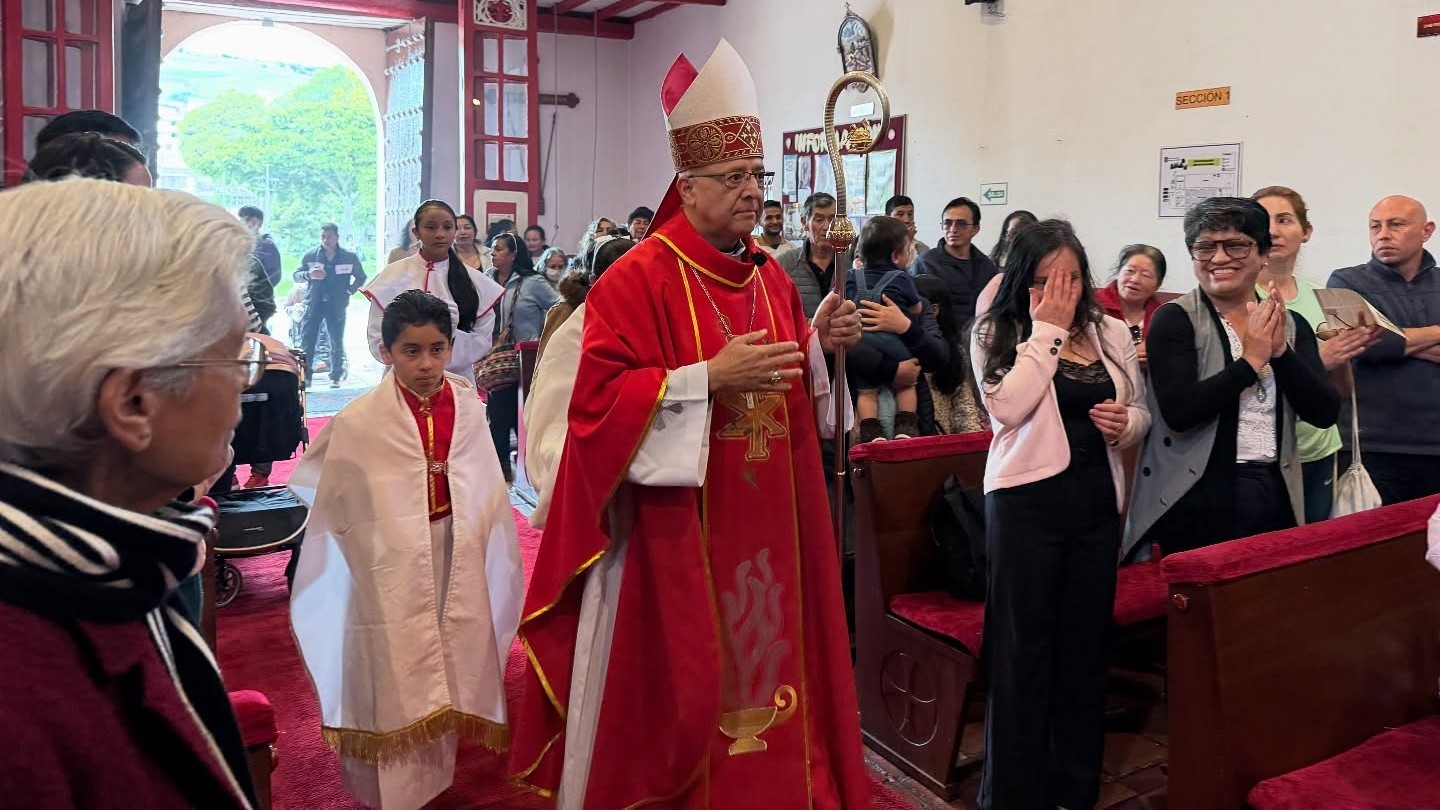
You were talking about how some bishops portray those who are investigating these cases. One as powerful as Tunja’s, Gabriel Ángel Villa Vahos, who is currently the vice president of the Colombian Conference of Catholic Bishops.
Those bishops have been escalating the stigmatization of those seeking justice. And more recently with the court's ruling, because it's known that there were two of us who were the plaintiffs. Now they spread the idea that those behind this ruling, including the judges who ruled in favor of these journalists, are public enemies of the Catholic Church.
That seems to me to speak volumes about the position that the Catholic Church has held over the years in a country such as Colombia. And yet, yes, one finds progress with this ruling, but one needs to wait and be very realistic, because we are not after the identity or the names of the accusers.

That's another thing that needs to be clarified. Our investigation is more focused on the data of accused priests. But, how possible is it? I think what we've done so far has been very important, and it's been astonishing, because historically, and even today, it's very easy for them to destroy archives and evidence.
In that regard, it could be we are asking for data that could disappear. What cannot disappear perhaps will be when the very complainants have the proof and some signature of “document received”, or some evidence as to say: “I delivered this document” or “I spoke with such person”.
That is what over time people have been doing, those who have reported to, to the church have been learning that they have to track down everything, absolutely everything, even with, with a picture of when they met with the bishop. There are people who take a selfie as proof: “Today I met with the bishop” or “Today I delivered a copy of this document”, as to prevent the clergy telling them that there was no delivery or meeting about their case.
But a big question is, if the astonishing thing behind an investigation like this is, how can we, how were we still able to access a list of at least 600 cases? And how have they not destroyed the evidence yet?
Chances are the evidence about other cases, some of it potentially compromising current archbishops and bishops, not only on cover-ups, because there will surely be those who were denounced at the time, being young priests, because they destroy all of that.
I have many questions and many concerns. I think we need a more inquisitive gaze of the data. There is much that can be done, and I still have a series of perplexities and questions.
In the book Juan Pablo and I published two years ago, with this list of nearly 600 cases, we dared to say—and certainly such a harsh statement deserves its nuances—that the Catholic Church operates as a transnational organized crime organization.
If we focus solely on the cover-up aspect, well, then there are traces, evidence of such crime. That is the case when there are systems and an organization fostering the reproduction of this type of criminal mentality and practice.