
Extortion by armed groups of the Sinaloa Cartel in Talismán undermines border security.
Los Ángeles Press
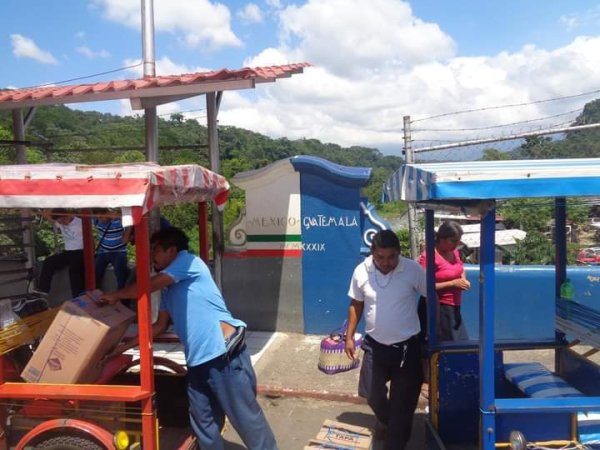
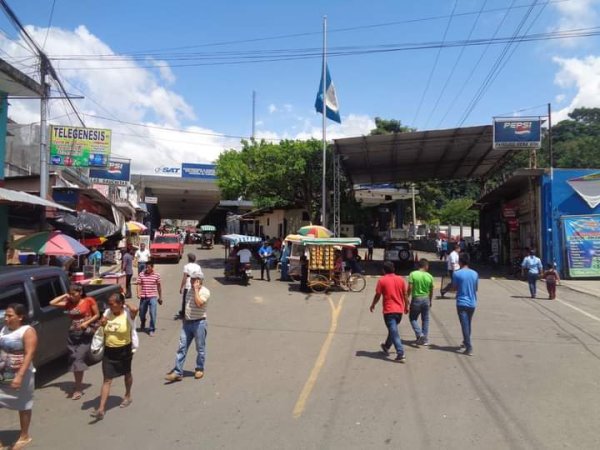
In Talismán, Tuxtla Chico, Chiapas, heavily armed men, openly visible and unmasked, are demanding payment from individuals arriving by boat along the river. This extortion occurs just 50 meters from the customs office located at the bridge. They request identification from travelers; those from El Carmen, a nearby town across the Suchiate River in Guatemala, are exempt from fees. However, individuals from other areas of Guatemala, or those carrying goods, migrants, or Mexicans not residing in Talismán, are subjected to a fee. The standard charge is 800 pesos per person (about $45), though some have been extorted up to 2,000 pesos ($112).
One border resident, who frequently crosses between Chiapas and Guatemala, recounted his recent experience to Los Ángeles Press: "I visited my father in San Marcos, Guatemala. Upon my return, as I was ascending from the river, two suspicious men called me over. I needed to pass through their area to reach the transport zone. They asked where I was going. I said Tapachula. While inspecting my INE, they asked where I was coming from. I told them I was visiting my father. They demanded 2,000 pesos or I would be left there. They showed me a long gun. I opened my wallet to show I had just over 500 pesos. They took it and told me to leave quickly."
A local trader, who crosses frequently, confirmed the Sinaloa Cartel's extortion practices: "They are charging 800 pesos in Talismán. I went to pick up merchandise," he said. "As I was organizing my boxes, a man leaning against a red truck with tinted windows asked where I was going. I said Tapachula to sell clothes. He told me that if I wanted to pass without trouble, I needed to pay 800 pesos. He showed me a gun at his waist."
The trader expressed his frustration: "We’re struggling to restock because we barely make a profit of one to two thousand pesos a day. For that amount, they could kill us. They’ve beaten people who don’t pay or don’t have money. Recently, they reportedly threw a woman into the river."
A transporter, to avoid extortion, has ceased operations. "I took my van out of service," he said. "They were demanding 600 pesos a week from my driver. Another driver on a different route was beaten and left in the woods."
Residents, who wish to remain anonymous, report that the extortion in Talismán is severely impacting workers in the agricultural and commercial sectors of Tapachula, as well as traders and tourists who use the bridge to shop in Tapachula. The local currency, the Quetzal, is stronger (1.5) compared to the Mexican peso, which boosts local sales and hotel occupancy.
The apparent inaction of both local and federal authorities has led to a climate of silence among residents. Talismán, the largest town in the municipality of Tuxtla Chico, is seeing a decline in commercial activity that affects not only its own economy but also neighboring municipalities like Cacahoatán and Tapachula.
It is inconceivable that authorities are unaware of the armed men collecting fees, or that they fail to notice the trucks and motorcycles used by these criminals at this crucial border point. National sovereignty is being compromised at this immediate frontier, where daily crimes occur despite the presence of authorities meant to protect the area. Moreover, just 150 meters from Talismán, there is a National Guard checkpoint on the Pan-American Highway heading toward Tapachula. What are they truly doing? Have they never received reports about the situation in Talismán?
There are eight official border crossings between Guatemala and Mexico, marked by rivers, volcanoes, or lagoons. These crossings are equipped with customs stations where documentation is processed on both sides. However, the 956 kilometers of border remain porous.
Additionally, historical and cultural ties between the nations, with families divided when Chiapas and Soconusco were annexed to Mexico in the 19th century, result in ongoing cultural and commercial exchanges across numerous informal crossing points. The pangas, which transport tons of products and even vehicles, are a tangible example. But today, in the port of Talismán on the Suchiate River, national sovereignty is effectively disregarded.