
Rodolfo Soriano-Núñez Lunes, 28 de Octubre del 2024
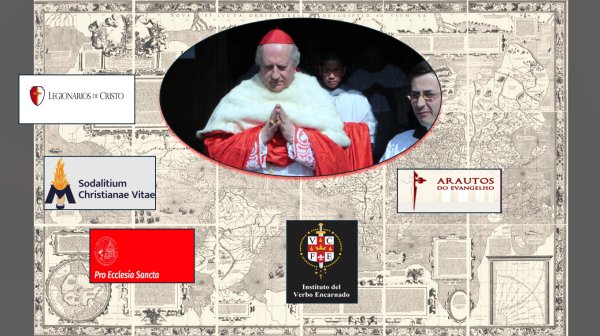
Rodé is key to understand how the Roman Catholic Church dismissed accusations against the Legion of Christ, the Heralds of the Gospel, and the Sodalitium.
Besides Rodé's role, from Argentina news of a victim getting justice, while in Mexico, despite the clash between the President and the Judiciary, a former priest gets bail at a hearing at 1 am.
By Rodolfo Soriano-Núñez
The story about the Peruvian Sodalitium looks more and more like the Mexican soap operas: lots of noise and fuss, little or no substance to address the real issue: the lives destroyed by abusive priests and those who, like Luis Fernando Figari, the founder of that “order” have never been priests but enjoyed many of the perks Marcial Maciel or Carlos Miguel Buela had at the Legion of Christ and the Institute of the Incarnate Word, respectively.
In the most recent development in Lima, the nunciature to Peru received a very expensive messenger: a lawyer sent there by Jaime Baertl and Juan Carlos Len Álvarez, two of the 15 former leaders of the Sodalitium expelled up until now by Pope Francis.
Baertl, like the male protagonist in any soap opera loves to display his power and knowledge of how to impact his public. He decided to twist his knickers, but instead of doing so the way other former leaders of the Sodalitium have done, with silence or—at least—some decorum, he went for the bombastic use of a lawyer to deliver a letter to the Nuncio.
There was no actual need of hiring a lawyer, one with a license of notary public, to be more precise. But Baertl, as many other leaders of movements like the Sodalitium, the Mexican Legion of Christ, or the Argentine Institute of the Incarnate Word, loves to perform for an audience.
Here it is important for the English-speaking audiences to keep in mind that unlike what happens in the United States, where the function of public notary is so common that the services of public notary in The Bronx, as one of the many possible examples, are offered next to a deli and a hair salon, as the picture before this paragraph, from Grand Avenue in The Bronx, proves, in Latin America, said duties are the realm of expensive lawyers, usually hired when one buys a house or writes a testament.
The notary public used by Baertl even has a website of his own, with a very sophisticated system to update their clients about how their business moves in the complex structures of the Peruvian judiciary, something that would be unthinkable for public notaries in the United States.
Bells and whistles
It is not the most expensive notary public in Lima, but there was no actual need to hire a lawyer to deliver a letter to the Apostolic Nunciature. But Baertl as other former leaders of the Sodalitium loves to intimidate who ever crosses his path, and now it was archbishop Paolo Rocco Gualtieri’s time to witness Baertl’s power and his mastery of a symbols and the Peruvian judiciary system.
Unlike what happens in the United States, notaries in Peru must be lawyers, and are used to these kinds of games and legal threats. That is why they use rubberstamps and legends to limit the true reach of their intervention. In this specific case, the Peruvian public notary limits his involvement on the issue to the act of being a courier.
At the top of the first page, the notary says that he is not the author of the piece. At the end of the same and the next page, there is another stamp stating that the notary does not assume any responsibility for the contents of the document, its signature, or the identity of those involved.
The PDF is available here for download and you can read it in the box above.
On the back of the second page the flair Baertl was looking for falls apart because the notary states there that his firm only delivered the letter. An image of that legend appears below.
So Baertl hired an expensive courier, something that RAMSEM or KCR Courier local couriers in Lima could have done, much cheaper, but without the flair, the impact of using a notary public to do the deed.
The letter proves nothing. Baertl is asking the nunciature to retract his expulsion from the Sodalitium because:
- The accusation of sexual abuse against Baertl and Len Álvarez is new to them. They were not aware of it.
- They claim to be innocent of having any responsibility on irregularities happening at firms with some kind of association to the Sodalitium.
- They do not acknowledge being responsible for the sins leading to their expulsion from the Sodalitium.
- They believe that the accusation of them being responsible for misappropriation and private use of funds and goods of firms with links to the Sodalitium is a calumny and defamatory.
- They ask for a retraction and a rectification of the rulings expelling them from the Sodalitium.
Performative Baertl
The main problem is not the performative nature of Baertl using a notary public to deliver this document. It is the fact that they are unwilling to acknowledge their guilt.
Sadly, it is impossible to figure out how the Pope ruled on Baertl and the other 14 expulsions from the Sodalitium because there is no access to the final report made by Maltese archbishop Charles Scicluna and his second in command Spaniard priest Jordi Bertomeu.
This is where it is necessary to raise the question of why the Pope is ruling the way he has, with what, in fact are nothing but a series of slaps in the wrists of the leaders of an extremely abusive religious “order”.
It is a question that nobody in Rome will ever answer because what happened at the Sodalitium was only possible because many key figures in the Roman curia and in the leadership of key Roman Catholic dioceses in Peru were willing to dismiss accusations, formal or informal, brought before them at least since 2000, when José Enrique Escardó Steck came forward with the first formal complaint about what was happening at that order.
It is the same old pattern of denial at all costs. The only difference is that this time around the former leaders of the Sodalitium are avoiding any reference to Pope Francis to prevent the threat of an excommunication as it was with Giuliana Caccia Arana and other former leaders of the Sodalitium.
This pattern is not new. The Roman Catholic Church saw something similar happening when the former nuncio to the United States, Carlo Maria Viganò, decided to attack Pope Francis.
When that happened, Viganò did his best to render Francis as unwilling to go deep into the sexual abuse crisis for having kept Theodore McCarrick, despite the fact that McCarrick resigned his position as archbishop of Washington, DC, back May 16th, 2006, when he reached 75 years, and then Pope Benedict XVI accepted the proforma resignation he was forced to tender at that point.
The McCarrick report came as a vigorous response from the Holy See to unsubstantiated allegations from Viganò about Pope Francis’s role in keeping McCarrick somehow active, although as the report proved, it was Viganò and Benedict XVI himself who allowed McCarrick to remain active despite the allegations that existed already before his fellow cardinals elected Jorge Mario Bergoglio to replace Joseph Ratzinger, as the McCarrick report, available here, describes.
Scandal, again
So, why is Rome managing the crisis at the Sodalitium the way it is doing? Why there is no indication that we will get a copy of the report on the Sodalitium?
It is possible to assume at this point that unlike what happened with McCarrick, who was already the source of a scandal on his own, and gave Viganò an excuse to keep his attacks on Francis, with the Sodalitium the situation is far more complex and goes all the way into forcing questions into the way John Paul II, Benedict XVI, and many of their closest subordinates at the Roman curia have been dealing with the clergy sexual abuse crisis over the last 40 years or so.
It is clear by now that Francis is not up for suppressing predatory organizations as the Legion of Christ or even the Institute of the Incarnate Word, with which Francis has had a conflictive relationship going back to his years as vice chair and chair of the Argentine Conference of Bishops.
Pope Francis has rewarded the relative docility of the Legion of Christ with positions in the Roman curia and with silent punishments. Readers must be aware, in this respect, that the key difference between the Legion of Christ and the Sodalitium is not the scale of the predatory behavior.
The difference lies in the fact that former leaders of the Sodalitium as Alejandro Bermúdez and Jaime Baertl are unwilling to accept two facts: there were abuses at the Sodalitium, and they were involved, one way or the other in those abuses.
Bermúdez keeps using his social media accounts to split hairs when it comes to provide a credible explanation of his role as the enforcer of the Sodalitium, the guy charged with destroying the victims of clergy sexual abuse and more so the journalists willing to write about what has been happening there since the mid-1970s.
The situation makes all the more relevant to have a version, even if redacted, of the full report. However, Los Angeles Press has been unable to find any hope of the report ever becoming exposed because of who helped the rise of the Sodalitium.
It would be possible to point many culprits. A frequent flier of this kind of accounts would be now deceased Italian Cardinal Angelo Sodano. Ever since his days as apostolic nuncio to Chile, he struck unexplained deals to protect Marcial Maciel, Fernando Karadima, and later Carlos Miguel Buela.
He is the reason Francis trimmed down the financial autonomy of the Secretary of State in the Roman Curia. Several accounts of what happened at that entity during John Paul II’s pontificate talk about an endless transfer of funds from major predators in the Roman Catholic Church getting some help from Sodano when some other office in Rome seemed to be willing to do their job.
The missing link
Of course, any thorough understanding of the clergy sexual abuse crisis would need to take into consideration the role of John Paul II and of Joseph Ratzinger and later Benedict XVI.
But another key player is Cardinal Franc Rodé, and different sources talk of him as one of the reasons why there is little or no expectation of the report on the Sodalitium becoming public.
He is a creature of the Cold War. Born in war torn Balkans, his family was able to flee to Switzerland and from there they reached Argentina. Rodé entered religious life in Argentina as a member of the Congregation of the Mission, also known as Lazarist Fathers in the English-speaking world, an order with roots in France.
That explains Rodé having his ordination as both deacon and presbyter in Paris in 1959 and 1960, respectively. Twenty years later he was already working at the Roman Curia. In 1997, he was appointed archbishop of Lubjliana, Slovenia, and seven years later he went back to Rome as prefect of the then Congregation now Dicastery dealing with the religious orders in the Catholic Church.
He played a key role in fostering the Sodalitium, in whitewashing and normalizing Marcial Maciel’s many crimes at the Legion of Christ, and in fostering at least other two “orders” with known predatory practices: the Heralds of the Gospel and Pro Ecclesia Sancta, a smaller “order” in Peru.
He was also involved in the second and last “apostolic visitation” of the Argentine Institute of the Incarnate Word. In that case the record is not as bad as in the Legion of Christ’s, when Rodé was one of the top clerics probing Maciel’s legacy, because Pope Benedict XVI dismissed Carlos Miguel Buela from the leadership and sent him into some sort of golden cage in one of the parishes managed by the Institute in Italy.
It would be impossible to provide at this point all the information available on Rodé’s role suffice to say that Rodé made a name for himself as the champion of predatory organizations when he made a passionate defense of the Legion of Christ, the Sodalitium, and the then relatively recent arrival, the Brazilian Heralds of the Gospel in Aparecida, Brazil.
The Brazilian Basilica, the largest Church in the Roman Catholic world, held the Fifth General Conference of the Roman Catholic bishops of Latin America, the so-called CELAM, whose final document is available in English here.
Standards
Rodé attended the meeting as a delegate appointed by then Pope Benedict XVI (see the roster of that meeting, only in Spanish, here).
It was not a special appointment since he was already then the head of the Congregation (now Dicastery) for Institutes of Consecrated Life and Societies of Apostolic Life, which deals with all the “orders”, masculine and feminine in the Roman Catholic world.
Rodé repeated a line that was the standard take of both John Paul II and Benedict XVI when dealing with new organizations that in some cases acted like religious orders but that broke aways from the ordinary understanding of what was a religious order up until the end of the 1970s.
The issue is that Rodé was pushing that understanding of those organizations by 2007, when Marcial was already in some sort of limbo because neither the Mexican nor the U.S. governments were willing to go after him and because Benedict XVI “punishment” after the many revelations of his predatory conduct before his death was to send him to pray.
Maciel set the tone with which his order would deal the allegations against him. Never really admitted any wrongdoing, but unlike Chilean super-predator Fernando Karadima and more clearly the former leaders of the Sodalitium, he quietly accepted the “punishment”.
Despite the punishment, Rodé was already by 2007 rallying the Legion of Christ to keep their organization alive. In this story Rodé hails the Regnum Christi, while explicitly praising Marcial Maciel (available only in Spanish here), despite the fact he was already “condemned” to the life of “prayer and penance” that Benedict XVI saw as some sort of punishment.
One year later, back in 2008, Rodé went to Mexico. There he decided to up the ante. After Maciel’s death he praised the founder of the Legion of Christ saying that given “that the (Legion’s) fruit is good, can we say the tree is bad then? Purely from a logical standpoint, I would say no.” So Rodé, the Cardinal charged with keeping the Roman Catholic religious orders’ discipline, went to say: “I absolve Father Maciel. I do not judge him”
Fruits and trees
Another source, writing in Spanish back in 2010, provides more details as to how willing was Rodé to dismiss the accusations against Maciel:
All of this is the fruit of Fr. Maciel’s genius since he was able to be above his time. He transcended time. He was sovereign, was free, he was not conditioned by the then current opinions. That is why he was one of the few able to avoid the mistakes made after the (Second Vatican) Council. He was able to foresee the dangers and the traps of secularization and to avoid them.
Rodé would use a similar approach at Aparecida, praising Maciel’s deeds and extending the same attitude to orders already accused of being as predatory as the Legion was. Among the beneficiaries of Rodé’s largesse were the Peruvian Sodalitium and the Brazilian Arautos do Evangelho (Heralds of the Gospel).
Around those days, Rodé presided over the ordination of deacons and priests from the Heralds.
There he followed the approach towards the priesthood as instilling the recipients with the kind of perpetual bond, the ontological change, leading many Roman Catholics to assume that whatever a priest does, clergy sexual abuse included, is somehow fair play because it comes from an individual touched with that special gift that, top clerics as Rodé say, is ordination.
An excerpt from the magazine published at the time by the Heralds, in Portuguese, appears in the box after this paragraph. The full issue is available at one of the Heralds’ websites here.
Excerpt from the July 2007 magazine of the Heralds. Available only in Portuguese.
Two years later, in 2009, Rodé went back to Brazil. This time as representative of Pope Benedict to deliver an award to Joao Scognamiglio Clá Dias, the priest and founder of the Arautos who appears in the picture immediately after this paragraph.
At the ceremony, Rodé showered Clá Dias with all kinds of praise, as this story, available only in Spanish, tells.
Not that Rodé would be willing to accept anything from the orders he oversaw in the Roman curia. He was a key driver of the “apostolic visitation” launched against the female religious orders by the most conservative members of the United States Catholic Conference of Bishops.
Soft on Maciel, hard on nuns
The same year he went to Brazil to praise Clá Dias, in 2009, Rodé rendered the visitation to the U. S. nuns as a decision stemming from Rome’s concern with the religious sisters spiritual and material welfare, but—in reality—the visitation was not as generous as Rodé describes it in this National Catholic Reporter story from that year.
Quite the opposite, it went hard on small female-only orders, whose only crime was to allow their members to pursue degrees, even doctoral degrees, breaking away with the most traditional understanding of the role of nuns in the Roman Catholic Church as maids-in-habit, providing domestic service for the bishops, priests, and seminarians.
This story from Jason Berry from December 2012, provides more details as to how contradictory was Rodé’s probe against the U.S. nuns when considering his own record and that of many of the bishops pushing for that probe. Francis killed the probe soon after his election as Pope in 2013.
Unlike Rode’s attitude towards the nuns, but attuned with his attitude towards masculine orders marred with accusations of clergy sexual abuse, Rodé cleared the monks of the Benedictine abbey in Ettal, Germany, as this story from 2010 tells.
Originally, archbishop and now Cardinal Reinhard Marx of Munich, the diocese once led by Benedict XVI, launched a probe for failure to follow the diocesan guidelines to report sexual abuse. Far from siding with the archbishop Marx, Rodé found a way to clear the abbot and his underlings as to avoid any disciplinary action from Rome.
Five years ago, Jason Berry stressed already the role of Cardinal Rodé in preventing any kind of change as far as clergy sexual abuse is concerned. In that piece, he goes there into details of how Rodé repeatedly was willing to dismiss any accusation or criticism of Maciel since “he was not his confessor”.
Predatory practices
Rodé was with fellow Cardinal Velasio de Paolis, and then archbishop of Denver Charles J. Chaput part of the probe regarding the predatory practices at the Legion of Christ. By now, as previous installments of this series on the Sodalitium have stressed before, it must be clear that Chaput played a key role not only providing landing pads for the Sodalitium’s entrance to the United States in Denver and later at Philadelphia.
Chaput also legitimized the practices in the Peruvian organization. There is no record of him going as far as Rodé, but he was very willing to receive the leaders of the Sodalitium in Denver and Philadelphia, as he was to go to Peru to attend at least one of their Assemblies, as the picture after this paragraph proves.
Rodé’s largess was also available for yet another Peruvian order with standing accusations of abuse, spiritual to say the least, the so-called Pro Ecclesia Sancta (For the Holy Church in Latin).
It is impossible to address the existing accusations there, but if Pope Francis’s interest in going deep into the major drivers of predatory practices in his Church is real, Pro Ecclesia Sancta should be the next in line as far as Peru is concerned. A video from Pro Ecclesia Sancta praising Rodé is available here. Audio available only in Spanish.
However, any decision on that much smaller organization in Peru will have to wait to see how many tricks Baertl, Bermúdez, and the rest of the now expelled leaders of the Sodalitium will pull out of their sleeves.
This series will provide more details about Rodé’s role as the missing link in many of the cases of predatory religious “orders” in Latin America and elsewhere as it is clear that Baertl’s gimmick of using a notary public to deliver the letter to the nuncio to Peru will not end there. He is for the theatricality of the proceedings.
Him, as many other leaders of predatory organizations loves to play the victim, and he is more than ready to deliver the performance of a lifetime. More so since there is a clear coalition of Roman Catholic bishops and Cardinals more than willing to challenge Pope Francis on any and all issues.
Rodé himself has been more than willing to fuel the myth of a “Peronista Pope”, a Pope so drawn into left-wing policies that any person with actual knowledge of the attitude Jorge Mario Bergoglio had as archbishop of Buenos Aires during Néstor Kirchner’s and Cristina Fernández de Kirchner’s terms as Presidents of Argentina would be unable to digest those ideas.
At some point during Néstor Kirchner’s term in office La Nación, the paper of record in Argentina, called Bergoglio the head of the opposition to Kirchner’s Peronista government.
More from Argentina
In Argentina, the Network of Survivors of Clergy Sexual Abuse was able to score a win in the fight to achieve a measure of justice for victims of predatory practices there.
The victory comes after a sentence to four years of effective prison to priest Fernando Páez. As it is a sad reality, there is no indication from the diocese of Salta in Argentina if Páez will face some internal disciplinary action from his church. As with Julio César Grassi, who remains a priest despite a long-standing sentence on him, it is not clear what will happen to Páez.
The message posted in their social media memorializes the sentence against Páez.
Going back to Grassi, the same network of Argentine survivors is concerned about what guests said at TV show 59 seconds at the public TV network in Spain.
The Argentine network of survivors rejects the idea that Pope Francis changed his understanding of the clergy sexual abuse crisis after his pastoral trip to Chile and Peru back in 2018.
Fittingly, they remind Grassi’s case, who remains a priest, and who frequently brags about a close relationship with Pope Francis as an example of how, in actuality, Francis has not changed that much his understanding of the issue or the most common practices of his Church.
A previous installment of this series went into some of the details of Grassi’s case, as the story linked after this paragraph tells.
The Argentine Network’s objections are in full detail, only in Spanish, at what used to be Twitter with their rejection to what was said about Pope Francis at the show in the Radio Televisión Española network. The thread appears after this paragraph.
On top of the Grassi case as an example of why they claim there has been no change, they also raise objections regarding the “zero tolerance” of Pope Francis.
Key among the objections is the unwillingness of the Argentine dioceses to open their files and archives to allow for a better understanding of the scale of the clergy abuse crisis there. Similar objections exists for any country in Latin America.
Also, they stress the issue of how much the Church in Argentina is willing to spend to defend clerics with credible accusations of clergy sexual abuse. As it is usually the case in other Latin American countries, dioceses use all the tricks at their disposal to try to discourage victims from seeking justice in courts.
And from Mexico
It is in that respect that is necessary to see a case from Mexico, where the archdiocese of Tuxtla Gutiérrez, Chiapas, was able to get one of their former priests with a credible accusation of clergy sexual abuse on bail.
They did so in the most absurd manner. The hearing to decide whether Francisco Javier Albores Teco would be out on bail happened at 1:00 am of Thursday October 24th.
The judge’s decision to allow Albores Teco to be free, without a bracelet or without any other measure to prevent him from fleeing to avoid the trial, is more concerning since Mexico is in the middle of a constitutional crisis confronting the Presidency and the Judiciary.
It is hard to imagine how many buttons someone had to press to allow this to happen. It must be noted that Albores Teco’s Facebook account has been increasingly focused over the last two years on political rather than religious issues.
Up until March of this year he was actively supporting the now governor-elect of Chiapas, Eduardo Ramírez, on an almost daily basis, despite him being in some sort of arrest, so either he lent his account to someone else, or he had access to a phone or a computer while being under arrest.
The way the hearing happened is more concerning given the fact that last week Marcelo Pérez, a prominent priest from the neighboring diocese of San Cristóbal de Las Casas was killed after presiding over early Sunday mass as the story linked after tells.
Albores Teco’s case goes back to a story Los Angeles Press published back in 2023 about the cover up provided by 15 Mexican bishops and one mother superior to priests accused of clergy sexual abuse.
Bishop Fabio Martínez Casillas, who died back on November 25th, 2023, was helping Albores Teco. Now, it is the current Chancelor of the archdiocese Eduardo Palomo Beltrán who helps Albores Teco.
Sources in Tuxtla Gutiérrez tell Los Angeles Press that other priests there are actively asking donations to support Albores Teco’s defense, despite the fact the bail is inexpensive: 15 thousand Mexican pesos, little less than 750 US dollars. Albores Teco will have to sign regularly each two weeks at the court dealing with his case.
The victim’s lawyers were against the judge’s decision to grant bail since Albores Teco will be residing at a clergy run facility despite the fact that he is no longer a priest.
As it is increasingly frequent in cases of clergy sexual abuse, Albores Teco’s victim was not an underaged boy, but a now former nun who was a member of the Disciples of Jesus the Good Shepherd, a local female order under the jurisdiction of the archdiocese of Tuxtla Gutiérrez, the capital of the state of Chiapas in Southern Mexico.