
Rodolfo Soriano-Núñez Lunes, 19 de Agosto del 2024
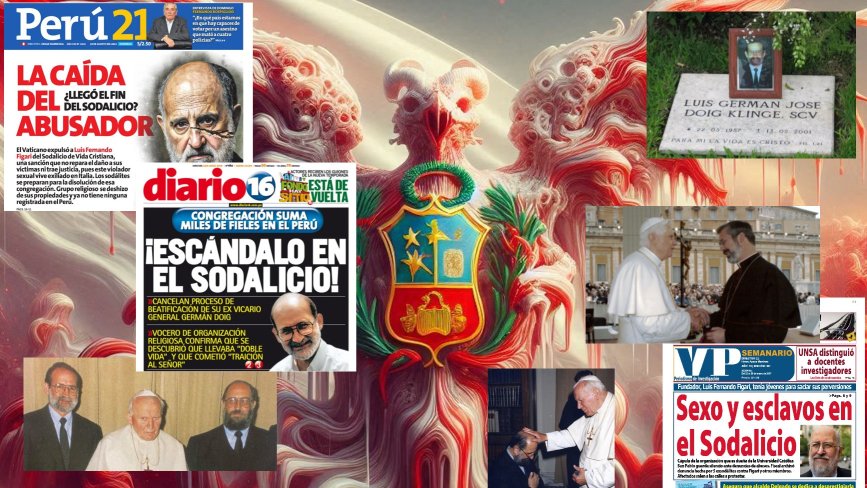
Figari and Germán Doig portrayed themselves as watchdogs of Catholicism but, as Maciel or Buela did, they devoted their “order” to cover up sexual abuse.
Forcing out Figari from his “order” provides no relief to victims; it is "much ado about nothing”, with the blessing of the Catholic hierarchy and the political elites in Peru.
By Rodolfo Soriano-Núñez
On Friday August 9th, the Vatican office dealing with the so-called “orders” in the Roman Catholic Church, the Dicastery for the Institutes of Consecrated Life issued a one-page decree expelling Luis Fernando Figari Rodrigo from the “order” he founded back in the early 1970s in a posh neighborhood of Lima.
The decree references a letter from Pope Francis to Brazilian Cardinal João Braz de Aviz, the former archbishop of Brasilia. In full Vatican fashion, information in English is hard to find.
There is a brief story at the English-speaking edition of Vatican News (available here) with little or no background about the extent of the damages done by the so called Sodalitium of Christian Life.
The decision to expel Figari changes nothing in the tragedy that is the abuse perpetrated there and in many other religious “orders” in the Roman Catholic Church and other churches.

Even if the Vatican admits the abuse of at least thirty-six persons, nineteen of whom were minors at the time of the abuse, there are other issues neither solved nor addressed, not even symbolically by the Pope’s decision.
As much as I would like to tell a story about how this is going to change the lives of those victims, there is no way to actually believe that.
The current leaders of what used to be Figari’s “order” are prone to emphasize the move, but they only do so in Spanish, as one can see in this page in the News section of their English-speaking website (available here), where there is no translation to English of the document issued in Spanish, available here.
The fact remains: there is no actual punishment to Figari or the many accomplices of the abuses at that “order”. There is no evidence of compensation to the victims of sexual abuse as there is no real will to cease the attacks on the Peruvian journalists who have been calling out the leadership of that order and the Peruvian Conference of Catholic Bishops on this issue for the last two decades.
Too much, too little, too late
We became aware of the abuses at this Peruvian “order” back in 2000, when José Enrique Escardó Steck (@JEESxorcismo at what used to be Twitter) published the first report of what happened at that “order” over the las two decades of the 20th century. Despite that original report, Figari and other leaders of that “order” tried to promote the canonization of Germán Doig, who died in 2001.

By the end of this century’s first decade, it was impossible for that “order” and their partners in the religious and political elites in Peru to suppress the reports of systematic sexual abuse, but they still tried to do it.
It was then that the Peruvian media announced the end of Figari’s attempt to turn Doig into the Sodalitium first saint, as the frontpage of the now defunct Diario 16 tells in the picture after this paragraph.

Despite that original admission that there were cases of abuse, Pope Francis’s decision to simply expel Figari from his former order and prevent him from ever going to Peru again looks insufficient and weak.
Unlike what Pope Francis did to Theodore McCarrick when he forced his resignation as Cardinal, and later when he laicized him, or what happened to Fernando Karadima in the last years of his life, when Francis also laicized the Chilean predator, Figari was never a priest, so the Pope cannot “punish” him with the laicization.
But the Pope could instruct the Roman Curia to publish an official, detailed account of the Figari case as he did with the McCarrick case.
Even if no other punishment has come after the McCarrick report (available here), because of that report we are able to better understand, as one example, the kind of relationship that existed between McCarrick and Argentine predator Carlos Miguel Buela.
Setting the record straight as far as the kind of support that Figari received from leading Peruvian bishops could help to avoid falling in the same traps the Roman Catholic Church seems so eager to fall over and over.
In setting as part of the “punishment” the idea of Figari never going back to Peru, the Vatican is actually guaranteeing Figari’s impunity until his death. Not that the Peruvian government is actually interested in prosecuting Figari or his acolytes at the Sodalitium.
There is no evidence of any attempt from the Peruvian authorities to do so. They remain unmoved by the many abuses, and with enough excuses to avoid any meaningful action.
What follows is an attempt to provide an explanation of how abuse came to happen at the Sodalitium, knowing that it is not only a Peruvian issue. Members of that “order” are in charge of parishes or sanctuaries in the United States, Colombia, Brazil, and other countries.

As with many other relatively new “orders” or “movements” founded in the 20th century the Sodalitium is an organization active in many countries. In the United States, in the Archdiocese of Philadelphia, they are in charge of the Saint Agatha and Saint James parish and the Newman Center serving students at the Philadelphia campus of the University of Pennsylvania and the Drexel University.
Parallel paths
To enter the United States, they followed a similar path to those of the Mexican Legion or Christ and the Argentine Institute of the Incarnate Word. Although instead of having their entry at dioceses in the Eastern seaboard, they followed the path of now emeritus archbishop of Philadelphia and former archbishop of Denver, Charles J. Chaput .
Chaput opened the doors of the Archdiocese of Denver back in the 1990s. The Sodalitium used the favorable tax code for media firms in Colorado to their favor. They set there the operations of ACI Prensa, a service to the Roman Catholic in South America originally set up by a German priest to let the word know what the Church was doing in the Andean region.
With the help of the Sodalitium and archbishop Chaput, ACI Prensa developed services as the Catholic News Agency in several languages, until they became one of the many appendices to EWTN as it exists today.
The Sodalite or Sodalit brothers, as they call themselves, are a complex beehive of organizations, some of which claim to be lay, that is to say that their members are not ordained or consecrated religious as a priest or a nun would be.

As far as it is possible to tell, there are a total of five “major” organizations in addition to the Sodalitium as such. These are the Christian Life Movement (known as MVC, after its Spanish-language acronym), the Marian Fraternity of Reconciliation, the Servants of God's Plan, the Association of Mary Immaculate, and the Brotherhood of Our Lady of Reconciliation.
In theory, each one responds to different logics of service and community life. These organizations of the Sodalite Family are, in turn, divided into other more specific ones.

The most notable case is that of the so-called Christian Life Movement, which is made up of the Marian Groups, which bring together young people in general; the University Action, which does so with college students; Betania, which brings together adult women; Emmaus, which does so with adult men; Family of Nazareth, which does so with married couples, and Simeon and Anna, for the elderly.
However, in dioceses where they exert influence it is possible to find other groups loosely affiliated with the so-called Sodalite Family.
Lima origins
Despite their now reactionary attitudes on political issues on almost any country where they operate, in their origins, back in Lima in the 1970s, they saw themselves as the carriers of the promises of the second Vatican Council to renovate the Catholic Church.
The original idea to bring about a Sodalitium, that is to say a space of relative equality between ordained and non-ordained members of the Catholic Church, was the contribution of Gerald Haby, a U.S. priest from Texas, a member of a small order known in Peru as Los Marianistas (Society of Marianist Fathers), who used to travel to Peru to conduct missionary work there.
The first iteration of what the Sodalitium is nowadays emerged in 1971 in a small corner of France in Miraflores, a municipality in the metropolitan area of Lima. Its cradle was the chapel of the school of a Peruvian female religious order with a strong French connection.
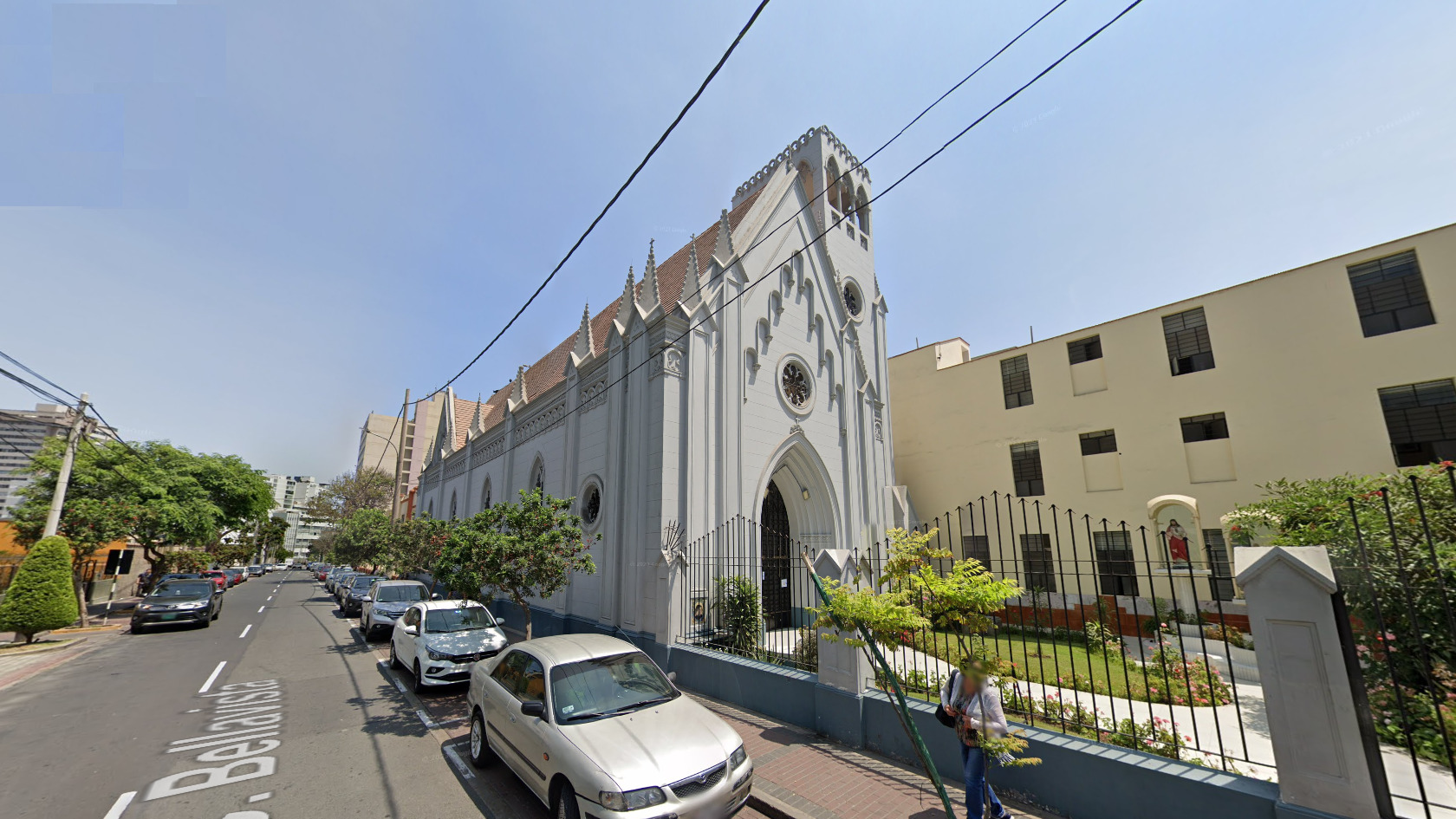
It was in France where its founder, Rosa Mercedes de Castañeda y Coello, studied before returning to Lima to create the order of the Reparadoras del Sagrado Corazón (Repairers of the Sacred Heart). The chapel, small, sober, and elegant screams the influence of French religious architecture in its façade, as the picture before this paragraph shows, as its interior does in the picture after this paragraph.
Without being the most modern area, it retains an appeal that makes it one of the best places to live in Lima. Not in vain, it is an area where Mario Vargas Llosa lived at some point in his life, in addition to being the headquarters of other schools for the Peruvian elite.

Most of the founders of the Sodalitium were students of the Santa María de Los Marianistas school, located almost five kilometers or three miles East of the chapel where Figari and others created the Sodalitium.
The Marianistas are also an order of French origin, which currently operates four schools in Peru. They sent Fr. Gerald Haby as a missionary. There, he came in contact with those who, in the early seventies, would shape the Sodalitium.
There is nothing in Haby's behavior that could point to him as responsible for the abuses perpetrated in the Sodalitium. He was another victim of Figari and Doig and of the radicalization of what, in the early seventies, seemed to be one of the positive fruits of the then recently celebrated Council.
Sodalicio is a noun that in Latin refers to a community or fraternity. This is the sense in which one finds it in Catholic environments, whether in Latin (Sodalitium) or in translations into other languages.
Theoretically, it aims at developing experiences of community life in conditions of relative equality, something that Figari was never really interested in achieving. Quite the opposite, as confirmed by the many accounts of abuse perpetrated, induced, or tolerated by Figari, Doig, and other leaders of the Sodalitium.
Radicalization
Despite this, one of the most famous antecedents of the use of the noun is associated with an experience of radicalization fueled by the most secretive and conspiratorial traditions of Catholicism, the Sodalitium Pianum (fraternity or community of Pius, after Pope Pius IX).
It is impossible to trace at this point the many radical conservative experiences using this Latin noun to identify themselves. One of them was that group that while celebrating Pius IX tried to be more radical than Pius X, the Pope who inaugurated the “cultural war” model so dear to the most radical conservatives of the Catholic Church nowadays.
At some point, before developing his own model, Josemaría Escrivá de Balaguer, the founder of the Opus Dei used the Sodalitium noun to explain the aims of his “order.”
As the Peruvian “order,” Opus Dei can be seen as a family or network of organizations that, on the one hand, bring about the effect of many Roman Catholic organizations working together even if the actual number of persons involved is small. On the other hand, provides some experience as leaders to those persons who respond to the one leader of the organization.
Besides the Peruvian Sodalite Family, other group using the noun nowadays is an extremely radical spinoff of the Society of Saint Pius X, the group originally founded by French bishop Marcel Lefebvre to reject the second Vatican Council.

The Peruvian Sodalitium had Figari as one of its original members. Born in 1947, Figari was then a lawyer in his twenties with some appetite for a political career but who actually lacked the skills required to survive the treacherous waters of political life, more dangerous then, when there were priests actually working with if not leading themselves guerrilla operations in Peru, Colombia, and other countries in the Andean region.
The Peruvian bishops saw the Sodalitium as a way to rein in not only the radicalized lay persons, willing to either join the then new Liberation theology or to provide support for the leftist guerrillas, but also as a way to control their own priests. No wonder, in their earlier years, the Sodalitium gathered the support of key figures of the Peruvian episcopate.
The original Sodalitium had also the advantage of the ethnic origins of its members, who came from well-off families, dynasties of sorts, who were able to trace their origins to European or Japanese families. Such marker is still present up until today in the order’s rosters of members, more so in the case of the male leaders of the family or network of organizations, who sport Italian, German, Basque, French, and Japanese family names.
Eugenics, racism, and faith
The very founders, Figari and Germán Doig Klein, are representatives of this feature. Not required, but highly appreciated in a society that despite the many changes over the last two centuries, remains tied to the old caste system of the Spanish Empire, where being European or having European ascent was better for the career of individuals, even within the confines of an institution like the Roman Catholic Church, adhering to ideals of radical equality for its members.
The feature, by the way, is not exclusive of the Peruvian Sodalitium. It was similar to the eugenics behind Marcial Maciel’s informal recruitment criteria in the Mexican Legion of Christ, where so-called Whitexicans abound, or for the membership into other Roman Catholic orders with a known record of abusive behavior towards their members, as in the Pious Priestly Union (Pía Unión Sacerdotal), the group used by Chilean super predator Fernando Karadima.
That is not, by the way, some hidden and old feature of Roman Catholicism in Peru. Up until 2021, almost half of the Peruvian episcopate was foreign born, as the table after this paragraph shows.
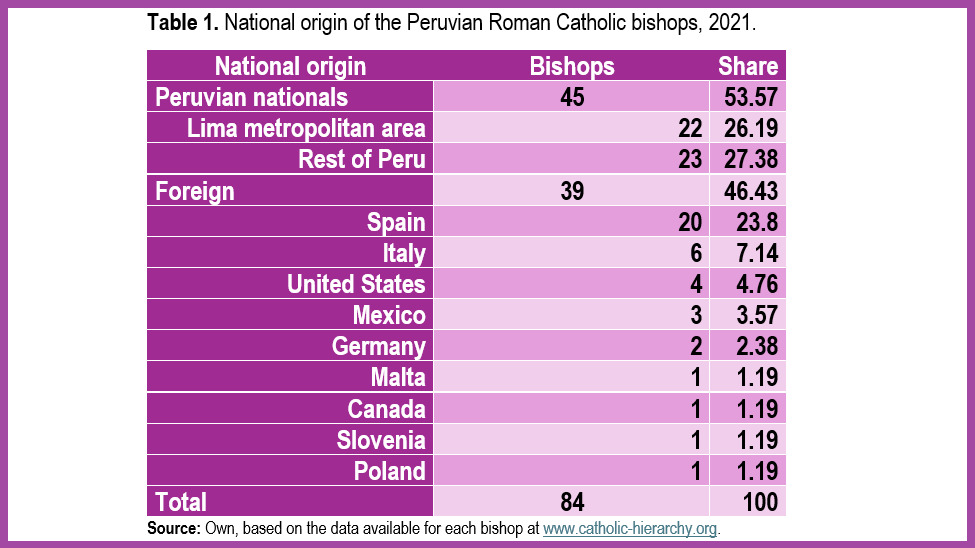
The numbers in Table 1 would be worst for mestizo Peruvian clergy if one would go deeper into the genealogy of each bishop, as to distinguish those coming from Italian, German, Basque, or more broadly, of Peruvian families of European origins.
What would come from that analysis is a picture of how both the local hierarchy, the Roman curia, and—given the complex Church-State relationship, making Roman Catholicism the official religion of the Peruvian State—the Peruvian civil authorities prefer an episcopate marked by two features.

On the one hand, their foreign origin: 46.43 percent of all bishops serving in Peru in 2021 were foreign nationals. On the other hand, the preference for bishops born in the Lima Metropolitan area, with little more than one quarter of all the bishops hailing from the nation’s capital.
On top of their ethnic origin, a marker in highly stratified polities as those of the old Spanish and Portuguese empires, Figari, has had throughout his storied public life a preference for radical conservative political theologies.
Political theologies of the right
Before his interest in the Sodalitium, he was, already in the 1960s, a sympathizer of the Peruvian branch of Tradition, Family, Property (Tradição, Família, Propriedade, look here for the English-speaking Wikipedia entry devoted to that group and here for the English-speaking website of their U.S. branch), the far-right organization of Brazilian origin that is behind the so-called Heralds of the Gospel, another Roman Catholic order with a long record of abuse.

Tradition, Family, Property has a long-standing association with the most radical type of conservative politics in Brazil, Argentina, Colombia, the United States, and European countries from Spain and Portugal to Austria. It has some type of ever-changing relationship with the Mexican and Spaniard far-right movements headed by Eduardo Verástegui and Santiago Abascal, respectively.
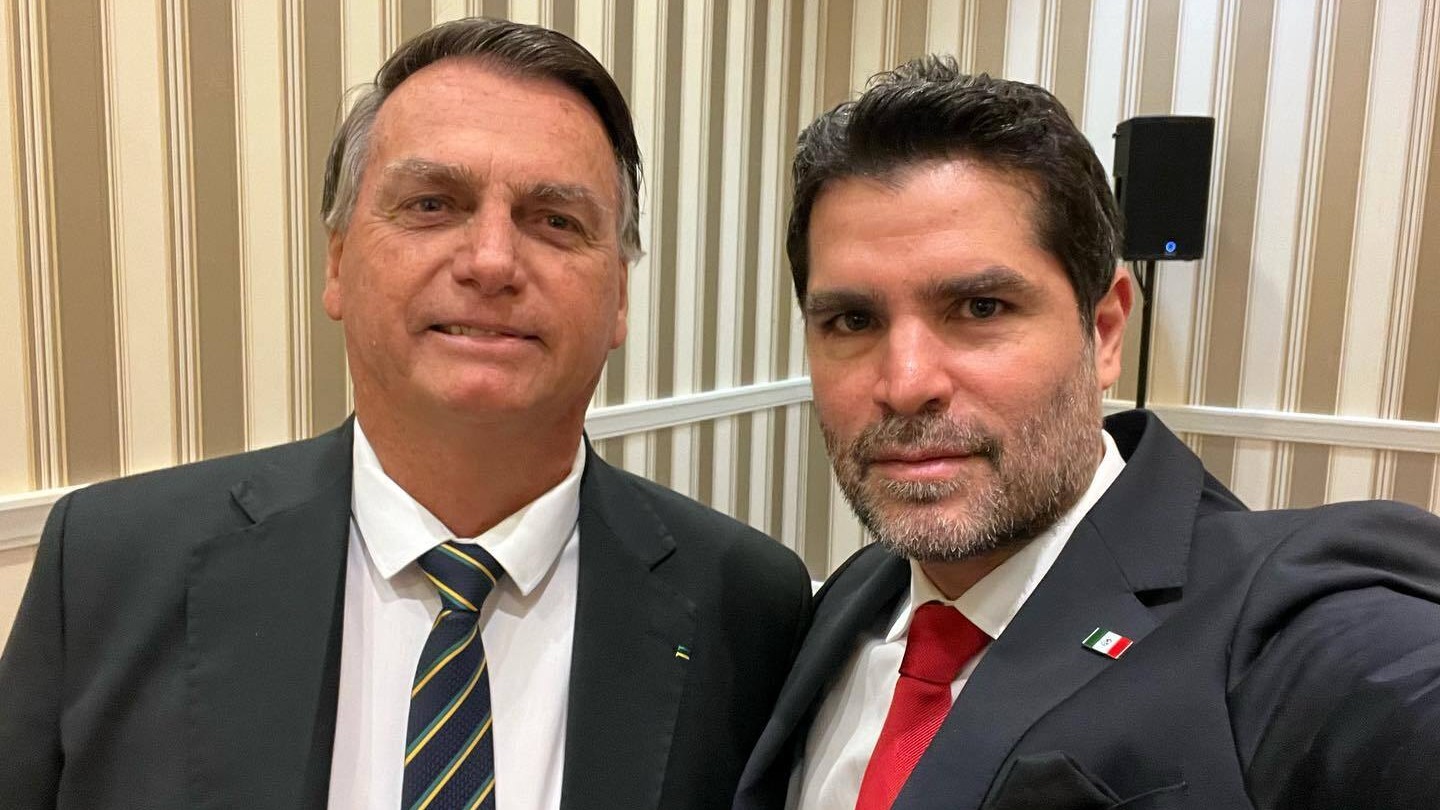
Besides their open support for Brazilian far-right populist Jair Bolsonaro, members of the different branches of Tradition, Family, Property have been behind systematic attacks on Pope Francis’s tenure as Roman Pontiff.

The Verástegui Network, a dystopian and authoritarian world
They oppose his willingness to incorporate, as many Popes have done over the last five centuries, elements of local Latin American cultures into Catholic liturgy and theology. Despite his overall adherence to Roman Catholic doctrine Tradition, Family, Property, and other similar groups of the Catholic far-right see Pope Francis as betraying Roman Catholic doctrine for his openness to incorporate elements of the Amazonian and Andean religious traditions as in the case of the so-called Pacha Mama.
Peronista Pope
Alexander Tschugguel, a member of the Austrian branch of Tradition, Family, and Property attacked images of the Pacha Mama that were brought to Rome during the October 2019 Synod of the Pan-Amazon region. He forcefully removed a group of images from a Roman Catholic Basilica in Rome and threw them into the Tiber River in the Italian capital.
The European, Latin American, and U.S. far-right hailed Tschugguel’s actions as a display of bravery against a dictatorial Pope, existing only in the far-right’s hyperactive imagination, who desperately need to portray Jorge Mario Bergoglio as a dangerous communist or at least as a dangerous Peronista to justify the never-ending stream of criticism towards him.
That episode resembles what happened recently in Mescalero, New Mexico, when a newly appointed priest in the Las Cruces diocese decided an icon of Apache Jesus was not up to his theological standards, so he removed it from the main altar at the Church there, as he did with a ceramic chalice adorned with Apache art, prompting a vigorous reaction from the Native American and Latino populations in Nuevo Mexico.

Race, art, homophobia, and Roman Catholicism in New Mexico
Figari is the prototype of the Roman Catholic far-right militant turned into religious leader. The only difference, if any, is that unlike Maciel in Mexico, Karadima in Chile, or Buela in Argentina, no bishop ever ordained Figari as priest.
It is not clear if he ever attempted a career as cleric or if he was set from the outset to lead his organization as a non-ordained and non-consecrated male, but this feature of his leadership certainly forces any analysis of sexual abuse in the Roman Catholic Church to go beyond the usual approach centered on the evils of clericalism.
As an aspiring politician in the late sixties, Figari publicly professed his admiration for the Spanish Falange, the movement created in 1933 by José Antonio Primo de Rivera, that later played a key role in supporting Francisco Franco during the Civil War and his long government (1936-1975) in Spain.

We know, thanks to the testimonies of former members of the Sodalicio, that Figari was more than willing to do so. It is not surprising that when the Sodalicio became a relative “box office” success with the Peruvian elites and presented itself as a bastion of Western values, it undertook, already in the eighties, a “purge” of references that linked them to Primo de Rivera, the Falange and, by implication, with Franco and his dictatorship. That purge led the Sodalicio to confiscate the first editions of their original documents.
They eventually would go as far as to use the stern copyright laws in Peru to chastise the legitimate owners of copies of those editions. They kept, however, the ideal of their members, whether priests or “lay persons,” as “half monks, half soldiers.”
State of siege?
That is a recurring theme in other Catholic religious orders with a history of systemic and systematic abuse as the Mexican Legion of Christ, the Argentine Institute of the Incarnate Verb, the Brazilian Heralds of the Gospel, among others. It goes back to Medieval religious-military orders as the Knight Templars, who claimed to incarnate that ideal.
That has brought an idea of the Roman Catholic Church as an entity under permanent state of siege, harassed by its enemies, that one finds in the works of Popes Pius IX (1846-78) and Pius X (1903-14). This framework, a way to understand the role and place of the Roman Catholic Church in the world, has been used to justify the “need” of this kind of Catholic faithful, whether clergy or lay person, willing to become the proverbial “half priest, half monk” willing to exchange their lives to preserve the integrity of the Church.
That idea of the Roman Catholic Church as a besieged entity is a frequent theme in many predators. Maciel claimed to be the permanent target of the Mexican Communist Party, although there was never a single thread of evidence of such attacks.
Karadima and Buela in Chile and Argentina also claimed to be the targets of campaigns from the “left” in their countries to discredit them and, in doing so, to attack the Church.
In that regard, despite the Sodalitium claims of being “different” to other religious “orders” in the Catholic Church, the only differences are in how they play around with a lexicon of their own, although they operate as any other religious “order” would.

They are not alone in those games. One can see something similar in the Opus Dei, the Legion of Christ, the Institute of the Incarnate Word, and in some other new religious groups, and also in the attempts of old religious orders to bring lay persons into a closer relationship with them.
If you read Spanish, you can either try to get a copy of Mitad monjes, mitad soldados, a book by Pedro Salinas (@chapatucombi at what used to be Twitter), former member and survivor of abuse of that organization.
You can also follow what Martin Scheuch (@ScheuchMartin) writes about his experience as former member and survivor of abuse at that organization at what it used to be Twitter, at his blog, and in some Peruvian media.
In English, there is one documentary published back in 2017 by Al Jazeera at YouTube, linked immediately after this paragraph, providing valuable information about the financial side of the abuse happening at this Roman Catholic “order”.