
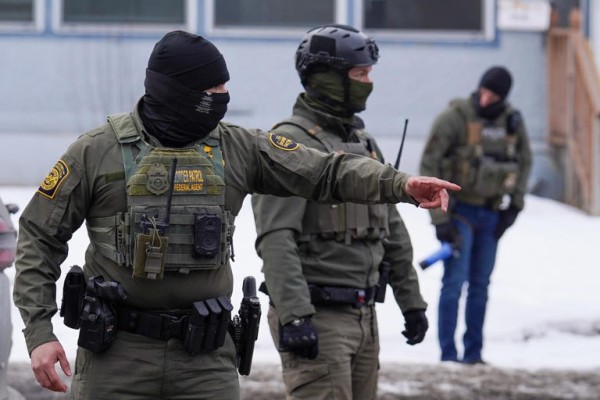
The hearing comes as Immigration agencies face mounting scrutiny over expanded enforcement operations and their impact on civilian communities.
Los Ángeles Press
WASHINGTON, D.C. — Senior officials from the federal agencies responsible for enforcing President Donald Trump’s mass deportation policy appeared Tuesday before a congressional committee, amid mounting political and public pressure over how federal agents have carried out immigration enforcement operations inside U.S. cities.
The hearing before the House Homeland Security Committee was the first since the Department of Homeland Security (DHS) received a significant infusion of congressional funding last year and since immigration operations were intensified nationwide.
Testifying were Todd Lyons, acting director of Immigration and Customs Enforcement (ICE); Rodney Scott, head of Customs and Border Protection (CBP); and Joseph Edlow, director of U.S. Citizenship and Immigration Services (USCIS). Democratic lawmakers pressed the officials on arrest tactics, use of force, and alleged civil rights violations involving protesters and individuals not subject to deportation.
Questioning during the hearing was shaped by two recent deaths in Minneapolis, Minnesota, where federal agents shot and killed protesters during demonstrations against federal immigration raids. The case drawing the most scrutiny is that of Alex Jeffrey Pretti, a 37-year-old intensive care nurse who, according to videos reviewed by journalists and activists, was unarmed when CBP agents shot and killed him during an operation in the city.
Pretti is at least the second U.S. citizen to die in confrontations with immigration agents in Minneapolis in recent weeks, following the death of Renée Good, a mother of three who was fatally shot by an ICE agent in a separate incident in early January.
The deaths sparked widespread protests extending beyond Minneapolis, with demonstrations also held in cities such as San Francisco, New York, and Boston. Protesters have demanded an end to aggressive federal tactics and called for greater transparency and accountability.
On Capitol Hill, several Democratic lawmakers urged restrictions on DHS funding and stronger oversight mechanisms, including mandatory use of body cameras by mobile agents during operations and a sharper focus on violent criminals rather than protesters or civilian communities.
Immigration officials defended their policies as necessary to ensure public safety and enforce existing immigration laws, while acknowledging that some aspects of the operations could be adjusted.
The hearing takes place against a backdrop of declining public support for Trump’s strategy to enforce immigration laws in urban areas, as well as growing calls from state and local leaders—particularly in Minnesota and California—for independent investigations and budget cuts targeting federal agencies involved in the operations.