
Rodolfo Soriano-Núñez Lunes, 28 de Septiembre del 2026
Global indices can explain why as bad as the Catholic Church’s handling of the abuse crisis, Latin American authorities are also amiss.
Data from the Rule of Law and the Global Peace indices help to understand where Latin American countries are failing victims of abuse and other crimes.
By Rodolfo Soriano-Núñez
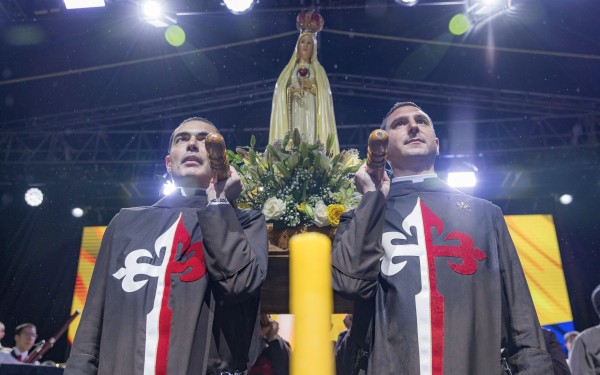
For the last two weeks this series presented the mind-blowing details of abuse and what explains it at the Heralds of the Gospel, an order-like Catholic religious organization known globally by its Portuguese original name of Arautos.
Unlike other similar organizations born in Spain or Mexico, countries with a clear record of Church-State conflict, the Arautos, emerged in Brazil, a country with no such record. Even if the Church does not hold privileges as it did when Brazil was part of the Portuguese Empire, it has never been threatened as it happened in Mexico and Spain in the first half of the 20th century.
None of that happened either in Peru or Argentina, and yet, as it happened with the Arautos in Brazil, the Peruvian Sodalitium of Christian Life and the Argentine Institute of the Incarnate Word emerged with some level of cooperation from the local bishops in each of those countries, rendering themselves as some kind of vanguard to protect the Catholic Church from its own “Liberal” elites and its “foes.”
Later, despite the early warnings about predatory and abusive behavior, all of them received Roman blessings within the context of the “New Pentecost” that Germán Doig, one of the Sodalitium’s founders, proclaimed in the 1990s to praise John Paul II’s largesse towards them and many other movements with similar sect-like approaches and practices.
As far as the Arautos is concerned, John Paul II legitimized them as late as 2001, at a time when the Institute of the Incarnate Word had been already the subject of three Apostolic Visitations, and the Argentine Conference of Bishops were asking Rome to suppress the Institute of the Incarnate Word.
More troublingly, John Paul II blessed these organizations despite the many warnings issued during the late 1980s and throughout the 1990s in the Spanish-speaking world by the likes of José María Mardones and in the English-speaking universe by Andrew Greeley, among others, and after Jason Berry had already uncovered many of the Legion of Christ’s abusive and corrupt practices, and almost at the same time The Boston Globe was publishing the details about what had happened in the Archdiocese of Boston.
The Catholic Church’s responsibility is undeniable. One only needs to read the letter some of the victims of former Jesuit but still a priest Marko Rupnik sent to Pope Leo XIV a few days before his trip to France.
They, as many victims before, complain about the labyrinth-like process, the delays, and the very absurdity of the Jesuits already dismissing Rupnik, while he remains a priest, and the effects of the Catholic Church’s inability to “pick a line” when it comes to actually enforcing its own rules on abuse. They did so at a time when there is no clue as to how or when Rupnik’s second canonical trial will end.
In France, survivors at least can perceive a certain sensitivity from the Catholic Church there. Before Rupnik’s survivors delivered their open letter, the bishop of Tarbes and Lourdes, where the Basilica of Our Lady of Lourdes sits, decided to fully remove or at least permanently cover Marko Rupnik’s mosaics as a practical, concrete sign that he acknowledges the pain such mosaics bring to the victims at large, and more so to those victims still willing to call themselves Catholics.
However, as contradictory as the Catholic Church’s attitude is regarding Rupnik and many other cases, it is necessary to keep in mind what the old saying tells: “it takes two to tango.” That is to say, as bad as the Catholic Church’s performance when dealing with its own monsters has been, it is impossible to dismiss the role of state authorities.
Whether in Mexico, New York, Madrid or Rio de Janeiro, a victim enters the clergy sexual abuse crisis through the doors of the Catholic Church’s parishes or schools and then at some point, tries to exit through those of the prosecutors’ offices.
Otherwise, there is no way to explain why the sexual abuse crisis keeps offering the “tale of two cities” of meaningful solutions, whether in penal or civil courts, or in some other cases through relatively transparent agreements in the United States, Canada, Australia, and a handful of European countries, while in Latin America, even if authorities like Brazilian prosecutor Catharina Verboonen accept that crimes happened, nothing actually is done to address such crimes.
That is more relevant when one takes into consideration that, even if the definition of what constitutes abuse could be rather similar in Montreal, Buenos Aires, Lyon or Lima, how the authorities address the specifics of such abuse is strikingly different.
Granted, the Catholic Church is the one that through the failures of its own processes turns its faithful into victims by authorizing organizations whose “success” depends on sectarian and predatory practices, such as the isolation or the silencing of victims, their allies and whoever dares to criticize its performance.
However, one must keep in mind that once abuse happens, most victims have a choice: they either go and follow a strictly canonical or Church procedure, or they follow a civil procedure and some of them even follow both paths.
As far as the specifics of the Church’s procedures, as installments of this series in Mexico and other Latin American countries have proved, the process is secretive in nature, and with very few exceptions, leaves victims deeply dissatisfied.
Back in 2025, the story linked before this paragraph went over the most recent of a series of cases of underage male victims in the diocese of Izcalli, an exurb of Mexico City, but the story linked after this paragraph is about a Mexican nun whose case has had no real progress in the last two years.
More recently, this series uncovered the case of an adult male who, in the pandemic’s aftermath, sought help from the pastor of the parish where he had recently moved in Mexico City and found only abuse, aggravated by the way the Archdiocese of Mexico has handled his case.
The panorama in Latin America at large is hardly different. Granted, some cases in the region in both Argentina and Chile, have gone to trial but only to hit the same wall the Arautos’ cases hit when Verboonen’s memorandum admitted that something awful had happened to the victims while acknowledging the futility of the entire process, whether on statute of limitations grounds or because Brazilian law has hard-coded limits to prosecute organizations engaged in predatory practices.
The statute of limitations was a key component of the piece about Chilean former Jesuit Felipe Berríos (see above) and more recently the reason why Hernán Rausch, an Argentine survivor of abuse that took place back in the 20th century is part of a class action process seeking relief from the Inter-American Court of Human Rights.
Rausch himself published recently an opinion piece in Argentine media (content in Spanish) where he talks about more recent Argentine cases where the statute of limitations has been used to justify rulings that acknowledge some of the claims made by the victims, but leave them with little or no actual access to justice.
Rausch’s argument is similar to what one still reads in similar pieces published by victims all over Latin America, where the issue was acknowledged but without any actual access to justice:
- It is a pending task to create commissions tasked with following up (the cases) and to offer assistance to victims of child mistreatment and abuse, who suffer undeniable consequences, apt to damage the development of their lives. That on top of the urgent need for the Legislature to address the statute of limitations: a sexual abuse crime should never fall under the statute of limitations as the victim is only able to come forward to talk about what happened when he or she is able to do so, not when he or she wants, as it is hard to do so and implies great effort to go over the details of what a person lived and suffered.
The situation is not that different when going over the many cases at the Arautos’ houses. The victims started what was offered as a journey, with promises of eternal life, resurrection and a chance to achieve spiritual perfection that ended, for many of them, in a labyrinth of reports, emails to Rome, the Arautos or the Brazilian authorities.
As in any other country, the victims of the Arautos, whether Brazilian or Canadian or of many other nationalities, are forced to exit through the prosecutors’ offices doors once the spiritual journey promise has been shattered, but with little or no recourse.
That is why Verboonen’s Arquivamento, available as a PDF after this paragraph, the order to close the books on the Arautos file by sending it to the morgue, is so relevant to understand what keeps failing in Latin America, why as the old saying goes, it takes two to tango.
Verboonen’s Arquivamento, original Portuguese after English translation.
Yes, the indifference of the national conferences of bishops, from Mexico down to Chile or Argentina, to follow any of the potential examples they have at hand from France or Spain is troubling. But only as much as the dismissiveness of the national and subnational legislative bodies unwilling to follow the examples of the state legislatures of California and New York, through the so-called “look-back windows” enacted before the pandemic struck.
As always, there is an exception, as there is a recent development from the Archdiocese of Panama about a study commissioned to the University of Notre Dame. Despite the fact it was limited to the last 25 years, it hints at patterns already present in countries with more comprehensive surveys.
By the Panamanian archdiocese’s own admission, they have records of reports of 37 cases, more than one per year. The report claims that only in 24 of those 37 cases there would be some kind of institutional responsibility (content in Spanish).
As limited as that collection of cases is, it already shows how the clergy sexual abuse crisis is not only about minors, putting another nail in the coffin of Benedict XVI’s moral panic about the crisis being the byproduct of some kind of “invasion” by pedophile LGTBQ monsters who betrayed the Church’s trust.
One only needs to look at how only nine of the 24 cases involve minors, eleven involve adults defined by the Catholic Church as “vulnerable” and in four cases there is no data about the age of the victim. More tellingly, of those 24 cases, only five resulted in the defrocking or secularization of the priests involved.
Only seven of the 24 cases have fully integrated files, and only on two of those seven cases there is a written final resolution. More tellingly, the authors of the study describe an “administrative culture leaving no written record.” More on the results from Panama in an upcoming installment of this series.
It is important to keep in mind the study coming out of Panama happened because it is a relatively safe risk. The Catholic Church in Panamá remains under some protection and patronage from the national government, and the study as such was conducted by the U.S. quintessential Catholic university.
It was not something similar to the French Sauvé Report, the reports that the German dioceses have been publishing over the last five years or so, and, unlike Spain, where the Ombudsman office was in charge of a preliminary assessment of the situation and the ensuing mechanism to deal with the cases and potential compensations, there was no Panamanian authority or official institution involved.
That makes it necessary to go back to Verboonen’s order to send the Arautos’ probe to the morgue and avoid looking at it as merely the byproduct of an overzealous Brazilian prosecutor closing a case.
Throughout its pages, Catharina Verboonen is willing to recognize that awful things happened. She acknowledges human-rights violations. She describes practices as reprehensible. She does not write as though the allegations were absurd or invented. Yet the document still ends in the same place: accountability remains beyond reach.
It is almost a meditation on institutional incapacity in Latin America, an acknowledgement of how weak the system of justice is there to properly handle sexual abuse cases, clergy or otherwise, and for practical purposes many other crimes as proven by the fact that there is a paper and digital trail of cases where Verboonen has been forced to follow a similar rationale.
Back in early March, Verboonen offered a similar argument to file a probe where a Brazilian government official used a false document to identify himself, as this story from the local media proves (content in Portuguese). If one had enough time and patience to go over Brazilian media, one would find other similar cases where the authorities ultimately acknowledge the structural limits of Brazilian law and institutional design to go further.
In the case of the Arautos, the implicit message is unsettling because the authorities are not saying abuse never happened. Such response would be easier to confront, as there would be a way to disprove it. Instead, Verboonen’s document, as the Chilean and Argentine rulings, suggest an institutional framework and societies capable of acknowledging the evidence of abuse and many other forms of wrongdoing while simultaneously claiming to be incapable of doing much about it.
The fact that Brazilian laws and institutional design are not that different from the rest of Latin America is not a matter of opinion or a receding gene from Latin American studies of the 1960s, where a synoptical view of the history of the region assumed nothing ever changes in the region.
There is evidence, proof of that fact. One only needs to look at the right places to find it. To explain that fact, today’s installment relies on the data from both the World Justice Project’s Rule of Law Index for 2025 and the Institute for Economics and Peace’s Global Peace Index for 2026.
By looking at some of the specific factors of both indices it is possible to better understand why Latin American systems of justice are unable to address the needs of survivors of clergy sexual abuse and of other endemic forms of violence in the region.
The data
To measure why Latin American polities are unable, by their own admission, to address their institutional paralysis, the data from both indices have been cross-referenced. Sadly, it would be impossible to include the 19 Latin American Republics and all the relevant cases from Europe required to better understand the issue. That is why this installment includes only the ten largest Latin American republics (Argentina, Brazil, Chile, Colombia, Ecuador, Mexico, Paraguay, Peru, Uruguay and Venezuela) alongside five high-income reference points (Canada, France, Germany, Spain and the United States).
The data reveals a striking statistical reality. Granted, none of these indices specifically addresses the issue of clergy sexual abuse. They offer, instead, a couple of very reliable indices, built over several variables coming from different sources, that allow to understand why justice in certain countries is better suited to address the needs of victims of crime at large. In that regard, the implications of the findings go well beyond clergy sexual abuse and are relevant to understand other pressing issues, such as forced disappearances, feminicides, among others.
It should be noted that to test if the model makes sense, at least statistically, with the data from a selected number of variables from the two indices for the 15 countries under consideration the two metrics yield a robust Pearson correlation coefficient of r = -0.706
In lay terms that means that, as expected, there is a robust correlation between both indices. The correlation is inverse, so where a higher WJP score signifies stronger institutional health (0.00 to 1.00), while a higher GPI score reflects greater violence and social instability (1.00 to 5.00). This negative correlation suggests that as state legal capacity collapses, social insecurity and institutional impunity rise in direct, predictable proportion.
Squaring this correlation coefficient yields a coefficient of determination of R2 = 0.499. An R-squared of nearly 50 percent represents a high threshold of explanatory power. It indicates, in practical terms, nearly half of the variation observed in the Global Peace Index is associated with differences in the strength of legal and judicial institutions as measured by the Rule of Law Index.
That reality affects victims of clergy sexual abuse just as it does with victims of forced disappearance, feminicide, and the many crimes against journalists, environmentalists and representatives of First Nations all over the region.
This single statistical finding dismantles the lingering “bad apples” narrative so common in Catholic and other religious communities in Latin America and even, up until today, in Europe.
It strongly indicates that prosecutorial paralysis in complex clergy sexual abuse cases is not only an accidental oversight or a localized failure; those failures on the side of the religious institutions play a key role but, once again, “you need two to tango” as there is a clear relationship, proven by the numbers, between those failures and the health of the state’s legal infrastructure: its police, prosecutors and judges.
The Primary Bottleneck: Pre-Trial Attrition
A key issue captured by the WJP is the role of the sub-factor 8.1. That variable captures how effective the criminal investigation procedures are. The data demonstrates that the primary engine of impunity in Latin America operates long before a case ever reaches a judge.
WJP measures the actual technical capacity of prosecutors and forensic police to gather evidence and build viable cases. Across the Latin American cohort, as reported in Table 1.A below, these scores collapse into systemic paralysis, falling uniformly below the 0.350 threshold, as it can be confirmed in that table, where that and other selected variables from the WJP 2025 Index are on display.
By comparison, as reported in Table 1.B below, the benchmark nations maintain investigative scores ranging from 0.580 (Spain) and 0.610 (France and Germany) to 0.650 (United States) and 0.670 (Canada).
This gap explains why cases involving high-profile institutions like the Arautos, the Sodalitium, or order-like or diocesan structures in Mexico perpetually rot at the pre-trial stage. When a survivor walks into a prosecutor's office in Guadalajara or Brasilia, they are placing their hopes into systems with very high “dark figure” rates and very low conviction rates.
Brazilian media hardly disagrees with the kind of description the WJP did of the “state of the art” of their country’s system of justice, as this newsclip from January when soberly, Folha do Estado, published a summary of how bad their country scored on the Rule of Law Index with a “bullet” titled “International shame” (Vergonha internacional) followed by a headline stating: “The Brazilian judiciary elected the second most corrupt and unfair in the world” (content in Portuguese).
In that regard, Verboonen’s Arquivamento was simply the formal administrative acknowledgment of this underlying statistical reality, accepted with a certain degree of pessimistic realism by Brazilians themselves. Still, Verboonen’s detailed account of what Folha do Estado summarizes is an indictment by an insider of the Brazilian system of justice of its own failures, both of design and performance, but also, a window to better understand what happens from Tijuana, Mexico, down to Ushuaia, Argentina, as the overall numbers of the region remain as “static” and “synoptic” as the old handbooks of Latin American history from the 1950s and 1960s.
It is not that nothing actually happened. Chile, Mexico and other countries in the region have gone through several rounds of reform, in some cases stepping away from old traditions of the region, as in the case of the Peruvian premiership and the vote of confidence as a mechanism able to bring down a national government. The main problem, however, is that such changes have not affected the outputs of the region’s justice systems.
When one compares the careful explanation provided by Verboonen’s decision, it is impossible not to think how, as one of many possible examples, the Mexican federal government was already, by the end of 2025, ready to give up the lead that the authorities of California and the U.S. federal government had already handed them in the cases dealing with the Luz del Mundo Church.
Xavier Becerra, the current Democratic candidate for governor of California, had already achieved a sentence against Naasón Joaquín García; he was already convicted in a State prison in California. At no point, the Mexican federal government or those of the states of Jalisco and Baja California, tried to open probes on what has happened in the Luz del Mundo Church on the Mexican side of the border at least since the mid-20th century.
Back in Mid-2025, the U.S. federal government did what Mexico was unwilling to do and filed new charges against Naasón Joaquín García and added a new cohort of accomplices in an expanded case.
Again, at no point the Mexican government was willing to file charges of its own to seize the opportunity offered by the U.S. Department of Justice. It was only when the victims mobilized on their own that the Mexican Attorney General’s Office was willing to show some interest in the case.
The Chilean miracle that was not
That does not imply that no change has ever happened. If one goes over previous editions of the Rule of Law Index, one would find how Chile was, ten years ago a shining star, willing to go on its own when reforming its institutions of justice, and how the will to reform that existed over a decade ago hit a wall, probably after becoming the hostage of inertia and political influence.
That can be seen in the paradoxical data coming from Chile. Even if its macroscopic rule-of-law metrics are the best in the region and close to European standards, the reality in the streets of Santiago remains closer to Bogotá’s than to Lyon or Cologne.
Chile scores relatively high on formal judicial independence (WJP Sub-factor 8.6: 0.732), approaching European levels. However, its criminal investigative capacity (WJP Sub-factor 8.1) sits degraded at 0.339.
This divergence explains the mechanics of modern institutional protection. Impunity in states like Chile does not require crude judicial bribery or political calls to a magistrate’s chambers.
Instead, the prosecutorial apparatus (Fiscalía) fails to complete thorough investigations within mandatory legal timeframes. When the stalled case finally reaches a court, independent judges issue rulings closing the matter based on the statute of limitations.
The state delivers a formally independent, legally unassailable exit that acknowledges the abuse occurred while guaranteeing that no perpetrator faces criminal trial. A parallel dynamic is evident in state handling of institutional abuse in child protection agencies like SENAME, where elite networks benefit from quiet non-investigation rather than overt judicial interference.
An interview with Eneas Espinoza, the spokesperson for the Chilean Network of Survivors, offered more details as to how Gabriel Boric’s government, once the hope of the new Latin American left, was unwilling to accept the survivors’ suggestions as to how to handle SENAME’s and other institutional cases in the country.
When survivors find the primary door of criminal prosecution blocked by investigative stagnation, they often attempt to exit through civil courts to seek tort remedies or institutional accountability.
That was the door the legislatures of the states of California and New York offered their citizens with the “look-back windows.” However, WJP Sub-factor 7.5 (Civil Justice Free of Unreasonable Delay) reveals that in Latin America the secondary door is equally jammed.
Because both criminal and civil proceedings in Latin America are plagued by structural delay and political interference, survivors who seek civil remedies hit an identical dead end.
The Chilean case is harder to understand when one goes from the aforementioned variable measuring formal judicial independence to its very robust, First-World-like value for “judicial freedom from government influence” (WJP Sub-factor 8.6) going all the way up to 0.730.
To outside observers, Chile appears to function with European-style judicial integrity. Yet, its criminal investigative score (WJP Sub-factor 8.1) sits at a very Latin American-like score of 0.340.
This split explains how modern institutional impunity functions in the region. In a state like Chile, impunity does not require crude political interference or magistrate bribery. Instead, the prosecutorial apparatus (Ministerio Público) simply allows complex cases to stall. When the case finally reaches a court years later, formally independent judges issue clean, legally unassailable dismissals based on the statute of limitations (prescripción). The state acknowledges the wrong, praises its independent bench, and guarantees that no perpetrator ever faces trial.
The Coercive Disconnect: Policing Without Investigation
Cross-referencing the WJP judicial scores with the 2026 Global Peace Index exposes a final structural contradiction: Latin American states frequently maintain heavy uniformed policing presence while starving their investigative bodies of technical skill, as reported in Table 2.A, below.
Uruguay and Argentina record maximum or near-maximum scores on the GPI Police Rate (5.000 and 4.820, respectively), indicating massive police deployments per capita. Concurrently, nations like Mexico (4.000) and Brazil (3.500) score exceptionally high on the GPI Political Terror Scale (PTS), indicating active state coercion.
Such ability is noticeable in Mexico in the way the Army and Navy are selectively used to address crises, as has been the case for the last two years or so in the western state of Sinaloa. In Brazil, there are similar examples when state or national police corps launch operations in favelas and other marginalized communities in the country’s largest metropolitan areas.
Yet, despite the ability to launch those kinds of large-scale police-military operations, both Mexico and Brazil maintain abysmal criminal investigation scores in the Rule of Law Index (WJP 8.1).
The state invests heavily in street presence and executive force, but maintains near-zero capacity for independent, forensic investigation. It possesses the heavy machinery to enforce public order on the street, but lacks the technical competence—and political will—to investigate entrenched, elite institutions like the Catholic or the Luz del Mundo churches.
Again, as the Luz del Mundo Church case proves, survivors of abuse in religious settings are left trapped between religious organizations doing their best to silence their voices, and authorities that can acknowledge their trauma, but lack either the technical machinery to deliver justice or the political will to do so even in a case where the government of California has already done the heavy lifting of proving wrongdoing in the Luz del Mundo communities.
As bad as the Latin American states are when providing justice to their citizens, it is necessary to stress that the Catholic Church’s attitude towards the issue in Latin America remains a key factor.
Catholic bishops in France, Germany and Spain could have remained tied to the denialist stance developed during John Paul II’s pontificate: running down the clock, betting on the sudden death of either the predators or the victims, or the expiration of the statute of limitations.
However, whether to prevent a virulent response from the Jacobin wings of the French National Assembly or to keep at bay the nightmares of the Third Republic in Spain, they did not.
They decided to avoid that. Whether on their own, as in the cases of the French and German bishops or by accepting the intervention of the national ombudsman, as in Spain, semblances, essays of potential solutions are on their way in those three European countries. Sadly, their Latin American colleagues seem more willing to keep going back to John Paul II’s macabre bet.
It is noticeable that alternative solutions are emerging in Spain and France, where systems of justice lag when compared to other European polities. Initiatives such as the framework established by the French bishops following the Sauvé Report, or how the bishops in Spain accepted the Ombudsman’s intervention, effectively circumvent their judiciaries’ structural limits in addressing clergy sexual abuse cases.
In any case, one must be aware that such bets are not only placed by the bishops. Other Latin American elites bet their institutions’ reputations following similar patterns. For religious organizations, the risk is higher as playing such games directly undermines the trust the public is willing to place in them.
Ultimately, what must be clear is that the numbers prove that countries where victims least obtain accountability are also countries whose justice systems struggle to investigate crimes effectively.
* * *
A summary of this piece is available as audio after this paragraph.
Your browser doesn't support HTML5 audio. Here is a link to the audio instead.
Note on production: The text of this summary was written and edited solely by the author. The delivery of the audio summary was achieved using a high-quality, text-to-speech engine Microsoft Word for Web. The AI was used for voice generation only, not content creation.