Rodolfo Soriano-Núñez Lunes, 08 de Junio del 2026
“Boric’s violence against us was dreadful and Kast has no interest in us. We are the little warning light that they want to turn off in Chile,” Espinoza points out.
Chile’s Survivors’ Network seeks to get to the bottom of abuse in religious settings and the former National Service for Minors, Sename. In that entity alone, there would be a minimum of 54,000 victims.
By Rodolfo Soriano-Núñez
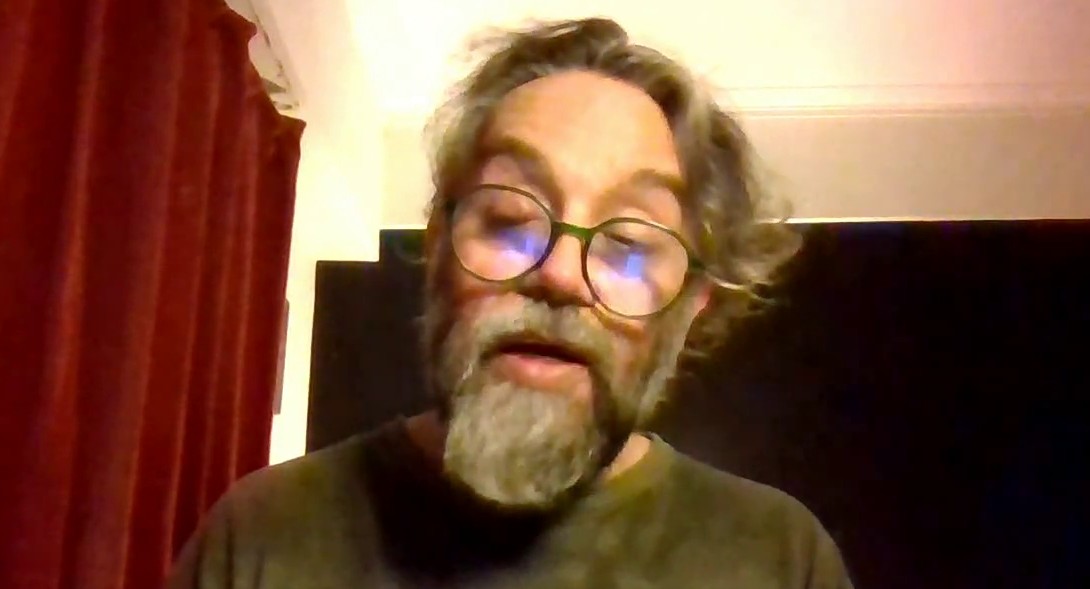
This week we spoke with Eneas Espinoza, spokesperson and founder of Chile's Network of Survivors of Abuse in Institutional Settings, who offers details of the indifference with which the governments of Gabriel Boric and José Antonio Kast minimize the scope of the allegations regarding the abuses committed in religious settings and in institutions such as the former National Service for Minors (Sename, content in Spanish), a network of state-funded homes for orphans and vulnerable children.
The Survivors' Network in Chile, like those of other Latin American countries, faces a difficult reality, marked by a double disdain. On one side, from the hierarchy of the Catholic Church and, on the other, from the Chilean political elites who, despite their deep differences on other issues, find in their lack of interest regarding systematic human rights violations a common denominator that brings them together and unifies them in what is substantive.
What follows is a slightly edited version to facilitate the reading of the exchange that Los Ángeles Press had with Eneas Espinoza.
Rodolfo Soriano-Núñez (RSN): Why don't you tell us a bit about the history of the Chilean network? If you want to include links to other networks in Latin America, it would be very good for you to present a sort of map of the network's history; why don't you tell us how it came to exist.
Eneas Espinoza (EE): Thank you, Rodolfo, for your invitation. I think the history of the Chilean network represents a bit the history of what has been happening on our continent for victims and survivors of abuse in the ecclesiastical setting. And I will explain to you why. Because we emerged officially and publicly as a network precisely when Pope Francis was visiting Chile. When he was getting ready to fly to Chile.
We are talking about January of 2018. It was in that year and…
RSN: Which had a lamentable performance, right? Because an Argentine television station arrives, does an improvised interview, right there before the Mass begins. And, in the interview, he goes back to defending with tooth and nail one of Fernando Karadima's accomplices.
It is still not very clear what type of situation was there, but what is known is that Juan de la Cruz Barros Madrid was one of the so-called “Karadima bishops,” who besides being bishop of Osorno at that moment, had previously been bishop of the military diocese, which is an important position in the structure of the Catholic Church in Chile. So, it is at that moment when Francis is there in Chile that you decide to start working.
EE: Right, and we as a survivors’ network started by confronting the Catholic Church. We did not agree with canon law taking charge of justice, instead we appealed to the State. But at that moment we accepted going to testify in accordance with canon law, meaning, participating in the things that the Catholic Church proposed as possible spaces of justice, with many quotation marks, or of solution for the victims. Time proved us right that in reality that was in vain because it did not happen.
And the survivors' network is created in the beginning solely for ecclesiastical settings, meaning, the first ones, those of us who grouped together, those of us who founded the network. All of us, men and women, came from places where the Catholic Church was involved. Catholic schools, seminaries, places where the Catholic Church was present through orders: Jesuits, Marist Brothers.
RSN: And at that moment already also the Legion of Christ, which had there in Chile one of the most terrifying cases, that of this Irishman whom the Chilean State practically celebrates as a hero, grants him citizenship in a special ceremony and then has to strip him of it after they realize the kind of scourge this man was...
EE: Yes, John O'Reilly. It was one of several very high-profile cases, but as it always happens with these things, they were famous cases because they involved schools with a lot of money, families with resources.
In fact, the Karadima case itself, which is the one that finally causes the entire media cataclysm over the Pope Francis pontificate, has to do with that, with the fact that they were members of well-off families, people who had power and who could access the media, have some political contacts to defend them.
And it was a confrontation, we could say, within the Catholic Church itself, which is a very powerful institution, and these cases that had a small access to power, but the victims did, in fact, have their own bases, because at the end of the day...
RSN: Of course, Providencia was the most, let's say, celebrated parish in Santiago because there was even a line to get married there and it was difficult to get space for couples to have the celebration there, due to how photogenic the parish itself is.
Class and abuse
EE: That's right, and in fact, already at that moment the difference by social class that prevailed in this issue was beginning to be noticed, because the victims who did not belong to that world and to those social classes finally did not obtain any type of justice or presence, because there were also victims in Salesian schools, there were also victims of the Franciscans, and those people did not have the access or the presence that was given to, for example, Karadima's victims, who traveled to Rome, had private interviews with the then Pope Francis. They even agreed on a series of deals.
The network was founded by those of us who did not belong to that world, and we decided and made the decision to take action that would involve everyone, every man and woman, so that no one would be left without justice, that this was not about a specific case.
For example, I could have, like the Marist case, tried to save myself. To have received a reparation and that's it, be at peace. But that was never our decision. Neither did the people who had been violated in the Jesuits and belong to our network; they also made the decision to risk it all for everyone. And that meant that to this day, no one from the political world, nor from the parliamentary world, nor from the business world gave us support. We were always alone in this.
We are a very independent network that did realize it was urgent to open this network toward other people who had suffered abuses in institutional settings where the Church was not necessarily directly involved. We are talking about places where the State wards children and adolescents. In Chile it was called Sename, National Service for Minors.
RSN: Yes, the equivalent in the United States would be Child Services or in Mexico the so-called DIF. It is an institution now redesigned as the National Service for Specialized Protection of Children and Adolescents (content in Spanish)…
EE: Exactly, precisely, which are homes that are controlled by the State and well, Chile is a deeply neoliberal country. The Sename was created in 1979, during the Pinochet dictatorship. Therefore, not all homes are directly under State control, instead the State outsources, it pays private entities a certain amount of money per child so that in theory they take care of watching them, attending to them, and giving them what they need.
In practice, that is a multimillion-dollar business that enriched important political sectors of Chile in that era of the old Concertación, especially the Christian Democratic Party linked to the Catholic Church.
And the Catholic Church itself gets involved during the Pinochet dictatorship in the businesses of warded childhood, earning fortunes. The funds are difficult to dimension for us, but the papers are still there and can be followed and tracked. So we became the network of survivors of abuse in the entire institutional setting.
RSN: As I see it from a distance the orders created front non-governmental organizations that served to siphon public monies. These NGOs were practically in sync with the criteria, with the interests of the orders that in turn had schools, that in turn have other activities and networks. And so, it was practically a horizontal integration of the upbringing of those children, which were already marginalized to begin with and who were marginalized even further in these schemes, and that are also reproduced throughout Latin America, where many NGOs, in name only, are part of very rich organizations.
EE: That's right, they are gigantic businesses and as you say, they are hidden behind NGO fronts. Some are easy to track because they didn't even take that care and you can find, for example, I don’t know, there is a gigantic organization called María Ayuda that belongs to the founders, they are the same priests of Schönstatt. Who are the ones who belong to the Schönstatt movement.
So, even if they do not share a Tax ID, they do belong to the same movement as the Schönstatt schools and the rest of the organizations in which the current president of Chile participates, for example.
So, since the survivors' network always positioned itself in a confrontational attitude against these powers that are so large in Chile, we have been very alone in all these years. In other words, there is no other support than citizen support, the support of people who say, well, this is fundamental, it is urgent.
The support of journalists, as is your case, right, who have said, well, here is an important thing we have to talk about. And it is so important that, for example, in the Sename case, we are talking about more than 54 thousand girls and boys who disappeared from the system, who have probably died, who might be in clandestine cemeteries like what happened in Canada with children from the First Nations there. In Chile, as of now, there is no interest in setting the record straight as to what happened with the girls and boys who, at some point, were in Sename, who disappeared from the system.
Financial trail
RSN: Those are very large numbers…
EE: For a country like Chile, which is a country with a small population, 54 thousand boys or girls is a gigantic quantity. It is calculated that through Sename there passed, the official calculation figure is between 700 thousand and 800 thousand minors. In reality, the victims and survivors of Sename say that it could have been a million and a half or up to two million who passed through there. Which is very hard to investigate because there are no records, but the papers are there, the financial trail, let's say, the data, the economic numbers that speak of that.
So, the Chilean survivors’ network, from 2017 to 2026, we have been fighting a battle that implies being independent of power. Never has any government that has passed in all these years given us anything. There have been no “competitive funds” or any economic support from the State for us.
Sometimes, foundations even get properties. In Chile it is very common for them to set up a headquarters in a building, a property, that belonged to the government, to the State. Well, that is not our case. We have always been independently confronting the Catholic Church.
In all of Latin America we know what that means. It means a very hard blow, not only for the organization, but for the victims who are the faces and lead this. Each of us, men and women, has had to pay a very large personal cost from the standpoint of jobs to which one could not access, resources one could not have. We have colleagues in the network who have lost their office, their house, because the person who rented to them, leased the place to them, told them, “You must leave because I don't want to have anything to do with this.” These are real cases.
So, sometimes when we try to tell very little of these things, the truth is because we don't want to show ourselves as poor things who have suffered so much, because the truth is that the gain we have had in all these years is very large from a human standpoint, because in all these years we have managed to get many people to speak up, to report.
And when a person speaks up and when a person reports what happened to them as a girl or a boy, it completely changes their situation, because they realize that by speaking up, they take a weight off their shoulders, they can make the report.
But we are aware it is going to be very difficult for them to get real justice in the courts, because the courts also respond to the Catholic Church, even if they are courts of the State, it is very difficult to get justice.
Terrible silence
But at least you perform an exercise that changes everything. The exercise is taking off that backpack; taking off that terrible silence that was imposed on us from the moment we experienced this crime. And we hand that backpack over to the State, to which we say: “Mr. State, now you speak about this, you know the crime, you know what happened, I have reported it and you have to speak about this.”
So, that is where today we find ourselves in 2026 with another pope, with a Catholic Church that wants to turn the page, which is very important to understand as well.
Pope Francis, whose visit to Chile in January 2018 we were talking about, they realized that dealing with the new survivors' networks, which was us and other networks from other countries that we can talk about too, was no longer the same. They were not isolated cases that could be bought, silenced, crushed. There was an organization on our part, which led the Catholic Church to activate a different marketing plan. It is a plan that gave supposed solutions, including all the measures that Francis announced with fanfare regarding changes to the Code of Canon Law of 2019, things that in practice meant nothing, that is the truth.
I also remember the story about all the bishops of Chile resigning…
RSN: In 2018, all of them apparently present their resignation, but it is not accepted for all of them and furthermore, in practice, many of those who presented that resignation have just been promoted, right?
EE: Exactly, that's right, and in fact in all these comings and goings a characteristic game of ping-pong is also activated, which in every country we already know. In the game, when you go to speak with the local Catholic authorities they tell you that you have to speak with the Vatican, and when you go to speak with the Vatican they tell you that you have to speak with the bishop, so in that ping-pong, of course, the victims wear out, nobody has the resources, time, and money to be going from Rome to Santiago and from Santiago to Rome all the time, that is impossible.
And they use those games a lot, betting on exhausting, on tiring us out, on us victims growing old and disappearing. And the problem is that they know it, but they don't care, because new victims appear, in other words, before talking to you today I was answering an email to a survivor, to a woman who was writing to me who is under 30 years old, I am 52, and she is a person who today is going to report, who is going to start talking, who is going to tell her story, and just as she comes behind her come more people, who are younger people who, fortunately, are speaking up sooner.
Why are they speaking up sooner? Because we, the survivors' networks, are here and the topic is present. I had to wait until almost my 50s to speak. They, at least, can do it at 30. And that is a huge change in your quality of life.
There is still a lack of the Catholic Church taking care of repairing and assuming the responsibility it has. It is not doing it. The only thing it manages, as a big deal, is some request for forgiveness. It is the maximum it can reach, which are also very well-drafted readers of forgiveness. If you read them carefully, the ones they have done even in Canada regarding the issue of the First Nations children.
The Catholic Church is always asking for forgiveness because it had within it people who committed these crimes, but they do not assume the responsibility. The closest they came to assuming guilt was when Francis himself said that there existed a culture of abuse and silencing. That is a culture within an institution, but he didn't take the next step either, which is to hold the institution responsible, and that is something we are going to have to do.
There is no other thing to do than to report the Vatican in an international court, to advance on matters that already go beyond what can be done in each country.
The other effect that the survivors' network emerging so many years ago had is that survivors' networks were also replicated in other Latin American countries.
We are not the first. The first is that of Argentina. Argentina existed before. Argentina was a very solid but very unknown network.
Why? basically because the Argentine system is a federal justice system and they were concentrated on federal cases. Cases arrived from different provinces, but it did not have such a strong national presence. I met them, learned from them.
When we founded the network in Chile, with the Argentine network we accompanied and supported each other a lot and we started handing over information, learnings. Later other networks began to emerge, in Bolivia for example, which was the case that you have covered a lot regarding what happened in Bolivia with the Jesuits, which is a network that also emerged accompanied by the Chilean network.
There are others in Venezuela, in Colombia, and the idea precisely is that the collective struggle of survivor groups, regardless of whether they have to do with the Chilean network, but survivor groups give you a different strength and allow you to face the hatred and attacks you are going to receive.
Attack as routine
Because that is the first thing one learns, that attacks are our daily bread. Regrettably, the Catholic laity persist in attacking the victims instead of dealing with the abusers they have inside. So, by existing as a network it already allows you to protect and take care of yourself better, and it also allows you to organize strategies to be able to make this problem visible.
And, this is fundamental, move society so that it pushes politics to make changes. In some countries legislative changes have occurred. Chile has several successes in that sense. We managed to make very important modifications to Chilean law.
For example, we managed to modify in the Code of Criminal Procedure (content in Spanish) the privileges that the Catholic clergy had when a priest, a bishop, a cardinal was involved in a crime. They had procedural privileges. What does this mean? That he could testify by letter, not show up to testify. He was treated as if he were a sort of senator or international ambassador, when he is a Chilean citizen. He has no reason to have those privileges. That is an example of the impact the Network has had.
Another was reviewing that all national awards for arts, journalism, and other disciplines, that all awards be reviewed regarding whether those people were also involved in allegations of abuse in order to strip them of them.
The infamous Jesuit Renato Poblete, who passed away in 2010 and to whom posthumously they wanted to grant awards, he was reported by a group of women as an abuser of adult women and, what we promoted as a network, allowed his awards to be stripped. From him and from other less famous characters, but we have managed to do it too.
There are other examples, like the Right to Time Law (content in Spanish), which is the one that guarantees that child abuse crimes will never prescribe, it is a law that we pushed for. We were not alone on this, but the network had a very important role in the final stretch of the approval of that law, because that is a fight that came 10 years before us and we joined in the last stage, with an important boost, and we feel very happy that it exists.
English Edition
A view from Latin America: sexual abuse without consequences
RSN: And this issue of the statute of limitations continues to be a problem. There is the recent ruling regarding former archbishop José Francisco Cox Huneeus, a member of Schönstatt, which precisely invokes the statute of limitations of the crime to say “nothing happened here,” meaning, there continue to be problems that are still not resolved, could you give other examples of problems that remain pending in Chilean legislation?
EE: Of course, what happens is that when the end of the statute of limitation was approved, retroactivity is respected, the principle of non-retroactivity of the law is respected, which means that, from that moment on, the crime becomes imprescriptible. What occurred before, which includes all our cases or survivors who are adults, men or women, we cannot access that law, but when that law was created also during the conversation and parliamentary discussion there was much talk about what has happened looking backward.
There was talk of what has been done in the United States, the look-back windows, as to allow people to report up to a certain number of years and give a period of time so that those cases could be closed. That, finally, was not achieved.
Neither was a truth commission or board achieved that could investigate the crimes, specifically those of the churches and those of the State regarding childhoods. It was not possible to advance at that moment on that board because the lobby of the Catholic Church weighed more than the political will to advance. That is the truth, and it could not be done.
The strongest and most difficult thing today that Chile has as a debt is first that some laws that exist are fulfilled, but they are not fulfilled. For example, of what we are talking about during the debate on the statute of limitations there were many people who said: “but this is not necessary, if in reality Chile already signed international treaties, the treaties against torture,” treaties that nearly all our countries in Latin America have signed, as well as the treaties on the rights of the child.
They said it because they are treaties that contain in themselves already principles to prevent the use of the statute of limitation, why? Because torture is an imprescriptible crime, it is a crime against humanity and the United Nations recognizes it for the case of minors in institutional settings who are subjected to mistreatment or abuse comparable to torture.
Therefore, any district attorney or judge, if they went over precedent carefully at that moment would have to say this must be probed, it cannot be considered expired, because it is a crime against humanity. Regrettably, they don't do it. So, this law was created which leaves no doubt about it.
Now the issue of the truth commission, that is one of the most painful topics personally, I tell you, of the most painful things that have happened to us. During the campaign for Gabriel Boric to be president, the campaign team of the president, and I am talking about his direct advisors, committed to the victims' and survivors' organizations that he was going to create a commission.
Politics over principles
They committed to me directly and to the networks through Eneas Espinoza and the rest of the people who were there in those days. In the end, they didn't do it.
What did they do? Forced by an international ruling of the Inter-American Court of Human Rights that obliges the national state of Chile to create a commission exclusive to the sphere of Sename. They created what they were obliged to do to comply, the bare minimum, and not even those whom it supposedly benefits are satisfied.
As I was telling you before, our network has people from the ecclesiastical sphere and the non-ecclesiastical sphere. The survivors of Sename who are in our network and other victims' organizations that are directly linked with us, of all of them, none agree with the results of this commission because it is a disaster.
It is a commission made with the least possible number of resources. They have very little money, now they have less because on top of that they slashed their funding. With very few people and without capacity, because it lacks standing. That was what we were telling the government, which was something obvious: if you create an investigating commission that does not have the faculties of law so that that commission can demand from other public or private entities the delivery of information, they are not going to deliver it to them.
Because if, exactly, the commission can send a letter, a request for information to a ministry or to a civil or religious organization, like the Catholic Church, and the Catholic Church can choose not to answer it; the ministry can choose not to answer it and not contribute and nothing happens. It is as if the letter were sent by the survivors' networks. The networks could do the same and nobody is going to answer them. Nobody is going to answer them because it does not have the faculties, the legal attributions that allow it to oblige a private individual or an institution to deliver information, to search, to review.
Neither does it have a budget and now it doesn't even have the people, because they fired the people who worked there. Furthermore, they said here there are more or less 700 thousand cases; but the victims tell them “No, they can be up to two million people.”
But even if it were only 700 thousand, the original period was one year of investigation, without resources to do a campaign and go out to look for those testimonies, how are you going to achieve the objectives? it's absurd.
Well, currently that commission is destined to fail for obvious reasons. Gabriel Boric also wanted it to fail. It's not that the previous government was good and the current one is bad in this sense. Here there are no good and bad guys. Here they are all involved in the business of violated childhoods.

It is a multimillion-dollar, gigantic business, from which politics and the Catholic Church in Chile have lived for decades. Gabriel Boric's mother is from Schönstatt; the current president is from Schönstatt, which is an organization directly involved in what they do not want to be investigated and in crimes they do not want to be known.
So, creating the commission under these conditions is worse than having created nothing, because if they hadn't done it, today the conversation would be, we have to create the commission and fight against that and look for the way for the commission to be created and be efficient and be effective.
By having created it, it is like what Pope Francis did when he said that all the bishops resigned. He said, the Catholic Church already changed, now we are defending the victims. On the other side, that of the government of Chile, it already did it too: everything is fine, they created the commission, the problem is resolved. We say, no, the problem is not resolved. It doesn't even begin to be resolved. Because, furthermore, the people who learned that this commission was created and see that the commission fails, are doubly betrayed and deceived by the State. In other words, the State fails again: it failed me when I was a child, when they abandoned me, when my family was not present and I ended up in a home where I was violated, abused, mistreated, and now the State, again, abandons me.
So it is terrible, it is a dreadful situation that, furthermore, it's not that Gabriel Boric was unaware. He knew it. Look, I am going to tell you something that we have never told, in any interview, nor articles, nor anything, this is a scoop.
During the crafting of the commission's design, the Boric's government, which lasted four years, announced the commission at the end of the third. The first two years, groups of people specialized in childhood and in these subject matters were asked to deliver information on how to make a commission well.
Our survivors’ network had been working for many years on the project to create this commission. Therefore, we delivered to them all the documentary material of the experience that occurred in Australia, New Zealand, the United Kingdom, in Ireland, all the material on how it was necessary to act. What was right, what was wrong, what had been the errors and what the successes.
It was a work of comparative legislature in which we offered them all the data, besides the willingness to speak with the organizations of other countries, with an open agenda. They were told: “here is everything, you have all the information.”
And we were not the only ones. This week I was speaking with an activist who is not from the network, a person who is involved in other organizations, who told me: “we too; we went to ten meetings. We brought material, we delivered documents, our lawyers offered to help.”
To the trash can
That organization works with international law experts who are clear on how everything was grounded. All of that, they threw it in the trash and made the commission that suited them.
So, the violence they have exercised against us from the government of Boric was dreadful, and the one now, that of Kast, directly we have no communication channels. They do not want to talk to us because obviously we are reporting the worst thing they have inside.
There was no political will to truly bring that forward and it only generates a false expectation that, at the end of the day, ends up spoiling the whole project. Now they can say that there already was a commission and it found nothing, even though it was designed to fail. Or they can say that the commission only found three hundred cases and not seven hundred thousand, fifty thousand, four hundred thousand.
There is an investigation and a report that the Chilean police itself did at the request of the Chamber of Deputies which established that in one hundred percent of Sename homes crimes had occurred, not in 99, in one hundred percent. There was not a single home or residence or space linked to this state system in which there were no violations.
When the Lower House of the Chilean Congress had the final document, they were so terrified, they got so scared that they hid it and the Nation Attorney of the era also shoved the report in a drawer.
We were able to access it by mistake, by the mistake of an advisor who handed it over to a deputy. The deputy saw it, said this is madness and published it. That deputy risked it, let's say, he said well this has to be known and that's why we all found out in 2019 (content in Spanish).
The report had to be made public, but the amount of data, because there you realize the Nation Attorney’s Office of the era was working to hide this, so you start like, this is like the movie Spotlight. Like when the character arrives with the box and starts talking and you say this man is crazy.
And yes, sometimes one feels like that. I tell you because it is exasperating. The information is everywhere but they do not want to see it, they do not want to publish it, and they do not want to advance. And it was not the first nor the only case in which the Nation Attorney’s Office actively prevented greater details from being known about the real scale of the problems.
Passive protection
That is to say, the way in which it protected different predators is very well documented, not only Karadima, not only what occurred in Sename, but the way it protected actively, even in isolated communities outside Santiago where there was not so much media pressure they protected by simply not moving the cases forward, right?
In fact, in Chile there are several homes that belong to people with disabilities, there is even a home that has children and adults who have cognitive disabilities, therefore, they are people who cannot communicate correctly and they have received a series of reports from the people who worked there who began to realize what was happening, homes under the control of the Catholic Church and when they went to make the report, the authorities of the Public Ministry (ministerio público), as it is called in Chile, told them, no, we are not going to take your report.
Which goes against the law, because according to Chilean law, every person who has knowledge of a childhood suffering violence has the obligation to report, and furthermore if the person works in those sectors the law also obliges them to report with punishment if they do not do it, meaning a person who works in a place with a child, for example, in a school, a teacher, and suspects that something is happening with the inspector or with the catechist, has the legal obligation to report.
It is not something that is at their discretion to do or not to do, because she cannot take the decision to say if this is or is not real. It is not her purview. For example, the Catholic Church has the habit, which has worked very well for it, of creating the internal reporting window, as if it were a problem of internal labor relations or human resources.
They tell teachers in Catholic schools, “if you know something, if you suspect something, send an email or speak with this person within the school, within the congregation.”
That is a crime, that is not something the school can do on its own, but they do it and nobody prosecutes them. The crime is supplanting justice and by law in Chile and that is the case in most countries, by law the person who suspects a case must go to the police, to the district attorney’s office, not to the internal office, not write an email to the congregation, which in fact is called “report” I don't know, “report at Marist brothers” or whatever. You cannot do that and they do it.
If someone wants to open the internal channel, let them open it; but they must also comply with the external legal channel, which is the one that effectively allows processes to be initiated that can be continued later.
RSN: Thank you, Eneas, for the presentation you have made for us. Now, what is it that you look for and why is there this need, it should be self-evident, but I would like very much for you to explain it in your own terms, why the need for the network to seek funding.
EE: Look, we as a network have been independent of power, independent of all powers and that has allowed us to have this freedom to speak, to report, to say, and that, over the years, has also generated respect for us within the other organizations and also a certain alert regarding others, that they might want to silence us and in fact something that has happened in recent years since the campaign and the strategy of Pope Francis.
For example, when Fernando Chomalí Garib comes to power, to the archdiocese of Santiago, he comes with a strategy as the new cardinal in Chile, with influence in the Episcopal Conference of Chile, besides being capable of directing the communication media toward other sources distinct from the network, to eliminate us from the map, literally.
His arrival has implied a very strong silencing toward the network. It has happened to us several times already that when a media outlet works on a television or print report, at some point there is a phone call and the program drops, it is pulled down. The report does not come out, it is shelved. Some international media continue to work with us, but they are the fewest; the Chilean media directly have no interest and this is not a problem of the journalists whom I know, because I am also a journalist, it is an issue that comes from above, the order not to publish and I cannot oblige those journalists to publish or to go out themselves to report them risking their own jobs.
It is a very complex situation that we as survivors' networks today what we need is to make the situation even more visible, because it is very easy for society to forget these things and for the topics to fade away, especially when on the other side you have a gigantic communications apparatus which is the Catholic Church.
One must not forget that the Catholic Church gets series on Netflix, publications everywhere, meaning it has a capacity and in fact now they are very involved in social media, but well, we can talk about that another day regarding how they manage the issue of social media.

RSN: The very recent thing is what Felipe Berríos's victims suffer, how they report that while several Chilean radio stations open the microphones to Berríos, nobody in the media asks them for their opinion on what happened to them, on what they lived through or on the effects that the acts committed by Berríos have had on their lives, who furthermore was one of these bridge figures between the world of politics and the world of the Catholic Church.
English Edition
Berríos and Rupnik, the parallel lives of predator priests
The Jesuits already distanced themselves from him and although there has been no Chilean bishop willing to incardinate him, formally he remains a priest, which lets it be seen that there continues to be a problem that the Catholic Church does not gauge the scope or the effect that abuses have, which the Catholic Church sees exclusively as sins, but which the law sees fundamentally as crimes and which, above all for you, are disastrous experiences that change your life for the worse for decades…
Rebuilding oneself
EE: They are realities from which it is very difficult to recover, to rebuild oneself; there is no recovery discharge, it is a lifelong problem for a survivor: one manages the aftermath for the rest of one's life, but only manages it.
I am going to use a somewhat strange example, but it is like having a chronic illness when someone is given their diagnosis of diabetes or of an issue that has to do with their kidneys, knows it is for life, that one day they are not going to be cured, they have to learn to live with that, they need resources for that, access to doctors, to treatments, to medication.
And the issue of the aftermath of sexual violence in childhood it is the same, you have a series of things going forward to live the rest of your life with that and the Catholic Church does not consider it. In fact, sometimes, the few times it has paid some type of compensation in general what it does is a number, a figure so that we close this topic.
If you calculate how much that would be in therapy, psychological therapy, medication, etcetera, it would be enough for like two or three years and afterward, die. And it is basically that what it does.
This independence with which we try to operate always needs resources. Resources to be able to make things visible and work, because this is work, besides being activism, the dedication and the time that must be dedicated to the media, to the press, to other victims when people write to you. If I told you the number of hours one spends answering messages.
For example, a day, it is necessary to respond to people who write, who need help, whom you have to coordinate. Sometimes people appear who are not even really victims of the Catholic Church…
RSN: Put a number on it please, I know, but you put a number on it, how many hours of the day do you dedicate to that?
EE: Look, it is at least six hours daily, from Monday to Saturday, of being busy, of attending to matters that have to do with the network, the design, the preparation of messages.
When, for example, you manage to finally have them receive you and you can travel to the Senate, to the Chamber of Deputies and deliver some testimony, sometimes they are complete days. The colleagues who went less than a month ago to Congress, to the city of Valparaíso, it also takes up entire days for them, days they do not work, days they do not go to their normal activities, so it is a lot of costs linked to this, which is a job and that job is done by activists and so, if we were a foundation, a large NGO, of course we would all have salaries.
If we are working in an office, there come more costs, computers, the lease, the rent, electricity, water, heating, you have a whole series of costs of keeping an organization running, which are not minor costs.
They aren't large fortunes either, because it's not that we have offices in every city in Chile, but that has to be funded and how do we fund it, we do it with help, that's why on our page at www.redsobrevivientes.org, there is a little button for donations.
And there are buttons to donate, which we have designed, for anywhere in the world. If you are in Chile, there are the typical resources of Chile to donate. But if you are outside Chile, there is PayPal and many other tools so that people can make their donations. You can subscribe, meaning automate a monthly donation, or you can make a one-time donation.
We need the money to support and facilitate help for other victims.
RSN: Another important thing that you point out is that despite the myth that you seek money to destroy the Catholic Church or churches in general, there is no such thing because there are no such payments.
Even if the Catholic Church renders itself as going beyond what it should do for survivors, whom it presents as people making a living out of it, people taking advantage of it for the rest of their lives, there is no such thing.
It is one of the brilliant myths that generated by these performative responses from John Paul II, Benedict XVI, Francis, and now Leo XIV, when meeting with victims that visually might be very attractive but which are not actually turning into concrete solutions to real problems…
Safe spaces
EE: …because, furthermore, the figures that would be required for a survivor to be at peace for the rest of their life are figures that only the Catholic Church could sustain, not someone's donations because as what we were talking about before, the medical health costs and all that are important costs and furthermore if we looked for money we wouldn't have a survivors' network.
We wouldn't have it because we know the logic of the Catholic Church. If we wanted the Catholic Church's money, we would follow the logic of the Catholic Church and we would look to get some secret meeting to obtain some money under the table and that's it.
You would never have known me and my name would not be on all the Google pages it is on because it's obvious. I am going to tell you one thing when I started to report, when the first report that came out was being written, a psychologist wrote to me, to whom the person who at that time was the person in charge in Chile of the congregation of the Marist Brothers, Mariano Barona, had given the contact, and what she wanted to arrange with me was for her to give me therapy paid by the Marists.
Imagine how convenient, a therapist paid by the same abusers and furthermore she wanted to arrange some type of reparation with me, in secret, hidden, so that this would never come to light publicly. I did not accept it, obviously, because that is not what we are looking for.
That is to say, the 6-year-old Eneas who lived through this crime, who later lived through it again as an adolescent, I am a survivor of abuse and trafficking because many things happened to me in there, but well, that Eneas needs an integral reparation that goes beyond money.
Because that is another thing I don't understand, reparation is not, here, take a check and you can go home. Reparation has to do with society taking charge, with the Catholic Church assuming responsibility for what occurred. Reparation is not a letter of forgiveness, which they sent to me, your letter is very pretty, thank you. There I have it kept, I don't know where, truly, but somewhere it is. It's not that, it's not along those lines. This has to do with a matter of a structural change.
Because, in fact, spirituality is a human right. I firmly believe in human rights. Our survivors' network of Chile is a network deeply defensive of human rights and therefore what we aspire to is that the spaces where people wish to develop their spirituality, those people and their families are free and safe spaces…
RSN: At this moment those spaces are not.
EE: …exactly, meaning, at this moment a Catholic Boy Scouts group is not a safe space. We want it to be, for a parish to be a free and safe space. I am not interested in parishes disappearing. They have to be there, they are part of human life, of spirituality, just as the other churches are.
Of course, today we are talking about the Catholic Church, but in the spaces of Buddhism these crimes also occur and we also know survivors of Buddhism. So that space has to be free and safe so that nobody suffers, so that your children can be at peace, so that any person can be at peace.
That is not happening and it is there where the voices of the victims are fundamental, it is the little warning light today. That little light that they want to turn off, that's why we need the support of people who can help us fund our expenses so that, precisely, that alarm is not turned off.
Because this is as if a body has a fever and instead of treating the illness the thermometer is broken. That is basically what the Catholic Church wants to do with us: we are going to take out this thermometer that is marking 103º F (39.5º Celsius), so that nobody realizes the severity of the illness they have. That is what they want.
RSN: Eneas, well I think your presentation has been very clear, on the page I imagine is all the information that people need to be able to donate. I have nothing more to add, if you have anything more to add.
EE: Yes, our page has content that we hope can help more people to report, to inform themselves, to know about the topic, and in the donations section, there are all the details of what we do too and how they can help the network, so thank you very much for this space, Rodolfo.
* * *
A summary of this piece is available as audio after this paragraph.
Note on production: The text of this summary was written and edited solely by the author. The delivery of the audio summary was achieved using a high-quality, text-to-speech engine Microsoft Word for Web. The AI was used for voice generation only, not content creation.