Rodolfo Soriano-Núñez Lunes, 30 de Marzo del 2026
When an adult man claims to be victim of abuse, the dominant narrative is the victim’s failed masculinity.
It is a labyrinth where adult and young females and adult males must prove they were not tempting, setting up the priest, "forcing" him to abuse them.
By Rodolfo Soriano-Núñez
This week’s story is anything but easy. Not that the case is especially rare, quite the opposite. The main problem is that, in Mexico and Latin America the prevalent narrative is that clergy sexual abuse matters only if it involves underage minors. Much more if the victims are underage males. That is where most of the coverage remains focused, even when it comes to so-called historical cases.
More recently, after some of the many female victims of this scourge have been paying the price of coming forward, there is more willingness to acknowledge, that sexual abuse is not what the narratives designed by the Vatican to control the damages back in the 1980s and 1990s said.
The idea was that abuse was the province of “perverts,” whose proliferation was the byproduct of the late 20th century “sexual revolution.” Abuse was the works of the odd man out, the rotten apple or a “abominable lone predator,” even though the issue was known for centuries.
Even if there has been evidence of extent of abuse for many centuries, new confirmation from the Catholic Church’s files came, as the story linked after this paragraph of the papers of the Mexican Inquisition tells, when the Huntington Library in California published, among many other, the Inquisition’s file of a Franciscan priest abusing a boy in what is now the Mexican state of San Luis Potosí in the 16th century.
It was a narrative in the key of moral panic. The story linked above traces in more detail how the Catholic hierarchy built, shaped and weaponized such narrative, as an attempt to minimize the scale of the abuse and, above all, to perpetuate the overarching story of a Church under siege, in desperate need to do whatever it takes to protect itself from the forces of evil intent on destroying it.
English Edition
The Inquisition’s long memory and sexual abuse
And to be clear, the sexual abuse of minors is a hideous crime, and survivors such as José Barba, a former priest in the Legion of Christ deserve special acknowledgment and gratitude for coming forward when the Catholic Church was drunk on John Paul II’s populist theology, betting big on Marcial Maciel’s Legion and other groups and movements such as the Neo-Catechumenal Way, an organization within the Catholic Church with close ties with the Sodalitium of Christian Life in Peru and other predatory Catholic organizations.
The accusations resonate nowadays in Antonio Cabrera’s case, the Spaniard priest and member of the Legion of Christ who is now under a convoluted judiciary process with no certain outcome in sight, as he has been able, claiming health considerations, to get deferments and being under some type of house arrest while at a hospital.
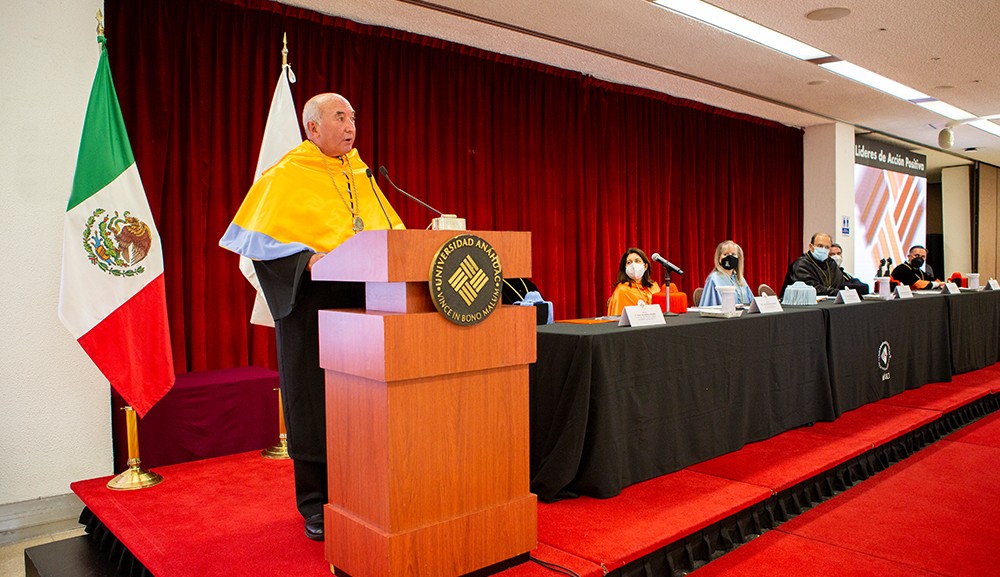
Barba and the rest of the brave former members of the Legion of Christ who, by the mid-nineties reopened accusations of abuse at that order going back to the late 1940s, deserve respect and admiration.
One side of the story
However, one needs to keep in mind that, as painful as it is, theirs is only one side of the story of clergy sexual abuse in religious contexts; also, that there is no way to build a hierarchy of pain, and that the main issue is not the victims’ age, but the power imbalance, the asymmetries created by hierarchies, religious or otherwise. Also, one must acknowledge that most predators, religious or otherwise, are not specialists; they are opportunists.
When the victim is a minor male or female, it is possible to find some empathy. Even when the victim is an adult female, there are circles where it is possible to expect some sympathy, at least from other females who have gone through the experience of being subject to harassment or abuse.
When the victim is a male, then it is extremely hard to even acknowledge the existence of such asymmetry, of such imbalance. More so as in Mexico the overall assumption is that if a Mexican male brakes, even when going through his darkest hours, something the social psychology of Mexico encompasses in the notion of “rajarse,” such a male is already in deficit, as he will be immediately labeled as less virile, less masculine, less macho.
In that regard, readers be aware, this week’s case belongs to a category lacking the ingredients a certain brand of commercial journalism seeks when dipping their toes in the rough waters of clergy sexual abuse.
Protasius, an assumed identity to protect the survivor’s relatives, loved ones, but also to preserve his last chance to seek justice within the Catholic Church’s canonical track, is far from being the “perfect” victim, if that ever exists.
He was an adult when seeking help, he became prey in Southern Mexico City, he obviously engaged in the kind of sexual intercourse Mexican machismo simultaneously despises but renders, through the never-ending games of the so-called “albur” as the ultimate frontier of sexual pleasure.
Albur is a form of sexualized speech traditionally limited to Mexican and Mexican American males where one tries to prove its command of language by implying that, within the context of sexual intercourse, he who wins the “albur” is the top, the active, penetrating male and not the top.
Octavio Paz’s The Labyrinth of Solitude already addressed the many paradoxes that Mexican albur games reveal. Even if dated by the emergence of new realities, Paz’s understanding of the infinite complexities of Mexican masculinity remains key to understand contemporary Mexico.
Masked as joke, as entertainment, albur is a safety valve of sorts, in some cases even a prelude, foreplay to sexual intercourse. If one is able or willing to figure out the cryptic double entendres of albur, one has an excuse to open up, to reveal the true sexual identity or preference in a fashion reminiscent of the old Spanish adage “entre broma y broma, la verdad asoma” or its English-language cousin: “many a true word is spoken in jest”.
There is a whole subgenre of Mexican cinema, stand up routines, and even contests where, more recently even females engage in these word-games trying to assert dominance and sexual prowess. Oddly enough it has no equivalent in the United States, except for Mexican American and Latino communities, as even in the most brutal insult comedy, male–male sexual positioning is not the organizing principle.
And the very cryptic nature of albur, a “dialect” of sorts of Mexican Spanish finds its way to sacristies, curias, seminaries. After all, it is a semiotic system for producing masculine order through the threat of feminization, by affirming a dominant masculinity to control, dominate, subjugate and abuse other males.
It is relevant not because it is sexual humor, but because it is a cultural mechanism through which Mexican men learn that being placed in a passive sexual position—symbolic or real—nullifies both their masculinity and their chances of being believed.
Albur does not explain abuse, nor does it cause it; it explains why, when abuse happens to adult men, the cultural reflex is ridicule, disbelief, and silence rather than recognition. In cases of clerical abuse of adult men, this mechanism operates silently but decisively because it offers a template to summarily dismiss “imperfect” victims.
Consented rendezvous?
And, granted Protasius was already an adult. Right at the outset there will be some claiming that he was able to consent and, as such, the juicy narrative of pederasty, the Vatican’s choice when creating Tutela Minorum, that is Latin for, Minor’s Guardianship, wins.
When that happens, it is not only the success of the easy narrative of pederasty, good for click-and-bait, bad to understand what lies behind every episode of abuse, in religious settings or otherwise, as it forces one to turn a blind eye to the asymmetry of the interaction.
More so as Protasius was under the combined stress of his personal medical history, marred by depression, the death of his mother, and his decision to keep fighting depression trying to find a new life in Mexico City.
What is lost in narratives centered around the victim’s age is that even when they are “of legal age,” when they can consent to sexual intercourse, the most fundamental feature of abuse, remains: the asymmetry between the priest and the lay person.
More so as Catholic theology, unlike other Christian theologies, is dominated by a school of thought seeing ordination as a momentous event in the recipient’s life, a time where his very being is transformed by “ontological change.” Even if such narrative looks pretty on paper, one must be aware that it is frequently weaponized into a theological license to attack others, minors or otherwise.
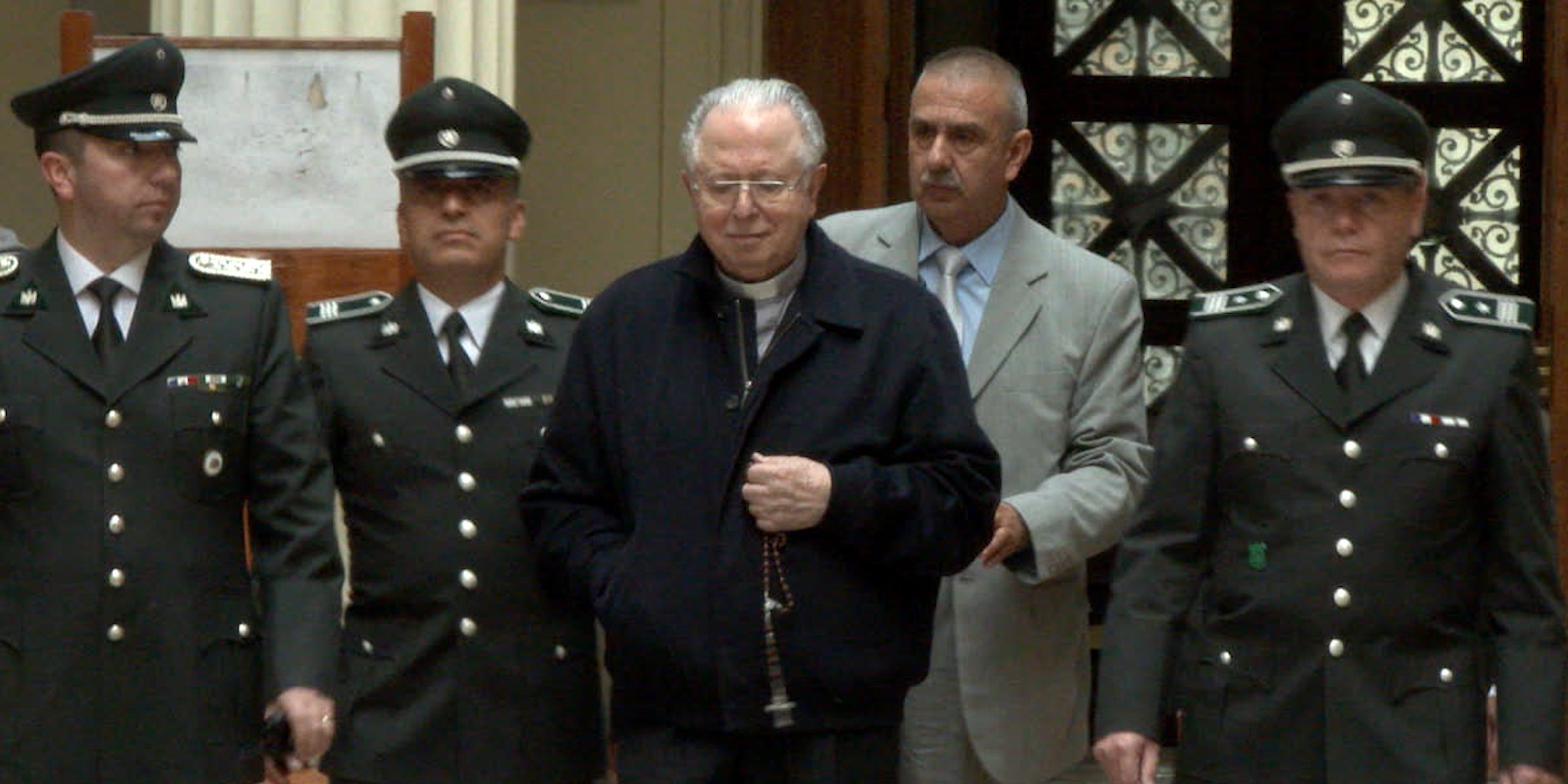
One only needs to look at Fernando Karadima’s defiant attitude when the Chilean authorities tried to build a case against him to see how the “ontological change” narrative becomes a weapon craftly used by predators to self-exonerate themselves: no matter what a bishop or a Pope could say, they remain “priests forever.”
But that is the very cause of the soon to happen reenactment of schism in the Catholic Church when the Society of Saint Pius X retraces his founder’s steps when consecrating bishops without explicit Pope Leo XIV’s approval. As the old Mexican saying goes: the fish dies through its own mouth, whose English-language equivalent would be “to be hoisted by one’s own petard.”
Whether one goes with the Mexican or the American idiom, the fact remains: an institution so enamored with its mind-games becomes trapped in a snare of its own making, where the very theology used to protect predators is now being used to justify schism
Priesthood as a license
Although official Catholic theology talks about a priesthood shared even by females, the sad reality is that said priesthood is, in practice, a relic, something only understood and accepted by a handful of the Catholic flocks all over the world.
In the everyday reality of the Catholic Church, priests are seen as special. Even the very origins of the word clergy go back to clerus, that is to say, a lot separated, something special, unique, different from the lay person, vested with the “authority” derived from ordination and granted as perpetuity through the “ontological change” mechanism.
The distinction becomes more evident when the sacraments and rituals are celebrated, but also at times of crisis, when the layperson goes through his or her darkest hours, seeking refuge in a chapel or a parish, looking for counsel, support, advice, craving for the safety inserted in the very etymology of religion: something to reset, to restore a lost link.
As many of us, the main character in this week’s story, identified by the archdiocese of Mexico City as case: Prot. 11/2025 or Protasius for the purposes of this story, sought the trust and assurances offered by religion in hard times. As he learnt from his family in the Mexican Lowlands, the Bajío, Protasius sought help and advice from a priest, a member of those selected few who have been transformed by the “ontological change.”
He did so in the last months of the pandemic, when he thought Mexico City would offer him the opportunities his hometown seemed to be unwilling to provide. Sadly, Protasius as many people all over the world, had been dealing since his late teens with mental health issues, and the pandemic was anything but helpful.
Migrant resiliency
At the time he had been dealing with such issues for over ten years. And he has the medical record to prove it. There, his doctors diagnosed a documented history of major depressive disorder and generalized anxiety disorder, including psychiatric hospitalizations.
Already in Western Mexico, Protasius proved he was a fighter, a responsible employee crushed by his employer’s bankruptcy. Even if his field was that of finances and credit, he took a new job in the marketing areas of a local newspaper where the pressure to sign publicity contracts crushed his health. From there, always the fighter, he moved to a jewelry store.
Then the pandemic hit Mexico as it did elsewhere. It was in such context when, already in a partnership, he decided to try his luck in Mexico City in 2021, despite being under what his medical records describe as a “state of clinical depression.”
The situation was worse as his mother had just recently passed away, and even more because the hype of the move to Mexico City was crushed by the effects of pandemic. Even if the move had been planned, not a whim, not a week-end’s adventure, the reality of the Mexican economy at the time was that there was no appetite for the kind of venture he originally was invited to be a part of, more so, as—after the pandemic—he lacked capital of his own to become a partner.
Whoever has gone through the experience of moving from one city to another knows that along the excitement of getting to a new place there is an implicit tax, even if one is moving in the same country, there is a stress associated with leaving the safety net of family, friends and the environment where one grew.
Could anyone be surprised by Protasius’s depressive state getting worse in Mexico City? Could anyone blame him for seeking the comfort of one of the nicest “new” churches in Mexico City?
Healing souls?
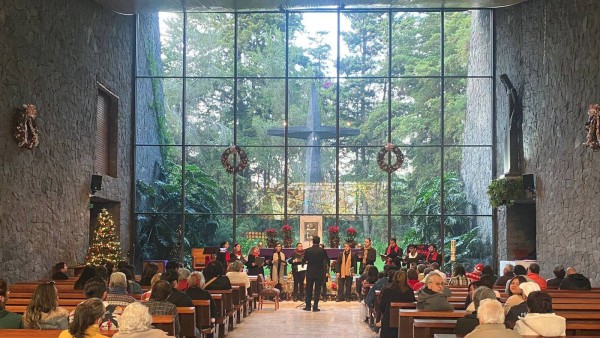
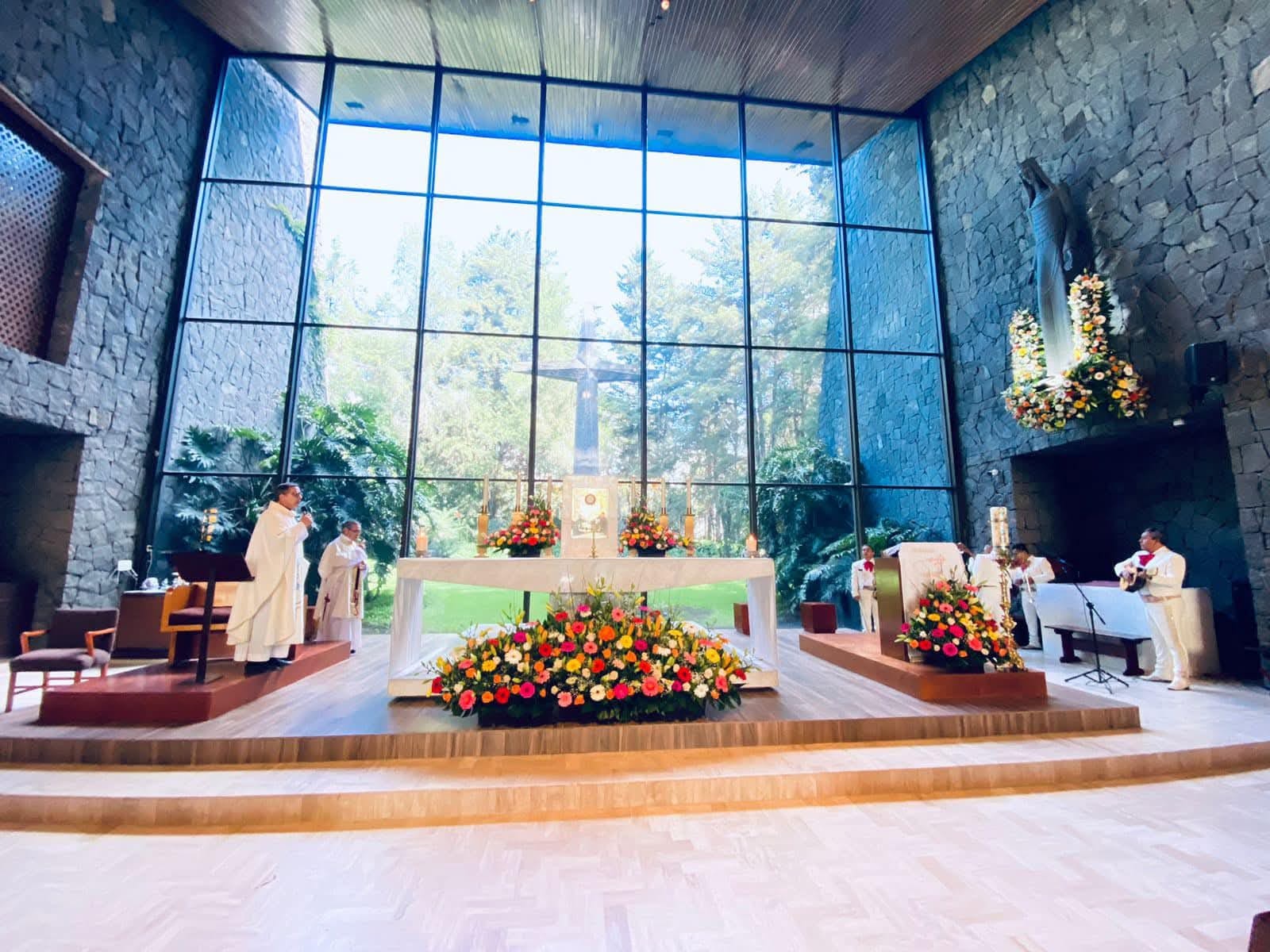
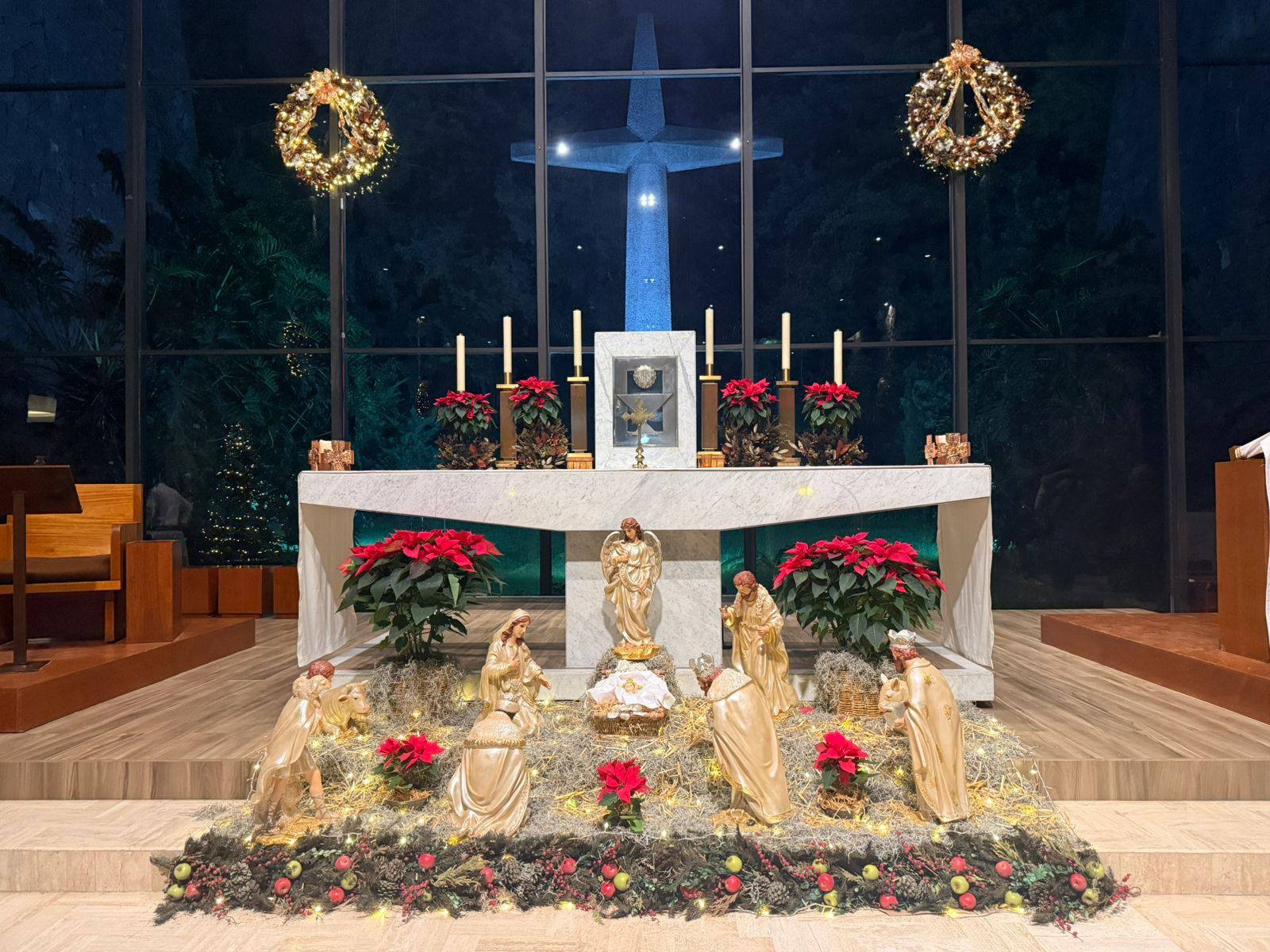
Even when only going over the pictures at the parish’s Facebook profile, it is easy to understand why one would assume Mary Queen is a place to heal broken souls, one where someone going through the dark night of depression would find light and solace.
The temple’s very design portrays Mary Queen as passthrough to a happy place, with its main altar being a huge window overlooking the kind of lush gardens common in the 1950s manors of San Jerónimo Lídice and the so-called Pedregal de San Ángel.
If anything, Protasius personal timeline reveals how resilient he is. When he went to his new parish, near the Unidad Independencia, a Housing Complex in Southern Mexico City he did it during the Christmas season 2022.
He went there seeking help, he was trying to go back to the trenches, asking God for support, compassion and help. He was doing so following the template Catholics all over the world learn during their childhood religious upbringing, something one borrows from the mother or the grandmother.
He went there trusting the “selected few,” the clergy, those who in Catholic theology are supposed to be “alter Christus,” the very representation of Christ. Had his first impulse was for an easy “hook-up,” on top of the usual apps, available worldwide, there is the active “scene” in Mexico City, a buffet of sorts to satisfy any sexual appetite one can think of.
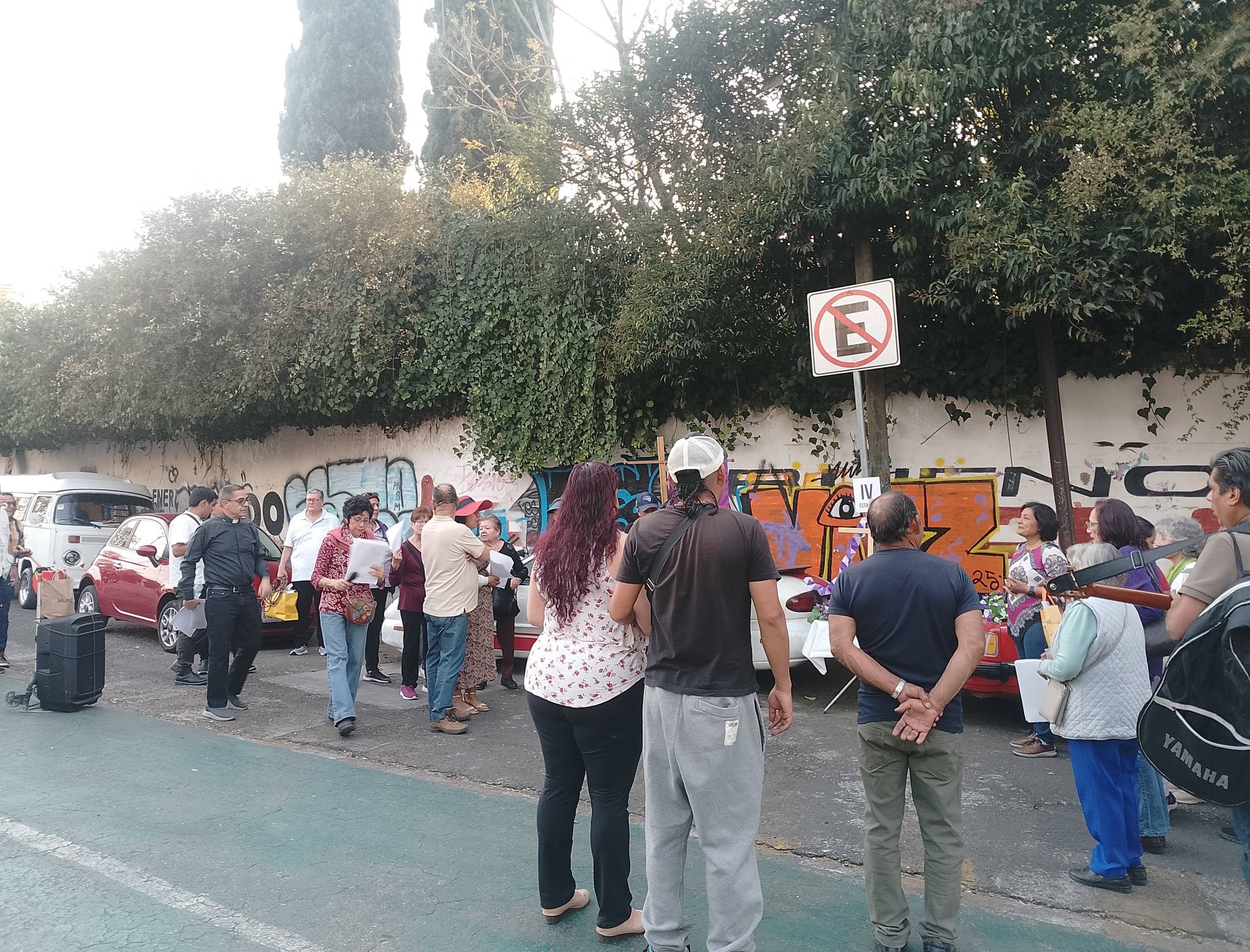
Protasius reached Mary Queen in a profound loneliness and emotional decline, a true dark night of the soul, one of the priests there, a figure of authority at the parish who, for the purposes of the story, will be called Marcus Aurelius and who immediately was informed by Protasius himself of his then current clinical diagnoses and his history of psychiatric hospitalizations.
And to be clear, offering such protection is not grace nor mercy. It is a strategic choice to avoid further damage to the victim, the innocent bystanders, but also to let the wheels of canonical justice turn without media interference.
Protasius was looking for some sense of order, the one religious beliefs seem to imply, some kind of containment under a religious framework. By his own admission, he was trying to “to verbalize years of silence regarding his childhood and his orientation.”
Imitating Christ?
Far from acting in the imitation of Christ, as Thomas A’Kempis calls for, or as an Alter Christus as Cyprian demands, the priest at Mary Queen saw a chance to seize the vulnerability of a layperson. The abuse happened within the context of an explicit request for spiritual support.
If anything, Marcus Aurelius used what Protasius disclosed in the context of an explicit request for spiritual support as a roadmap for exploitation. Because Mary Queen is the “elite parish” in Southern Mexico City where any quinceañera wants to celebrate her thanksgiving Mass, there a small garrison of priests, plenty of space, and tricks to find a couple of hours to spare.
But that also increases the asymmetry of any interaction. Even if Marcus Aurelius would not be able to rule over the lives of dirty poor peasants, he is, to say the least a local celebrity, a pillar of the community, frequently invited to elegant houses in San Jerónimo Lídice; the victim was an outsider in the Unidad Independencia and in Mexico City at large.
Ultimately, the abuse happened over 2023. As usual, this series spares the details because they hardly ever provide any additional insight to the main issue. What matters is that once the abuse happened, when—once again—Protasius was able to pick up where he left and with the help of health professionals, he was able to find the strength to believe the many promises of actual change in the Catholic Church.
On May 7, 2025, Protasius files a formal written accusation against Marcus Aurelius, the priest at Mary Queen. That is when the Metropolitan Tribunal at the archdiocese of Mexico City stamped the case with its reference key: Prot. 11/2025.
Usually, because of the self-inflicted wounds brought to the Catholic Church by its own leaders, the first steps of the process seem to happen at overdrive. Bishops and monsignors want to prove wrong the nay sayers, so one week after, on May 13, 2025, Protasius formal complaint is officially logged.
For the purposes of the canonical or church law process, this is the official date when the “Preliminary Investigation,” as prescribed in c. 1717 of the Code of Canon Law, begins. Three days later, on May 16, 2025, the Tribunal issues a summons signed by Juan José Hernández Flores, a priest and authority within his Church on these issues.
Roma, Mexico
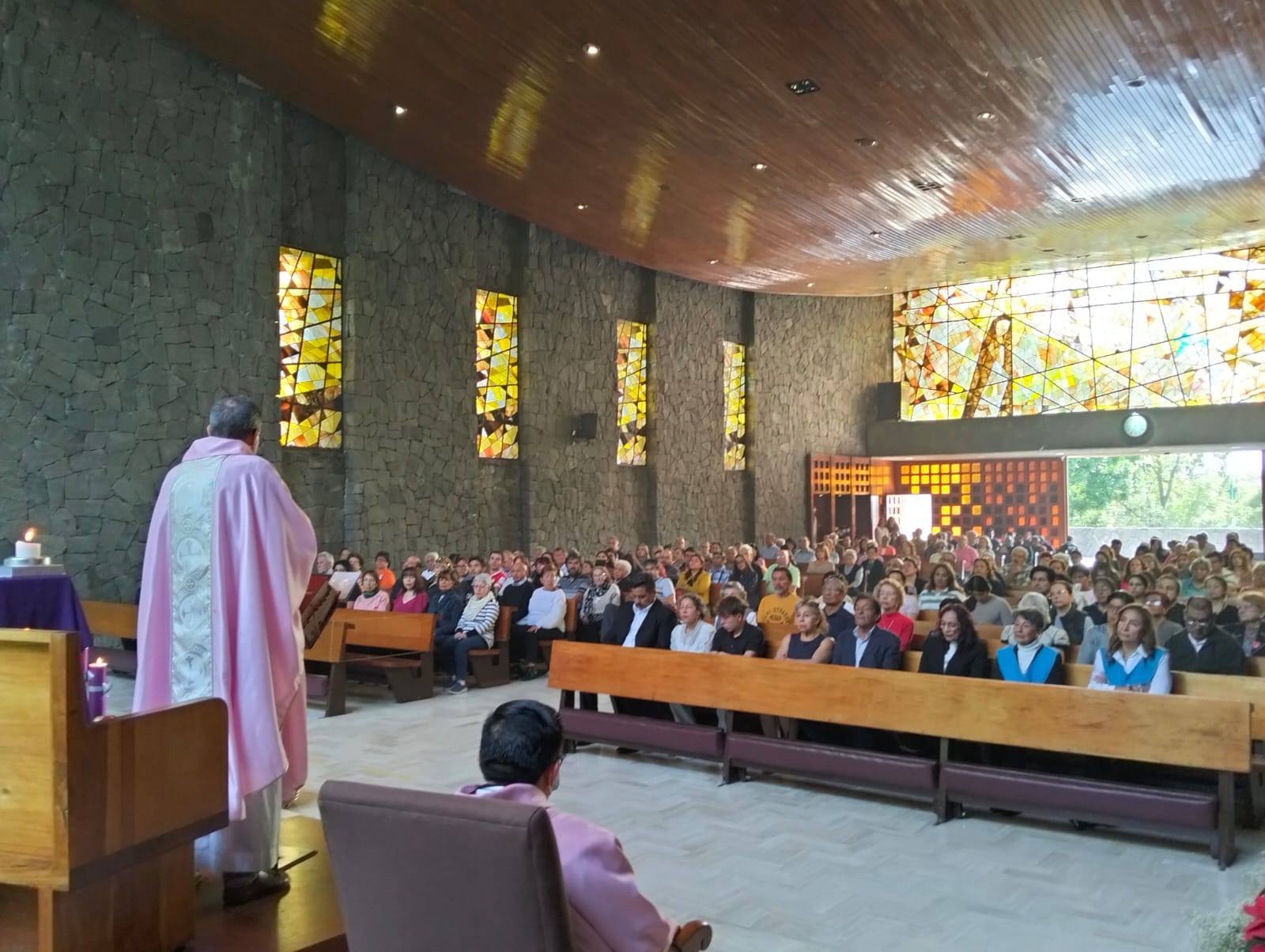
Less than a week after, on May 21, 2025, a few minutes before noon, Protasius makes his first formal appearance at 90 Durango street, 6th Floor, in the Roma neighborhood of Mexico City, the one inspiring the 2018 eponymous movie by Alfonso Cuarón, to render his declaration. At this meeting, the canonical tribunal informs him that they will “gather elements” to probe the “verisimilitude” of the facts.
After the initial rush, silence becomes the norm. Worried about his case, on July 7, 2025, Protasius tries to get in touch with the monsignors at the tribunal. He talks about being unprotected and vulnerable, the very opposite of the approach Pope Francis asked his Church to follow.
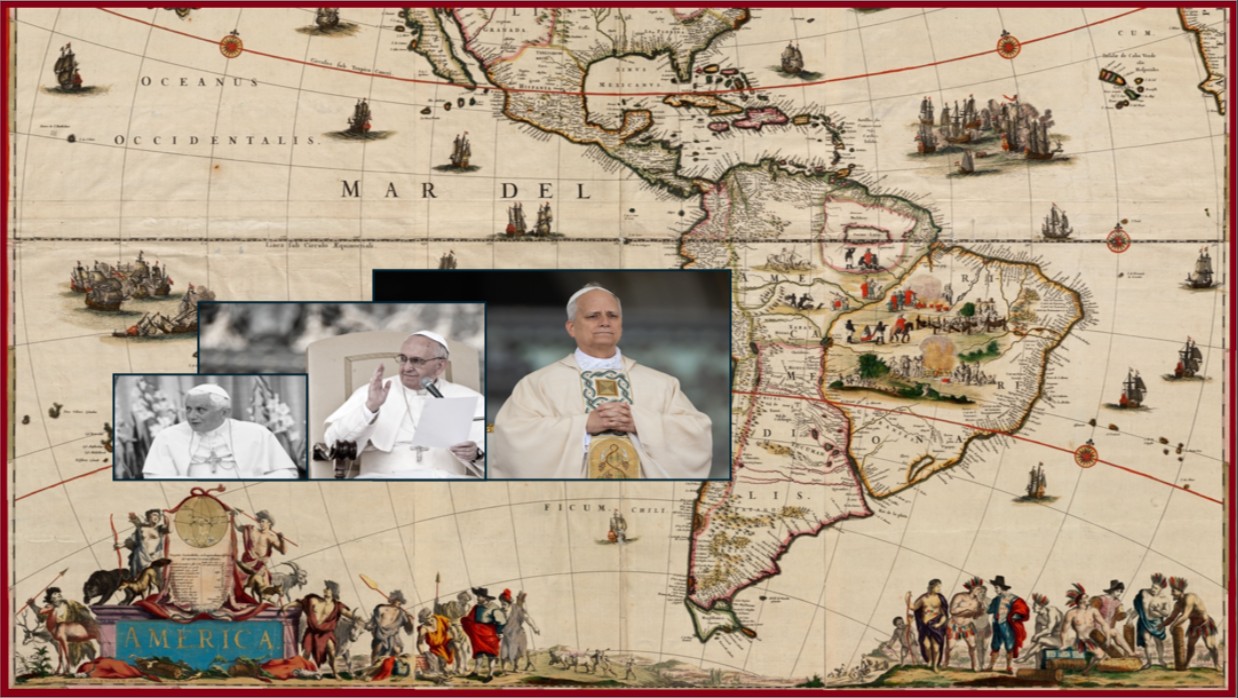
Unlike what happens in civil tribunals, where one or his or her lawyers have mechanisms to exchange information, canonical processes remain, for the most part, covered by the “pontifical secret,” a device premiered by Joseph Ratzinger during his days as prefect of the then Congregation now Dicastery for the Doctrine of the Faith and then elevated to an art form by Benedict XVI.
Although the response was relatively fast was as imprecise as a handbook to operate a computer in Russian. The next day, the tribunal issues a boiler plate, template-like, procedural response. They cite Pope Francis’s document Vos Estis Lux Mundi and claim they are observing “due diligence while remaining objective.” However, they provide no timeline, only stating he will be informed “once the necessary elements have been gathered.”
One month after, on August 6, 2025, nearly three months after the initial filing, the tribunal at the archdiocese of Mexico City issues another formal Citation asking Protasius to be at the Roma neighborhood offices on August 15, 2025. The monsignors are now asking for his “valuable and generous collaboration.” He is required to bring his national ID card.
Oddly enough, while the victim is forced to full disclosure of his or her identity, the priests probing and eventually ruing over the behavior of a fellow priest from the same religious jurisdiction, maintain their own “confidentiality” following Ratzinger’s designs.
Following the rules
And Protasius has been willing to follow his Church’s rules on this issue. As many other victims, they want to believe the many reenactments of the liturgy of penance over clergy sexual abuse, played by John Paul II, Benedict XVI, Francis and, more recently, by Leo XIV.
Main problem is that even if one could be willing to believe that there was some truth in any of those liturgies, it is almost impossible to believe there is some will to change the way the Church deals with these matters when a survivor such as Sandra Valdez tells her own story of her meeting with the rather dismissive archbishop of Monterrey, Mexico, Rogelio Cabrera López.
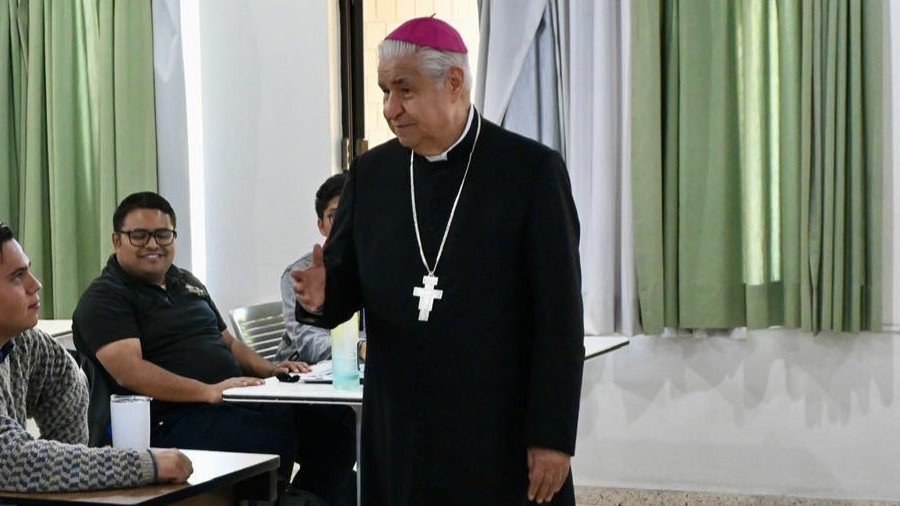
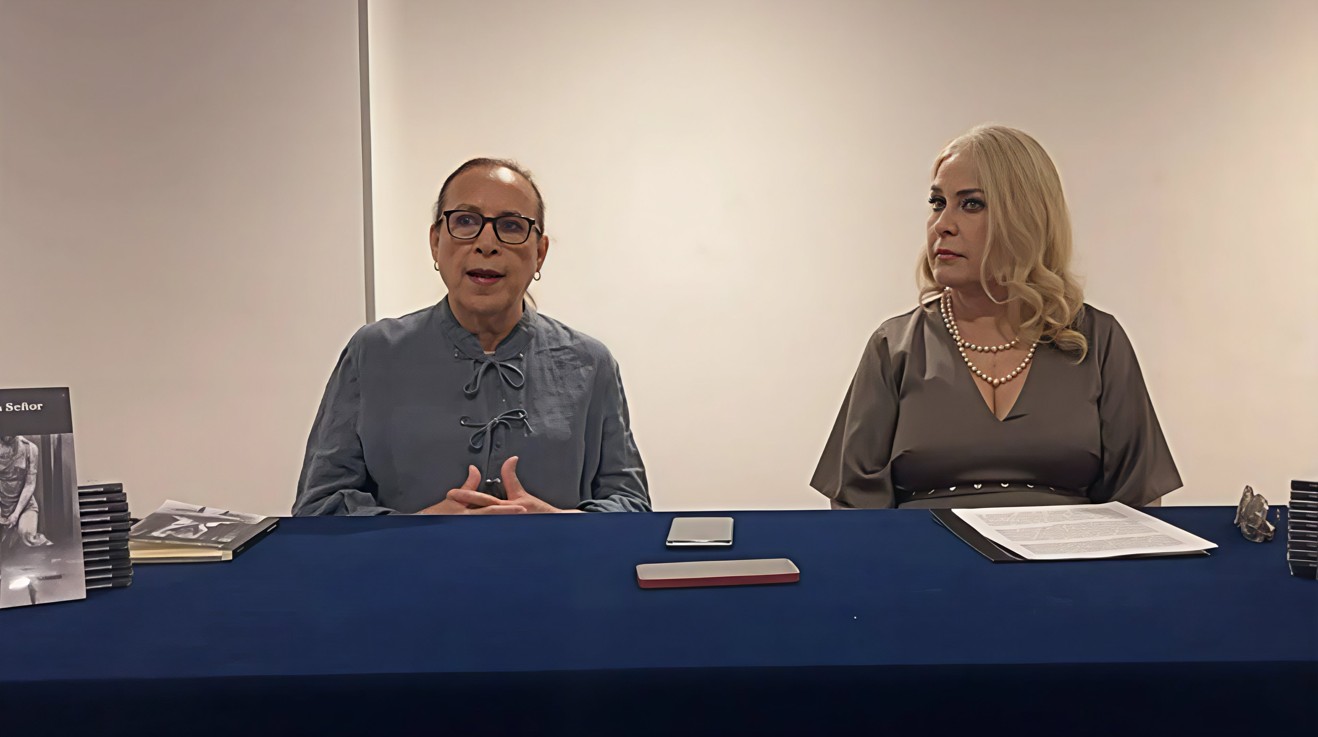
During the meeting, per Valdez’s account in her recently published book, available only in Spanish in the story linked after, this is what happened:
The bishop, sitting in front of me, very elegant in his black cassock and violet zucchetto; his gold rings and a large pectoral cross hanging on his chest, listened to me in silence with an overbearing attitude. He did not say a single word. There was no expression on his part. Completely unmoved, he stared at me with his piercing eyes as if trying to intimidate me. I immediately understood that his apathy and arrogance are much greater than his love for his neighbor, and even much greater than the love for God that the Catholic Church proclaims so much.
“I am not going to make a public circus out of this. Not for your sake. I do it in memory of my parents, who were good people, pious and respectful of their Catholic religion. Now, I do not profess any religion, and it is thanks to the priest who raped me,” I told Mr. Cabrera, barely holding my tears (p. 72-3).
English Edition
“Forgive Them, Lord“: an abuse survivor‘s story from Mexico
And even worse, despite the judicial like tone of the tribunal’s summons, for the purposes of the Church, Protasius is not a potential victim or survivor. He was asked to become a “collaborator,” but he must do so while accepting he is nothing but “human cargo,” a piece of evidence in a process where the only asset is Marcus Aurelius.
A previous installment of this series, linked after this paragraph, dealing with a case at the diocese of Izcalli, in the Greater Mexico City area, offers some details as to how priests in Mexico and all-over Latin America play “internal affairs” detectives for the crimes of other priests. Spoiler alert, none of them is as tough as Serpico.

English Edition
Izcalli, Three‘s a Charm?
Hierarchy of pain
Readers must be aware that the story is not “convoluted” on its own. It is convoluted by design, because the Church, with support from massive media consortiums, has been able to create a hierarchy of pain where the only “true victims” are underage boys, and any other victims must compete to be worthy of victimhood.
Within such narratives, if a boy is abused, innocence has been violated. When a woman is abused, her vulnerability has been exploited, although when it comes to underage females, they always run the risk of becoming the exploitive Lolita, the young temptress willing to destroy a male.
When an adult man claims to be victim of abuse, it is almost always a narrative of a failed masculinity on the side of the victim. It is a narrative where adult females and males, and even adolescent females must prove they were not enticing, tempting, setting up the priest, to transgress the sixth commandment, which is where, for the purposes of current Canon Law the “litis,” the issue at stake is.
That is why, inebriated in their own brand of theological thinking, many priests think victims, their relatives and friends, and the media dealing with this issue are nothing but troublemakers, a nuisance or some sort of underserved pain they must endure as witness of the faith.
Catholic theology and more significantly Catholic canonical regulations are still miles away from acknowledging the kind of damage predatory priests are able to inflict, from Maciel to Renato Poblete, from Felipe Berríos to Marko Rupnik, no matter their politics, for the rather blind optics of Canon Law, when it comes to adult victims they are only guilty of transgressing the sixth commandment.
English Edition
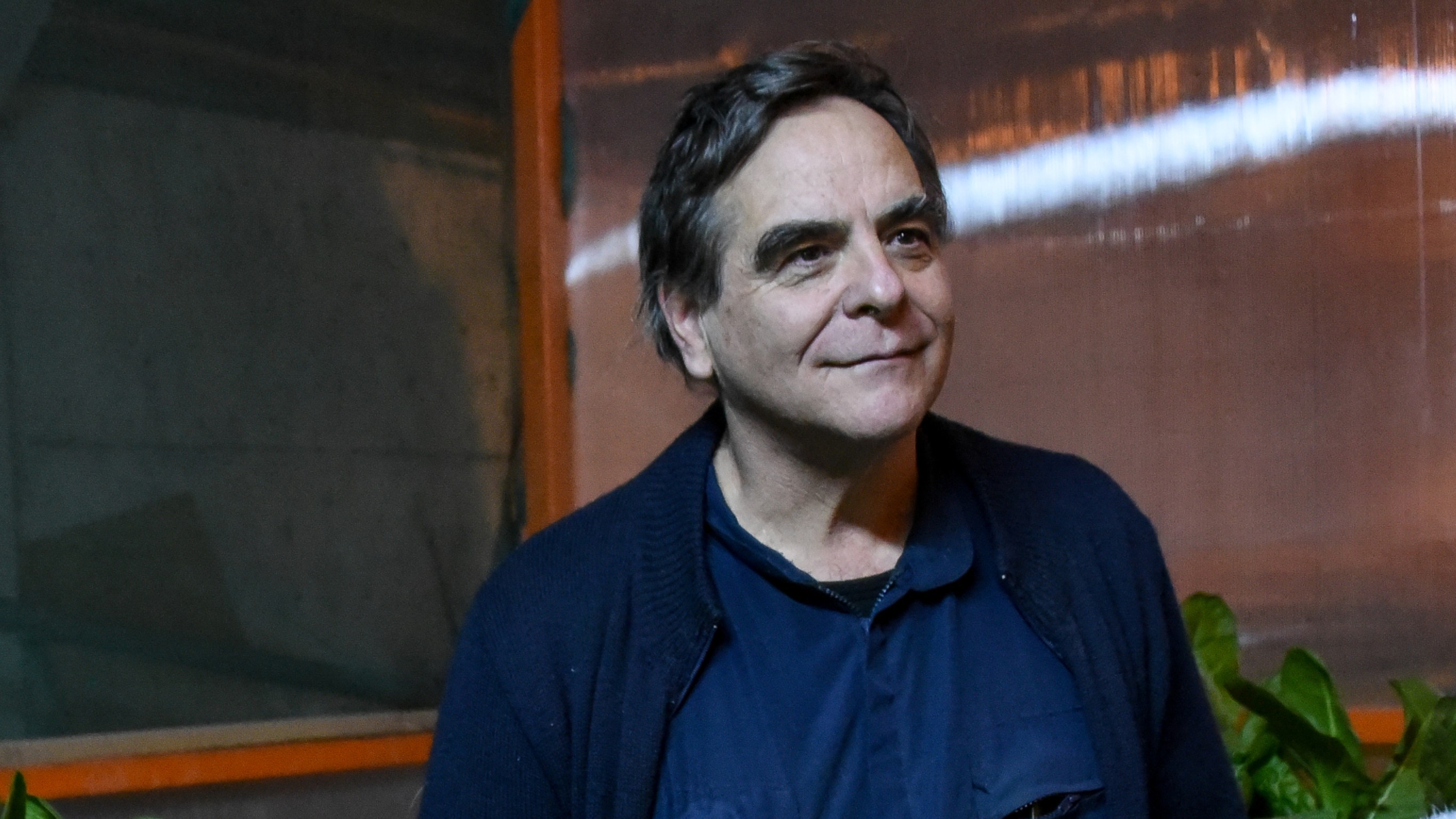
Berríos and Rupnik, the parallel lives of predator priests
As the story linked before this paragraph tells, Berríos and Rupnik, drunk in “ontological change” remain priests even if both have been expelled by the Jesuits, while trying, at times, to discredit their victims, or to play victim of the media or, as Maciel used to do, of “the communists.”
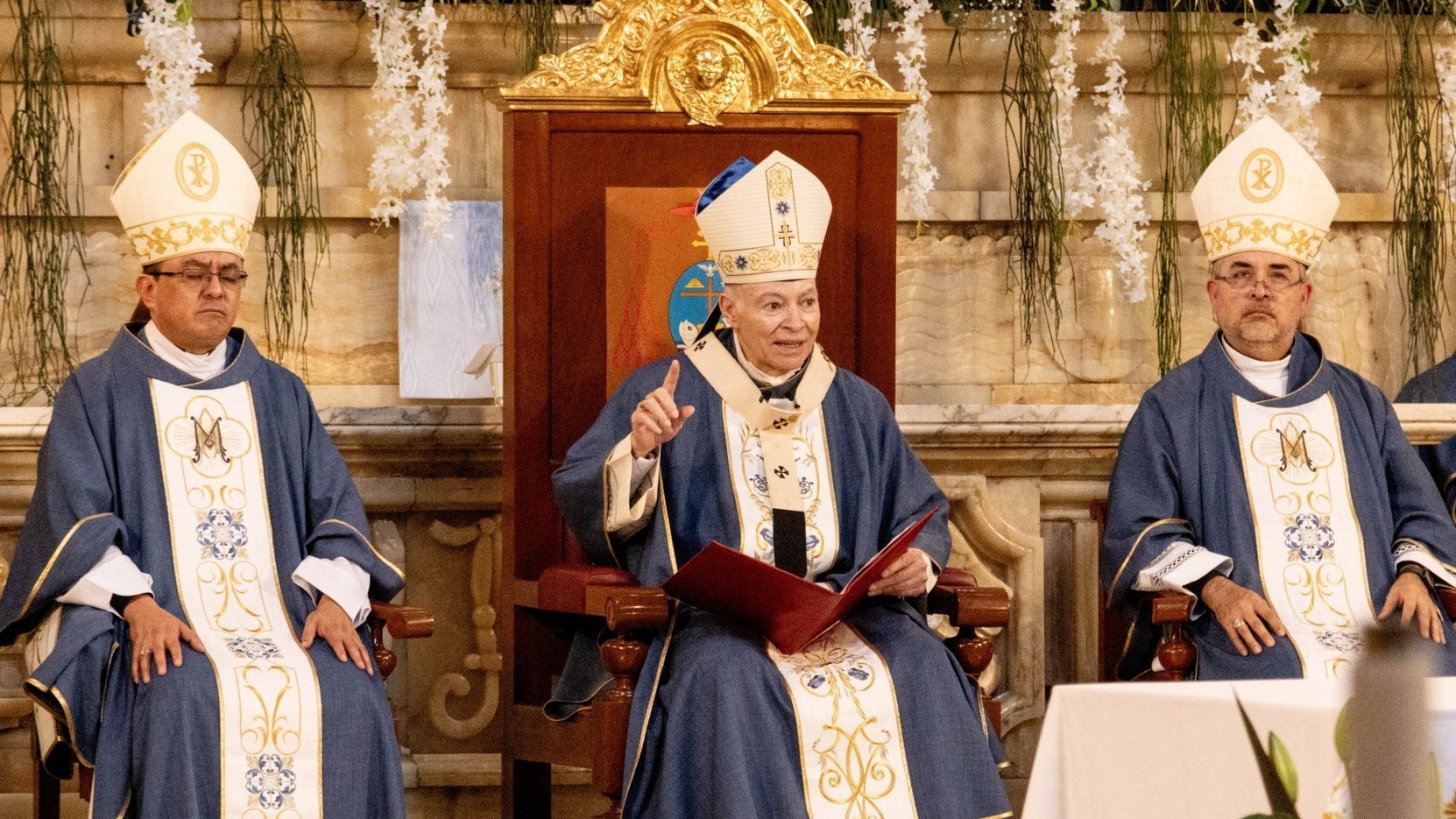
So far, Protasius case remains stagnant, mired, in the never-ending procedural labyrinth of canon law. For the last six months or so, the ball has been in the Catholic Church’s court and given the absence of a Catholic ombudsperson or some other figure able to grant the rights of the faithful, one only can wait for Cardinal Carlos Aguiar Retes to seize the chance to actually differentiate himself from his predecessor in something other than the tone or the attitudes of their public personas.
It is a chance also to prove there is some advantage for the rigid hierarchical structures of the Catholic Church as compared to those of the different branches of the Orthodox Church.
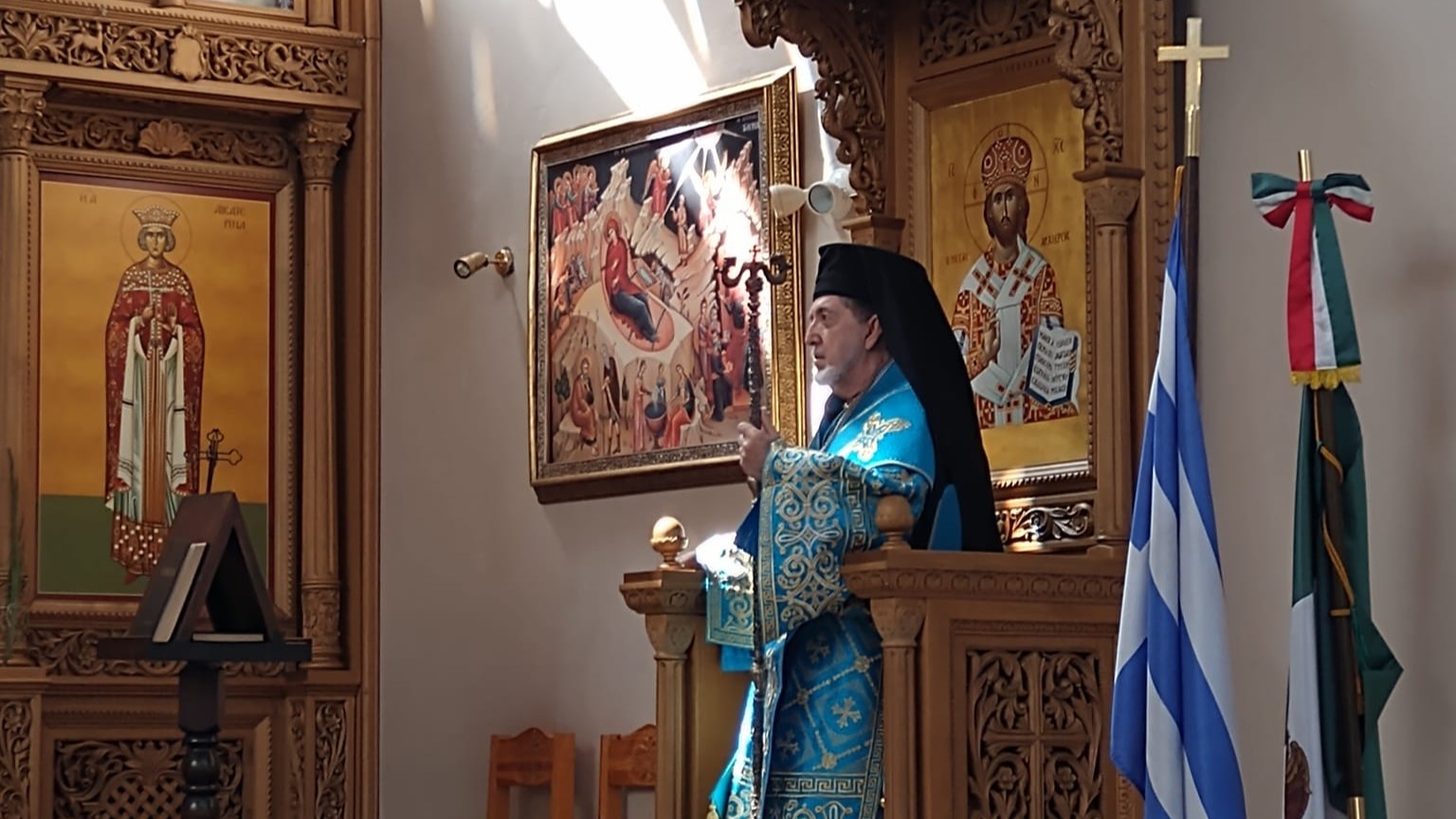
English Edition
Lost in Mexico City: clergy abuse, Orthodox style
Last year this series went over John Metsopoulos's case, a former member of the Connecticut state house who, after having a relatively successful career in local politics in the United States came to Mexico City in the hopes of helping his Christian Greek Orthodox Church grow here. That story, available before this paragraph, shows how what he found was abuse, bankruptcy and misery.
It is up to the monsignors at 90 Durango street in Mexican Roma to decide if they will keep as priest someone who, if one was to believe their interpretation of Scriptures and Catholic theology, should be removed immediately from the priesthood.
Even if Marcus Aurelius were to be found guilty only of breaking his vows and transgressing "the Sixth," a thorough understanding of Benedict XVI's 2005 reforms would grant dismissal from the clerical state, as he remains a risk to the unsuspecting faithful seeking his spiritual direction.
Only time will tell if Marcus Aurelius, the emperor of his own parish, can successfully sacrifice the weakest link in Queen Mary: Protasius, who is neither a rich dude from the San Jerónimo Lídice manors nor the member of a family of the closely knitted community in the Independencia Housing Complex. Despite being Mexican, he remains as foreigner to Mary Queen as an Argentine or a Spaniard could be. He speaks the language, but he is far from home.
And before dismissing Protasius as an "imperfect victim," think if you would trust Marcus Aurelius when going through what Carmelite friar John of the Cross called the dark night of the soul.
Post-Data
The last week of March brought new developments in the clergy sexual abuse crisis. On Friday 27, in the diocese of Albany, the capital city of New York state, the bishop was able to finally settle a 148 million package of compensations for more than 400 victims in that religious jurisdiction.
Whoever thinks this is a huge sum of money should take into consideration that some of the survivors have been litigating their cases for more than 20 years, as can be seen in the PDF list, originally published by the diocese of Albany back in 2022 available after this paragraph. The list includes the names of 59 priests or, in some cases former priests, some of them already deceased. A very basic analysis of the data proves that every predator in that least attacked at least seven victims, 7.33 if one wants to be precise.
That is where the consensus of the reports now available from the United States, France, and Germany seem to converge but one must be aware that, as Protasius case prove, some victims must face more complex hurdles than others.
In Portugal, in a surprising move, the bishops there accepted to enter a process similar to the one already in place in Spain to address the many cases of clergy sexual abuse there.
Each of the 57 Portuguese victims will receive between nine and 45 thousand euros. Unlike what happened in Spain, where there is room to discuss other cases, in Portugal at least until now, this compensation does not come with a framework to allow for other similar agreements.

In France, Jean-Michel Alain di Falco Léandri, the emeritus bishop of Gap-Embrun in Catholic heartland of Southern France, was forced to pay a compensation for the sexual abuse of an underage male dating back to the 1970s. The case is relevant because it is a relatively new development in French law.
The sentence was not issued by a penal court, but by a civil one, mirroring the kind of developments that have happened over the last decade in California and New York where the legislatures in Sacramento and Albany have acknowledged the need for so-called lookback windows allowing for sexual abuse cases already prescribed over criminal law can follow a civil law process allowing for compensations for the victims as the one announced in Albany.
The civil court sentenced the emeritus bishop to pay 200 thousand euros as compensation. There is the expectation of an appeal and Di Falco Léandri’s lawyer already criticized a ruling that is a first for France and many other countries where prescription of crimes is still a major hurdle.
The news from France is especially relevant for many Latin American countries with systems of justice and jurisprudence carbon-copied from the French Napoleonic code and the theories supporting such understanding of the law.

Finally, in Bolivia, two of the 70 victims of a Spaniard Jesuit priest are trying to force the government there to reopen their case. Previous installments of this series have gone over the Jesuits accused of large-scale sexual abuse in Bolivia.

* * *
A summary of this piece is available as audio after this paragraph.
Note on production: The text of this summary was written and edited solely by the author. The delivery of the audio summary was achieved using a high-quality, text-to-speech engine Microsoft Word for Web. The AI was used for voice generation only, not content creation.