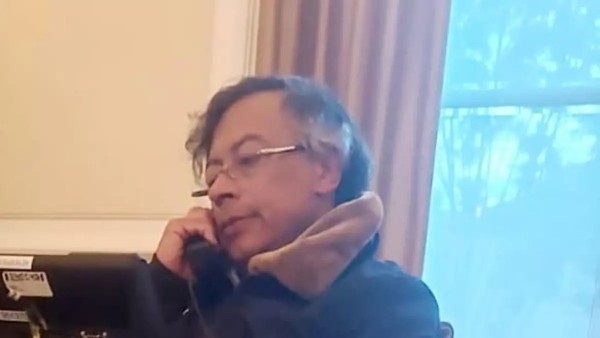
Both governments said the conversation was conducted in a “constructive tone”, after Trump suggested that Colombia could face an operation similar to the one carried out in Venezuela against Maduro.
A phone call between the Colombian president, Gustavo Petro, and his US counterpart, Donald Trump, on Wednesday helped defuse a growing diplomatic crisis between Bogotá and Washington, following days of escalating rhetoric linked to developments in Venezuela.
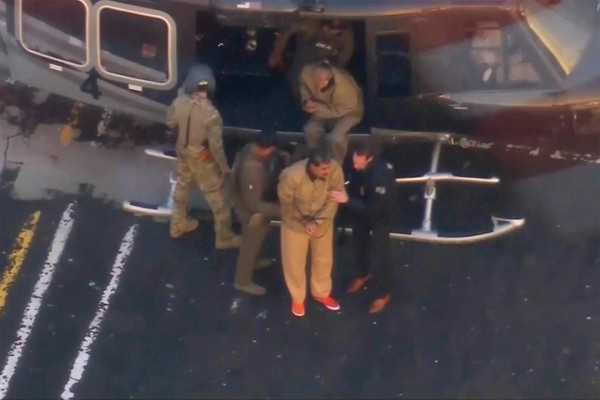
Both governments described the hour-long conversation as “constructive”, signalling a pause – at least for now – in a verbal standoff that had intensified after the detention in Caracas of Venezuela’s president, Nicolás Maduro. In recent days, Trump had even floated the idea of replicating in Colombia an operation similar to the one that led to Maduro’s capture, further heightening tensions.
Speaking to supporters gathered in Bogotá’s Plaza de Bolívar at a rally he had called “in defence of sovereignty”, Petro said the call forced him to change the tone of a speech he had prepared in response to Trump’s remarks.
“After everything that has unfolded over the past two or three days, I had one speech ready and now I have to give another,” Petro told the crowd. “That is not easy. The first one was much harsher.”
Trump, for his part, said it was “a great honour” to speak with Petro and announced that the two leaders would meet at the White House in the coming weeks. According to the US president, Petro raised concerns related to drug trafficking and other longstanding disagreements between the two administrations.
Restoring broken channels
Petro said one of the main objectives of the call was to restore formal lines of communication between the two governments, which had largely broken down amid repeated diplomatic crises since Trump began his second term in January 2025.
“If there is no dialogue, there is war. Colombia’s history has taught us that,” Petro said, lamenting what he described as months of a breakdown in communication with Washington.
During the call, Petro pushed back against accusations made by Trump that portrayed him as linked to drug trafficking. He said he presented data on Colombia’s anti-narcotics efforts and stressed his personal history of confronting powerful criminal networks.
“I had to put the figures on the table,” Petro said. “The same ones I’ve repeated here. How can I be labelled a trafficker when I’ve spent 20 years risking my life fighting high-level mafias and the politicians allied with them?”
Venezuela and regional security
Petro also highlighted cooperation with Venezuela in tackling cross-border drug trafficking, particularly in the volatile Catatumbo region, where the guerrilla group National Liberation Army, dissident factions of the Revolutionary Armed Forces of Colombia, and criminal organisations operate.
He said he had informed Trump of a recent conversation with Venezuela’s acting president, Delcy Rodríguez, in which he proposed a tripartite dialogue involving Colombia, Venezuela and the United States to stabilise Venezuela and prevent a broader outbreak of violence.
“The peace of Venezuela is the peace of Colombia, and vice versa,” Petro said, adding that the proposal would be on the agenda when he meets Trump in Washington.
Strained relations with Washington
Petro’s criticism of US-led counter-narcotics operations in the Caribbean and eastern Pacific – where dozens of suspected drug-smuggling vessels have been sunk and more than 100 crew members killed in recent years – has been a major source of friction with Washington.
The relationship deteriorated further last year when the US revoked Petro’s visa and the Treasury Department placed him and several members of his inner circle on the Office of Foreign Assets Control (OFAC) sanctions list, after Trump accused him of being a “drug trafficking leader”.
Wednesday’s call appears to have halted the immediate slide toward a deeper diplomatic rupture, but officials on both sides acknowledged that profound disagreements remain over drug policy, regional security and Venezuela’s political future.

English Edition