Rodolfo Soriano-Núñez Lunes, 08 de Julio del 2024
A Nigerian priest removing religious art from a parish in New Mexico, with help from the Knights of Columbus, encapsulates the war shocking the Catholic Church.
While the artwork was easily removed in New Mexico, leaders of the Roman Catholic Church dismiss calls to remove noted sexual predator Marko Rupnik's artwork from places of worship all over the world.
By Rodolfo Soriano-Núñez
On the very first day of July, Catholic internet in the English- and Spanish-speaking worlds went into a frenzy when news of stolen religious artwork came out of Mescalero, a small town, whose parish, Saint Joseph belongs to the Roman Catholic diocese of Las Cruces, New Mexico.
The episode is a prism of sorts of the crisis shocking the Catholic Church nowadays. At the end of 2023, when Pope Francis and his then newly appointed prefect of the Dicastery of the Faith, Víctor Manuel Tucho Fernández, issued Fiducia Supplicans, a document allowing for an informal blessing to so-called “irregular couples”, the first line of riflemen aiming at the Pope and Cardinal Fernández, was full of African clerics.
The African bishops and priests went as far as to call the Pope heretic or at least to insinuate the charge. They were willing to cross that line emboldened by their relationship with wealthy funders from the United States and Europe.
Said funders, have turned Africa into the ground to reenact for draconian laws already dismissed in Europe, Canada, the United States, and even most of Latin America in the last 30 years or so. Those laws criminalize same-sex preference and punish it with sentences that can go as far as to execute the guilty party.
In his latest trip to Africa, in February 2023, when he shared the dais with the Archbishop of Canterbury, Justin Welby, the leader of the Anglican Communion, and the moderator of the Church of Scotland, Iain Greenshields, Francis made a plea to drop that kind of legislation from the books.
Francis’s plea, a response to a question made by a French journalist on the papal flight back to Rome made headlines outside of Africa.
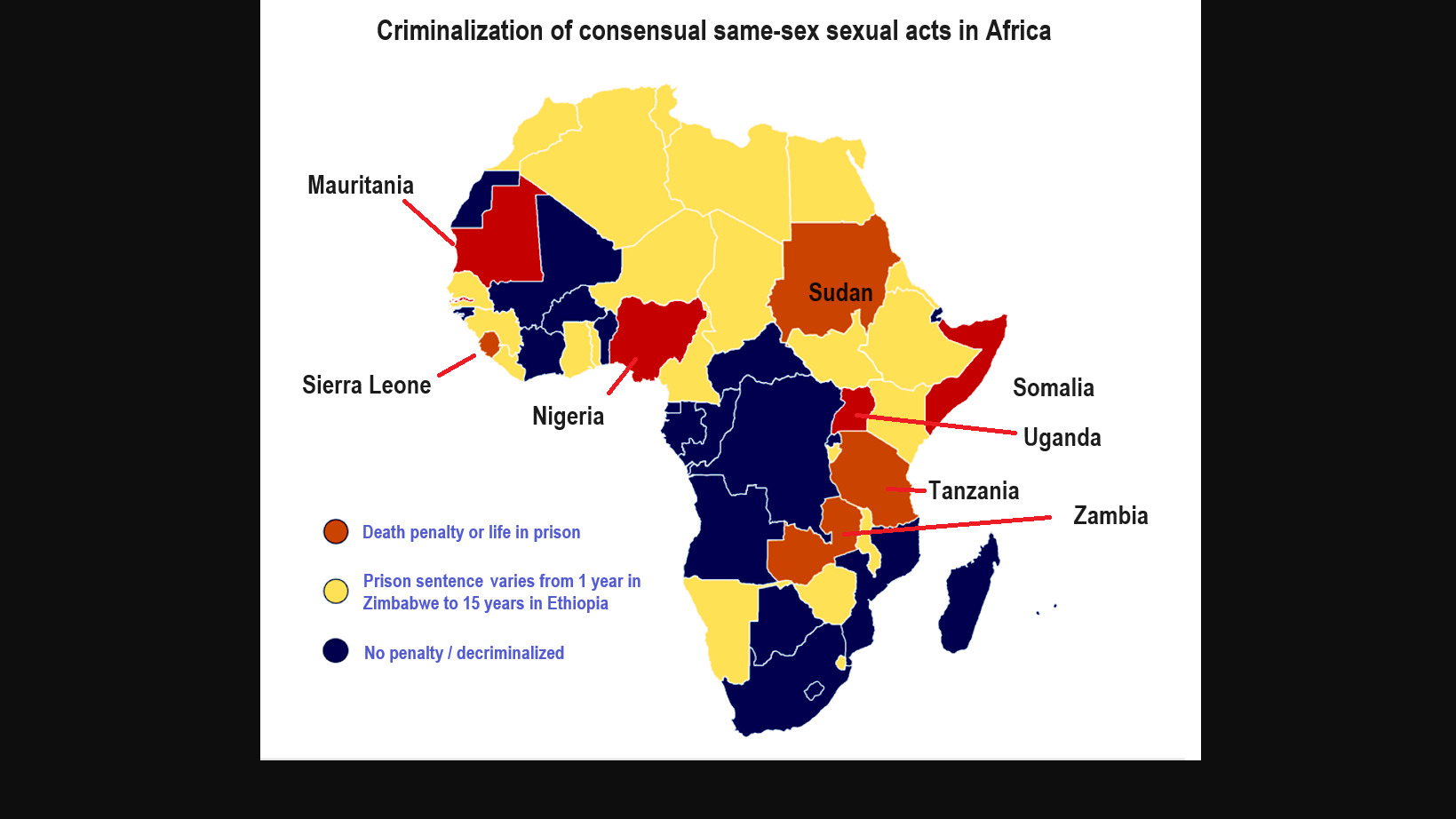
In Africa, the call to drop the homophobic laws in 33 out of 55 countries in that continent, made little or nothing to change the attitudes of Roman Catholic clerics more interested in keeping their good relationship with the boosters of said laws, that in eight African countries go as far as to punish the alleged offenders with either life imprisonment or the death penalty, as can be seen in the map appearing immediately after.
The researchers at the Institute for Security Studies estimate in fifty million of U.S. dollars the monies offered to governments in Africa to “develop laws and policies against sexual and reproductive rights.”
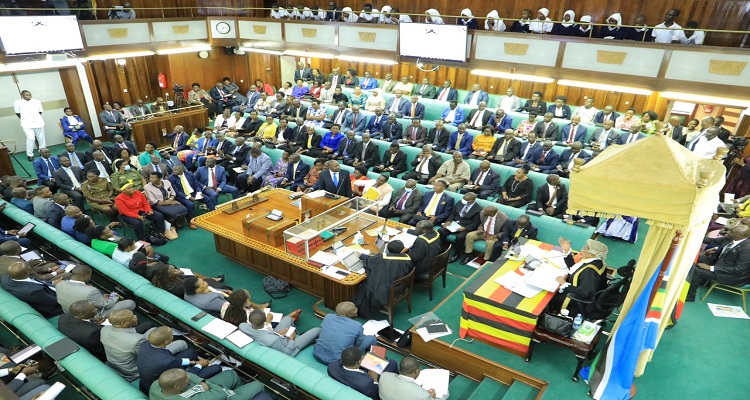
That source estimates that Uganda alone received nearly $20 million USD “to support the government in developing laws, including the Anti-Homosexuality Act” passed back in 2023 by the national parliament of that nation.
Human Rights Watch published a critique of the Act and the processes followed by the Ugandan parliament then, available here. Los Ángeles Press published a story, available only in Spanish, stressing the silence of the local Roman Catholic hierarchy in Uganda, despite the pleas made a few weeks before by Pope Francis during his 2023 trip to Sudan.
Back in Mescalero
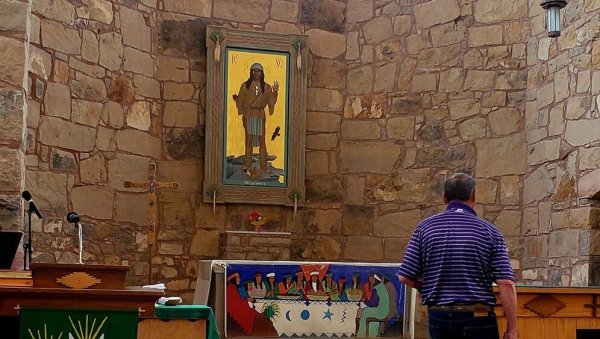
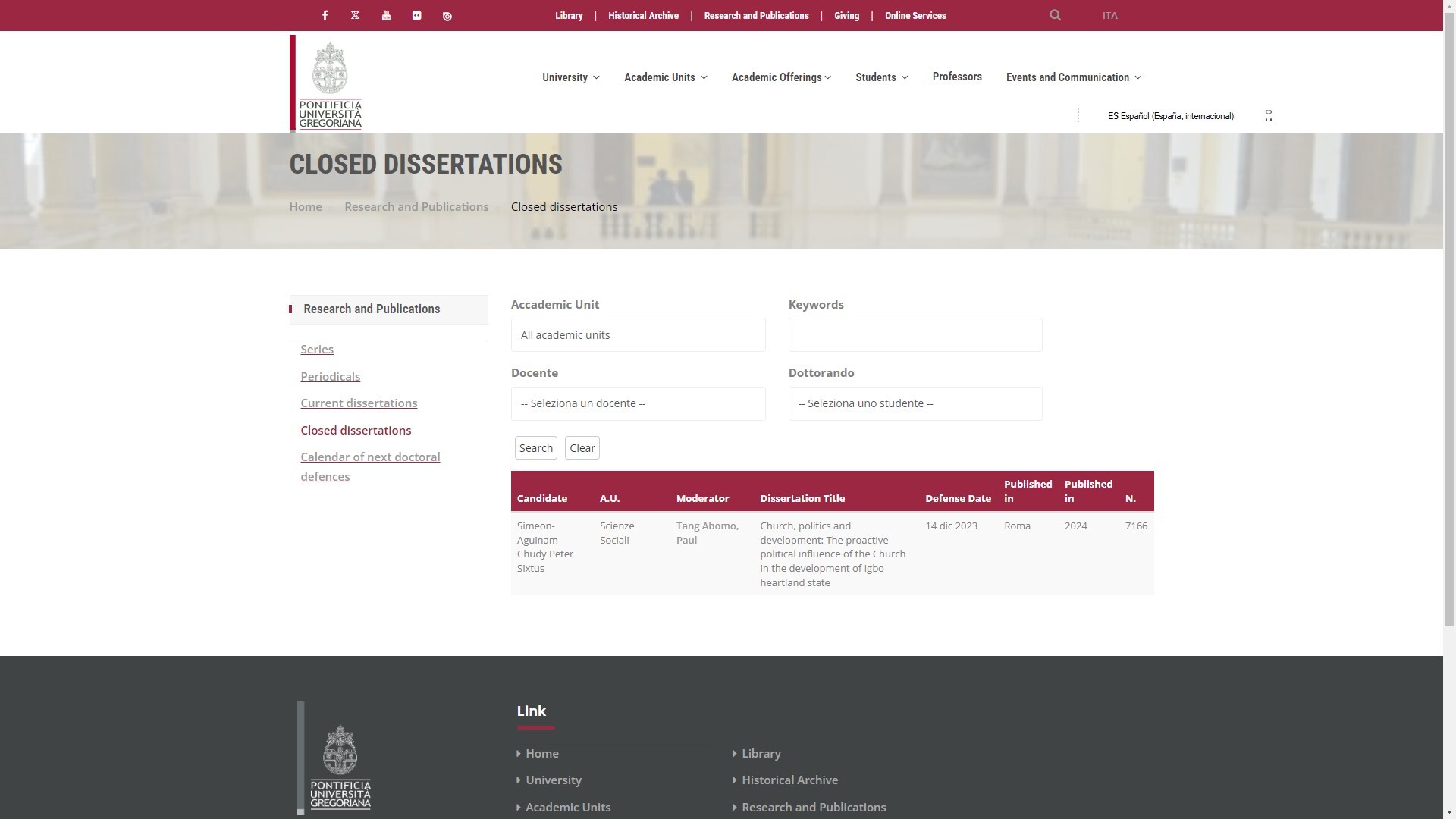
As the night fell in Mescalero, New Mexico, more details emerged. It was known that a Nigerian priest, recently assigned to the parish of Saint Joseph, Chudy Simeon-Aguinam, a recent graduate from the prestigious Pontifical Gregorian University in Rome, decided that a painting depicting Jesus in Apache garments was not Catholic enough for that parish located at an Apache reservation.
To remove the painting, which used to preside over the altar of the Church, as the main picture of this story shows, he was assisted by members of the Knights of Columbus, an organization describing itself as a “Catholic fraternal organization”, based in the United States, with local chapters in Canada, Mexico, and other countries in Latin America and elsewhere.
The Knights, founded in 1882, played an extraordinary role in facilitating the integration of minorities in the United States and Canada over the 19th and 20th centuries. So extraordinary, that a century ago, back in 1924, W.E.B. DuBois saw their work as an effective tool to overcome discrimination and violence in the United States, as described in his book The Gift of Black Folk: The Negroes in the Making of America.
Despite such a storied record, over the last 30 years the Knights, reflecting changes that have affected the Roman Catholic Church at a global scale, shifted to the right and became an increasingly partisan entity.
As the Knights stand today, they have aligned themselves with the most radical wing of the Republican party, drawing criticism even from priests in good standing in the Catholic Church, and from the editorial board of in Roman Catholic media.

Radical, partisan, and marred by accusations ranging from financial malfeasance going all the way back to the last years of the 20th century, with claims made as recently as 2017, to the stealing of trade secrets, and abusive labor practices.
More than a decade ago, the range of accusations against leaders of the Knights grew to include child molestation and sexual abuse in their premises and/or programs. The first of such accusations emerged in 2010, in Brownsville, Texas. Eleven years, later, in 2021, a similar accusation came out of The Bronx, New York.
More recently, in May of 2024, similar reports emerged in the Detroit metro area in Michigan. You can try this link for the original story from The Detroit Free Press, but the content is behind a paywall.
Already in March of this year, the Knights had a record of at least five accusations against their leaders for this type of sexual molestation or abuse cases, so the report coming from Detroit is their sixth so far.
The shift taking the “Catholic fraternal association” to the right was already notable back in 2013, when the NGO Catholics for Choice identified the Knights as “crusaders for discrimination” for reasons detailed in this report.
Apache Jesus
Back in New Mexico, the local leaders of the Knights immediately took distance from Chudy Simeon-Aguinam’s actions at Saint Joseph, but the fact remains: local members of the “fraternal Catholic organization” assisted a Nigerian priest in the removal of sacred art from a Roman Catholic parish at a mission in an Apache reservation.
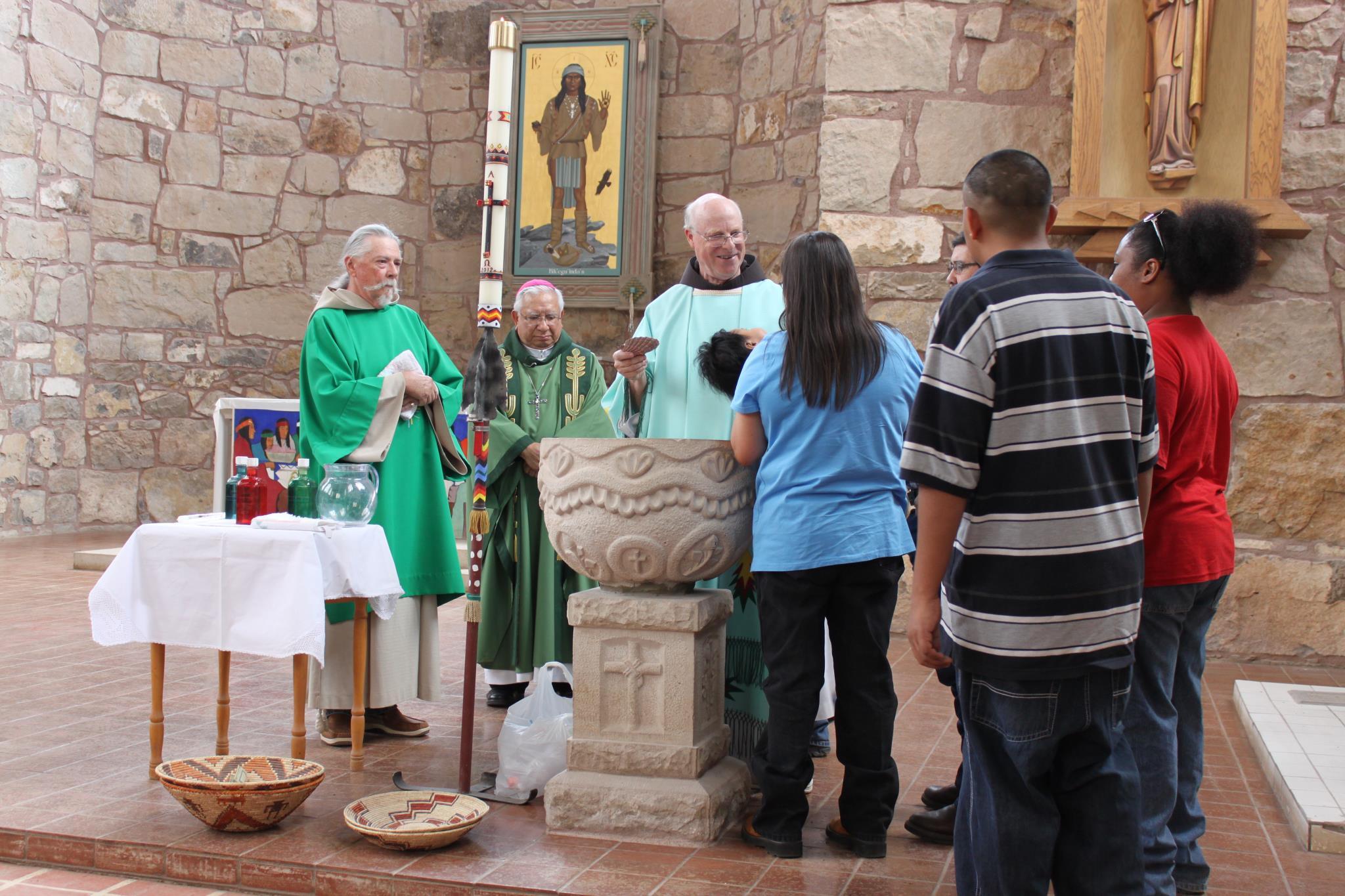
The icon of Apache Jesus removed by the Nigerian priest Simeon-Aguinam was known to at least three bishops of Las Cruces. First, bishop Ricardo Ramírez, now the emeritus of that diocese, who left the position in 2013, who appears in the picture immediately before this paragraph, while witnessing a baptism at Saint Joseph.
Then by Óscar Cantú, current bishop of San Jose, California, who can be seen presiding over a mass at Saint Joseph in Mescalero in the first picture of the posting at Facebook appearing immediately after this paragraph. Finally, the current bishop Peter Baldacchino.
(In case the posting cannot be seen directly on this page, you can find it here).
On the second picture from that posting, bishop Cantú appears blessing another piece of religious art, also inspired by the Apache culture.
On the third picture of that posting, bishop Cantú celebrates mass using a ceramic chalice, already different in that regard, from most chalices used in Roman Catholic masses. The chalice sports patterns resembling a cross, with blue and orange paint, inspired by those of the pre-Hispanic cultures of Chihuahua and Sonora in Mexico, and New Mexico, Arizona, and Texas in the United States.
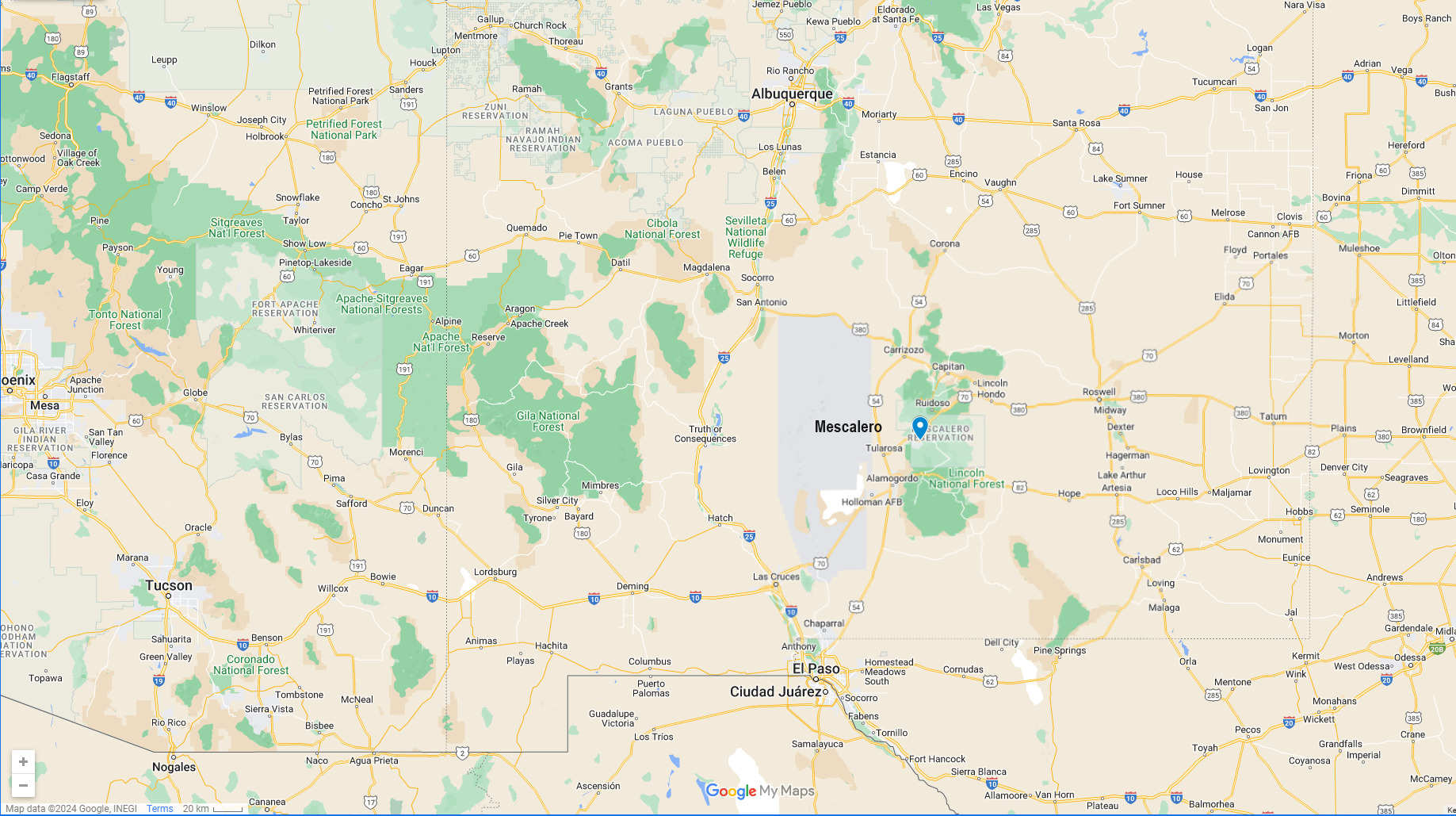
Saint Joseph is located at Mescalero, New Mexico, a small town, little less than a hundred miles North from El Paso, Texas, little over 165 kilometers North from Ciudad Juárez, Mexico, or a similar distance South from Albuquerque, New Mexico.
The parish underwent major renovation more than ten years ago, as can be seen in their website, that was last updated back in 2011. Most of the communication nowadays is made over their Facebook page.
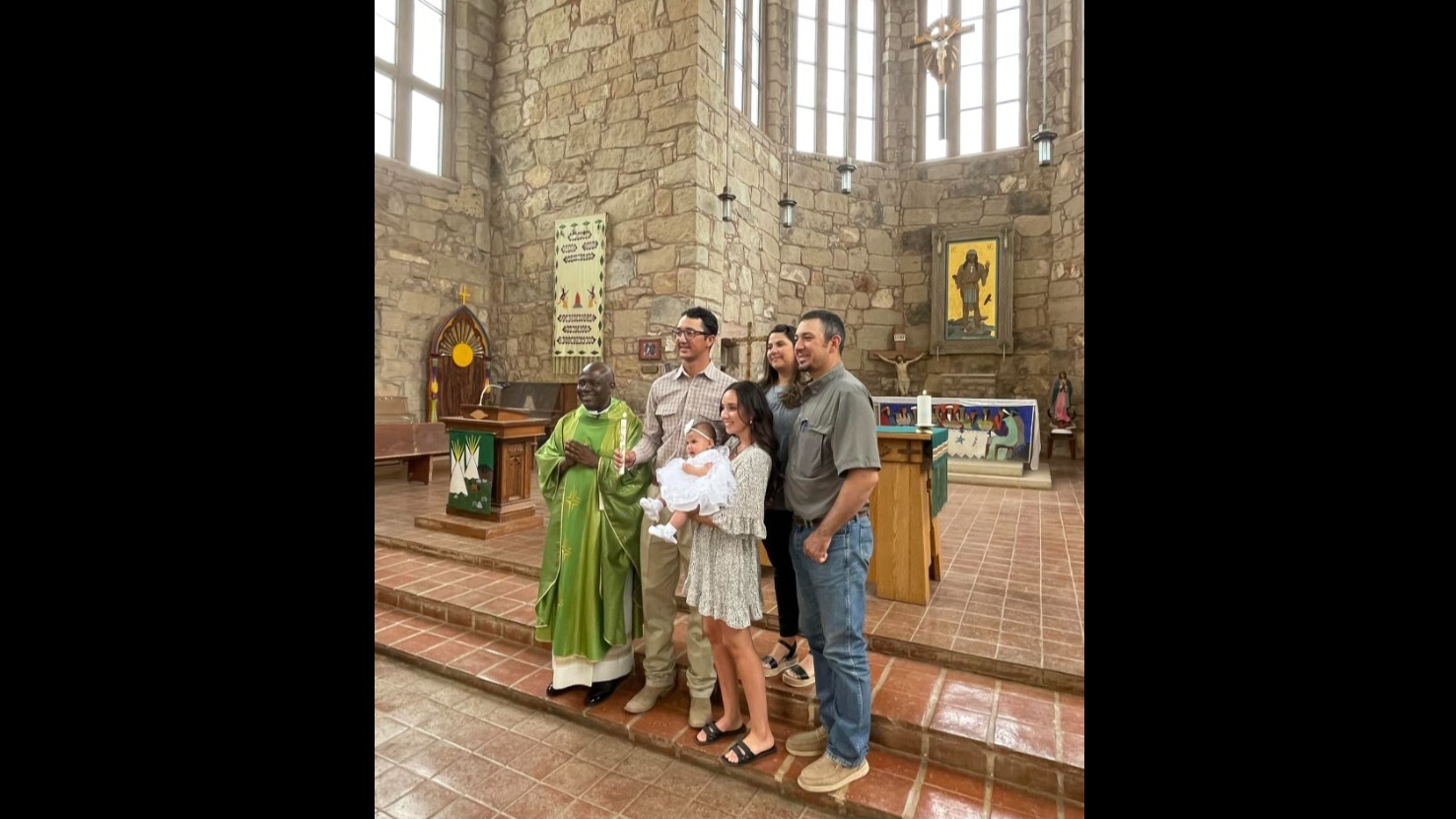
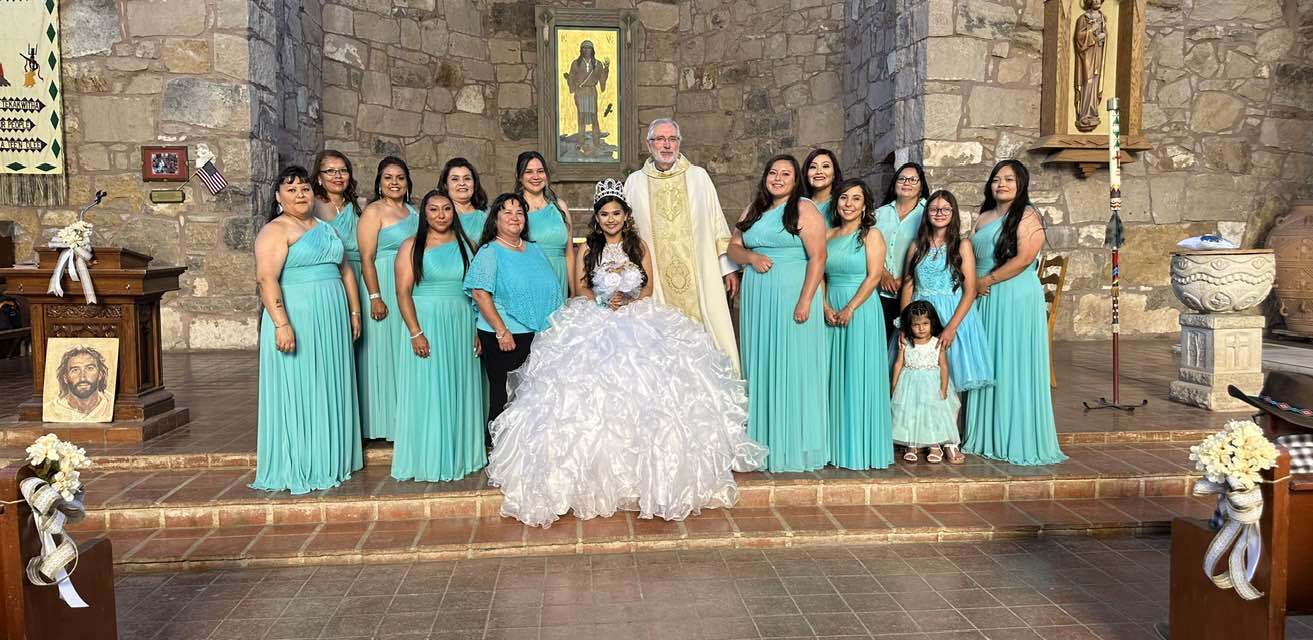
At that page, a parishioner posted a picture where one can see father Chudy Simeon-Aguinam (in green liturgical garments), with a local family whose members happily welcome him at Saint Joseph, back on June 11, 2024, under the gaze of Apache Jesus.
The posting is a message sent to Father Dave Mercer, a priest now residing in Cupertino, California, whose Facebook profile sports several pictures of ceremonies he presided at Saint Joseph, like the one of a Quinceañera, who joyfully shares the frame with 14 females, all dressed in matching garments, in a scene presided by Apache Jesus, located at the Church in Mescalero, appearing immediately after this paragraph.
Narratives from Mescalero
So, it is almost impossible to think that the Roman Catholic hierarchy at Las Cruces and Mescalero, New Mexico, was unaware of the icon of Jesus sporting Apache garments. Should one believe that at least two bishops of Las Cruces and all the priests that have been involved with the Mescalero parish celebrating there masses, baptisms, and weddings for more than a decade were unable to spot a failure in the Apache Jesus icon?
Mary Serna, a self-described “devout Catholic, member of St. Joseph Apache Mission, past staff member, volunteer, and the Co-Director of the St. Joseph Apache Mission Restoration Project” posted a message where she explains the removal of the icon as the result of Simeon-Aguinam’s and Peter Baldacchino’s ignorance.
Mrs. Serna states:
«Sitting here wishing that I could join in the fight to get our painting back. I keep thinking, what would Jesus do. Fr. Chudy did not only help in stealing the paintings but eliminated the use of our vessels made by hand from clay by a Native. He bought gold plated ones. So, I rather doubt that Jesus used gold vessels. This is only one of the changes he has made disrespecting our culture and tradition. Scripture tells us not only to hold onto the Word, but to follow our traditions.
«The US conference of Bishops issued a 52 page document apologizing for the abuse bishops and priests have done to the Native Peoples.
«Both the diocese of Las Cruces bishop and Fr. Chudy are not from this country and have no respect for the Native People. Our cry for removal and apology for stealing from us will not be suppressed».
If Simeon-Aguinam hails from Nigeria, Peter Baldacchino, current bishop of Las Cruces, does it from Malta, an Island nation in the middle of the Mediterranean Sea, although his ecclesiastical career has been made in the United States.
Oddly enough, former Cardinal and known sexual predator Theodore McCarrick ordained Baldacchino as priest during McCarrick's tenure as archbishop of Newark, New Jersey, back in 1996.
Almost 20 years later, in the first year of his tenure, Pope Francis appointed Baldacchino auxiliary bishop of Miami, the "anti-communist capital" of the United States and Latin America.
Back in 2023, Los Ángeles Press published a series about the politics Eduardo Verástegui a Mexican soap-opera actor. The story linked immediately after describes Verástegui’s debut as a political operative in both Mexico and the United States in Miami, under the gaze of archbishop Thomas Gerard Wenski, who consecrated Baldacchino as his auxiliary in 2014.

The curious case of Citizen Verástegui
It is unknown if Simeon-Aguinam consulted the removal of the Apache Jesus icon from Saint Joseph with his bishop, but the chances of a young, newcomer, priest making a move like that on his own are hard to calculate.
Simeon-Aguinam is a priest who only finished his doctoral studies at the Pontifical Gregorian University in Rome back in December 2023, with a dissertation titled “Church, politics, and development: The proactive political influence of the Church in the development of the Igbo heartland State”, as can be seen in image that appears immediately after this paragraph.
Simeon-Aguinam had only recently arrived in Mescalero. The current website of the Las Cruces diocese does not offer information regarding recent appointments for its parishes, since the page appears as “under construction”.
As far as I have been able to reconstruct this story, Simeon-Aguinam was received at Saint Joseph on June 11, as the only picture of him in this piece proves, available eleven paragraphs before or here at Facebook.
He is not the first priest from an African nation working at Las Cruces. Again, although the diocese provides little or no information through their website, and even in the middle of this crisis they have not updated their Facebook page since March 2022, I was able to find a 2021 directory of the diocese, already under Baldacchino.
The directory is available in the box immediately after this paragraph.
The 2021 Directory of the Las Cruces, NM, diocese.
At page 26 of that directory, Fr. Mercer still appears as head of Saint Joseph. A full list of the active priests in the diocese appears in pages 29 through 31.
The presence of Roman Catholic priests from Africa providing religious services is not a new trend in the United States or elsewhere in the Catholic world. Dioceses in Europe have been able to remain active because of the efforts of African priests.
Even in Mexico one can find, with relative ease, African priests providing services to Mexican dioceses. Ten years ago, in 2014, criminal gangs in the Mexican state of Guerrero abducted and later assassinated Father John Ssenyondo, a Ugandan priest. His corpse and other twelve, appeared in a clandestine mass grave near Ocotitlán, six months after his abduction.
However, in dioceses of the United States, African priests have played a role in the radicalization of the Roman Catholic Church. The best possible example of the effects of that trend come from Tyler, Texas.
Pope Francis forced out of office the now emeritus bishop, Joseph Strickland, back in October 2023, when he doubled down his criticism of Pope Francis's timid reforms, as the story linked immediately after this paragraph tells.

Strickland and the risk of turning Catholicism into a cult
Strickland’s attitude resembles that of Martin Anwel Mtumbuka, bishop of Karonga, in Malawi who made available audio of his weekly homily chastising Pope Francis as a “tired pastor”, unwilling to be radical enough in performing his duties, as can be heard in the video linked immediately after this paragraph. Mtumbuka's message was published after Pope Francis issued Fiducia Supplicans, the document allowing for informal blessings of "irregular couples", incluiding same-sex couples.
(If the video is not available, please try here)
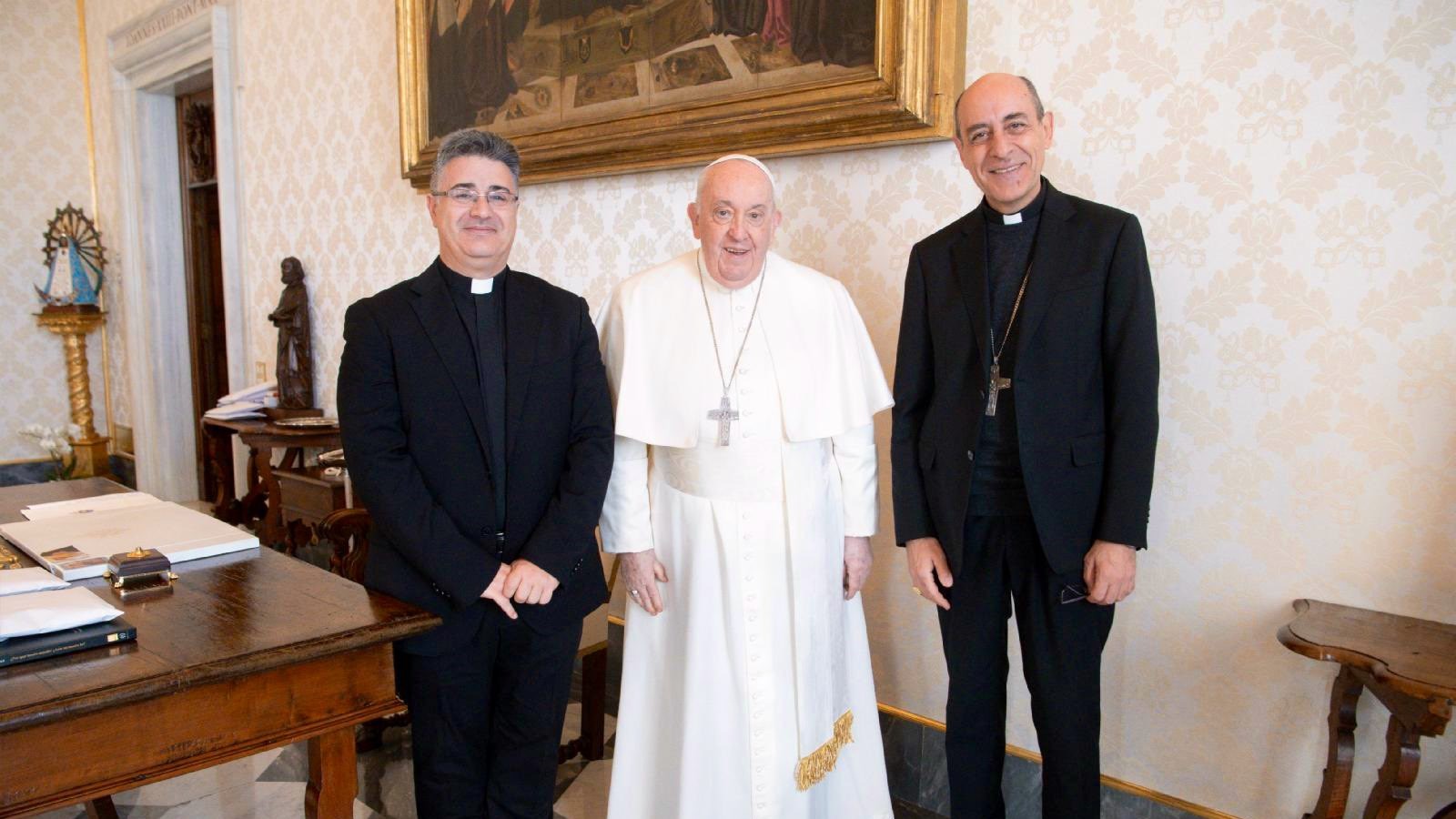
The story linked immediately after this paragraph, available only in Spanish, provides more details about the rebellion Pope Francis confronted from African bishops and priests like Mtumbuka, angry at the very possibility of extending an informal blessing to “irregular couples”.
Herejía y escándalo, el laberinto de la homofobia católica
But even if there was no connection between the removal of the Apache Jesus at Mescalero and the roots of Simeon-Aguinam as a Roman Catholic priest from Nigeria, a nation where consensual same-sex relations are punishable with either the death penalty or life imprisonment, there is no doubt that he was he was extremely disrespectful with the community at the Roman Catholic church of the Mescalero Reservation of the Apache nation.
It is hard to believe that we would ever know if Simeon-Aguinam did what he did on his own or if bishop Baldacchino was somehow involved. I would venture a similar forecast for the role of the Knights of Columbus in this matter.
Shocking and chocking
What is clear for me is that this episode summarizes the crux of the issues shocking and chocking the Catholic Church in the United States and elsewhere. This is a story known to Catholic Mexicans and Latinos in the United States as much as it has been for the Mexican or Canadian First Nations for the last 500 years, when they negotiate the inclusion of aspects of their identities in what religious leaders set as Catholic or Christian doctrine.
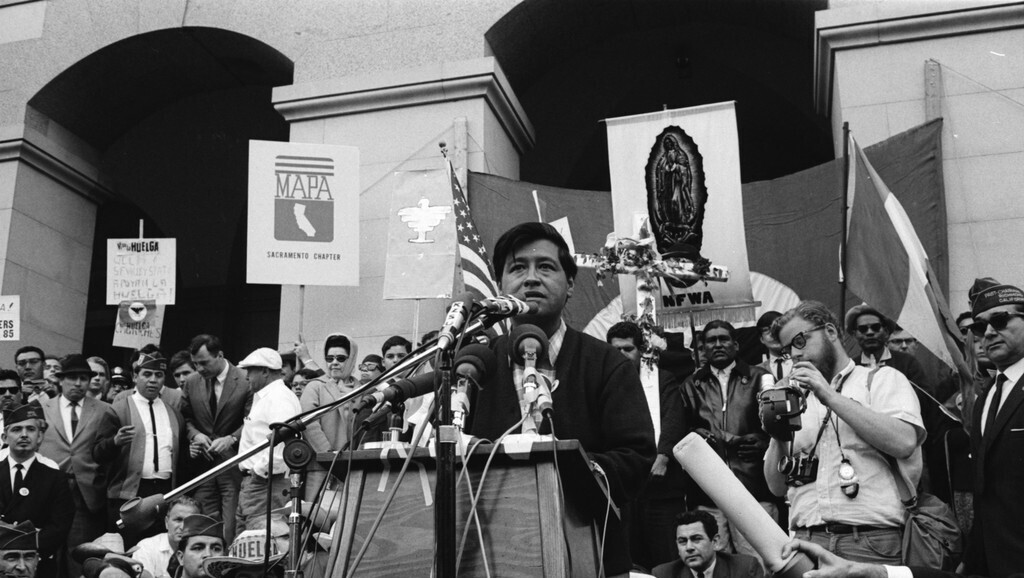
Despite what a previous piece in this series called “the kidnapping of Our Lady of Guadalupe”, linked immediately after this paragraph, there is an attempt to homogenize Roman Catholicism that runs against the express wishes of Pope Francis, to open the Church to those living "in the peripheries" and that is linked to the clergy sexual abuse crisis in the Catholic Church.
The kidnapping of Our Lady of Guadalupe
Chastising LGTBQ persons is the best way to insist in the idea that they are somehow responsible for the sexual abuse crisis in the Catholic Church. However, in that regard Pope Francis is hardly exempt from his own share of guilt. A month ago, Los Ángeles Press published two stories regarding the use, twice, of the Italian slur frociaggine, by Pope Jorge Mario Bergoglio himself. The stories are linked immediately after this paragraph.

From blunder to blunder: Roman Catholicism and sexuality
And yes, as the Facebook page of the Saint Joseph parish tells the icon of Apache Jesus is back where it belongs, but three larger issues remain.
Issues
First, there is the issue of the place that non-Western representations of the sacred have in the Roman Catholic Church. The issue seemed to be done back in the 1970s, right after the second Vatican Council, but as the Apache Jesus icon’s episode proves, that was not the case.

There are young clerics like Simeon-Aguinam way too interested in bringing the Catholic Church back to the Middle Ages, unless one should accept the idea that Our Lady of Guadalupe, a representation of Mary, the mother Jesus, actually appeared in the hills of Northern Mexico City, sporting Mexica (Aztec) garments, but that it is unacceptable for artists to depict his son sporting Apache or Tarahumara garments in New Mexico or Chihuahua, respectively.
If that is the case, then there has been a real regression in the Roman Catholic Church going all the way back to the era prior to its own expansion in what is nowadays Latin America.
Then there is the issue that the United States Conference of Catholic Bishops issued back in June of this year one more of the endless stream of apologies about the abuses, sexual or otherwise, perpetrated by their underlings in territories of mission such as the Mescalero parish of Saint Joseph.
The apology came with a new set of guidelines for the pastoral ministry with so-called Native peoples (available here) but was greeted by bishop Baldacchino and one of his priests with an attitude that would have been unacceptable even in the 19th century in Mexico when dealing with Our Lady of Guadalupe.
It would be impossible to go deep into the complexities derived from the fact that the priest is an African, Nigerian, male who exerts violence against members of a Native American nation, in a similar fashion to the Spanish conquistadors in what nowadays are Mexico or Peru in the 16th c., but the complexity, the contradiction is there.
The fact that the Knights of Columbus, who played such a positive role in confronting the violence against racial minorities in the United States are also involved, even if unofficially there, is a confirmation of the need to understand as thoroughly as possible the issues of race and ethnicity and how they relate with religion and other issues in the United States and elsewhere.
The episode at Mescalero is only "American" in the most obvious aspects of it, but it could happen tomorrow in Mexico, Peru, or any other country in Latin America.
Suffice to remember how the Oblates of Mary Immaculate, the members of that religious order, broadcast as much as they can their commitment with the marginalized in Latin America.

Despite their stated commitment, they were more than willing to send a Paraguayan priest with accusations of sexual assault in his home country to a mostly rural and marginalized region of Mexico, as the story linked above this paragraph describes.
Finally, there is the issue of how, right after the Las Cruces diocese informed New Mexican local media about the whereabouts of the Apache Jesus icon, a flurry of personal attacks on the author of the icon inundated social media.
Franciscan brother (a cleric who is not a priest) Robert Lentz painted the image that became the apple of discord. In the video linked immediately after this paragraph Lentz explains his process when creating the icon, and the many religious symbols shaping that piece of sacred art.
(If the video is not available, please try here)
However, his explanation had to deal with the way he became the target of personal attacks, an exercise in character assassination in more than one respect, because his biography at Wikipedia identifies him as gay.
What Wikipedia says about his work was enough to detonate a rainstorm of personal attacks on him dismissing the quality of his work, and the fact that as proved in this story, at least two former bishops of Las Cruces were very willing to celebrate mass and other sacraments under the gaze of the Apache Jesus icon made by Lentz.
The underlying assumption of the attacks on Lentz, calling him “a flaming homosexual” was that regardless of the blessings imparted originally on the icon by bishop Ramírez, now emeritus, when Lentz first painted the icon, and the disposition of bishop Cantú, now in San Jose, California, to celebrate the sacraments at Saint Joseph, his work was unworthy and that justified Simeon-Aguinam’s behavior.
From Mescalero to Aparecida
This attitude from the U.S. far right that launched an attack on Lentz and those who, as I did, expressed support for his work, is strikingly different from the attitude of the bishops who commissioned at some point in the last decades paintings from noted sexual predator and former member of the so-called Jesuits, Marko Rupnik.
It is impossible to go deep to provide an account of the many abuses perpetrated by Rupnik, suffice to say at this point that Father Arturo Sosa, global leader of the Jesuits, expelled Rupnik from that order, but almost immediately bishop Jurij Bizjak of Koper, Slovenia accepted him as a diocesan priest, prompting a flurry of criticism.
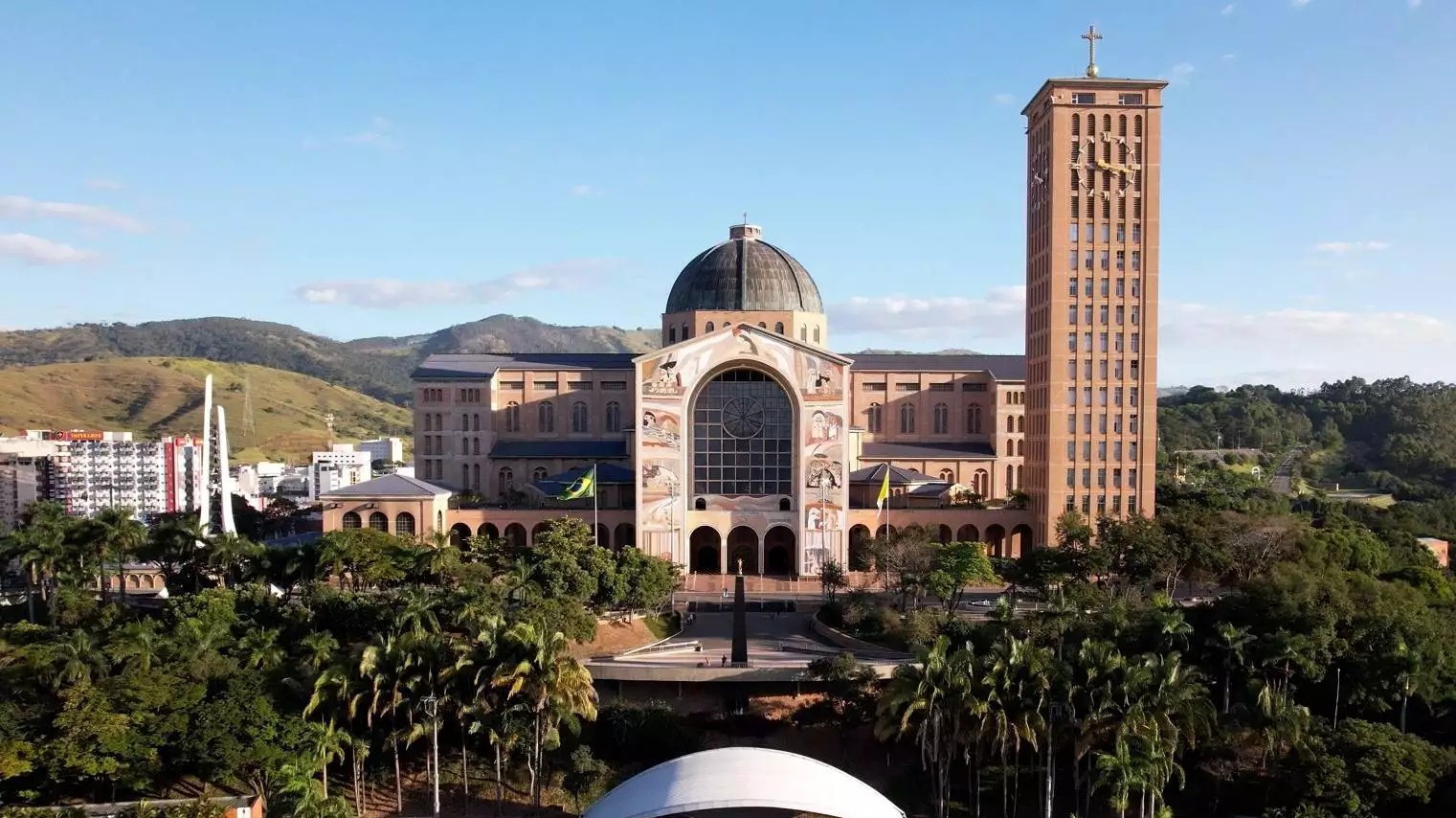
Although there is a chance Pope Francis will defrock Rupnik, what is clear is that the leaders of his Church are not willing to remove his religious art from the places where one finds it.
Even in the case of art pieces that are still nothing but a project, as in the case of some of the walls of the Basilica of Our Lady of Aparecida in Brazil, the bishops there are still willing to let the predator priest decorate the Basilica with his mosaics.
As recently as May of this year, as this story in Spanish describes, religious art developed by Rupnik was inaugurated at Aparecida, Brazil, the largest basilica in the Roman Catholic world. That happened even though back in August 2023, that same Spanish-speaking medium announced the suspension of the installation of Rupnik’s art there.
And the same goes for Rupnik’s pieces in Rome, where there is no appetite to remove his art (content at America Magazine could be behind a paywall), unlike what happened to Brother Lentz’s icon at Mescalero.