Rodolfo Soriano-Núñez Domingo, 13 de Agosto del 2023
Verástegui is the visible head of the “politics of veto” the hard-right of the Catholic Church.
Eduardo Verástegui follows John Rick Miller's model to turn turn religious affiliation into political muscle on both Mexico and the United States.
By Rodolfo Soriano-Núñez
Mexican Catholicism has been political ever since the establishment of the old colony of New Spain. There is no way around it. Even if one accepts the metaphor of Mexico becoming Catholic because of the apparitions of the mother of Christ at the top of Tepeyac, a minor mountain in what is nowadays Mexico City, Mexican Catholicism has been marked by the many political debates shaping Mexican identity.
It is impossible to summarize here the conflicts in the very unstable 19th century in Mexico, but it is possible to say that, despite the overwhelming number of Catholics in the country, religion was not a source of stability, of peace. Quite the contrary, it played a major role in many of the conflicts shaping said instability.
The route is very different from that in United States. While in the American narrative of the so-called “melting pot” Catholicism and other religions played a major role in integrating the minorities coming first from Europe and later from Latin America and Asia, in Mexico Catholicism was for at least 100 years, the black beast, the main enemy of the polity.
Unlike their peers in most countries in South America, in Mexico the Roman Catholic bishops only became a partner of the political elites in the 1990s, after the political elites assumed the easy narrative of the so-called “lay State” and secularization had done their jobs as “solutions” to the issue of the boundaries of the public role of religion.
The issues shaping the prominence of religion were never actually addressed in Mexico. We just put the dusty unease of religion and public life under the rug of laws that were never actually enforced, because they were unrealistic.
Not that the US solution to the Church and State relationship issues was a good model to follow. It was impossible to adopt, since, unlike the many Christian denominations that shaped the US from the days of the Thirteen colonies, in Mexico there was only the Catholic Church, and its bishops and priests were never willing to challenge the easy, rather dumb assumption, that every soul in the country was happy with that.
The political elites, marred by their own contradictions and corruption, assumed that their narrative of a “lay State”, where religion was nothing but a private matter, where the churches, Catholic or Protestant, had no legal right to actually exist or to own even the most basic property to perform their functions was going to be enough to simply forget about religion until, they hoped, secularization solved the issue for them.
Faux secularism
What happened is that since religion was not that easy to delete from private and public life, the churches, Catholic or otherwise, required complex legal strategies to pretend somebody else, like docile laypersons affiliated to said churches, owned the real estate, other than the temples that as such were declared public property, and monies required to perform their duties.
I cannot dive deep into the details of how that happened in Mexico, suffice to say that neither the Mexican “lay State”, nor the French laïcité or secularism, or the very peaceful agreements reached in Uruguay and Chile (the so-called Trato Afable in Chile) to avoid the horrors of civil wars, as in Mexico and Spain, provided any safeguard to the issue of clergy sexual abuse, to name just the most obvious case of how the Mexican "lay State" was ultimately useless.
Let me emphasize. That the “lay State” was an easy “solution” that never addressed the complexities of religion and public and private lives in Mexico can be better understood when considering the plight of the victims of clergy sexual abuse at the hands of Marcial Maciel, the Legionaries of Christ, and other religious organizations, Catholic or not, as in the Luz del Mundo (Light of the World) Pentecostal church.
More so when one thinks about the ways in which Maciel was able to thread around the laws shaping the “lay State” to build the Legion of Christ behind layers of trusts, faux-contracts, and phony-foundations, while being able to cover up the clergy sexual abuses perpetrated by him and other clerics in that religious order.
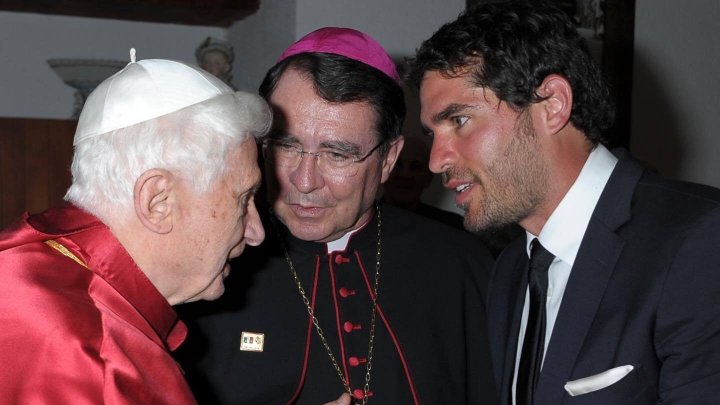
Both the Peruvian Sodalicio, now under a Vatican probe, and the Argentine Institute of the Incarnate Verb, were shaped by their founders as local attempts to imitate the Legion of Christ’s success in both Mexico and the United States. When Maciel made Verástegui a figure in the Mexican and Latin American Catholic world when he took him to Rome in 2004, he opened doors that remain useful for the Mexican actor.
The Doors
One is that of Kevin Farrell. A native of Ireland, Farrell was a Legionary of Christ in Monterrey, Mexico (1978-84). He left Maciel’s order to join the clergy of Washington, DC, under James Aloysius Hickey. Later (2002), one year after his appointment as archbishop there, Theodore McCarrick, promoted him to auxiliary in the District of Columbia. From there, in 2007, he was appointed as bishop of Dallas, Texas.
In 2016, Pope Francis called him to join the Roman curia as prefect of the Dicastery for the Laity, the Family, and Life. Later, in 2019, he was appointed as Carmerlengo or Chamberlain of the Roman curia.
For the most part, it is an honorary title, with little or no actual power in the Church’s everyday life. It is only in the event of the Pope’s death that the Camerlengo becomes the most powerful of the Cardinals acting while a new pontiff is elected as the sovereign of the Vatican.
After that appointment, Farrell became the head of two of the most powerful and secretive entities in Rome: the Pontifical Commission of Confidential Matters (2020) and the Pontifical Committee on Investments (2022). Although it is not clear why Farrell left the Legion in the mid-1980s, he never challenged Maciel, as some other members of that order did after leaving it.
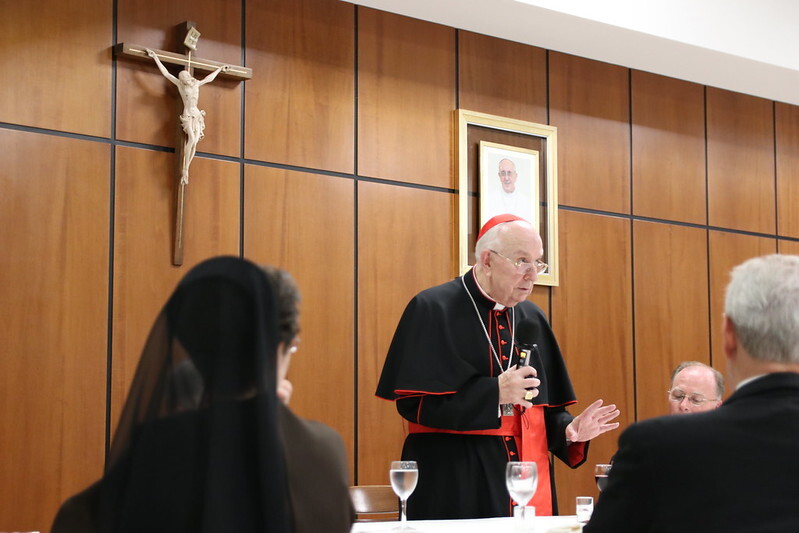
The other is Fernando Vérgez Alzaga, the Legion’s first Cardinal, a former aide to Argentine Cardinal Eduardo Pironio, who became early in Pope Francis’s tenure the general secretary of the Governorate of the Vatican City State, a powerful entity now under his aegis as president of the Pontifical Commission for Vatican City State, on top of being a member of the Council of the (eleven) Cardinals.
Verástegui was not alone when he was introduced as a relatively new face in the landscape of the newly politicized Mexican Catholicism of the first decade of this century, the one that came out of the 1991-2 reforms on Church and State relations. Quite the opposite.
Rivera Díaz and Miller
Before Verástegui, there was monsignor Pedro Agustín Rivera Díaz. Born in Veracruz in 1953, he is a priest who currently holds a position as head of the commission on Liturgy within the Archdiocese in Mexico City. During the first decade of this century, he was one of the leading voices of the movement to criminalize all types of abortions in Mexico, even those performed to safeguard the life of the pregnant mother.
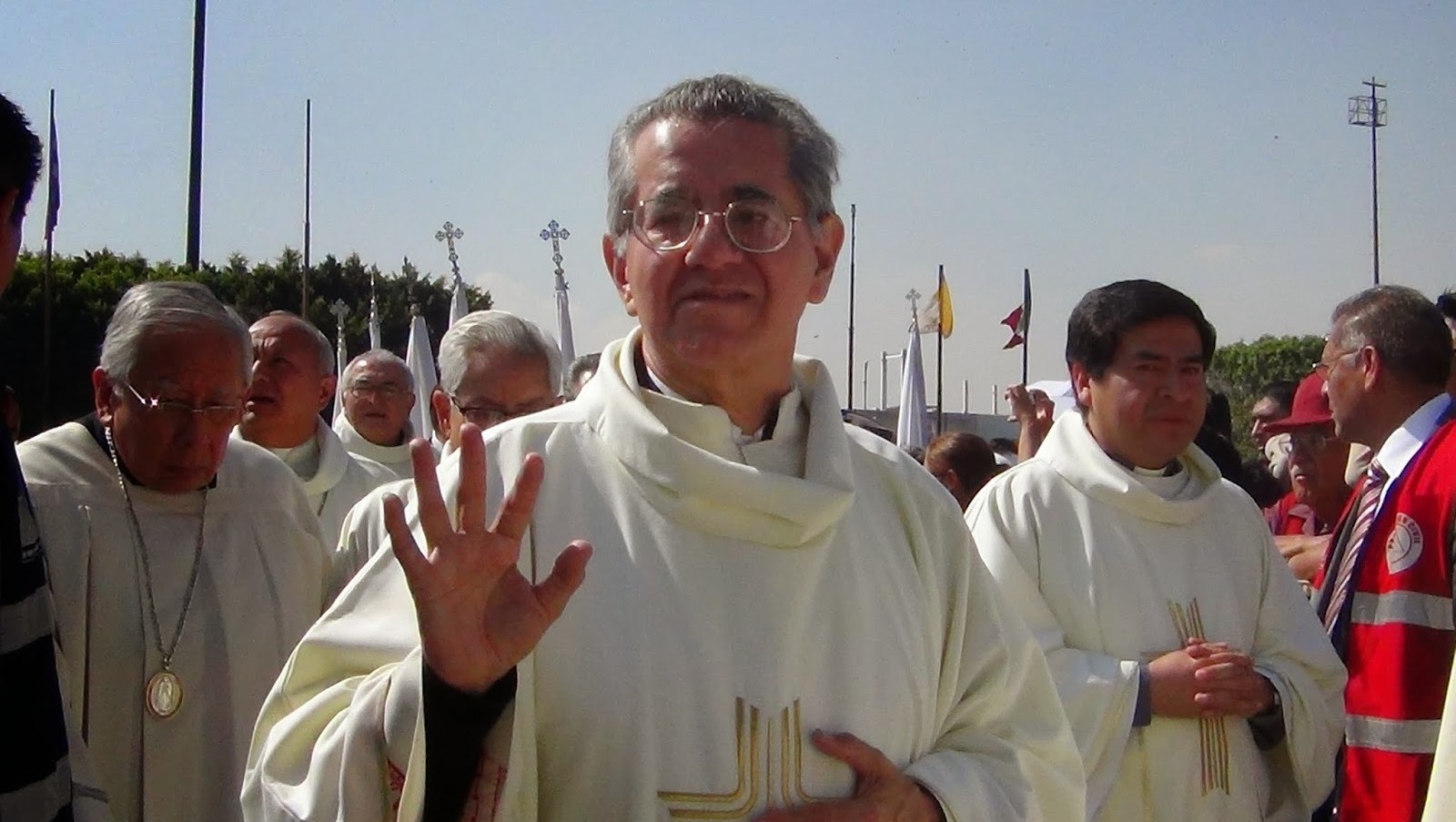
One can still read about his previous efforts on a blog sporting his name, on top of providing some of the content for other blog about the rights of the unborn, Nowadays he is a frequent celebrant in the masses that “Unión de Voluntades” (Joint Commitments or Joint Wills) broadcasts over YouTube on a channel with a bit more than 50 thousand subscribers.
Unión de Voluntades seeks to appear as some sort of “holding” of Catholicism in Mexican public life; a “national (Catholic) front of sorts, although with a clear preference for what in the United States is seen as the Catholicism prone to the “culture wars” centered around abortion and similar issues, although, unlike similar actors in the U.S. Catholic Church, Unión de Voluntades avoids any pretense of attacking Pope Francis or discrediting him the way Joseph Strickland, the bishop of Tyler, Texas, does from his Twitter pulpit. Quite the opposite, as their Twitter account proves.
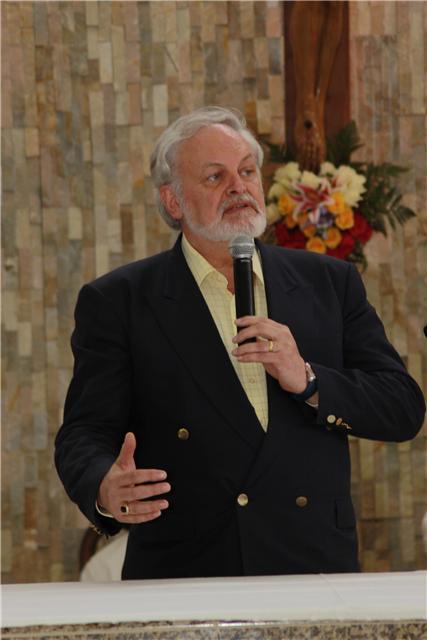
More than 14 years ago, back in September 2009, Father Rivera Díaz presided the mass attended by John Rick Miller at the Old Shrine of Our Lady of Guadalupe. Miller’s role in the development of Verástegui profile was addressed with some detail in the first part of this series.

The curious case of Citizen Verástegui
On that day of 2009 Miller launched what he called the “Campaign of 100 thousand people praying for Peace and the Conversion of Mexico” (the same page is availavle also in Spanish here).
Although Miller’s website has some issues, it is still possible to see how him, the Mexican Catholic bishops and priests, and prominent members of the Mexican political establishment set the stage to build the network of political support for the laws criminalizing any form of abortion.
The Mission in Mexico
When providing an account of Miller’s involvement in Mexico The Mission’s website states:
"On May 22nd, 2010, John Rick (Miller) was invited to participate in the 8th Marian Congress at the Basilica of Guadalupe, where five thousand attended and consecrated their families to the Sacred Hearts of Jesus and Mary.
"In October of the same year, the State of Mexico hosted the First International Congress of the Mission welcoming representatives of the Mission in the United States, Peru, Colombia, Venezuela, Ecuador, Nicaragua, and Panama, accompanied by various bishops and priests.
"On April 28th, 2011, Chiapas was the first state in Mexico to consecrate to the Sacred Hearts of Jesus and Mary, by the archbishop and the presence of civil authorities. To date, more than 4 million people, 15 states, 11 archdioceses and 23 dioceses have been consecrated to the Sacred Heart of Jesus and to the Immaculate Heart of Mary."
An entry from Sunday, October 28th, 2013, tells in English the brief story of how Adriana Hernández de Ortega, the wife of then governor of the state of Campeche, Fernando Ortega Bernes, in Southeast Mexico, attended a Mass of consecration to the Mission, and she is introduced to the readers of the Mission’s website as “an honorary member of the Mission”.
It adds “she (Hernández de Ortega) declared that ‘love and hope can guide the families of Campeche to a better destiny’ and assured her commitment to continue working to make the family of Campeche, a worthy and responsible institution with its proper duties, ‘founded in love, understanding and tolerance’”.
The message
The participation in these masses was assumed to send a message from the local political establishment to entrepreneurs in Miller’s and Patricio Slim’s orbits about the commitment of the governors and members of the state legislatures to protect life. The expectation of the political establishment was that investments, massive investments would follow these consecrations.
Despite Slim and Miller close relation, as close that Slim attended a ceremony of the Congress of Colombia in his name, it was not that clear how much support Mexican entrepreneurs were willing to offer the governors and lawmakers willint to consecrate themselves to Miller's mission. One can find entries where relatively small firms, as Guadalajara’s Atmósfera, was consecrated with the 15 families of workers of said firm, to the goals of The Mission.
Much more relevant was the consecration of the Judiciary of the state of Querétaro (same page in Spanish available here). The Mission’s website describes, in English, the consecration as follows:
On Tuesday April 30th at 7:00 p.m. before the image of Our Lady of El Pueblito, Patroness of the Episcopal City, the magistrates, judges, lawyers, and personnel of the Judiciary of the state of Queretaro, made their initial consecration to the Sacred Heart of Jesus and to the Immaculate Heart of Mary at the Parish of Teresitas in Corregidora. In their consecration act, they consecrated themselves and their families as well as their “common responsibility to administrate and impart justice in society, according to our human and Christian values”. The Eucharist was celebrated by the Vicar General, Fr. José Martín Lara Becerril, who reminded them this act of consecration consisted in four steps: the consecration itself, the process of personal change that needs to be undertaken, accompanied by prayer from the heart and good works.
A similar account of the consecration still exists at the website of the diocese of Querétaro although, unlike Miller’s website, it does so only in Spanish.
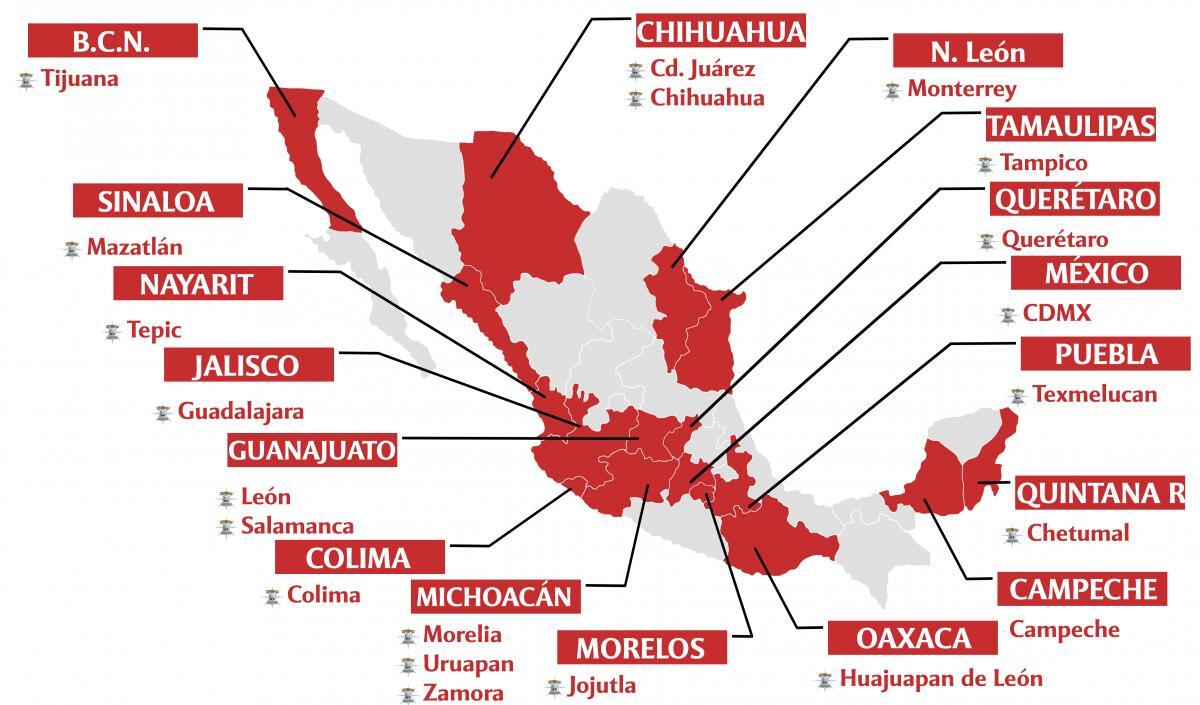
Despite the issues on The Mission’s Website, it is possible to find a map providing a relatively detailed account of Miller’s efforts in Mexico. The website also provides accounts of the activities carried out by the Mission up until June 26th, 2023 in Mexico.
Miller’s legacy
Miller understood that the integration of Mexico and the United States was not only economic, trade oriented, but that there was a deeper connection between both countries that goes through religion. In that regard, Miller despite whatever shortcomings one could point out, saw the reality of a truly binational form of Catholicism from Mexico to Texas and Louisiana, the two states in the United States where one can see the effects of his work.
Verástegui is chasing on that intuition, hence his appointment as part of Donald J. Trump’s team back in 2020, and I am almost sure the role he will have on both presidential elections, in Mexico and in the United States, come 2024.
What Verástegui has been doing for the last five years or so, has been to keep the base originally developed by Rivera Díaz and Miller mobilized, willing to challenge the idea that women should have some say in how their pregnancies are solved.
He is not doing so challenging directly the Mexican Supreme Court rulings on abortion. He does so by claiming some kind of moral high ground on the issue of the kidnapping and abuse of minors in his most recent movie, The Sound of Freedom.
The legitimacy of his claims is murky to say the least. Not only because of his own association with Marcial Maciel, bad enough to derail them, but also because of the many false claims made by Jim Caviezel in the final monologue of that movie and about the role that Donald Trump should play in the future of this issue.

What must be clear is that he is now a player in the politics of children abuse and abortion in Mexico and the United States.
Even if the Mexican Supreme Court struck down the restrictions to abortion placed by local congresses in Mexico during the first 15 years or so of this century, it would be deceitful to assume that the Mexican court cannot do what the US Supreme Court did back in 2022 when it struck down Roe vs. Wade.
As it is, the Mexican court is much more dynamic than its U.S. counterpart, since Mexican appointments to the court are for a fixed period and not life-long as it happens in the District of Columbia.
Verástegui’s own work has not been free from setbacks. If one wanders over the many accounts associated at some point to Verastegui’s public persona, it is possible to find the Manto de Guadalupe (@mantodegpe or Guadalupe's headcover) account at what used to be called Twitter.
The last message on that account is from October 21, 2014. A testament to the ephemeral nature of many of the attempts at providing support for females who consider abortion as a choice, Manto de Guadalupe seems to have ceased operations.
Their website is up for sale, and despite my best efforts to find an explanation of what happened to them, I was able to find only some old references in Spanish-speaking celebrity magazines from Mexico and the United States.
Dismiss them at your own risk
In that regard, even if the leading role in trying to shape abortion policy in Mexico is no longer Miller’s but goes straight to Verástegui’s own Viva México organization and his varied relations with the Slim family, one can only dismiss them at their own risk.
In that respect, the pandemic offered a prime opportunity for Verástegui’s team to spread the messages coming from his version of Catholicism.
One can read Verástegui’s timelines in almost any social media service as the expression of his will to assume a role that contradicts many of the traditional assumptions about the borderlines between the role of public policy and personal, private, religious practices.
Whoever is still betting on the “lay State” as the safeguard that will prevent any cross-contamination is making an awful bet.
Even the French laïcité has been unable to suppress the deaf but powerful criticism by Islam and other less institutional forms of religious practice.
The relentless violence affecting Mexican public life and the laziness with which the Mexican Catholic clergy confronts said reality will provide more chances for opportunistic populist challengers as Verástegui to redefine the terms of the “lay State”.
He is trying to do so with the support of a very dangerous populist movement that has Trump as his visible figurehead and who is still a viable presidential candidate for the 2024 presidential election in the United States.
In Mexico, Verástegui is not betting on him becoming Andrés Manuel López Obrador’s successor.
He is betting on him having the power of veto over Xóchitl Gálvez, a senator originally elected by the Conservative Partido Acción Nacional, but who supports freedom of choice when it comes to abortion and who has criticized the governors of her party who supported the almost absolute ban on abortions that came out of John Rick Miller’s mission on Mexican politics in the first two decades of this century.
To build theocracy in the future, all what Verástegui needs in 2024 is to keep somewhere between one and two percent of the Mexican national vote. That is all it takes to derail Gálvez's candidacy, given she is competitive but she is still trailing the leading candidate for López Obrador party, Claudia Sheinbaum.
All Verástegui needs it to render himself the way Vox in Spain and La Libertad Avanza in Argentina have done so far.
Mexican politics, as Spanish and Argentine, offer an endless stream of corruption ridden scandals. All Verástegui needs to become an increasingly more relevant political actor, is to go fishing on said stream where even his own association with someone as corrupt as Marcial Maciel will appear as “normal”.

He could endorse an independent candidate to member of the Lower House of the Mexican Congress or he can be a candidate on his own, to follow Argentina’s Javier Milei’s footsteps, becoming a representative while sporting a discourse centered on criticizing the Mexican political elite, even with Milei’s own phrase of “La Casta” (The Caste), while blaming—as Santiago Abascal does in Spain—feminism, homosexuality, and abortion for all the evils in the world.
Ultimately the Church itself normalizes Maciel’s legacy when it appears—as it stands now—unwilling to suppress the Legion of Christ or to even punish the many predators still active as priests in that order, while keeping former associates of Maciel as Farrell and Vérgez as key figures in Pope Francis’s curia.