Rodolfo Soriano-Núñez Lunes, 02 de Diciembre del 2024
While Verástegui blasted Cardinal Aguiar Retes, in Rome, Cardinal Víctor Manuel Fernández announced “spiritual abuse” as a new delict tied to crimes of abuse.
Would Verástegui's intolerance towards Cardinal Aguiar Retes and the Opus Dei merit a probe of his claims about acting on God’s behalf in Mexican and United States politics?
By Rodolfo Soriano-Núñez
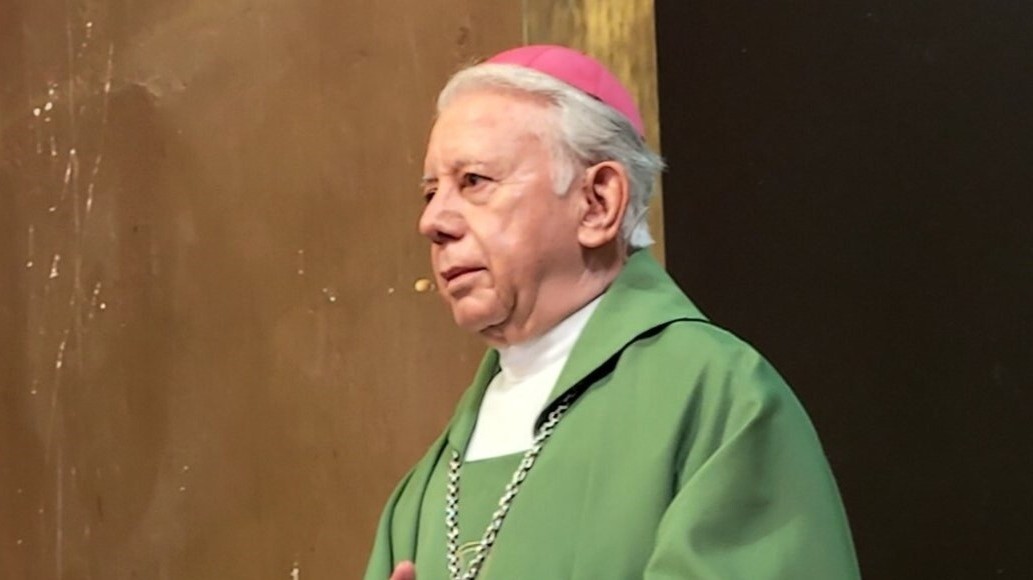
Tomorrow Tuesday, December 3rd, around 6 PM, Cardinal Carlos Aguiar Retes, Archbishop of Mexico City, will host a round table at one of the colleges of a Roman Catholic order in the Mexican capital city, the Universidad Panamericana, linked in more than one way to the Mexican branch of the Prelature of Opus Dei.
So far, there would be no reason to pay attention to the activity. It would be the kind of academic or religious activities common to a Roman Catholic college in a place like Mexico City.
The activity was not relevant for the college itself, as proven by the fact that over their website there is no notice about the incoming visit of Cardinal Aguiar Retes to their campus in the Mixcoac neighborhood of Mexico City.
The guests are two national lawmakers, senator Luis Colosio Riojas; representative Ricardo Monreal Ávila, the former mayor of the borough of Benito Juárez in Mexico City, Santiago Taboada. They each represent the three major political forces in Mexico these days. Monreal is a member of the ruling party; Taboada is a member of the right-to-center National Action Party, and Colosio hails from the so-called Citizens’ Movement.
At the table will be also José Antonio Lozano Diez. With the Opus Dei it is almost impossible to know their actual level of membership, but he has been a fixture at the Panamericana University, so it is almost impossible for him not to be a numerary or super-numerary of that organization. Paola Coronado will also participate, she is part of the local branch of the group behind the round table, the so-called Academy of Catholic Leaders.
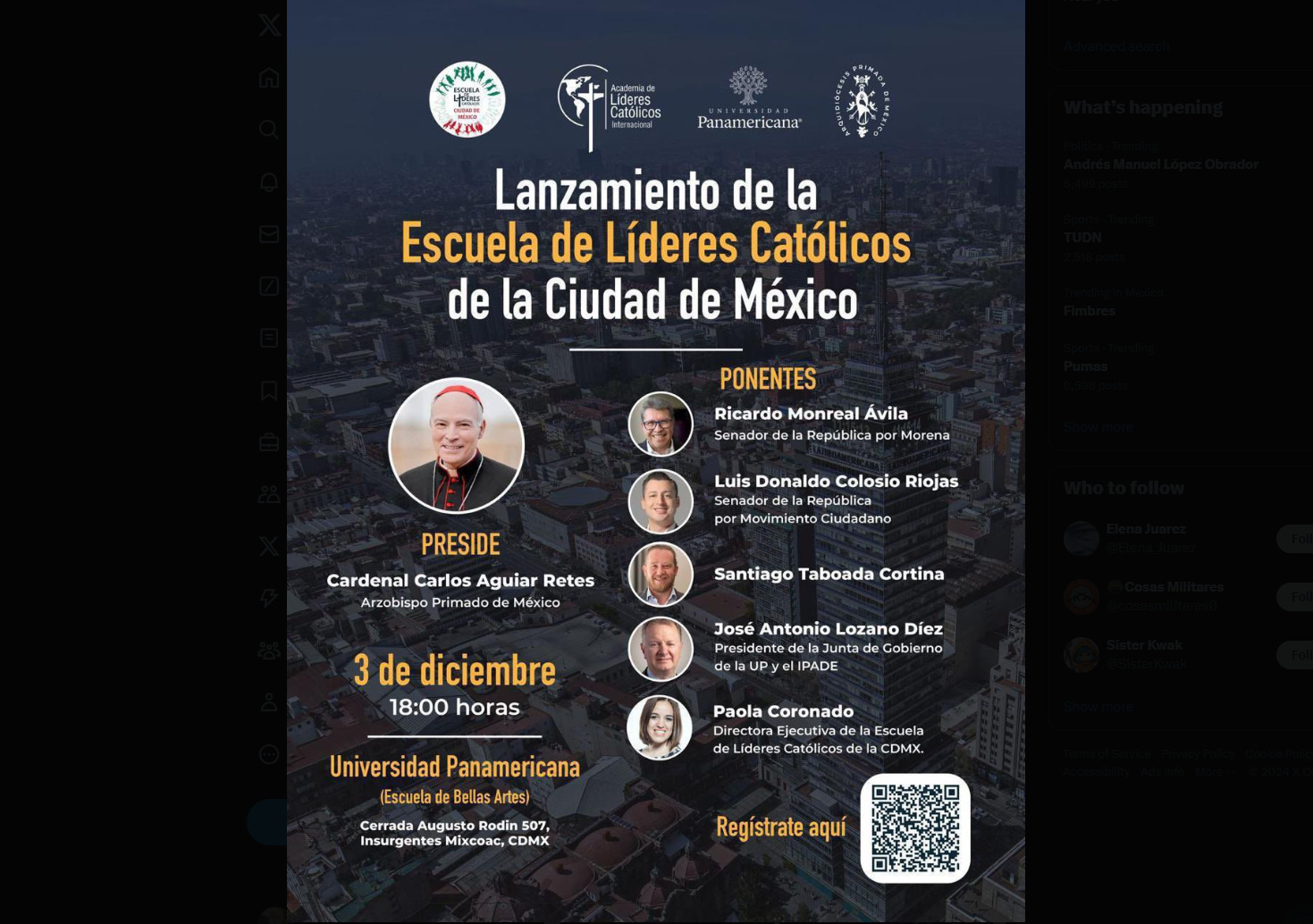
What made it relevant is that, since it was known that Cardinal Aguiar Retes would be the host, both the round table, the organizers, and the Cardinal himself became the targets of all kinds of attacks from the Mexican far-right.
Far from letting pass the round table as part of the natural exercise of his office as archbishop of Mexico City, the Mexican far-right saw a chance to gain some notoriety at the Cardinal’s expense.
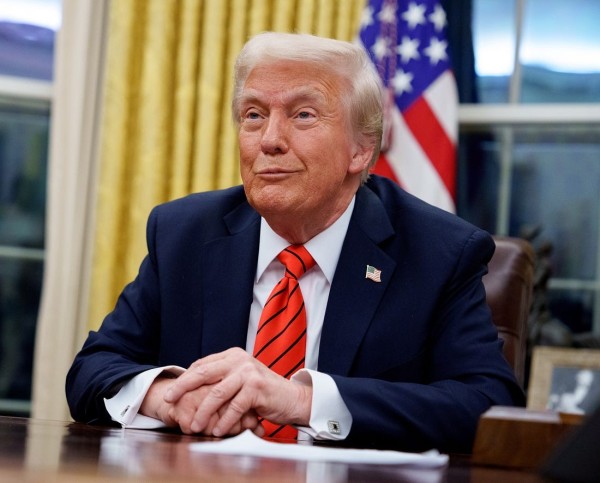
The attack is more relevant since it happens weeks after the far-right all over Latin America got the boost coming from Donald Trump’s victory in the United States Presidential election.

The curious case of Citizen Verástegui
The victory happened with some contribution from Latino Catholics called to do so by soap opera actor Eduardo Verástegui from his social media accounts, as he did back in the 2020 U.S. Presidential election.
Verástegui is a key character to understand the present and future of the Mexican far-right. Not that he is a prolific thinker. He is merely offering the “Christmas leftovers,” the recalentado of Trump’s ideas for Mexico, but because who has been promoting him for over ten years now.
Los Angeles Press ran a four-part series on Verástegui and why it is important to pay attention to what he does in Mexico and elsewhere. Despite his attempt at acting as political leader, last year he was unable to gather enough signatures to run as an independent presidential candidate.
Playing a part
He is, primarily, an actor playing a part. The series proved that Verástegui links with one of the wealthiest families in Mexico: the Slims. If you want to understand how deep the relation between Verástegui and the Slims is, the installments from that series appear throughout this page.
Verástegui main relation is with Patrick, one of Carlos Slim’s sons. Unlike his father and brothers who keep their religious beliefs out of the eyes of others, Patrick is very willing to bring together in public display his understanding of Roman Catholicism and his role as entrepreneur and member of the wealthiest clans in the world.
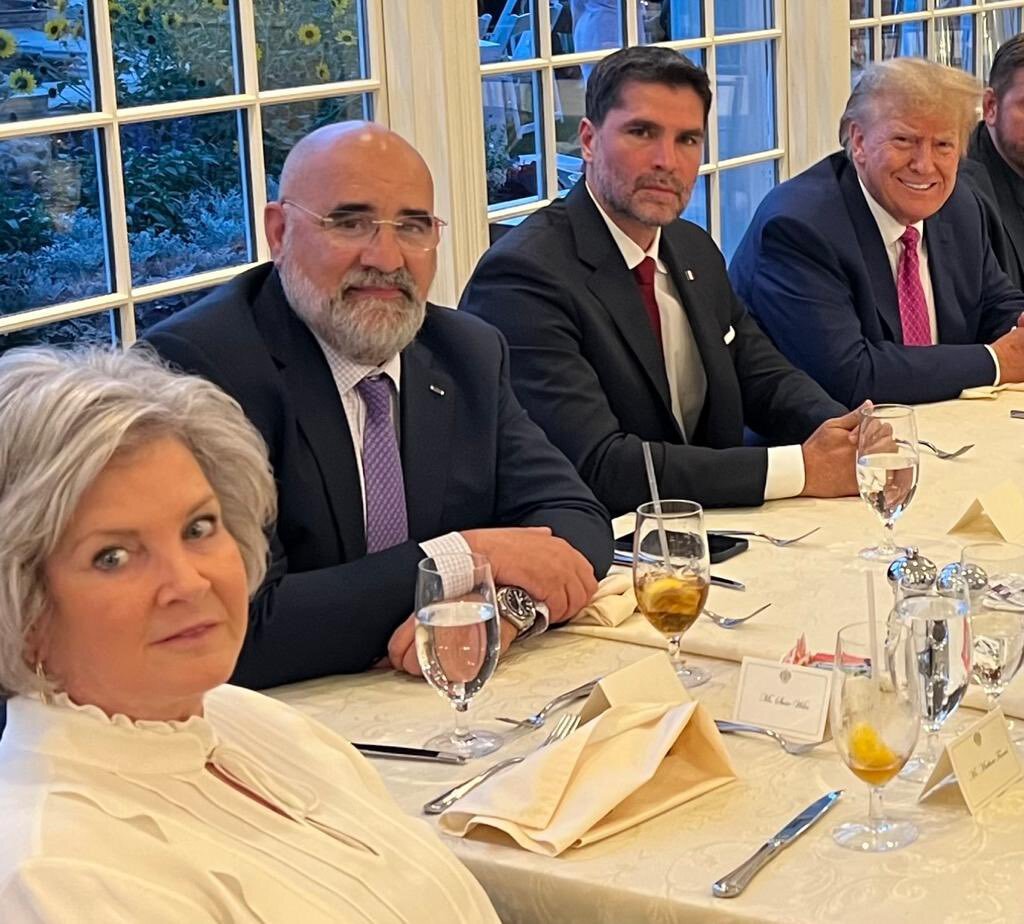
Not that Carlos Slim’s public life is exempt from any display of his condition as Roman Catholic. Quite the opposite; he was one of Marcial Maciel’s key supporters.
Besides Maciel, the most public relationship of Carlos Slim Senior with the Roman Catholic hierarchy was with Onésimo Cepeda, who at some point in his life was a corporate lawyer in some of Slim’s earlier businesses.
Later than most priests in his cohort and especially later than most bishops, at some point in Cepeda’s life, he left Slim’s businesses to become a priest. How late? While Cepeda was ordained when he was 33 years-old, the bishop ordaining him (Sergio Méndez Arceo) got his own ordination at 27. Girolamo Prigione, who presided over Cepeda’s consecration as bishop, was ordained as priest when he was 22.
One of Cepeda’s contemporaries as bishop in Mexico, Emilio Carlos Berlié Belaunzarán, got his ordination when he was 26, and Cepeda’s co-consecrators as bishop (Luis Reynoso Cervantes and Manuel Pérez Gil) got their own priestly ordinations when they were 23 and 22, respectively.

Slim was always behind Cepeda. After John Paul II appointed Cepeda as bishop of Ecatepec, a marginalized exurb of Mexico City, he helped him built a new cathedral, and supported him when he took over as spokesman for the Mexican conference of bishops in the late 1990s.
It was a miserable task, marred by allegations of clergy sexual abuse against Maciel and other priests. As it is the case in Mexico, Cepeda denied them all as it is the standard procedure for all the other leaders of the Mexican episcopate, while dealing with the Church’s ever conflicting role in places like Chiapas, Oaxaca, and Chihuahua.

In that respect, Carlos Slim Senior never voiced a criticism of the hierarchy of his Church. Quite the opposite.
His son Patrick, on the other hand, has been less willing to simply support the career of a cleric or an order. He does so, but following the model so common among the Roman Catholic elites in the United States in the so-called Napa Institute, Patrick supports characters like Verástegui to advocate for the type of sect-like Roman Catholicsm described in the aforementioned series, and in other pieces published by Los Angeles Press as the one on bishop Joseph Strickland, linked below.

Strickland and the risk of turning Catholicism into a cult
On Trump’s behalf?
Verástegui was hardly the only one criticizing Cardinal Aguiar Retes for hosting the round table but, given the dynamics of the algorithm at what used to be Twitter Verástegui got the lion’s share of the interactions.
He did so as a continuation of both his criticism of the Mexican political elites and his absolute support for Donald Trump. Verástegui very frequently translates into Spanish some of Trump’s messages, amplifies them, and showers them with all kinds of praise.
Verástegui posted his first message about the round table at the Opus Dei college in Mexico City after reposting one published by an account claiming to be a “Father Israel”, available here. I found no actual evidence of a real priest from the Mexican state of Chihuahua operating that and other social media accounts using a similar design and icon.
Although there are some reviews of a Facebook profile, and they are all in praise of him, the latest review is from 2017, so, perhaps he was a priest or is a current priest who would rather act like a sniper when criticizing what Cardinal Aguiar Retes does. I even dialed the phone number appearing at the Facebook profile, getting no answer.
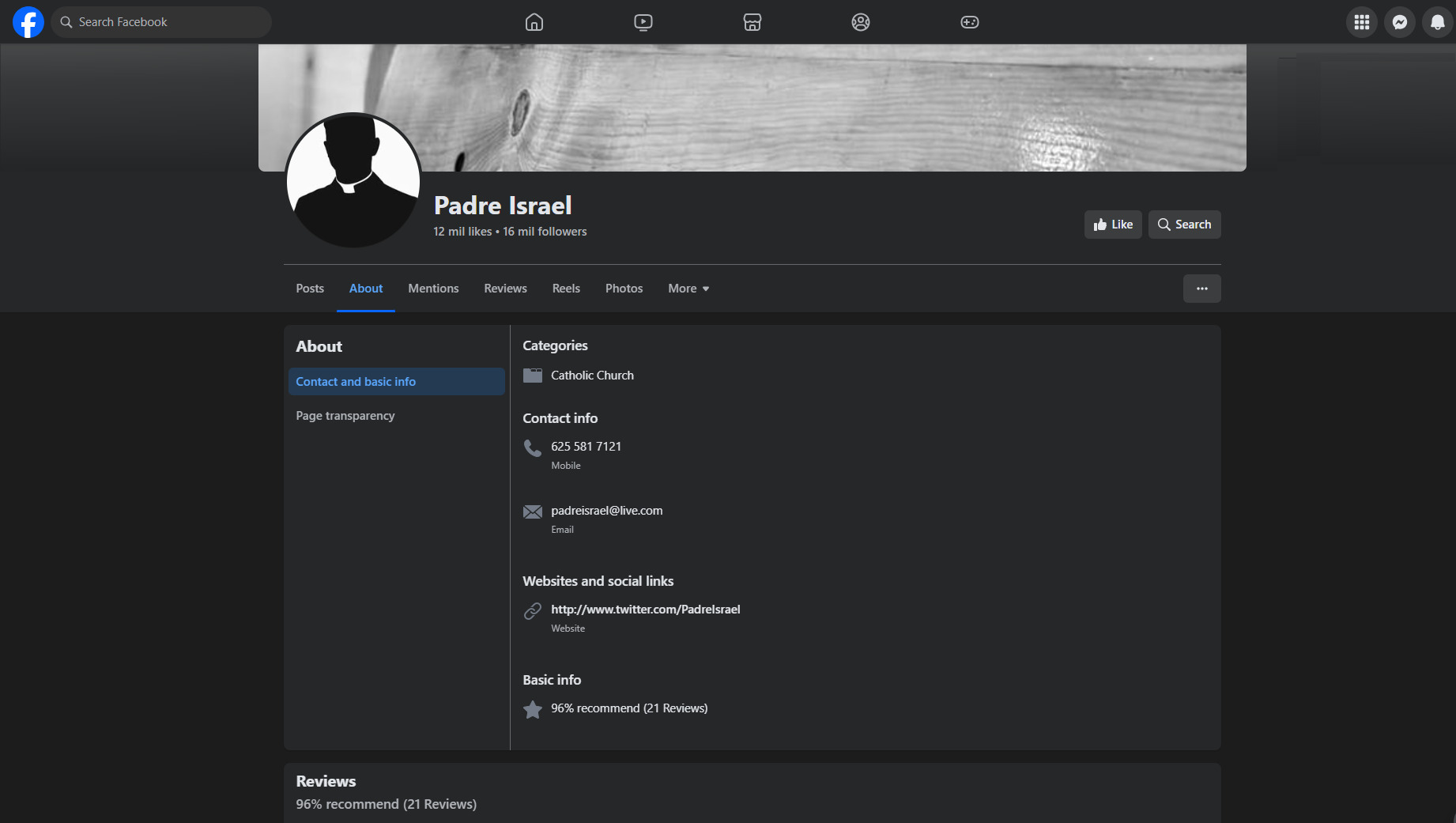
Even if there is an actual priest behind the social media accounts it is impossible not to wonder how bad things must be in the Catholic Church for priests to use anonymous profiles to attack the very possibility of some form of dialogue happening at a Catholic college.
That on top of the question of why going after his superiors with rather weak arguments about the moral qualities of Aguiar Retes’s guests at the round table. Should cardinals be banned from having any kind of exchange with whoever is not a Catholic as Verástegui or “Father Israel” understand Catholicism?
Even if representative Monreal was a franc-mason, why Verástegui charged with such enthusiasm is hard to understand, more so when it was impossible for him to separate the criticism of the act of having a round table, from the fact that Cardinal Aguiar will only be the host of such round table.

The Verástegui Network, a dystopian and authoritarian world
Moreover, it is a round table in an academic setting. It is not a mass or other type of religious ceremony, so why would Verástegui, “Father Israel”, and many other Mexican Catholics cried foul about the round table?
In any case, ever since Verástegui reposted “Father Israel’s” attack on the round table, on Tuesday November 26th, there has been no truce on the attacks on Cardinal Aguiar Retes, on the Universidad Panamericana, and on the organizers of the round table, the Academy of Catholic Leaders.
The round table actually was originally designed to launch the activities of this academy in Mexico City. Before, they have had similar activities in other Mexican, Latin American, and Spaniard dioceses.
On Saturday, November 30th, the Academy’s social media accounts reposted a message from the Archdiocese of Madrid, after they hold a similar activity with leaders from different parties and organizations in Spain, as the message after this paragraph proves.
The Archdiocese of Madrid emphasizes their wish to overcome a “culture of confrontation”, and “to create spaces of sincere fraternity”.
Verástegui’s and “Father Israel’s” attitudes against dialogue are harder to understand when one takes into consideration the frequent calls made by the Catholic Church in Mexico for peace and dialogue, as Los Angeles Press has been telling over the last couple of years, as the story linked after this paragraph shows.
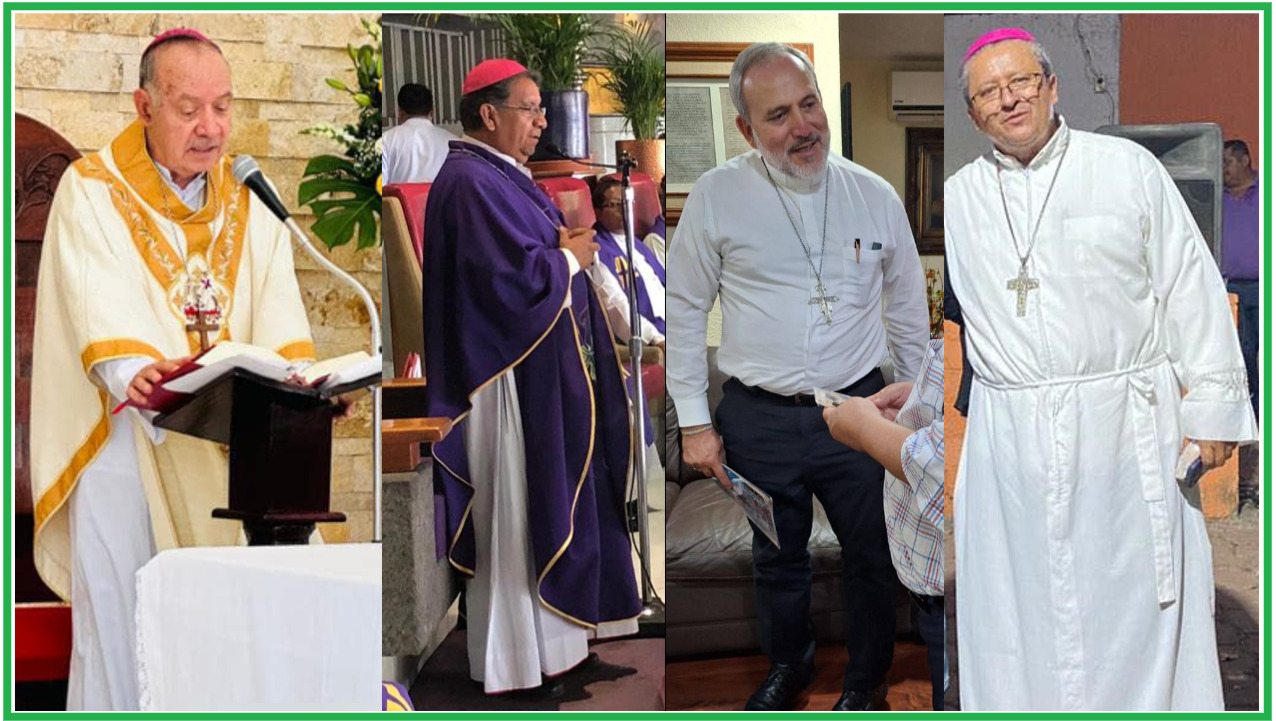
The Academy of Catholic Leaders itself published a relatively brief statement distancing itself from the criticisms launched from the most extreme right flank in Mexico. The statement is available here and published as pictures at what used to be Twitter, as it appears after this paragraph.
In any case, the episode should be a wake-up call for the hierarchy of the Catholic Church in Mexico. More so since neither Verástegui nor “Father Israel” or any of the other accounts lamenting the invitation to representative Monreal, senator Colosio, and former mayor Taboada, were able to explain why it is impossible to have a public conversation hosted by Cardinal Aguiar Retes.
No place for dialogue
As far as is possible to interpret the anger they have displayed for almost a week now, For Verástegui, “Father Israel”, and their followers in social media, there is no space for any kind of meaningful dialogue between Roman Catholics and non-believers, franc-masons, or people who do not identify with the brand of Catholicism undersigned by Verástegui and his supporters in Mexico, Latin America, and the United States.
It is a Roman Catholicism deeply affected by “reveries” of a past that never actually existed, one where the Church is always the victim of perverse and voracious political elites unable to deliver on their promises because they do not adhere to that idea of Catholicism as political theology.
The kidnapping of Our Lady of Guadalupe
In that respect, Verástegui’s Catholicism dismisses any criticism towards the Church, while trying to render itself as some sort of personal representative of Trump in Mexico, and as the herald of some restoration of “true” Catholicism in public life in Mexico and Latin America.
Verástegui is not alone in that effort. As one of many possible examples one only needs to look at what the bishop from Orihuela-Alicante, Spain, José Ignacio Munilla Aguirre, published in his social media accounts almost at the same time Verástegui was blasting the idea of Cardinal Aguiar hosting a round table with an alleged member of the Mexican franc-masonry.
The legend says in Spanish “Truth rescues freedom”, while the social media posting quotes a passage from the Gospel of John. It is not clear if the posting means that after the outcome of the U.S. Presidential election the Statue of Liberty needs to be rescued by Jesus or if the very outcome of the election is the rescue.
However, if one is aware of the political preferences of bishop Munilla, a favorite of the far-right media outlets in Spain, it is easy to understand that for him Trump’s victory implies that Lady Liberty was rescued by the outcome of the election.
Moreover, when going over the social media accounts of some of the most ardent critics of the round table at the Catholic college in Mexico City, it is clear that some of them see Trump’s success as a validation of their ideas, their attitudes calling to an open confrontation with whoever is not aligned with their understanding of Catholicsm.
The message appearing after this paragraph comes from the social media account of Alice Galván, an alumna of the Universidad Panamericana, she has had some role in Mexican politics, with the up until now center-to-right Partido Acción Nacional.
However, Galván herself is currently the head of a foundation hailing from the far-right of the Mexican political spectrum.
Her post has been pinned at the top of her account at what used to be Twitter since November 6th, with a map displaying the results of the U.S. election at the county level, and it claims:
- The socialist and progressivist left is defeated by the right.
- One beats the left exerting censorship with freedom.
- One defeats the impoverishing left with effort and work.
- One beats the murderous left with the protection of life.
Similar, and even more extreme claims about how Latin America must follow Trump’s path can be found in any country in the region.
Meanwhile in Rome
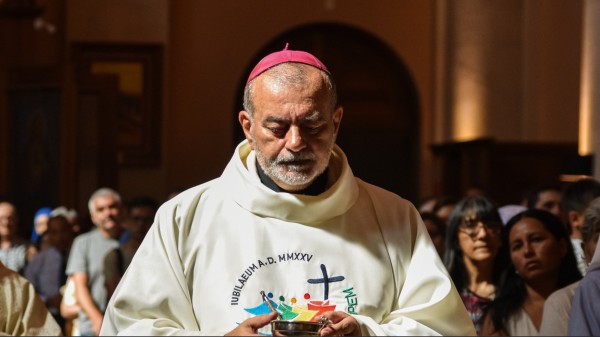
It must be noted that, almost at the same that this “storm” of sorts was brewing, in Rome the head of the Dicastery for the Doctrine of the Faith, Cardinal Víctor Manuel Fernández, issued a statement regarding an upcoming change in the way his Church deals with what has been called up until now “false mysticism”.
For Cardinal Fernández, this “false mysticism” must be classified as a delict of “spiritual abuse”, since “there is no delict in Canon Law classified as ‘false mysticism,’ even though canonists occasionally use the expression in a manner that is closely tied to crimes of abuse.”
It is hard to believe that some actual radical change will come from this statement for the already existing victims of clergy sexual abuse. However, it is possible that the incidence of abuse could be changed by this reform to the Church’s internal rules, since Cardinal Tucho Fernández’s statement also links this idea of “false mysticism” and “spiritual abuse” with claims frequently made in Roman Catholic circles about “alleged apparitions, visions, and messages attributed to supernatural origin.”
That is the case with Eduardo Verástegui himself, who frequently claims to have received some sort of message about the direction and purpose of his life, as this video from 2015 depicts, that somehow justify his intolerance in social media over the last week because he claims to be in some sort of divine mission to save Mexico.
Perhaps Cardinal Víctor Manuel Fernández needs to pay attention to those claims before it is too late.