Rodolfo Soriano-Núñez Martes, 29 de Octubre del 2024, 23:05
Violence has been pervasive in Guerrero for the last decade and a devastating hurricane hit Acapulco, the largest metro, port, and tourist destination back in 2023.
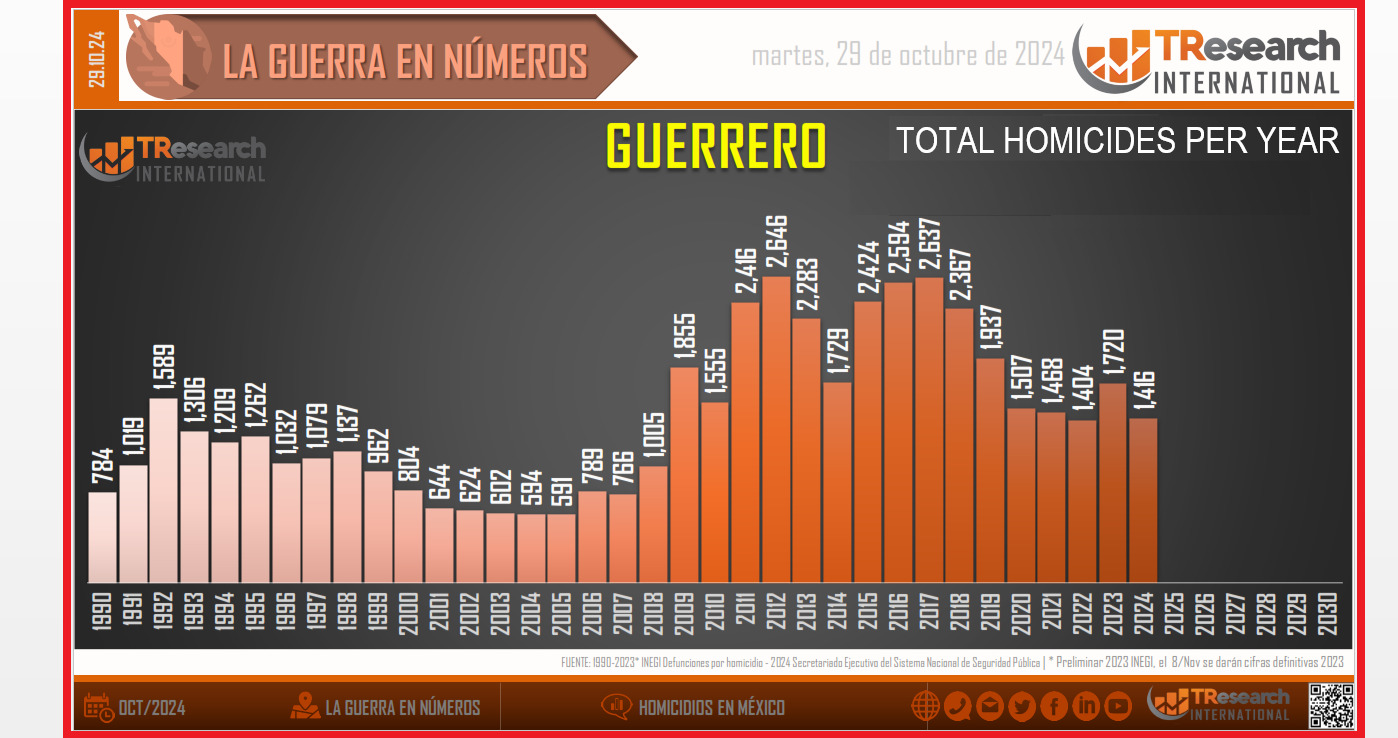
Guerrero is one of Mexico’s poorest and most violent states, with more than a thousand victims of homicide per year over the last 16 years.
By Rodolfo Soriano-Núñez
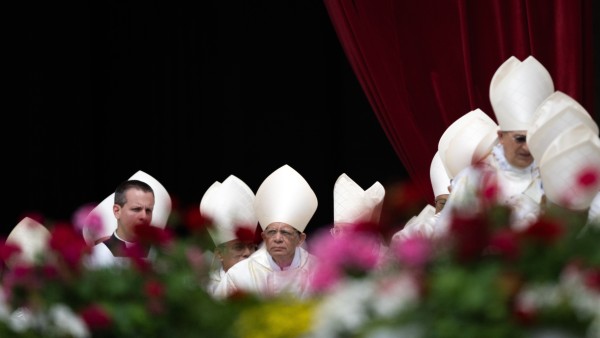
Over the weekend, the Roman Catholic bishops of the four dioceses of the state of Guerrero issued a collective letter asking the civil and military authorities to restore the rule of law.
Their calling comes one week after the execution of Marcelo Pérez, a priest in the state of Chiapas, told in story linked after this paragraph and Guerrero has had over the last ten years its own share of murders of priests.

Father Marcelo Pérez killed in Chiapas after presiding mass
In 2013, Óscar Prudenciano, a priest in Iguala, was the victim of an attempt to kill him. He only saved his life because another criminal gang confronted those who attacked him and, in the middle of the mutual attacks with guns, he was able to escape.
The next year, three Roman Catholic priests from three different dioceses were victims of homicide. John Ssenyondo, a priest originally born in Uganda, Ascención Acuña Osorio, and Gregorio López, died at separate incidents in 2014. All of them were victims of violence in circumstances that remain unknown almost ten years after their assassinations without any expectation of a measure of justice or even an explanation about what happened to them.
Ssenyondo’s case shocked Mexico and his native Uganda because his corpse emerged in November 2014, six months after he “disappeared”, in a collective unmarked grave in a rural area near Ocotitlán, Guerrero. A profile of Ssenyondo is available in English at the website of a Ugandan newspaper.
Theirs are not the only crimes that remain unsolved in Guerrero. That same year a group of at least forty-three students from a teacher’s college in Ayotzinapa “disappeared” after a confrontation with local police and leaders of warrying drug trafficking gangs, who allegedly thought the students were members of a rival gang.
Back in 2014, Guerrero had the highest homicide rate of the thirty-two states in Mexico with 47.9 homicides for each one hundred thousand inhabitants. Back in 2022, the most recent available, the reported rate was of little over 38.4 homicides for each 100 thousand inhabitants (see the rate for each Mexican state from 1990 up to 2022, in Spanish, here).
For the sake of comparison, Guerrero has a population of roughly 3.5 million inhabitants, similar to Utah or Connecticut in the United States. However, Utah scores 2.5 homicides for each 100 thousand inhabitants, while Connecticut ranks at 4.2.
Despite three official probes, one of them with the help of the Organization of American States, the official explanation to what happened to students from the teacher’s college remains in the sort of metaphysical state of “disappeared.”
Andrés Manuel López Obrador ran for Presidente of Mexico back in 2018 on the promise of solving that and many other cases but, despite his overwhelming popularity, he was unwilling to provide a measure of justice to the relatives of the students.
Current President Claudia Sheinbaum has repeatedly made similar promises but, so far there is no indication of whether a new probe will be launched in the near future or what she and her government will do in that and many other cases of persons who officially are consider as “disappeared” and many more whose relatives have been unable to get a similar formal acknowledgement from the Mexican authorities.
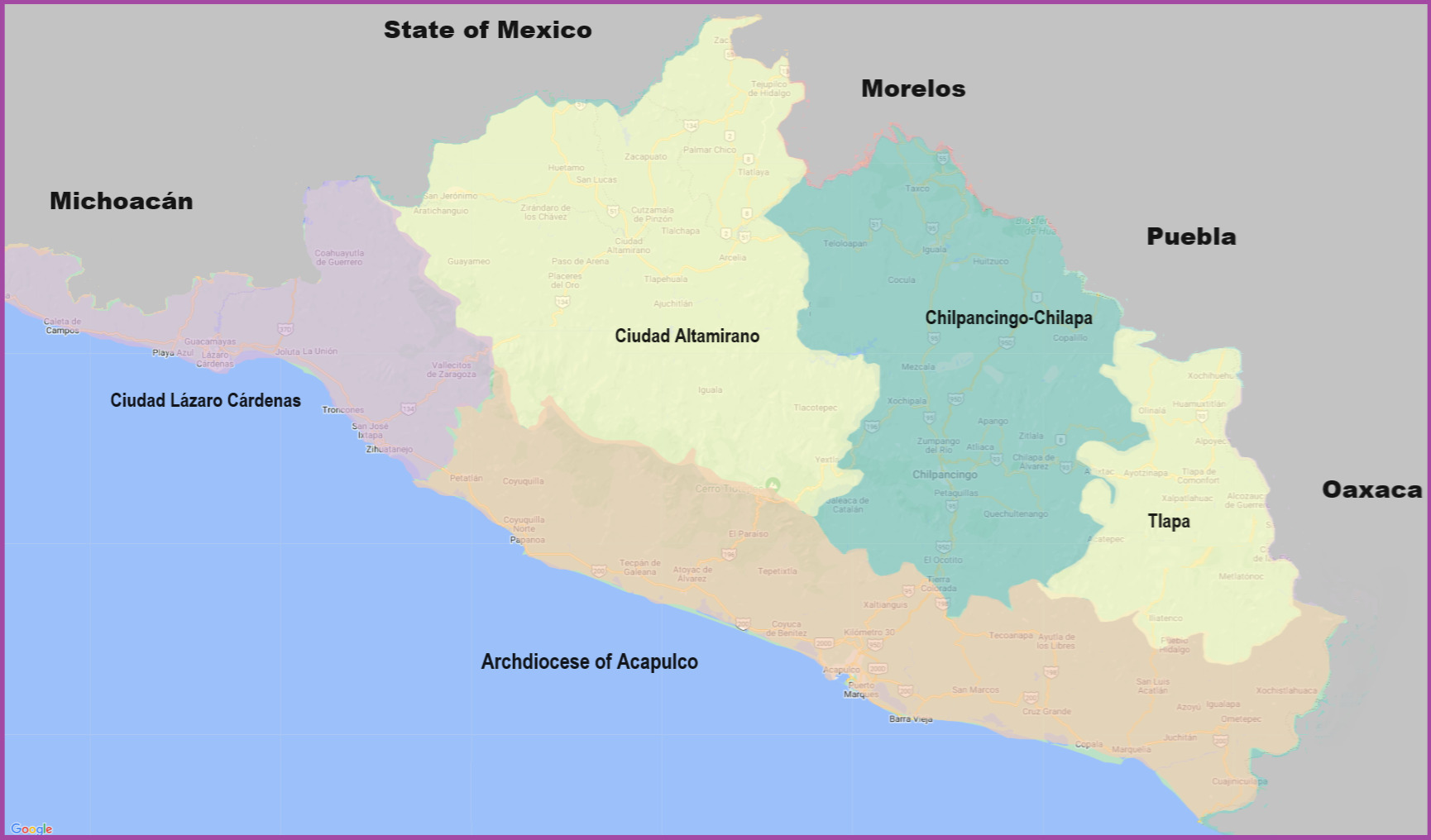
The Roman Catholic dioceses issuing the statement are the Archdiocese of Acapulco, and the dioceses of Chilpancingo (the state’s capital), Tlapa, and Ciudad Altamirano (see the map below).
The main paragraph of the statement, the second on the statement, available at the box below, only in Spanish, stresses the demanding situation in Guerrero. It describes it as heartbreaking (“desgarradora”) since they see too many…
…persons crying for their spouses, parents, offspring, grandchildren, brothers or sisters, their friends, the goods stolen from then and ghost towns. We have dreamed about peace every day, however, the political infighting around private interests keep growing stronger because they have the complicity, tolerance, or indifference of many who should be promoting and guaranteeing justice, legality, and safety.
At the end of that paragraph, the Roman Catholic bishops of Guerrero criticize one of the most frequent “explanations” of the López Obrador and Sheinbaum administrations of the federal government, who usually blame the government of Felipe Calderón Hinojosa (2006-12) as the root cause of violence in Mexico. The say: “Blaming others in this situation does not address this shameful dram.”
The statement from the Roman Catholic bishops of Guerrero, Mexico. Available only in Spanish.
After that, they quote the most recent document issued by Pope Francis, an encyclical available here, where he talks about “living in a heartless society” (cf. Dilexit nos, 22.45).
The seventh paragraph of the statement calls the people of Guerrero to...
…become one and join forces with groups and institutions, inside and outside the Church to offer consolation to the victims’ families, to ask the authorities for the protection of the physical integrity and the jobs, and to promote justice and fraternity.
The bishops' call is pertinent when one takes into consideration that, over the last 16 years, Guerrero has had more a thousand homicides per year. In 2012 the state had 2,646 homicides, its peak as far as this issue is concerned, as the graph after this paragraph proves. The graph comes from TReseach International de México.
The Roman Catholic bishops of the state of Guerrero close their statement with the following paragraph, as translated from Spanish by Los Angeles Press:
We ask the civil and military authorities to carry with their duty and to guarantee the safety, free transit, and the ability to work without the fear of being forced to pay “fees” and extortion, so families are able to live in a dignified manner. The people in Guerrero want to experience the authorities’ sensibility and solidarity in these times of violence. We hope they take concrete and immediate measures to guarantee the wellbeing of the people of Guerrero, and to solve so many crimes, to offer justice, and to restore the rule of law.
Mexican and foreign bishops have made recently similar statements regarding the scale of violence in Mexico. Two of the most recent callings come from Chiapas, from July and August of this year.

The first statement, from July, comes from the now former bishop of Tapachula, Jaime Calderón, the southernmost city of Mexico, next to the border with Guatemala. His message to the diocese when he was appointed as archbishop of León, in central Mexico, was the subject of the story linked above this paragraph, available only in Spanish.
The second was issued by Guatemalan Cardinal Álvaro Ramazzini Imeri, bishop of Huehuetenango. He issued his statement at a press conference in Panama. He called the Mexican authorities to do their duty in Chiapas and is very similar to the calling from the bishops of Guerrero. That story is available in English after this paragraph.

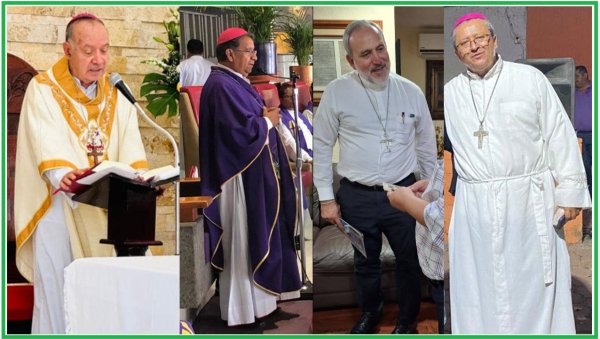
The bishops of Guerrero are Leopoldo González González, archbishop of Acapulco, and bishops José de Jesús González Hernández OFM from the diocese of Chilpancingo, the state’s capital; Dagoberto Sosa Arriaga, from Tlapa, and Joel Ocampo Gorostieta, from Ciudad Altamirano.
A portion of the state of Guerrero, including the tourist destination of Ixtapa-Zihuatanejo, belongs to the diocese of Lázaro Cárdenas City, based in the state of Michoacán.