Rodolfo Soriano-Núñez Lunes, 29 de Diciembre del 2025
The United States, Mexico, Brazil, and Italy are among the nations with the highest number of future appointments of bishops.
While Francis renewed the episcopates in Argentina and Chile, he kept bishops older than 75 in their positions in Mexico and the United States, creating a backlog Leo XIV must now address.
By Rodolfo Soriano-Núñez
Last week, Pope Leo XIV solved one of the mysteries of the global Catholic Church: the future of the archdiocese of New York. Instead of rewarding a potential successor close to the now departing Cardinal Timothy Dolan, Leo XIV appointed a former auxiliary of Chicago, his hometown, Ronald Hicks.
In doing so, Robert Prevost appointed someone who mirrors in more than one respect his own biography. As Robert Prevost, Hicks spent time out of the United States. One year in Mexico and five more years in El Salvador, giving him a chance to speak a clear Spanish when required without the need to have a dictionary or a phone by his side.
As Prevost did in Peru, Hicks spent his time not in Mexico City or the nicest areas of San Salvador, but getting his shoes dirty in marginalized areas of both countries. As Prevost, his tenure as bishop has been celebrated by their former faithful as an enriching experience for both.
However, even after passing that post, the Catholic Church in the United States and in other countries faces a silent crisis. Appointing a bishop is not what it used to be 30 or 40 years ago, as Hicks’s appointment proved, there a stress over the appointment. The stress is not all Prevost’s fault, but at least over the last three years he was a major player in shaping the global process.
One should keep in mind that Pope Francis brought Prevost to Rome in January 2023 to become a major player in the process to appoint bishops as prefect of the Dicastery for the Bishops, the office in the Roman Curia vetting most of the Catholic bishops worldwide.
In that respect, Prevost was not a minor character in Francis’s appointments. Some even credit him as being directly involved in Pope Francis’s decision to appoint, on January 6, 2025, then-bishop of San Diego, Cardinal Robert Walter McElroy as archbishop of Washington, D.C., as to prepare the ground for Donald Trump’s inauguration a few weeks after.
In some cases, it is clear that Pope Francis faced difficult situations with little or no room to wiggle due to differences with the governments of countries where such appointments were required.

One only needs to remember how Francis appointed Cardinal Baltazar Enrique Porras Cardozo as apostolic administrator of Caracas back in 2018, when Porras was about to reach 74, and while remaining as archbishop of Mérida, Venezuela.
He got that job after Cardinal Jorge Liberato Urosa Savino retired one-month shy of 76. Urosa Savino was a critic of Nicolás Maduro’s regime, and there was hardly a chance of a smooth appointment as the disastrous 1964 Concordat, ratified in 1994 gives the President pre-notification rights and a general political veto power over bishops’ appointments (content in Spanish).
Appointing Porras Cardozo as an apostolic administrator was a tactical move where Francis used a loophole in the Concordat as it bypassed Maduro one year after the Holy See ended its attempt at mediating the internal political crisis in Venezuela. On the in-flight press conference from Egypt to Rome in April 2017, Pope Francis explained the Holy See mediation ended because Nicolás Maduro was unwilling to honor the agreements.
Ultimately, Porras Cardozo held both offices (Mérida and Caracas) and, in 2023, when he was already 78, Francis appointed him to Caracas, only to leave the post in June 2024 at the “tender” age of 79, when Francis appointed Raúl Biord Castillo in August 2024.
Similar examples emerge all over the Catholic geography, as the Church confronts the reality of difficult political contexts, such as that of Cuba, the “black swan” in this piece, or Nicaragua or in other countries.
However, given that neither Mexico nor the United States can be actually compared, at least not now, with Venezuela as far as the difficulties to appoint bishops in the context of authoritarian and populist regimes. A key driver for Leo XIV is the reality of extremely thin episcopal benches.
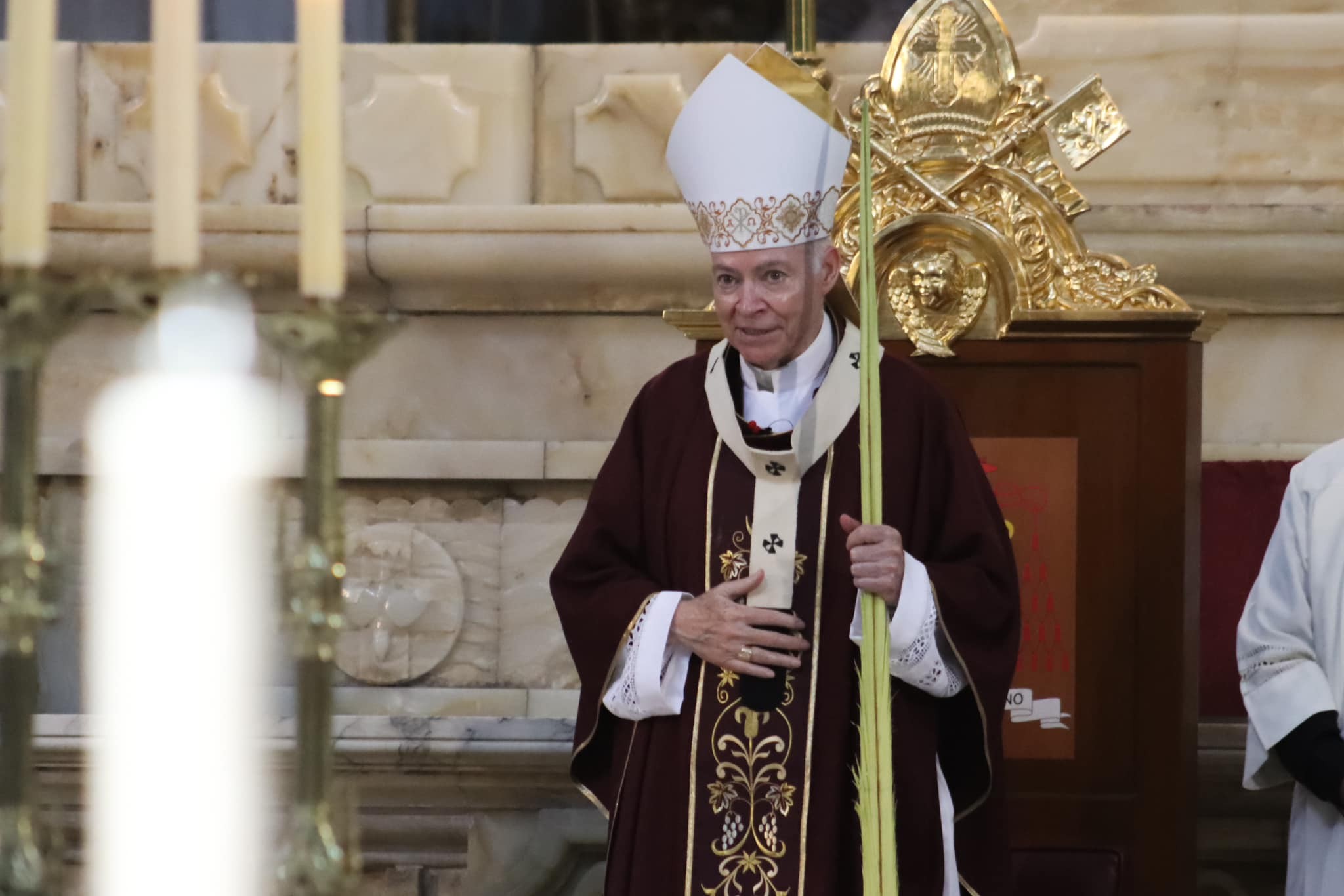
Putting aside the United States, the perfect example of the “thin bench” hypothesis is Mexico, where the two largest cities and archdioceses of the country, Mexico City and Guadalajara, have Cardinals Carlos Aguiar Retes and José Francisco Robles Ortega, as their leaders despite both of them being already well above 75.
Finally, on top of political interference and “thin benches” there is the issue of how the clergy sexual abuse crisis forces now the nuncios and other Vatican officials in the Dicastery for the Bishops and in the Dicastery for the Evangelization, to carry more thorough and systematic vetting processes.
A key aspect of appointing news bishops in the last ten years or so has been to prevent the “surprise” effect of promoting to bishop someone with skeletons in his closet or to appoint someone who, for whatever reason, will not be willing to acknowledge the new reality of increased surveillance over and criticism to the Catholic Church because of the effects of the clergy sexual abuse crisis.

One only needs to look at what recently happened in Juli, Peru, where Ciro Quispe López, the now emeritus bishop, was forced out of office after local media published details of his sexual cavorting with at least ten females in his own diocese, as the story linked above told a few weeks ago in its “Double standards” section.
An example of bishops in hot water for their inability to perform their previous roles is the backlash Spaniard bishop Pedro Aguado Cuesta faces nowadays after his mismanagement of clergy sexual abuse cases in Mexico (see the story linked below).

English Edition
“Old” new cases of clergy sexual abuse emerge in Mexico City
Even if at this point it is impossible to offer an unequivocal assessment of the issue, the limited evidence at hand seems to imply that a combination of these three factors explains Leo XIV’s and the Catholic Church’s current situation.
This week’s installment of the series goes over the available data of 46 countries to see where Robert Prevost needs to place special attention when exercising what is now his sole responsibility: appointing new Catholic bishops.
As such, the sample concentrates little over 70 percent of the Catholic dioceses (2,159 out of 3,041), and roughly over 80 percent of the total population of Catholics worldwide. Even if the data were concentrated only in four of the 46 countries included (Brazil, United States, Mexico and Italy) that would account for 40 percent of the dioceses in need, now or in the near future, of a new bishop appointment from Rome.
A scissors crisis
The database reveals a scissors crisis, a process shaped by two “blades.” One, on the demand side, the number of bishops the Catholic Church needs to appoint to replace current prelates and, on the other, the supply side, or the potential candidates to become bishop.
The demand blade is shaped by a context of both high scrutiny and high political risk for the Catholic Church. Unlike other groups, religious organizations must appoint credible and coherent leaders, individuals able to embody their stated values and beliefs.
The high scrutiny coming from the sexual abuse crisis and the high political risk make appointing a bishop a more complex than it used to be 20 or 30 years ago. Those constraints shape the demand for more articulate, bishops, able to navigate new realities.
The supply side blade is reminiscent of the farm system in a Major League baseball franchise, it deals with how many presbyters or priests are able to become bishop in the contexts described by the demand blade.
There are cases where a relatively older priest can easily transition to become bishop, even archbishop, as with now Carlos Castillo Mattasoglio in Lima, Peru, back in 2019, without previous tenures as either auxiliary in a major see or head of a small diocese, but usually the path leading to a major see involve, as in Ronald Hicks’s case, a period as episcopal vicar or auxiliary bishop in a major see, then a period as head of a small-to-medium diocese to end with an appointment as archbishop.
Hicks’s path to New York City was similar to how Pope Francis cemented his own legacy when he appointed Jorge Ignacio García Cuerva as archbishop of Buenos Aires in 2023. He got there after spending little over a year as auxiliary of Lomas de Zamora (2017), then four years as head of Río Gallegos. It was then when Francis appointed him.
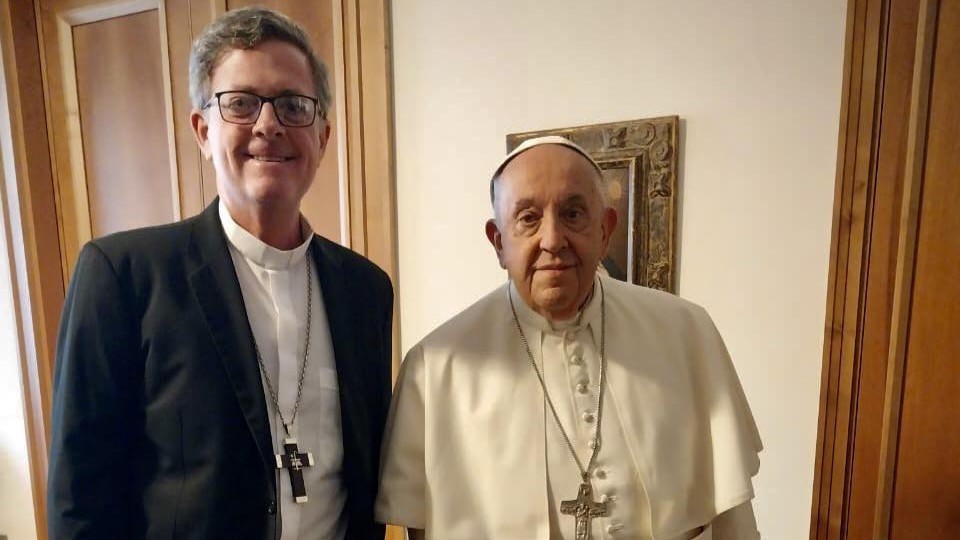
A key, major change in the demand side of the process is the need for more effective and thorough vetting processes, as the cases of Quispe López in Juli, Peru, and Aguado Cuesta, the former superior of the Pious Schools order and current bishop of Huesca y Jaca, Spain, prove.
Both went through vetting processes that theoretically probed key aspects of their personal (Quispe López) and institutional (Aguado Cuesta) behaviors. What their current situation reveals is that something failed in those processes.
In some cases, the roadblocks to appointing a new bishop come from the political friction in any given country, as the aforementioned Caracas case proves. Another example is how, during the final weeks of his Pontificate, Pope Francis sent bishop McElroy from San Diego to Washington, D.C., to have a more proactive voice there, able to confront the tempest brought by Donald Trump.
Putting those examples aside, the fact is that the pool of priests willing or able to survive the vetting process to become bishop is moving downward. In some cases, even bishops already vetted and with experience decide the role is not for them.
That was the case of German bishop Gregor Maria Franz Hanke who recently, after roughly 20 years as bishop of Eichstätt, decided to quit when he understood he was unwilling to deal with the requests for transparency and accountability stemming from the Synodale Weg, the synodal way, as practiced by the German Catholic Church.
To cut efficiently, a pair of scissors need to collide over paper or fabric. In Cuba to name the most extreme case, the blades have opened so wide that they are unable to do the job, so the system seems to have snapped, as 72 percent of the bishops there are already in overtime or about to enter that state.
Something similar, but less dramatically happens in Mexico and the United States. In both countries the issue is not the difficulties to appoint bishops in a political context such as that of Cuba, where there is a smaller pool of local priests and little or no chance to bring foreign bishops.
In Mexico, the remedy has been to keep seniors “playing” their positions in overtime in Mexico City and Guadalajara (Aguiar Retes and Robles Ortega), while in the United States, before Hicks’s appointment to New York, the solution was to shuffle a proven leader such as McElroy from San Diego to Washington, D. C.
The statistical reality: Several worlds, one Church
The data is based on a measure of “transition impact.” The measure is the percentage of territorial dioceses (TD) currently in transition (vacancies + near-retirements). All data was synthesized from Catholic-Hierarchy.org, which systematizes official Holy See data from the Acta Apostolicae Sedis and other official Vatican sources.
It only includes bishops with jurisdiction over territorial dioceses. All the bishops serving the Vatican Curia or the diplomatic service (Nunciatures) were excluded.
This is relevant because Catholic-Hierarchy.org’s template includes in their count of bishops near retirement all prelates, including those in the Roman Curia and those deployed as nuncios. Main problem is that, as one of many possible examples, Cardinal Christophe Pierre, the current nuncio to the United States appears in the listings of bishops near retirement age of Haiti, Uganda, Mexico, the United States (all the countries where he has been nuncio) and his native France.
It is necessary to remove them also because their inclusion would artificially bias the numbers for countries such as Italy and Spain. Both have a relatively large number of bishops in Rome but play no role in the dioceses of their countries.
The eparchies and other entities of the so-called Oriental Churches were generally excluded (e.g., in Mexico, Argentina, the United States, and Australia) on the premise that even if vital and active, they often do not function as separate branches in practice, as they are no longer a sanctuary of sorts for migrant and marginalized populations.
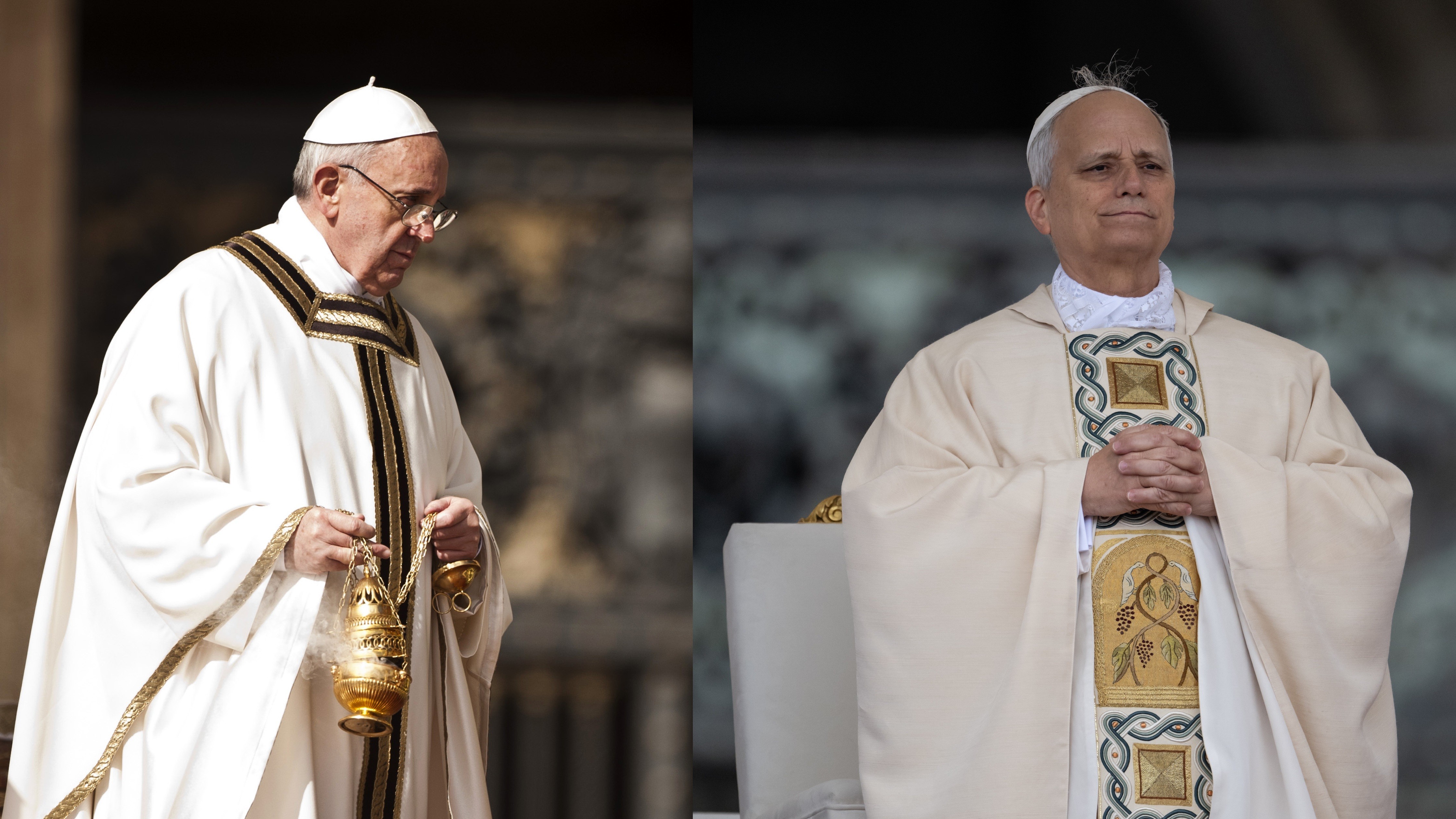
What used to be the eparchy faithful have largely integrated into the general population, making their administrative structures less representative of the national landscape. The exception, as far as the sample is concerned, is India. The Syro-Malabar and Syro-Malankara eparchies are included since they are native to India, their functional autonomy and demographic presence. Also, because their faithful do not easily transition between each other or to dioceses of the Latin rite.
The database tracks 46 countries and little less than 2,200 jurisdictions, focusing on the deltas of change: retirements near 75 and the vacant sees, as they stood by Friday, December 18, 2025. Some appointments have been made since then, but the overall evidence remains unchanged.
The next day, Leo XIV accepted Gerald Michael Barbarito’s resignation as bishop of Palm Beach, in the United States and Manuel de Jesus Rodriguez got the see. He also appointed Peter Dai Bui as auxiliary bishop of Phoenix, Arizona, and Charles Phillip Richard Moth became the archbishop of Westminster, in the United Kingdom, replacing Cardinal Vincent Gerard Nichols.
On December 23, Leo XIV appointed a bishop to the newly created diocese of Caia, Mozambique, and appointed a new bishop to the diocese of Jasikan, Ghana. As far as it has been possible to see it in the public record, no other appointments have been made until Sunday December 28, 2025.
What is a Z-score?
To understand Z-scores it could be helpful to see them as the “reading” of a thermometer during a fever. It is a measure of how bad a situation is. In this case what the Z-score measures is how many “pending appointments” any given country faces over the next years following Catholic-Hierarchy.org’s definition of “Bishops near age limit,” that is to say 75.
In plain terms, a Z-score tells us how unusual a country’s situation is compared to the rest. The higher the Z-score, the more exceptional—and usually more problematic—the situation:
- A Z-score of 0 means the country is exactly at the global mean.
- A positive Z-score means the country is less stable or has more administrative stress than the average.
- A negative Z-score means the country is more stable or has less administrative stress than the average.
The stress was calculated via Z-scores in two scenarios: including and excluding Cuba. The reason to do so is that the Caribbean nation is an extreme outlier, a true black swan with a 72.7 percent impact, so including or excluding it has a major impact in how to interpret the data.
The reason why this piece identifies Cuba as a total systemic collapse, the proverbial black swan, is because out of eleven dioceses eight bishops are already above 75, two of them above 80, and one more diocese (Ciego de Ávila) remains vacant, without a bishop, since 2022.
Given the extreme nature of whatever happens in Cuba, especially when dealing with religious issues, the table below includes the Z-score for all the 46 countries when Cuba is in the sample and one another without Cuba in the sample.
Without Cuba, Mexico emerges as an outlier followed by the United States. Other countries such as Switzerland emerge as outliers, but the relative size of such countries makes them less relevant for the analysis. The full database with all the data is available at Scribd as and Excel book or as a PDF file. A column with a commentary on each country has been added.
If the analysis was carried over the percentages (first column of the table below), a tiny country with two dioceses and one vacancy would look “worse” (50 percent impact) than the United States with 180 dioceses and 40 vacancies (22 percent impact).
The Z-score corrects for this “noise.” It measures the intensity of the anomaly. It allows us to compare the structural collapse in Cuba to the volume-driven crisis in Mexico, on a single, unified scale of “institutional stress.”
The table after this paragraph shows two Z-score values in separate columns. The 72.73 value for Cuba puts that country in the almost impossible situation of 4.23 times the Standard Deviation of the sample. Usually, most of the cases of any given sample (99 percent) fall below that kind of extreme value. Removing Cuba allows to better understand what happens elsewhere in the world.
A word of caution
As useful as metrics are, one needs to be extremely careful as to how to interpret each case. A perfect example is that of Nicaragua. Even if the numbers have it as having no major stress, four Nicaraguan bishops have been forced to leave their country. Since there are no accusations against them, they appear as heads of the dioceses in Catholic-Hierarchy.org, but the reality of the Daniel Ortega regime is that it is hard to imagine them going back to Nicaragua in the near future.
If one seeks to actually understand what happens in Nicaragua nowadays, the “pure” Z-score is not enough. To do it one would have to add those four exiled bishops to the stress count. When doing so, the Z-score for Nicaragua goes through a catastrophic shift.
By counting the four exiled bishops—who remain in office on paper but are physically barred from their cathedrals—as functional vacancies, Nicaragua’s transition impact jumps from 33 percent to nearly 78 percent. Under this lens, Nicaragua joins Cuba as a second black swan, representing a total systemic collapse where the government has effectively “decapitated” the Catholic hierarchy without Rome being able to respond.
Also, the negative Z-score (-0.76) in Brazil suggests an “institutional giant” outperforming Mexico, the United States, France, and most of the countries in the sample. However, this is likely a statistical mirage.
Unlike the high-scrutiny environments of the United States, France, Argentina and even Mexico, Brazil currently benefits from a relative Church and media silence regarding the clergy sexual abuse crisis. Up until April 2024, Brazil lacked any diocesan or national body to prevent clergy sexual abuse cases, as the story linked below proved at that time.

The newly created Serviço Nacional de Proteção (National Protection Service) has rather limited, consultative, powers so the burden of handling the denunciation of specific cases remains in the hands of each Brazilian diocese. No wonder local media and advocates criticize the bishops' response as their country is at least 20 years behind other Latin American polities such as Chile.
Evidence of that comes when one realizes that the first major book dealing with some of the many hidden cases of clergy sexual abuse in Brazil saw the light only in 2023 (Pedofilia na Igreja: um Dossiê Inédito Sobre Casos de Abusos Envolvendo Padres Católicos no Brasil), almost 30 years after accusations against Marcial Maciel resurfaced in the United States forcing media in Mexico to write about the Legion of Christ's founder.
Even today, some of the most devastating reports about abuse in Brazil come from the French-language media in Quebec, Canada, and not from local Brazilian media, as the video linked after this paragraph proves.
Audio in French, English subtitles available over the YouTube Control Panel.
And even the legal drive to prevent abuse from happening has been spearheaded by survivors with Canadian citizenship sent to Brazil by their parents at some point in their lives, as the same Radio Canada story proves.
Given the size of the Catholic Church in Brazil, an estimate about the number of potential victims of clergy sexual abuse using the algorithm set by the Sauvé Report from France set a range of a minimum of 22,601 victims all the way up to almost 56,955 cases in Brazil.
That is far larger than the ranges one finds for Mexico or Argentina when using the same algorithm from the Sauvé Report. Argentina has a range of 6,775 through 17,072 and Mexico one of 15,845 through 39,930 cases, as the story linked below proves.
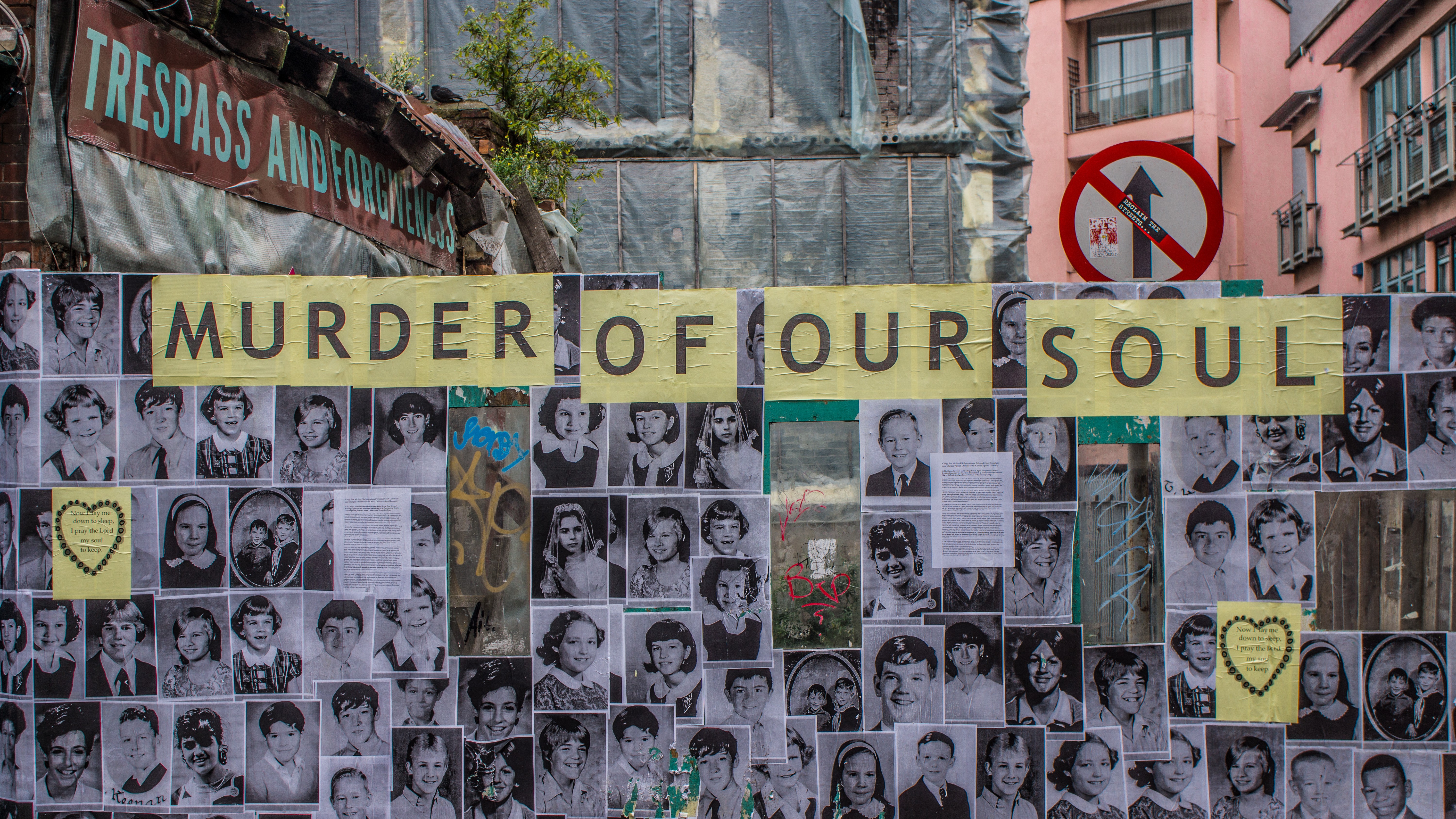
In that piece, following the insights of the Sauvé Report the assumption was that a minimum of three percent of the clergy male (priests and brothers) in any given diocese are predators, and that each predator has a minimum of 25 and a maximum average of 63 victims.
Other potential “statistical mirages” are Spain, Poland, Portugal, and Austria. In Spain, Rafael Zornoza Boy, the now emeritus bishop of Cádiz left that diocese at 76 in the midst of the first ever scandal of clergy sexual abuse involving who was, when the scandal emerged, a sitting bishop in that country. The story linked below went over some details of that case in the section “A first ever in Spain.”
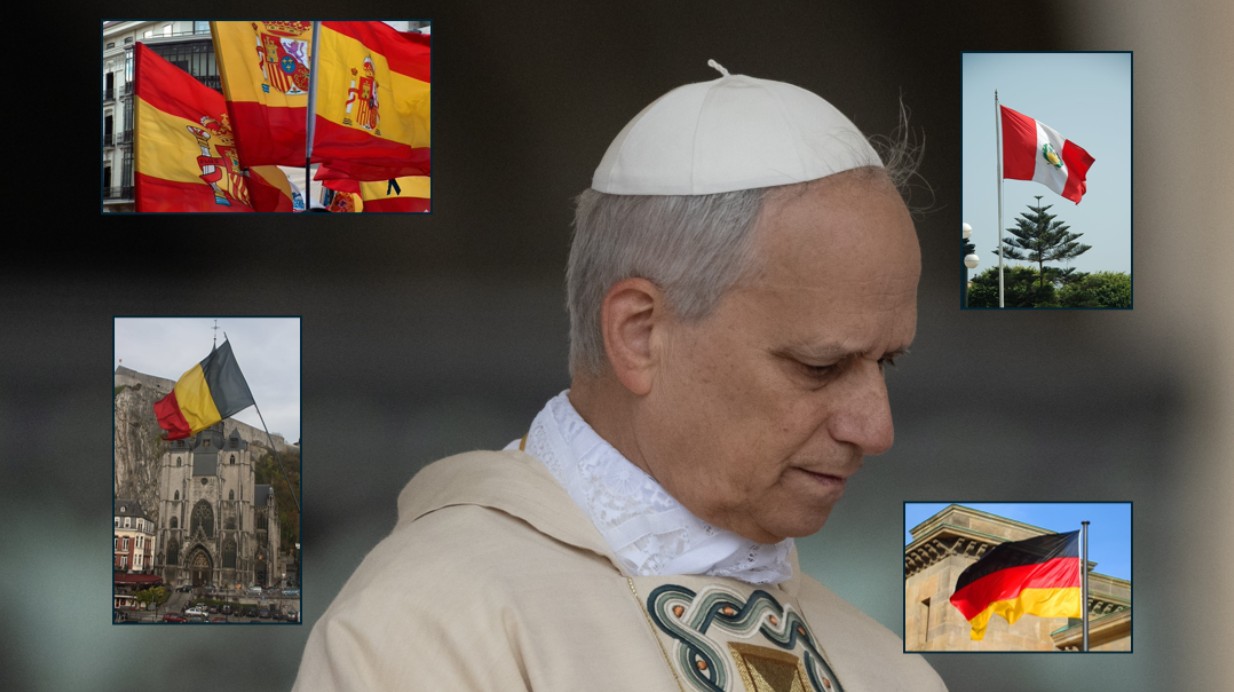
As stated there, it is unclear why the Vatican let him stay until he was 76. A possibility is that Rome let him in office until the scandal burst as to send a message to the conference of bishops of Spain. It is a riskless move as his crimes have prescribed under the very generous statute of limitation in Spain, but that is just a hypothesis as there is no transparency in Cádiz, Madrid or Rome on the issue.
Unlike their French and German colleagues, the bishops in Spain have done their best to dismiss the scale of the crisis there, betting on the statute of limitation and on collective amnesia in Spain.
This is more relevant as in Cádiz, the Holy See only accepted Zornoza Boy’s resignation but without appointing a new bishop. Currently that is one of many vacant sees somehow involved in the clergy sexual abuse crisis, and Ramón Darío Valdivia Jiménez, the auxiliary bishop of Seville was only appointed as apostolic administrator. Later in the piece there will be other similar cases.
In Poland, there is at least a dozen bishops under different types of probes, the most notable, already solved, that of Grzegorz Kaszak, who was forced out office in 2023, after a scandal involving an orgy with male prostitutes at his house.
Although Portugal followed France’s lead by commissioning a report on sexual abuse, the report is now “lost” on the Internet and there is no will to bring it back, as there is no will to actually address the many accusations against priests there. More details appear in the story linked after in the section titled “Story of Lisbon.”

English Edition
The 2025 Catholic report on clergy sexual abuse
In Austria, the bishops there have been unwilling to follow the lead of their German peers by probing the accusations in their dioceses but now they have been forced to acknowledge that, for the first time in Austrian contemporary history Catholics are no longer the majority of the population, with the most notable losses among the younger Austrians.
Finally, as far as the methods, exclusions and inclusions is concerned, one needs to be extremely careful when comparing the data from Nicaragua or Guatemala with Switzerland and Belgium. Even if the numbers are similar, the situation is very different as both European countries are reckoning with the exhaustion of their pastoral models, with Belgium being one of the epicenters of the clergy sexual abuse crisis, as proved by the fact that one of Pope Leo XIV’s most recent activities on that topic was a meeting with Belgian survivors in Rome, as told in the story linked below.
Key takeaways from the data
Based on the analysis of the data, it is possible to offer some ideas about the challenges that will shape, at least for the next two or three years, Pope Leo XIV’s pontificate.
1. The need to hurry appointments. This is a consequence of the fact that there is a “high transition impact” measured by the Z-scores in each country. They correlate with failure or stress. The highest values for transition metrics are concentrated in a few countries, indicating significant stress.
Cuba is an extreme outlier with the maximum transition impact of 72.73 percent and the highest Z-Score of 4.23, earning the unique black swan: total failure status, but as explained already, the same could be said about Nicaragua. Both Cuba and Nicaragua could be described as crisis stemming from the peculiarities of the State-Church relation.
The oddity of it all is that the situation in Cuba is the byproduct of a crisis going all the way back to the 1940s, when the old Catholic majority began to wane on the island, before Fidel Castro’s takeover. In Cuba, a 1954 study titled Encuesta nacional sobre sentimiento religioso del pueblo de Cuba (National poll on religious sentiment of the people of Cuba) proved there was already evidence of religious practice waning, years before Castro’s takeover.
Later, in 1979, Margaret E. Crahan published her seminal article "Salvation through Christ or Marx: Religion in Revolutionary Cuba" (content behind a paywall) where she offers more evidence about how unequal was the access to Catholic religious services and priests depending on where any given person lived in the island (p. 162).
She states there how in 1954, approximately 54 percent of all Catholic priests in Cuba were located in the archdiocese of Havana, and primarily served the urban middle and upper classes, leaving the rural population with almost no access to religious services.
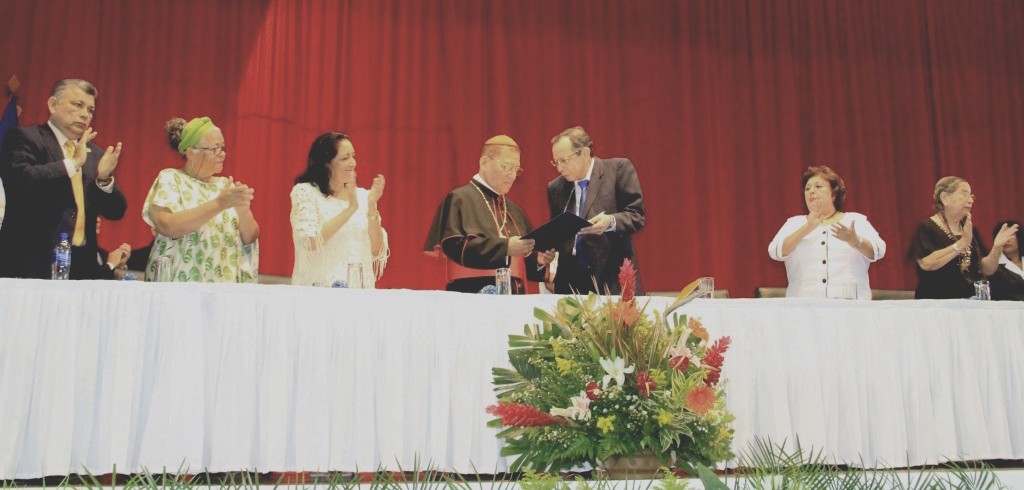
Even if it has been Ortega who maimed the Catholic Church in Nicaragua through the expulsion of four bishops and the expropriation of Church property, including the largest university in the country, the Universidad Centroamericana, Ortega was only able to do so because now deceased Cardinal Miguel Obando y Bravo actively and repeatedly endorsed him as presidential candidate, as the story linked after this paragraph proves, because he offered to suppress abortion in the country.
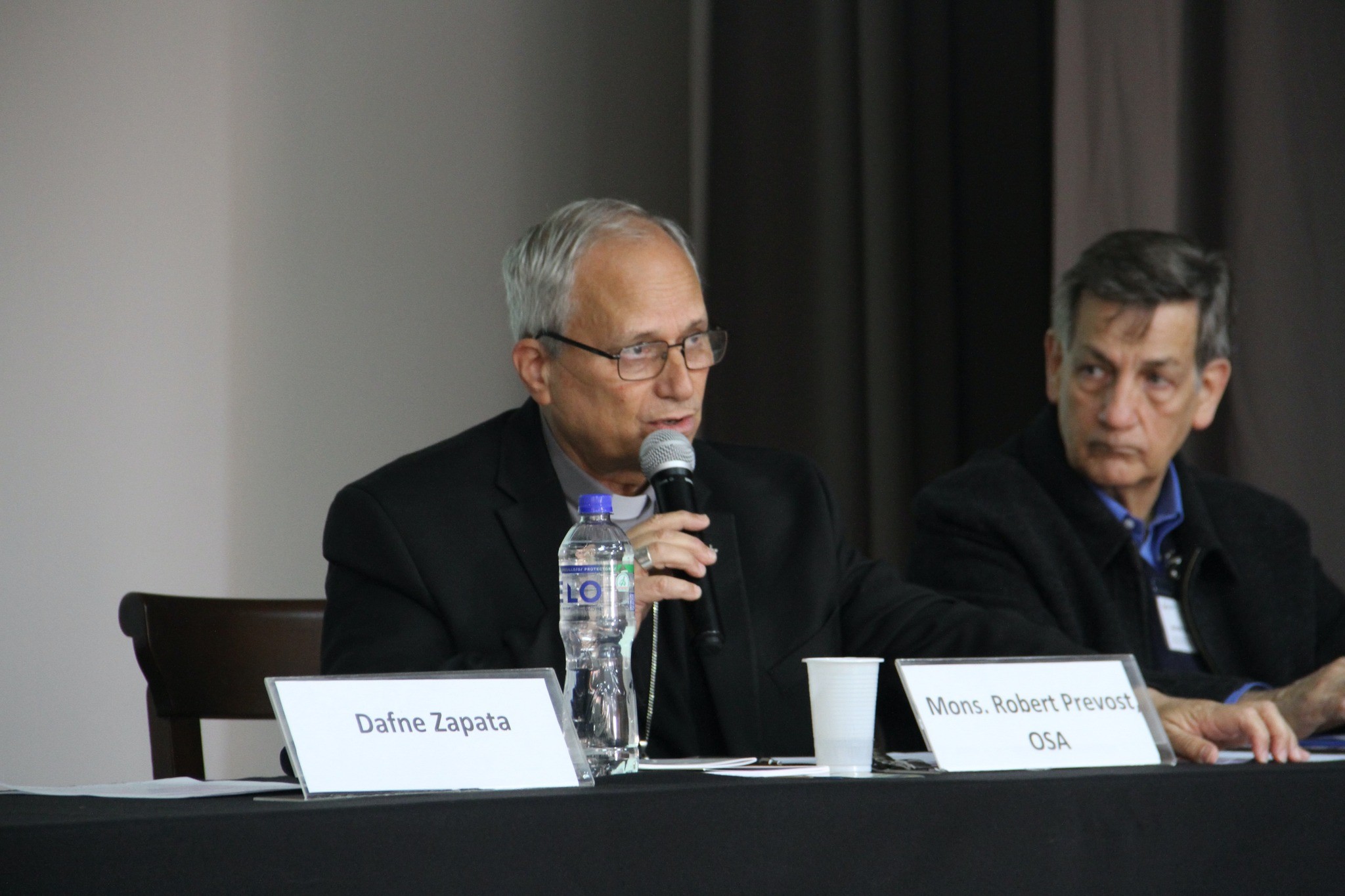
In an exchange that, years later, turns out to be paradoxical to say the least, the Ortega government showered Obando with all kinds of distinctions and honors. One of these was granted by the National Assembly—already under Ortega's control—on March 10, 2016, declaring him a "national hero of peace and reconciliation." The image appearing before this paragraph is from that occasion, taken from the Assembly's press release available here in Spanish only.

English Edition
The Catholic Church in Nicaragua: a new twist in the plot
In that regard eve if the top five countries by transition impact (Cuba, Switzerland, Belgium, Guatemala, Nicaragua) are identical to the top five by Z-Score, and they all could be described as facing significative challenges in the coming years, it is necessary to avoid generalizations while paying attention to the reasons behind the crisis in each country.
Guatemala is a special case also because of the lack of current demographic data, on religion or any other meaningful aspect of public life. Unlike in Mexico or Chile, the true extent of Catholic depletion in Guatemala is impossible to measure with precision.
The country went nearly 20 years without a census, and the 2018 data is limited and controversial. While most observers agree that the Catholic share of the population has dropped sharply—amid rapid Evangelical growth—there is no reliable baseline for comparison.
This data gap makes it difficult for both Church leaders and analysts to assess the real scope of the crisis or to plan effective responses. Moreover, while the 2018 census provides the most recent official snapshot of religious affiliation in Guatemala, the pace of change since then means that even this data is already obsolete. The true extent of Catholic depletion—and the rise of other religious groups—remains difficult to quantify with confidence there.
2. The opportunity window. The mean transition impact is 19.34 percent, but the standard deviation of 12.63 suggests a wide variance, driven largely by the high-impact outliers. The variation observed offers some opportunities to Leo XIV. If his appointments of bishops are thoroughly vetted as to avoid scandals, restore trust and open new venues to the laypersons-hierarchy relationship, at least in the countries where the Z-Scores are lowest, there is hope.
Some examples are Panama, New Zealand, Tanzania, and Angola, which report a zero percent transition Impact and also have the lowest Z-Score of -1.53. Even Brazil could fit that profile, depending on how the national conference of bishops and the dioceses manage the cases that could emerge in the coming months.
One needs to be cautious when interpreting the data because Chile would be included there with those other four countries. However, anyone paying attention to the evolution of the global clergy sexual abuse crisis should know that Chile is one of its epicenters. There is the legacy of Fernando Karadima, the Chilean super predator in the same league as Mexican Marcial Maciel or Theodore McCarrick in the United States.
And even worse, besides Karadima, there is a small army of priests and former priests who have been able to avoid jail or any meaningful penalty because of the limitations of the Chilean system of justice, not especially different than the systems of justice of any of the other 18 Latin American republics.
A perfect, but hardly the only example is that of former Jesuit priest Felipe Berríos, whose case was considered in the section “Damascus by way of Chile?” of the story linked after this paragraph.
English Edition
Is the Catholic Church‘s talk about zero-tolerance for real?
Sadly, after José Antonio Kast’s election as Chilean President the chances of a meaningful reform allowing to address the need of the many victims of clergy sexual abuse there seem unlikely, so what is possible to expect is a lasting damage to the Catholic Church’s prestige and reputation.
The Mexican black swan
When one removes Cuba from the sample and “forgets” cases such as Nicaragua, Brazil or Chile, what remains is the “small black swan” of Mexico. The Mexican case is relevant because of the relevance of the pending appointments to the two largest archdioceses in the country, Mexico City and Guadalajara.
Guadalajara used to be, at least up until the end of the 20th century the breeding ground of a relatively large share of the Mexican bishops’ bench. Repeated scandals, both sexual and managerial, turned Monterrey into the powerhouse for recruiting bishops in Mexico.
The role of Guadalajara in the Mexican Church is more relevant as the seminary of the diocese is the largest in the Catholic world, with 491 students registered in 2022, the latest figure available and even if they do not have the best student-to-ordination rates, it is hard to assume that it would be easy to appoint a new archbishop without thinking about the future of the seminary there.
To put Guadalajara’s role into perspective, one only needs to contrast its 491 seminarians with the power centers of other countries: it is more than twice the total of the seminaries of either Paris (49), Madrid (115), and Toronto (45) combined or New York (33), Chicago (27), Bogotá (42), Buenos Aires (35), Lima (33), and Santiago de Chile (20) put together. Data on the number of seminarians is available on the pages for each diocese at GCatholic.org and are the values reported for 2022, the most recent there.
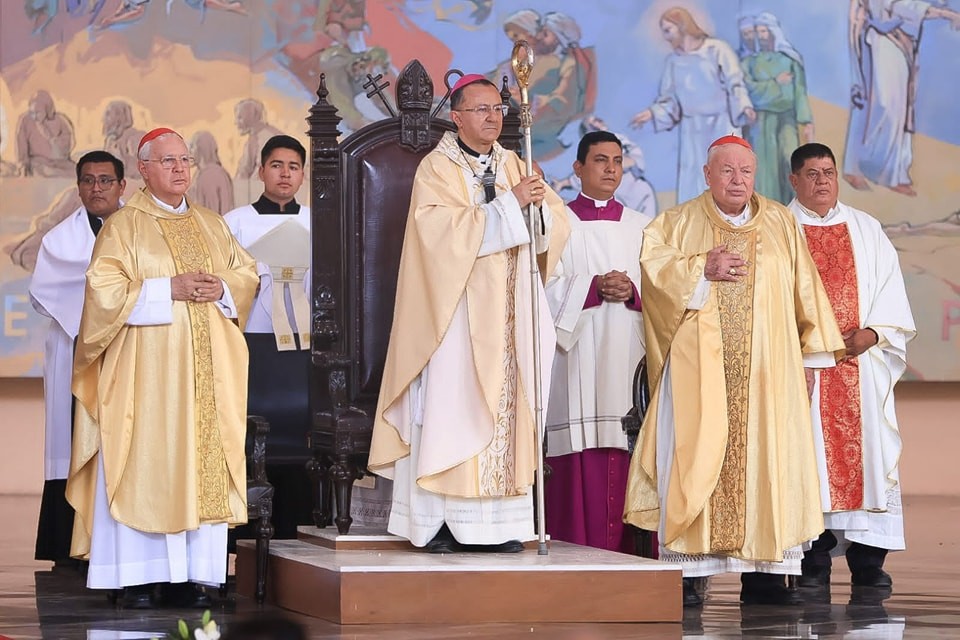
The very fact that José Francisco Robles Ortega remains the head of the archdiocese reveals the depth of the crisis there. More so as his term has been marred from the get-go by the unwillingness of the now emeritus archbishop and Cardinal Juan Sandoval Iñíguez to actually let Robles Ortega manage the diocese on his own terms.
Pandemic hallucination
Whether through videos dropped over social media or through strawmen in the diocese, Sandoval Iñíguez remains in the spotlight, even pushing anti-vaccines conspiracy theories over videos during the pandemic. There he regurgitated many of the most delusional talking points of the confluence of the “Pro-Life” and anti-vaccine movements worldwide, going as far as to blame Bill Gates for the pandemic. Even if Sandoval Iñíguez is about to reach 93, there is no guarantee as to how he would behave if Leo XIV appointed a new archbishop there.
The issue at Guadalajara has been not only how to deal with a vacancy; but how to outsmart Sandoval Iñíguez's thirst to remain relevant despite clashing with Robles Ortega over diocesan media and when impossible, over his own social media.
To figure out how disruptive this is, one only needs to look at Buenos Aires where emeritus archbishop and Cardinal Mario Aurelio Poli, avoids as much as possible the limelight, much less to challenge Jorge Ignacio García Cuerva, who is not a Cardinal.
In Guadalajara one of the reasons Benedict XVI had to bring Robles Ortega from Monterrey was because he was already a Cardinal so there was no need to appoint yet another Cardinal in Guadalajara to avoid Sandoval Iñíguez from pulling rank over his successor at the archdiocese.
Mexico City is hardly as relevant in that regard as Guadalajara is and, to his credit, Norberto Rivera Carrera has been less imprudent as emeritus than Sandoval Iñíguez, perhaps because he is the frequent target of other types of scandals, as the one that emerged over 2025 for the purchase of at least two luxury departments in one of Mexico City’s newest high-end buildings.
Unlike Rivera Carrera, Aguiar Retes avoids scandals, but local clergy has been against his attempt at reform, and he even confronted over 2025 a mini rebellion at the Pontifical University of Mexico, of which he is the Grand Chancellor. He was able to quash the rebellion but the unease among local clergy remains a feature of his tenure at the country’s capital, as the story linked after tells in the “Undermining trust” section.

And then there are unexpected developments as the death of the archbishop of Tijuana, one of the Mexican archdioceses unwilling to comply with the minimalistic request made by Pope Francis of setting up a commission to prevent clergy sexual abuse.
If one goes with what happened in another Mexican archdiocese, that of Tuxtla Gutiérrez, where the appointment of a new head had to wait for more than a year, from November 2023 through April 2025. Now in Tijuana Rome follows a similar path, avoiding the appointment of a new head of the diocese, opting instead to name an apostolic administrator.
A common thread
The risk at Tijuana is not that different from what has happened since September 2023 in Steubenville, Ohio. There the issue was not the death of a bishop, but the sudden resignation of Jeffrey Marc Monforton a relatively young prelate, who at 60, became not the head of an archdiocese, not even a coadjutor archbishop of a Metropolis, as it recently happened in Santo Domingo, Dominican Republic, where Carlos Tomás Morel Diplán, became, at 56, the coadjutor there to Francisco Ozoria Acosta’s chagrin, but the auxiliary bishop of Detroit.
How long Steubenville will remain vacant is anybody’s guess, but there is already talk of a “ghost diocese,” a place where the administrative and scandal mess has been so bad that a planned merger has been a the only possible solution. The fact that the diocese has lost the Catholic flock over the last 40 years or so.
If one goes over the diocese’s self-reported data at Catholic-Hierarchy.org, the Catholic flock there went from a peak of 57,600 (10.6 percent of the total population) to its current low of 28,339 and 5.9 percent of the total population in 13 counties in Ohio.
It would be impossible for Tijuana to merge, as back in 2007 it actually lost territory to create the diocese of Ensenada, but unlike the relative honesty in the data reported by the U.S. dioceses to the Vatican, in Mexico the data reported by dioceses such as Tijuana is laughable as the story linked after this paragraph proved in the section titled “The impossible comparison”.

English Edition
Baja California and the clergy sexual abuse crisis
That piece proves how when analyzing the data reported by the archdiocese of Tijuana to Rome there is a massive discrepancy between the archdiocese of Tijuana's claim (95 percent Catholic) and the 2020 Mexican Census (61.94 percent). To do so, they must pull out of thin air almost 1.4 million Catholics that simply do not exist in the Mexican census which, unlike the U.S. census, has a specific question for professed religion.
But even if one was willing to dismiss that discrepancy, Tijuana is now affected by an ongoing schism summarized by the story linked after this paragraph, in the “Post Data” section.
At least in Tijuana, the potential appointment of a new archbishop becomes what in Mexico is usually described as a “Tiger’s raffle,” that is to say, a process whose outcome appears appealing even tempting, but ultimately is bound to fail. A “poisoned chalice” of sorts.
The situation reaches a point where it is impossible not to wonder if there is actually somebody willing to take over what seems like an appointment marred from the outset. One has to wonder how many potential appointees decide, before going through such ordeal, as bishop Hanke did in Germany, that it is better to remain a simple priest.
What is clear is that something is amiss in the “farm systems” in Mexico, the United States, and some of the countries with the highest Z-Scores in the table, and there is no easy recipe to deal with that reality.
There is a common thread linking the dioceses already considered of Cádiz, Spain; Juli, Peru; Steubenville, United States; Tijuana, Mexico, and that of Verdun, France, where another bishop resigned his position in the midst of a scandal, with Rome opting to keep the see vacant while appointing an apostolic administrator, as the story linked below told.
Leo XIV is currently a firefighter. Even if his bet on Hicks to New York and other recent appointments involving bishops who are migrants or sons of migrants in the United States are successful, the scale of the pending appointments in both his home country and Mexico talk about a rather daunting task. Besides Guadalajara and Mexico City in Mexico, he must figure out Chicago and Miami, while Los Angeles is about to join the list.
As a firefighter, Pope Prevost should be aware of how that stability on a spreadsheet could be misleading, masking a potential institutional crisis.
* * *
A summary of this piece is available as audio after this paragraph.
Note on production: The text of this summary was written and edited solely by the author. Due to a temporary health issue, the delivery of the audio summary was achieved using a high-quality, text-to-speech engine (Voicertool). The AI was used for voice generation only, not content creation.