Rodolfo Soriano-Núñez Miércoles, 20 de Agosto del 2025, 00:05
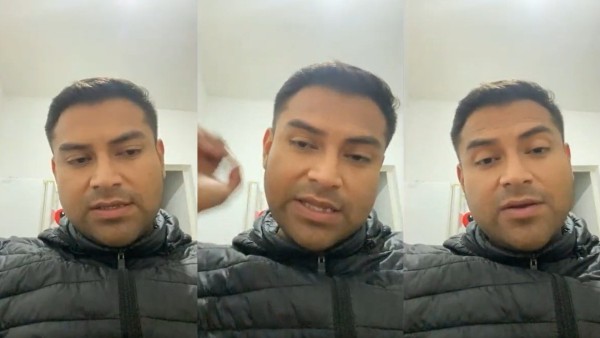
A former seminarian, Matias played a key role in condemning bishop Zanchetta and priest Fernando Páez from the diocese of Orán, Argentina.
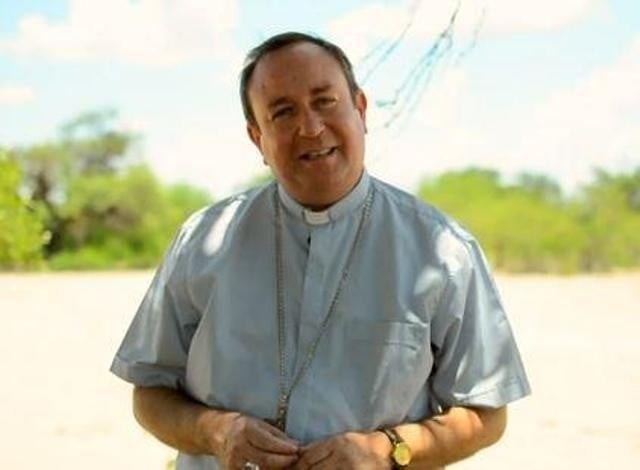
Zanchetta was, in 2013, one of the first to be called “Francis’s bishop”. Four years later, at 53, an abuse and embezzlement scandal forced him out of office.
By Rodolfo Soriano-Núñez
This week, Mexico will host a small, private meeting, that has gone, per the organizers’ decision, unreported. A group of survivors of clergy sexual abuse gathers to share their painful experiences and navigate the difficult road ahead.
One of them is Kevin Matías Montes. He is a young former seminarian from Northern Argentina who has achieved a rather rare feat in the region: he successfully completed the grueling judicial process for survivors in Latin America.
While Argentine civil courts have achieved remarkable progress in addressing some cases there, significant challenges remain. In stark contrast, Argentine dioceses remain unwilling to move beyond generic, pro forma statements of regret.
Their carefully worded statements contradict their stated goals, while moving, inch-by inch towards normalizing abuse as much as possible. Pope Francis himself did it when it was about clerics close to him. That is the backbone of Kevin Matías’s case.
The priest who abused Kevin Matías between 2015 and 2017 is Carlos Fernando Páez. He was a pastor at the parish of the Holy Cross, in Tartagal, in the province of Salta and the diocese of Orán.
Montes was assigned there by bishop Gustavo Zanchetta. As it is common practice in Latin America, the expectation was that Páez would provide some mentoring and guidance to Montes. Instead, what Kevin Matías found was abuse against him and other teenagers.

English Edition
Argentina, Germany, or France: nobody knows about abuse
Kevin Matías first sought justice through the Church's internal process, a secretive path that has long protected the institution at the expense of victims. Moreover, when Kevin reported what was happening, there were already other accusations against Zanchetta for his handling of sexual abuse cases at Orán.
That is why Kevin’s report was originally handled by bishop Luis Antonio Scozzina. Francis sent Scozzina there to address Zanchetta’s mishandling of both abuse cases and the diocese’s monies.
Young emeritus
It was a bitter reckoning for the former Archbishop of Buenos Aires, who appointed Zanchetta four months after his election, back in 2013, while Zanchetta was a 49-year-old priest, and the very epitome of the then so-called “Francis’s bishop.”
Instead of a long and felicitous tenure at Orán followed by a promotion to a “better” see, Zanchetta’s ride ended abruptly on August 1, 2017, making him a member of an odd "club" of extremely young emeritus bishops.
The prime example of this group is Mexican former auxiliary of Culiacán, Emigdio Duarte Figueroa, who reached such a position at the age of 42. Duarte now identifies himself only as Father, no longer as bishop, when signing papers as the general secretary of the Honduran Conference of Bishops in Tegucigalpa.
However, in the 15 years since his sudden resignation, there has never been a credible explanation of why he resigned as bishop or why he left Mexico in 2010, only to reappear, no explanation provided in the midst of the pandemic in Tegucigalpa.
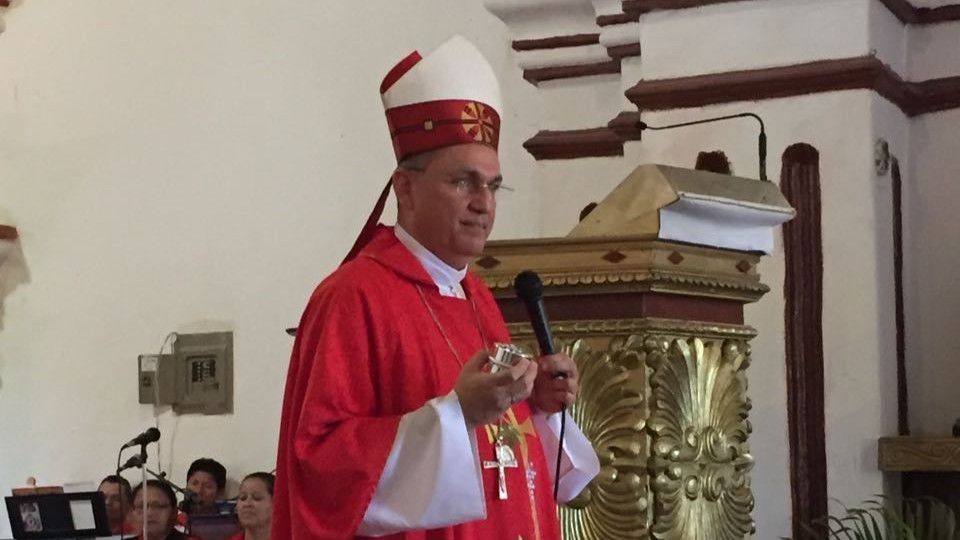
Duarte reemerging there is shocking because the Honduran capital is a diocese with its own share of mishandling of clergy sexual abuse. Former auxiliary bishop Juan José Pineda Fasquelle is also a member of the young emeritus club.
Fasquelle was forced to resign at 57 in the midst of accusations against him and his superior, Cardinal Óscar Andrés Rodríguez Maradiaga.
When Zanchetta joined that club in 2017, he was three months shy of 54. Instead of him becoming a herald of a new era for the Catholic Church, his case proved how hard it is for institutions to actually address its own failures, making all but impossible to make a positive assessment of Francis’s tenure as Pontiff.
Despite his role in trying to suppress the Institute of the Incarnate Word in Argentina, when he was Vice President of the Conference of Argentine Catholic Bishops, back in the Aughts, or his will to acknowledge his own mistakes when dealing with abuse in Chile or when he suppressed the Peruvian Sodalitium, in the last days of his life, he protected Zanchetta until the bitter end.
Zero-tolerance and geographic solution
Zanchetta is, in that regard, a pristine example of why the zero-tolerance talk in the Catholic Church remains a statement of good will, but nothing more.
His free ride to Rome is also a prime example of the “geographic solution” to clergy sexual abuse, one of the oldest tricks in the Church’s repertoire, that simply sends a cleric from one place to another, with no accountability for his misdeeds.
To make matters worse, Zanchetta’s trip to Rome made him an official of the entity in charge of the Patrimony of the Holy See a hard-to-swallow decision given that one reason for accepting his resignation was, in addition to the cover-up of abuse, his mismanagement of the diocese's monies.
English Edition
Is the Catholic Church‘s talk about zero-tolerance for real?
Zanchetta’s tag as a “Francis’s bishop” turned from pride into confusion, as the Spanish- and English-speaking far-right factions of the Catholic Church weaponized Zanchetta’s case. More so as the abuse in Orán fits the preference of said groups: same sex abuse.
Furthermore, as it happens elsewhere, in Argentina institutional resistance to address clergy sexual abuse is not limited to the Catholic Church. It is part of the broader political climate.
Despite his alleged condemnation for abuse, sitting President Javier Milei actively works against progress on gender and sexual violence issues. He frequently repudiates sexual abuse, fudging his speeches with distasteful references to the State as a pedophile abusing minors at a school.
Mieli and abuse
But as soon as Milei assumed office, he cancelled programs aimed at preventing sexual violence as a trailer of sorts of what Trump’s Project 2025 did with the so-called DEI policies in the United States.
Every time Milei has a chance to boast abhorrent ideas about same-sex orientation as a main driver of sexual abuse, he does. Internationally, he did it early this year, during the most recent meeting of the World Economic Forum in Davos, Switzerland.
At his speech, he offered a cocktail of allegedly scientific takes on the markets and the economy of his country, with disparaging remarks on sexual and gender issues. Most notably, he used a single case of sexual abuse, as springboard to go back to dated, anti LGTBQ scares, to justify the dismantling of the gender-sensitive policies enacted by his predecessors.
There are factions within Milei’s movement identified with some of the most radical brands of Catholicism, similar to the kind of Catholics who feel at home in the MAGA movement in the United States, who actively try to derail what has been achieved in Argentina over the last couple of decades abuse-wise.
Those factions of Argentine Catholicism applauded a ruling setting Justo José Ilarraz free. Not because he was actually not guilty of abuse charges, as a lower court in the province of Entre Ríos had already declared him guilty, but because the Argentine Supreme Court used the statute of limitation to rescue him.
Ilarraz’s case is similar to that of Felipe Berríos del Solar, a Chilean former Jesuit, who was also found guilty, but who got free when an appeals court used a similar argument to that helping the Argentine predator.
There is no genuine acknowledgment of the long-term effects of abuse on many victims, those who, unlike Kevin, have been unable to win their cases. In some cases, there is still denial, and even more alarmingly, active attempts at normalizing abuse.
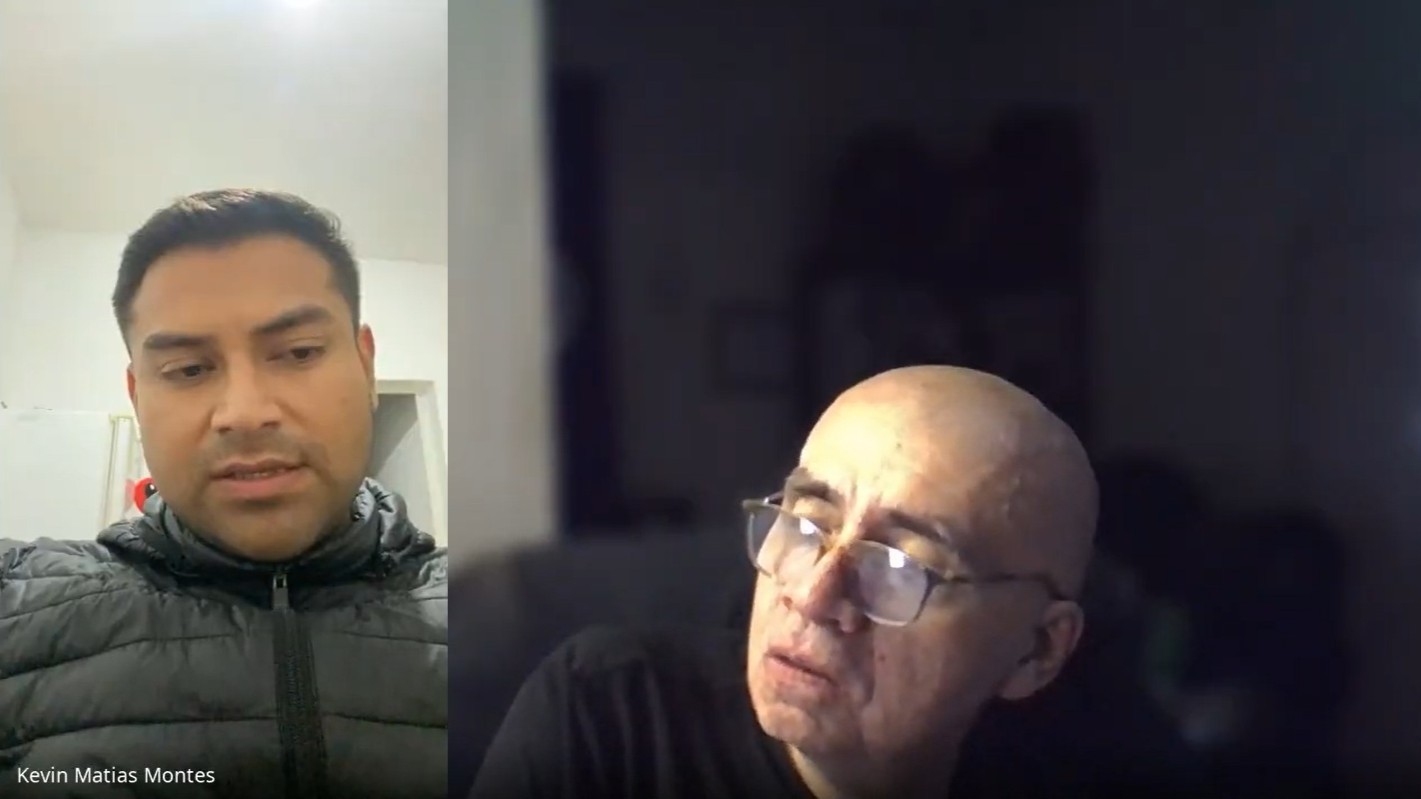
So, in this context, Kevin Matías Montes had a conversation with us
RSN: What is the reason for your visit to Mexico? What do you hope to achieve here?
Matías: It's a workshop to continue training, to continue specializing in this unfortunate thing called sexual abuse.
It's a workshop offered by CRIN, the Child Rights International Network, a British non-for-profit, and ODI, the Office for the Ombudsman of Children's Rights (content in Spanish), which is based in Mexico and has been working on these issues for several years.
The idea is to continue acquiring personal tools to continue this fight because, in my case, I got a measure of "justice," but that doesn't mean I don't still have certain ghosts in my head, certain emotional distress, ups and downs. So, these tools, first and foremost, are for us and to let ourselves continue supporting other fellow survivors who are joining us.
Because, with the support we provide with the Network of Survivors of Abuse of Argentina, the number of cases continues to increase.
RSN: So, the workshops have a mutual support component?
Matías: Yes. It's a legal advocacy workshop. This is important and helps us a lot to support victims in their legal proceedings. It also helps us learn about the law. Not only the law we have in Argentina, but also the laws of other countries, and the provisions set by the United Nations and other multinational bodies.
Because, for example, in Argentina, what we have is the great powers of the Catholic Church and the State. Priests with very low sentence terms. Priests who are acquitted due to the “benefit of the doubt” or because they enjoy the support of judges and other officials in the judiciary.
In my case, for example, bishop Zanchetta himself, whose sentence was formally four years and four months, served only four months in prison.
Limbo
RSN: And now he's in a kind of limbo.
Matías: And now he's in Salta, the capital of the eponymous province, in a house that belongs to a religious order. But he enjoyed the benefit of spending six months of his prison term in Rome in a hospital due to alleged “health problems,” and he requested to be treated there at the Gemelli Hospital. The hospital where the Holy Father is treated, where Pope Francis was actually treated.
So, these workshops help us to be aware of the difficulties in the laws, and the procedures one must follow.
RSN: In Argentina, a terrible case recently occurred: the exoneration of Raúl Sidders, a priest from the province of La Plata. Although he could now face trial again, he already obtained a favorable ruling due to the "extinction of the case," that is, because the crime had expired.
Matías: Yes, the Sidders case is not the only one in which the court has ruled this way, due to the statute of limitations. So we know that if the court rules that there was a statute of limitations, it doesn't mean that the events didn't happen. It's just that they don't receive the punishment. But we know that these are influences that the Church has, since they are generally prominent people with a lot of influence.
So, we know the giant monster we're fighting against, but we do so from the experience that each of us survivors has lived through, as to help other prevent similar situations for them, for their relatives.
RSN: Even cases like that of De Grassi, who is indeed in prison and is known to have been found guilty, but the Church in Argentina keeps him as a priest, despite the fact that it's proven that he committed the crimes.
Matías: That's the modus operandi we've detected from the Catholic Church. It consists of continuing to hide, continuing to deny, and prioritizing forgiveness. Because, when you go to make a canonical complaint, the first thing the bishop tells you is not to report it. Or they tell you "don't let this get out." They even order your arrest and then ask for forgiveness as if they were the victim.
And another aspect of their modus operandi is that if a complaint is filed against a priest or bishop, they are automatically sent to another city or another country and continue committing the same crime.
Persecuted
RSN: Did you ever feel blackmailed after you began your process?
Matías: Yes, because when I entered the seminary in 2015 in the diocese of Orán, I met Bishop Zanchetta, Father Fernando Páez, and other priests, and that's where I began to live this bad experience of harassment and abuse by these criminals.
And when a colleague filed his canonical complaint against Zanchetta in 2017, Pope Francis took him to Madrid for psychological treatment to heal him. And then Pope Francis appointed him as an official of APSA, which is the entity that manages all the assets of the Holy See.
RSN: Zanchetta held that position in what is called the Administration of the Patrimony of the Apostolic See, APSA after its Italian acronym, from December 2017 to October 2021, so far from his departure from Orán being a punishment, it became a reward.
Matías: That's right and managing the assets of the global Catholic Church after leaving the diocese of Orán absolutely poor. Poorer than he found it.
He sold Church land and embezzled funds. That was a cause that never made progress in Argentina because several politicians and powerful people were involved. So, the cause remained "shelved."
RSN: Orán is a diocese in northern Argentina, very close to the border with Bolivia.
Matías: Yes, it's one of the poorest and youngest dioceses, one of the most recently created in the country, in 1961.
So, returning to your question about whether I felt blackmailed, rather, we felt persecuted because they didn't offer us any compensation. They simply discredited us, punished us, falsified psychological expert evidence, because in the seminary we go to therapy and talk to the psychologist constantly.
So, they falsified our reports. They called us anti-clerical. Because at that time, the legal abortion thing was gaining a lot of traction in Argentina, they presented us as anti-clerical. They said that organizations had paid us to destroy the Church.
RSN: Gender ideology...
Matías: Of course, exactly. And when I began to testify against Bishop Zanchetta, I realized that I had also been a victim of Zanchetta, but I realized that I had suffered more sexual violence at the hands of the priest Fernando Páez, who was sentenced on October 24, 2024.
Lay persons attacking survivors
RSN: In Mexico, Peru, and other countries, the experience I've seen is that the main supporters of predatory priests are not other priests but, above all, lay people who feel deeply committed to the structure of the Catholic Church. Did you experience something like this in Orán?
Matías: Yes. The province of Salta, where Orán is located, is the province with the highest religious following in all of Argentina. Catholic society carries weight. The voice of the Catholic bishop carries weight. During election time, what the priest says in the homily is what the people vote for.
So, we've faced this persecution from some fanatical parishioners, insulting us on the street. In my case, for example, they insulted my mother, my sisters, my nephews, who were young and went to catechism classes, and were also mistreated by catechists and people from the Church.
And these were people who, three months earlier, had touched me on the shoulder and said, "I pray for you," "I pray for your vocation." These were the same people who hurt me later.
RSN: And regarding the cases you initiated or participated in, what is the situation?
Matías: In the criminal and judicial proceedings, I was a key witness in the Zanchetta case, where he was convicted in March 2022 and his final sentence was handed down in February of this year.
The other case, against the priest Fernando Páez, whom I directly denounced, ended on October 24, 2024, and he was sentenced to four years in prison.
He's currently imprisoned, he's in jail, but he's still a priest.
RSN: Which is terrifying, because there's no clear criterion for laicizing them.

Matías: That's true, and, for example, Father Fernando Páez already had a criminal record dating back to when he was a seminarian.
In that case, we're talking about the 1990s, from 1995 through 1998.
In canon law, given Zanchetta is a bishop the only one who can judge him is the Pope. We know of his ties to the late Francis, who did absolutely nothing. And well, Pope Leo XIV has yet to say anything about Zanchetta’s case.
No news from Rome
Regarding Fernando Páez, I've never heard back from the current bishop of my diocese, Luis Antonio Scozzina. I've never heard back from the canonical report.
The nunciature only issued a statement regarding Zanchetta, expressing solidarity with the victims, but nothing more.
Regarding Páez, the nunciature never issued anything regarding the case. There wasn't any outreach or anything like that. And there's no indication that there's an active canonical process in his case.
RSN: Do you want to add anything else?
Matías: Well, just an invitation to the survivors in Mexico who haven't filed a complaint, who don't dare to file a complaint, who are afraid, because we know it's not an easy process.
We encourage them to file the corresponding complaints. We, as a Network in Argentina, are a few steps ahead, and maybe there are people who would like advice or want to ask us things or come and ask how we're working to help them take their first steps.
RSN: That the Network is very active on Facebook.
Matías: That's Facebook, Instagram, Twitter.
RSN: And how do you prefer to be identified?
Matías: My whole life, I've been called Kevin. When I was a seminarian, it was Kevin. But in 2021, when there was a turning point in my life, when I decided to move to a new city, I decided, also as a therapeutic exercise, to start calling myself Matías.
I decided to leave behind that Kevin who suffered, that Kevin who had a bad time. Who tried to commit suicide. To leave him behind and make way for this survivor who is Matías.
So, today, everyone calls me Matías.