Rodolfo Soriano-Núñez Lunes, 22 de Diciembre del 2025
In covering up for each other, Anglican, Catholic, and other clergy run the risk of destroying their own churches and flocks.
The ecumenical disease affects clergy of different religious traditions. The most notable symptom is the clergy’s will to ignore and silence victims.
By Rodolfo Soriano-Núñez
The final weeks of 2025 have revealed a shared disease across the Christian world. It is the story of how silence, “administrative errors” and “geographic solutions” become part of complex strategies to silence victims of clergy sexual abuse and reduce institutional risks, regardless of theological differences.
The story is strikingly similar whether one sees it evolving in the Anglican see of Canterbury or in Catholic dioceses of Mexico or Paraguay, as the key issue is how clergy protecting clergy, becomes a system.
In Canterbury, archbishop-designate Sarah Mullally is fighting a scandal that mirrors the very failures that took down her predecessor. On December 11, 2025, Lambeth Palace the Anglican equivalent to the Vatican Curia admitted that a 2020 complaint from a Survivor N was ignored for five years due to “administrative errors.”
There, Mullally faces a storm about to sink her term in office before her inauguration. What happens in Canterbury is relevant not only for the Anglican Communion, but for many other religious organizations, Christian or otherwise, facing similar issues.
In Mexico City, a survivor whose case we have been following, currently fights both the Catholic Church and the local government to achieve a measure of justice in a case involving Pedro Aguado Cuesta, the bishop of Huesca and Jaca in Spain. His battle for justice is similar to that of Paraguayan survivors of Juan Rafael Fleitas López, who previously sought refuge in Mexico to restart his career.
Even if Fleitas López was unable to land in Mexico, he reappeared early this month concelebrating a Mass for the centenary of the Oblates alongside Cardinal Adalberto Martínez Lozano, the archbishop of Asunción. By standing at that altar, the institution signaled that his record had been effectively “cleansed” by the system.
Little Canterbury
The scandal engulfing the Church of England is twofold. On the one hand, it involves Survivor N, a victim of the prolific abuser John Smyth, who alleges that Mullally (as bishop of London) breached disciplinary codes by emailing his confidential allegations to Anglican clergy implied in the Smyth case.
The case is more complex as, on December 11, 2025, Lambeth Palace, admitted that Survivor N’s formal complaint filed against Mullally in 2020 was ignored for five years.
While Anglican bureaucrats supposedly “lost” his paperwork, they also forced a restraint order on Survivor N, essentially gagging the victim while protecting the Anglican hierarchy.
The excuse provided to “explain” the mismanagement of Survivor N’s case—“administrative errors” and an “incorrect assumption” about the victim's wishes—mirrors similar excuses used in Catholic curias all over the world, and it could merit a “Little Canterbury” kind of comedy, if not for the human cost. For Survivor N, that error lasted 1,800 days, nearly five years of absolute silence while his file sat dormant.
And even more, letting a file “rest” for that long cannot be seen as a momentary lapse, but as a barrier to exhaust victims and protect the institution. Ultimately, time runs in favor of institutions, including churches, and against individual persons.
It should not surprise, in that regard, that survivors, see probes and audits and other procedures as weapons the institutions, the churches, regardless of theology, use against them, combined with the corrosive effects of time.
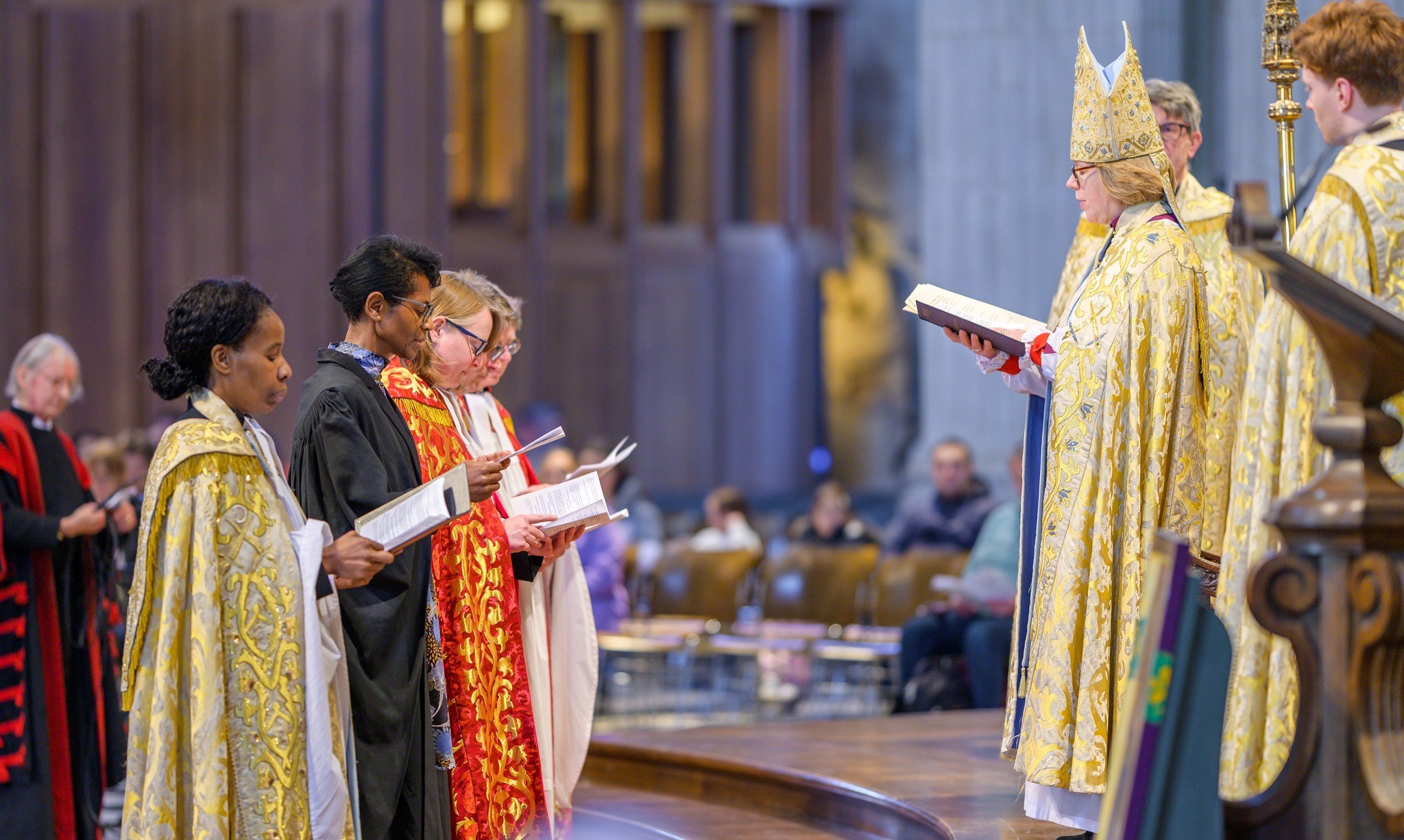
The Anglican scandal goes well beyond the borders of that denomination offering a cautionary tale to any religious organization, Christian or otherwise. It is a story of how secretive procedures hardly ever achieve their goal of preventing scandal and often become tumors, hurting institutions with noble goals.
One only needs to look at a recently announced Catholic example from Guam, where back on December 15, a local newspaper published the news of the laicization of a priest ten years after accusations emerged against him and other Catholic leaders in that U.S. territory in the Pacific.
And to be clear, even if John Smyth has been dead since 2018, his case is very much alive. Last week, the youngest of his daughter, Fiona Rugg, acknowledged the pain of the 130 victims documented by the Makin Review published back 2024, over an interview with the BBC.
The Makin Review ultimately forced out of office Justin Welby, the then archbishop of Canterbury, who was a personal friend of Smyth and who played a key role in authorizing Smyth to operate as a lay spiritual leader for laypersons in the Anglican Communion.
Death by suicide
The other element of the Anglican scandal involves the death by suicide of Alan Griffin. At the time of his death, November 8, 2020, Griffin had left already the Church of England and had been, since 2012, a Catholic priest.
One of the reasons to leave the Anglican Communion was that he became the target of accusations of abuse, while being a HIV-positive gay person who, as such, suffered the consequences of being labeled as “sick with AIDS,” and more so of “endangering others.” More so, as before his conversion to Catholicism, he had attempted twice to commit suicide in 2010.
His death happened after what British media has labeled a “shambolic” investigation that started in February 2019. This investigation was part of an Anglican internal probe known as the Two Cities Audit or Two Cities Report, an unofficial document, prepared by an individual who later fell in disgrace after being accused of fraud.
Launched as a wide-scale review of clergy files in London, it quickly devolved into a platform for what has been labeled as a “brain dump of gossip” from a retiring official that would eventually target Griffin.
According to the Coroner’s Regulation 28 report or Report to Prevent Future Deaths, a regular procedure in British law, he took his own life because he could not cope with the pressure of a process, detonated by the Two Cities Audit, where he was never told the details of the allegations.
Although Griffin was no longer under the authority of the Church of England, as he was already a Catholic priest, he lived under the shadow of this administrative process for 21 months before his death. Although there are no standing accusations against him during the eight years he was a Catholic priest, it must be noted that neither the Anglican nor the Catholic Church in Britain were able to openly deal with his situation.
Opacity fuels cynicism...
Despite the fact that it was possible to ascertain his medical status when he was alive, in a move that has been labeled as of “staggering cynicism,” the Anglican diocese of London, during Richard Chartres's tenure there, shared Griffin’s sensitive HIV status with Catholic authorities while deliberately omitting other relevant details of his health history, including mental health issues and two previous suicide attempts from 2010.
It would be only after his death that the British Coroner set the record straight identifying him as HIV-positive with an undetectable viral load—biologically unable to transmit the virus.
His suicide has been described as a consequence of the difficult position he found himself in, affected by what him and other Anglican clergy are calling a barrage of gossip used against him, and isolated by a process that lacked any transparency.
Even if Mullally was not responsible for sharing with the Catholic Church what was confidential health information, it is clear that she lacked the reflexes to foresee the potential consequences of the Griffin case, as she has been bishop of London since January 2018. Was she aware of how that issue had been handled?
Whether one looks at Chartres’s or at Mullally’s tenures at the Anglican diocese of London what one finds is that even if the Church of England was trying to manage a scandal, their leaders’ decision maimed the organization to handle the truth.
The ongoing scandal in the Church of England reveals how hard is for religious organizations, regardless of theology, to leave to their leaders to manage on their own clergy sexual abuse reports, but also why transparency is the only real response to fix this kind of issues.
For Catholics, these Anglican “shambles” worth an episode of Little England should look familiar. They prove that the crisis is not rooted in gender, marital status, or even the specific theology of the priesthood.
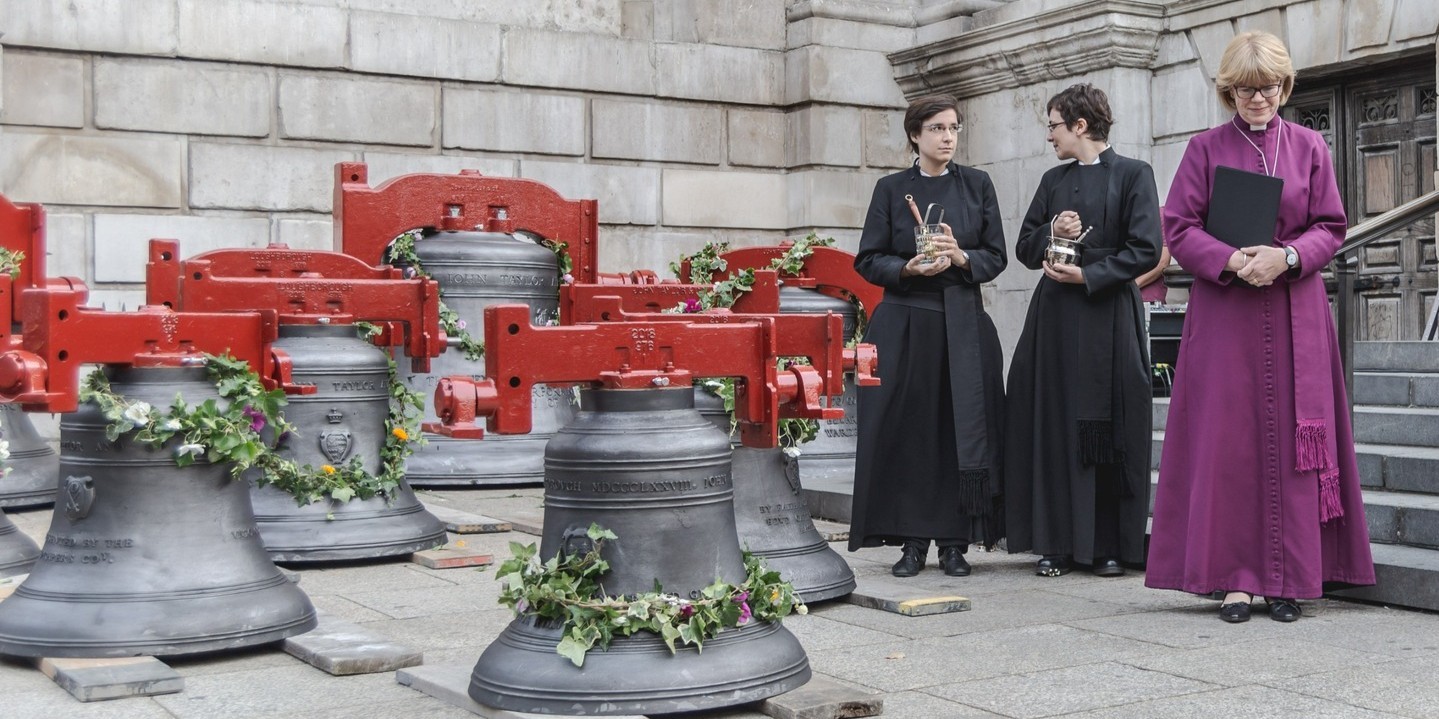
Sarah Mullally—who served as the Chief Nursing Officer for England and Wales was once the top-ranking official responsible for the professional standards of roughly 400 hundred thousand nurses—was expected to become the very embodiment of a new era of care in the Anglican Communion.
More so as it is almost impossible to dismiss the fact that her appointment has a “lethal" irony” at its core: she, a nurse with a record of operating a large and complex subset of the British health-care system, ignored for close to five years, 1,800 days, a key file dealing with a major case of clergy sexual abuse. Is it possible to perceive it as nothing but a mistake for someone with her high-level administrative training?
Instead of displaying her ability to provide care to the Anglican faithful, even before her inauguration, her on screen time has been consumed by the need to deal with the evils of procedural secrecy plaguing Catholic dioceses, as much as Mormon or Luz del Mundo ministries.
What emerges is a cautionary tale for religious organizations: self-policing safeguarding protocols are not enough, as they turn themselves into machines protecting those who run them.
And fuels more suicides
Last Wednesday, December 17, Michelle Burns, a former lay member of the board dealing with abuse in the diocese of London, already with Mullally as head of the diocese, offered a devastating interview to Channel 4 News, where she details how she developed suicidal ideation as a consequence of the unwillingness of the board to actually address the issues. Over Easter, as she recalls in the video linked after this paragraph, she tried to kill herself.
In going public, Burns is infringing on a Non-Disclosure Agreement she was forced to sign by Anglican leaders.
When confidentiality becomes the prime directive, it becomes a weapon against the flock, the congregation, but eventually against the religious organization itself. The result is not safety, but the destruction of trust, social capital, and in many cases, human lives, all in the name of institutional preservation.
For the Church of England, the issue is more damaging as Mullally was hardly cheered by the more conservative dioceses of the Anglican Communion in the Global South, where resentment against “woke” European attitudes toward sexuality are blamed for a loss of loyalty to their understanding of Bible teachings. As a consequence, ever since her appointment, Anglican congregations in Africa have been very vocal against Mullally’s appointment.
Those congregations in the Anglican Communion, dissatisfied since the early years of this century with the idea of appointing female bishops and accepting openly gay individuals in positions of leadership, actively rejected Mullally. Now, they are using her own inability to tackle the issue before the issue came to tackle her.
Those communities rejection of Mullally is not natural or bound by the local African cultures. Has been fueled by systematic campaigns funded by U.S. conservative organizations such as Family Watch International, promoting stern anti-LGTBQ laws, as this CNN report from 2023 proves.
Family Watch International is a 501(c)(3) based in Arizona. It has been documented working alongside other groups such as the Heritage Foundation, authors of the so-called Project 2025, and Alliance Defending Freedom (ADF) to export the American culture wars to the Global South.
In that respect, Mullally—as it frequently happened to late Pope Francis during the rebellion over Fiducia Supplicans, the document allowing for the informal blessings of so-called "irregular couples"—is being squeezed from two sides. She failed victims through “administrative errors” to avoid internal rift in her Church, yet she is being attacked by conservative forces in the Global South, funded by the U.S. far-right, for her very identity.
Just as African bishops used the Vatican’s own secretive processes to attack Francis, congregations in the Anglican Communion are now using Mullally's inability to address clergy sexual abuse. As a consequence, now she is at risk of being forced to resign before taking office.

English Edition
From blunder to blunder: Roman Catholicism and sexuality
Although Mullally remains scheduled to succeed Welby, she is already waist-deep in the waters of a scandal at least as treacherous as the one that forced, one year ago, Welby to resign.
And perhaps in any other circumstance, bishop Mullally would deserve a chance at actually assuming the powers of the archbishop of Canterbury, but given the fact that her predecessor resigned in the midst of his own scandal for the mismanagement of abuse accusations, there is an element of déjà vu, of Groundhog Day, in the development of the crisis at Lambeth Palace that makes it very hard not to think that perhaps it would be better for bishop Mullally to avoid any more damage to the second largest Christian Church in the midst of what can become a black hole of an scandal.
What emerges is a cautionary tale: Secrecy becomes a weapon that any faction is able to use. In the end, the all-male “all-celibate” priesthood of the Catholic world is just as vulnerable to this pathology as the Anglican hierarchy. Transparency is the only cure.
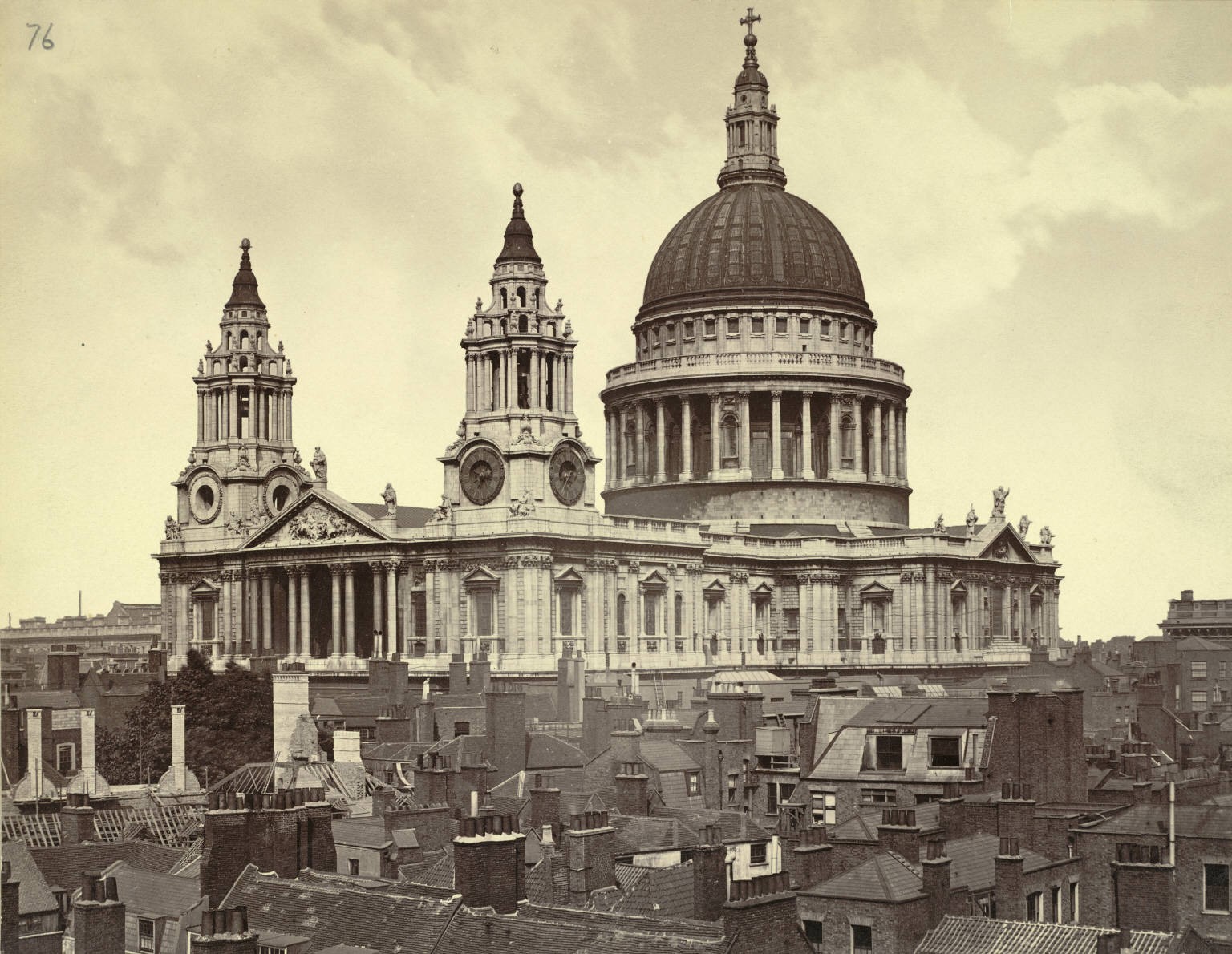
The Catholic Mirrors
Although on the other side of the world, in Mexico City, there are no tell signs of a seismic movement as deep as the one ripping apart the Anglican Communion these days, it is impossible to assume that things are just right.
Back on June 17, 2025, a story of this series went over a case of Mexican survivor at the time identified only as Hernán, available after this paragraph.

English Edition
“Old” new cases of clergy sexual abuse emerge in Mexico City
Recently, he decided to come forward with his name to keep pursuing justice in both the Church and the civil courts. As told there, Javier Fernando Alcántara Cruz was the victim of Miguel Flores Martínez, a priest of the so-called Pious Schools, also known as Piarists, when he was an 11-year-old boy and was an altar boy under Flores Martínez’s care back in the first decade of this century.
As it is usually the case in the Catholic world, religious priests, that is to say priests who are members of religious orders, have double affiliations. On the one hand, they remain members of their order, but they also are authorized by the local bishop, in this case the head of the archdiocese of Mexico City, to preside over sacraments and ceremonies and, in some cases, are even appointed as pastors or vicars of any given parish or as chaplains in other entities such as schools, prisons, hospitals, or funeral houses, among other possible destinations.
At the time, the head of the archdiocese was Cardinal Norberto Rivera Carrera, and the episcopal vicar for the parish where Flores Martínez was assigned was the current bishop of Veracruz, Carlos Briseño Arch, and the current bishop of Puerto Escondido, Oaxaca, Florencio Colín Cruz.
Javier Fernando has been able to fill a formal complaint at the Attorneys’ Office in Mexico City. Even if the process remains uncertain, the local authorities acknowledged the possibility of opening a file for his case.
On the Church track of his case, the Archdiocese of Mexico City also has been willing to acknowledge its own responsibility on the issue, as the abuse happened in a parish within that entity in the Mexican capital.
It is unclear at this point how far will Cardinal Carlos Aguiar Retes’s team dealing with clergy sexual abuse will be willing to go on this case, but he is already probably on the last years of his tenure, as cardinals are allowed to remain in office until they reach 80, but it would be healthy for the archdiocese to exorcize the demons of his predecessor’s tenure in the Mexican capital.

Previous installments of this series have gone over Rivera Carrera legacy in Mexico City (see the story above, especially the section titled “Victims by the hundreds”), and also over some of the pending issues in Aguiar Retes’s tenure here, some of which were the backbone of the story linked after this paragraph.

It should be noted that Flores Martínez is already dead, so the issue is not that of a protracted scandal over the penal trial of a sexual predator. What is at stake are the institutional responsibilities of the archdiocese of Mexico during Rivera Carrera’s tenure, that of the order of the Pious Schools in Mexico and other Latin American countries, as Flores Martínez’s is hardly the only case.
But also, there is the issue, not minor, of the responsibility of the current bishop of the dioceses of Huesca and Jaca in Spain, Pedro Aguado Cuesta (content in Spanish). He is involved in this and some other cases of clergy sexual abuse at the hands of members of his religious order, because he was, from 2009 through 2025, the general superior of his order.
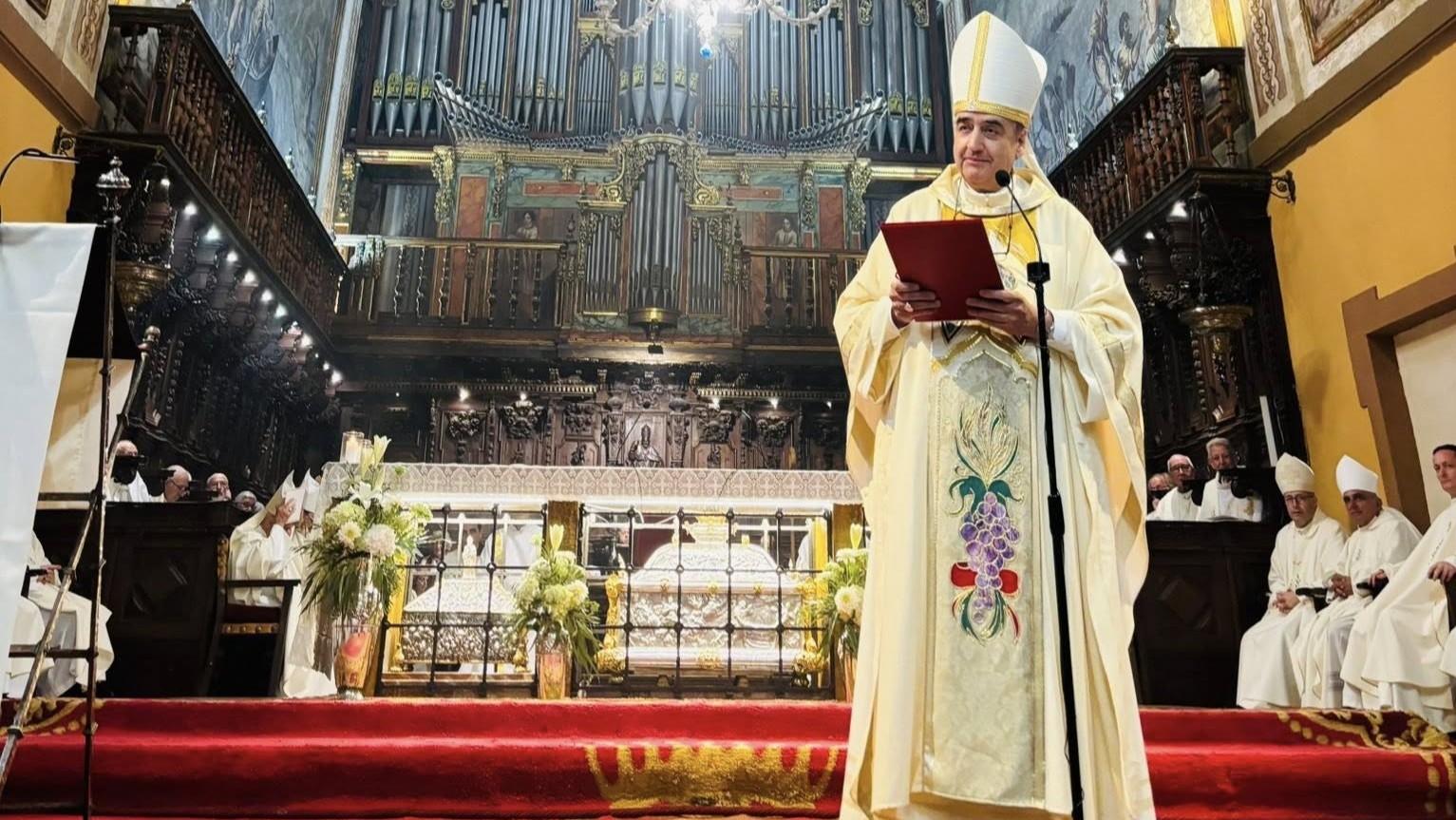
As such, he offered assistance to Javier Fernando Alcántara Cruz although, at some point, the promise got broken.
The issue could involve some other Mexican dioceses as Flores Martínez remained active in ministry despite the alleged restrictions set by some of his superiors.
As the original story on this case proved, when Flores Martínez died, both his fellow Piarist priests and his brother, who runs a private school in the Mexican state of Tlaxcala, in Central Mexico, part of the eponymous diocese, elevated him to the status of a faithful priest.
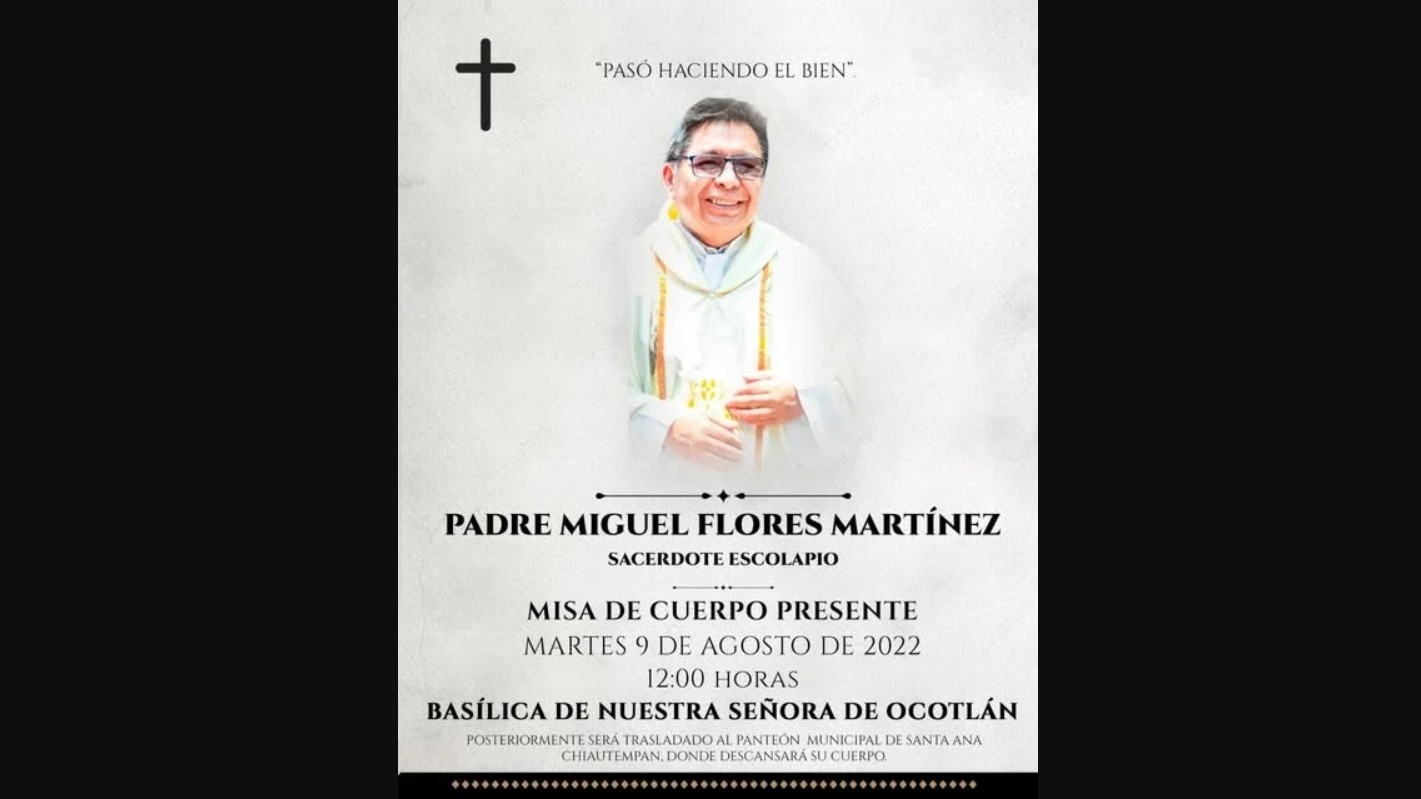
Over social media, his brother, using the profiles of his private school, rendered Flores Martínez as someone who spent his life “doing good”, as the notice of death after this paragraph blasts in Spanish when letting the people in Santa Ana Chiautempan, Tlaxcala, know about the funeral services to be offered at the Minor Basilica of that township.
The Mass was not a regular, run of the mill event. On the one hand there is issue of using a location such as a minor basilica to celebrate the funeral. Then, there is the issue of having at least three priest members of the Pious Schools order presided over the funeral on August 9, 2022. In doing so, they were not only dispensing the final rites to a fellow Catholic.
In an official statement, published in October (content in Spanish), the Piarist order decries the celebration as "imprudent" but even if, as they say, they were unaware of his activities, it would be necessary to understand the role of the diocese of Tlaxcala.
They were, in fact, at least for the purposes of the local community in Tlaxcala, whitewashing the memory a priest who, at least in theory, was under restrictions for the exercise of his ministry.
And it was not only after his passing. His brother facilitated Flores Martínez access to underage students at the school, where he would act as a chaplain of sorts. In theory, when Flores Martínez was doing so, he was already under some kind of restriction.
At this point, it is unclear if Julio César Salcedo Aquino, the bishop of Tlaxcala, was aware of said restrictions or if, despite such restrictions, he authorized Flores Martínez’s to perform as chaplain at the Preparatoria Latinoamericana, the high school owned by his brother, or if Flores Martínez presiding over Mass and, one would guess, hearing confessions there, was a matter ultimately decided only by the Flores Martínez clan.
The issue is not minor. Pope Leo XIV recently appointed, in June 2025, Salcedo Aquino as a member of the Roman dicastery dealing with religious orders (content in Italian), as the Brothers of the Pious Schools are. That is the entity directly responsible for regulating religious orders, not only on matters of clergy sexual abuse but its authority certainly includes that issue.
Even if one is aware that there is a chance his appointment to that dicastery is nothing but a “retirement gold watch” as he will reach 75 in April 2026, so, best case scenario, he will be a member of the dicastery’s board for two years or so, there is the issue of the underlying messaging the Vatican does when appointing, even if only, as mementos for the end of an ecclesiastical career, bishops such as Salcedo Aquino to those kinds of positions.
Figuring out if Salcedo Aquino, himself a member of a small Mexican order known as the Missionaries of Saint Joseph In Mexico, was aware of Flores Martínez’s situation is something a thorough canonical investigation into this case would have to deal with.
Then, for the order of the Pious Schools and the archdiocese of Mexico there is the issue of reparations which remains the most contentious and controversial of them all. More so, because Catholic bishops in Mexico, perhaps as much as Sarah Mullally, the Anglican bishop of London, bet big on getting survivors tired, and making them aware of how small they are compared with institutions.
Back to Paraguay
On the other side of the Western hemisphere, in Asunción, capital of Paraguay, there is another way to get the unease of a Groundhog day on the making.
On Saturday, December 13, the parish of San Blas de Loma de Pyta was the site for a celebration, one so festive that when one looks at videos and pictures shared over social media of the activities there, it is clear that the relatively large nave of the local parish was not enough to receive the many priests and faithful who joined Cardinal Adalberto Martínez Flores, the archbishop of the Paraguayan capital city to celebrate the 100th anniversary of the arrival of the Oblates of Mary Immaculate to Paraguay.
The Mass moved to a more spacious atrium, where the rigors of the Southern Hemisphere Summer are less demanding on the faithful and clergy attending the Mass and then the feast.

Sadly, the celebration of the centenary of the Oblates in Paraguay provides evidence of how, despite the documented accusations of abuse against Rafael Fleitas López, for the heads of the Catholic Church in Paraguay, moving around a priest from one parish to another is enough “punishment.”
Back in 2023, Los Ángeles Press provided a detailed account of how Fleitas López had abused an adult female in Catholic parish of the General Artigas municipality in Southern Paraguay, right on the border with Argentina.
Despite the accusations, the reports, and effort put by the relatives of the victim to provide a clear record of what happened, the Oblates tried to send Fleitas López to Mexico. Not to Mexico City, but to a parish managed by the Oblates in rural Oaxaca, as the story linked after this paragraph tells.

The Oblates is an order with an awful record of abuse among the First Nations of Canada. In this two-page staement they acknowledge the scale of the abuse (opens a PDF), while it is possible to access the full report hosted at the National Centre for Truth and Reconciliation of the University of Manitoba here.
If that was not enough, their abuses have been documented in other locales in the Global South, so much that the Bishop Accountability website has an entire section devoted to them, with a baseline of 60 clerics accused so far. A striking detail there is how many of those included in that list, had a long record of assignments in different points of the world.
The story proved enough to prevent Fleitas López from being assigned for pastoral duties in the diocese of Tehuantepec, one of the many dioceses in Mexico ignoring Pope Francis’s 2019 instruction to all dioceses to set up at least a commission to prevent clergy sexual abuse in their territories.
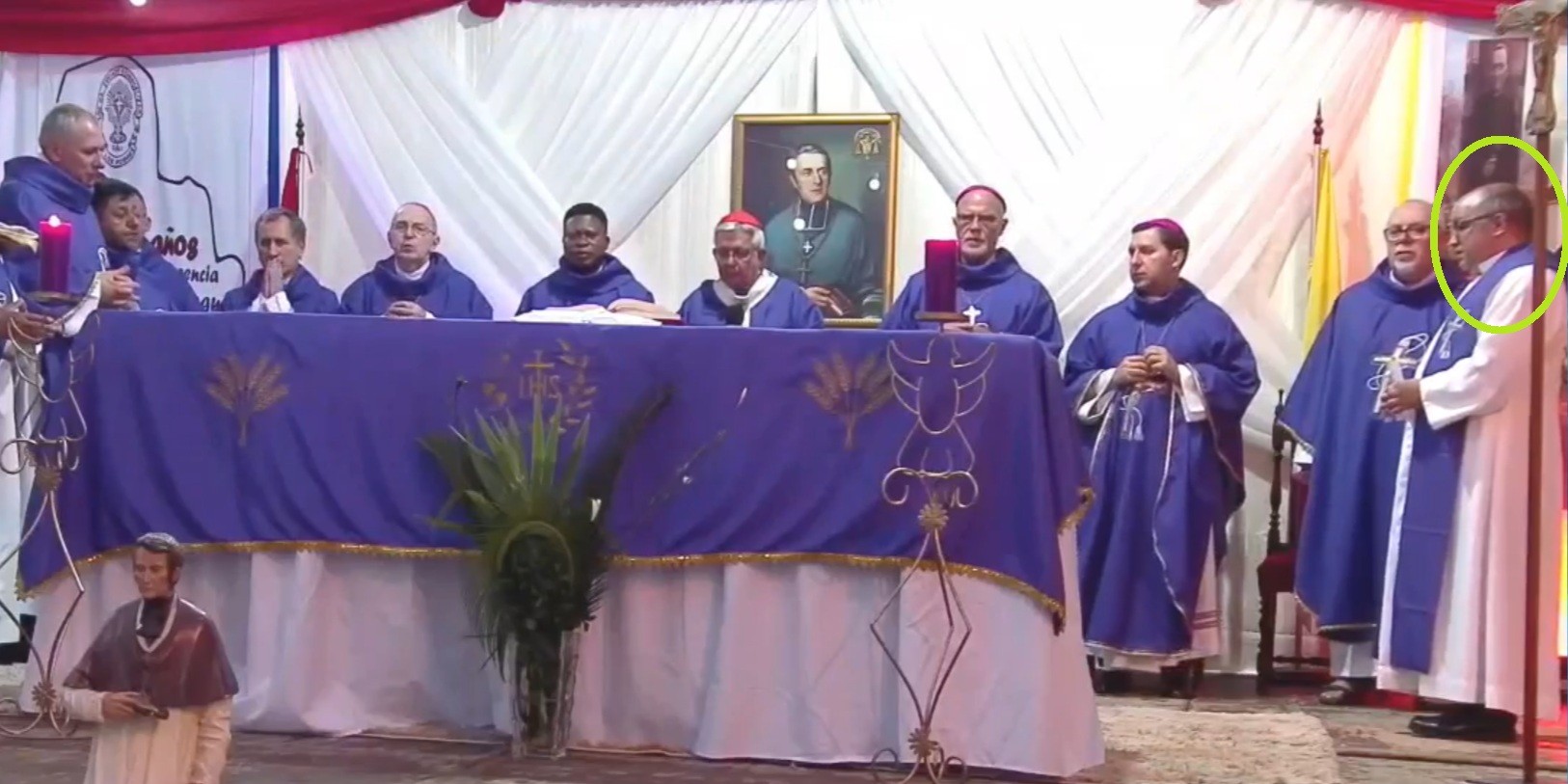
In that regard Fleitas López reappearing publicly assisting Cardinal Martínez Flores in San Blas de Loma de Pyta is a painful reminder for the relatives of the victim in General Artigas of how irrelevant they are for the bosses at both the Oblates of Mary Immaculate order and at the archdiocese of Asunción.
This is not the first time Fleitas López makes the rounds, reappearing not only in clerical garment, but actually concelebrating Masses at major activities in the Catholic Church in Paraguay.
Later in 2024, the story linked after this paragraph, going over the cases of seven of the most notorious global cases of clergy sexual abuse, included Fleitas López as a last minute addition when the relatives of one of his victims sent to Los Ángeles Press pictures and details of his participation in a Mass for the ordination of a member of the Oblates of Mary Immaculate at the San Carlos de Borromeo parish in the diocese of Villa Rica.

English Edition
Seven stories of clergy sexual abuse
It must be noted that the relatives of the victim in Paraguay had received no response from neither the Oblates nor the different dioceses there where that order manages parishes.
And, as it is usually the case in Latin America, civil authorities in Paraguay are always busy, trying to fry bigger fish, dismissing cases of clergy sexual abuse for whatever reason they think justify their inaction when dealing with these crimes.
Post Data
As the final paragraphs of this piece were being written, French media reported an accusation of sexual abuse against one of the rising figures of the French Catholic intelligentsia, the economist and Jesuit priest Gaël Giraud (content in French and possibly behind a paywall).
He represented a new generation of Jesuits who gained prominence in the wake of Francis’s pontificate. Giraud sought to systematically integrate the insights contained in Pope Bergoglio’s social documents into both economic analysis and the logic of the Church’s social doctrine.
Two women—one of them linked to the so-called Consecrated Virgins, an order-like organization—accuse him of improper conduct and behaviors, while a male who studied under his guidance at Georgetown University, the Jesuit university in the U.S. capital, points to him for fostering or nurturing a cult-like environment around him.
The ease with which such an environment was fostered is evident in current media analysis, where outlets such as French Catholic weekly La Vie are now forced to investigate the “shadows of a prodigy,” (content in French and behind a paywall) a label that once elevated him in French media and now recoils against the institution as evidence of the cult-like context of the allegations.
The Jesuits set preventative measures on Giraud including a ban on publishing under his own name since January of last year. Interviewed by French media, Giraud denies the accusations, labeling them as mere allegations or insinuations. His case now tests the transparency of an order that, in 2021, published a report on members accused of abuse in the French and Belgian province of the Jesuits. The latest version is available here (content in French).
Simultaneously, in the Anglican world, the ecumenical disease this piece has been dealing with, triggered a final, desperate defense mechanism. As of December 19, 2025, a coordinated push by General Synod members and survivor advocates has labeled the investigation into bishop Sarah Mullally as a potential “stitch-up.”
Critics, survivors, and their advocates are demanding Stephen Cottrell, archbishop of York, second in command in the complex structure of the Anglican Communion, to step down as the so-called “adjudicator of the complaint.”
As “adjudicator of the complaint” he has a chance to either rescue or sink Mullally’s imminent inauguration as archbishop of Canterbury, scheduled for January 28, 2026. The requests cite Cottrell’s close professional ties to Mullally as a conflict of interest that makes a fair ruling impossible.
It is impossible to dismiss in these last days of December a Groundhog Day kind of feeling when talking about Mullally and going back to November 2024, when Justin Welby finally acknowledged the need to step down as leader of the Anglican Communion.
Both Welby and Mullally offer perfect examples of this “ecumenical disease” that goes well beyond the Anglican or Catholic churches. The morale for whoever wants to learn something from the stories unfolding in Canterbury, Mexico City or Asunción, Paraguay, is that the evil of clergy sexual abuse can only be exorcized by the will to put an end to secretive systems where clergy claim to probe but more often than not cover up for the crimes and misdeeds of clergy.
* * *
A summary of this piece is available as audio after this paragraph.
Note on production: The text of this summary was written and edited solely by the author. Due to a temporary health issue, the delivery of the audio summary was achieved using a high-quality, text-to-speech engine (Voicertool). The AI was used for voice generation only, not content creation.