Guadalupe Lizárraga Viernes, 14 de Febrero del 2025, 03:38
The new call for protest against Trump’s policies is scheduled for February 17, President's Day, with the slogan "No Kings on President's Day."
By Guadalupe Lizárraga
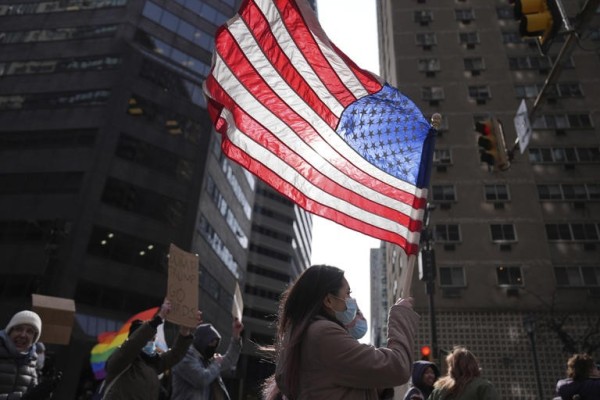
In response to the recent executive orders signed by Donald Trump, civil society in the United States has begun to mobilize and organize. Protests in the streets, digital activism, and legal challenges have become part of the growing citizen resistance against what many see as an attack on democracy and constitutional principles.
This resistance movement may signal the start of a more structured and resolute opposition to what historian Timothy Snyder has described as a silent coup orchestrated by the oligarchy.
English Edition
Of course it’s a coup
A prominent example of this expanding resistance is buildtheresistance.org, an online platform created following the February 5 protests. The website aims to connect concerned citizens through virtual meetings and to coordinate future demonstrations, such as the one planned for President's Day on Monday, February 17. According to its organizers, who wish to remain anonymous for security reasons, the initiative aims to foster collective action that goes beyond protests, using the hashtags #BuildTheResistance to coordinate efforts and raise visibility on social media.


However, street protests are not the only form of resistance. Many people are also employing everyday acts of defiance in response to Trump’s executive orders. For instance, public employees, threatened with the loss of their labor rights, have opted to deliberately perform their duties inefficiently as a form of passive protest. Others, such as federal workers, have risked their jobs by refusing to comply with measures they believe are unjust or by resisting pressure to remain silent. Similarly, the whistleblower system created by the Trump administration, intended for federal employees to report colleagues who failed to comply with directives on diversity and equity, was overwhelmed with satirical and defiant messages.
These citizens are literally taking a page from the U.S. government’s own playbook for dealing with authoritarian regimes. A field manual from the U.S. Office of Strategic Services during World War II, known as the "Simple Sabotage Field Manual," declassified by the CIA in 2008, has gained popularity, with thousands of downloads since Trump assumed office.
The 20-page document encouraged office workers and civilians under Nazi occupation to engage in "simple sabotage" acts, such as "giving long and incomprehensible explanations when questioned," "reporting imaginary spies or threats to the Gestapo or the public," and "misinterpreting all types of instructions and regulations on issues like rationing, transportation, and traffic." The idea, frequently used by citizens worldwide to fight authoritarianism, is to resist nonviolently by making oneself harder to govern.
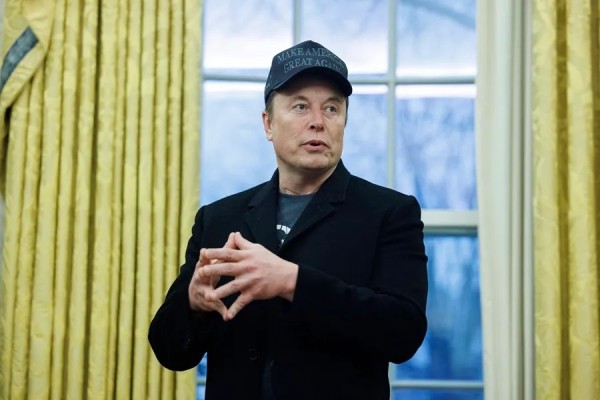
The judicial system has also become a key battleground in the resistance. So far, more than 40 lawsuits have been filed by unions, nonprofit organizations, and state attorneys general against Trump’s policies. While it remains unclear how the courts will interpret the Constitution regarding Trump’s actions and those of the empowered Elon Musk, several federal courts have already temporarily blocked some of his most controversial executive orders, such as the freezing of internal spending and the denial of birthright citizenship, which contradict constitutional protections. There are even class-action lawsuits from Venezuelan immigrants following the suspension of their previously granted temporary protection rights.

English Edition
Pope Francis decries US migration policy under Trump
On the local level, communities are also beginning to take concrete steps to confront Trump’s attacks. A notable example is former Labor Secretary Robert Reich, a prominent progressive activist, who has been an advocate for sanctuary cities like Chicago, which are committed to protecting undocumented immigrants from mass deportation threats. The sanctuary city initiative is even being strengthened at the cost of losing federal funds.
Another example of citizen resistance to Trump’s threat of withholding federal funds is Los Angeles. After being ravaged by wildfires, the city successfully launched a GoFundMe campaign, raising significant resources. Some billionaires have also taken action, including former New York Mayor Michael Bloomberg, who offered to fund the implementation of the Paris Climate Agreement in U.S. cities after Trump decided to withdraw the country from the agreement at the national level.
This wave of mobilization is just beginning, both locally and nationally. It is clear that the citizen resistance to Trump’s policies is not an isolated or temporary phenomenon. It is rapidly consolidating into an organized, diverse, and determined movement that could mark a pivotal moment in the current political history of the United States.
English Edition
Hate Speech on X Increased Under Elon Musk’s Ownership