Soledad Bavio Jueves, 19 de Marzo del 2026, 00:00
How social engagement can confront ICE raids, because “public silence in moments like these signals complicity.”
By Soledad Bavio
Agents have entered the public sphere, generating a terror that once remained private. Now the threat is ever-present—and it demands confrontation. The California Community Foundation’s public declaration campaign, “Am I Next?”, challenges individuals to move from being witnesses to becoming responsible actors.
Fear was once private. It has become public. And when that happens, the risk becomes collective—and the stress, chronic. The social fabric begins to erode. No longer only because of immigration status. That argument collapses when invoked under the banner of national security—a concept increasingly shaped by anti-immigration policies that have placed entire societies on alert. It is enough to be foreign on unfamiliar ground to endure unjustified threats and persecution. The everyday lives of those not born in the United States begin to fracture: their employers, the collaborative workforce, and the cultural and academic richness they sustain. It signals a return to dehumanization, arrests, and the erosion of freedom.
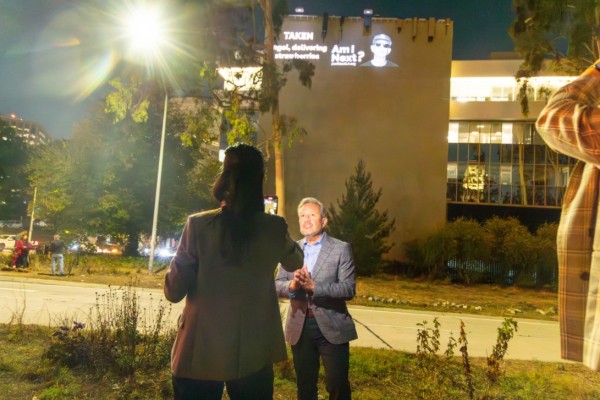
“Am I Next?” emerged from a public question that reflects the private reality of many. Through projections that do not argue but confront, the California Community Foundation (CCF) has installed the campaign in solidarity with communities under pressure. What began as a response to immigration raids has evolved into a broader stance against racial persecution and the erosion of civil liberties.
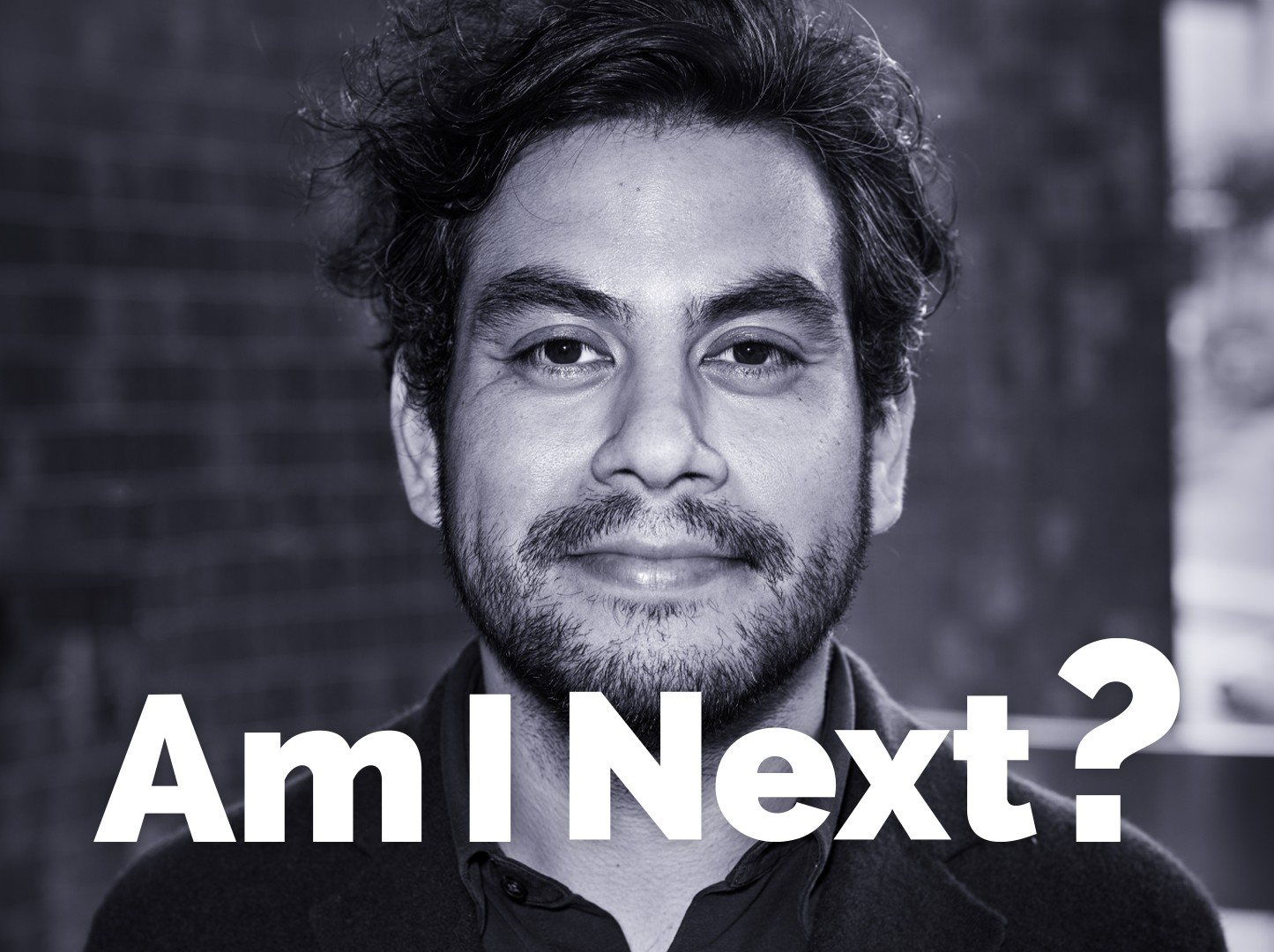
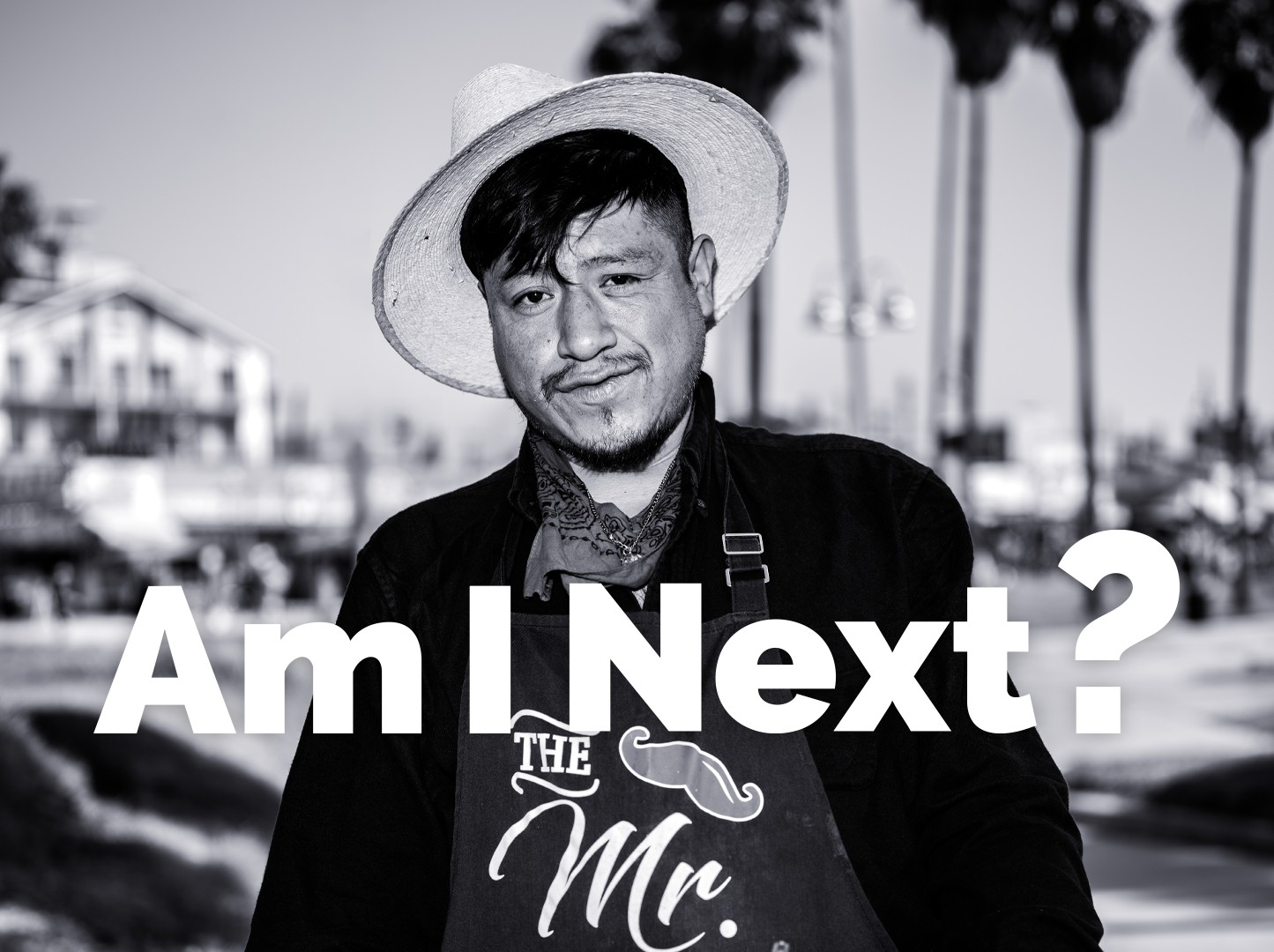
Miguel A. Santana, President and CEO of the California Community Foundation (CCF)—a public, charitable organization serving Los Angeles County since 1915 and the force behind “Am I Next?”—spoke with Los Angeles Press.
How and when did the campaign emerge, and what results have been achieved so far?
Am I Next? emerged from a moment of collective fear that was impossible to ignore. We were hearing from families, workers, parents, and students who were living with a constant sense of vulnerability—afraid to go to work, afraid to send their kids to school, afraid to speak out about injustice. The campaign was born as a public question that reflects a private reality many people were already carrying: Am I next?
So far, the results are less about numbers and more about visibility and solidarity. We’ve created spaces where communities see their fear named out loud and shared collectively, instead of carried in silence. The projections turn what feels isolated and personal into something public and undeniable. People are realizing they’re not alone in what they’re feeling—and that shift from isolation to collective awareness is powerful.
Where are the projections taking place? Are you planning to incorporate additional locations or spaces?
Right now, the projections are visible on the walls of the California Community Foundation, the Japanese American National Museum, LA Plaza de Cultura y Artes, the Los Angeles County Hall of Records in Gloria Molina Grand Park, and the Music Center—sites that hold civic, cultural, and historical weight. We chose locations that already function as public memory spaces because this campaign is about placing today’s fear and resistance into the public record.
And yes, we’re expanding. We’ll be launching four additional projection sites soon. The intention is to keep growing thoughtfully, in partnership with communities, so each new location isn’t just another wall—it’s another place where people see their reality acknowledged in public.
Beyond raising awareness about the situation faced by the migrant population, this campaign has become an ethical stance. Have you received support or seen organizations join the initiative?
Absolutely. From the beginning, this was never just an awareness campaign—it’s an ethical position. It asks whether we are willing to accept fear as a condition of daily life for our neighbors. Many organizations and community leaders recognize that this moment demands more than neutrality. They’ve joined not because it’s symbolic, but because it’s moral.
We’ve seen support from artists, advocates, philanthropic partners, and civic leaders who understand that public silence in moments like this becomes complicity. The campaign gives them a way to stand visibly with communities under pressure.
What are the next steps for the campaign? How does it move forward?
The next step is deepening relationships and expanding the platform responsibly. We’re building partnerships across the state that allow communities to activate the campaign in ways that are locally meaningful—projections, storytelling, gatherings, and public conversations that continue beyond a single event.
This isn’t meant to be a moment. It’s infrastructure for a sustained movement that connects art, visibility, and community protection. The work moving forward is about scale without losing intimacy—growing the reach while staying grounded in real people’s lives.
Art and public projections have strong activist power. Do you believe this is perhaps one of the most effective ways to generate greater awareness?
Art has always been one of the most effective ways to interrupt indifference. A projection doesn’t argue; it confronts. It enters public space and asks a question that can’t be easily ignored. In a world saturated with information, art creates emotional clarity. It slows people down long enough to feel something.
That emotional recognition is often the beginning of action. Awareness alone isn’t enough—but awareness that touches the human nervous system can move people from spectatorship into responsibility.
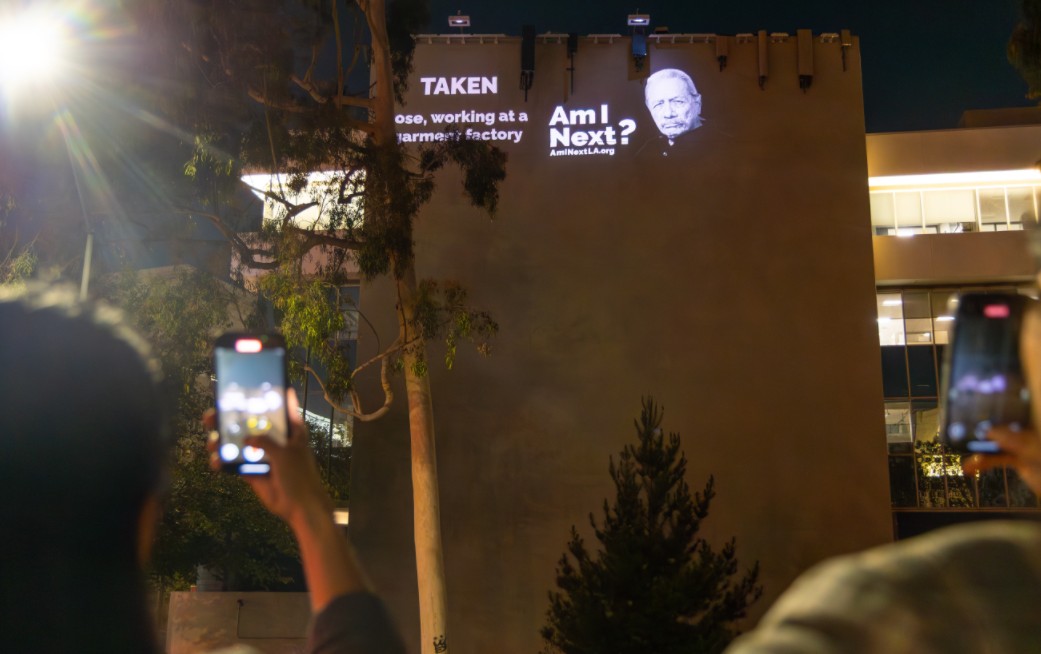
How many people have joined the campaign, and what is the main fear being perceived, beyond the possibility of “being the next”?
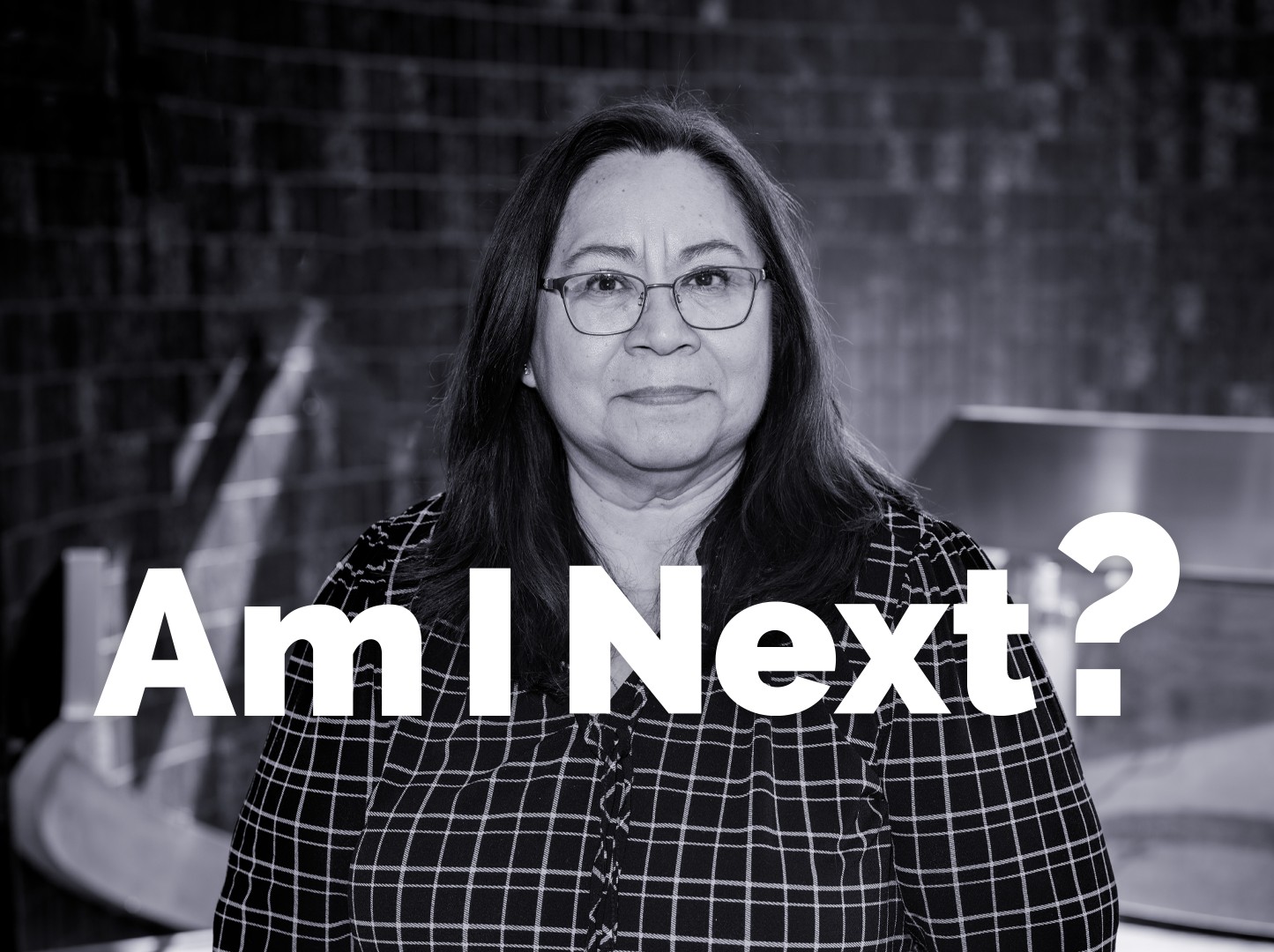
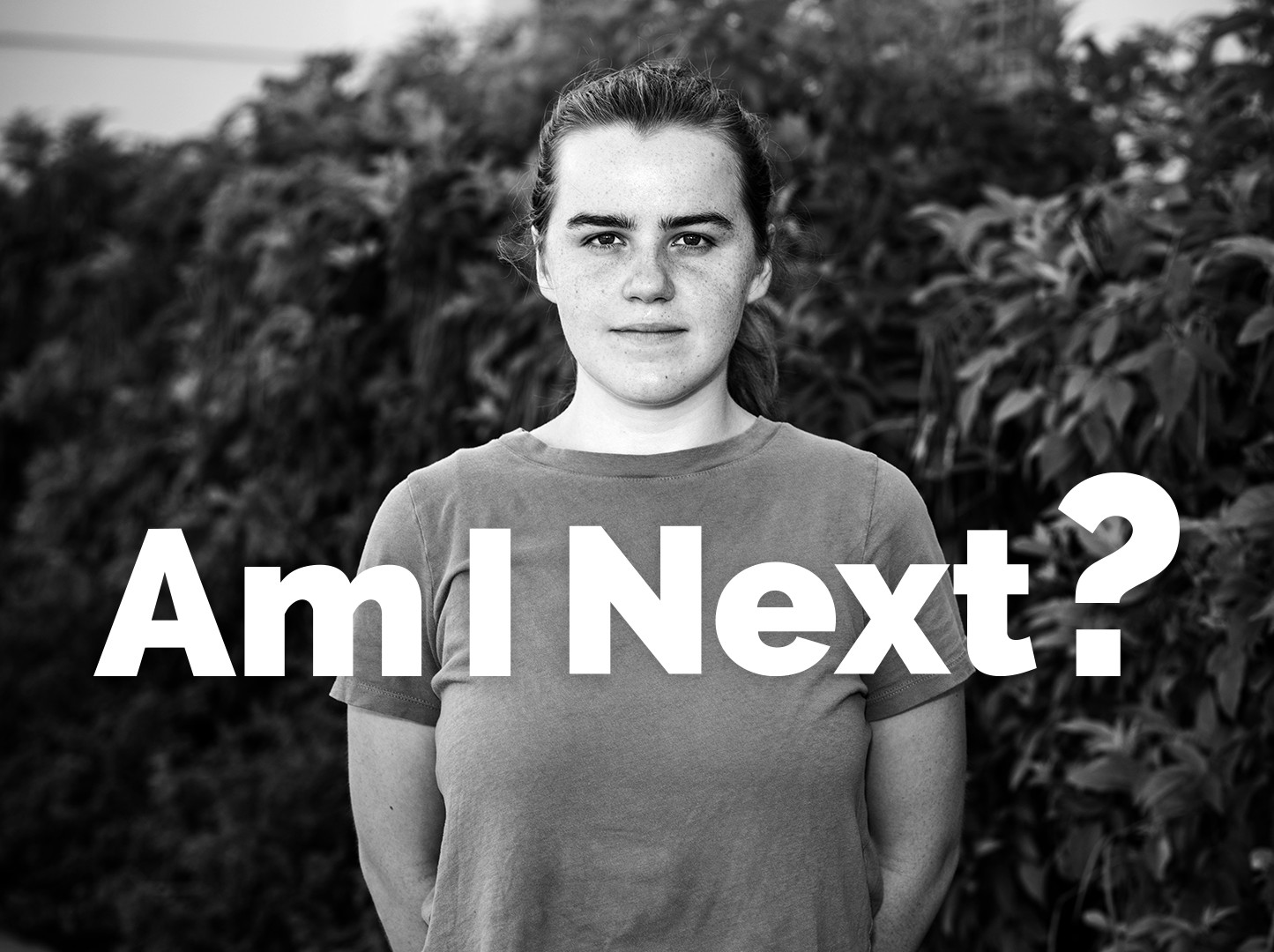
More than 500 individuals have already lent their faces to the movement, and thousands are engaging with the website every day. They include Los Angeles Mayor Karen Bass and actors James Edward Olmos and George Takei. Thousands more drive past the projections daily and encounter the message in public space. And this is just the beginning. But this campaign isn’t measured only in numbers—it’s measured in reach and recognition. The goal is to reach millions of eyes and move people beyond asking Am I Next? toward standing with their neighbor, their friend, their tío, or their prima.
The deeper fear isn’t only deportation or separation—it’s the erosion of belonging. It’s the fear of being treated as disposable, of living in a country where your humanity feels conditional. When children are taken publicly and families are fractured in front of the world, the message sent is that safety is not guaranteed for anyone. That fear expands beyond immigration status; it becomes societal.
How is this ongoing uncertainty experienced within the migrant population?
It’s lived as chronic stress. It shapes daily decisions: whether to leave the house, whether to speak up, whether to trust institutions that are supposed to protect you. Families are constantly calculating risk. Parents are explaining fear to children who shouldn’t have to understand it yet.
And when fear becomes normalized, it shrinks a community’s sense of possibility. That’s what we are pushing back against. Communities deserve to walk the streets, go to work, go to school, and visit each other without fear of being taken without cause. Living under permanent threat is not freedom—and we cannot accept it as ordinary.