Guadalupe Lizárraga Domingo, 02 de Noviembre del 2025, 01:21
Six weeks after Zeta accused him without evidence, Omar Cisneros Salcedo was murdered. His father had demanded a right of reply, but Adela Navarro ignored him—and later claimed he had threatened her.
By Guadalupe Lizárraga
Adela Navarro Bello, editor of the weekly newspaper Zeta, faces a serious ethical dilemma. Businessman Manuel Cisneros Romero —the father of Omar Cisneros Salcedo, who was murdered on October 25 in Ensenada— has raised troubling questions about the outlet’s ties to controversial political and business networks.
Cisneros Romero, a restaurant owner, accuses Zeta of falsely linking his son to drug trafficking and money laundering in a story that publicly stigmatized him and exposed him to the kind of danger that ultimately cost him his life. Yet even after the tragedy, the paper reported on the killing and again floated the hypothesis that the victim had “ties to members of the Jalisco New Generation Cartel.”
The inconsistency was striking: Zeta itself had previously alleged that the young man was a business partner of an entrepreneur connected to the Sinaloa Cartel —only to later claim links to its rival group, the CJNG.
The lack of evidence and the shifting narrative expose an irresponsible handling of information that not only branded the victim but also fueled the hostile context in which he was murdered just weeks later. Despite this, the weekly repeated its claims, tying him to companies sanctioned by the U.S. Treasury Department without citing any public record to support those assertions.
The controversy deepened in the weeks before the tragedy.
A month before his son’s murder, Manuel Cisneros Romero made his first attempt to exercise his right of reply. He formally asked Zeta to correct the story published on 19 September 2025. His request went unanswered. Editor Adela Navarro Bello refused to hear him, and the paper shut down any chance of rectification.
With no other option, Cisneros turned to other outlets. The local news site Punto Norte gave him space to tell his side of the story and present documents showing that Alimentos CISGO S.A. de C.V.—the company Zeta had portrayed as a financial front for Jesús González Lomelí, allegedly linked to the Sinaloa Cartel by the U.S. Treasury—had in fact been dissolved.
During the interview, given that same day, Cisneros produced official records from Mexico’s Public Registry of Commerce demonstrating that the company no longer existed and had never generated income or transactions. He also pointed out that the name of Alimentos CISGO did not appear on any U.S. sanctions list.
Cisneros confirmed he had known businessman Fernando Salgado Chávez since Salgado was ten years old—his family were regular diners at the Cisneros restaurant—but insisted he had no business ties with him or with González Lomelí. He spoke candidly about the “cobro de piso,” the extortion payments demanded by organised crime in Mexico, and told Punto Norte’s reporter that he feared for his life and that of his family.
That was 19 September. On 25 October, his son was shot dead inside his own business.
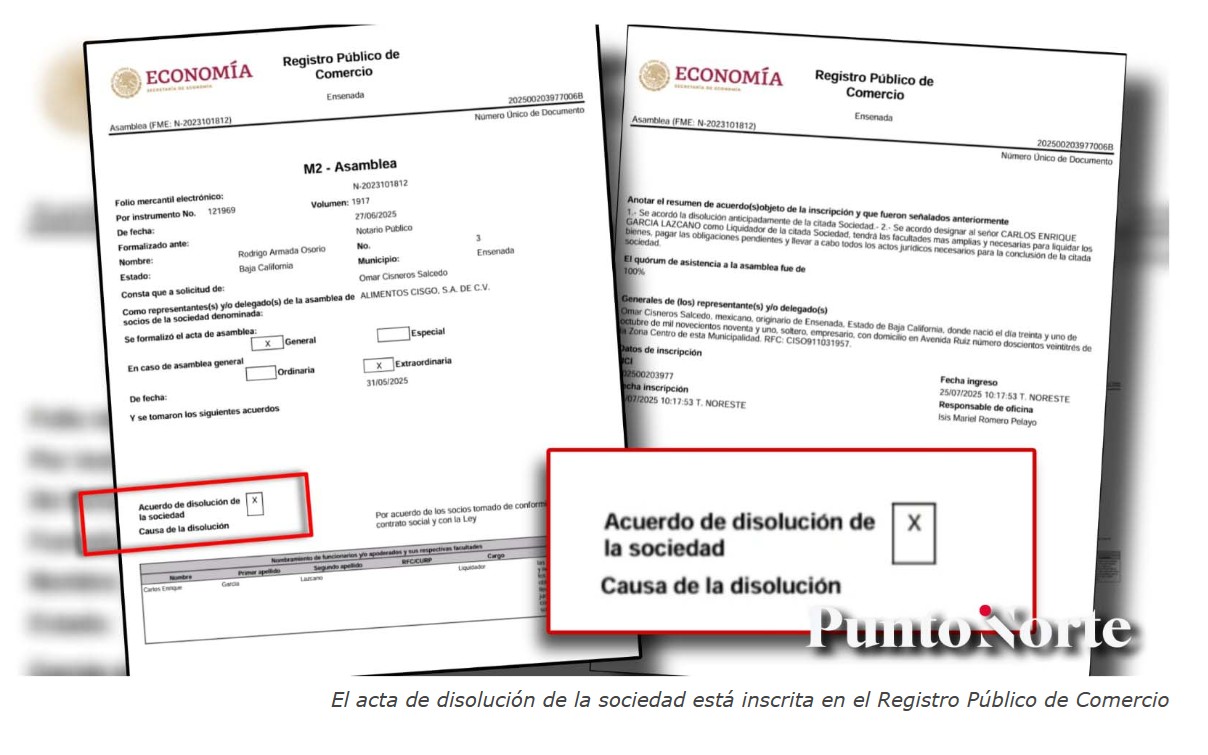 Documentary evidence that Adela Navarro Bello, co-editor of Zeta, refused to review. Source: Punto Norte.
In the article published by Zeta weekly on 19 September 2025, titled “Jesús González Lomelí Sanctioned by OFAC and His Ties to La Familia,” the outlet stated:
“...Fernando Salgado Díaz and Julia Graciela Chávez García, parents of Governor Ávila’s associate, also registered the company Alimentos CISGO, where they are business partners with the Cisneros family and the entrepreneur known for owning restaurants, nightclubs, and entertainment venues, Jesús González Lomelí.”
This claim by Zeta lacks any documentary basis and was publicly refuted by businessman Manuel Cisneros Romero, father of Omar Cisneros Salcedo, who presented official records from Mexico’s Public Registry showing that the company had been legally dissolved.
Nevertheless, the defamatory content was neither retracted, edited, nor corrected for more than six weeks after its initial publication—and not even following Omar Cisneros Salcedo’s murder. Zeta also failed to issue a clarification or update.
The outlet repeated the falsehood in its coverage of the killing, asserting that the victim had “ties to members of the Jalisco New Generation Cartel,” despite previously linking him to a business relationship with González Lomelí—who, according to U.S. authorities, is connected to the Sinaloa Cartel.
In terms of journalistic ethics, this represents a serious breach of the duty of diligence and verification, because:
- a direct accusation against specific individuals is maintained,
- no documents or evidence are provided to substantiate it, and
- despite the affected party formally requesting a right of reply, the text has not been corrected.
The article even continues to display a photograph of the alleged partners of Grupo Hoteleros JJJ, including “Manuel Cisneros” and “Manuel Cisneros Saucedo,” with notable inaccuracies in the names.


In the follow-up story reporting the murder, the weekly claimed that “according to the Public Registry of Property and Commerce,” Cisneros was a partner in three companies owned by González Lomelí, and that one of those also listed Fernando Salgado as a partner. However, once again, Zeta provided no documents or evidence to substantiate this assertion.

“I just want them to tell me what they based that on,” said the victim’s father in a firm voice, fully aware of the danger his family faces. No one from Zeta—not even its editor, Adela Navarro—contacted him to verify the facts or offer him a right of reply, a constitutional duty the outlet has so far deliberately ignored.
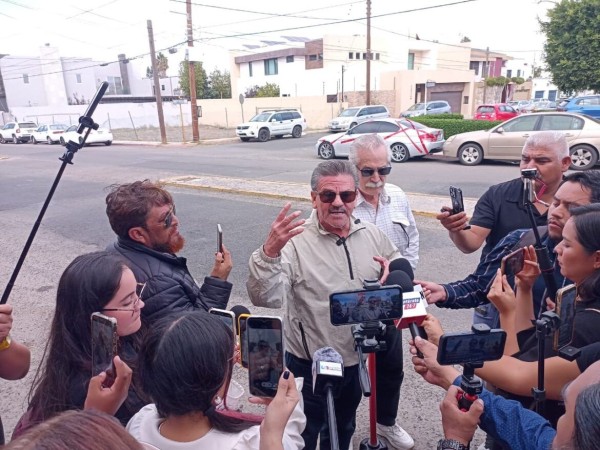
Days after his son’s murder, on 31 October, Cisneros Romero stood outside Zeta’s offices with a group of reporters. “I don’t want a fight or threats. I just want Adela Navarro to tell me to my face what she based her claim on when she said my son belonged to a cartel,” he told the journalists present. His demand was public, peaceful, and devoid of any intimidation, as shown in video footage published by Tijuana en Línea.
Even then, he was ignored again. No Zeta reporter responded to his plea, and to this day there is no document, case file, or judicial ruling substantiating any of the alleged crimes attributed to his son—nor any record of financial transactions linking him to criminal activity. Yet the paper’s silence amplified the stigma and deepened the family’s exposure to danger, feeding the hostile environment that culminated in the killing of Omar Cisneros Salcedo.
Despite the controversy, the following day Adela Navarro published that she had received threats from Cisneros Romero. The organization Artículo 19 quickly issued a statement on X (formerly Twitter) calling on authorities to provide protection for Zeta’s co-editor and her staff “in the face of acts of intimidation.”
In its statement, however, Artículo 19 made no mention of the lack of evidence supporting the original accusations, nor did it acknowledge the legitimate demand for clarification from a father whose son had been killed.
The organization’s public stance, devoid of context about the request for verification, reinforced a narrative that erased the victim’s father from view and placed the focus solely on protecting the newspaper—without addressing the consequences of an unsubstantiated accusation that preceded a high-risk killing.
The case exposes a serious ethical breach in the journalistic conduct of Adela Navarro Bello and the weekly Zeta: the duty to verify before publishing and to correct when information proves baseless. High-risk reporting does not exempt a newsroom from diligence or from accountability for the harm caused by false or unproven claims—especially when, in Zeta’s case, the outlet has received financial support from the very political and business circles it has reported as having criminal ties.
Official advertising and financial dependence on power
The ethical lapse is evident not only in the handling of victims but also in how the outlet funds its operations.
Between 2023 and 2024, Zeta—through its corporate entity Choix Editores, S. de R.L. de C.V.—received public-advertising contracts from government offices headed by officials closely aligned with businessman Fernando Salgado Chávez, who has been accused of leading a political-business network allegedly involved in money-laundering schemes and in promoting entertainment events under the brand La Familia Presenta.
The first of these contracts was awarded by the Tijuana municipal government under Mayor Montserrat Caballero Ramírez for a total of 2,163,000 pesos, covering the period from 1 March to 2 June 2024—coinciding with the state electoral campaign. The agreement, signed by communications director Miguel Ángel Torres Ponce, authorized printed and digital advertising, social-media promotions, live broadcasts, and full-color inserts in the weekly.
The deal was approved under a “special” arrangement just days before the start of the electoral period. In practice, it amounted to the use of municipal public funds for institutional propaganda during an election season—effectively benefiting the media outlet.
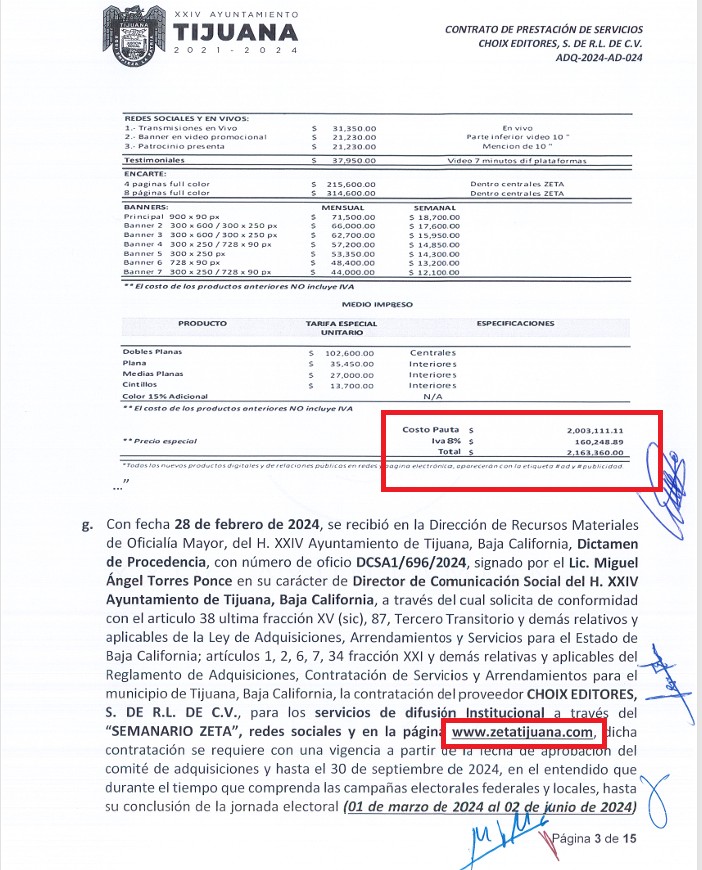 Excerpt from the contract granted to Zeta weekly by the Tijuana City Council under Mayor Monserrat Caballero’s administration, for an amount of $118,846.15 USD.
Another contract, worth 900,000 pesos, was directly awarded in 2023 by the Baja California State Attorney General’s Office (FGEBC) under the direction of Ricardo Iván Carpio Sánchez—one of the former officials closest to businessman Fernando Salgado, who, according to information obtained by AFN Tijuana, had been provided security protection by the prosecutor’s office during social events attended with Álvaro Vidal Velasco Castro.
The contract with Choix Editores, S. de R.L. de C.V. explicitly stated that it was for institutional advertising aimed at promoting “public activities of the FGEBC.”
This was in addition to advertising payments made by the Rosarito municipal government during the administration of Hilda Araceli Brown Figueredo, who—along with Jesús González Lomelí and others—was sanctioned by the U.S. Department of the Treasury for alleged money laundering and ties to the Sinaloa Cartel.
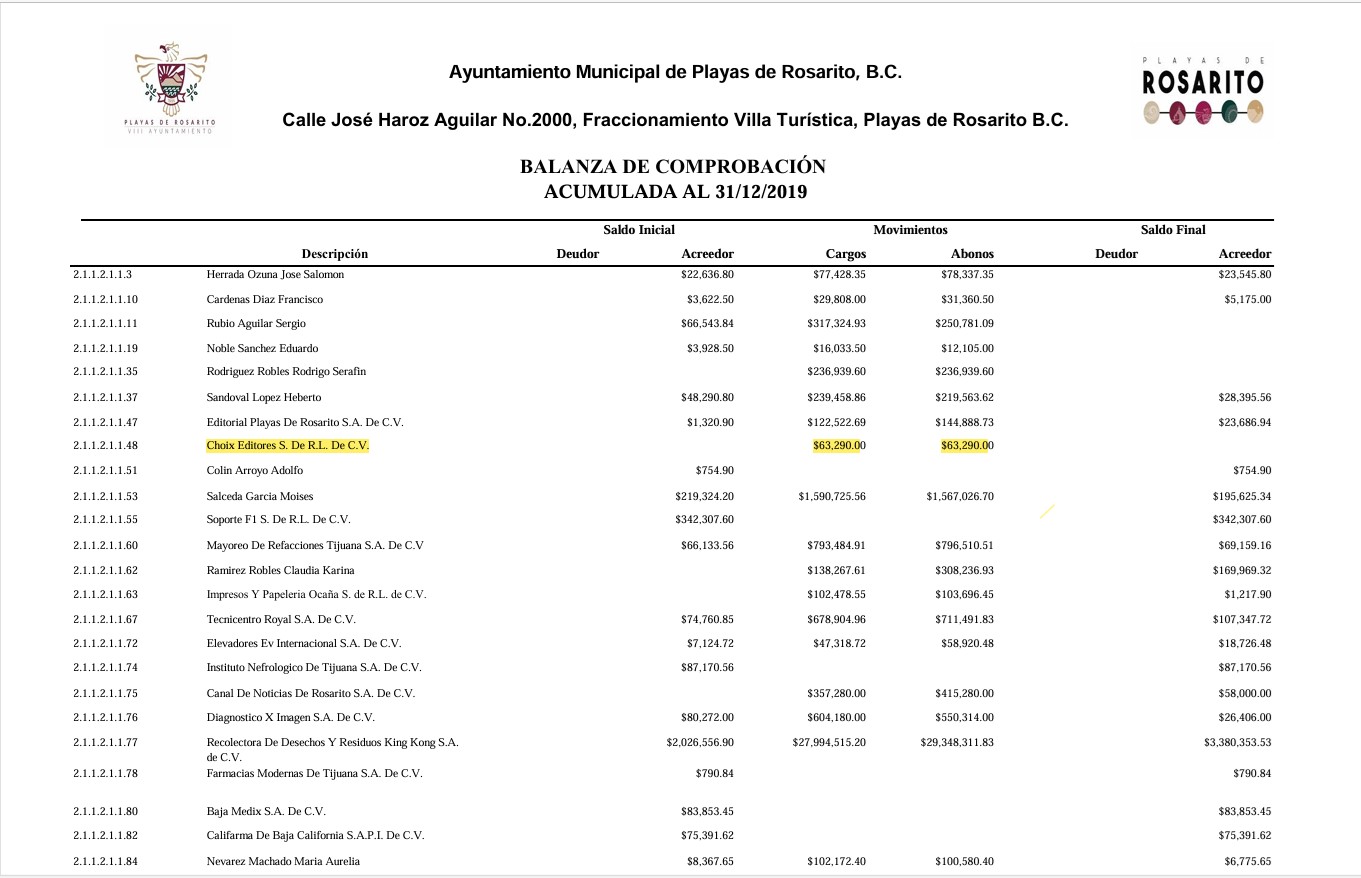
Official records from Rosarito City Hall show payments to Choix Editores between 2019 and 2022, including a trial balance for $63,290 and financial notes listing the publisher as a recurring vendor. Although the individual amounts were modest, they confirm an ongoing financial relationship with a municipal government under international investigation.
These are not the only institutional clients. Data from Mexico’s National Transparency Platform show at least twenty different government agencies awarding Choix Editores periodic advertising contracts.
During the same period, Zeta offered favorable coverage to La Familia Presenta and In House Producciones—promoters within the Fernando Salgado–Marco Santelices circuit, responsible for organizing large-scale concerts in the Valle de Guadalupe. Both companies belong to the same business network that Governor Marina del Pilar Ávila Olmeda has supported since the start of her administration.
Ties that compromise editorial independence
The convergence of public contracts, personal relationships, and Zeta’s editorial stance reveals a pattern that undermines the outlet’s credibility.
Ricardo Iván Carpio, for example, is part of the dominant political group in Baja California aligned with Governor Marina del Pilar Ávila Olmeda, whose administration has been accused of favoring Salgado Chávez and his associates through the granting of permits and public contracts to their entertainment companies (La Familia Presenta, In House Producciones, among others).
While Zeta was receiving public funds from these administrations —totaling more than three million pesos between 2023 and 2024— the weekly was simultaneously promoting concerts organized by the same business network and offering opinion space or sympathetic coverage to figures linked to Salgado.
This dual flow of resources—government advertising and private sponsorship from businessmen under international investigation—creates a potential conflict of interest between Zeta’s public discourse of editorial independence and its financial reality.
During Mayor Montserrat Caballero’s administration (2021–2024), Zeta received over 2.1 million pesos in official advertising contracts, while avoiding criticism of the mayor and instead focusing attacks on her political rivals.
In contrast, when Governor Ávila and her circle were exposed by Los Ángeles Press for their alleged connection to luxury properties in California tied to a network of shell companies associated with Fernando Salgado, Zeta reproduced parts of that investigation without crediting the original source. The weekly incorporated the information into opinion columns, describing Salgado as “the shadow boss of power in Baja California.” Yet it omitted its own financial relationship with the same public institutions that have helped sustain that power.
Public records show that Choix Editores has never disclosed its advertising policy or published the amounts it receives from government bodies or private companies. According to UNESCO standards and the Ethical Journalism Network, government advertising must be distributed with transparency and proportionality—not as a reward for political alignment.
The Code of Ethics of the Society of Professional Journalists (SPJ)—one of the oldest and most respected journalism organizations in the United States—outlines four guiding principles: Seek Truth and Report It. Minimize Harm. Act Independently. Be Accountable and Transparent.
In this case, Zeta’s financial ties to the Salgado–González Lomelí–Brown network represent not only a clear conflict of interest but also a profound contradiction with the outlet’s proclaimed independence and its editor’s public image as a defender of press freedom.
Defamation: the cost of a life
While Adela Navarro Bello presents herself as a victim of threats, the evidence points to a sustained pattern of opacity, selective reporting, and disregard for those who challenge her narrative. In the case of Omar Cisneros Salcedo, the denial of his father’s right of reply, the lack of verification, and the refusal to issue a correction amount not merely to ethical negligence but to an omission that cost a man his life.
And yet, no organization, not even Artículo 19, has demanded accountability.
The case of Zeta and Adela Navarro Bello exposes a deep ethical void in Baja California’s investigative journalism. And when journalism becomes an instrument of power, there are always victims. Omar Cisneros Salcedo was one of them.
---