
Rodolfo Soriano-Núñez Lunes, 03 de Agosto del 2026
The question is not academic. There is little or no precedent for successful strategies to disprove clergy sexual abuse accusations, why then bet the alms on a jury trial?
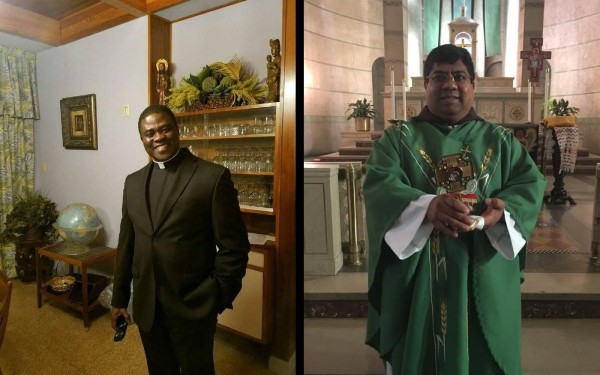
What explains Urbano Vázquez’s or Anthony Odiong’s decisions to reject plea deals and bet their luck on clergy sexual abuse jury trials in the United States?
By Rodolfo Soriano-Núñez
Over the last weeks this series has dealt with two notable cases of predator priests. Even if there are sharp differences in their origins and biographies, as one was born and ordained as a priest in Nigeria, and the other was born in Mexico but entered religious life and was ordained in the United States, both share common traits.
Both Anthony Odiong and Urbano Vázquez had a chance to save themselves from the humiliation of going through trial juries, and yet, despite overwhelming evidence against them, they decided on their separate trials to spin the roulette wheel. As odd as their independent decisions were, they offer a chance to cast light on the deepest roots of the clergy sexual abuse crisis and some of its potential consequences.
As customary in the U. S. penal system, the district attorneys leading their cases in Texas and the District of Columbia offered Odiong and Vázquez, respectively, plea bargains.
Although the days where a plea bargain was a chance to avoid further damage to their names and potentially receiving a shorter sentence are over, as in Donald Stavinoha’s case, who in 1988 got a “sweet deal” of only a ten-year sentence that was commuted after he served just three years (see the story linked after this paragraph), a plea bargain today is far less risky and far cheaper than a jury trial.
The stakes for Odiong in Texas were riskier and even if for Vázquez the risk was far inferior, trials are expensive and the district attorneys, the judges, and even the police departments have incentives to avoid as much as possible a trial, much more a jury trial, as they force authorities to impanel a twelve-person jury—along with additional alternate jurors routinely seated to prevent mistrials—isolate them for the duration of proceedings and even protect them from potential tampering.
Despite those facts, both Catholic priests decided to bet on the rather odd chance of being acquitted by a jury. In that respect it is unavoidable to ask who paid for what, as it will be see later in this piece is a rather dangerous and extremely expensive courtroom strategy. Were they gambling the donations of the dioceses and/or religious orders backing their defense?
Their decision is harder to understand as the Catholic hierarchy, in the United States and elsewhere, frequently complains about the effects of litigation over their finances, how they seek the relief of bankruptcy procedures and blame “resentful” victims for the closing of Catholic schools, community kitchens, other works of mercy and for the merging of parishes and even dioceses.
As a consequence of their gamble, Odiong received the harshest sentence possible for clergy sexual abuse in Texas: a life term in state prison, with no possibility of parole review for decades (see the story above this paragraph).
Vázquez, in turn, became infamous nationwide for the worst possible reasons, serving as the poster boy for the anti-immigration policies of the Trump administration. Whenever he is released, he will be forced to go back to a country where he probably has some relatives, but no life to return to, as the story linked after this paragraph told a week ago.
That both priests gambled their Church’s funds on their own defense is harder to understand when one takes into consideration that the Catholic Church is already reeling from the financial and reputational toll of daily abuse allegations worldwide.
Even if it is impossible to accurately estimate how expensive it is for any given defendant to stand a jury trial, it is hard to imagine any criminal defense lawyer in the United States taking these kinds of cases for less than a quarter to a third of a million dollars—much less in Vázquez’s case, which unfolded in the highly affluent District of Columbia.
It is harder still to understand why both priests chose to gamble, given that any search for a priest acquitted at the end of a jury trial in the United States or Canada yields zero results.
Precedent?
The sole case with such a result in the English-speaking world is that of Cardinal George Pell in the Australian courts. However, one should be aware that Pell was convicted by a jury, at the trial court level. He served prison time and his sentence was upheld by an appeals court. His conviction was only overturned by an appeal to the High Court—making him a high-court appellate anomaly rather than a jury trial acquittal.
His acquittal is far more complex, handed down only after heavy mobilization from the global Catholic far-right whose talking heads went as far as to disqualify the lower Australian courts as “kangaroo courts.”
Far-right Catholic media outlets in the English-speaking world did so despite the exemplary transparency with which the Australian political elite has been dealing with sexual abuse, clergy or otherwise, since the inception of the so-called Royal Commission.
The Royal Commission into Institutional Responses to Child Sex Abuse, as it is officially known, went not only into Catholic cases, but took the time, effort and monies to go over cases from almost any active religious community, on top of cases in other settings, in what is, up until now, the most systematic effort to track down the true reach of sexual abuse in that country.
The other oddity as far as the Common Law/English-speaking world is concerned, comes from Pennsylvania. Back in 2022, a jury found Robert Cedolia not guilty of “aggravated indecent assault.” The allegation was made back in the 1980s, it was based on a single instance of alleged abuse.
Putting Pell’s and Cedolia’s cases aside, it was impossible to find something similar to a list much less a pattern of priests who faced serious criminal sexual-abuse charges, rejected plea offers, opted for a jury trial and were acquitted.
It must be noted in that respect that in the Spanish-speaking world, trials almost never involve a “jury of his or her peers” for the accused, as the principles guiding penal law in Latin America and Spain derive, for the most part, from the so-called Napoleonic Code, a tradition where there is no such practice or the practice disappeared for reasons that would be impossible to explain here.
A notable case in the Spanish-speaking world was that of Fernando Karadima, the Chilean super-predator whose crimes were acknowledged by the Vatican as he was laicized in 2018, near the end of his life, despite the fact that his 2011 trial concluded with a ruling where the courts accepted that some kind of crime happened, but dismissed the case due to the statute of limitations.
Standing trial was a cheap bet for Karadima. He had, on the one hand, counsel paid by some of the extremely wealthy parishioners at Providencia, in what used to be, at least until the Aughts, one of the most exclusive neighborhoods in the Chilean capital. He also had precedent on his side, as well as the rigidity of the Latin American judiciaries, unable to figure out creative solutions to clergy sexual abuse, such as the lookback windows designed by the state congresses in California and New York.
Where state legislatures in Sacramento and Albany were able to bring to civil courts historical cases of sexual abuse, clergy or otherwise, to address a major social concern, Latin American legislative branches shy away from engineering similar solutions, forcing victims to remain in the dark corners of their trauma.
A perfect example of how, so far, the Latin American polities have avoided that kind of challenge was the subject of the story linked after this paragraph. It goes over one of the most recent cases, also from Chile, where the judicial authorities, along with the Catholic hierarchy in Rome, accepted that Francisco José Cox Huneeus was a predator, but decided not to force his order, the so-called Schönstatt Fathers, his former archdiocese (La Serena) or the Catholic Church at large to repair the many damages caused by him.
Similar rulings have happened in Argentina (see the story linked after this paragraph), and it is the core issue of the many cases now being aired over the media in Bolivia, pertaining to the large-scale abuse perpetrated by members of the Jesuits in some of Bolivia’s most marginalized regions.
It is, by the way, a similar situation to that of Felipe Berríos, a Chilean Jesuit who also got what, for practical purposes, is an acquittal, despite the fact the authorities there and his former order also acknowledge he sexually abused underage females under his pastoral care, as detailed in the story linked below.
But even if in Latin America standing trial is still a relatively safe bet for priests, at least when the statute of limitations for their cases has expired, the social and political costs of their pugnacious attitude remain, and are probably more damaging for the Church itself.
At least in the United States the resolution to the trial offers a chance to put an end to the issue and to close the books on the cases. In Latin America, what remains as a toxic residual is the bitter anger against systems of justice unwilling to address the needs of the victims and the perception that religious leaders get special deals from authorities that ultimately fuels the episodes of antireligious policies and laws that have swept Mexico, Venezuela, and other countries in the region over the last 200 years or so.
Clash of approaches
In any system, whether Common Law in the English-speaking world or Napoleonic Code derivatives common in Latin America and parts of Europe, precedent plays a major role in how judges and tribunals rule on cases, but also in how lawyers and their clients try to figure out how to win their cases.
Those who, like Odiong and Vázquez, join a growing number of (former) priests who—for reasons difficult to generalize—decide it is worth gambling the alms, have no actual precedent to follow beyond that of Pell in Australia and Cedolia in the United States.
If there were a certain number of cases where priests accused of sexually preying on their flock found relief in jury trials, there would be some way to understand why Odiong and Vázquez decided to swing for the fences the way they did it when they rejected the plea bargains offered to them.
In actuality, what one finds when going over the many cases of priests charged in clergy sexual abuse cases is that many of them realized the futility of their attempt, and seized the chance to at least find some peace of mind with themselves, their relatives and former colleagues, when they decided to accept the plea bargains offered to them. A colleague of Odiong in Texas, Lawrence Hecker, had a similar chance and he accepted the plea bargain.
Granted, some priests are independently wealthy, but it is hard to imagine a couple of priests from Global South nations like Mexico and Nigeria being in a position similar to, say, Francisco José Cox Huneeus, a member of the patrician Chilean elite that has ruled that country for over a century.
The priests who were able to monetize their trade at the scale Marcial Maciel or Fernando Karadima in Mexico and Chile did in the second half of the 20th century were able to do so because they seized the opportunities offered by the priesthood itself, so whatever access to money or other resources they have is contingent upon their status as a priest, even in cases where such status has been removed by a laicization process (defrocking) within the Catholic Church.
Even if it is impossible to claim having had access to every single court record across all 94 U.S. federal district courts and thousands of state county courthouses since 1984 or the even larger and harder to locate records from countries lacking the kind of court databases available in the U.S., across decades of high-profile, documented cases—from Boston to California to Philadelphia to Texas—every single cleric who turned down a plea deal to bet on a common-law jury got crushed.
In that regard, as non-representative as the following sample is, what is clear is that it is rather hard to find a successful modern case where a priest was able to win his case after rejecting a plea bargain. What is relatively easy, instead, is to find some of the priests and bishops included in the following list:
Paul Shanley, a priest associated at some point with the infamous Archdiocese of Boston (2005). Shanley rejected plea bargains despite overwhelming evidence, went to a jury trial, received a 12-to-15-year sentence, and exposed the Archdiocese of Boston to massive civil liability.
Also from Boston is the case of John Geoghan, who was murdered in a Massachusetts prison in 2003 while his conviction was under appeal, forcing state courts to “abate” or dismiss the proceedings post-mortem.
On the U.S. West Coast, Oliver O'Grady, associated with several California dioceses, gained notoriety as the central subject of the documentary Deliver Us from Evil. O’Grady repeatedly minimized his crimes, maintained a posture of spiritual superiority, and forced trials and a massive public exposure of the inner workings of the dioceses where he had worked rather than quietly accepting accountability.
O’Grady is, in many respects, one of the reasons why the State Legislature in Sacramento saw the need for a “lookback window” to address so-called “historical cases” in California. More information about the documentary going over how several dioceses in California simply moved around O’Grady from one parish to the other is available in the story linked after this paragraph.
Later, at least two priests associated with the Archdiocese of Philadelphia—likely with the backing of its then-leader Charles J. Chaput, O.F.M. Cap.—bet big on their chances to sway local working-class Catholic juries.
Two of the most notable were Neil Connolly and Joseph Brennan. If their bet was finding at least one "good Catholic" willing to hang the jury, they misread the room entirely. In the end, they got swift guilty verdicts.
Bishops too
And not only priests. There is Robert William Finn’s case, a pupil of Cardinal Raymond Leo Burke who helped Finn become the coadjutor bishop and eventually the bishop of Kansas City, Missouri, in the first decade of this century.
Less than eleven years after his original appointment as coadjutor there and despite Burke’s support, he was forced to resign in 2015 in the midst of a scandal fueled by his unwillingness to settle misdemeanor failure-to-report charges early, leading to a criminal trial that made him the first bishop in the United States to be criminally convicted for covering up abuse.
And if one is willing to go deeper it is possible to find also Theodore McCarrick’s case. The former archbishop of the U.S. capital, a powerbroker in both Washington, D.C. and Rome, where he was a member of the College of Cardinals, fits the pattern. Granted, he died shortly after a judge declared him unfit to stand trial, but he was apparently ready to stake whatever remained of his future on a jury trial.
As the story linked after this paragraph proved, McCarrick embodies the ultimate version of both the scarlet bond and what observers of the clergy sexual abuse crisis describe as the “sacred shield delusion,” that is to say, the idea that some clerics develop that they will be somehow protected by their status as members of the Catholic hierarchy.
One must keep in mind that McCarrick was willing to spin the roulette of a jury trial despite the fact that the Vatican’s Secretary of State had already published on November 10, 2020, the one and only official report ever released by the Catholic Church (available here) about a predator in McCarrick’s league.
If that was not enough, the Dicastery for the Doctrine of the Faith had already expedited, by February 13, 2019, with unusual speed, McCarrick’s laicization, on top of the fact that major news outlets in the United States had published since 2018 detailed accounts of the abuse perpetrated by the former member of the College of Cardinals.
More recently, during the interview with Camille Rio, a French Catholic priest, he pointed out the effect that accusations against bishops in his country had, as well as the specific difficulties of those types of cases in which it is the very person in charge of a diocese who must decide how to proceed in their defense. The interview is linked after this paragraph.
Outside the United States, but still in the Common Law tradition, in Australia, one finds Gerald Ridsdale, who at 92 is serving what is functionally a life sentence (technically 36 years), whose crimes played a central role in the systemic cover-ups that defined Cardinal Pell’s ultimate reckoning.
Although hardly typical for Latin America, there is the case of Julio César Grassi in Argentina, who remains a priest despite serving a 15-year prison sentence. Like Ridsdale and Geoghan, Grassi was one of the seven cases detailed in the story linked below.
The other shore
On the other shore of the Atlantic, in France, there are at least two cases that, with the unavoidable peculiarities of the French Napoleonic Code, fit a pattern of clergy hubris. Granted, the French legal landscape offers no Common Law mechanism to “make a deal” and quietly avoid a public trial for serious sexual offenses against minors.
Yet, an accused priest, like any other defendant in the French penal courts, retains the power or agency to admit guilt early in the investigative phase conducted by the authorities and avoid the scandal. Doing so spares victims, the public, and the Catholic Church the drawn-out spectacle of a full criminal trial, acknowledging facts that are functionally undeniable.
Instead, Bernard Preynat (content in French), a high-profile Boy Scouts chaplain in the Archdiocese of Lyons who abused dozens of young boys between the 1970s and 1990s, relied on procedural delays and institutional silence for decades. Even after the inquisitorial machinery caught up with him, his refusal to step forward and own his actions in a transparent manner dragged the French hierarchy into the mud alongside him.
The resulting public reckoning did not just end in Preynat’s 2020 conviction and eventual laicization; it directly forced Cardinal Philippe Barbarin into court on criminal charges for failing to report the abuse, detonating a crisis that forced him to tender his resignation while shattering the moral authority of the Catholic Church in France.
But even before Preynat there was Joël Allain’s case revealing a similar strain of clerical stubbornness within French scouting circles. As a prominent scout chaplain in the 1960s and 1970s, Allain leveraged his charismatic status to victimize boys under his pastoral care.
When confronted with allegations, rather than offering a straightforward admission to mitigate public exposure, the defense strategy leaned heavily on the social prestige of the priesthood and procedural technicalities, treating the secular courtroom as an adversary to be outmaneuvered by a “holy man” in a cassock.
The ultimate fallout from cases like Allain’s and Preynat’s demonstrates that the “sacred shield delusion” is not unique to U.S., Nigerian, Mexican, Chilean or Argentine Catholicism.
Whether facing a U.S. jury, an Argentine appellate judge, or a French magistrate, clerics who cling to their status to fight the evidence end up multiplying the institutional damage.
In France, this pugnacious posture directly accelerated public disgust, prompting legislative updates to statute-of-limitations rules and culminating in the landmark, independent CIASE or Sauvé Report (available here in English), which laid bare the massive scale of historical clerical abuse across the nation.
And Latin America too
It is necessary to keep in mind, however, that the issue of clerical hubris when dealing with the accusations raised against them is not limited to those willing to dismiss a plea bargain, as it is possible in the Common Law system. One sees that kind of behavior in cases that, for reasons that would be impossible to review here, have not been admitted by the civil authorities in several countries.
A few months ago, this series went over a new episode in Rafael Fleitas López’s case. He is a Paraguayan priest with standing accusations in his country who, at some point in 2023, tried to come to a parish in Oaxaca, Mexico.
After that plan failed, the Archdiocese of Asunción, the capital of Paraguay, allowed his order, the Oblates of Mary Immaculate, to add him to the pastoral team in a parish in that city, as the story linked after this paragraph told.
As the story stresses, in what can only be seen as a glaring contradiction, Cardinal Adalberto Martínez Flores, the head of the local archdiocese, went as far as to use that day’s homily to condemn clergy sexual abuse while concelebrating Mass with Rafael Fleitas López, as the picture immediately after, taken from that story, proves.
In Argentina, media in the city of Córdoba published over the last week several stories about how a priest with standing accusations of abuse there was allowed to return to public ministry. Alejandro Nicola has been the subject of at least five publicly known complaints over his behavior.
Far from acknowledging the potential effects of bringing him back as a concelebrant in a public Mass at the Cathedral in that archdiocese, Cardinal Ángel Sixto Rossi, the Jesuit archbishop there, allowed for Nicola’s return to public service.
Granted, he was not presiding over the Mass. Unlike the presiding priest, Nicola was wearing only a stole, but he performed all the gestures and rituals reserved to concelebrants in a Catholic Mass.
If Nicola’s return to public ministry was a trial balloon, an attempt from the local curia to gauge what would be the effect of allowing him back into public service, Rossi and his team got what they were looking for, as the local media saw a chance to recycle the standing accusations against Nicola, the civil authorities, unwilling to expedite the probes, and the local Catholic hierarchy, unwilling to acknowledge the extent of the damage already done by Nicola’s predatory practices.
Local media in Córdoba opened their archives to update their tracking, refreshing their readers’ memories with stories about the excesses perpetrated by Nicola. Some Argentine media outlets, for example, published reproductions of the drawings with which the minors who were Nicola's victims describe what happened. As one can imagine, these drawings (see after this paragraph) reflect the psychological stress, the pain that the situation produces in them.
As customary, the local curia issued a boilerplate statement expressing sorrow about their decision to bring Nicola back into active public ministry—which appears as an image after this paragraph—without ever explaining why they did so.
They limit themselves to pointing out that formally he is not suspended, making clear their closeness to Nicola, and lamenting the effect that the former pastor of Christ Redeemer parish—and current head of the Child Jesus parish in Villa Carlos Paz, Córdoba—had by celebrating Mass in the cathedral parish.
Of course, they also do not explain how such decisions align with what Pope Francis labeled as a “spirituality of reparation” that, for the most part, has turned, less than five years after being offered as a model by Pope Bergoglio in 2023, into dead weight.
More so as Argentina at large, and Córdoba in particular, have been shocked recently by Paulina Viale’s revelations about the predatory practices of her cousin, Patricio Cruz Viale, a priest and member of the aforementioned Schönstatt Fathers order.
Cruz Viale has been the subject of at least two additional accusations of clergy sexual abuse that, so far, seem to be going nowhere, despite the original announcement made by his order about their willingness to cooperate with the civil authorities when he was arrested in November 2024, as the final paragraphs of the story linked after this paragraph told at the time.
According to Ms. Viale’s testimony to Argentine media, her cousin abused her when she was underage. Since it was not easy for her to come forward to publicly report him, the statute of limitations has already expired on her case, so it will be hard for Cruz Viale to face legal consequences regarding the abuse of his cousin, but the other pending cases remain open.
Both Nicola’s and Cruz Viale’s cases reveal yet another aspect of how Catholic clergy engage in what seems to be a war of attrition to try to wear down and tire out their victims and public opinion, in ways all too similar to what has happened in Mexico in cases from the border town of Ciudad Juárez (see the story linked above) to Izcalli, a Mexico City exurb, where there are at least three pending cases with no expectation of any change in the near future (see the story below).
It should be clear by now that there is an attitude, some would call it a mentality, within the Catholic clergy leading many of them to deny the predatory nature of their behavior even when confronted, as Anthony Odiong did in Texas, with the risk of receiving a life sentence.
But as the story from last week emphasized, the damage is not limited to them or even to the prestige or good name of the Catholic Church; Urbano Vázquez’s predatory practices, for instance, are now an excuse to justify the migration raids devastating Latino communities across the United States.
* * *
A summary of this piece is available as audio after this paragraph.
Your browser doesn't support HTML5 audio. Here is a link to the audio instead.
Note on production: The text of this summary was written and edited solely by the author. The delivery of the audio summary was achieved using a high-quality, text-to-speech engine Microsoft Word for Web. The AI was used for voice generation only, not content creation.