
Rodolfo Soriano-Núñez Lunes, 22 de Junio del 2026
Although an arrest warrant has already been issued against Serrano Limón, he remains at large. Eduardo points to the Lasallians for protecting his former teacher.
Serrano Limón attacked Eduardo in 2010 inside a house belonging to the so-called Brothers of the Christian Schools, who are known as Lasallians in Mexico City.
By Rodolfo Soriano-Núñez
In recent days, details have emerged in Mexico regarding an arrest warrant issued against Francisco Serrano Limón, a member of the Lasallian order who served as a teacher at the senior high school of Universidad La Salle, located on Benjamín Franklin Avenue in Mexico City.
Serrano Limón is also the brother of Jorge, the former leader of the now-defunct National Pro-Life Movement. An organization linked with various far-right Mexican and Latin American groups, including the so-called El Yunque—a secret, militia-like organization whose existence was openly acknowledged in 2010s in an attempt to legitimize the numerous abuses they perpetrated, including physical violence against those they identified as their enemies. El Yunque literally means The Anvil in Spanish.
A story from 2025, linked a after this paragraph, goes over the legacy of the El Yunque organization in Mexico, its wide reach, as wide as to involve now-retired national politicians in Italy, elsewhere in Europe, the United States and Latin America. The hypothesis they follow is that, since they consider themselves victims of some type of persecution in Mexico, one must accept the violence they exercised against other people in Mexico because they consider that they were carrying out a sort of crusade.
Francisco Serrano Limón's predatory behavior was publicly admitted by the members of the Lasallian order themselves. This occurred during a public ceremony held on March 16, 2022, in the main auditorium of Universidad La Salle. The problem is that they only admitted the abuse against Jorge Flores Silva, who was a minor when he suffered the assault. Details about the rest of the cases are only just beginning to be known thanks to the complaints filed by survuvors such as Eduardo Arce Schreiber.
It is notable that, despite recognizing that case—unlike the so-called Marist Brothers, the only Catholic religious order operating in Mexico whose commission to prevent sexual abuse appears registered and functioning on the official website of the Mexican Conference of Catholic Bishops (content in Spanish), the Lasallians avoid creating a similar commssion, as if nothing ever happened in their classrooms, as the Mexican bishops' website itself does not report the existence of any prevention commission for them.
In that sense, Eduardo Arce Schreiber’s case is a painful reminder of the cosmetic nature of many of the measures adopted over the last four decades by the Catholic Church on a global scale and in Mexico to resolve or mitigate, in their view, the incidence of sexual abuse within the spaces controlled by that religious organization.
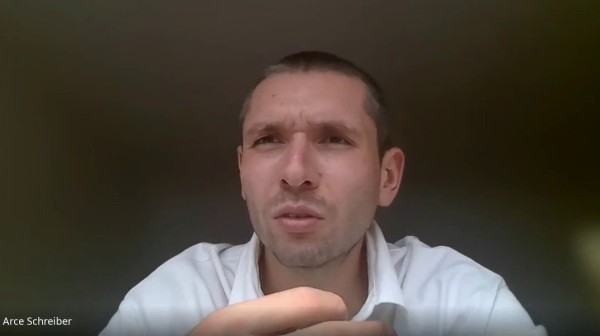
What follows is the conversation with Eduardo Arce Schreiber on June 19 of this year.
I would very much like you to present the substance of your case to me. What do you consider that we should know about your case? When did it happen? Where did it happen? What were the conditions under which this happened?
Yes, this happened to me in the year 2010.
How old were you?
16 years old.
Were you in middle school or high school at the time?
I was in my first year of high school. Yes, I used to live in Mérida, Yucatán, and I went to middle school there, and I had just returned to Mexico City. We are from Mexico City, I was born here and so was my family, but we returned to Mexico City. Me to continue my studies, and my dad for a job.
I entered La Salle and, from the start, it seemed like a very, very big change to me because I came from a very small school with two classrooms and few students, and here at La Salle there are 20 classrooms with 50 students, right? So, there were a thousand students in the first year of high school.
Of course, it is one of the largest Catholic schools in Mexico City.
Yes, at the Benjamín Franklin campus, in the Condesa neighborhood.
It is very close to Chapultepec here in Mexico City. Did you also study at a Catholic school in Mérida?
No, no, no, not at all. It was completely secular and here, well, I entered La Salle. I haven’t been a believer since... No, rather, I have never been a believer. I didn’t enter La Salle out of any religious conviction, only because of the prestige of the university and by recommendation, well, of the high school at that time.
Of course.
And I entered the school, and among the teachers assigned to the classrooms, one of them was this person, Luis Francisco Serrano Limón, who was a physics teacher, but he also held a religious position in the school, which was the pastoral coordination, because he is a Lasallian brother.
They are not priests, although some media outlets here in Mexico have clumsily presented them as priests; they are religious brothers as they identify themselves.
But, in addition to being a brother or a friar, he taught that class which, well, is always one of the most difficult classes in senior high school, right? It’s one of those filter classes where professors have a chance to squeeze those who don’t comply, and besides, as you explain to us, he held a position in the authority structure of the school of what is known here as Universidad La Salle, right?
That’s right, that’s right, and besides, this person was very much characterized by being very charismatic, wanting to be very funny, even in his way of dressing and acting, right? Because he was of an extremely robust build and he used to wear suspenders, with which he danced, and he wore ridiculous ties with cartoons and such.
So, in a way, he did win the trust of both students and teachers; moreover, he was super beloved in the school and everyone honestly knew him so well, including parents. In my case, it was a shock because, Mérida was, at the time, a very different place from what it is now, meaning very conservative.
And I enter this school and I get a religious brother who speaks to me and my peers in ways, well, perhaps a bit out of the ordinary because, being a religious brother, you don’t expect comments about whether you have masturbated, or how you masturbate, right? Or he would simply compliment girls from the high school itself, and that’s how they made us feel comfortable, right? Especially when talking about these topics.
You were already at La Salle as a coed high school...
Yes, coed.
So, there were young women with you in the classrooms.
That’s right. And he would make that type of comment, referring to female classmates of ours. And something else he did a lot in class, not only teaching his physics class, was that he would show us videos of abortions. Of how serious an abortion is. How bad an abortion can get to be. He would show us the worst part of that procedure just to make us, I don’t know, simply not accept it, right? Or to make us think something negative regarding abortion.
Jorge’s brother
He is the brother of one of the key figures of the Pro-Life movement here in Mexico, right? The anti-abortion movement in Mexico, Jorge Serrano Limón.
That’s right.
Who was the cause of scandals more or less around that time, in which even Felipe Calderón Hinojosa’s conservative government had to acknowledge that there were problems with the accounting of the organizations Jorge Serrano Limón worked with. They tried to deduct absurd items, like women’s lingerie, things that could not be explained as required for the work that Pro-Vida was supposedly doing as a NGO.
And I imagine that you, in some way, were also at least aware of his brother, meaning Jorge.
No. The truth is, no. He never mentioned his brother Jorge Serrano or the government or anything. He did it indirectly.
And so, what happens in that context that you describe to us?
Well, during the course, a little bit before final exams started, he asked the students, he asked about five classmates to step out so he could make us a formal proposal to go to the house of the Lasallian brothers.
For what?
For leisure time. To go waste time, leisure time.
He told us that inside the house there were many screens, they had TV rooms, they had billiards, they had water pipes, hookahs or narghiles, and, well, because of the age I was impressed and all this being free for the taking and that he was going to justify my absences, it seemed like a good idea to me and I was the first to accept going to this house of the brothers.
In fact, days before, he still sent me messages, because he used to add his students on both Facebook and have their cell phone numbers, and on Facebook he sent me follow-up messages to see when, he made the comment, right, about it being like a basketball countdown, to decide on a day to go, right?
I remember this perfectly, it was a Tuesday, around the month of April, already in 2010, well, it was from the 2009-2010 high school course, so, already in April, more or less around the dates of those final exams, we had physical education class, which lasted two hours, and he, prior to this, to going to the brothers’ house, asked me to accompany him to his cubicle so he could write a justification note for me, because he also did “accompaniment” work.
This “accompaniment” was for students who had some issue at home, some school or academic problem, right? Especially to see how to support them. And he took advantage of that aspect of the accompaniment.
He gives me the justification note and we go to the brothers’ house from the university, a few minutes away from the high school. We left from the high school in his SUV and headed towards what is now the Ángeles Mocel private hospital, near Chapultepec.
I had recently returned from Mérida, so I wasn’t very familiar with the place, but I remember a black door opens, we enter the garage and the first thing there was or that I saw was a door where there was a kitchen and several nuns or sisters cooking, he greets them and they see me, but apparently it didn’t seem strange to them at all, right?
Were you alone or were others with you?
Only me.
Only you?
Only me, and well, we entered the house. Right at the main entrance was another person from maintenance, he greeted him and offered to give me a tour of the house, and the first thing was that he offered me something to drink. He went into a pantry and pulled out a guava boxed juice, sorry, a mango one.
We advanced a bit further and there were the TV rooms. They were still those large Mitsubishi screens, and there were several big armchairs. At the back there was another room, there they had their billiard tables and well, he was showing me, he was explaining to me what they did there. How they wasted time and so on.
He had to give a physics review class precisely for the final exams. But he was going to do it in an auditorium at the school. So, he asked me to come to his room.
The brothers have rooms in that building that look like hotel rooms, each one has their own room, and we headed towards his room. We entered and just as he is closing the door, I still see how he puts up a "do not disturb" sign with the image of John Paul II.
We entered the room and the first thing was the bathroom, there was a vanity, then the bed, a computer, and a TV at the entrance. He told me that if I wanted to lounge around while he took his things out, I could lie down there on his bed; to turn on the TV and so on, but first, he asked me to leave my cell phone and my wallet on his nightstand; I still had a flip Motorola cell phone, and I left everything there on his nightstand.
Suspicion
I lie down and yes, in about ten or 15 minutes I started to get very sleepy, I was really starting to fall asleep. But that was when he comes out of his bathroom, which is like a hotel room, he comes out of his bathroom and goes towards the bed. But he lies down already wearing clothes, a white t-shirt just for sleeping, and he was in his underwear.
When he lies down, what he does is pass my left hand underneath him and he lies down on it, with his legs, he starts to squeeze mine and he does a sort of tourniquet on me; being very robust, it’s like he turns and puts his hand on my stomach.
And, truth is, I didn’t know what was happening to me at the time; if what was happening to me was what I was thinking. It was a matter of 15 or 20 seconds, I pulled away as best as I could and told him, “You know what, I have to go to the bathroom.” I got into the bathroom and I stayed there, for as long as necessary to...
Do you suspect now he spiked the juice with something?
Of course, of course, and in fact, well, 15 minutes after I locked myself in, he still approached, knocked on the bathroom door, and told me, "Hurry up, dude, you already left me thrilled," and well, I didn’t come out, I didn’t come out.
Rather, I stayed there in shock, I had no way to communicate with anyone because I had already left all my things on his nightstand and I waited there until I could go back to school. It was about an hour and a half that I was locked in there.
And I don’t know if it didn’t seem strange to him that I didn’t come out either, but well. Before we had to leave, he knocked on the door again and told me it was time. I come out of the bathroom and he was getting dressed, and precisely he was putting on his suspenders and combing his hair; I grabbed my things and we left, we left the room.
He was dragging one of those speakers with wheels and he was carrying a projector; I was no longer walking next to him, I didn’t catch up to him or anything, and we got back into his SUV.
On the way back, he told me that back at school we were going to move up a level and that he could exempt me from the physics final exam and support me in other subjects.
But well, we arrived at the school, he went to his office, and I went looking for a friend. Everyone was playing their preferred sport, so I went to the volleyball courts.
She sees me, but she sees me with a look; she and I were having an issue but, in the end, she saw the terrified face I had and asked me what was wrong; in broad terms, I was able to tell her.
We still went into class, it was a class from one to two in the afternoon, it was Spanish, and when this class ended, what I did was stand up to cry and hit a locker, but I still had a class from two to three with this person in his physics laboratory.
But I didn’t enter anymore, I didn’t want to enter his class anymore and I left. I left, and what happened in class is that when he goes to give the class, he starts asking for me and my classmates tell him they didn’t know, but that they had seen me crying, and what he does is send me an SMS message still to ask, well, telling me if everything was fine because they had told him they had seen me crying.
I communicated by phone with another of the school authorities named Maurilio Suárez, who also held a position in the subject of formation. In fact, he is also religious, he is a religion teacher, and I told him in broad terms what had happened and he told me that we would see each other the next day, first thing in the morning, in the director’s office.
I was ashamed to tell my dad, my mom still picked me up from school, and when my mom picks me up, she arrives for me and my friend accompanies me to the car; when I get to my mom’s car, my friend gets in with me and tells my mom, “Hey, Lalo (familiar for Eduardo in Mexico) has something to say.”
Paco Parties
My mom turns around and says, “Did they expel you?” I told her no, I told her “I think Paco is gay;” I had already talked to her about Paco, they nicknamed him Paco Pachangas (Paco Parties), so I told her, “I think Paco is gay,” and she laughs.
Jokingly she said, “Did he hit on you?”
I told her “No, he touched me.” And her face changed completely. She asked me if I wanted us to do something and, at that moment, I told her no. I asked her for us to just go home, because there was no one left to go report it to, there was no authority because of the hour, because usually they leave at two.
On the way back, in the car, my mom calls my dad. She tells him what had happened to me, she asks me to keep telling him, but I was already in total tears, well, I couldn’t speak well on the speaker with him. My mom said, “You know what? We’ll see each other at home right now.”
We arrived at the house and what my dad did was move my mom to the back seat and he takes off, he communicates with whoever was the tutor that each classroom had to follow up on each student.
So, my dad kept asking him what was happening, he asks him, “What the fuck is this?” and tells him he was going straight to La Salle, ready to find him and settle the issue.
This gentleman answered him no, to be calm, not to do any foolish thing, that he wouldn’t regret it later. But, well, those were things he wasn’t interested in continuing to listen to.
We arrived at the school, my dad got out, and I was behind him. And yes, he looked for him, he didn’t find him anymore, and there was no director anymore, only the college’s president.
I had never talked to the president. Usually, to go to the president’s office one must request a bureaucratic appointment, but well, my parents didn’t care. They went straight into his office to demand explanations, to ask what was happening.
And well, he asks me, “Can you describe the brothers’ house to me?”
Trying to cast doubt on what you were saying...
Revictimizing me, above all. But, well, yes, I described it to him, exactly as...
For those who don’t know La Salle, the rector’s offices are a sort of fortress. That is to say, it is not so easy to enter all the way to the rector’s office. So, your dad was truly in a state of anger that made none of the many security guards there are at La Salle stand in front of him at all.
They didn’t know what my dad was going in for... But I answered the president’s question. At the time, the president was Martín Rocha Pedrajo.
He came to hold the position of visitor in the Lasallian order, which is a position even higher than that of rector, but he died this year, precisely when the Prosecutor’s Office proceedings were underway to locate the addresses; shortly after, he died.
The day after what happened to me, we met with all the authorities. The rector Martín Rocha Pedrajo, the director Marco Aurelio González Cervantes, academic secretaries, Gerardo Mujica, the other one named Virgilio, academic secretary, and that person Maurilio Suárez Ortiz; right there they asked me again if I had proof that I had communication with Francisco.
And yes, I showed them this Facebook exchange in which he asked me about the basketball countdown.
Warranties
There, in the president’s office, they offered me that if I was going to need therapy, they would take charge of it. They told me that if I needed to take some time off, there was no problem with my grades.
They guaranteed me, furthermore, that Francisco Serrano Limón would never set foot inside again, especially on the campus. That was what they guaranteed me.
It passed, the school year ended, and shortly after, and here is something very curious, when I enter the next year of high school, I get Marco Aurelio González Cervantes as a teacher.
He didn’t teach any other group except the one I was in. He taught biology; here I perfectly assume that if he did it, it was to keep an eye on me, well checked, because precisely after this happened to me, a little bit after, the same authorities requested me to gather all my classmates from the different classrooms in a chapel that is below the laboratory classrooms, so they could help me stop the gossip so that it wouldn’t keep being talked about, right?
According to them, it was to "avoid bullying issues," that is, to censor it in some way.
As if it were your fault that the gossip, the chatter, existed.
Yes, or so that it wouldn’t be twisted from reality, from what truly happened, but in the end what they were looking for was that the matter wouldn’t be spoken of anymore, right?
Of course.
So, well, the next year, when I am already in the classroom with the director as a teacher and so on, I start to have many anxiety attacks. I start to have anxiety attacks and I start having seizures.
The first time I have a seizure, I mean, never in my life had I had anything like that, I have always been super athletic and everything, and well, the truth is that my emotional states had always been altered in the slightest, since this started, until this happened to me and I started to have these anxiety attacks.
I started rather to have seizures and the first time I go to the hospital, well, they do encephalograms, they do the studies that were necessary, but precisely the first day, when I enter sedated into the emergency room, one of the doctors asks me if I had had some recent event that caused me a state of shock.
Traumatic event?
That’s right. And I answered him yes, that a teacher had tried to rape me. I didn’t say abuse, he tried to rape me. So, well, the clinical diagnosis resulted in post-traumatic crisis and completely related to the abuse by the university teacher. In fact, the medical expenses were reimbursed by La Salle.
They gave my dad a receipt that I have now, in which under the concept of this event the reimbursement for both neurologist, psychiatrist, and psychologist is paid, and it is stamped and signed by La Salle, making themselves completely responsible and accepting their responsibility solely regarding these medical expenses.
My dad didn’t report it either. Right now, well, there is nothing else to do for that moment, but yes, La Salle from the start committed to never allowing this person to appear again.
And did they comply?
I, personally, never saw him again. In fact, I had to change schools because for me it was already very stressful to have to deal with what was happening to me and to have to be going to face everything.
But that is not an easy process, because usually students attending private schools have problems getting their studies in one private school being acknowledged by another private school...
...and besides, I had a suicide attempt after this. Everything was covered by the school. I spent the rest of the second year of high school, I was at the Universidad Latinoamericana, but my way of being has always been very frontal, very frontal in the face of injustice.
Confronting demons
And what I did was return to La Salle, as if to confront my own situation and in some way make myself think that I had already overcome that. And yes, precisely and literally I went to ask Marco Aurelio for the favor to allow me to return to the university and, at first, he did put up obstacles for me. I mean, what better for them than for me to detach myself from La Salle completely. But well, no, I returned, finished high school, continued my studies up to postgraduate level.
And it was years later on social media that I saw a publication in which the school offers public apologies to another of the victims for Francisco Serrano Limón, for the abuses of Francisco Serrano Limón towards this person.
And what impacted me there is that, well, they never approached me to even give me an apology either publicly or in private. So, from there, La Salle made quite a show out of this acknowledgment of guilt.
In that case, they broadcasted it as if it were a kind of progress on their part, right?
Supposedly, guarantees of non-repetition had been achieved at La Salle, that this type of case would never happen again.
And in that sense, this person who was also a victim, was he a victim before or after you?
No, before. He was much before. He was indeed a child when it happened to him, and it went worse for him than for me, and on repeated occasions. So, yes, yes, it is very serious.
Meaning everything that Francisco Serrano Limón did, right?
And, in fact, now that the arrest warrant has been achieved, which I am the only victim among those of us who have denounced that has achieved an arrest warrant. All the others have not prospered.
But here is something interesting, well, this starts to become public, and people start to approach me to comment to me that also this guy Francisco at some point asked them to jump into the pools without clothes during their camps.
In this video excerpt (audio in Spanish), Eduardo Arce details testimonies from other former students who reported being instructed by Serrano Limón to swim without clothing during camp activities.
This was very, very common among what Francisco did. But, above all, what caught my attention the most is that a former classmate of mine from high school made me see that Francisco had an approach with her years later, after mine.
Mine happened in 2010 and, in 2015, Francisco Serrano opened an Instagram account. It appears there, the account remains active. In this account, there are too many photos of Francisco with children, and especially in the mountains, right?
In the different communities where La Salle gets to have a presence and they get to do these religious missions. He has a lot of photos of this Francisco like that. He also has photos inside the high school on the Benjamín Franklin campus.
In the same place where you studied.
That’s right.
Then we can assume that there was no such compliance with that.
No, and in fact, almost at the end of this account of his photos, Marco Aurelio González Cervantes appears gathered, he is the one who was the director of the La Salle high school. They appear gathered drinking beer with Maurilio.
Maurilio is married, he is a family man. He continues with a supposed career, well, he is a musician and his music is religious. Pure incongruity, right?
And as for the criminal case properly, you tell us that you achieved the arrest warrant. What is the status of this warrant? Is it pending execution?
The warrant has already been issued. Now it’s a matter of them finding him.
Here is also something “curious.” Whoever handles the matter on behalf of La Salle is a former student who has also held public offices. At some point, he was a prosecutor, then he was head of La Salle’s Law School while being also the college’s general counsel and now he is general director of INACIPE, the National Institute of Criminal Sciences (content in Spanish), an entity linked to the Attorney General’s Office of the Republic: Jorge Nader Kuri.
Nader Kuri is a key figure across several presidential terms in Mexican politics, who has equally worked with governments of the National Action Party (PAN), the Institutional Revolutionary Party (PRI), and with the party currently in government, the National Regeneration Movement, known as Morena.
So, it is not properly an exclusive problem of this or that federal government or this or that government here in Mexico City. When you were attacked, the government here in Mexico City was already in the hands of Marcelo Ebrard, the current secretary of Commerce of the federal government, did your family file any complaint?
No, at that time they did not proceed.
Well, let’s hope that the warrant is completed quickly, I don’t know if you would like to add anything else about the situation.
Well, it is evident that La Salle is covering it up, that La Salle has him, that he has also been covered up by officials, in this case well, the conflict of interest that Jorge Nader Kuri has to even know about the matter is evident due to the position he holds now.
And well, I also think it is important to highlight that Francisco belonged to this clash group called El Yunque, which is directly related to the PAN, but above all it is a far-right militia-like group.
Of course, with links to different parties, because you find people in some way linked to El Yunque in the PAN, in the PRI, even in Morena, there is Manuel Espino, for example.
Of course, and its existence has always been denied, but there is also plenty that proves its existence.
Well, if you would like to add something, just you, whatever you say, whatever you want to add.
No, I think that would be all, and rather thank you.
Post Data
While it is unlikely that a reader in Mexico will need an explanation as to why Eduardo’s family avoided filing an official complaint at the time, it may be necessary to outline the reasons for those reading this story outside of Mexico.
In many instances, avoiding a formal report is a mechanism to prevent the revictimization of individuals who have already suffered from the sexual assault itself and are, in one way or another, struggling to rebuild their daily lives.
As can be gathered from Eduardo’s testimony, he even experienced suicidal ideation, which led to an attempt on his life at one point. Under such a dynamic, and given the type of burden of proof that Mexican criminal law expects victims to provide, it is not difficult to understand—from the standpoint of the Mexican experience—why Eduardo’s parents chose the path they did at a time when making decisions is profoundly difficult, even when adequate legal counsel is available.
The Mexican criminal justice system is notorious for its extreme formalism, as well as for a deep-seated corruption that consistently evades core structural issues despite repeated legal reforms. As evidenced by other cases covered in this investigative series—not only in Mexico but across other Latin American countries—the system has yet to resolve fundamental obstacles, such as the statute of limitations on these crimes and whether the state will genuinely comply with rulings issued by the Inter-American Court of Human Rights.
Despite the current administration’s numerous promises of change, whenever it finds an opportunity to evade addressing the warnings of multilateral bodies linked to the United Nations or the Organization of American States, it does so—disregarding the many treaties, covenants, and protocols signed by the Mexican government at various points throughout the country's history.
The refusal of the Mexican Catholic hierarchy to acknowledge the severity of this crisis within the spaces it controls—including schools and universities that claim to be Catholic, as in the case of La Salle—further complicates the issue. This gridlock is exacerbated by the immense difficulties that abuse survivors in Mexico face when attempting to build the kind of cohesive advocacy and support networks that already exist in other Latin American nations, such as Argentina, Chile, or Colombia.
* * *
A summary of this piece is available as audio after this paragraph.
Your browser doesn't support HTML5 audio. Here is a link to the audio instead.
Note on production: The text of this summary was written and edited solely by the author. The delivery of the audio summary was achieved using a high-quality, text-to-speech engine Microsoft Word for Web. The AI was used for voice generation only, not content creation.