Rodolfo Soriano-Núñez Miércoles, 23 de Octubre del 2024
Even if the expulsions come with some acknowledgment of the predatory behavior common in the Sodalitium doubts remain as to the future of the now expelled clerics.
Also, once again, there is no indication from Rome as to how and if the Sodalitium will ever offer some concrete and credible reparation to their many victims o abuse, sexual or otherwise.
By Rodolfo Soriano-Núñez
As if he was trying to send a message about what has happened at the Peruvian “religious order” known as the Sodalitium, Pope Francis has been releasing in small doses the names of the leaders he expels from that organization.
On this Wednesday, October 23rd, when the Roman Catholic Church in Peru and Latin America is saddened by the death of Gustavo Gutiérrez, the father of the so-called Liberation theology, Jorge Mario Bergoglio expelled two more members of the Sodalitium.
The new expulsions are Jaime Manuel Baertl Gómez and Juan Carlos Len Álvarez.
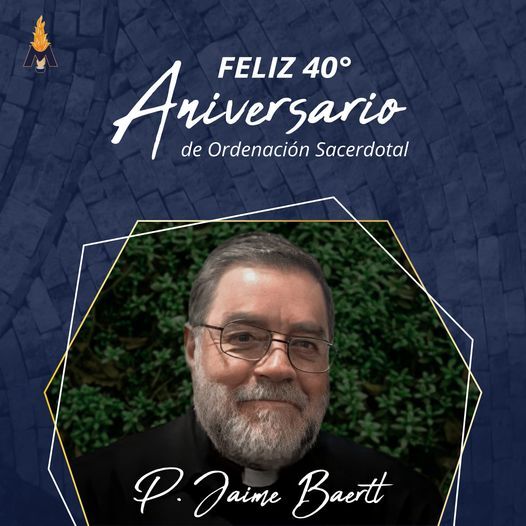
The most relevant is Baertl Gómez. On the one hand, because he is a priest, but above all because he was the “brains” of the expansion of financial and territorial expansion of the Sodalitium in Peru, Brazil, Colombia, and the United States.
His most significant role has been up until now the business side of what is a maze of semi-autonomous organizations, some of them similar to traditional religious orders, some others closer to actual private firms, and others acting as non-for-profit entities.
Len Álvarez also played a key role in the structure of this predatory organization, but there is no way to compare him to Baertl Gómez who also used to be a very active presence in Peruvian media and public life.
When German Doig, now deceased, and Luis Figari came under fire in the first decade of this century, it was Baertl Gómez who became a key figure of the organization.
The statement, appearing as an image after this paragraph in Spanish, charges them with “numerous irregularities and crimes” (numerosas irregularidades y delitos).
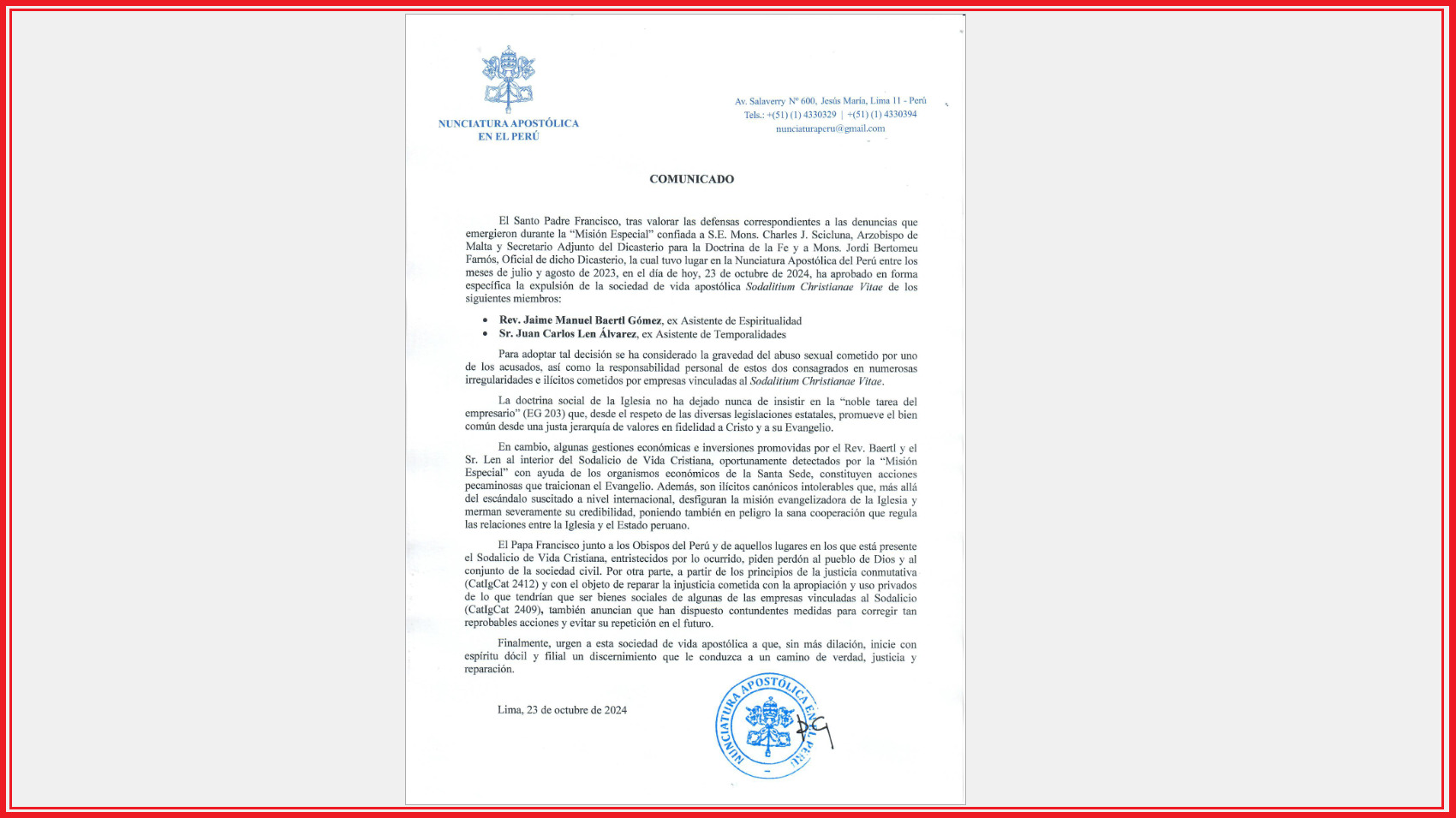
Although the Nunciature statement seems to offer some details, the statement as such is not precise as to the kind of “irregularities and crimes” leading to their expulsion from the Sodalitium. In its main paragraph, the statement talks elliptically about “sinful actions betraying the Gospel”.
The statement goes further to identify said actions as:
«…canonical crimes leading to scandal at the international scale, blurring the Church’s mission to promote the Gospel hurting its credibility, and threatening the healthy cooperation between the Peruvian State and the Roman Catholic Church».
Unlike Mexico or Uruguay where the Roman Catholic Church is not an established Church, as the Church of England in the United Kingdom, the Peruvian national State offers a great deal of protection to the Roman Catholic Church. As it happens in Panama and the Dominican Republic, the Roman Catholic in Peru is an established Church.
Bishops and some priests receive stipends from public funds. The Sodalitium’s cemetery business allowed the order to benefit also from very generous aspects of the tax code dealing with Church property in Peru. Those two are only the most evident and relevant issues leading the Nunciature to talk about “healthy cooperation.”
Complex structure
As this series on the Sodalitium has stressed before, this organization mimics features of other religious “orders” with many accusations of clergy abuse, sexual or otherwise, in many ways.
The Sodalitium shares with the so-called Legion of Christ and its mirror organization the Regnum Christi (Kingdom of God), the Opus Dei (God’s Work), and other “new” religious movements in the Roman Catholic world, the accusations of abuse, but also complex structures, many levels of membership, and participation and, above, their interest in having activities closer to economic firms than to the more traditional understanding of what a Roman Catholic religious order should be.
They are key players in complex investment funds, allocating millions of U.S. dollars, euros, and other currencies in tax havens. They are the owners of business, and they trade in stocks, in some cases as owners of portfolios with investments in gun factories, distilleries, and other investments that contradict their alleged allegiance to the Gospel.
One very specific feature of the Sodalitium is that they have been in the middle of long-standing judicial battle to keep the control over land that belongs to one of the First Nations of Peru.
Even if both the Legion of Christ and the Opus Dei are prone to fight out any challenge to their firms, their alleged reputation, and the legacy of the “orders” or, in the case of the Opus Dei, their founder Josemaría Escrivá de Balaguer, dragging their critics into costly judicial battles every time they are able to, neither of those organizations have pending litigations similar to the one the Sodalitium has had against the First Peruvian nations in the region of Piura.
Back in April of this year, Pope Francis went as far as to send a message telling the leaders of those communities to fight for their land. The far-right Roman Catholic media in Spanish used that chance to criticize Pope Francis with the usual flurry of name-calling straight out of McCarthyism, calling Bergoglio “a Communist Pope” or “a Peronist Pope,” for supporting the Peruvian First Nations’ claims.
Pope Francis’s support for the Peruvian First Nations angered even more the Latin American far-right because the websites of both the Archdiocese of Lima and the Peruvian Province of the Jesuits published the Pope’s statement about Piura.
Crisis management
Baertl Gómez is more relevant on that issue because of his role as one of the Sodalitium financial masterminds. However, that is also why there are issues with how the Pontiff manages this issue and why expulsions are not enough to address the abuses at the Sodalitium.
We know since the expulsion of Figari that there is a final report on what happened at the Peruvian order, but unlike the report issued to deal with the scandal brought by the accusations against former Cardinal Theodore McCarrick, that is available in English and Italian, with the Sodalitium there is no indication of when and even if tthe report will be published.
The overall perception of people who have been dealing with the clergy sexual abuse over the last two decades or so in Latin America is that, unlike the McCarrick report (available here as a PDF), the Holy See will not publish a report on the Sodalitium any time soon.
Last Tuesday’s piece on this order, available before this paragraph hints at some of the reasons: the so-called Society of Jesus, the Jesuits, at least two of its members who became bishops were boosters of the Sodalitium in the earlier stages of development of that organization.
What is worse, the Sodalitium leaders used them to gain access to Jorge Mario Bergoglio, the then archbishop of Buenos Aires, to open doors for the Sodalitium in Argentina and elsewhere in the Roman Catholic world.
It is impossible to go now into the details, but at some point, in the mid-1990s, when the Internet was in its initial stages of development, the Sodalitium saw there a chance to grow by providing hosting services to many Roman Catholic dioceses in Latin America.
Back then, hosting services were a new area of development, and the Sodalitium exploited the absence of hosting services with some expertise in providing that type of service for dioceses, religious orders, and even Roman Catholic schools all over Latin America.
That allowed the Sodalitium to become influential in the region. They were also pioneers in making encyclicals and other Church documents available for free over the Internet.
It was at that point that Figari, Bermúdez, and Baertl, among others, casted wide nets to try to offer services to bishops all over the continent, opening opportunities for other deals, so many bishops were willing to get in business with the Sodalitium.
This series will go into more details in the weekly installment of this series for the next Monday on other key issue: the kind of support the Sodalitium got during John Paul II’s and Benedict XVI’s pontificate from key figures in the Roman curia.
Besides Angelo Sodano, who is some kind of fixture in the clergy sexual abuse crisis, the Sodalitium had a friend in the now emeritus prefect of the Dicastery of the Institutes of Consecrated Life, the Slovenian Cardinal Franc Rodé.
As head of that Dicastery Rodé offered his absolute support to many predatory “orders” in the Roman Catholic Church. In the next installment of this series I will provide more details.
For now, it is important to stress one issue, relevant because in this new batch of expulsions Pope Francis included Jaime Baertl, a priest and, as it has been the case up until now with other priests expelled from that organization, there is no clarity as to the specific charges against each of the now fifteen former leaders of the Sodalitium.
There are the formal and informal accusations brought against them, but it is unknown, up until now, if in the case of the former leaders who are also priests there are processes leading to temporal or permanent sanctions as far as their condition as priests is concerned.
The table appearing after this paragraph summarizes the name, the date of the expulsion and the information on whether they are ordained males or not.
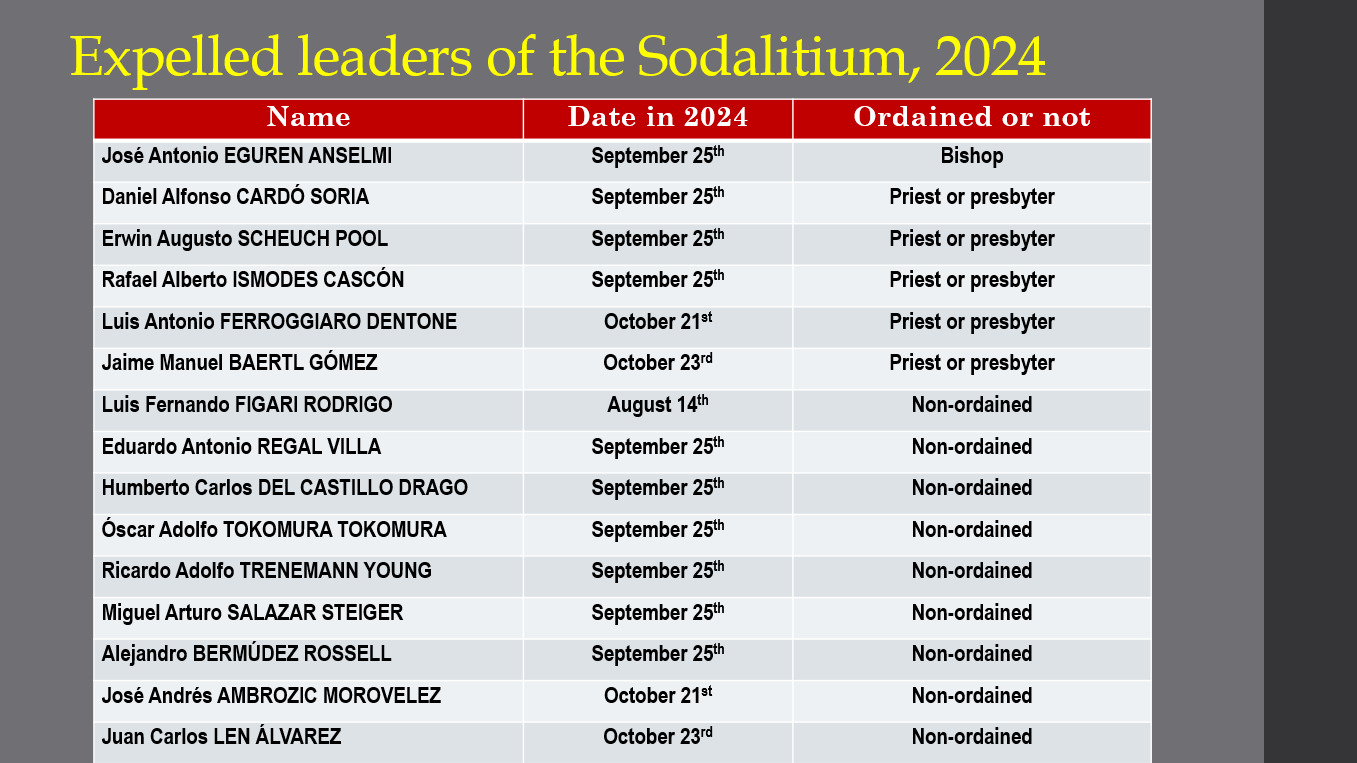
A key issue as far as the fifteen expulsions in the Sodalitium is that it is unknown what will happen with the priests already expelled from that predatory organization. After the expulsion will they retain their so-called licenses as priests? Will they join a diocese? Another religious order? Will Rome accept that?
Are Baertl Gómez, bishop Eguren Anselmi, and all the other priests identified as such in the table appearing before this paragraph subject to a more specific Church or canonic probe given the fact that they are all ordained males?
It is clear that in the case of the non-ordained males expelled by the Argentine Pontiff there is little else the Pope could do, with the relative exception of an excommunication. However, in the case of the five priests and the bishop expelled questions remain as to what is next for them.
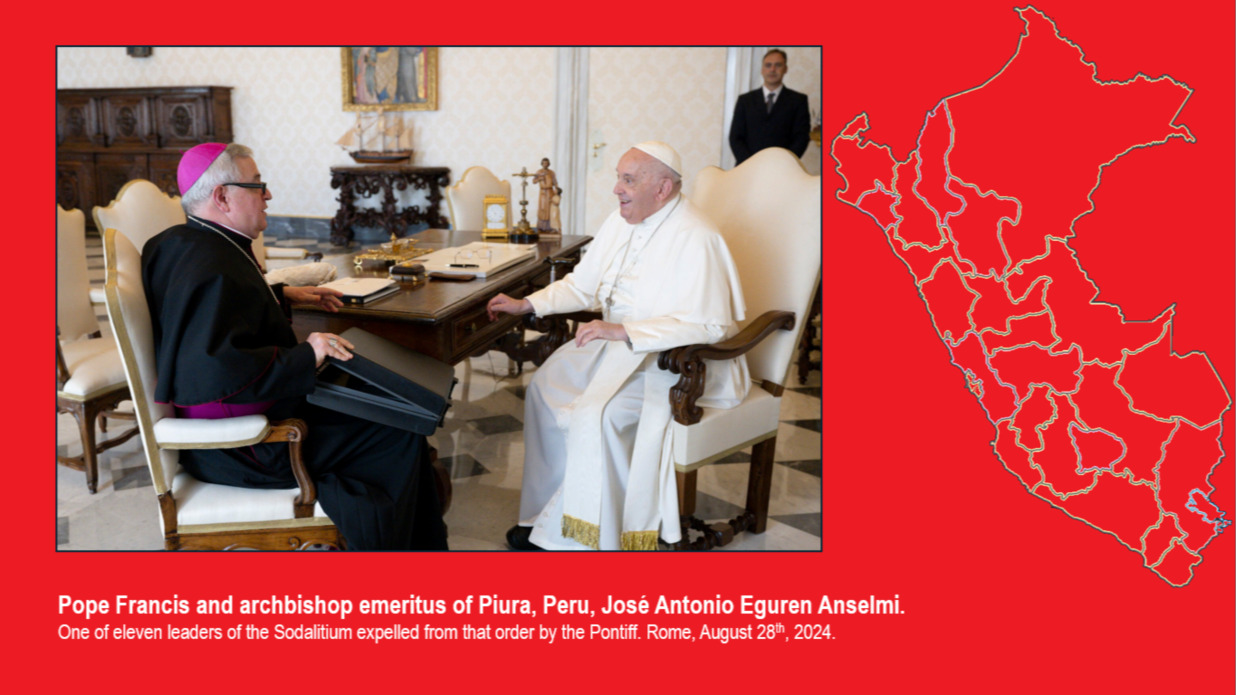
As the table details, out of the fifteen former leaders expelled, there is one bishop: José Antonio Eguren Anselmi, the now emeritus archbishop of Piura, a metro area almost 550 miles or 880 kilometers North of Lima.
The expelled priests are five: Luis Ferroggiaro, who was the subject of a previous installment of this series, already linked before this paragraph.
On the same installment dealing with Eguren Anselmi, linked after this paragraph, there is information about Daniel Cardó Soria, Erwin Scheuch Pool and, to a lesser extent, Rafael Alberto Ismodes Cascón.
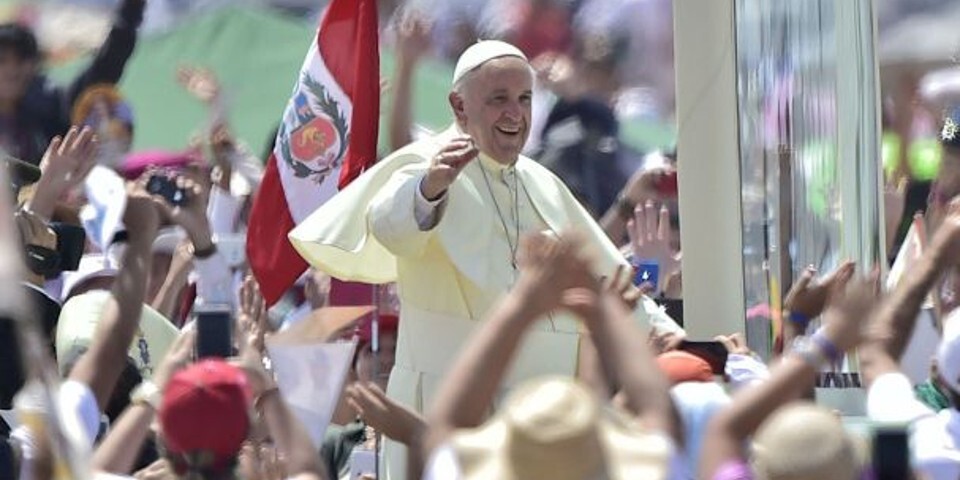
Excommunications, Pope Francis's response to abuse cover-up
The other nine former leaders expelled up until now are the non-ordained males Luis Fernando Figari, one of the founders of the organization. The story linked below deals with his case in more detail. Pope Francis expelled Figari back in mid-August of this year.

Back on the 25th of September, in the same group with archbishop Eguren Anselmi, Jorge Mario Bergoglio expelled Eduardo Antonio Regal Villa, a former Superior General of the organization; Humberto Carlos del Castillo Drago; Óscar Adolfo Tokomura; Ricardo Adolfo Trenemann Young; Miguel Arturo Salazar Steiger, and Alejandro Bermúdez Rossell.
On Monday, with Luis Antonio Ferroggiaro Dentone, Pope Francis expelled José Andrés Ambrozic Morovelez.
Once again, as in Wednesday’s statement, there is no indication as to when and if there will be reparations for the many victims of this predatory organization.