Rodolfo Soriano-Núñez Lunes, 21 de Octubre del 2024
There is nothing in the new statement regarding the moral obligation to repair the many damages to the victims of clergy sexual abuse at the Sodalitium.
Also, there is no indication if the only ordained male in this group will remain a Roman Catholic priest after the expulsion from the Sodalitium.
By Rodolfo Soriano-Núñez
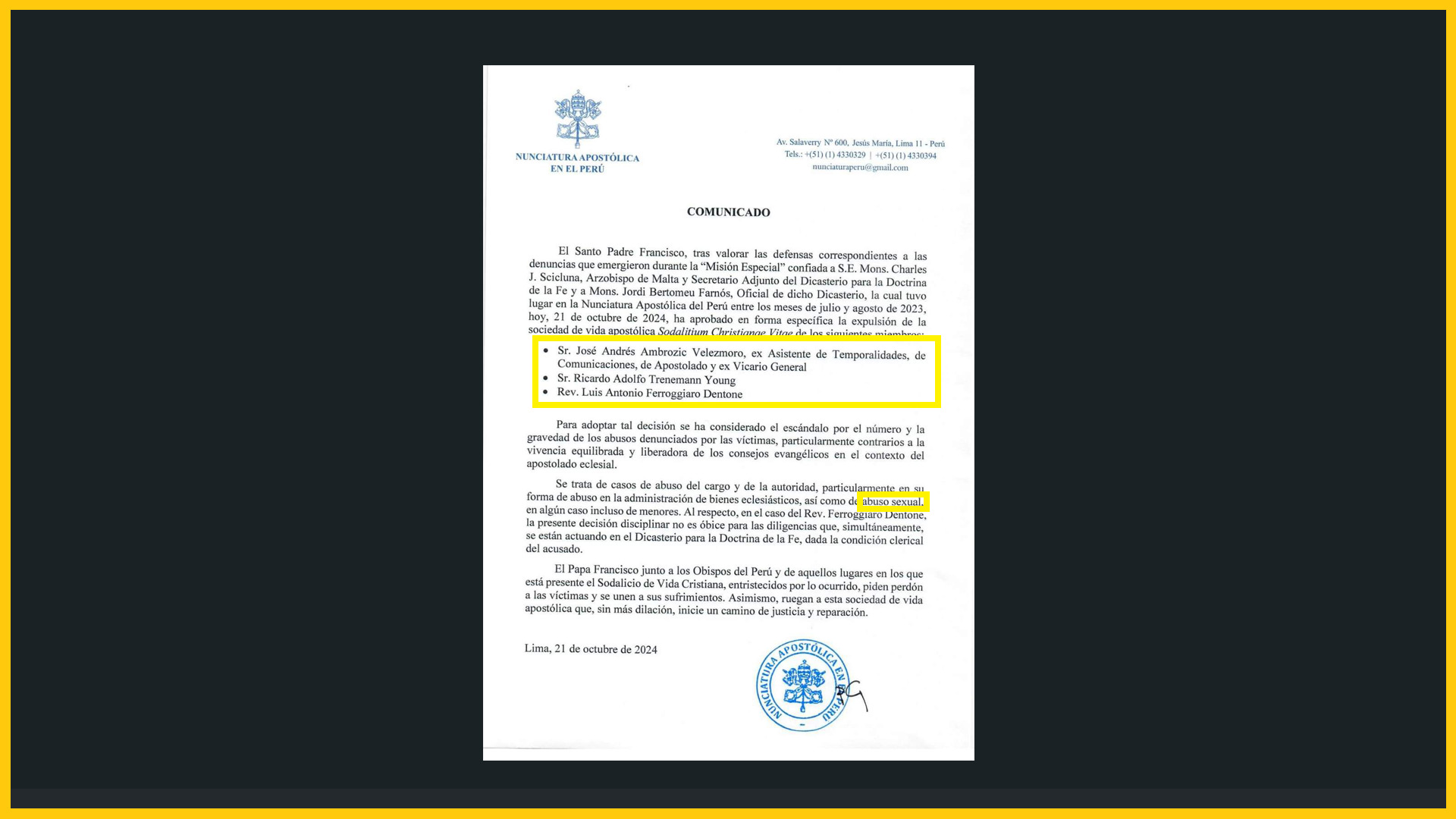
Monday October 21st, around noon, the Nunciature to Peru issued a brief statement summarizing Pope Francis’s decision to expel three more former leaders from the Sodalitium, a Peruvian religious organization marred by clergy sexual abuse allegations.
Previously, the Pontiff had issued excommunications of members of this group who repeatedly tried to discredit the very idea that abuse had happened at that organization.
The new statement is somehow misleading, since one of the three former leaders, Ricardo Adolfo Trenemann Young, was already in the previous list of former leaders expelled by the Argentine Pope.
Trenemann is a non-ordained male and has been, up until today, a key figure in the expansion of the Sodalitium in Brazil.
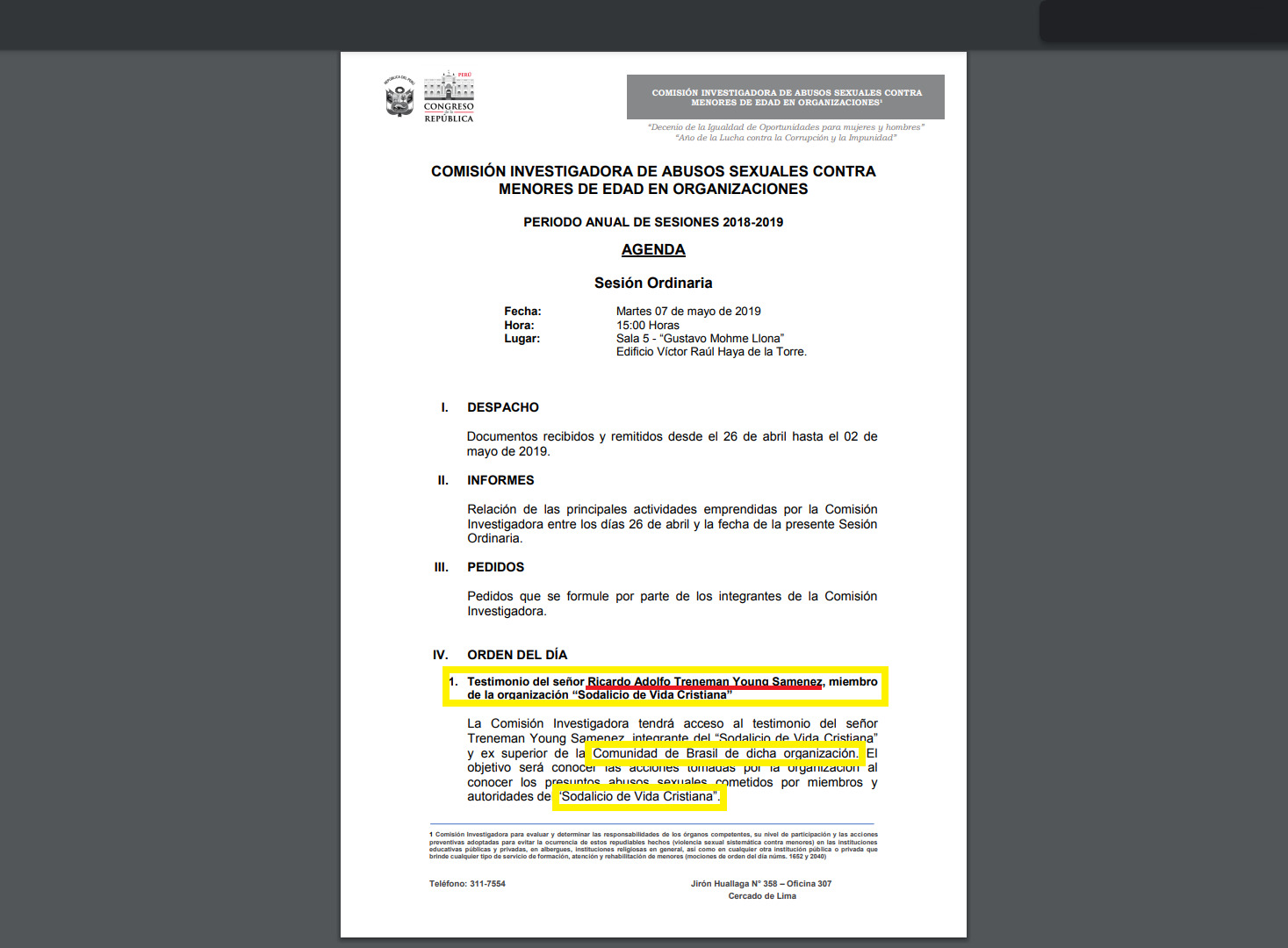
When the Peruvian Congress tried to probe sexual abuse in religious organizations, back in May 2019, the lawmakers summoned Trenemann Young to explain what the order had done to prevent sexual abuse in that organization in Brazil, as the image appearing next proves. The image comes from a PDF at the Peruvian Congressional records office.
The Congress closed the probe as part of the ongoing political crisis in the Andean country, so even if there were hearings and testimonies, and the lawmakers offered some practical solutions to the issue, there was no actual improvement.
The other two, actually newly expelled former leaders of the Sodalitium are José Andrés Ambrozic Morovelez, a non-ordained male who was at some point the second in command at this order (vicar general). Before, he played a key role in recruiting new members, and was also in charge of some of the “pastoral” activities of this organization.
Finally, there is Luis Antonio Ferroggiaro Dentone, he is a priest and, oddly enough, as with other priests accused of abuse, sexual or otherwise, there is no indication of any challenge or doubt to his status as priest, we only know that the Pope decided to expel him from the Sodalitium.
The statement from the Nunciature appears after this paragraph.
Ferroggiaro has been dealing with accusations of clergy sexual abuse at least since the mid-2010s. So much that by the end of the decade, Javier Augusto del Río Alba, archbishop of Arequipa, 460 miles or 740 kilometers South of Lima, launched a Church probe to figure out the validity of the accusations back in August 2019.
That was, by the way, the only accusation of clergy sexual abuse Del Río Alba was willing to acknowledge in his archdiocese.
Before the abuse allegations emerged, Ferroggiaro was already some sort of religious celebrity in Peru. A few years after his ordination, he spent seven years as an officer of the Pontifical Commission for Latin America, the so-called PCAL, the very commission now led by Robert Prevost, the U.S. born Cardinal, and former bishop of Chiclayo, Peru.

From Chicago to Chiclayo, sexual abuse victims are pawns
Ferroggiaro was at the Commission from 1997 through 2004, officially as a priest of the Archdiocese of Lima and as a member of the Sodalitium.
Unlike other orders in the Roman Catholic Church, which force their members to either be with them or be a associated to a diocese, the Sodalitium allowed their members to be in a somehow liminal position.
As an officer of the Commission, he would have access to information about the issues affecting almost any Roman Catholic diocese in Latin America.
His very appointment to that position should bring the bishops of the Roman Catholic Church to an analysis of how and why they appoint priests like Ferroggiaro Dentone to such positions.
Major Leagues
More since his appointment to the Roman Catholic Major Leagues, the Roman curia, would have been impossible without the support of two now deceased Jesuit bishops.
On the one hand, even if he recanted his support by the end of his life, when he came to the realization of the toxicity of the Sodalitium, there was Augusto Vargas Alzamora.
He was archbishop of Lima at a key period, from 1989 through 1999, when the Sodalitium was setting itself up for a major expansion beyond Lima.
He was Ferroggiaro’s superior at Lima at the time of his appointment as officer of the Commission.
There is no way the now expelled leader of the Sodalitium could have been in Rome without Vargas Alzamora’s approval.
Any bishop would like to have a surrogate at that Commission, but he was not any bishop. He was a Jesuit, so he already had access to a network of contacts and information that other bishops have no immediate access to.
More so since, by 1994, three years before Ferroggiaro’s appointment, he was already a Cardinal, so he had no actual need for a pawn at the Commission.
What makes the Sodalitium so relevant?
The other key piece to understand Ferroggiaro’s appointment there is another bishop, another Jesuit, the now deceased former archbishop of Arequipa, Fernando Vargas Ruiz de Somocurcio.
As far as I have been able to figure out the kind of horse trading behind the many abuses at the Sodalitium, it was Vargas who facilitated Ferroggiaro’s growth as a powerful figure in the Peruvian Catholic Church.
And it was not only this priest. The Jesuit archbishop moved his influence to support the Sodalitium at large.
Without Vargas at Arequipa, it would be impossible to understand why Ferroggiaro was at some point associated to that archdiocese.
Also, without the support of the Jesuit archbishop of Arequipa, the Catholic University of Saint Paul, would have never come to exist by the mid-1990s.
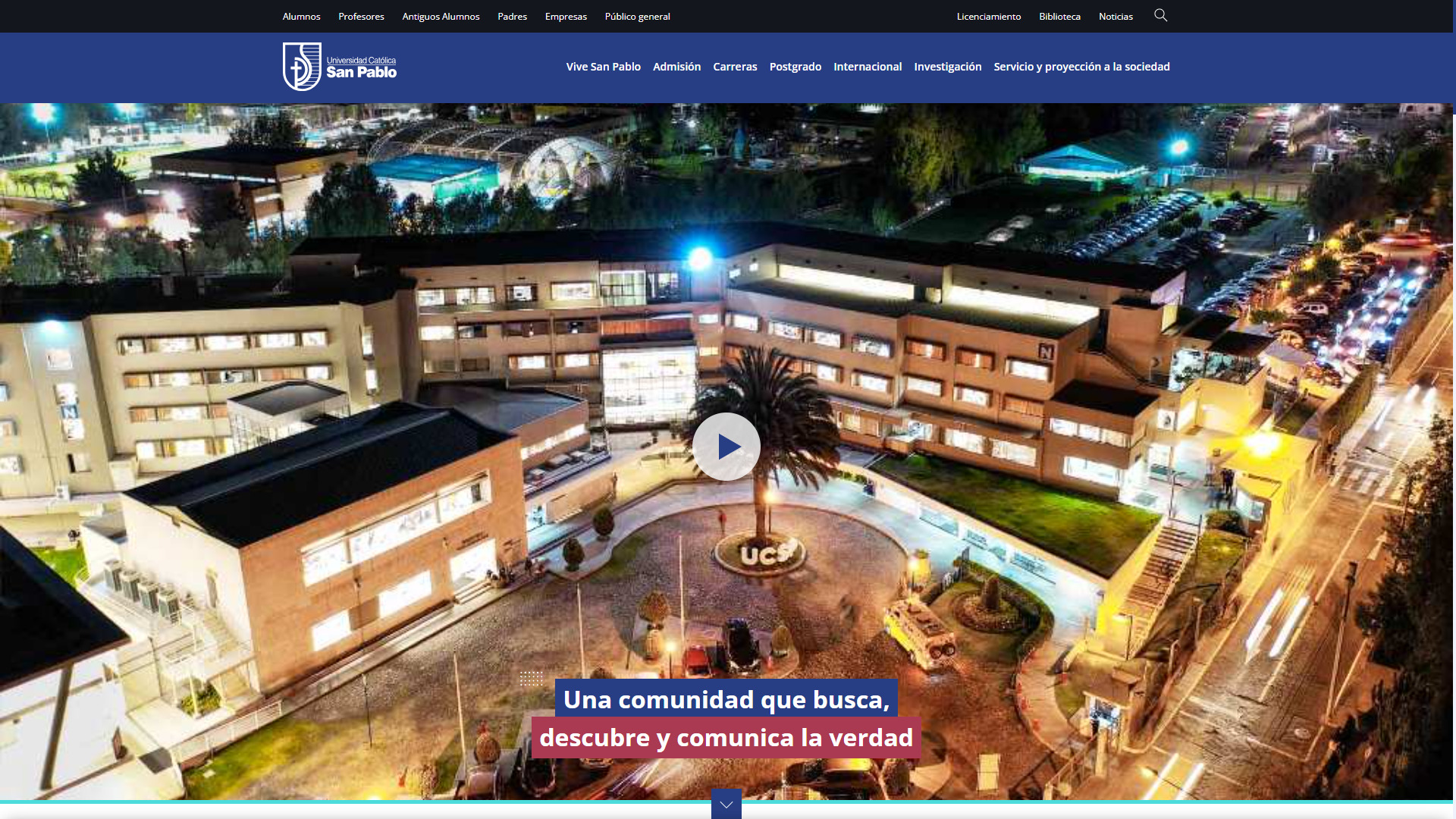
Although the college as such makes no reference to their relationship with the Sodalitium (see their section Who we are? at their website here), the Sodalitium is more than willing to broadcast their relationship to the University, as can be seen here.
There the leaders of the Sodalitium render the University as “God’s project” among many other superlatives to describe the college as such and their relationship with that organization.
Blind Spots
Sadly, there are plenty of blind spots when trying to understand how the Sodalitium became the abuse-orientated machine that it is up until now, but one key place to look at would be their relationship with this and other Catholic colleges in Peru.
That this is the kind of issues that a report from the Roman curia on the Sodalitium would clarify.
Pope Francis did it when he dealt with the crisis brought by the accusations against former Cardinal Theodore McCarrick.
However, doing so would be extremely painful for the Pope himself and the Jesuits, his own order, given the role two Peruvian Jesuit bishops had in the development of the Sodalitium.
More so, because Ferroggiaro used to brag about having a close relationship with Jorge Mario Bergoglio during his tenure as archbishop of Buenos Aires, Argentina.
When Ferroggiaro’s victims hinted at the possibility of filing some kind of formal complaint, Alejandro Bermúdez, then head of ACI Prensa and Catholic News Agency, the “news” agency now integrated in EWTN he used his position in those entities to attack the victims, discrediting them in English- and Spanish-speaking diocesan media in the United States, Latin America, and Europe.
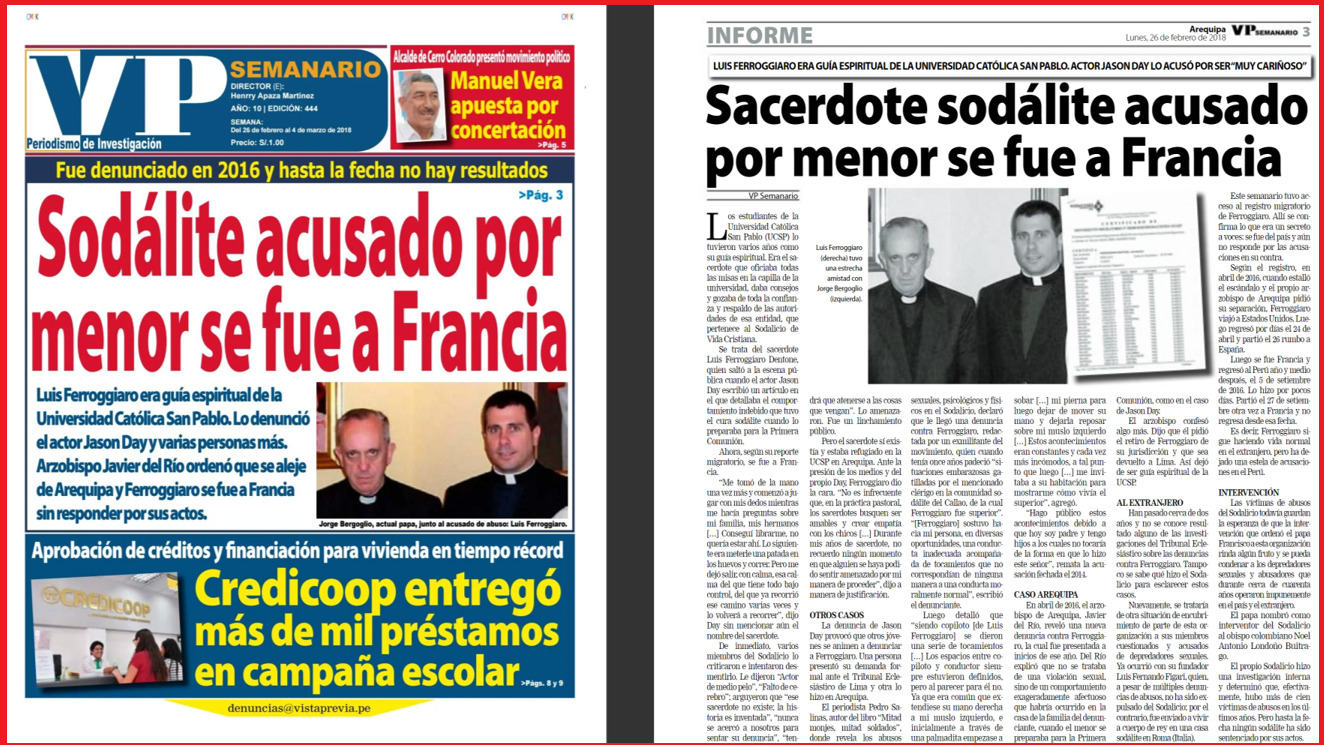
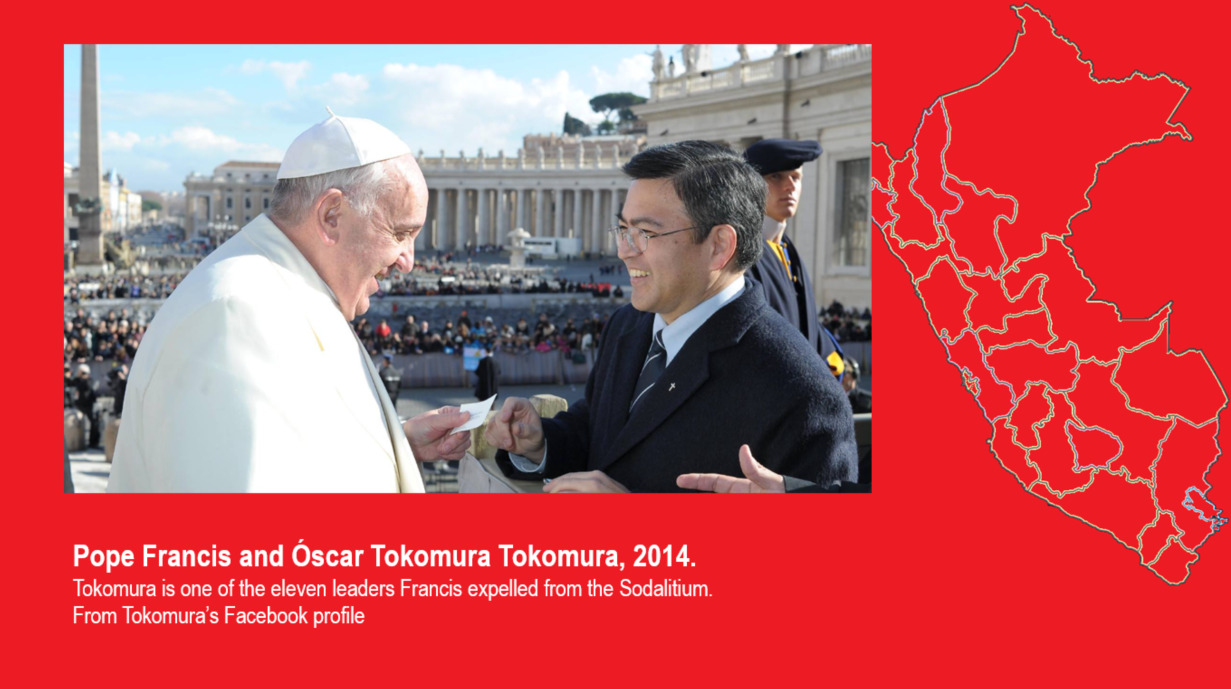
Back in 2015, when a new wave of accusations against the Sodalitium emerged, pictures of then Cardinal Bergoglio with Ferroggiaro and other now former leaders of the Sodalitium as Óscar Tokomura, inundated Roman Catholic social media to render the leaders of the Sodalitium as a deeply loyal to the Pope.

The leading voice then was Jason Day, a Peruvian performer and celebrity who suffered Ferroggiaro’s sexual advances.
When Day talked about his experience, the Sodalitium enforcer, Alejandro Bermúdez, went hard on him.
Bermúdez, the spit-baller of “Catholic” social media, will insult and do the kind of character assassination that is almost a standard practice in the Roman Catholic Church against any victim of clergy sexual abuse: discredit the victim, questioning his or her credibility, portraying the victim, if possible, as “an homosexual”, as an “enemy of the Church”, a “communist” or some other adjective to keep their crowd happy and mobilized.
When the accusations emerged, Ferroggiaro was the chaplain of the Catholic University of Saint Paul, although local media in Arequipa were also well aware of his plans to move out either to the United States or to France.
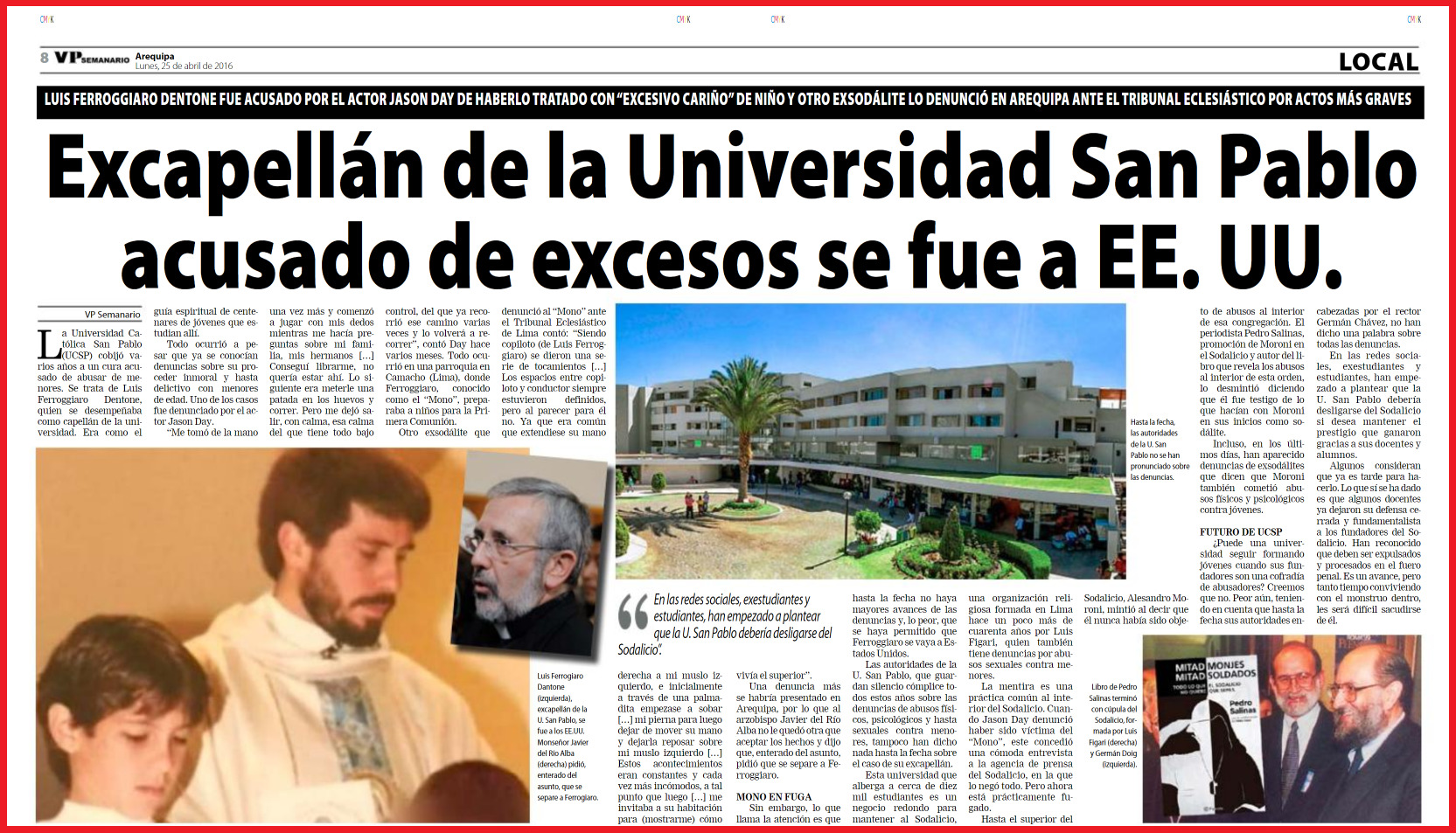
He was also an instructor at that college, as the image after this paragraph shows.
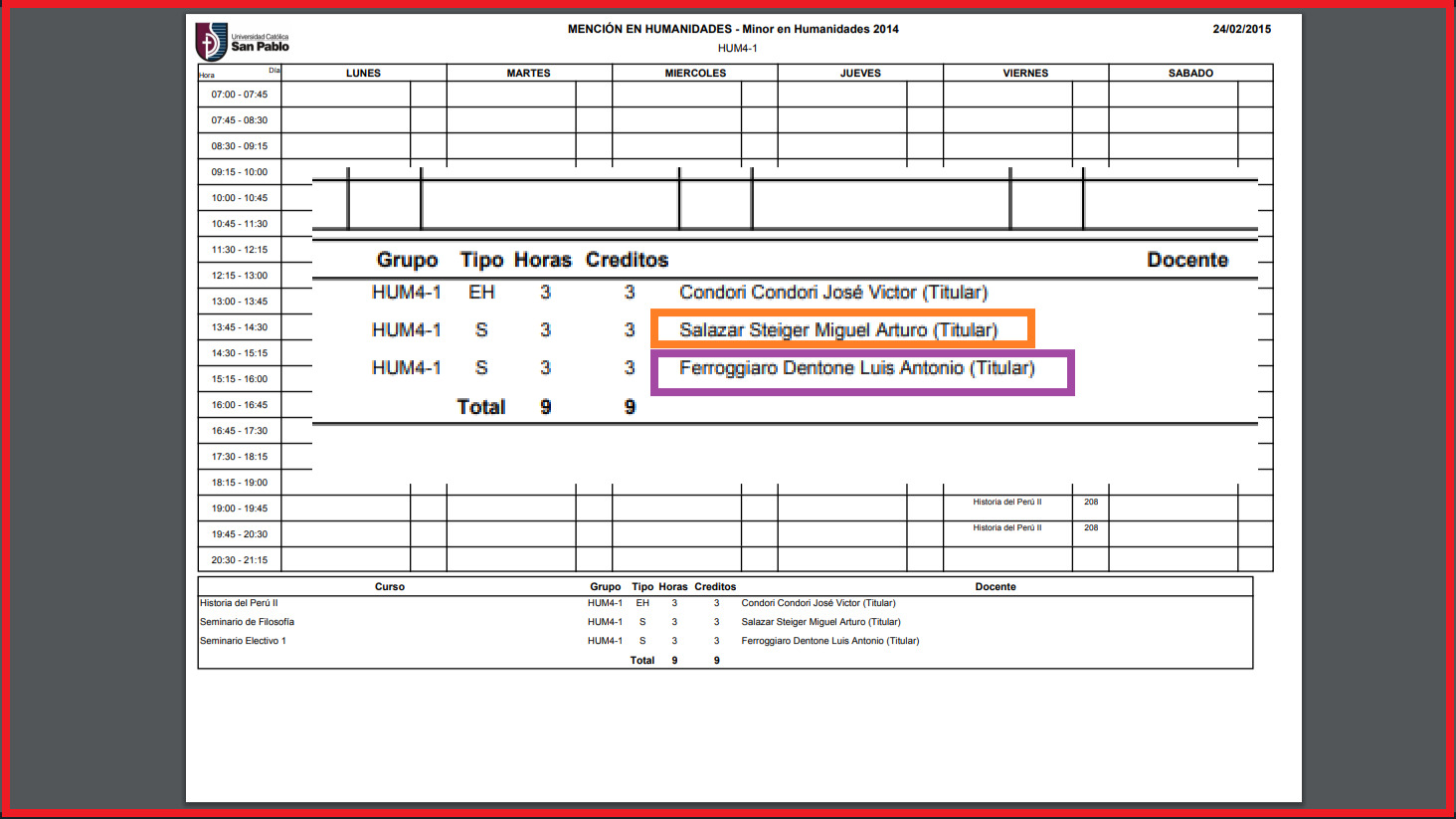
It is worth noting that next to Ferroggiaro’s name one finds one more former leader of the Sodalitium in the schedule from that Peruvian college: Miguel Arturo Salazar Steiger.
It is not clear if Ferroggiaro went to the Sodalitium original landing pad in the United States, the archdiocese of Denver or if, given the fact that back in 2016 archbishop Charles J. Chaput, the Sodalitium's best friend in the U.S., was already the leader of the archdiocese of Philadelphia, Ferroggiaro went there.
In the pictures with Jorge Mario Bergoglio, besides Ferroggiaro it is possible to identify Óscar Tokomura, a Peruvian Japanese who also used to brag on his own about his close relationship with Pope Francis, as the image displayed after this paragraph proves. The image comes from Tokomura’s social media accounts.
Pedro Salinas, a journalist, survivor of abuse at the Sodalitium, and a leading voice in the criticism and denunciation of abuse there, used a picture of Ferroggiaro, Tokomura, and then Cardinal Bergoglio to illustrate a 2016 story available here and displayed as an image after this paragraph.
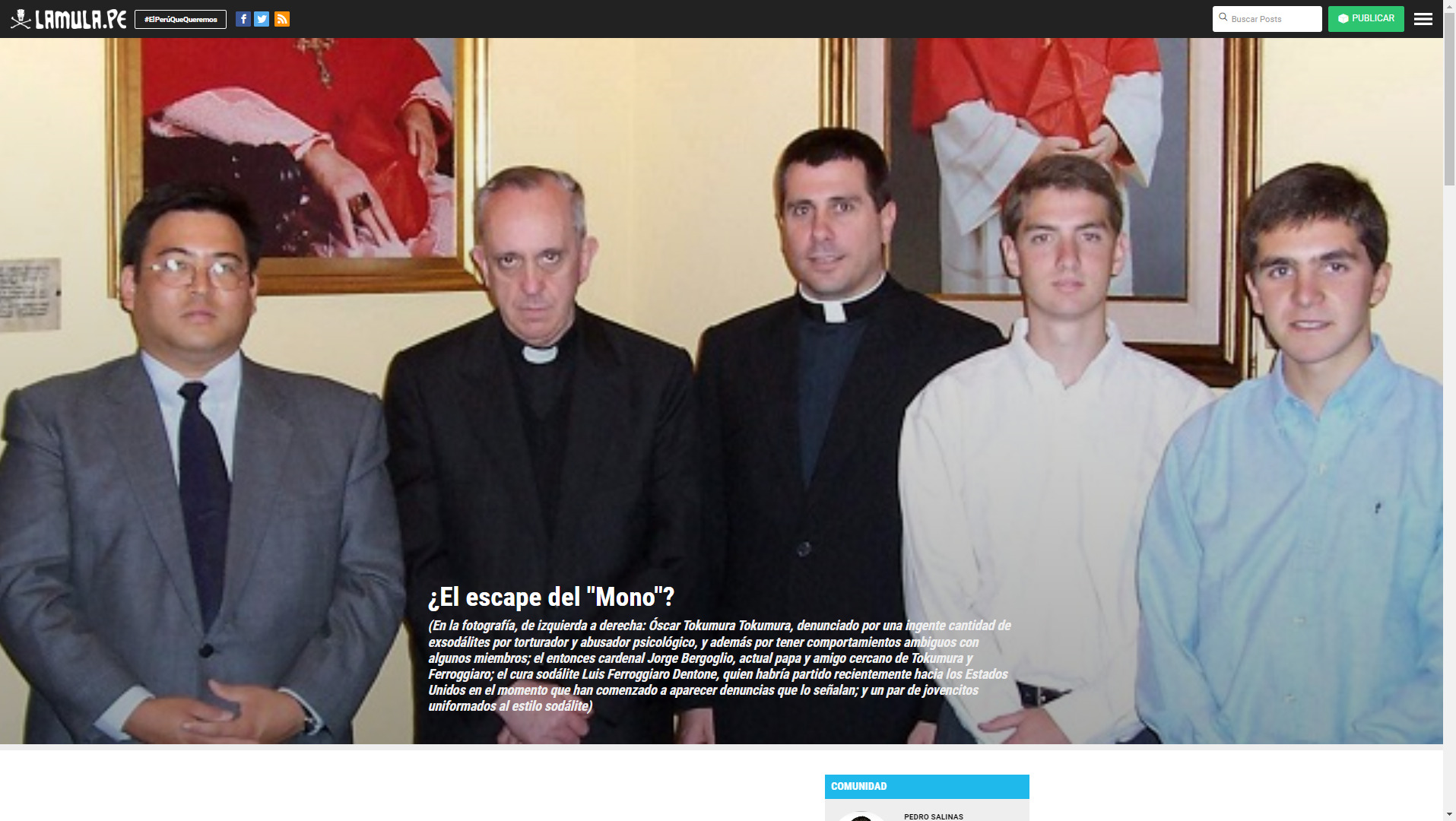
Other Peruvian newspapers and magazines used similar pictures displaying Bergoglio as close to the leaders of the Sodalitium, as some sort of warranty that abuse was going to remain the unofficial doctrine of the Roman Catholic Church.
The reasons
The reasons to expel this group are similar to the reasons behind the expelling of other former leaders of that organization where several “orders” and “movements” share resources in opaque and unusual ways even when compared with other secretive Roman Catholic orders as in the case of the Spaniard Opus Dei, the German Das Werk, or the Mexican Legion of Christ-Regnum Christi.
The new announcement seems to indicate that Pope Francis has decided to keep the Sodalitium as an “institute of consecrate life,” which is jargoon to talk about some religious orders in the Roman Catholic Church.
The decision goes against the requests and/or suggestions of many former members, journalists, and observers of the clergy sexual abuse crisis to suppress the organization.
One of the potential reasons to keep it alive is the fact that, as it was the case with the Mexican Legion of Christ or the Spaniard Opus Dei, these “orders” act in other realms of public life, whether as managers of investment funds, as owners of large, transnational universities, or as owners of Real Estate, from commercial to residential and, in the case of the Sodalitium, as managers of cemeteries and similar services.
This is more evident in Ferroggiaro’s case because on top of his roles as instructor and chaplain at the Catholic University of Saint Paul, his rank as a leading member of the Sodalitium, and his own position as a Roman Catholic priest, he also has power of attorney over firms related to the Sodalitium financial empire.
The most basic search over the internet brings about official documents where Ferroggiaro appears as attorney of Sodalitium related entities, as the image appearing after this paragraph shows, where Ferroggiaro is trying to secure water rights from the Peruvian government for a firm called Asociación Promotora del Apostolado (Association for the Promotion of the Apostolate).
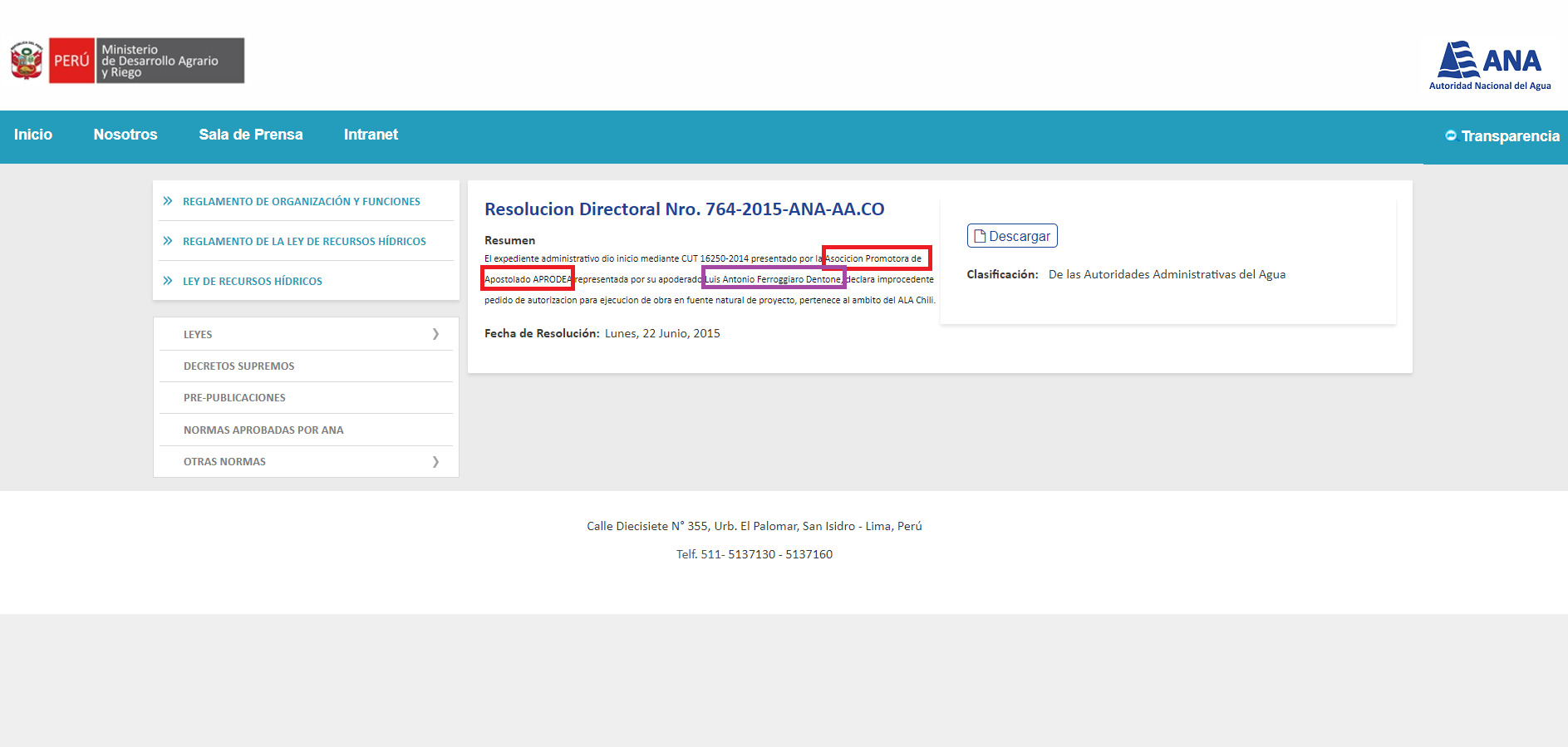
Why would an entity devoted to an apostolate need to secure water rights? Well, because cemeteries is one of the Sodalitium business and graveyards need water to keep them neat and tidy.
In any case, as good as the decision to expel more former leaders of the Sodalitium is, the issue of reparations for the victims of clergy sexual abuse at the Sodalitium is the proverbial 800-pound gorilla nobody wants to talk about.
There is nothing in the recent expulsions and threats of excommunication addressing that issue, and again, there is no indication as to whether Ferroggiaro will remain a Roman Catholic priest or not.