Rodolfo Soriano-Núñez Lunes, 19 de Mayo del 2025
As Leo XIV begins his tenure, Saint Peter’s witnessed a pontifical ball of groups vying for influence and access.
From financial backers with political agendas to advocates for female inclusion and survivors of clergy sexual abuse demanding justice, Leo XIV faces a complex landscape.
By Rodolfo Soriano-Núñez
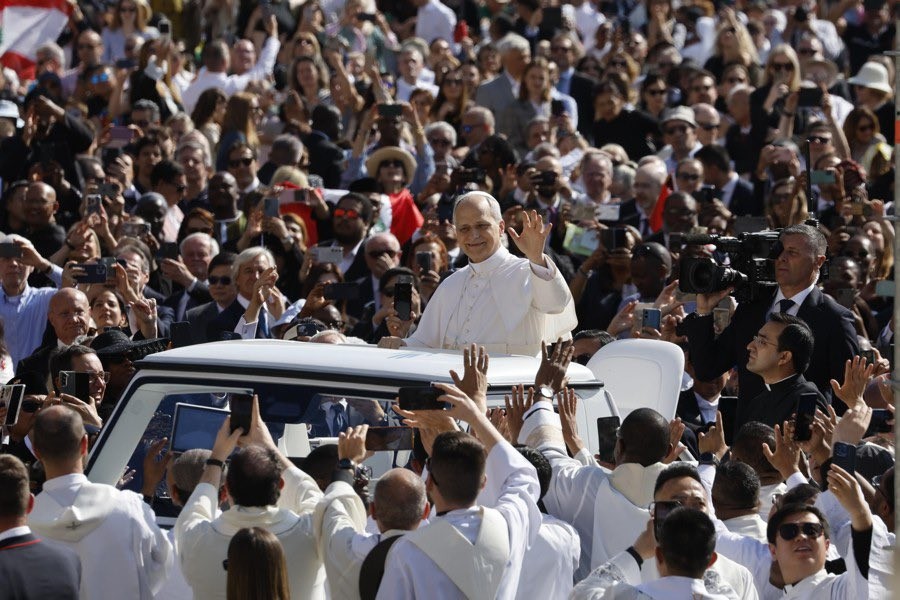
Yesterday, Rome displayed all its grandeur as the old imperial capital and heart of the Catholic Church. Most of the symbols of the old papacy were on display. To the chagrin of the Catholic far-right, the old Triple Tiara, the sign of the Imperial Papacy was nowhere to be seen.
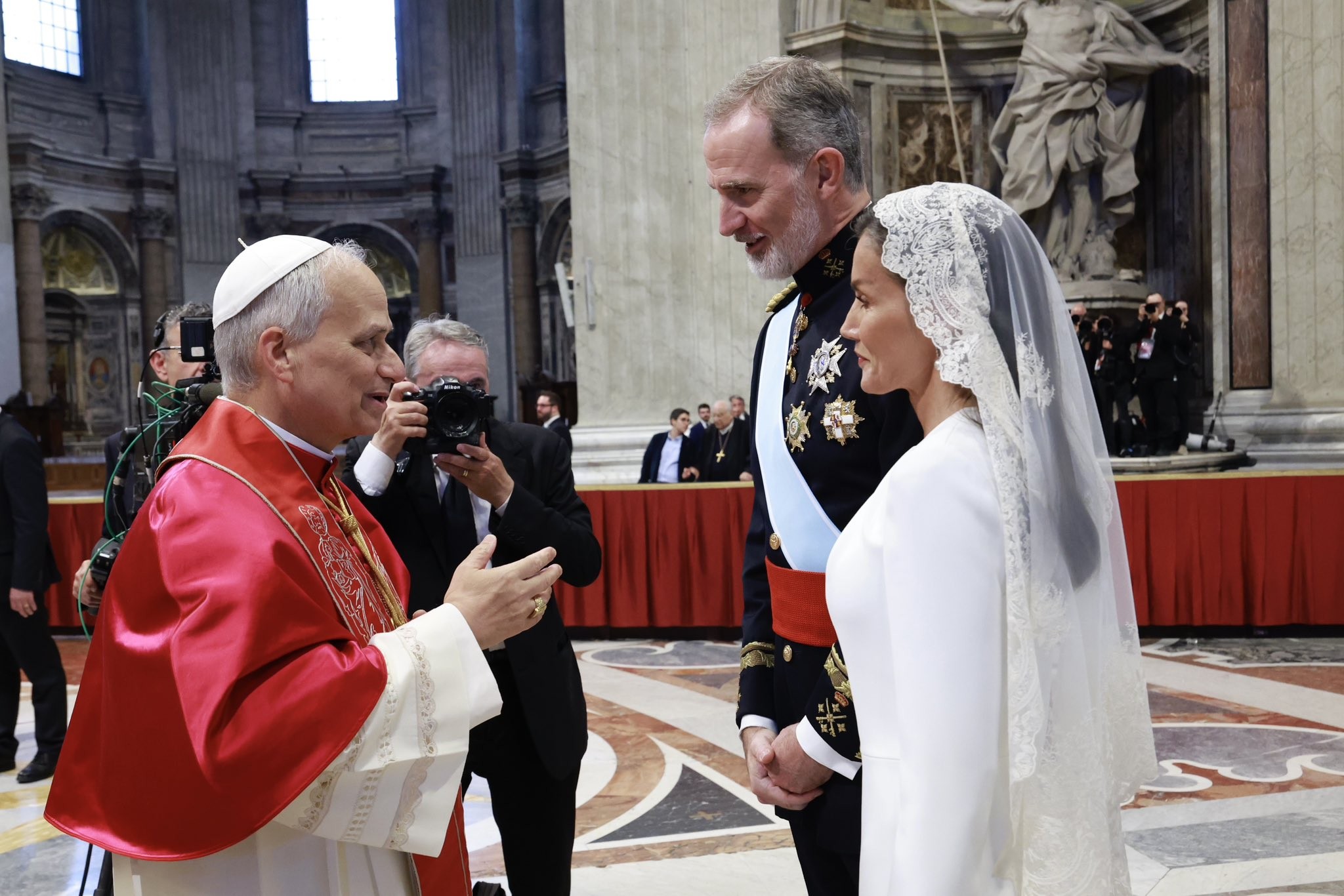
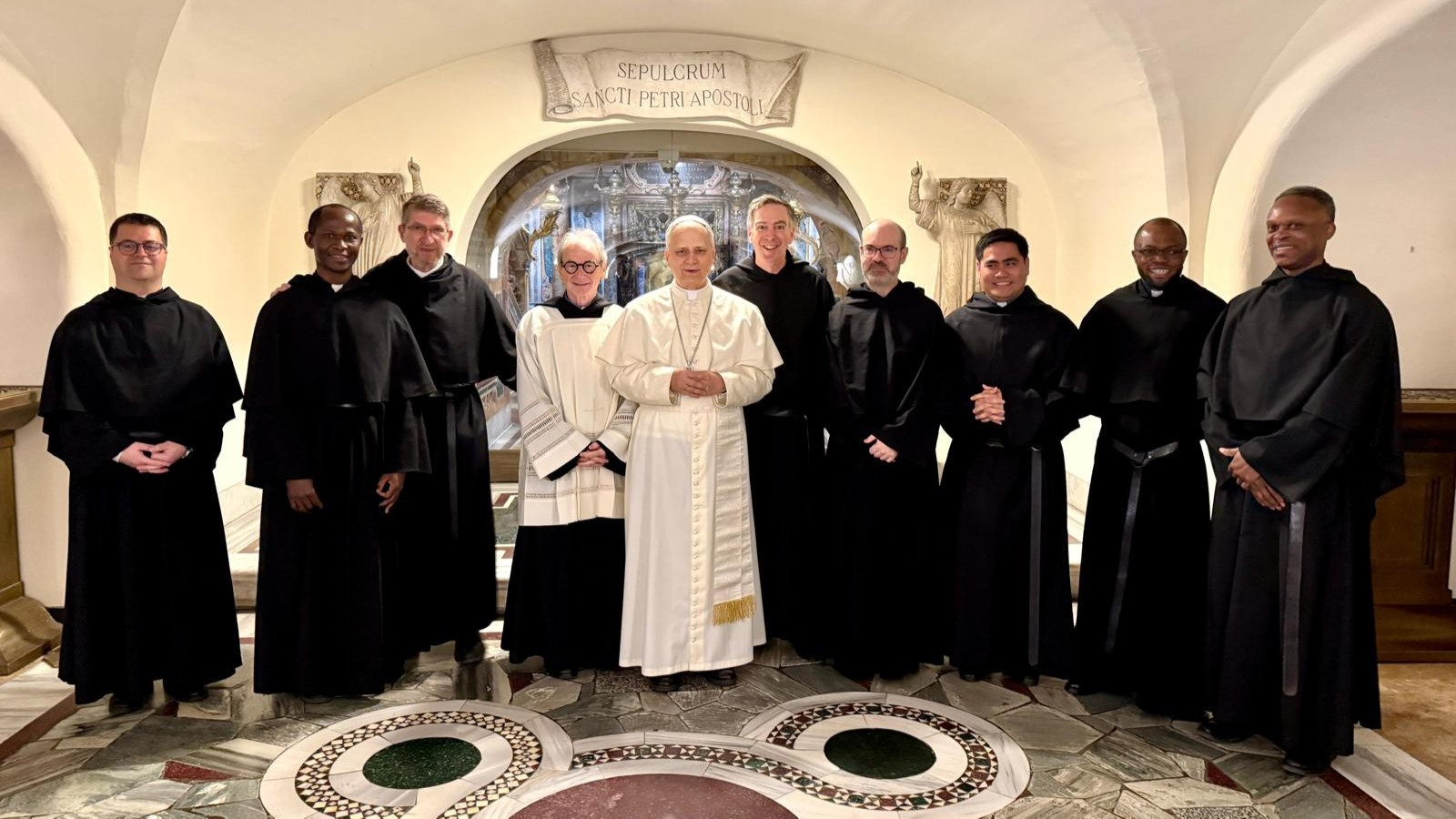
There were, instead the rather humble hints of the many paths Robert Francis Prevost Martínez, as he used to call himself in Peru, walked before becoming Pope Leo XIV: Chicago, the Augustinians, Peru.
Ever since the world knew he was the new Pope, elected by the largest Conclave ever, there has been a pontifical dance of sorts around him. It is not as with the U.S. Presidency, where many balls happen in Washington, D.C. to celebrate the inauguration of the new president.
In Rome, and all over the world, the papal dance is a more discreet display. Cardinals, bishops, superiors of religious orders to understand what their new leader expects. Leaders of lay movements, experts, and the exegetes of the previous Pope also participate in the scramble to figure out the new pontificate.
This initial phase is one of optimism, a period of intense speculation and maneuvering, and a prelude to a more competitive struggle for influence in the Catholic Church, leading to a sort of frantic game of musical chairs, where powerful groups and individuals vie for power and influence.
Leo XIV’s message, available here, stressed the idea of unity as a recurrent theme, with seven references in its little less than two pages. He also stressed the need to reach harmony, and decried the fact that
We still see too much discord, too many wounds caused by hatred, violence, prejudice, fear of those who are different, by an economic paradigm that exploits the Earth's resources and marginalizes the poorest.
In that respect, it is clear that he shares with Francis, the now deceased Argentine Pontiff an understanding of the Church and its current challenges.
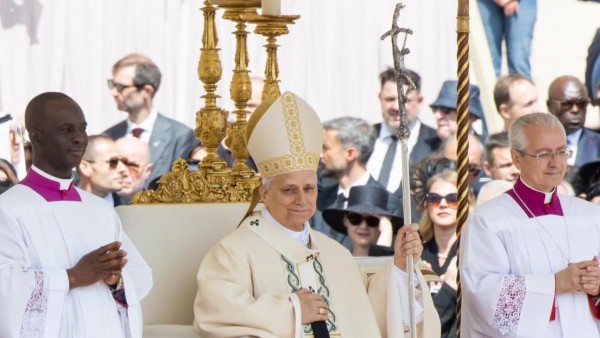
A curial courtship of sorts, the dance culminated today in Saint Peter’s square. Leo XIV’s received the so-called Fisher’s Ring and, as in any other mass, he preached his homily.
Pope Leo XIV’s preaching followed the dynamics displayed at the so-called General Congregations, the meetings of all Cardinals during the week or so before the Conclave. At the time, they exchanged ideas about the priorities of the Church in something similar to a parliamentary debate, although there are no votes. The Congregations also mirror media coverage.
Hints of those debates emerged today as the new Pope went over his priorities, especially when stressing the need for a unity coming out of dialogue, and not simple imposition of authority. Far from merely reaffirming the alleged eternity of a way to understand the Church’s teachings, one of the far-right’s all-time favorites to reassert its influence, Leo XIV went for an idea frequently shared by Pope Francis.
It is not about proselytism or the mere reaffirmation of tradition. There is an actual need to convince through example. Over the eighth paragraph of his message, Leo XIV explains Peter’s task as one of “giving his life for the flock,” in the sense of a…
- …self-sacrificing love, because the Church of Rome presides in charity and its true authority is the charity of Christ. It is never a matter of capturing others through oppression, religious propaganda or the means of power, but it is always and only a matter of loving as Jesus did.
If up until yesterday the curial waltz showed repeated attempts from the U.S. and global Catholic far-right to claim Prevost’s election as the byproduct of the ability of their champions at the Vatican: Cardinals Timothy Dolan, the archbishop of New York, and/or Raymond Leo Burke, to build a robust coalition, on the hours after Leo XIV’s inaugural mass, that idea looks increasingly weak.
A procession of sorts
That does not mean, of course, that the attempts to seize Leo XIV’s pontificate are over. Again, over the days before this Sunday’s mass there were moves to claim and render him as their own. Arrogant or humble, all of them aim at finding a new place in the procession following the new Pope in his first attempts at figuring out his own role.
One example of these, at times desperate attempts to seize influence over the new Pontiff came from Fernando Ocáriz, the moderator of the so-called Opus Dei, a secretive Spaniard religious organization, similar to an order, with accusations of abuse in Argentina and other countries.
On Wednesday, May 14th, Pope Leo XIV granted the leader of said “order” a brief audience. A couple of hours after the meeting, the Opus Dei’s vast social media operation, posted messages in Facebook and X rendering Ocáriz as the obedient “prelate” acknowledging the new Pope’s authority.
Portraying Ocáriz as an obedient 'prelate' is already an example of the ongoing power struggle in Rome, as proven by the Holy See’s press office reaction. Far from following the Opus Dei choice of style for their leader, they set the record straight when identifying Ocáriz as moderator in English (available here), and as moderador and moderatore in the Spanish- and Italian-speaking versions of the briefing (available here in Spanish and here in Italian), and as a composite image with the statements in the three languages, after this paragraph.
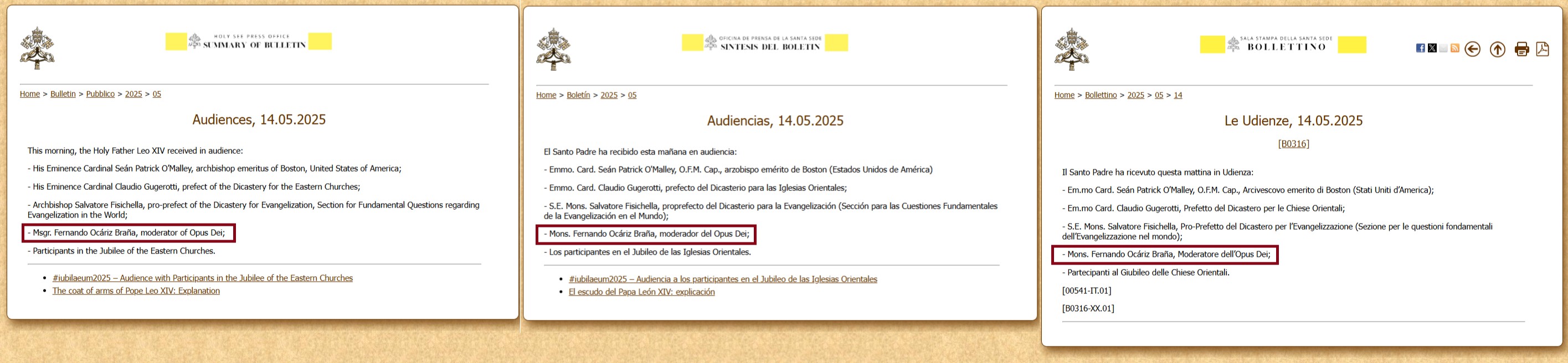
The different ways Opus Dei and the Holy See Press Office credited Ocáriz is more than a stylistic choice. It highlights potential clashes and power struggles. It also demonstrates the Catholic far-right's willingness to challenge Francis's reform. Francis moved the “order” from the Dicastery of the Bishops’ authority, to place it under the Dicastery of the Clergy with a Motu Proprio, a decree-like instrument, in July 2022.
By placing them under that dicastery's authority, Francis made a concession. All other orders are under the Dicastery for Institutes of Consecrated Life and Societies of Apostolic Life. This is a Vatican Cabinet post, currently led by a nun, Sister Simona Brambilla.
It is not the first time Pope Leo XIV has had to deal with the Opus Dei’s deceitful ways. When Pope Francis appointed Prevost as bishop of Chiclayo, the Opus Dei lost their influence over that Peruvian diocese whose second bishop, Ignacio María de Orbegozo y Goicochea, a Peruvian-Spaniard and full member of the Opus Dei, ruled Chiclayo for 30 years (1968-98), leaving Jesús Moliné Labarte, born in Spain, close to the order but not a full member, as his successor until Prevost’s appointment in 2014.
The participants
Before Pope Leo XIV’s inaugural mass, there were signals all over the internet about the intensity of the competition to frame a dominant narrative about the new pontificate.
More so after The New York Times reported about the wanderings of Louis, a brother of the Pope, a resident of the very red state of Florida, displaying his closeness to the MAGA universe over his Facebook account prior to his brother’s election as Pope. Pontifical brother Louis was in Rome to greet his brother and, at least for now, he seized the chance to avoid the limelight.
Before yesterday’s mass, the English- and Spanish-speaking Wikipedia pages devoted to Pope Prevost had to use the anti-abuse filters. Said filters are a policy at that collaborative website used to prevent the hijacking of biographies and other articles available there.
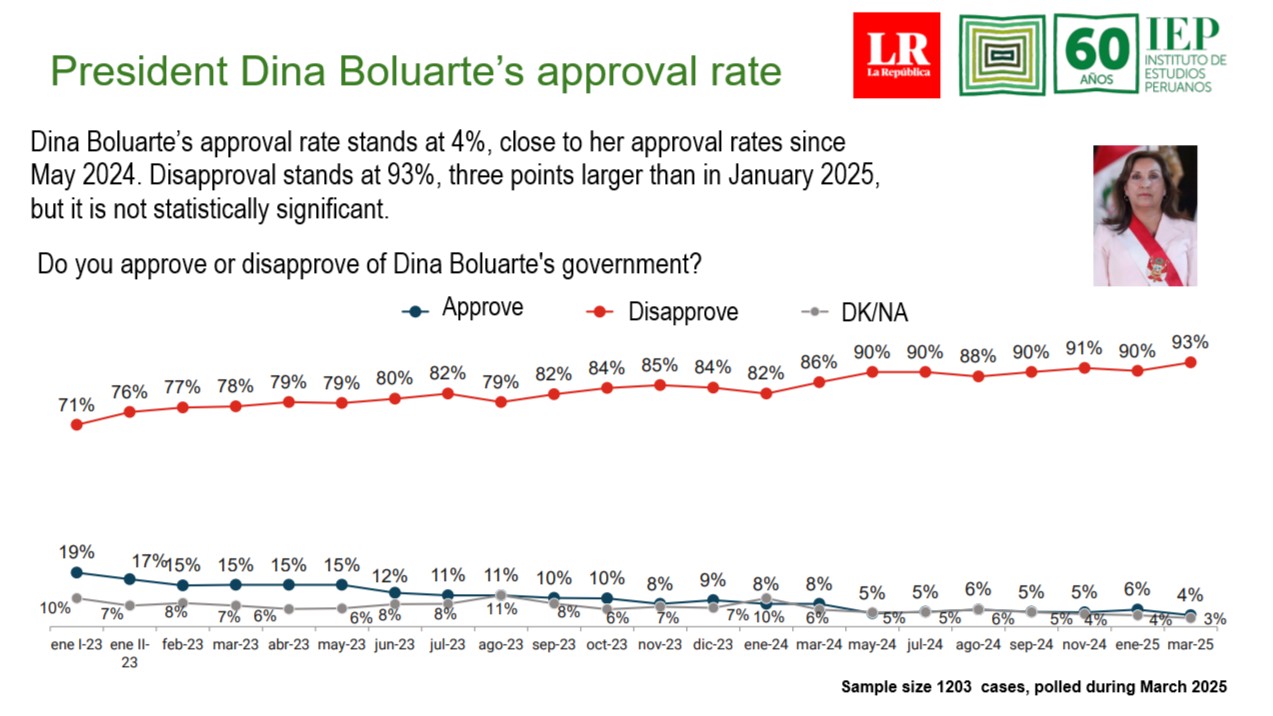
Other struggles for power were on display at yesterday’s inaugural mass. Among others, it was possible to spot Dina Boluarte, the weak Peruvian President, sporting a miserable three percent approval rate (see the graph below). She and the Pope’s adoptive country have witnessed a seemingly endless parade of eight Presidents over the last eleven years.
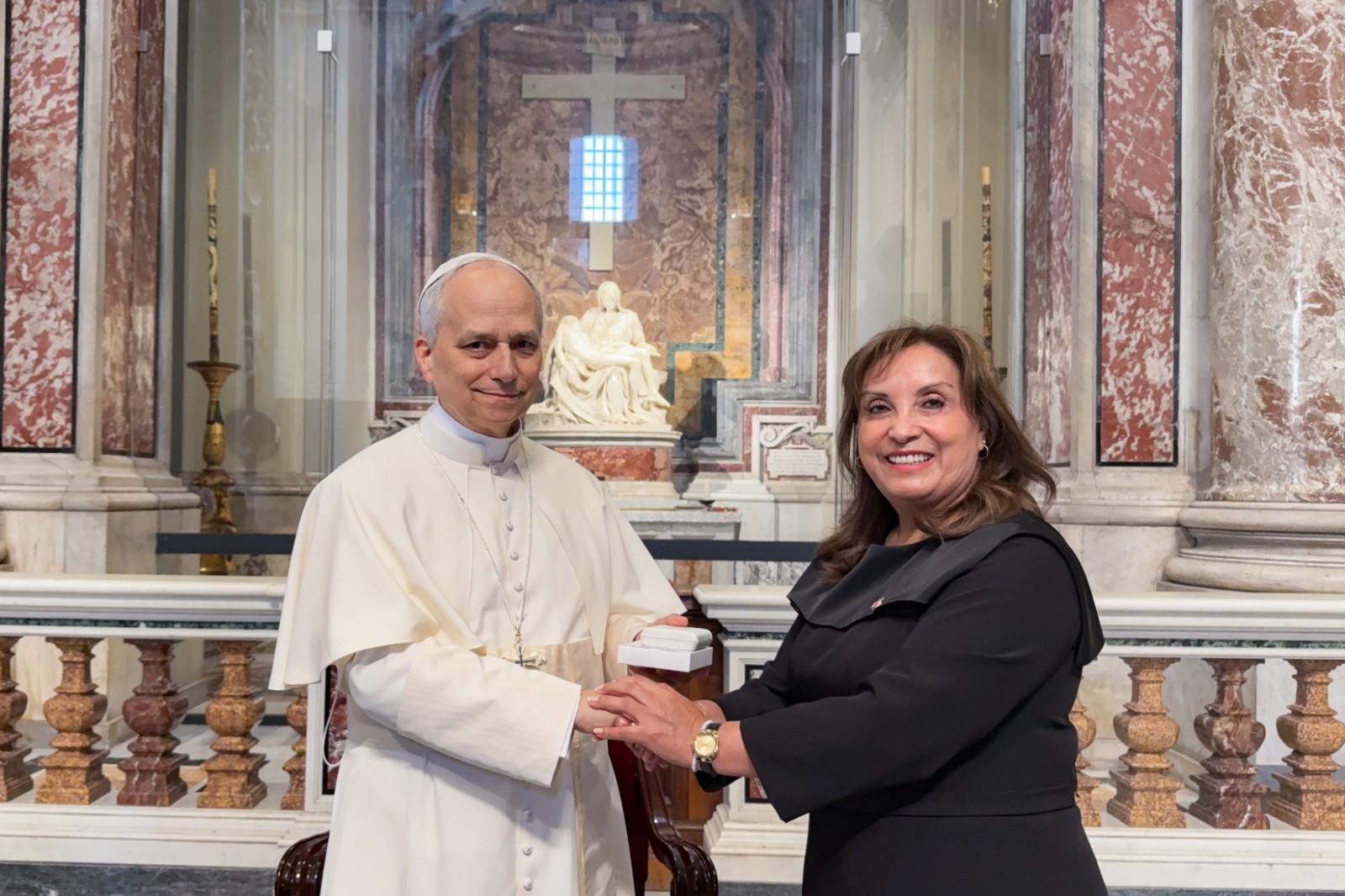
She decided to only share pictures of her with Pope Leo XIV and with the King of Spain, Felipe VI.
It was possible to spot in Rome Dutch Queen Maxima, and the Prime Minister of her country, Dick Schoof.
Canadian Prime Minister Mark Carney, a practicing Catholic who was among the first leaders to salute Prevost election on May 8th, as the statement available here shows, was also at Saint Peter's Square.
Carney, as many other leaders used the trip to Rome to endorse, once again his Ukrainian counterpart, Volodimir Zelensky, who was in attendance too.
French Prime Minister François Bayrou, jumped at the chance to leave his home country, at least for a few hours, after he avoided any meaningful answer to the questions posed by a committee at the National Assembly probing the abuse, sexual and otherwise, at the Catholic school of Bétharram, where his wife used to teach catechism.
Also, it was possible to find U.S. Vice President J. D. Vance and Marco Rubio, Donald Trump’s head of the State Department. Both Pope Francis and then Cardinal Prevost dismissed Vance, who claims to have converted to Catholicism, when he tried to spin Catholic theology for the benefit of Trump’s migration policy.
Francis’s critique
Francis’s dismissal came in the form of a stern letter addressing the U.S. Conference of Catholic Bishops, published over two months before his death, reminiscent of an encyclical published by Pope Pius XI in the 1930s condemning Adolf Hitler’s policies, as the story linked below tells.

English Edition
Pope Francis decries US migration policy under Trump
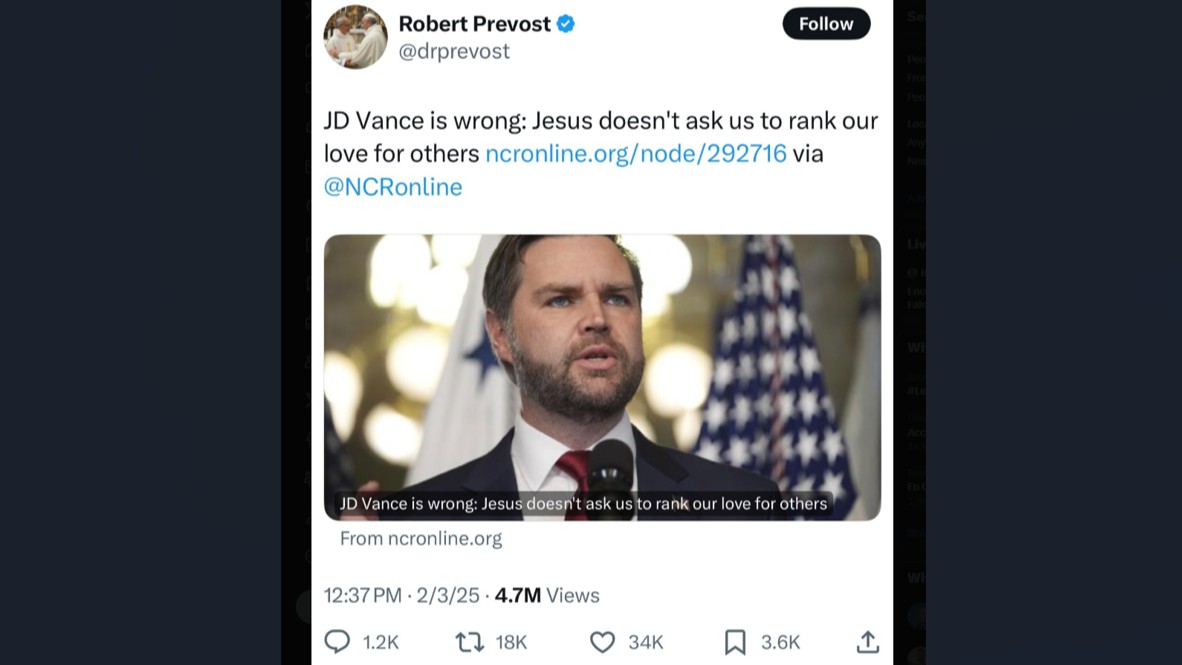
Around those days, on February 3rd, Prevost’s personal account at what used to be Twitter published a simple condemnation of Vance’s take. Prevost’s personal account was recently closed, but there are pictures of the original tweet simply stating “Vance is wrong” while sharing an article by Kat Armas, available here.
The issue is far from solved, as stressed by a recent decision from bishop J. Mark Spalding of Nashville, Tennessee. Bishop Spalding’s ruling, available here in both English and Spanish, is a response to the fear and uncertainty created by stricter immigration enforcement. He dispensed undocumented Catholic workers in his diocese of the obligation to attend weekly Mass.
Pope Leo XIV’s most recent statement on migration, his papacy’s first, was not as clear a condemnation of Trump’s policies, as the Pope is above all a diplomatic, but it depicted his own experience as that of a migrant. When addressing the Diplomatic Corps at the Vatican on Friday, May 16th, he said:
- My own story is that of a citizen, the descendant of immigrants, who in turn chose to emigrate. All of us, in the course of our lives, can find ourselves healthy or sick, employed, or unemployed, living in our native land or in a foreign country, yet our dignity always remains unchanged: it is the dignity of a creature willed and loved by God.
Whoever was expecting Leo XIV endorsing Trump’s policies or attitudes towards migrants and other marginalized groups in his first major public activity, surely was disappointed as even if the Pope stuck to the formalities of the day, with a mass mostly celebrated in Latin, but according to Paul VI’s missal, his homily was an endorsement of his predecessor’s take on the issue.
Booklet with the so-called Libretto.
Far from endorsing the sect-like mentality so common nowadays in the most radical conservative factions of the Catholic Church, the readings chosen by the Pope for his mass (see the box above with the booklet) and his own preaching acknowledge the need for a unity coming out of dialogue and the acceptance of what people have in common instead of the sect-like exaltation of whatever singularity populist leaders chose to emphasize.
In any case, the fact that leaders with almost irreconcilable takes on issues such as migration as Pope Leo XIV and Vance call themselves Catholic highlights the kind of environment ripe for instability and potential chaos shaping the Catholic Church today, and the kind of challenges Leo XIV will face when trying to achieve the goals he stated by the end of his homily:
- This is the missionary spirit that must animate us, without closing ourselves in our small group or feeling superior to the world; we are called to offer God's love to everyone, so that that unity may be achieved that does not cancel out differences, but enhances the personal history of each person and the social and religious culture of each people.
Disloyal clerics too
And if the differences among politicians was not enough, there is the issue of the differences among leading figures of the Catholic Church. One example came on Monday, May 12th, when George Gänswein, the former secretary to Benedict XVI, rejected a chance to remain quiet.
Gänswein saw fit to join the inaugural dance in Rome disparaging against the recently deceased Argentine Pontiff during an interview with Italian newspaper Corriere della Sera.
According to him “a new phase opens. I sense some widespread relief.” He goes after a dead man, unable to defend himself. Gänswein derides Francis’s willing to make off-the-cuff comments when he saw fit to do so.
The nuncio to the Baltic States goes as far as to talk about the end of what he calls a “season of arbitrariness,” talking about a chance to trust a Pope able to “guarantee stability and rely on existing structures, without overturning and upsetting them.”
LifeSiteNews, an outlet that frequently targeted Francis with unsubstantiated claims offered an English-speaking version of Gänswein’s interview with Corriere, sprinkled with Cardinal Robert Sarah calling Leo XIV’s election a “great joy”.
They added a portrayal of Cardinal Dolan as the “influential kingmaker” allegedly willing to garner support for Prevost within the conclave, although they dismiss their own take when accepting that “such information cannot be confirmed due to the strict rules of secrecy surrounding the conclave process.”
The founder of said website, John-Henry Westen, went as far as to claim that a litmus test for the future of Leo’s pontificate will be whether or not he reinstates bishop Joseph Strickland, the former bishop of Tyler, Texas, who was the subject of an installment of this series, available after this paragraph.

English Edition
Strickland and the risk of turning Catholicism into a cult
There is hardly any chance of Leo XIV backpedaling on that decision if one takes into consideration that he was already the prefect for the Dicastery for the Bishops when Pope Francis forced Strickland out of office back on November 11th, 2023, seven months after Prevost’s appointment as prefect. And, far from dismissing his predecessor, Leo XIV short homily, devoted 94 of its little over 1,200 words, per my translation, as there was not official at the time of writing, to remember his Argentine predecessor, who was with Leo XIII, the only modern day Popes who he explicitly talked about.
In the previous days to yesterday’s ceremony, German Cardinal Gerhard Ludwig Müller also showed up for the ball as a story from NBC in the United States tells.
There, the former prefect of the Dicastery for the Doctrine of the Faith renders himself as pleased by Prevost’s election as Leo XIV, using the issue of the pre-1970s rite of the mass, as his key concern to celebrate Prevost’s election, although there was no indication of a return to the pre1970s situation.
Church moneyball
But not all participants at the Roman pontifical ball are into ethereal issues of Latin and lace. Some are rather blunt in stating what they are willing to bring to Rome if the new Pontiff is willing to play ball according to their rules.
Even before the Conclave, both The Wall Street Journal (available here behind a paywall) and Financial Times ran stories on the Church’s money troubles.
While both newspapers acknowledge the problem is the Church’s opaque finances, the Financial Times went deeper into Angelo Becciu’s role in such troubles. The FT story is available as a video after this paragraph or on their YouTube channel.
Becciu is yet another case of a disloyal cleric who as soon as Pope Francis’s corpse was cold enough, ran to Rome to reclaim his “rights” as Cardinal. The Dean of the College, Cardinal Giovanni Battista Re was able to send Becciu back home, but there is no indication of the former Sostituto (substitute in Italian) at the Secretariat of State will to acknowledge the wrongdoing behind Bergoglio’s decision to punish him.
Putting Becciu aside, the exchange the Catholic far-right is seeking is clear: financial support for as long as the Church is willing to keep a stern condemnation of LGTBQ communities, while dismissing inequality, migration, and—above all else—a strict rejection of abortion.
A story published by National Catholic Reporter on May 5th, went over the details of how U.S. Catholic billionaires were willing to offer their monies “So long as we get the right Pope”.
The fact that even populist politicians on the 'left' have followed a similar playbook, as Nicaraguan strongman Daniel Ortega, should be a clear sign of how dangerous is to fall for the idea that all it takes to bless a politician or wealthy patron is for them to promote zero-abortion policies.
The story linked after this paragraph goes over how Ortega got Cardinal Miguel Obando Bravo’s endorsement to go back to power building what now the Nicaraguan and other Latin American exiles in Miami and other cities in the United States actively call out as a dictatorship.
Sadly, it is hard to find people in those communities of exiled Latinos willing to acknowledge how the Church was a willful and rather gullible player in what is now its own purgatory.

English Edition
The Catholic Church in Nicaragua: a new twist in the plot
Church and females
Sadly enough, the Church is victim to its own murky understanding of why females request abortions when they do so. It is almost impossible to find, as one of many possible examples, a Mexican bishop willing to admit that jailing Dafne McPherson, a Mexican female who suffered a spontaneous, natural abortion while working as cashier at a mall in San Juan del Río, a small city in the central state of Querétaro was a mistake.
She wanted her baby, and she was working at a Mexican department store, so she was exerting no extraordinary pressure on her body when she felt ill. Upon arrival at the restroom, the abortion happened.
There was no evil of Mifepristone or any other “poison” as the Mexican and Latin American antiabortion or prolife movement call that medication. It simply happened, as other non-induced abortions happen. Yet, Mrs. McPherson went through the ordeal of being charged for abortion at the local police precinct, as this story from 2017 at The Guardian tells.
Even if, after a major mobilization in Mexico she was able to leave jail, and even if abortion is no longer a punishable crime in the country, many in the Mexican far-right are eagerly expecting the go ahead from the newly minted US-Peruvian Pope to reignite their crusade, more so when they see how the issue is going in the United States, with the increased restrictions on pregnant females at risk of miscarriages.
That is the kind of real-world impact of the Church’s stance on abortion often missed in the inflammatory discourse pushing for a blind defense of life negatively affecting the Church’s relationship with women, the primary transmitters of faith in their families.
It is there, in the ability of the Church to keep its relationship with the Catholic females, where Pope Leo XIV faces already the most significant pressures for his papacy. Said pressure highlight its Church's vulnerability to powerful interests and the risk of compromising its mission.
The politics of faith
And then there is Steve Bannon who, rather than portraying the new Pope as a potential ally of his MAGA went straight for discrediting Prevost’s election as Pope, describing it as “rigged” by none other than Pope Francis.
In an interview with the Financial Times Bannon hinted at how far the MAGA movement is willing to go to take over full control of the U.S. government and of the Catholic Church.
Early in the interview, Bannon goes as far as to say that the Conclave was “more rigged than the 2020 election”. In that respect, one should wonder how far will the Catholic MAGA be willing to take this new “grievance” about the Conclave’s outcome? Will we witness an attempt to seize control of the Apostolic Palace and the Vatican at large by the same crowd that defecated in some seats of members of the U.S. Congress in January of 2021?
So, when there is talk about the chances of the pontifical ball reaching a stage of destructive rage, similar to a rock concert in the 1970s is not an exaggeration. One only needs to see the kind of accusations thrown at Pope Francis by Gänswein to understand how big the toll on Catholic unity has been.
All these diverse groups add conflicting interests. This often creates a chaotic situation, like a game of musical chairs without rules, sometimes even resembling professional wrestling.
The Pope, in theory, is an absolute monarch, concentrating Legislative and Judiciary powers. However, Leo XIV, like any Pope, needs agreement and obedience. Disloyal clerics and groups with their own agendas make this difficult, increasing the likelihood of conflict.
Understanding the Gospel
It would be childish to assume that the only factions vying for influence over Pope Prevost are the radical right and disloyal clerics like Gänswein. Key among those groups are females who have been asking for a more meaningful understanding of the roles of laypersons and clerics in the Catholic Church, and for more equitable, respectful relations between males and females.
The demands for female ordination and greater inclusion in Church leadership pose a significant challenge. While there aren’t massive mobilizations everywhere, it's increasingly difficult for the Church to justify its treatment of laypersons and female members as second- and third-class members of the same faith.
And yes, it is clear that the most active poles requesting meaningful reform are not located in Bogotá, Guadalajara, or Quito. The prime example is the KFD, the Association of German Catholic Females. They issued the next day of Prevost’s election a short call to action, available in German here:
Unlike other participants at the Pontifical dance, KFD chair, Mechthild Heil, frames her statement as an expectation: “We hope Pope Leo XIV will be an energetic, reform-minded Pontiff who is close to the realities of life of the faithful.”
As other groups of Catholic females, the KFD used the Pope’s take on “peace and dialogue” in his speech immediately after his election, to call the new Pope to “continue the World Synod initiated by Pope Francis.”
Recently, Leo XIV saw fit to actually acknowledge the need to continue said process so, at least on that respect, the KFD cannot call itself disappointed, although in the next paragraph of the statement is where issues will, unavoidably, emerge as KFD calls for substantive “equality of females” in their Church and “admission of women to all offices, including the priesthood.”
They warn against “symbolic politics,” stressing instead the need for a “genuine will for change,” and how for them only such will for change will allow Prevost to become “a leading figure for a credible and gender-equitable church.”
Reflecting current trends, KFD, like many lay organizations, calls for consistent investigation and punishment of abuse cases, recognition of diverse lifestyles, liberalization of celibacy, transparency, and lay participation.
One finds similar calls in the United States. Phyllis Zagano, a theologian and historian actively pursuing the restoration of the female diaconate, published a piece at the National Catholic Reporter where she stresses how all newly elected Pope Leo XIV has said on the record about female ordination is that it is “under study,” suggesting he doesn't oppose changes in Church law on that issue.
Ellie Hidalgo, a Catholic lay female in the archdiocese of Miami, and a leader at Discerning Deacons, a grassroots organization pushing for the restoration of the female diaconate, stressed over an op-ed at The Miami Herald how for her organization “creating conditions for peace and recognizing women’s leadership gifts are inextricably linked.”
Following a similar argument to KFD’s she reminds the Pope that achieving his goal of promoting peace, as he stated in his first message after his election, is only possible if the Church overcomes the marginalization of its own females, while stressing the need to pursue the “synodal way” as Pope Francis did in the last years of his Pontificate.
Late on Thursday, May 15th, the digital edition of The New York Times published a piece (behind a paywall here) dealing with Prevost’s marginal role, when he was a student, in a protest dealing with the female priesthood debate.
He was not a major player in that activity, so it is hard to see it as some clue into his papacy, although it is possible to assume that he is aware of the issue, and he will be able to draw lessons from his role as close witness to that kind of mobilizations when John Paul II was Pope.
Dismissing the German or U.S. groups calling for a renewed understanding of the role of females in the Catholic Church runs counter to the very idea of a synodal Church, as a key element of the synodal model is the willingness to at least open issues for constructive dialogue.

At the same time, it is clear that Leo XIV, as Pope Francis did in his last meeting with world leaders is deeply concerned with the role of Artificial Intelligence, and there is reason for it but.
However, as the story published at the time in this series linked above, stresses it makes little or no sense for the Church to criticize the role of AI, as Leo XIV did in his first meeting with journalists at the Vatican, when the Church is unable to figure out an humane way to put an end to the clergy sexual abuse crisis.
And survivors
Countries as the United States that, at least up until last year, had efficient systems of justice, have been able to contain the crisis, but there is no warranty against a reversal of fortunes there or elsewhere in the handful of countries where the issue remains unsolved.
For the rest of the world, the reality is closer to that of Peru and other Latin American countries where there is no real solution in sight. Perhaps it is there where Prevost’s experience could make the difference for Leo XIV’s pontificate. Last week’s piece on this series, linked after this paragraph, dealt with that issue.

English Edition
Leo XIV and the risk of victims remaining pawns
Clergy sexual abuse is a key issue, a deep wound that has significantly damaged the Catholic Church's moral authority. It also adds urgency to the ongoing power struggles.
There is a sense of urgency for Pope Leo XIV to send a clear message. One of his very early meetings as Pontiff was with the head of Tutela Minorum, Cardinal Sean O’Malley. The timing of said meeting is already a meaningful message of the centrality of the issue, but it is not enough. The Church needs to enhance its own ability to force dioceses to comply with the basic requirements set by Pope Francis, otherwise there will be no improvement.
As the story linked after this paragraph proves, that was one weakness in Pope Francis’s reform, as national conferences of bishops, as the Mexican episcopate, were actually unwilling to comply with Bergoglio’s rather timid goals, and yet there were no consequences for them.

English Edition
The Catholic Church’s report on clergy sexual abuse
The initial speculation surrounding Pope Leo XIV's inauguration reveals the deep currents shaping the Church. It remains unclear whether he will adhere to tradition or embrace reform, but if today’s homily is a hint, he will do his best to navigate a middle ground, with a preference for dialogue and inclusion, rather than blind exercise of authority and appeal to a distorted idea of tradition.
The hopes and anxieties of various factions, as displayed yesterday in Rome, underscore the urgent need for more dialogue when figuring out the way forward, but without the implicit attempt at extorting the Church’s hierarchy in exchange for financial and/or political support.
The competition for influence is real; it would be naïve to underestimate the interest of many to force their agenda into the Papacy. Trump himself played endorsing his favorite Catholic cleric, Cardinal Dolan, for Pope. He went as far as to toy with the grotesque, disrespectful, and abusive idea of him becoming the Catholic Pope.
Betting big on polarizing issues as abortion has been, so far, successful for the political far-right in some countries. However, the backlash is already there in the increased polarization within the Church. More so as the situation stresses the effects of the cognitive dissonance of a Church chastising sexual indiscipline in others, while tolerating and even covering up sexual abuse when performed by its own clerics.
But beyond the very real divisions driven by ideological divides, there is a yearning for a more just and equitable Church. The push and pull of tradition and reform, and the deep wounds within the Church demand leadership capable of strength, discernment, and the ability to effectively communicate in more complex ways than an Instagram reel or a Facebook posting.
Later today, Monday 19th, Pope Leo XIV will greet U.S. Vice President J.D. Vance in what is expected to be a courtesy meeting, with no major announcement expected, given the positions of the Trump administration and the Holy See on migration. In some ways, it will be similar to the meeting Leo XIV held after Mass with Peruvian President Dina Boluarte at St. Peter's sacristy.