Rodolfo Soriano-Núñez Lunes, 05 de Enero del 2026
Theodore McCarrick, Marcial Maciel, and other predators bought their impunity with the alleged vitality of their seminaries.
Now, the American Pope needs to figure out how to grow Catholic seminaries without depending on predatory, sect-like practices.
By Rodolfo Soriano-Núñez
Ronald Hicks's recent appointment as archbishop of New York was as a high-profile victory for Pope Leo XIV, yet it masks a deeper structural decay. He was able to appoint a relatively young bishop to a city that only in November voted massively for Zohran Mamdani, the Socialist Muslim who is the son of migrants at a time when the United States undergoes the worst wave of antimigrant policies since the 1930s.
How good match will Hicks be to Mamdani is, at the time, anybody’s guess. What matters is that Pope Prevost seemed to be conscious of the need to reward Chicagoan Cardinal Blase Cupich’s tenacity, but also to appoint a man capable of actual dialogue in New York City.
Hicks will not use Saint Patrick’s pulpit to call a crusade; he is the Pope’s response to a city electing a Muslim democratic socialist major with the largest turnout since the 1960s, in the midst of the deepest political crisis in recent history in the United States. Moreover, it is an oblique critique of the “culture war” model that has become a suicide pact for the Catholic Church in the United States.
By sending Hicks, Leo XIV acknowledged how relevant are the many diasporas in New York City, especially the young members of such diasporas who merrily joined a segment of the Black and White constituencies willing to elect a young socialist democrat Muslim as mayor.
If Mamdani won with 75 percent of voters under 30, and 83 and 85 percent of Black and Latino youth, respectively, Prevost seems to be aware of the need to have at Saint Patrick’s an ally able to communicate with that revamped New York City.

That is why, after going over last week over the kind of challenges Leo XIV faces while appointing bishops to a cascade of sees already in need of a replacement or about to enter that category, this week’s installment goes to the other side of the looking glass, trying to figure out how deep is the Catholic farm system, the throughline providing new priests and bishops in the same sample of 46 countries.
As the analysis of the open or about to be open sees in the Catholic world, the task is daunting. Even if there are unexpected vocational “miracles” in African and Asian nations, Europe, Canada and the United States hardly survive, and Latin America shows many of the signs of institutional exhaustion one sees in churches from Vancouver, Canada to Marseille, France.
Growth in Europe is extremely hard to achieve, and when it happens, as the French diocese of Frejus-Toulon proved. As the story linked after this paragraph shows, now bishop emeritus Dominique Jean Marie Rey saw fit relaxing standards and accepting candidates to the priesthood with murky files.
English Edition
Pope Francis forces out of office 30 bishops in two years
In doing so, Rey called in the demons of sectarian practices and the desperate attempt to evade reality by going back in time to some sort of golden age that never actually existed, as if celebrating the Mass in Latin was some sort of magic spell to bring back people to the pews. But more on this by the end of this piece.
Growth filthy lessons
A key issue for any group is its ability to reproduce itself as such over time. Organizations can do it following the often-monotonous rhythm of an institutional path. The other is the roller-coaster of betting bet its future on depending on charismatic personalities.
Over the centuries, Christian churches have had their share of both models, and the fact is that the only relatively safe path to sustained growth is to avoid as much as possible the excesses of charismatic leaders. Perfect examples of why depending on charismatic personalities is so risky comes from the many predators involved in large scale clergy sexual abuse.
From Theodore McCarrick in the United States to Marcial Maciel in Mexico, from Abbé Pierre in France to Julio César Grassi in Argentina, or from Fernando Karadima in Chile to Juan Luis Figari in Peru all share the traits of charismatic leaders, able to build groups of followers and secure the silence of their superiors.

English Edition
Theodore McCarrick: Dead dogs don‘t bite?
Followers and superiors turned into enablers saw in their “numbers,” whether as recruiters or as fund-raisers, the perfect excuse to partake, at least passively, in their abusive practices because they were able to offer the illusion of growth to the Catholic Church.
There was no sin or crime heinous enough to convince their followers and enablers, John Paul II, Angelo Sodano and Joseph Ratzinger, among many others, that there was a need to put an end to their abuse.
A perfect example comes from the Peruvian Sodalitium. Its leaders, as much as Maciel in Mexico, were able to convince relatively small groups of young people to dedicate their lives to what they rendered as a spiritual conquest, needing the kind of mentality armies develop.
In Peru, in the 1970s that was easier because, all over South and Central America were very radical guerrillas, some of which claimed to be building the "Kingdom of God" through violence, while mixing Catholic theology with Marxist and national liberation movements' rhetoric.
As the story linked after this paragraph proves, that mixture granted the leaders of the Sodalitium the support and later the silence of the Catholic hierarchy, aware of the sectarian practices and the abusive behavior but willing to tolerate them as they were under the spell of the "state of siege mentality" associated to the confrontations between the Marxist far-left and the Catholic far-right, paying little or no consideration to the sectarian and predatory practices of organizations and movements such as the Sodalitium.

Only the scandal and discredit forced Rome to face facts and, eventually, almost always way too late, set some minor restrictions or, also rather late, suppress them as Pope Francis decided to do at the very end of his life.
The Sodalitium's way to understand institutional growth happened in many other countries and specific contexts, different from that of Peru and explains, at least partially, the current situation, one with the Catholic Church is unable to grow as it used to do and is in desperate need for a new model to build its own future.
The more mature communities in the Catholic Church acknowledge the need to understand the issue, so they regularly commission or encourage surveys, analysis, and other tools to do so. In the United States there is the experience of different schools and centers at Georgetown, Notre Dame University or Catholic University of America.
Catholic University of America published, back in October 2025, a well-crafted study of priests in the United States (available here as a PDF). However, as much as I would like to assume that the findings there are good enough to extrapolate them to Latin America, I do not think the results would be that helpful even in the case of Canada.

In Canada there is a chance to figure out a solution, through their version of the General Social Survey and other tools available there. However, it is almost impossible imagine that happening in Mexico and most of the other Latin American countries. Even if I am able to find similar trends (the increased conservatism of the priests to pinpoint the most obvious), makes no sense to try to apply the findings of that U.S. survey in Mexico or elsewhere in Latin America.
One would expect that, by now, there is a clear conscience in the Catholic hierarchy about the risks of growing with no second thoughts on the effects of the sectarian practices behind, as one of many possible examples, the Regnum Christi, where its members were isolated from their relatives, were unable to read civil and even Catholic media unauthorized by their superiors, and their email or letter exchanges were subject to the kind of surveillance one only sees in maximum security prisons.
Sadly, that kind of organizations still exist and launch campaigns to demand from Leo XIV authorization to go back to that kind of practices, as with the Brazilian Arautos do Evangelho (Heralds of the Gospel) who, over the last months, have been engaged in an active campaign to render themselves as victims of Pope Francis (content in Italian).
The Roman Curia during John Paul II pontificate was willing to turn a blind eye to these issues because for the Catholic Church the preeminent need is to have enough priests presiding over Masses, marriages and funeral services and organizations such as the Heralds, the Legion of Christ, Opus Dei or the now suppressed Sodalitium of Christian Life showed their Excel books full of names of seminarians about to be ordained.
A previous installment of this series, linked after this paragraph, dealing with some of the most recent cases in the Legion of Christ, deals precisely with the issue of how Maciel used the massive ceremonies of ordination of his priests so dear to John Paul II’s heart and how, despite all the fireworks about those ordinations, many of those priests have left the Legion of Christ, the priesthood and, in the most radical cases, the Catholic Church. See the section titled “Spiritual muscle” to get the details.
Now, in the new context created by the clergy sexual abuse crisis, any future model of growth needs to be extremely aware of achieving such growth without endangering its own flocks.
Today’s piece looks at how able is the Church in the 46 countries sample representative of more than 80 percent of the total Catholic population to achieve that. It does so by gathering information about both seminarians and active priests back in 2022, the latest figure available at GCatholic.org, a respected Catholic website hosting statistical data for that Church.
With that data the piece develops a ratio of major seminarians to active priests revealing how thick or thin is the bench of the Catholic Church. With that value, the piece builds a Z-score to measure where each country stands in this metric. The table after this paragraph summarizes the values for the countries in the sample. The Excel book with all the data gathered from GCatholic is available here at Scribd.
CSTOP stands for Current Seminarians Totals Over Priests.
The table lists the countries from the thickest or deepest possible bench, at least in the 46 countries in the sample, to the thinnest. Whoever looks at it should notice how there is a deep geographic and economic divide.
What appears there is the consequence of a centuries-long process that had, by the end of the 19th century, France, Spain, Italy and Germany offering the Catholic Church armies of priests willing to go to Latin America, Asia, Africa, and even the United States and Canada.
By the end of the 20th United States and Canada became the powerhouses for the ordination of priests, with diocesan and religious seminaries in Quebec or the U.S. Midwest as net “exporters” of priests and even bishops, taking over dioceses all over the Global South.
It is unclear whether a major, seismic shift is about to happen, but it is clear by now that many European dioceses would be unable to keep their parishes active and open without the labor provided by African, Asian and to a lesser extent Latin American priests willing to provide their services there.
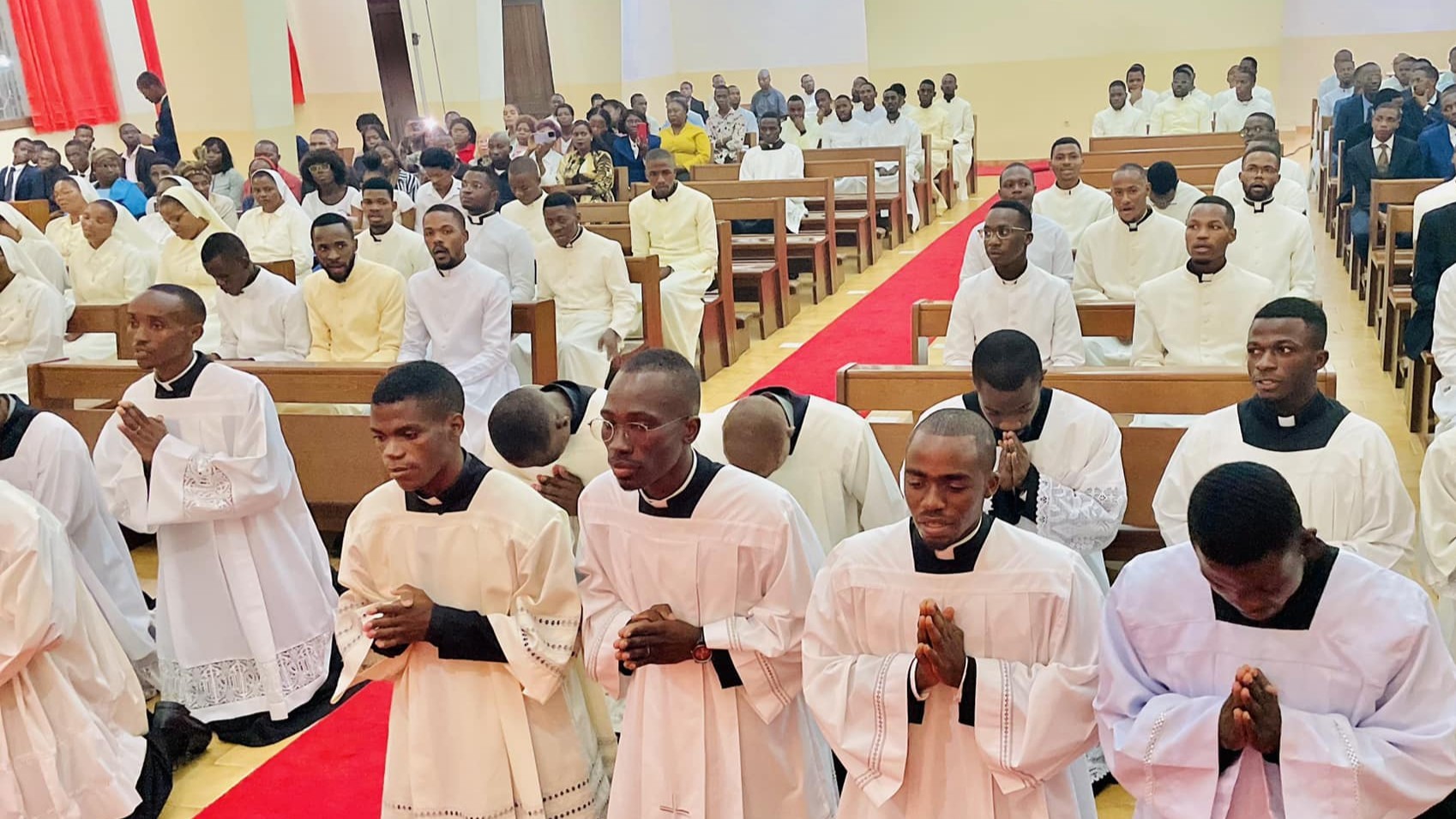
However, when going over the data from Angola, the Black Swan of this piece, one should be careful as to how to interpret the data. How a country that was 40 years ago a scenario of one of the most brutal civil wars by the end of the 20th century, with Cuban troops and Soviet arms and ammunition playing there one of the many episodes of the Cold War, now is a paradise of sorts for Catholic priestly ordinations?
Angola sporting a Z-score of -4.2 implies that its numbers are four times the standard deviation above the median of the sample. It means it is a true outlier.
Something similar could be said about Madagascar standing at -2.19 on this stress index. It must be noted that all the four top and six out of the ten top countries in this index are African or Latin American, having low to very low levels of development as measured by the Index of Human Development crafted by the United Nations Development Program. Moreover, it must be noted that their an extremely high correlation between the depth of the Catholic priestly bench and the HDI (r = 0.8).
Angolan miracle or mirage?
In other words, as the HDI for 2022 grows, that is to say, as more developed a country is, there are less chances for their young males entering the seminary. What is worse, when going over data on youth unemployment in Angola and Madagascar, the countries with the thickest bench in the sample one finds other potential explanations for the apparent religious vitality.
In Angola, the National Institute of Statistics (Instituto Nacional de Estatística) reports through their Angola Employment Survey (Inquérito ao Emprego em Angola) a 54.3 percent rate of youth unemployment, ages 15-24 (content in Portuguese, see page 12 of the PDF). Sources such as the World Bank have Angola with a rate of male youth not in education, employment or training of over 20 percent. It is a panorama of broad “labor underutilization” for youth.
Granted, other countries, even European countries experience high rates of youth unemployment, Spain and Italy, to name two of the most obvious cases. What makes the difference in African and Latin American cases such as Angola or Honduras, is the existence of safety nets providing solutions other than seminary to young Europeans unable to find a job.
It is true that other countries, including Europe, suffer high rates of youth unemployment, Spain and Italy to name the most obvious cases. What makes the difference in Latin America (Honduras) and Africa (Angola or Madagascar) is the fact that Europe has safety nets offering solutions other than Catholic seminaries to European young males unable to find a job.
And also, even if unemployment could be high, violence in France, Spain or Italy is a far cry from that in countries deep in multigenerational cycles of violence associated to drug dealing as in Mexico, Guatemala or Honduras or with political instability as that of Africa, lacking any similarity to Europe in the 21st century.
Clearly, the issue requires more data and a deeper analysis of the specifics for each national case, but one should be aware of these structural constraints shaping vocational decisions from young males.
In Madagascar it is impossible to find the kind of data available in Angola, but a very basic overview of the situation there has a soft coup happening in the island nation in mid-October, after riots and the decision of the Army to abandon Andry Rajoelina who ultimately left the country in a French military plane on October 14.
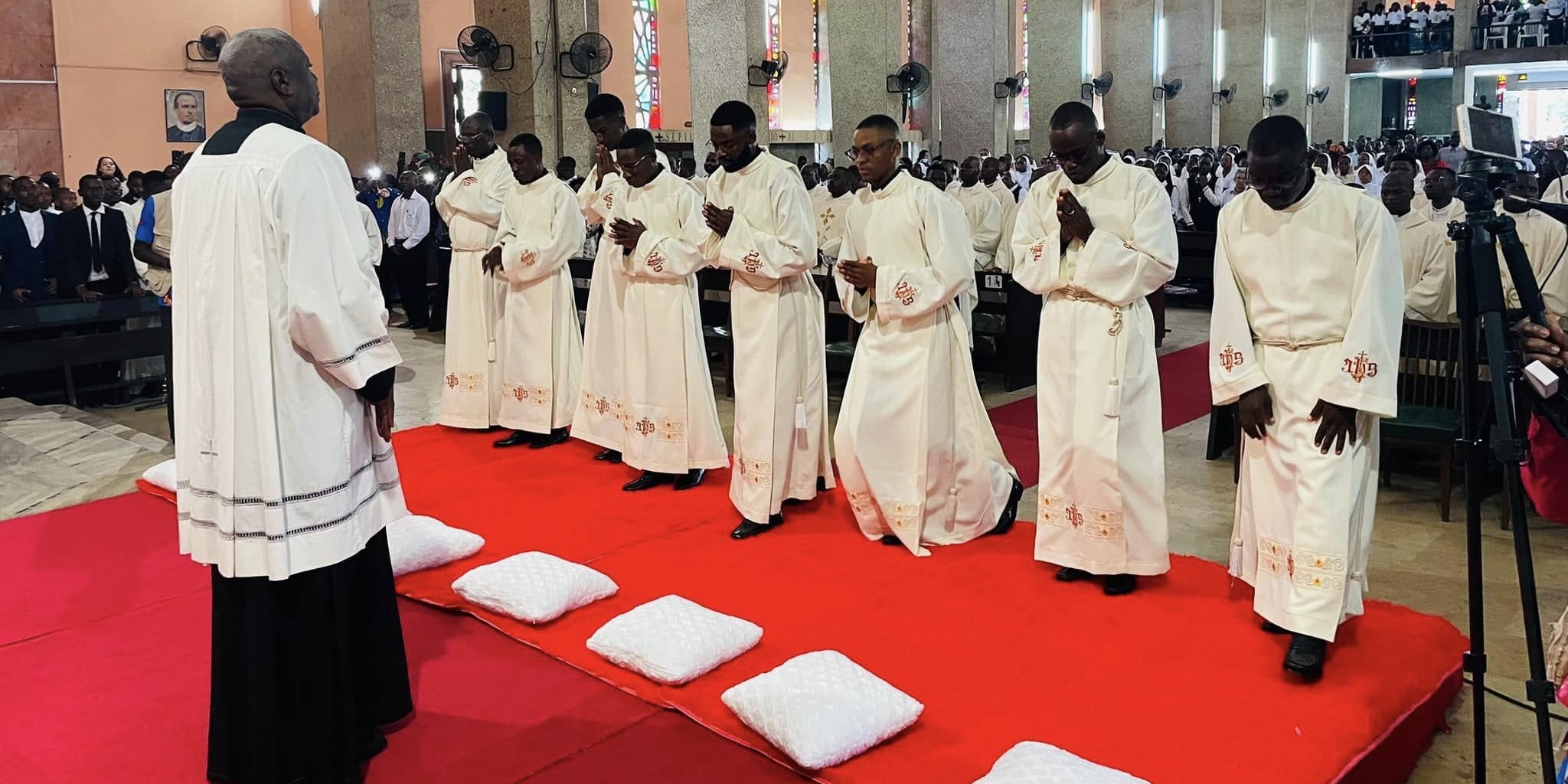
The political instability in Madagascar is similar to what one finds in other African nations appearing in the table as strongholds of Catholicism as far as the will of their young males to enter religious life in the seminary is concerned.
It is necessary to be cautious because unlike what happens with superior education, where the cohorts of young males and females seeking degrees to enter the market resembling cylinders connecting two pipes, seminary education looks more like a funnel, with many young males opting out of religious life at different points in time.
Data from Spain and anecdotal evidence from other countries reveals how difficult is to successfully complete seminary education. In Spain, less than eight percent of seminarians entering religious life as such become priests at some point. Even if the story published by Catholic magazine Omnes does its best to portray the data in the best possible light, numbers do not lie.
Omnes reports that out of 1,036 seminarians enrolled in Spain in 2023-4, only 85,8.2 percent, became deacons to eventually become priests. The same story talks about 86 seminarians leaving the route to priestly ordination. In other words, they lose as many as they are able to ordain.
Must be noted also that while a secular education “cylinder” (like an Engineering degree) responds to market demand, the Church’s “funnel” in the developed West is failing despite a desperate institutional demand. It is a market where the “customers” (seminarians) decide to forego ordination even though the “jobs” (parishes) are vacant.
Exception no more
Even if there is nothing new in proving that development is negatively associated with religious practice/beliefs, the fact is that up until the end of the 20th century it was possible to talk about exceptions, the United States and Canada the most notable. Nowadays, in light of the evidence, that is no longer possible.
In actuality, data from the Center for Applied Research on the Apostolate, CARA, at Georgetown University, reveals that only in the 2024-2025 cycle a new drop on graduate-level seminary (equivalent to theology in previous models of seminary education) dropped another 8 percent.
In that respect, it is possible to attest an inversion of sorts in the United States. If 40 years ago dioceses in the United States were able to “lend” priests all over the world, nowadays 17 percent of U.S. students of theology are foreign-born, with the primary countries of origin being Vietnam, Mexico, and Nigeria. The U.S. has transitioned from a “Farm System” able to export priests to one that imports them to stay alive.
More strikingly, the same source found that 26 percent of the 2025 of former seminarians entering priesthood are foreign born. The three most common countries of birth for these foreign-born ordinands are Mexico (five percent), Vietnam (four percent), and the Philippines (three percent).

CARA found that, on average, these foreign-born men arrived in the United States 15 years ago at the age of 21. This delay suggests they often completed foundational education in their home countries before being absorbed into the U.S. system.
Even if CARA offers no information on their April 2025 report on attrition, it is notable how they stress the fact that 36 dioceses, including archdioceses, in the United States had no ordination. The full report is available here.
Also, the fact that countries with very high levels of violence and political strife, as Honduras or Nicaragua in Latin America appear all the way up in the table, confirming the notion that low levels of human development are associated with higher chances of entering religious life as a seminarian.
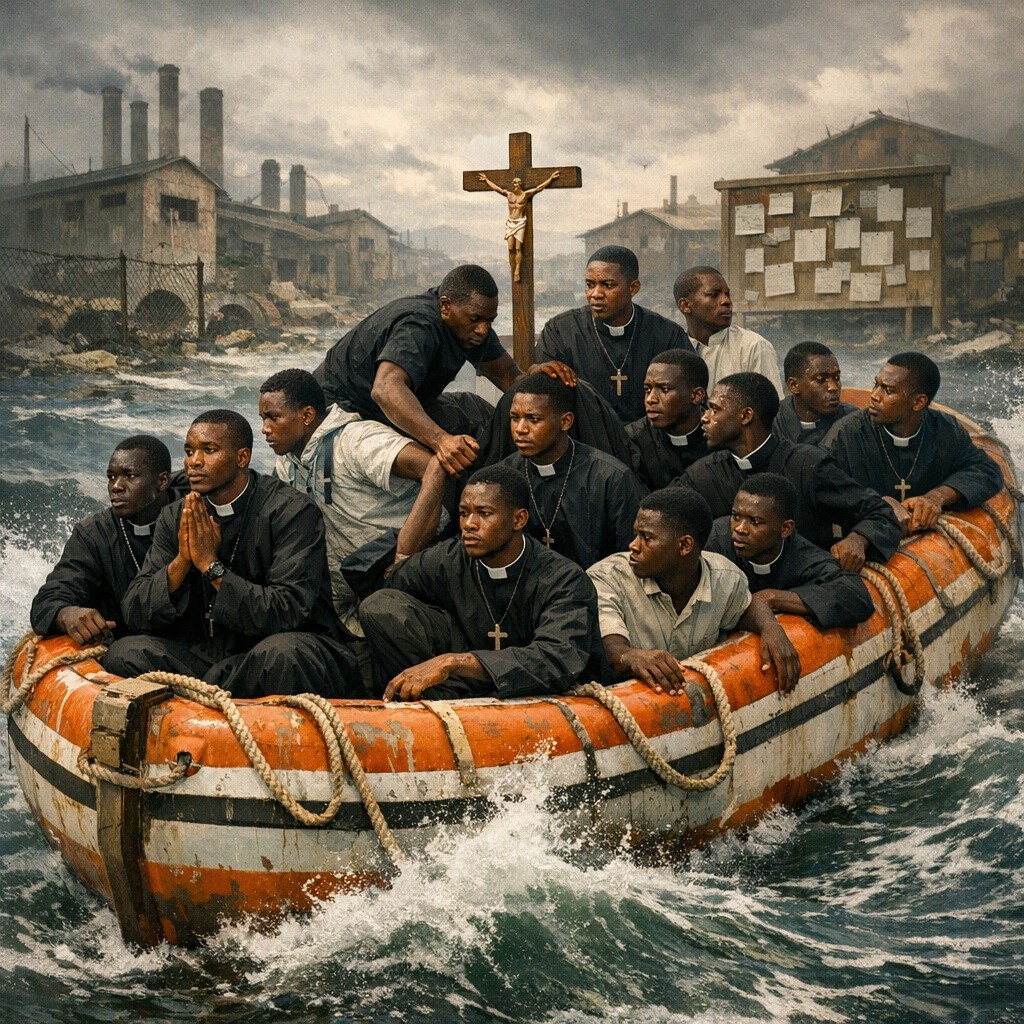
The relatively healthy farm systems of Angola and Madagascar in Africa, or Nicaragua and Honduras in Latin America are not a sign of a global Catholic spring, a revival of sorts. Very likely, they are a symptom of a secular winter. In these regions, the Church operates as a safety hub—a demographic lifeboat in a sea of youth unemployment and political instability.
The challenge
Leo XIV’s challenge is to acknowledge the limitations of the current model and to tell the wheat from the chaff when looking for long term solutions to this issue.
Betting on recruiting young males when markets and national states fail in their native countries should warn the Catholic hierarchy about how sustainable such model in the long run is.
But it can also be dangerous to do it in the context of economic growth with restrictions to religious practice. It would be impossible to go over the details of how the Church-State relations have evolved since Benedict XVI reached an agreement with the government of Vietnam.
The agreement was good, so good that it became the basis for the one signed with China to restore full communion with the Catholics who have been able to survive there the glacial age of the Church-State conflict after Mao Dzedong emerged as the winner of the Chinese civil war.
What is relevant at this point is to acknowledge how in the Vietnamese context entering seminary is not necessarily the same kind of decision as the one made by a young Mexican American living in Los Angeles or a relatively young French male deciding to quit his job to enter religious life.
Vietnam outperforms these days other major, well developed Asian economies. It has a better performance, at least on paper, than one of the engines behind its own boom: the Chinese economy.
It is clear in that respect that, unlike a young Angolan seeking religious life as a way to secure an education, a young Vietnamese has options, but his options are not as varied as those young Europeans and even Latin Americans have when entering the seminary of their dioceses.
The opacity of the Vietnamese miracle is further aggravated by Decree 95, which went into effect on March 30, 2024 (look for the English PDF tab). This government decree grants the central government power to intervene on financial matters and suspend religious activities deemed as “serious infractions” by the government.
A source of information to better understand what happens in Vietnam is the United States Commission on International Religious Freedom (USCIRF) and its reports published over the last years.
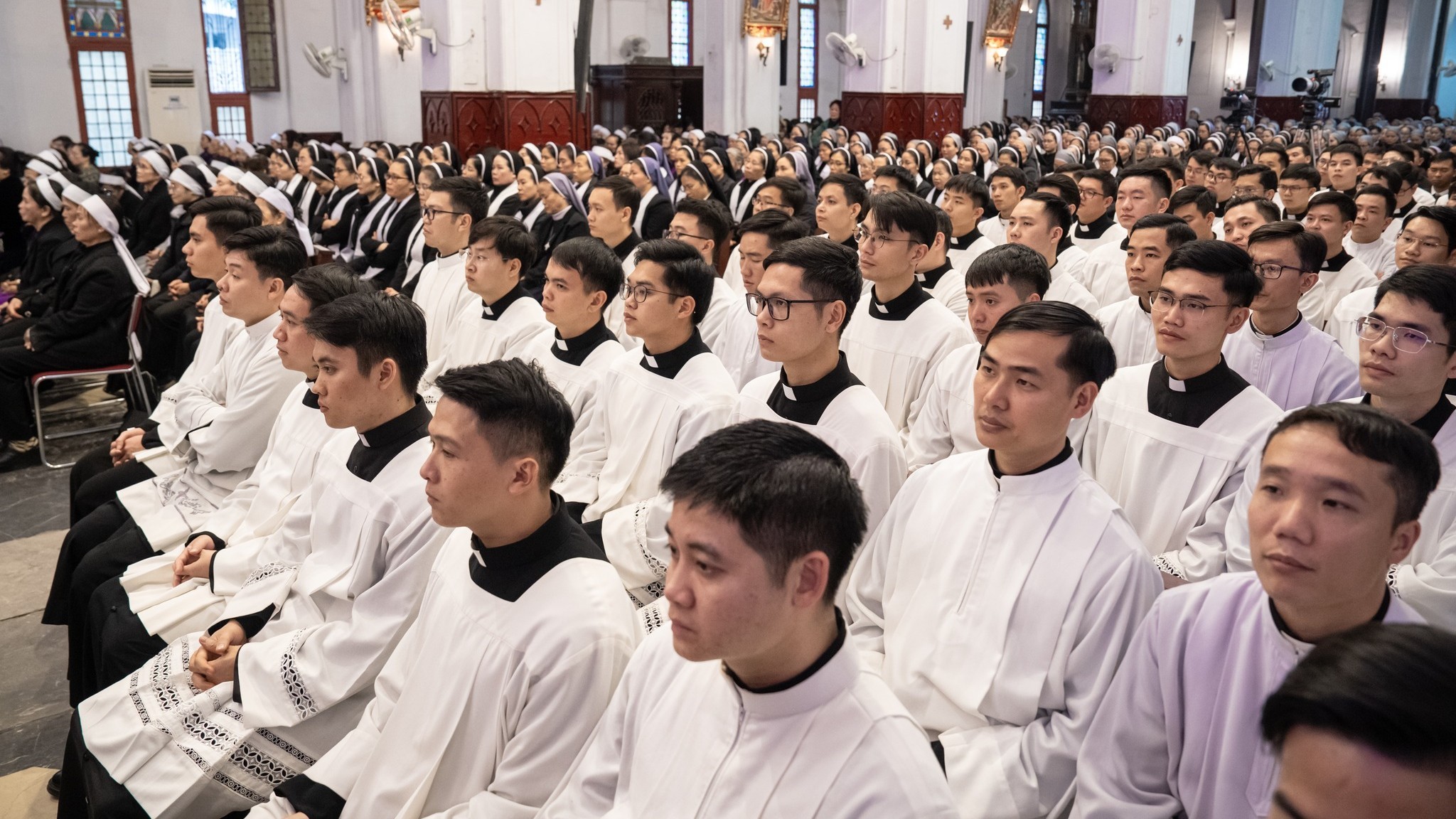
In other words, the Vietnamese vocational miracle will remain only for as long as the government in Hanoi allows it to continue. This is more relevant as the Catholic Church in Vietnam remains a “parallel institution,” allowing ethnic minorities in rural areas to exert a modicum of agency before the national government. It happens in similar ways to what happened in Poland during the pro-Soviet regime, in Spain by the end of the Francoist dictatorship, in Argentina and Chile during the military Juntas or in Mexico during the PRI (Partido Revolucionario Institucional) governments.
Again, it would be impossible to go over the many caveats and potential issues, what matters is to understand that, as vital as the Vietnamese numbers are, they deserve a second look, and some reflection as to what they imply for the young males enrolling in seminaries there.
Oddly enough, the very persecution Vietnamese Christians experience allows for Western groups in the radical right to use the objective violations of human rights in Vietnam, to push their own anti-human rights agendas, in ways so convoluted it would require a whole book to go through.
Suffice to say that labeling Anfifa and other loosely integrated movements in the United States as “terrorist organizations,” opens the door for the Vietnamese (or any other government) to do the same with any group unwilling to remain in Hanoi’s good graces.
More data
Any analysis of the numbers offered in this piece is damped by the absence of other information, attrition rates would be the most notable of it all, but also, data, at least at the national level of how many seminary students leave or are forced out of any given seminary only to be reaccepted elsewhere in the Catholic world.
Closely related to the need of having more data on these issues shared with schools and universities all over the world, there is a clear need to go deeper on the issue of abuse at the seminaries.
The only meaningful studies available these days come from the United States, and they show that even with the new rules abuse at seminaries remains a key issue.
The most notable was published in 2019 by the University of Notre Dame, authored by John Cavadini, a Catholic priest and professor at that university.
The study was published as Sexual Harassment and Catholic Seminary Culture. The Center for Applied Research in the Apostolate, an institution associated to Georgetown University, developed the survey providing the evidence for the study. The full study is available here or here.
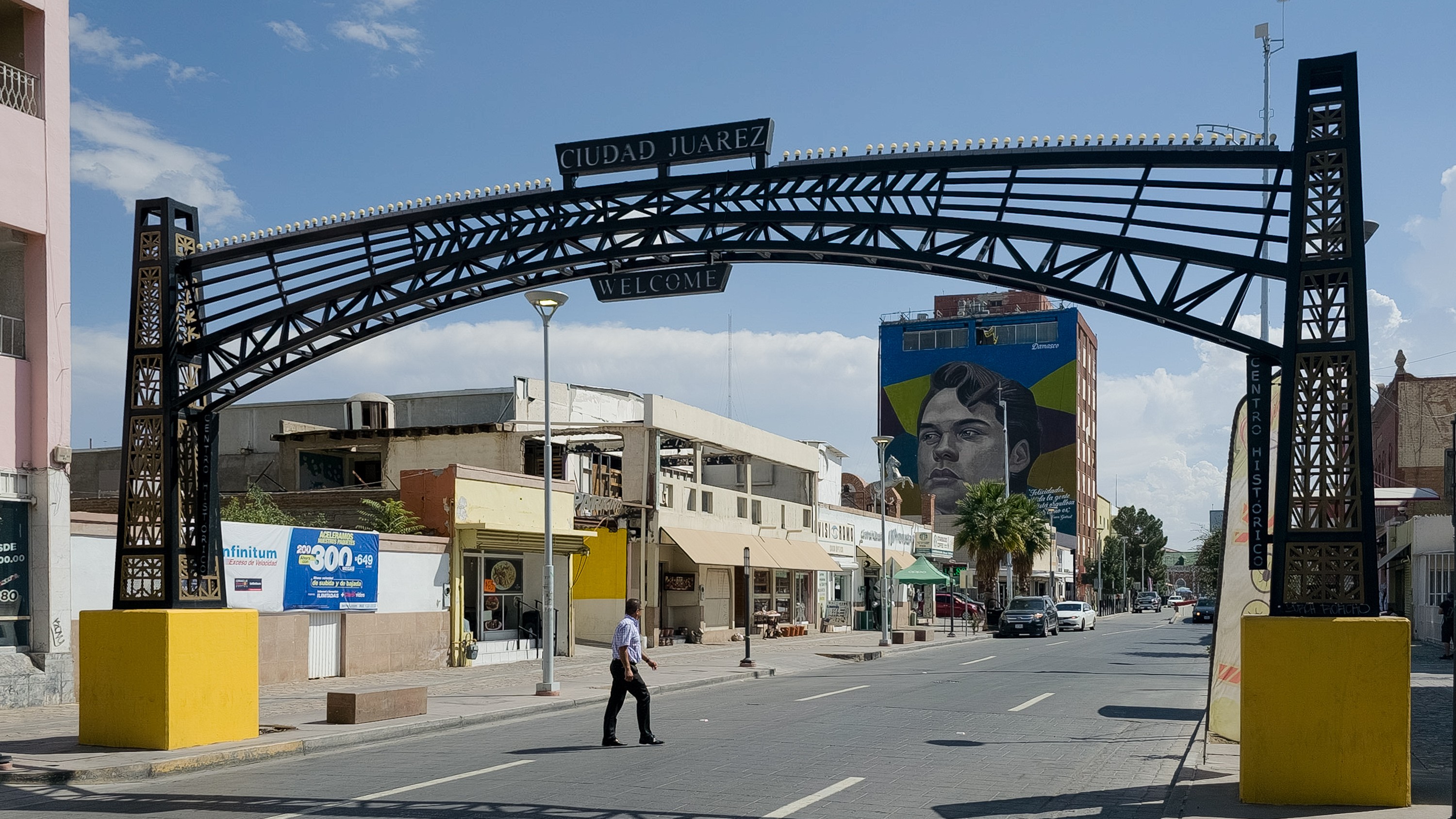
This series has published at least one piece about the experience of a Mexican former student at the seminary of Ciudad Juárez, available after this paragraph.
English Edition
Back to Ciudad Juárez
Sadly, there is evidence also of how former Mexican seminarians, expelled at least from one of such institutions, are readmitted elsewhere, their bishops ordain them, only to become the target of accusations of clergy sexual abuse, as the story linked after this paragraph told in the section “Secrecy and abuse.”

English Edition
Izcalli, Three‘s a Charm?
Benedict XVI attempt at solving the issue by barring gay candidates to priesthood and religious life at large backfired, as the story linked after this paragraph told a year ago.

English Edition
New interpretation of old rules at Italian seminaries
The failure was more notorious as it was coupled with the failure of the attempts at finding “a cure for homosexuality,” more so as that kind of “therapy” became in cases such as that of Tony Anatrella a trap for seminarians sent to the offices of the French “gray eminence” of conversion therapy by their bishops, as Anatrella’s idea of “a cure for homosexuality” was to rape said seminarians.
The story linked after this paragraph offers more details about Anatrella’s methods and effects for the Catholic Church in the section “Gays in the Church” of the story linked after this paragraph.

English Edition
From blunder to blunder: Roman Catholicism and sexuality
It is clear that the main issue for the Catholic Church and any other organization, religious or otherwise, is how to grow. Organizations ruled exclusively by market criteria learn the hard way from their mistakes, through bankruptcy. Religious organizations are not always ruled by market criteria. They are based, for the most part, in trust and tradition, so at trying times, they are able to pull resources other organizations have no access to.
The key for religious organizations is how to grow without destroying the trust on them. That is Leo XIV’s main challenge for 2026 and probably for what will be a a long pontificate.
The question is if he will be able to avoid the traps of “easy growth” offered by Charismatic leaders as the aforementioned Maciel, McCarrick, Karadima and Abbé Pierre, but also those offered by Catholic Traditionalists since the 1970s, when French bishop Marcel Lefebvre decided to go, inch by inch, into a schism consummated when him and Brazilian bishop Antônio de Castro Mayer decided to consecrate four bishops for Lefebvre’s organization, the Society of Saint Pius X and one more for its Brazilian counterpart, the Apostolic Administration of São João Maria Vianney, now reconciled with Rome.
For all the attacks on Paul VI during the 1970s and the conspiracy theories they spread all over the Catholic world, this brand of Catholicism has little or nothing to show, besides the “accomplishment” of having spawned at least two additional schisms of their own.
They have been unable to actually grow, they do so in a context of heightened abuse against their flock, as proven by the painful testimonies offered by the survivors of clergy abuse at that organization in the French-speaking world, as their website (content in French) and their account at what used to be Twitter) prove.
Far from offering a spell to address the challenge of growth, they just create smaller, more radicalized silos. First, the one based in the United States loosely integrated in the so-called Society of Saint Pius V, which would require a book of its own to address the kind of anti-Catholic cannibalization they practice.
Then there is the one based in Brazil, where Richard Nelson Williamson, one of the Lefebvre-Castro Mayer bishops, built his own schismatic organization, after being excommunicated, again, by Rome, and being forced out of the SSPX, when his neo Nazi sympathies turned into an embarrassment for Pope Benedict XVI, as he lifted the excommunications set by John Paul II on Williamson and the other three members of the SSPX consecrated as bishops by Lefebvre and Castro Mayer in 1988 for a brief and, for the most part, sterile reconciliation with Rome.
Prevost’s challenge now is to go beyond the apparent stability observed on a spreadsheet, as it could be nothing but a mirage. The need for a thicker, deeper, and more resilient bench is more pressing than ever. But betting big on short term solutions is what put the Catholic Church in this dilemma when John Paul II decided to look the other way when Mexican laypersons, priests, and at least one bishop were presenting him, by the end of the 20th century, with a truckload of evidence about Maciel’s abuses in Mexico and elsewhere.
The horse trading of accepting abuse because “orders” such as the Legion of Christ were growing was a losing game and yet, him and other top Catholic leaders were willing to play it again because of growth.
The only hope is that as much as Pope Prevost was willing to avoid appointing a culture warrior to New York, he is also willing to avoid falling in the kind of poisoned well of growth built by Maciel and many other predators, especially when growth in Africa and Asia is already under stress by the kind of constraints considered in this piece.

English Edition
Leo XIV’s 2026 challenge: Appointing 400 bishops
Last week’s piece, linked above, centered on the vacancies Leo XIV must fill in the coming months in sees such as Miami, Chicago, Mexico City, Guadalajara and, soon after, Los Angeles, showed some of the unique challenges Mexico and the United States offer, heightened in both cases by the tensions brought by their own varieties of populist regimes.
* * *
A summary of this piece is available as audio after this paragraph.
Note on production: The text of this summary was written and edited solely by the author. The delivery of the audio summary was achieved using a high-quality, text-to-speech engine Microsoft Word for Web. The AI was used for voice generation only, not content creation.